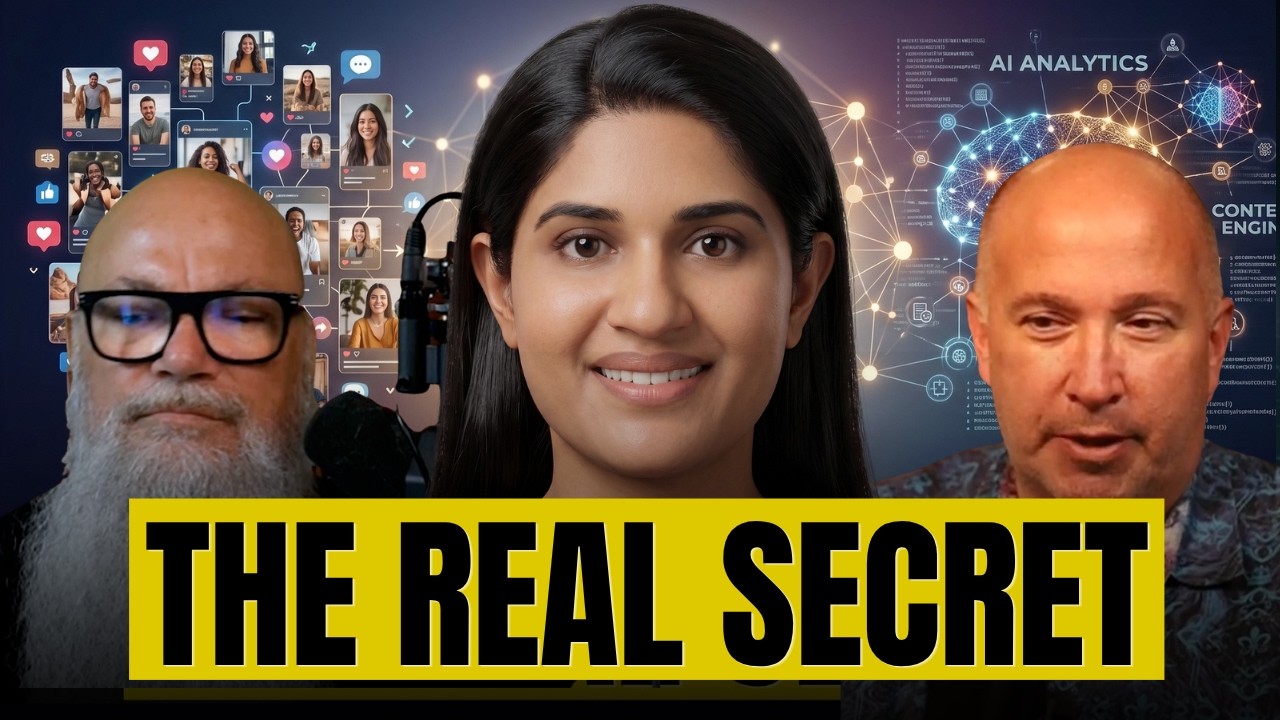
Podcast
Your Influencer Strategy is Dead (Copy This)
Summary
Authentic UGC from micro-influencers outperforms polished content in driving sales, as AI and human shoppers value trust. Slightly critical 4-star reviews boost conversion rates by appearing more credible. To maximize impact, leverage the "Gifted Tier" strategy for scaling video output and integrate shoppable video widgets on your product pages for a 5% to 20% conversion lift.
Transcript
So what we usually would recommend to a [music] brand is start at the gifted tier. That's where you're going to get that scale. The creator is receiving a free product in exchange for their authentic [music] review. And from there you can kind of identify the ones that are performing well for your products and then go back to them with a more paid or curated campaign. >> Do you find that brands try to over control the UGC creators? Like [music] should they just say here's the bullet points and here's the key points or should they say this is the product just [music] go? >> Sometimes it's the slightly critical reviews. not the fivestar like, "Oh my gosh, I absolutely love this product." But someone who's giving a more balanced perspective [music] actually tends to perform better and it's because it's more trustworthy. All these AI engines now are looking at the trustworthiness [music] of content. >> You're watching the Marketing Misfits with Norm Ferrar and Kevin [music] K. What's up everybody? Welcome to another episode of the Marketing Misfits. You know, we Norman and I have been doing this podcast since I think the first one came out April 30th of 2024, and it's always been me and my buddy doing this podcast, [music] but today he's feeling a little bit under the weather and is not able to make it. So, I'm going to be running this one solo, but it still got uh great content [music] and it's going to be a great episode because today we're going to be talking about video, you know, and there's a lot of people that that hear about video, but I think a lot of people underestimate the power of video when it comes to [music] not only selling something, but actually having people discover you and actually how video has become an integral part like of AEO and how YouTube is actually [music] now probably number one, number two, or number three depending on who you ask the most important thing there is when it comes to uh to AEO is is YouTube video and our guest today uh John V Shaw did I get that right is uh the co one of the co-founders of uh of a company that specializes in this her and two other women founded this company out of Harvard and they uh are are just crushing out there with some of the top uh brands a lot of Fortune 500 brands a lot of big e-commerce brands a lot of mainstream brands and they know what [music] she knows a thing or two about uh when it comes to video and comes about how video and AI work together. So, welcome to the show. Glad to have you here. >> Thank you so much. So great to be here. Thank you for having me. >> So, how long is uh your company is called Hugh? H U E, right? [music] >> Yes. Yes. >> And that's like that's hue is like that that's like the uh the hue of a TV or the the what's that? It's like kind of like [music] the >> the color contrast or something. It's like the hue, right? So you're like bringing things into focus or or not not focus but how would you describe why [music] is it hue? >> Yeah. Um it's all about you know the color and bringing life to things and we like to say it's all about the human element as well. So essentially you know what we do at Hugh we're a platform that helps brands really leverage video content from you know creators or their own branded content. And so that's where the the word Hugh comes from. >> So how long has Hugh been around? Yeah, we've been around for about five years. So, as you mentioned, we got started in business school. So, happy to share a little bit more about our our journey and how we got started. >> Sure, let's do that. That's So, I mean, every every big uh Fortune 500, every big uh uh billion-dollar company starts in a dorm room, doesn't it? >> Exactly. Exactly. Yeah. Yeah. A little bit about um my background. I actually started my career at Google. So, um I know a little bit about search. Um actually my first uh job at Google was working on Google search on the knowledge engine team. Um and I specifically was actually working on the TV and movies vertical which was super fun um to work on. But that was back in 2015 when search was so different than it is today. Now we live in this AI, you know, LLM AEO GEO world. Um, but got to see kind of firsthand how Google was evolving from being kind of that traditional blue links search engine to moving more towards the AI assistant capabilities and that was a big part of of my time at Google. Um, I left Google in around 2020 to go to business school at Harvard and that's where I met my co-founders Nicole and Silvin. They actually come from the consumer side. So Nicole worked at L'Oreal for about 6 years. um she was a marketing director on some of the biggest brands out there like Lancomeme, KE, so brands that you would have heard of in your in your day-to-day and she um you know really understands kind of how brands are thinking about this moment and and what it takes to kind of meet the moment with AI. So um and then Silvin also worked at in consumer brands. She worked at Airbnb um when it was really early stage. So we kind of brought together our expertise across the tech side understanding how AI was evolving as well as the um uh brand side to build our solution that we're doing today. And you know it's been 5 years since we started. So a lot of things have changed even so we've really evolved the product um thinking about UGC for social media and now um all the way to UGC for this AI search moment. >> So is that you're getting was that you went to business school for an MBA I'm assuming? Yes. >> So, was this did this start as an MBA project in one of the classes that evolved into a company or was this just you met these other two uh ladies and just decided like, hey, we should we should do this business together? >> Yeah. Um, actually, I went to business school really with the goal of starting a company. Um, my dad is an entrepreneur actually. He just uh sold his business this year, which is super exciting after 25 25 years of building it. So I pretty much grew up um every day when I was a kid going with him to the factory. >> So you never saw your dad? >> No, I always saw my dad. >> So you never saw your dad because entrepreneurs, they're so busy. >> Yeah. Well, I think what was great was he involved me all the time. I'm an only child and so I'm just super close with my parents and so yeah, I grew up going with him to his factory. It's a manufacturing business and really seeing kind of what he was building day-to-day. It was like a small factory at first and then it became a bigger factory and they hired more employees. And so I think I just always was super inspired by that journey and wanted to build my own thing one day. So my whole goal of going to business school was hey I'm going to leave corporate. I learned a ton at Google. Loved that experience. Um but now I'm ready to kind of take the leap and start my own thing. And um what I got really excited about and what um brought me and Nicole and Sivven together was just how shopping was evolving so dramatically. Um, we were in business school during COVID, so it was a very strange time to be in business school, which is normally all about the partying and the travel, but we were just like stuck in our dorm rooms kind of thinking about how things were evolving. And um, one of the main things that was changing was that, of course, when all the stores shut down during COVID, all of the shopping kind of moved to e-commerce. And that was a huge, you know, disruption in how brands had to think about their digital presence. It was no longer just something supplementary. It was something that was going to actually really move the needle and drive the business. And so we got really fascinated by that. Tik Tok was taking off and I think what um Nicole saw from her experience at L'Oreal is that brands were really struggling with how do we manage this like vast amount of video content. Pretty much every brand we would talk to would be like we just need more video to feed these engines. We need to feed Tik Tok. We need to feed the meta engine. And how are we going to think about producing that content at scale, measuring what actually performs, and ideally creating some kind of a flywheel to learn about what's actually performing and use that to make better content and have less waste. And so we got really excited about that space and that's how we that's how we began. >> Hey Norm, I've got a quick question for you. I'm trying to manage all my affiliate and creator programs from Amazon, from Shopify, from Walmart, but it's just a freaking mess. I mean, I've got reporting coming from here and there. There's all these different Slack messages. Do you know if there's like a unified dashboard where I can do this all in one place? >> Yeah, absolutely. And you're right, it is a mess. A lot of brands are complaining about that. But there is a place that has a solution. It's called Lavanta. And they let brands recoup partners, track performance, manage payouts, send product samples, and even run creator programs across every major marketplace all in one place. And guess what? Brands can spend less time on tools and more time making profit. >> Is that the one that you sent me a link for like a 10% off coupon or enterprise plan a few few days ago? >> You got it. >> Oh, cool, man. And I think I've got that link here. Was it lavanta.io/misfits? >> Yep, you got it. >> L E van na.iomisfits. >> Awesome. I'm going to go uh go hit him up right now and get that 10% off. >> Perfect. Me, too. >> So, is it is Hugh mostly then for those listening that aren't familiar with it, is it mostly a video management program? Is it a video creation program? Is it a creator/influencer management tool or all of those or what what describe what Hugh actually does uh for the end user? >> Yeah, so we actually help brands with the full endto-end flywheel of managing video content. So from sourcing content, collecting content through to merchandising and optimizing that content, our platform helps brands do all three of those things. Tactically how that works is that we have a community of content creators. So we built up this community of several thousand micro influencers specifically within the retail and commerce space. We started within the beauty and fashion um categories given you know Nicole's background at L'Oreal. And so we built up that really a vetted community of micro influencers. And so what that means for a brand is when they come to us, we can actually activate campaigns within that community to source content in a very scalable way, which typically for brands, if they're trying to do it on their own, they have to have a whole team of people whose whole job is to go out and, you know, scout creators, um, negotiate rights with them, figure out the briefs, etc. We manage that all inhouse within our platform. And we've built really an AI powered platform that allows us to do that in a very scalable way. um we've created over a 100,000 UGC videos over the past four years. So, we've done it at an incredible um scale, you know, compared to maybe what they would be able to do um with like an agency partner. Um and then the second aspect of what we do is we help them actually merchandise and deploy that content across all of their um uh places where customers are shopping. So, where we really started there was on the brand's own website. So, we've built a shoppable video um experience. It's a widget that kind of lives in different parts of the brand's website, whether it's product pages, collection pages, homepages, etc. And it surfaces the relevant video content. So, let's say you have a library of like thousands of videos. We can identify, hey, this video is for this specific product and it should be showing up on this product page and this user visited the website so we should present this specific video to them. um our technology helps do that all um automatically and then measures what is actually performing and helps brands figure out what video to source next. So that's that's essentially the end to end and we've been expanding into AEO which I know has been a big topic of conversation because as you said um video is one of the main sources that are cited for these AI engines um particularly on channels like YouTube and Instagram um and increasingly even more social channels like Tik Tok. So, um, we've been really now helping brands figure out, hey, you have all this video content. How do we now make this discoverable to the LLMs and the AI agents, which is a completely different way of thinking about the content than how brands thought about it before in a world of, you know, engagement and and clicks and things like that. >> So, there was something called FA. I don't know if they're still around, fame bit around 2016, 2017. I don't know if you all that was in your all's initial research when you're putting together your business plan, but they they kind of were one of the first to do kind of what you're doing, but not at the level that you're doing it. They were like like one of the little pioneers uh that was connecting creators cuz I used them back then for my for my like my Amazon business and my stuff cuz there was no now there's a tons tons of different tools out there and tons of different ways to actually connect with creators and stuff, but it didn't exist. And so that's the only way I other than reaching out onetoone to someone on YouTube. Tik Tok didn't really exist back then. >> It was a music tool or something back then. Um but then then they would connect them and I would get people and I would tell them, you know, here's my product, send them a sample and they would create a little video and I give them some bullet points and and they do it and I'd have to prove it and then uh you know, they were charging 500,000, 2,000, 3,000 bucks, whatever. And up. These weren't big big creators, but they were they were uh for the time, you know, making good money. But that whole industry now, like every kid wants to be a creator or an influencer now. It's like the new thing instead of being a rock star or being a an athlete, a lot of people that they want to be creators and a very small percentage of them actually make a living at it. A lot of people make a side hustle and and do do okay, you know, pay for their vacation or something, but to make a living, I think I saw some statistics like 1% make over 100,000 a year >> as creators, it's it's very very very small, >> but the ones that you always hear the stories are the ones that are just crushing it and then everybody wants to be be like them. >> So, how how do you actually you started with fashion, so how do you actually find the creators? So, you said you had 4,000 or I think you said 4,000 um 4,000 or so creators. Is there like a vetting process for them? Does it more matter? Can they sell? Are they good on camera? Can they >> can can they lead the the buyer down a path on the psychology? Because I find that that's the biggest issue with a lot of creators is they may get a following or may be able to go viral, but they don't know how to sell. >> Yep. Totally. Yeah. It's um it's a very datadriven process and you're completely right that there's basically you know two elements right there's the authenticity which is really important like does this creator would they authentically use your product right would they be a person who would um authentically benefit from your product so for example in beauty um a big thing is different skin types so if a product is meant for someone with say like dry and eczema prone skin you don't want to get someone with like oily skin reviewing the product because they're not going to be able to speak authentically to, you know, what's this product actually doing for my skin? So, the authenticity is really important, but then as you said, there needs to also be a layer of the capacity and capability of the creator. Are they able to speak well to camera? Are they able to create a compelling hook? And so, what we do is we vet all of the creators for those like fundamental skills of being able to um speak to camera, follow a brief, etc. Um, but then we have a really massive database of all of their characteristics. So when they sign up for Hugh, they actually fill out a very comprehensive profile, which is what is your skin tone, what is your skin type, what's your body type, what hobbies do you have, are, you know, are you um participating in these communities? So we really know kind of a detailed profile of who they are, and that helps us match them to the right brands and campaigns. because the thing that we find can happen is if the creator Yeah. isn't authentically matched to the brand. Um it's going to be really hard for them to um speak well to the products. Um a great example is we're working with this um really large um enterprise western fashion brand and they told us, "Hey, we really want creators who live an authentic western lifestyle." So for them that means, you know, they go to the rodeo, um they have a horse, uh they work on a ranch, things like that. And so we were actually able to um identify a set of creators um that really match that lifestyle based on all of those attributes um that we're collecting. Um we've grown the community tremendously. A lot of the community actually grows quite a lot organically because we have a fantastic relationship with our creators. Many of them have actually worked with us for many years and they they post that hey I'm collaborating with you etc. And then their creator friends see that and they sign up and join organically. Um, but of course we do a lot of targeted recruitment as well, um, to get into some of those like really niche demographics. Um, a great example there is that we found for beauty, you would you would think that this is niche, but it's actually not. Um, for beauty, the target customer that a lot of brands are going after is the woman over 40. Um, but there aren't that many women over 40 who are content creators. Like you think of content creation as more of a Gen Z thing that people are doing. Um, so we actually made a very concerted effort to build up that that community. Um, and because we target more of the microcreators, um, like you said, they're more of everyday people who are doing this on the side. It's a side hustle. They might be a a mom or they might have another full-time job. Um, we're able to actually find a vast um, amount of people with different characteristics and different demographics, which has been awesome for our brands. Yeah, I think a lot of people sometimes don't a lot of uh comp brands don't understand that you got to have that fit of authenticity and it's it's not about the number of followers cuz followers really doesn't even matter anymore with the new algorithms. It's it's a vanity number. Um but it it it or a celebrity or something, but you got to have that fit. So people believe that they use the product or believe believe it and there's often a mismatch there with a lot of brands that try to do this themselves. Do you do you find that to be true? Yes, absolutely. Um, I think oftentimes brands get a little bit more focused on their, you know, what other brands have they worked with and how like glossy does their content seem and all the things that, you know, a brand marketer would really focus on, which is great. You got to make sure that they are also on brand for your brand. That is is obviously very important. Um, but we often like to um tell brands like, hey, let's give these creators a shot, right? Let's see what they can do. And often times like they're very surprised the people who they might not have picked just based on their profile or their Instagram page might be the ones who create the most compelling piece of content that then goes on to you know crush their their meta ads. So um we like to take a very like data driven approach with it and almost an experimentation um approach of let's you know try this pool of say like 20 30 creators and let's see who's performing best and you can always re-engage the people who end up performing really well for you. So the best brands I think are thinking of it as a as a funnel where you want to open up a top a funnel of creators that you engage with and then narrow in on the ones that are really working for you u based on performance. Now, I know a lot of brands they, you know, I know like an email marketing, Norm and I, the co-host of the show have a company called Dragonfish that does email marketing and we, a lot of people when we new companies come on, they're like they want HTML pretty emails. And sometimes that matters, you know, for a beauty product or something, you may want to do that. But we're like, no, actually just plain old text emails work actually better. they actually they may not look as pretty, but they get in the inbox and they get past the spam and and if it's done right and shorten and got the right spacing and everything, they're actually often times more effective than a pretty HTML. Do you have the same problem with video where you have brands come to you and like, "No, we need slick looking commercials and we need this." And when a UGC creator does something that's, you know, maybe a little bit more basic or looks even cheap or looks um do you find that they kind of push back on that even though that's more authentic and that actually sells better? >> Yeah, absolutely. Um that being said, I think what is awesome about how we've built our platform is that because we own that merchandising piece, so embedding the video on the brand's website, we can track everything about the video. So we can track from when the user lands on the product page to which exact videos did they watch and then did they actually end up converting. And so we're actually able to show brands the data like hey this person's video actually drove the most amount of conversions or the highest conversion rate and it may not be the person that they expected. Um, we've actually developed a whole AI ranking algorithm based and scoring algorithm based on that data. And having that data has made it a lot easier to go back to brands and and get the buy in on like, hey, here's what's actually performing. Let's go double down on this style of content. Um, great example, too, is something so surprising that we found was that sometimes it's the slightly critical reviews. So, not the fivestar like, "Oh my gosh, I absolutely love this product," but someone who's giving a more balanced perspective actually tends to perform better than the, you know, super positive um uh video, which is not what brands would necessarily expect or even, you know, commission. Um, and it's because it's more trustworthy. Um, and I think going back to kind of the conversation about AI and what the LLMs care about, um, all these AI engines now are looking at the trustworthiness of content. And the trustworthiness comes in a number of different ways. It's like, is this person trustworthy? Is what they're saying trustworthy? Is it, you know, human and not just AI generated? The LMS are getting a lot more sophisticated at detecting all of that. And so I suspect that that kind of content that's you know balanced has some type of a balanced perspective will be the content that is going to be cited more in AI as well. So um it has been proven from a conversion standpoint that getting that balanced perspective makes the actual human shopper trust it more. Now we're seeing that that also makes the AI trust it more. >> Do you find that brands try to overcontrol the UGC creators? like what should the brand do if they're providing they want a video shot obviously they supply the product? Should they just say here's the bullet points and here's the key points and make sure you know here's a compliance thing make sure you don't say it it uh makes you lose weight in 3 days or whatever or should they say this is the product just go uh just do your thing uh what what's the best approach and some brands want to script the whole thing uh and they want it scripted uh others what what do you find works best from a a brand point of view and from the creator's point of view? >> Yeah. Um, we have a great perspective on this because we've worked with creators for so long and actually our team who runs the creator community, they were actually creators themselves in our community and then we hired them full-time to be uh community managers. So, they they've seen it from the creators perspective too of like what makes it easier for a creator to be able to create a really good video. Um, we find that it is good to almost prompt the creators with questions to think about. So, for example, hey, you're reviewing this um let's say like Western boot. Um how do you feel like it fits? Where would you use it? What are the different like use cases that you're identifying? Like here are some of the key features. So, give them not a script, but more so key prompts and questions to think about answering through their video. And interestingly, that approach actually works really well from an AI perspective as well because AI is always looking for answers to questions. Um but that's kind of the approach that we take. We give the creators um the creative freedom on how they want to answer, but we still make sure that they're speaking to the key talking points that are the barrier to purchase for this product because the brand team and the marketing team really knows like what is the differentiation of my product. How do I want to position it relative to my competitors in the market? So, it is important that you communicate that with creators. Um, something we've actually done recently that's been quite successful is we open up a forum for the brands to actually do a webinar with our creators. So all the creators who are enrolled in the campaign, they get to get on a Zoom call with the brand team, maybe even the founder of the brand and the brand gets to talk about kind of the origin story of the brand, what makes their brand different, etc. And we find that really helps build kind of that personal authentic connection between the creator and the brand. So, I think it's giving the creator the adequate context um to make a um compelling video. >> Isn't there a difference though between a video that a creator is creating that's going to go social to try to stop the scroll and to get attention versus a video that's you said that y'all are embedding on the website that's actually they're already there. You already got their attention. Now you need to convince them. >> Yes. Yes, definitely. um we actually um brief those videos quite differently. So if we're focused on a video that is stopped the scroll, going to be posted on social, going to be posted on um a meta ad, we really focus on the hook and what is going to be that stroll scroll stopping moment. Um creators are actually usually pretty good at figuring out those hooks because they are trying to build their social presence, get people to stop on their videos. Um, but we do work with creators on, hey, why don't we film like three different hooks potential for this video so that the brand can actually go back and piece together and edit together multiple versions that they might want to test within their their ads. Um, for the website, yeah, we absolutely find that the content that performs on site is more kind of more long form, more testimonial. Um, the person who's coming to the site has already discovered your product. They've already probably seen it 10 times on social media, right? It takes so many touches before you can get someone to actually visit your website. And so they're looking for answers, right? They might have questions about the fit of the product or the shade match if it's a beauty product. And so getting um content that really speaks to that authentic usage over time and you know, I've been using this product for several months and this is my experience. Um that is what tends to perform on site. So on the shoppable video that's on your site, you is this the shoppable video where you can actually click on the video? It's got hotspots on the video and so I want that desk or I want those shoes or that boot or that belt and then it takes you straight to it. So when some people don't understand what shoppable video means, so I just wanted to Can you explain what shoppable video means? How it's kind of more interactive than just watching a video? >> Yes, absolutely. >> The old flash like the old days of flash and stuff. I don't know if you're probably too young to know what that is. >> No, I'm not too young for flash. Funnily enough, when I was a kid when I was uh in middle school, I did this like flash animation uh class. We had to save we had to save it on to floppy disc. So, yeah, definitely [laughter] back. Um yes. So, shoppable video, I think the easiest way to explain it is it's basically like Tik Tok shop but on your own website. So imagine on your product page there's like a video carousel and when you click into it it pulls up an experience almost exactly like Tik Tok shop where you're browsing the videos and there's a shop now button on each video. So all the products are tagged within the video. So if I'm a user and I'm like oh my gosh I love this bracelet that this girl is talking about. It's popping up right away that this is this is the exact product you can shop. You can click a button and it redirects into your ad to cart. So the whole experience lives directly on your own website. you're not redirecting the user back to Tik Tok or to any of those other channels because the whole goal is keep the user focused on converting there. And what we typically see is by integrating video to site, what it helps do is most of your customers are discovering you through video, right? They're discovering you on Instagram, they're discovering you on Tik Tok or YouTube, and then when they come to your site, if it's such a static experience, like 80% of your site visitors are from mobile, right? So it's such a static experience, they're not able to continue that discovery journey. So having video allows them to continue in a very natural way. Um and typically we see a 5 to 20% lift in conversion rate um as measured by AB testing by having this shoppable video experience on your site. >> So videos now are like the new infomercial, right? >> Yeah. It's it's so funny. I mean, if you think about um like the days of QVC and and HSN, like people have been shopping through video forever. it just used to be, you know, live TV and then now it's uh come to your, you know, mobile experience. So, um it's just a the next evolution of how customers already shop. Like people just like to buy from people. I think that was true even back in the day of the um all the like Tupperware parties, right? Where people would, you know, go around and like learn what their peers were using and then share that. So, it's kind of just like the next version of that that we see. So, how much AI is used in your actual video production? I mean, is it all you're using UGC? Are these all human UGC? Are there any AI avatar ones? And also, like you mentioned a minute ago, you might work with a creator and say, "Here's three hooks what we want you to test." What about testing a 100 [clears throat] hooks? Because on every product, you know, there's different angles, different hooks, different avatars. And to do that with a human is difficult. But with AI and Hey Jen and some of the other tools that are out there, you can use the human. You can use an AI version of the human. And actually, I I know someone that does this in the the e-commerce space. And they they'll test 100 videos and they'll test every one of them's a different angle. This one's for, you know, it's a magnesium cream. This one's for menopausal women with a headache. And they'll be a grandma or something, you know, with a or not a grandma, a 50-y old woman with a headache. And then maybe they're a grandma. Um but um and and then another one's for the magnesium cream is for a runner who's like got sore ankles and you can put it on. So everything's about that and that's the avatar and they'll test all that and they'll see what performs best AI. You don't get a lot of sales but you get some basic at least clicks and numbers and then they'll take the winners. So they'll test 100 take four, five, six of the winners and say all right now we have the humans uh to actually do this with authenticity like these are the hooks and the angles that work based on the data and the testing. Now let's create this. Do you do anything along those lines or how does AI play a role in what uh you do on the video creation side? >> Yeah, I I love that. I think that is a great approach just in terms of testing and learning and and iterating based on what actually performs. So big believer in that. Um yeah, we we don't do generative AI content. So that's not part of our platform. We're very much focused on hey, we want the content to be real human content, real human experience. Um, however, I think the way that we see AI really helping is in kind of that editing process. So, for example, you might have a video that a creator films that's like three minutes long, but there may be some parts where they say something really compelling or you might want to reorder kind of what part is the hook and put that in front. So, taking one asset and kind of transforming that into many different assets, I think is extremely exciting. So, um, that's something that we encourage and like help our brands with as well as they think about, hey, how do we repurpose this one video on multiple different channels. Um, the other thing we do as, as I said, is we make sure that we're briefing creators in a really smart way. So, that's a big area that we use AI as well is we have a ton of data on what formats of video are actually performing and we actually feed that back into, let's say, I've done probably a hundred campaigns with skincare brands. So we almost know the exact formula of open with this you know um statement, speak and show the product application and then close with your honest review. So we use that tried and true formula and we bring that into the briefs that we um put out for our creators. So a lot of brands kind of come to us because we're like hey you guys have some expertise you've worked with many different brands and creators before we trust your brief process and we want to um test that out. So that's a big way that we leverage AI as well. Um but it is interesting. There's a lot of regulation that is coming out about AI disclosure similar to what you know regulation there are >> the state of New York actually is ours that did that and other states will probably follow suit. >> Yeah I will say >> yeah most of our um enterprise brands actually want us to ensure that the content is authentic and is not um AI generated and represents an authentic perspective from from a legal perspective as well. But you can use the creators could use AI maybe to create some of the backgrounds or something like that. Or do you want them everything to be 100% you know no putting is maybe it's them the real person on camera but do they are they allowed to do green screen and put in a you know I'm on the beach and they're really not they're sitting in their apartment or do you purely 100% all in camera stuff? >> Yeah, as of right now purely 100%. I think it just makes it a little bit easier because there gets to be a lot of gray area I would say when it comes to AI. So we want the input to be absolutely 100% human authentic um content and then how we maybe edit splice that together um put in you know use it for B-roll but you have it with a maybe the brand wants to put a AI generated voice over that is just more so talking about the brand things like that. Those are different ways that that content can be edited and and repurposed. Um we are very also specific about um brands can't use that content to create a digital likeness or you know make the creator say something that they didn't actually say. That absolutely cannot be you know allowed. So um we have some of those kind of parameters in place and it really just helps us um keep the content authentic. >> Hey Norm, do you know any sellers out there that are just burned out doing this uh ecom game? You know, I I know a lot of people that have talked to us, you know, when we go to events, and it's not only that, they don't know where to start. And >> who would you recommend they talk to? The >> first one that comes to mind is is Quiet Light Brokerage. And here's why. They're going to build you up. They're going to understand your company. And at the end of the day, you're going to know how to maximize your valuation. So, the very first thing you need to do is go and get your free confidential uh valuation at quietite.com. They're going to ask a couple questions. Uh you're going to meet up. It's one- on-one with uh somebody over there and then, you know, let the games begin. Awesome. What What was that website again? >> It's quiet.com. Awesome. I'm going to head over there. >> So, creating content is a numbers game a lot of times. And you got and that's why AI a lot of people like the AI because you can do like these 100 test ones really fast versus a human doing a 100 test ones just that's going to take a long time uh to do that. So what do how do these creators get paid to? Is it by the video? Is it by the work? Is it do you say, "Hey, we need 20 videos from you a month. We need one every single day so the brands can be pumping out content." Cuz it's a numbers game. And it's not necessarily about having five influencer, five creators that have, you know, get 10,000 views. It's more like 20 creators that get a,000 views each. And that's where it actually starts to work better. And I think a lot of people don't realize that. Can you talk a little bit about the math side of of it? Um >> yeah, absolutely. Um so we have the way we uh work with creators is that we have different tiers. So we have gifted um tiers and then we have paid tiers. So there are different types of campaigns whether you're going more for scale or more for curation. So what we usually would recommend to a brand is kind of start at the gifted tier. That's where you're going to get that scale. So, what the gifted tier means is that the creator is receiving a free product in exchange for their um authentic review. And so, you are able to reach way more creators with your budget using something like a gifted campaign because of the cost structure, right? You're really just covering the cost of the product in that situation. >> But you're also going to cover the cost of like a good percentage of them never going to do anything. You're just going to take the free gift. >> Yeah. And that's where like working with a platform like us is really >> kick them out. You kick them out. Yeah. >> Yeah. Yeah. The creators, you know, have skin in the game, right? They they don't want to just like ghost and then no longer be able to participate. And we have like that's why we have such high engagement in the community as well because they can kind of continue to access more campaigns going forward. Um, and we do some fun like rewards and points and things like that with our community as well. Um, but yeah, that definitely allows you to reach let's say 100 creators all at once in one gifted campaign is very feasible. And then from there, you can kind of identify, as I said, the ones that are performing well for your for your products and then go back to them with a more paid or curated campaign where you're like, "Hey, Joe, you were fantastic for this campaign. We now want you to make 20 different videos and different hooks and um covering all these different products." And what we've learned as well is that the meta algorithm does really um kind of prioritize or double down on a certain persona. So it might be that like Joe has like um blonde hair and like likes to hike or something, right? And that's what it is recognizing is performing well from the meta ads perspective. So um going back to that creator and working with them on a more paid engagement where you're having them do a lot more content for you, maybe it's a lot more specific, maybe it has a lot more hooks, a lot of different variations. Um that is how we typically um look at that and that really allows you to be efficient with your budget. I think these days efficiency is everything. Like I have not talked to a single brand who's like, "Yeah, I have tons of budget." Every everyone is strapped right on budget. And so you don't want to be wasting your dollars on creators that aren't performing. So that's why we recommend taking that approach. >> So how many videos should a brand be? What's a good number a new brand comes to you? Um forget the budget side of things, but just say what what would you say, hey, you need to be putting out one new video a day, 20 new videos a day. you need what was what would be like a baseline that you would recommend from a brand's point of view. >> Yeah, it depends on what use case we're talking about. So if it's so organic social, if it's paid, if it's um website um for the shoppable video experience, we have found that the content can actually be very evergreen, which is which is great. Like we've had videos that we created, you know, two years ago that are still performing excellently for some of the brands that we work with. Um but what they really need is some amount of coverage and quantity. So for shoppable video on site, you need typically a minimum of three videos per product page for it to really perform well because customers want to see a variety of different perspectives. And so we usually recommend that across your bestseller products at minimum. Um for >> three different three different people, >> three different people. Yes. Three different people, three different perspectives. Um it kind of increases like for example for fashion we see that three is is sufficient. For beauty, typically five is the sweet spot because there's such a variety of the skin tones and skin types and things like that that people want to see. Um for um AEO, which is kind of the area that we've been spending a lot of time in, um we are recommending on YouTube for example, that brands push out one video per day. Um and the reason for that is that you do need a consistency of fresh content. like the LLMs do prioritize more recent content over older content. Um, but you don't want to overwhelm the YouTube algorithm for example because if we found that if you post you know 10 times a day um you might actually decrease your engagement and um it is seen by the um social algorithm as a bit more spammy. So that's one of those things where you need to like strike the right balance of how much content you're putting out. If we're talking about ads, yeah, absolutely. Um, in meta, I think they're like more is more. Hey, if you have budget and you're able to run a 100 ads at the same time at a small budget, that is valued because the meta algorithm has kind of moved towards a place where you're no longer putting in exactly what customer you're targeting. The creative is the targeting. So, you're putting in lots of different kinds of creative that are kind of designed to meet different audiences and then the meta algorithm is figuring out which audience is responding best to your ads. So >> that that's a big change what you just said. The creative is the targeting. It used to be you go on meta and you choose your custom audience or you do this and that and that's people still do some of that but it's much much less now than like and that's Tik Tok is going in that direction too. It's it's give us the video and we'll find the people. You don't give them the right video they're going to find the wrong people. So that's that's a critical thing on how do you actually does AI come into a play there to actually do that research um to actually figure out cuz like in in Dragonfish we have 16 different AI brains before we actually write an email. So we go out and we do a whole uh storm analysis. We do a first principles with our client where they have to do it on their machine uh because it knows them better. We do uh competitor dominance. How are they where are the gaps? Uh we do um a whole brand for the brand with all the compliance and their color schemes and their you know language. We do we we get the reviews from Amazon and Walmart and scrape everywhere and look at voice of the customer and for them and their company. So we do a whole range of that and then we sit down and say, "Okay, here's the data. Now give us the creative that's going to target the person that's going to buy our product." And it the the doing that just really hones it in. And most people don't do that. I mean, there's big Fortune 500 companies that might have, you know, big R&D departments that that's what they've been paying people to do for a long time or maybe they're using some AI, but they don't use it like that. Um, do you do something similar or some of your clients do something similar to that? Because usually it's just some basic input. >> Uh, you know, a woman over 40 and this and that. That's not enough. >> [clears throat] >> Uh, and to if you can really hone that and like what you just said, honing that video in >> and then passing that to meta and Tik Tok and saying, "Okay, now go find me the people." Um, versus you having to figure it out uh on the audience side is is super powerful, but I don't I think very small percentage of people are creating video that way. >> Yeah, definitely. No, it's a it's a huge part of our process. We we do a pretty comprehensive intake um with our brand. So you know when they come to us you know they have to tell us a lot about who are they targeting who's their core customer again what what is the key um talking points about these products what differentiates these products who are your competitors [clears throat] so we gather that information from them as one source and then we have our own data that is proprietary right about we've produced 100,000 videos over um so many years we have data on which videos tend to convert so we layer that in with you know our insight about what actually works with what are are they actually trying to do with the brand? And then specifically for ads, yeah, we also do a pretty deep analysis of their the ad library, the competitor's ads that are being run to figure out, you know, any signals about what are the formats of videos that have already performed for them or their competitors because that's the algorithm telling you what works. So, it's great to kind of take what the algorithm is telling you is working and then recreate that same uh format again with more and more differing creators. So you always have to have and this is also how our AI ranking algorithm works. You need to have like maybe 80% of the content is hey we're doubling down on what we know already performs but you do need a 20% of we're going to just try something a little bit outside of what we know works because otherwise you're never going to discover new audiences like reach reach new people. Um so we do recommend that brands have that kind of balance in their campaign. So when they come to us, we're like, "Hey, we found these creators who are just exactly on target of what everything that you've shared and everything we know performs, but why don't we explore a couple younger creators and a couple older creators and let's see how those also perform in the mix so that we can um figure out what's going to work best as they continue to scale and grow." >> Do you do you incorporate comedy into what you're doing? >> Yeah. Yeah. I mean, we love for creators to just take their their own take and point of view and um it is entertaining every day to like see what creators um come up with, but yeah, it's it's really up to kind of the creator's personality, I would say. >> Now, you mentioned earlier your your company, Hugh, is now looking at a lot of AEO type of stuff. >> Yes. >> And GEO. Can a lot of people don't even know the difference between those two. Can you explain the difference between AEO, GEO, and SEO for someone listening that may get those confused? >> Yeah. Yeah. There's a lot of terminology out there. So SEO of course is search engine optimization, and that was kind of the um original way that um brands were thinking about how do we show up on Google search? So when someone is searching for, you know, moisturizers for dry skin, how do you become one of those 10 blue links? That was kind of the original thing of SEO, AEO, and GEO, which they're kind of one and the same. I mean, you could say they have like slightly different definitions, but I think for most intents and purposes for for brands, they're kind of the same thing. Um, it stands for answer engine optimization or generative engine optimization. So, what that means is when a user is searching on chat GBT or on Google's AI mode or AI overviews, hey, I'm a woman in my 40s and I'm struggling with dry skin and fine lines and wrinkles and I am looking for the best skincare routine for me. recommend me something. Um that is where you're trying to show up on the um generative engine or answer engine visibility side. Um and what is like so different about um AEO compared to SEO is first of all as the way that customers are asking the questions has evolved tremendously. With SEO people got used to hey you just put in a couple simple keywords and that's like how Google works. Um, with chat GBT, people are having a whole conversation and so they're giving the AI engine a lot more information about them, their persona, their background. They're talking to it like like a friend. And so that it it means that you need to have a lot more longtail content to really um address all those different um personas and people. Um, and then the other thing is that the AI engines have a very particular way of looking for citations. So what brands need to be thinking about is what are the sources that are being cited to show up in the answers and you want to be part of those citations and those sources. Um and I can talk about the different kinds of sources, but that's that's a very different way um of thinking about how to appear in the search results. Well, YouTube is one of those major sources that's under underlooked because you people don't usually go to YouTube uh they go there to either to to find something out like how to do something which is perfect for people you know like how do I replace how do I unclog my sink drain uh is something they're going to go to YouTube on they're not going to watch a video that's you know go to Tik Tok or Instagram really to find that and so that's what the AI is doing with AI now it's AI like you said it's it knows you because it knows your past history. I can be talking with AI and and I may ask something. I have a little miniature dachshin puppy and I can ask something about about a dog. What's a you know is it is this a treat safe for dogs or whatever and it'll come back and say oh because you have a dachshund and she's 13 months old or whatever it's blah blah blah. So it knows more about you. So you have to fit into that context >> and video is one of the best ways to do it because video >> it the transcripts on video it's more it's longtail it's usually more detailed than a lot of written content it's harder to produce. So people that put the effort into doing it uh especially if it's au real and not AI it is tend to have a carry a little bit more weight and YouTube's just a huge vast library and you have now chat GBT just came out last week and said 6% I think of all search traffic on or all interactions on on uh chat GBT are purchase intent right now and that's going up and up and up every month and it's going to get to the point where it's signi it's significant right now For most people, the AI, if you're at attributing what came from AI versus what came from your own list or from other sources, the AI is typically fairly small for most most people, but it's on the upswing. And I think there's going to be a major switch. Maybe not overnight, but over the next two to five years, it's going to be dominant. And I think a lot of people aren't prepared for that. And a lot of brands are not prepared for that. They're going to get left in the dust if they don't start doing stuff now. So, what can they do right now when it comes to video and especially YouTube? I know there's Reddit and there's several other places and press releases and all this kind of stuff, but when it comes to video, what can you do working with someone like you to actually optimize so that and put that investment in so that when that switch turns, you're sitting pretty. >> Yep. Yep. Um, yeah, YouTube is, I would say, the most lowhanging fruit for most brands to optimize their AEO. And it's for a couple of different reasons. One, um, YouTube is actually the most cited domain on Google's AI overviews. And people are using chat GBT, but they're also still just using Google, and Google is starting to transform into AI itself as well. And so, it is the most cited, so highest um, impact uh, channel. Um, two, it's a channel that you can actually fairly easily control. You have your own YouTube channel. You can work with creators who post on YouTube. Um, compared to channels like earned media, you know, it's harder to get those like PR articles written about you. That's another like great great thing to do for AO, but it's costly and it's it's much more difficult um, compared to a open channel like YouTube. Reddit is also a little bit challenging to work inside of because of the long tail of and how it's structured. So, it's super lowhanging fruit. And I would say, of course, from a social media angle, most brands that we work with have focused on Tik Tok and Instagram, but have kind of neglected, I would say, YouTube. So, what we typically recommend for brands to do, and this is what we help them with, is to do a quick audit of all of their existing video content. Most brands have tons of video content that they've um produced. Like I was talking to a brand the other day who's like, "Yeah, I've made I've posted 14 videos a week on Tik Tok for the last like three years." So they have vast vast amounts of content, but they don't really know how to structure it to be optimized to show up for an AI citation. So what we do is we take all of their video content, we ingest it, we then look at the prompts that they are trying to target. So let's say you're a this like western boot brand um or work boot brand. you're trying to target a prompt that's like what are the best boots for working on my ranch. Um you would want to know what are those prompts that you're targeting and then figure out which of your videos in your library can best answer those questions. And it turns out for example this western uh boot brand they already had a bunch of video content that they had produced for Tik Tok and Instagram from some of their in-house like experts and influencers that directly answers those questions and it recommends their own product as part of that video. So, we match up the um existing video content and these prompts, and we do that all using AI, and we tell you, hey, 50% of your prompts, you can actually already post content to YouTube to get cited on those prompts. Um, and we build out an automated kind of posting schedule to YouTube. So, pretty much they just have to click a button and they have a stream of videos going out every day that is um meeting those prompts. So, very lowhanging fruit. That doesn't even require you to produce any net new content. All you need to do is basically transform and take your existing library and turn it into something that's AI visible. And what AI visible means is that the title, the description, the transcript are all formatted in a way that directly answers those questions that customers are searching for so that it shows up as a citation. And that's a little bit of an art as well. And then the next call schema. Um, >> yeah. Exactly. Exactly. Yeah. So, so what about um the technical side like on a lot of we just ran something or partner with a company that does AEO audits for for brands. So, you give them your URL and they do a whole audit on your site and they come back and say all these things are wrong with your site, you know, uh and this is affecting your SEO and AEO and the number one thing usually is a robots.txt file, which is a file that's placed at the surface level or the root level of your domain that controls access. So, if you don't want certain directories because they're internal to be spidered or be crawled, you can block stuff. And there's default robot.txt, especially like on Shopify, uh, that actually blocks LLM crawlers. And a lot of people don't realize that. Doesn't that same thing, there's something with JavaScript or something that exists on on YouTube that a lot of people think, okay, I just put out my 14 videos about these boots. Um, but there's some technical stuff you need to know too to make sure that you actually can be picked up. Can you talk about that a little bit? >> Yes, definitely. Um, on YouTube, YouTube itself can get easily picked up, but where people kind of get tripped up is when it comes to bringing that video content to their site because obviously you want the same content also represented on your brand's website. The AI engines really love when multiple sources are saying the same thing about your brand. it makes it more confident in what it's saying. So you want to always reflect like what are we saying on YouTube to what are we saying on our brand website etc. Um when you embed a video on a YouTube video or video in general on website usually it's embedded through through a JavaScript embed and the LLMs like the bots that are coming to your website they cannot execute JavaScript. So um that essentially becomes invisible to the LLM. So you're saying if I just take that on YouTube underneath every video there's a share and then on the share it's like how do you want to share it? One of them's an embed, one of them's like share the link and sometimes even if you just grab the link and you paste it into your beehive or your email tool or whatever it's still doing an embed behind the scenes. So you're saying that's a problem. >> That is a problem. Yeah. The all the metadata about the videos that title, the description, the transcript is not included in that embed. And um while LLMs are very smart, they can't actually like literally play and watch the video. So you do need all of that structured data. So what we recommend and what we do with our um video player that we have on brand sites is that we have a JSON schema file that is corresponded to every video so that it puts all of that metadata into plain text that actually renders right when the page loads. It's actually before any of the other stuff loads on your website. So when a AI engine's coming to your website, they see that text right away and they understand that, oh, there's a video object on this page. It has this title, this description, it came from this creator, it has this authority, it has these key um the whole transcript is also in that schema. So it just makes videos visible to the >> whole transcript in the schema. That's a that's a weighs down the page a little bit though, don't doesn't that that doesn't hurt >> page speed? >> No. No, it doesn't because it's just pretty much like plain text. So um it They're mostly short videos. They're not like hourong necessarily videos either. So it's so that that's an interesting point. So what just to make sure everybody just got that if you have something on your own site or your own landing page and you have embedded it, you need to have the additional schema that JSON is basically it's it's kind of like it's a it's text basically. It's structured text um that actually that that can be read. So you actually need to add that to it. Not only then will it pick up the video and the content and give you extra quote unquote juice because it's on that page, it will also recognize it and give it extra weight to the am to the uh YouTube page because now somebody else is talking even though it's your same video. And the same thing when it's shared, same thing when your creators are doing it. You need to do that across the whole system to actually u make this so it's easily findable because a lot of people are probably doing a lot of work and it's for not. Yes, exactly. And and on top of that, the content itself needs to be optimized. So, you know, what would before be more of like a marketing content or um way of thinking about things like let's say you have a video and the title's like um I love these boots or you know, something like that. Um it needs to be more in that like detailed question and answer format. So, top five boots for uh wearing to stage coach. Like we need a title that's like that that indicates to the answer engine that hey, this is going to be a helpful answer to when somebody is asking a question. What are the boots that I need to wear to stage coach? So, that's a big part of what we're doing as well is actually like transforming the content to be something that's going to be more applicable for the AI engines. >> Hey, Kevin King and Norm Ferrar here. If you've been enjoying this episode of Marketing Misfits, thanks for listening this far. Continue listening. We got some more valuable stuff coming up. Be sure to hit that subscribe button if you're listening to this on your favorite podcast player. Or if you're watching this on YouTube or Spotify, make sure you subscribe to our channel because you don't want to miss a single episode of The Marketing Misfits. Have you subscribed yet, Norm? >> Well, this is an old guy alert. Should I subscribe to my own podcast? >> Yeah, but what if you forget to show up one time? It's just me on here. You're not going to know what I say. >> I'll I'll buy you a beard and you can sit in my chair, too. We'll just You can go back and forth with one another. Yikes. But that being said, don't forget to subscribe, share it. Oh, and if you really like this content, somewhere up there there's a banner. Click on it and you'll go to another episode of The Marketing Misfits. Make sure you don't miss a single episode because you don't want to be like Norm. [laughter] >> Also, you want comparison, too, right? Videos, where what? Yes. Why? Why are uh this this boot brand better than this boot brand for going to Kentucky Derby or or whatever it may be, but you want comparison? AI loves the comparison videos >> 100%. And it doesn't and and being like you said back earlier where people are honest, you don't need to be always the winner in that comparison video actually takes away some of the authenticity for the AI too. So if it's you're giving five reasons you know five uh how to choose it would be more like how to instead of saying instead of saying five reasons your boots are better than XYZ boots you want to do like which boots should you choose for this event and then you have your boots and their boots and maybe there's five points that you're making in there and three or four of them you win and one or two of them they win and that actually um makes it a lot more authentic and you make sure you're winning on the key points and that you know your avatars matter that matter. matters the most uh to them and that gives it a lot more authenticity both to the viewer and to the AI. >> Exactly. Exactly. You're you're totally on point there and it's um it's a different way of thinking, right? That's not the way that most marketers think about marketing their products, but that's also where when we start working with brands, just really understand their positioning. You know, where do they want to be winning? in what cases are their products actually the best [laughter] that really helps to create that type of content that's aligned with their brand positioning um but also is trustworthy to the LLMs. >> What's the what are a couple of the biggest no- nos that people you constantly doing a new brand comes to your agent to your company or starts using you guys and you're like here we go again. Um, and you just got to ch What are you some things you see or some mindsets you got to completely change and fight against? You know, maybe instead of Harvard, maybe they're Stanford educated. You're like, "Oh, people don't know nothing." Uh, because they doing it this way. You got to do it the Harvard way. Uh, so what what are a couple things like that that um people listening may be like, "I didn't realize I thought that was the way it is. I didn't realize you're not supposed to do that." >> Yeah, that that's a great um question. I think when it comes to honestly AEO is so new so I don't harp on any brand forum doing things the wrong way because everybody's trying to kind of figure it out I would say um but one of the key like stumbling blocks we actually run into is brands who have actually set up their tracking poorly. So, you know, there's a lot of tools out there now that you can use to track your AI visibility. And fundamentally, how they work is that you have a list of prompts that you're tracking and every day they monitor these prompts and they say, are you showing up on these prompts or not? So, you might have like 500 prompts that you're tracking. But if you track the wrong prompts, you are basically going to be like measuring and monitoring the wrong thing. So, for example, we were working with a brand who um a big priority for the brand was denim, like their denim uh category, but they actually didn't have any prompts that they were tracking that were specific to denim. And we're like, what happened here? And sometimes what happens is, you know, they set up the tool really fast. It like autogenerates some prompts that are relevant to your brand, but it doesn't actually align with what your marketing team or your brand team is trying to go after. And so then you have a huge uh gap because essentially what people are looking at is oh what percentage is my visibility against these prompts and you're missing out on what um customers are actually searching for data that data I don't believe it because there is no such thing as ranking in AI the you become the answer in AI you don't rank you rank on Google and those 10 blue links you rank >> but on AI you don't rank and so these tools that are testing it's good to do it to make sure that you know someone says what is this what's the best denim dress or whatever you actually show up some places but that doesn't mean you show up everywhere because the AI takes into factor its memory and its history on every single person and adjust what it shows. >> Yeah. >> So you you need to actually more like do you show up for your avatar and so the people doing the testing you almost got I maybe they're doing this I don't know but they need isolated environments. It's kind of like on on Facebook. If you if you're getting into the uh uh uh GOP1 business, you all you want to do on Facebook is set up a separate Facebook account and do nothing but watch Facebook GOP one ads and don't don't go look at dog stuff. Don't go look at, you know, sports scores. Always everything is so it teaches that algorithm. You start seeing your competition. You start seeing now do I show up there? >> You need the same um isolated environment and AI in order to actually get real. are you really is this really working? And I don't know if any of the the guys are actually maybe maybe they are, but >> yeah, >> those things I would I would be careful on on that and >> Yes. Yeah. And I think that's a really great point. It's like a lot of people are taking these tools um as gospel when they are really meant to be directional, right? They're directional kind of your directional coverage. And so >> I think I see brands a lot getting a little bit caught up in that. And I think the tools will get more sophisticated over time. I do see a lot of them incorporating personas. So you can actually set up, as you said, kind of a persona. Like maybe you have five different personas that are the demographic of people that you're targeting and then it'll run the prompts based on that context of that persona and it'll give you more accurate results in that way. Um, but people are very there there's so many different ways people can ask a question. So there's going to be a way broader universe of how people are searching for you than what these tools are going to be able to measure. So just keeping that in mind of it's not gospel, it's more directional. And um even from a content perspective, we can see that one video piece of video can actually answer multiple different prompts. And so what you really want to be thinking about is, hey, how do we have a strategy where we are continuously publishing content that aligns with these general things that we know our customer is is searching for and keeping that fresh, keeping it up to date, keeping it um relevant, educational, etc. Um, even if not every video you publish shows up in your tracker as a citation against this one prompt, it is helping to elevate the overall likelihood that your brand is going to get mentioned because the more trustworthy sources are out there about you, the more likely it is that you're going to be recommended. So, thinking of it more as a broader like portfolio strategy than, you know, hey, I'm going to try to win this like one very niche um prompt that um is probably just, you know, a fraction of the people that are searching things related to your brand. >> So, speaking of getting recommended, if people want to find out more about Hugh and what you guys do, how how do they actually do that? >> Yeah, absolutely. Um we are at poweredbyh.com. Um so, you can check out our website and reach out to us there. and how they find you on LinkedIn. Is it just just by spelling your name or is it under >> Yeah, John V. Shaw um at Hugh you'll find me uh on LinkedIn. >> Awesome. Well, John V, this has been uh this has been awesome. I really appreciate you coming on and uh sharing. We could keep geeking out on this for a while, I think. But uh >> yeah, I love this conversation. You're so knowledgeable and it was really great to to talk about all these topics. >> Well, I appreciate it. One other question before I let you go is uh you know, do you know anybody else that's a misfit that thinks outside of the box that might be good for us to talk to on on this podcast? >> Yes, I know so many people. Um but I wanted to recommend uh my [music] friend Sneha. She's the founder of a company called Spur and they're doing something. We're actually a customer uh of theirs as well, but they work with brands on using AI agents to actually [music] QA your website and make sure that you are nothing's broken and that your website's actually working for both shoppers and AI agents as well. They have a really cool product. She's working with a really like awesome brands like Living Spaces and um other like enterprise brands. So, I would I think she would be a really interesting guest to have on your podcast. >> Awesome. Well, I appreciate that. we'll uh we'll reach out to get our contact info from you. >> Sounds good. >> This has been great. I appreciate you taking the time today and and sharing and enlightening everybody on uh on video and how they can work with creators and uh really [music] get their brand out there. >> Absolutely. Thank you so much, Kevin. >> All right. Well, that's it for this episode. Uh unfortunately, my buddy Norm wasn't with me today, but we'll be back again. Hopefully, he'll be back next week. If not, maybe I have to carry one more episode by myself. Uh but uh he he should be all right. Uh but uh if you want to follow follow us and see what's happening, a new brand new episode every single Tuesday [music] of the Marketing Misfits comes out. You can always check out marketingmisfits.co, not.com, but.co for the latest uh episodes. Also, we have a newsletter that just started a few months ago that's actually built on the back of the podcast. [music] So we take the podcast, not everybody has an hour to listen to a podcast, but they want to skim the nuggets. You can actually get that in the newsletter. comes out every Wednesday. It's at misfits.news. And we also have a YouTube channel, Tik Tok channel, and we put some shorts and some of the nuggets on there. So, be sure to check those out. Other than that, we'll see everybody again next time. Thanks. Appreciate it. [music]
This transcript page is part of the Billion Dollar Sellers Content Hub. Explore more content →