Ecom Podcast
Work at These Companies, Become a Millionaire in 5 Years.
Summary
"To achieve better results, prioritize hiring experienced professionals over ambitious newcomers; while they may cost 2-3 times more, they can deliver results that are 5-10 times better, enhancing your business's efficiency and success."
Full Content
Work at These Companies, Become a Millionaire in 5 Years.
Speaker 1:
All right, it's a new year, but it's the same old us. And we wanted to do something for you guys. So we wanted to do a mailbag of fan questions. So people have written in questions. We are going to answer them. You ready to jump in, Sam?
Speaker 2:
Yeah.
Unknown Speaker:
I feel like I can rule the world. I know I could be what I want to. I put my all in it like no days off.
Speaker 1:
All right, here we go. Question number one, what is the biggest mistake you've made in your business that you have not spoken about publicly yet? And how has it shaped your decision making?
Speaker 2:
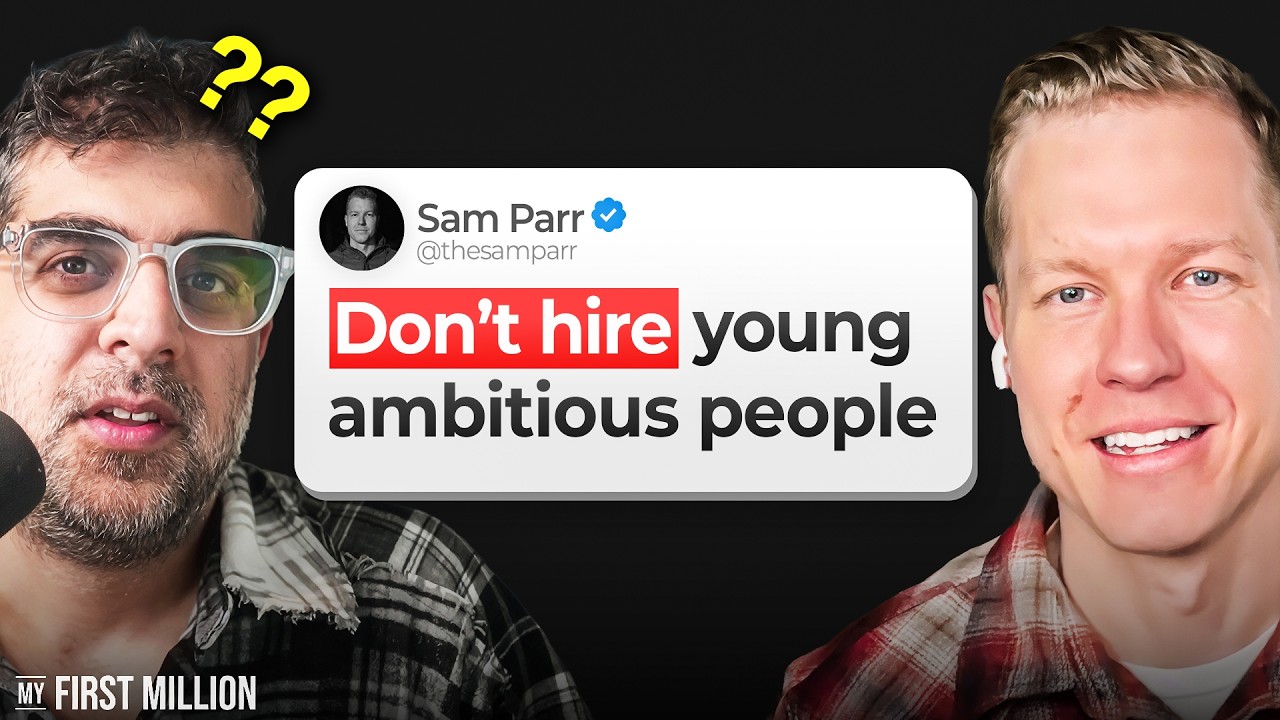
Man, I've got a great one for this. Tell me if your experience has been with this. So I tend to hire ambitious young people and I take chances on them. And I hate to say it, but the majority of the time that is a horrible plan.
And it's significantly better to hire more experienced people and pay them a lot more money. And I get way better results.
Speaker 1:
So, when was this mistake? Is this like, I've been making this mistake forever?
Speaker 2:
Forever, man. Look, this is like, my mistake, it's like the American dream, you know? Like, give me your broken, your weak, and your like ambitious. I can fix him. Yes.
And like, I always want to do that because I'm so, you know, I'm into the romantic idea of that. And just, I recently, you know, at Hampton,
we've hired like significantly more experienced people and they cost like two or three times more than a young and upcoming person. But the results are like five or ten times better. Right.
And I just make this, I always, I get so emotional and I always find the, people say hire high agency people or hire these people whose growth rate is really high.
But in general, it's just kind of better to say, hey, you already did this at this other company. Do it here, please.
Speaker 1:
So we were just going through a hiring process. I wanted to hire somebody on my content team. And we found this kid who was great. He sent in this like wonderful video.
Like he made this video application that was super funny and it was well done. And I was like, yes, this is my kind of guy. Young, green. Yeah, he used to do this. You know, he just graduated. But like this video is amazing.
I got to talk to this guy. I talked to him. I like him. Good dude. And right before we hired him, you know, we asked a very simple question, which is like, So we want this to go well, right? We want this to be great and we want this to work.
And so, like, does it make sense to just go with somebody who has never done anything even remotely like this? Or are there people in the world who have done very similar things that we could go talk to first?
And should we not, like, lean in that direction? And as soon as we had that, like, very simple sanity check, because I'm like you, I fall in love with the sort of angel investing in people idea.
The raw, up-and-comer, never done anything, found this diamond in the rough. Why do I like that? It's not for generous reasons. It's because it's like, I feel cool that I found that thing.
It's like finding a needle in a haystack, the diamond in the rough. I have such a low hit rate with that. By definition, you're going to have a low hit rate with that strategy.
And if it matters, and if there are people who have done it before that are way more proven in this category, like, why are you not going in that direction? So I've definitely had that same mistake sometimes.
Speaker 2:
It can work.
Speaker 1:
And when it does work, it's the best story.
Speaker 2:
It's the best. But like, check this out. This strategy that I've been doing, it's been working well. So I love hiring consultants and agencies. But I'll say, I'm only going to hire you for two months.
And I'm going to, you're going to do the work for the first 30 days. But in the second 30 days, it's just you teaching me what to do.
And so I have found experience of like getting like a young ambitious high agency green person and teaming them up with an agency. And I have had some results with that.
But in general, just hiring more experienced people and paying them more money. It's just typically the way to go. And that sounds so duh, but that's the biggest mistake that I've made.
Speaker 1:
Well, most businesses just figuring out what are your own leaks in your bucket. And then, of course, to other people who don't have that leak, they're like, I mean, it's obvious, right? But you have to know, what are my biases?
And in your case, your biases are like, I like to be cheap as hell when I build my companies. This was like how you were before with The Hustle, at least.
Speaker 2:
Of course.
Speaker 1:
Get the cheap office, get the free desk off Craigslist. Our dog will be security. And you're like, I'm going to build this the frugal way. And then secondly, What if I found a guy like me, just a lovable fuckup who could be fixed?
And it's like, you know, so those are biases that would lead you too far in that direction. It's not to say you never hire a junior person, but too often defaulting to that. And so you got to know your own biases.
Speaker 2:
What about yours? Do you have one?
Speaker 1:
I wrote project selection. So my theory is this. If you are hardworking and you are sufficiently talented, then the only variable that matters is what project you pick to work on, right?
Because if you're going to work really hard on it and you're talented, then either you're going to be a 10 out of 10 person working on a two out of 10 opportunity or a 10 out of 10 person working on a 10 out of 10 opportunity.
And I think I have picked some real dog shit projects in the past. So I tried to start a sushi restaurant chain, which like, Restaurants are one of the worst businesses. Sushi would be one of the worst types of restaurants to do.
And by the way, that makes no sense for me as a person to do. The second one, I tried to make the next hit social media app. I tried to make the next Twitter, the next Facebook, the next Snapchat,
and I spent six years going after that as a project to select, and God, that is hard to do.
Speaker 2:
You tried to make a hit social media app, which frankly, you don't really use social media. You use Twitter, but seldomly, to be honest, even though you're good at it.
And two, you eventually made a streaming video game, or that's who your market was, Neither of us know or play video games or like streaming.
Speaker 1:
Or had ever streamed a video game in my life. Dude, I made a craft beer app for craft beer enthusiasts. Dude, I can't spell beer. Beer is gross. It makes me burp. I don't know. I don't like it.
So I just picked all these terrible projects that were bad founder fit, just weak market opportunities in general. Very poor projects. I started my e-commerce brand is a clothing brand.
Speaker 2:
You've seen me dress. You love clothes.
Speaker 1:
You've seen me dress. You know what I'm doing. And that one worked, but it's such a grind because e-com and fashion and apparel and inventory, it's like, dude, one of the worst projects you could select.
So I think I've been together, just those projects I just mentioned. And by the way, those are just the ones I remember just off the top of my head. There's some other doozies in there. Those are 10 years of my professional life.
I've only had 17, so the majority of my professional life has been spent on really poor project selections, and everybody who's talented knows opportunity cost is the biggest cost. So every year I was working on one of those,
there was a year I wasn't working on something that was a better fit for me.
Speaker 2:
The good news is, Shaan, that even a blind squirrel finds a nut once in a while, and you've taken enough swing that it's worked out.
Speaker 1:
I've talked before about the way that I know how to make money, about how to build a money-making skill, about how to leverage your time and energy,
and the team at Hubspot actually went through the video where I explained all that and turned it into a free, downloadable cheat sheet on my four rules of how to make money. Now, this is not, you know, give or take advice.
It's just core principles, foundational principles about building wealth, things that I wish I knew when I was, you know, just getting started. And so if you want to download it, it's in the description below. It's totally free.
You can go get it. Thanks to the folks at Hubspot for doing the research, making this document and making it available to all you guys. All right, back to this episode. So this is from Dan from LA.
Speaker 2:
I've been a fan ever since the pod was promoted in The Hustle. I think that was four or five years ago. I'm dying for another Sarah's List episode. My wife currently works at Waymo, but time to jump to the next 5 to 10Xer.
I'm tired of waiting. Throw a brother a bone. Give me one company that you think would be perfect for the Sarah's List. Now, let's tell the listener, here's what Sarah's List is. My wife, Sarah,
was looking for a new job and we came up with this idea where let's see if you can join a company that has something like 1,000 employees so you can make a great living in terms of work-life balance because there's some stability,
presumably, and you can make a pretty decent salary. But even still, there's enough growth left where you're stocked at 10X and hopefully make you worth millions. In her case, it worked. She did that with Airbnb.
She joined Airbnb when they were I mean, it was a huge company. It was like an $18 billion company with, I forget, 4,000 people and it grew to be a, I think, $100 billion company and her, you know,
$250,000 a year stock grew to like a million dollars a year stock, something like that. And so Shaan and I have made maybe three different lists where we've predicted what the next Sarah's style company is.
Speaker 1:
We love this because you want to be a millionaire. Everybody does. I don't know. I haven't actually met anybody who doesn't want that. But not everybody wants to be an entrepreneur. That's huge risk. Not everybody has the winning idea.
Not everybody wants to be the brilliant investor who finds the gem at an early price. And this path was basically like, no, you're not like the hotshot exec getting this insane package.
You just join as a normal employee into a clearly good company. That's already in a stable position. You're gonna get healthcare. There's systems in place. There's a nice office to go to.
So you didn't make any of those crazy sacrifices, but even if you had a $50,000 a year stock grant, right? So let's say your total comp was gonna be 180K, 150K. And of that, 120 is cash and then the rest is stock.
And you get that every year for four years, normal vesting cycle. Well, over those four years, that $200,000 of stock could become a million dollars of stock just by the company naturally growing at the rate it's already growing at.
And I thought, what a hack. When you said that Sarah did this and that you guys were somewhat intentional about what company to pick to go to, she worked at Facebook, then Airbnb. We decided to christen this as Sarah's List.
Speaker 2:
I think we came up with 30 companies. A couple of them were home runs. So I think Rippling, Figma, Andral. I don't even remember.
Speaker 1:
Rippling, Retool, Cursor. There's been others, yeah.
Speaker 2:
Now, the question is, is why haven't we done this again? I have an answer, which is my, and I think you're going to agree. It's so much harder to predict what the winners are right now,
because compared to Airbnb and Uber and Lyft and Rippling and these software companies, they were fairly steady growth. With all these new AI companies, it's impossible to predict, A, what's going to hit,
and it's impossible to predict, are they actually going to have longevity.
Speaker 1:
Sustain, yeah, yeah, yeah. The hot companies today are like, They're so proud to be the fastest growing, fastest 100 million in ARR, but it's like, dude, that happened in four months or five months.
That's not the same sure footing that you could stand on. It's not a stable foundation, whereas you could see these things that have been going for seven years just compounding steadily.
You could predict that the next seven years will probably be more compounding steadily. But I do have an answer. Do you have an answer for this for Dan from LA?
Speaker 2:
It sounds so boring. There's probably two of them that I would predict. I heard Scott Galloway make the same argument, so I'm just stealing his. One was your alma mater, Amazon. I do think that you can get incredibly wealthy still at Amazon.
Speaker 1:
That's a crazy pick. Is it Amazon? What is Amazon?
Speaker 2:
No, they've underperformed the market. They've underperformed the market.
Speaker 1:
But you're saying it's currently a $2.4 trillion company. So you're saying it's going to be a $10 trillion company, the first ever?
Speaker 2:
Yeah, because I think that when I use my Alexa, it's still so stupid. It doesn't understand AI. Or when you use Amazon.com and search for stuff, the AI is still horrible.
Speaker 1:
Amazon is a wild pick.
Speaker 2:
I don't know. What else do you have?
Speaker 1:
I have two for you. There's one a lamp. We're both investors in this one company. I thought you were going to say that.
Speaker 2:
Yeah, that one's pretty good.
Speaker 1:
I'll give you mine and then you can use that one too.
Speaker 2:
I don't know if their valuation is public, so careful what you say.
Speaker 1:
I think it is. It was. My pick would be Neuralink. Okay, why Neuralink? Well, first, I think if you're going to join a company, maybe join the company by the greatest entrepreneur ever of all time,
which is Elon Musk, undisputed at this point, I would say. And so the Elon index of companies has just performed at this absurd level, whether it's Tesla, it's SpaceX, it's XAI now, is now like a ridiculously valued company.
Neuralink is what's next. So Neuralink is one of these companies that is doing something that very few, like there's basically no competitors to this. 5 competitors total in the world and they're all way far behind. What is Neuralink doing?
They're putting chips in your brain that today help a quadriplegic person be able to use a computer just with their thoughts. And by the way, this isn't just like a pie-in-the-sky idea. Like, there's a guy.
You can watch him streaming himself playing video games on Twitch using his mind as the controller. And it's pretty insane. They've done it in, like, monkeys. Now they've done it in, I think, two humans now.
And it's just getting better and better where it's becoming less invasive. Also, I think now, he just tweeted out there's like a I think there's like a more surface level implant that they could do rather than going so deep into the brain.
Speaker 2:
Can you even work here? How do you get a job?
Speaker 1:
It's a company.
Speaker 2:
Is it? Okay.
Speaker 1:
So Neuralink, I think when I initially said this on Sarah's List, it was like a $2 billion valuation. It's now at $10 billion. So it's already had one Sarah's List jump of 5x. It's gonna have another. This is going to be a huge company.
If you think about computing, so computing went from computers to laptops to mobile phones, and the next one is probably some version of glasses or a watch, some version of that. That's what's coming next.
And then what comes after that is the computer in your mind, right? Just attaching yourself to the computer so that you can literally just think and you have access to the internet just from your thoughts.
Now, some people will say this is dystopian. Some people say they don't want this. Guess what? Once the first people start to have the chip in your brain, you will be the equivalent of like a turtle if you do not.
And so this is the game theory of this is that we're all going to end up with this because if anybody does it, they're going to be a god amongst men.
Speaker 2:
You're like one of these guys, I think you're like, you don't like taking, I'm going to make a prediction, you never said this. Are you the type of guy who doesn't even like taking medicine?
Speaker 1:
I don't take much medicine, no.
Speaker 2:
That's what I thought.
Speaker 1:
Don't take any supplements, don't take medicine.
Speaker 2:
That's exactly what I thought. The guy who doesn't even take medicine, like Advil or something like that, you're saying you're going to be putting a brain chip in your brain?
Speaker 1:
Again, you have to, right? Like, I already basically have the computer attached to my hand. If I'm honest, it's in my hand eight hours a day. It's in my pocket, right? It's attached to my body at all times.
If I don't have my phone on me, I kind of panic, right? So it is, in some ways, already a third limb. But once this goes to the point where I can just have it in my mind, Again,
it's not really going to be that much of a choice because the people who have it are going to be like walking around like gods compared to the people who don't. And by the way, he's doing the Tesla model.
So the Tesla model, the Tesla business plan was You first do the really expensive sports car, high cost, low production volume, sell it to just rich enthusiasts who want something cool, a cool toy.
And then the cool toy becomes more and more mainstream and more and more, you know, eventually you get to the Model 3, which is now like a mainstream car.
With Neuralink, he's doing it where first it's gonna solve the problems for people who are quadriplegics. The next one he's going for is people who are blind. And, you know, like people who can really improve the quality of life.
And eventually it'll get to It's kind of like a phone, it's like a consumer device we all just do for fun, right? But it's inarguable that you should not be helping people who are paralyzed have more function because of this technology.
Speaker 2:
They have a cool, so the reason I was like, can you even apply to work there is because I had never seen their job openings. I thought it was like a project. I didn't realize it was like a proper company yet.
Because if you go to the CEO's LinkedIn, he says like manager of a family office. But they do have a careers page and they're hiring for a bunch of roles in San Francisco or Friedman and Austin and their jobs page is pretty cool.
It says you don't have to be a brain surgeon to work at Neuralink and it lists all the open roles they have. So that's okay. Yeah, I'm on board.
Speaker 1:
There's a content creator role. There's a junior accounts payable specialist, right? You can work at these companies.
Speaker 2:
Dude, I talked to a guy who worked at Facebook in PR. I think he said he was the 400th employee and he was in PR and he said that they did things where, you know, I had a large company, Amazon or Hubspot had this too, where you get,
I forget exactly, you get a discount on the stock or if you buy the stock, they match it or something like that as a perk, like 20 grand a year, nothing like crazy. And, um, he told me he did that.
Plus he like just stayed for 10 years and he said he made $90 million. So if you're listening to this, And you are an accounts payable person. This definitely looks cool. That is a good thing.
Speaker 1:
I thought you were going to say, I thought you were going to say owner for your answer. So owner, which is valued kind of in the billion dollar range. I think the last round they raised was a billion dollars. I'll just tell you two things.
One, when I got introduced to the investment for owner, the person who my friend who introduced it said, by the way, this is the he goes, hey, I think you should meet this company.
Speaker 2:
Why?
Speaker 1:
Well, it's the best founder I've ever invested in and probably the best company I've ever invested in. So I was like, OK, well, that's an incredibly strong recommendation. Within like 10 minutes, the CEO emailed me. Now, this is normal.
They'll say, hey, love to set up a time to chat. Here's my calendar. Maybe we could grab coffee next week. We'd love to tell you about what we're doing. This guy, Adam, is a savage. He goes, hey, Shaan, great to meet.
I just forwarded you our last three investor updates so you can get a sense of how things are going. And, you know, like if you've ever seen that slide that says, if they don't have revenue, they'll talk about users.
Or like if they don't have profit, they'll talk about revenue. If they don't have revenue, they'll talk about users. If they don't have users, they'll talk about potential, right? Or products, features.
If they don't have features, they'll talk about potential. And it's basically like the ladder of proof of like, what do you actually have? And I can tell you what you have because based on what you choose to reveal.
And so similarly, a founder that just says, here's the last three investor updates was, it was just like, oh, let me just show you. I have a straight flush. So here's my cards.
Because the investor updates will tell you all the numbers about the company. Because he sent me the last three, I know the trajectory of how fast they're growing across those three updates.
I can see how the CEO communicates and I can see what they care about, what their priorities are. So I was like, I made the investment without ever talking to the guy instantly once I read those three updates.
And since then, every update is just like, hey, so we're crushing it. Here's another gigantic number. Here's how much growth we had just this quarter or just this month instead of like what most companies do in a year.
Speaker 2:
Check this out. This guy, Adam, I don't know how old he is. I think of him as like a 22-year-old.
Speaker 1:
He was born in 1999.
Speaker 2:
That's insane.
Speaker 1:
He was born during Y2K.
Speaker 2:
One time he like messaged me about his brother. He said, my brother is looking for a project to do. And I thought it was like a kid. And he's like, yeah, he's a content creator.
And like his brother has 30 million followers on TikTok or something like that. I don't know if you saw that. But then he wrote this update yesterday.
I read his update yesterday and I was reading it and he was explaining how the company was killing it and he was like, you know, we also had a little bit of churn in December and that really bothers me.
And I thought like, okay, he's bothered because the product sucks or something. He goes, I'm bothered because that means that these businesses likely went out of business. So basically, sorry, owner serves small restaurants.
That's their customer. It's like an ordering platform for restaurants. And he was like, we had some more churn or some churn in December. And it was all because they likely went out of business,
because that's when these restaurants tend to go out of business, I guess is at the end of the year. And I read that line. And it was pretty cool, because he's like, kind of a terminator.
Like he says, like, here's where we said we were going to go. Here's how we exceeded it. Here's where we said we were going to go. Here's why we exceeded like constantly throughout each category of the company.
And at the end, he was like, we had we did have some churn. And that is part of the bad news. And it because they went out of business. And that makes me he goes, And that devastates me. I'm so saddened that these guys lost.
That was really cool.
Speaker 1:
Yeah, I ignored that. I was like, I'm just going to think this guy's a Terminator. I'm not even going to think of the human side of this that he actually cares to because, you know.
Speaker 2:
You need both.
Speaker 1:
You can't have it all. You need both. This guy seems very likable. You can't just have everything. I refuse to accept that. Today's episode is brought to you by Hubspot. Did you know that most businesses only use 20% of their data?
That's like reading a book but then tearing out four-fifths of the pages. Point is, you miss a lot. And unless you're using Hubspot, the customer platform that gives you access to the data you need to grow your business,
the insights that are trapped in emails, call logs, transcripts, all that unstructured data makes all the difference. Because when you know more, you grow more.
And so if you want to read the whole book instead of just reading part of it, visit Hubspot.com.
Speaker 2:
Let's do another question. Which one do you want to go to?
Speaker 1:
Let's do this one. I don't think you want to do this one, which is why I have to do it. OK. Alex from Brooklyn says, Gentlemen, every culture has its quirks. The Japanese make you take your shoes off at the dinner table.
The French chicks don't shave their pits. And My First Million is home for asking blunt financial questions. And Sam, you are the king of blunt financial questions. So it's our turn to return the favor.
I won't ask you for the number, but is Hampton over or under 10 million in revenue in 2025? Alex from Brooklyn.
Speaker 2:
Over. And that's all I will say because it's one of the businesses,
it's my only company and I just want to shut up and just quietly build for the next decade and just keep on trucking and maybe after 10 years I'll come out and reveal some more information. But yeah, it's done really well.
Speaker 1:
There you go. All right. Good job, Alex. You put Sam on the hot seat. All right, next one. All right. I just watched the Jesse Edster episode and Sean playing the piano had me kind of wowed. It's nuts what you can do in a year.
If that was your Misogi for 2025, what is each of yours for 2026? Dave from Mexico City. Yeah, put some respect on an American living in... I don't even know what that... CDMX, whatever that is.
Speaker 2:
That's Mexico City, you hillbilly. That's Mexico City.
Speaker 1:
CDMX? How does that stand for Mexico City?
Speaker 2:
I think it's some Spanish. I don't know. It's a Spanish way of saying, I don't know, the city of Mexico.
Speaker 1:
By the way, did you have a Misogi in 2025? Did you do that?
Speaker 2:
Yeah, I trained. So the point of a Misogi, so here's the thing people forget about Misogi is it's supposed to be so hard that you have a high chance of failing. And we don't talk about the failure enough. But yes,
I trained for a 50 mile run and I just like fucking got hurt and destroyed my Achilles and I couldn't do it. So I did it and I failed. Now, let me recap something.
So on two days ago, Shaan put out this video of him going to Jesse Itzler's house. You prefaced it by telling what you did. So basically, Jesse Itzler, front of the pod, amazing guy. You flew to his house in Atlanta and it seemed planned,
but it was very spontaneous that you played piano for him and his wife. Sarah Blakely, a very famous entrepreneur, they were in tears. You told us about the video and then it finally got released. It was awesome. But I have a bone to pick.
Everyone's saying how amazing this is and all this stuff. And they're like, you inspired me because you play this beautiful song. And people were literally in tears. And earlier this year, you said you're going to start playing piano.
I'm pretty sure you've been playing piano for years and years and years. And like, you did not know this stuff from scratch.
Speaker 1:
No, I haven't been playing for years and years and years. I did as a kid, my parents did buy a piano and they probably got us, I don't know, a couple months of lessons when I was maybe eight or something like that.
But by the time I'm like 38 now, I'd like forgotten everything. So when I started this year, I started from scratch this year.
Speaker 2:
But yes, technically when I was- But I remember you, I remember us being somewhere and seeing a piano and you sat down and I thought you like played a song.
Speaker 1:
I did know how to play two things on the piano. So I knew how to play the intro to James Bond GoldenEye like that, like just like that. Like, like, but like a one hand song type of thing. And I think I also knew the beginning of Fur Elise,
which is like a kind of a classic piano song through muscle memory. But I couldn't like I didn't know how to read sheet music, didn't know how to do the notes, I didn't know what the keys were called, type of deal.
I just had memorized because at some point, my sister or somebody had showed me like, hey, watch, push white, white, black, black, white, black, and that'll sound like James Bond. That was the level I was at.
Speaker 2:
Well, it was very good. Okay. And so the question was, what was the question? What's your Masogi going to be this year?
Speaker 1:
What's it going to be this year for each of us?
Speaker 2:
Do you have one?
Speaker 1:
I have one, I'm trying to figure out the exact way to frame it, but I think I told you this. I deleted all my social media apps, all the consumption. So I said, I'm going to go dark in terms of consuming.
I basically was like, how do I trade consuming stuff that people put 20 seconds of thought into? Like a tweet, people put about 20 seconds of thought into it to doing things that people put 20 years of thought into, which is books.
And so I deleted Reddit, I deleted Twitter, I deleted Instagram, I deleted Facebook, deleted all those apps. And instead I just, if I open up my phone, I want to kill boredom, I have to open up Kindle.
It's like the only thing left to do on my phone is Kindle. And so I basically made a list. I was like, all right, here's the 26 for 2026, right? Like the 26 books I want to read in 2026. And I have kind of a hit list.
These are books, honestly, I've probably owned for years, have thought about reading, I've heard really good things about. But haven't actually read. And so I started that a couple weeks ago. So that's going good.
The only other one that might count here is I have this life bucket list idea of coaching a high school basketball team. And so like, walking away from business, like not focusing on business for a season, which is three months.
And so I started that last month. And it goes, our season goes till till end of February. But basically take like, there's like a local high school basketball team, and I've become an assistant coach.
And it's like, we want to go to the state tournament and, and win. And that's the goal.
Speaker 2:
I know your first game, you got spanked. I think you said the second game went better.
Speaker 1:
Yeah, we are. What are we now? Six and three. So, you know, we're we're doing all right. We're getting better as a team. And right now it's all about like, just can we improve? But I'm basically spending like, I don't know, I'm at this.
I'm basically going to practices and games, you know, four days a week, roughly. And just me, like I get my coach's whistle and my little whiteboard and I drive to this high school and then it's just I'm doing it. I'm doing the actual thing.
I'm like coaching this high school basketball team. I'm an assistant coach. I'm not the head coach.
Speaker 2:
I have a two-year-old girl and then I have a two-month-old little girl and I have underestimated leading up to it how difficult it would be. And even though I have grandparents around and people helping out, my wife is helping and,
you know, obviously running the show there, I have underestimated how challenging it was. And so, frankly, I kind of feel like I'm holding on right now. My goals are simple.
I'm trying to eat 200 grams of protein a day and get out of bed at 6 a.m. So I have pretty small ones because I've always been, ever since I got into fitness, I've always been good at maintaining a fairly fit state.
Right now I'm at the lowest of my fairly fit era and so I just need to eat my protein and going to bed early and waking up early, this is so rudimentary, but it has had the biggest impact on my days per activity.
And so I don't really want to set a big goal right now because I am kind of hanging on.
Speaker 1:
Yeah, although I do think those are big. I know a lot of people who have that goal and don't do that thing. It's actually quite difficult to do both of those things that you just mentioned.
If you actually did those, those are high leverage things. Also, I'll say two things. I think it's great to acknowledge the season you're in. I think people want everything to be constant.
And there are seasons where you're able to be full out. There's seasons where you're in recovery mode. There's seasons where you're in, you know, nesting mode, where you're just like, look,
all that matters is like protecting the nest because there's like these baby eggs here right now. And like, that's all that really matters. I don't need to distract myself with a random hunt over here. I need to stay at the nest.
And so I think knowing the season and not beating yourself up about that is something that ambitious sort of type A people struggle with.
It's like you've got to give yourself some grace, you know, when you're so wired towards achievement of random goals.
Speaker 2:
You didn't do a good job of warning me, though. You should have warned me. I didn't realize how challenging this would be.
Speaker 1:
Well, everybody says the same thing. It's like, oh, it's man-to-man defense now. There's two of you and two of them.
Speaker 2:
I did not understand. Sometimes it feels like my wife is my roommate. I barely have gotten to know my little girl, my new baby, because I'm with the eldest, right?
So it's my job to take care of her and you got to take her out of the house because she's going to grab the pacifier out of the mouth. You know what I mean?
Speaker 1:
It's definitely a second baby blindside for dads because the first baby is the one you think everything's going to change and it's going to be, oh my God, my life's going to get really crazy. And then it's like, that's all right. I got this.
It's not so bad.
Speaker 2:
Life's different, but not crazy.
Speaker 1:
So you get this false sense of security. And then when the second baby comes, it's like nobody, you had already given up. You'd already stopped worrying about it in a way. And the second one is the blindside, especially for the dad,
because for the mom who you didn't realize how much she was carrying the team, but now she has to focus on the new baby. And that means existing kid is your kid and all of their needs and all of their time is like, you know, on your clock.
And that is very, that's a big wake up call.
Speaker 2:
Just getting her socks on, like that's like, it can be an ordeal. Just like these small things that I just kind of dismissed. So I'm frankly, I'm not drowning, but my cup is a bit full.
Speaker 1:
All right, here's another question. So this is, what is it, Gary V? It's the Gary V one. All right, so I like this one. Gary V wants to buy the Jets. Sam, you're working hard to grow Hampton now. Why are you doing all this?
Are you trying to buy all the pawn shops in the US, brother? In all seriousness, what is the F-you money purchase that you want if this is a home run? This is Tarek from the Bay. I guess that's the Bay Area.
Speaker 2:
So when I moved to New York City, I got this like really big, nice apartment and I love it. And I've gotten so much joy having family come and stay and be comfortable that I have my eyes set on,
I do in the next couple of years want to buy a huge like lavish You know, 15 or $25 million apartment. That is something that I definitely want. But more than anything, I saw this photo.
Speaker 1:
A 15 or $20 million apartment is your goal?
Speaker 2:
Why apartment?
Speaker 1:
Shouldn't you be getting a city block?
Speaker 2:
No, brother, it sucks.
Speaker 1:
Like one of the brownstones at least, like it's an apartment.
Speaker 2:
I don't want a brownstone. I've rented one before. I don't like them. I like having a doorman.
Speaker 1:
What's the like dream building? Is there a dream building in New York that's like the cool one to be in?
Speaker 2:
Well, it's different flavors.
So like if like there's like this thing called Billionaire's Row and it's like right next to Central Park and that's what a lot of the really rich like tycoons like Bill Ackman lives there and it's a hundred million dollars for the fancy apartment there.
It's insane. It's just absolutely insane how rich some people are and how much this real estate costs. That's not my flavor. That's like opulent. I mean, it's all opulent if it's twenty million dollars, but that's like, you know,
like you're the master of the world type of apartment and it's all clean and cool looking. But what I'm really working to do, I don't like Donald Trump, but I saw this photo of him working at his office and he was like,
had just left a meeting with a bunch of his employees and his wife and two kids, the boys, I forget their name, Don Jr. and the other guy, they came up to him while he was working.
And the cool part was that they lived in the same, you know, he owned the building and they lived in the same building where he worked.
And the kids could see him working and he was just able to do stuff and it was like a total life integration, work-life integration. That's my dream. That's really what I'm working towards. I really want to do that.
Speaker 1:
Wow, I never took you, Sam, to be the penthouse kind of guy.
Speaker 2:
I'm not a penthouse type of guy. Well, I guess I am. I just said I wanted to buy a penthouse.
Speaker 1:
Yeah, I think you just said that's your dream.
Speaker 2:
Yeah, I think by definition.
Speaker 1:
You're like, I'm not a penthouse type of guy. Yet. We used to have this funny thing on the pod where it was like, We're just two entrepreneurs with big dreams. Shaan wants to buy the Lakers and Sam would love to buy a lake.
I feel like you were so much more likable then. Not like Manhattan, Sam. You just lost like 30 points of likability with that answer. What are you doing telling the truth over here, bro? You know what?
Speaker 2:
It's rooted. It just so happens that I live in Manhattan, but really, if I lived in, let's say, St. Louis, Missouri, I would say,
I want the fattest house in the cul-de-sac that has a soccer goal in the back and a basketball goal and all the kids play in my yard. That's really what I would do. It just so happens that I live in Manhattan.
In order to do that, you have to spend $20 million.
Speaker 1:
By the way, this Gary Vee buying the Jets thing, I've talked about this before. To me, this is a master class in personal brand. So I always say, like, for a personal brand, you want these five Ds. One of the Ds is, what's the dream?
And if your dream is, I want to make so much money, it's like crazy. I just want to be a billionaire. It just sounds greedy, right? So what Gary did, which is brilliant, is he's like, I want to buy the Jets.
Now, there's a lot of brilliance in this. One, it gives him the air cover to go try to pursue a bunch of money without just seeming greedy. He didn't say I want to buy the Yankees. He wanted to buy this lovable loser, his childhood team,
the New York Jets that's never done anything and try to turn them around. And so it's like there's like a nobility to the mission. There's this like likability to the mission where it's like a turnaround project.
Everybody likes an underdog type of deal. And it's something a lot of people remember about him, like something he dreams of doing.
And so I think that Gary doing that is yet another example of Gary really understanding marketing and personal brand.
Speaker 2:
So Shaan and I like the UFC and at the UFC, after every fight, Dana White does a press conference and he lists like five or 10 stats. So who got the fight of the night, who got the bonus.
And then one stat that he always lists is how much money they made at the gate. And it's supposed to mean like, this is how many fans came to the fight. But the tickets are like two grand. I went recently and it was like $800 for bad seats.
And it's pretty funny that he is using that as like, look how many people are coming. It's like, dude, no, you're just charging so much money for a ticket. So you're like bragging.
It's sort of like when Gary says, like I've noticed in Gary's videos, people will be like, let me help you buy the Jets and achieve your dream.
That's so much better than people saying, let me put more money in your pocket and become a billionaire.
Speaker 1:
Let me help you go from 150 million net worth to 450 million in net worth.
Speaker 2:
Let's do another question. Do you have one of these, Shaan?
Speaker 1:
I don't. It's got to be authentic, right? I don't actually have one. To me, I bought back my time. That was the first purchase. First important purchase, buy my own time back, buy my freedom. Then it's like you invest in health. I got a trainer.
I got a chef. I'm doing everything I can for health for me and my family. After that, I don't know. I guess it'd be fun experiences. This burning desire to go purchase some really expensive thing.
You know, Morgan Hounsell wrote this thing in his book that really resonated with me. He goes, there's two ways to use money. Number one is as a tool to improve the quality of your life. And I nod. Yeah, that makes sense, right?
That's buying your time. That's buying a nanny. It's, you know, getting a personal trainer or something like that. And the other is as a measuring stick. And I realized that all the big money purchases,
the things you would need tons and tons of money for, they tend to be measuring stick things. I've almost run out of money as a tool to improve my life ideas. I've done a lot of the big ones.
And so I guess I don't really want to switch into that gear of money as a measuring stick. But you enjoy that penthouse, Sam.
Speaker 2:
Yeah.
Speaker 1:
I'm sure people will think you're very cool. All right. Let's go to the next question.
Speaker 2:
Do you remember the kid's house when you were younger where it was like the open door, where it was like a campus, everyone can hang out?
Speaker 1:
Yeah.
Speaker 2:
I've aspired to be that forever. It just so happens that you have to spend a lot of money in Manhattan to do it. All right. Let's do this one. So, early on, you guys had a ton of friends on the show as guests. Give us OGs an update on the OGs.
Where's Suli? Where's Ramon? Where's Jack Smith? Is there anyone else that I missed? So, when Shaan started MFM, the first 50 episodes maybe? A lot of people don't realize this. MFM is that like some number between 700 and 800 episodes.
I don't remember exactly. The first some number, I don't know, 25 or 50, it was just Shaan interviewing people and all those people were being interviewed. And also, you and I, when I came on, it was just like 5,000 people listening.
We basically just talked about our friends. And so for the OGs, they want...
Speaker 1:
Or we had them on and be like, hey, what's up? What are you up to? You know, like that sort of deal.
Speaker 2:
Before we were chasing clout. We were just hanging out with our buds.
Speaker 1:
Once we figured out the YouTube algorithm, things changed. But before that, we invited our friends on the pod a lot.
Speaker 2:
OK, let's do an update. So Suli, do you want to talk about Suli?
Speaker 1:
Okay, Suli is Suleiman Ali. He's one of our friends. He's one of my best buddies. There's a question later that I think will be a good explanation of who Suli is, but he's an entrepreneur.
He built a company called TinyCo, which was like mobile games. So think like Candy Crush, but he licensed the IP for Family Guy. So he made like the Family Guy mobile game, the Harry Potter mobile game, those types of things.
Sold Tiny for a bunch of money, nine figures. He then helped his brother start and sell Native Deodorant. So the Ali brothers are prolific and they've both been on the podcast.
Suli did something that I really respect and admire, which was he was able to understand what matters. So he's like, Suli's in his 40s. He's been super successful. And when you're successful, Winners have options.
You get deals put on your plate every day, things you could go invest in and make a bunch of money. You have people who want to come work for you and start companies with you.
You have more knowledge about how to win in the game of business and it is very tempting to just go and go get more success because success feels really good and you're good at it.
And it's very tempting to do that because there might be other areas of your life that you're not so good at, where you're not getting that same feedback loop of, I'm awesome, and this is awesome, and my results are awesome.
And what Sully did, which I thought was great, was he didn't make the mistake of just chasing more success. He started to look at those other areas. So first thing he did was he started working out religiously every day.
I started being like, hey, what are you working on today? He's like, I don't know, but I scheduled my workout. That's the most important thing that I did.
Speaker 2:
Dude, he takes more workout classes than a 23-year-old Manhattanite woman who works in PR.
Speaker 1:
And he takes the same classes that she takes also.
Speaker 2:
He introduced me to like rumble boxing and I think my first Barry's Bootcamp was his.
Speaker 1:
He loves the classes because he started doing that. Then he was like, I want to have kids. Like that's the next chapter. I want to have kids. So he just had a kid and he has resisted the AI wave to focus on having a kid for now.
We'll see what he does. I think he wants to take a very big swing in the world of AI and robotics. We'll see what happens, but he's a first-time dad. So that's the Suli update. Ramon is doing a very cool company called Athena.
If you've ever looked in your house and looked at the tap, your tap water, and you're like, I don't want to drink tap water. I want to drink clean water. I don't want water that has heavy metals in it, chemicals in it. You know,
a lot of people don't even know the water supply in most cities is like very interlinked with the sewage system. Like it's a pretty gross thing to drink tap water, but we all bathe in tap water. We put it all over our naked bodies.
And so Ramon has built a company that's around clean water for the home. And so it started with a filtered showerhead. So how do you shower in water that's going to be clean on your skin and good for your hair? It's called Afina.
And he's going into other categories with clean water for the home. And so Ramon's basically gone back to what he knows best. Which is, how do I sell stuff online? And he's just moved to more noble things.
He started with, when he first came on the podcast was, he was selling essentially soap opera, daytime soap opera spoilers. So like, what's gonna happen tomorrow on The Young and the Restless?
And he sold that company for like nine or ten million dollars. It was a blog.
Speaker 2:
Basically a soap opera blog. And he was only two years old. He sold for $10 million. When we talked about it, this was such a viral story.
Speaker 1:
And he's like a Dutch kickboxer. He's never seen a soap opera in his life, but he just loves to sell stuff online. He loves to figure out how to get traffic from one place to another and how to sell.
And now he's selling things that actually improve people's lives a little bit more than the soap opera. Spoiler. So that's Ramon right now.
Speaker 2:
You guys should go listen to his episode early on. So basically, yeah, he started a soap opera business that he sold for $9 or $10 million. Then he started a dog ramp company. It was called Sausage Dog Central.
Sausage dogs can use a ramp to get up in an SUV. Saan grew it to $18 million. Now he's doing Athena. He's a single dad. His son's about to go to college or gearing up to go to college. His kid is the most well-mannered, well-behaved kid.
That's probably the best thing he's ever done. He's been a single parent since his boy was two years old. And now his kids has been but is still thriving. Jack Smith. So Jack Smith is our buddy. Jack Smith.
So, on paper, he basically sold his company at the age of 29 or 28 for $850 million. It was called Vungle. Now, the intangibles are if you meet Jack Smith, very quiet. You'll have to pull anything out of him. He won't tell you anything.
If you ask what he does for work, he'll say, oh, I like to play on computers. In terms of what you said, Shaan, about people wanting to flex, he is The most non-flexing person I've ever met in my life. He's very special.
One of my best friends, he now lives in Portugal and he's building, he just bought 50 acres of land on the coast of Portugal and he's building a meditation center. That's what he's doing.
Speaker 1:
It's like digital detox meditation, right?
Speaker 2:
Yeah, so he bought 50 acres of land and check this out.
He has like a mobile home that he mostly lives in and this little like he I think he has a house that he now I think they've rented a house nearby but for a little while they were living in like a tiny home him and his kid and his wife and him and his wife are both tycoons.
They're both incredibly successful people and they live very very modest lives and they're dedicating everything right now to building a retreat so people can like Get into I don't know whatever you do when you meditate self-awareness calmness.
Yeah, whatever those Yeah.
Speaker 1:
Alright, let's take a quick break because I got to tell you a story. Let me tell you about the first time I tried to run payroll for my team. I was using a traditional bank and you know the type. It's got a janky interface.
It's built like a 2002 tax form and it was open only during business hours and I hit send and it froze. They flagged the transaction. They locked my account.
They put me on hold for 45 minutes and then they told me I got to visit my local branch. And that was the day I started looking for a new banking solution. After asking a few founders what they were using, I found out about Mercury.
And so now my payroll is two clicks. I can wire money, I can pay invoices, I can reimburse the team, all from one clean dashboard. That's why I use it for all of my companies. And so do 200,000 other startup founders.
And so if you're looking to level up your banking, head to mercury.com and apply in minutes. Mercury is a financial technology company, not a bank.
Banking services are provided through Choice Financial Group, Column NA, and Evolve Bank and Trust members FDIC. All right, I got one that's tactical, practical, business question. So this is from Ben's brother. Ben's my business partner.
This is from his brother, Sam. He says, I've been a realtor for the past decade. I've had good success. I've made $300,000 a year for about a decade, but I hate how it just doesn't seem to be compounding.
So I've decided it's time to make a change. Everything is on the table, buying a business, buying a franchise, flipping houses, getting a job. I'm not looking for specific prescriptive advice on what I should specifically do,
but I'm looking for you guys to tell me how you would think about deciding the type of thing you'd look for next and how you would attack it.
Speaker 2:
Have you ever read the, I think it's called The War, is it War on Art by Steven Pressfield?
Speaker 1:
War of Art.
Speaker 2:
War of Art, sorry. And he talks about this idea of the difference between like an amateur and a professional. And like an amateur maybe says that they have writer's block or that their creativity just hasn't come to them.
Whereas a professional, they sit down at the same day and they get to work and they just write regardless of how they feel. You know, their emotion that day doesn't impact how they feel. They're a professional. You go to work.
The things that I've noticed that have held a lot of people back is when they think about making money, or in Sam's case, what to do next. I think that they don't think of themselves as a company builder.
I think that when you're thinking about what to do next, you have to think, how do I get enough traction to hire people, to create a team, and to create a proper company with a culture that solves a problem and has recurring customers?
And I've noticed this with a lot of real estate agents in particular because they're one-off people. It's like a one-person business oftentimes with just an assistant.
And I have a bone to pick a lot of times with these one-person companies that we talk about online all the time. They're incredibly interesting. But in general, in order to build a lot of value for yourself, You have to create,
in my opinion, a company and that's sort of this like vague term, but in my head, what that means is like employees who are all working together on a mission and who are creating an asset that has a lot of value,
not just creating something that pays your salary.
Speaker 1:
And so are you suggesting he take his current job where he's like, I put in hours and I get a commission out of it, selling a home and start to think about like, well,
why don't I turn this into more of a brokerage or why don't I create a real estate team and we're not going to sell I sell 20 homes a year, but we could sell... Why couldn't we sell 300 if I was able to hire other people like me,
maybe even better than me at selling homes, and organize us all under one brand as a company rather than me as a broker?
Speaker 2:
John Rockefeller, who's I think the best businessman ever, famously said, I'd rather have 1% effort from 100 people than 100% effort from me. And I think that to be true,
where the name of the game to creating a lot of value and something sustainable is to create something that involves getting other people organized and them doing a lot of the work.
And that sounds very simplistic, but I don't think that's how a lot of people think about it.
Speaker 1:
Yeah, so my answer would be it's kind of like eating late at night. It's like, are you hungry or are you just bored? And a lot of what people think is hunger is actually just boredom.
And so similarly, I think Sam wants to do something different. He's basically saying like, I've been a successful realtor for a long time, but I'm ready to buy a franchise, flip houses, go do something completely different.
Whereas I think you first would want to question the initial assumption, which was, he basically said, I'm making 300K a year for about a decade, but it just doesn't seem to be compounding. Well, why not?
I've seen many brokers make way more money. If the goal is to make way more money or to work way less, I know many brokers that have done what you said, which is productize themselves or make a company out of what they're doing,
make a team out of what they're doing and scale it. And so I think that would be the first instinct. But I guess my general advice for anybody who's trying to figure out what to do next is,
Go talk to 20 people because the goal is to work backwards from a specific idea, not forwards from uncertainty. And what I mean by that is you go talk to 20 people who you think are having success in one way or one flavor or another.
Now, what does that mean? That means you go talk to friends or your friends of friends. You go talk to local businesses. Once you realize that everything around you If your business is a product made by a business,
then you can go find the owner of that business and you can just chat with them. Or you can study what they do from afar. You want to find people with similar backgrounds to you,
like other realtors who then pivoted and did something bigger and better out of it. What did they do? And you're just searching for a blueprint that you can copy-paste for yourself, and then you're going to,
of course, you're going to tweak it as you go, but you're going to sort of steal like an artist. You're going to find something that already works and work backwards from that.
So I think that's the first thing, Have you, okay, you just talked about buying a franchise. Go talk to 20 franchisees and see, is that, like, do I want the life that they have?
Does it seem like, do I want the inputs of the life, not just the output, right? Because, yeah, everybody wants success, but do you want to do the things that they have to do in order to get the success? Does that sound like fun to you?
Does it seem like things you're naturally good at? Is that the type of work you wanna sign up to do 3,000 times? Those are questions you gotta ask yourself. And so I would go and try to look for blueprints.
I'd look for, first, the people like me, what did they do? And then maybe go a little bit further out on the weirdness scale and find other things. And then once you go look at those blueprints,
something will scream out at you of like some combination of that looks fun to try, I think I could do that, I like the lifestyle that comes with doing that, And that will give you more direction on where to go.
And so I think people don't really think about business as blueprints. They think they need to be original. And instead, I think you should largely look for existing blueprints that many people have done and say,
which one of those do I wanna do?
Speaker 2:
Do you know this guy, Sam?
Speaker 1:
Yeah, yeah, I've talked to him a bunch. This is Ben's brother.
Speaker 2:
Well, I guess we're gonna have to follow up with him.
Speaker 1:
Oh, there's one other thing that, this is specific to Ben's brother that is a challenge for him. He doesn't make time to search. So every time I talk to him, I'm like, wait, what are you thinking about now?
And he's like made so little progress in the time. And the reason why is because he's got his job. Then he also bought into like a restaurant. He owns a piece of a restaurant.
He spends a bunch of time trying to make sure that restaurant doesn't fail because he doesn't want that restaurant to fail. And I'm like, so how much time are you dedicating to this? He's like, oh, like, you know.
Whenever I have free time, it's like how much free time you got? Not a lot. And so I think if you want to actually make a change,
you need to first clear your plate a little bit and create some space to actually work on the thing and work on the thing in like dedicated religious time that's like as sacred as your work,
as sacred as going to the gym, as sacred as other things you make time for. And so I think for him, he's got to find, you know, two,
three hours a day That he's going to spend to this and specifically mark it off on his calendar and be like, I might sell less homes this year and I'm okay with that trade because I'm working on building the next thing.
I think people don't really make specific concrete time. They try to hope that like in the extra time I have in this, you don't have extra time.
Speaker 2:
That's a great answer. Can I pick the last one?
Speaker 1:
Yeah, go for it.
Speaker 2:
This is hilarious. This is a great one. So this is from Peter J. One of my favorite American traditions is that when you get arrested, you get one phone call. That has to be one of the highest stakes calls ever.
I almost want to get arrested just to feel the rush of that one phone call rule when they place that phone in your hands. Anyway, what's your one phone call when it comes to business?
When you need advice or you're in a tough spot, who's that one call you're going to make and why? That's a good question.
Speaker 1:
Great question, Peter Jay.
Speaker 2:
Yes. I definitely have one. Do you?
Speaker 1:
I have one. You go first.
Speaker 2:
Do you know who Barry Diller is? Barry Diller is the founder of IAC. He's like a deal maker or whatever that phrase is supposed to mean. He's your phone call? Isn't he like 85? He's not my phone call.
But he's like a guy who kind of knows everyone and he owns this huge conglomerate and he's just a little bit of a business savant when it comes to numbers.
A little bit like Ari Emanuel where he just kind of knows deals and he just knows numbers and he spots value and he organizes people around it. Austin Reif is one of those two guys, but at the age of 30.
Austin Reif is one of my best friends. Austin Reif started this company called Morning Brew. I had a company called The Hustle, both daily business newsletters. They were a little bit more finance. We were more entrepreneurial and tech.
But when we were both getting going, I hated him. I wanted to kill him. Not because of him, just because we were competitors. We both sold our company and we both were in the same core group of Hampton.
One of the reasons I moved to where I live is because I'm down the street from him. He's one of my best friends. I love him like family. And he is probably the smartest business person I've ever met because A,
I do think he is like genius level. I'm pretty sure he got like a perfect score on the SATs. But B, he approaches things with the perfect balance of something must have soul and you must love it and you must be passionate.
But then for any problem that I have, he's very, very good at taking away the passion and the energy and the emotion away from the actual logistics and he's very pragmatic.
He's the best person I've ever experienced when it comes to asking advice on a certain issue. It sounds very similar, honestly, to Suli.
Speaker 1:
Yeah, that's a great one. My answer is Suli. No secret here. My rule for the person you would call, if you think about the jail phone call, you would want three things. One, they have to care.
I want this to be like the dad from Taken when his daughter is taken and he's like, oh, okay. It's on now, right? You want the person, when you come to them with your personal life problem, that it becomes their personal life problem.
And Suli is like that. He had a friend from high school who was a dentist. I don't think he talked to him in several years. And he was like, hey, I know you're in the business world.
We've gone our separate ways since high school, but I'm trying to sell my practice. Any tips for me? And Suli flew out there and made it his mission to help his friend sell his dental practice business and have this incredible outcome.
Speaker 2:
When was this?
Speaker 1:
This is a couple years ago, two years ago maybe.
Speaker 2:
That's incredible.
Speaker 1:
And so second, they need to be wiser than me. So I want you to have seen 10 times more data points and be better at putting together those data points so that when I come to you with noise and panic, you just see the signal.
You know what to ignore and what to focus on. And then lastly, I want that person to basically live rent-free in my head afterwards, which is what I have now. I don't even need to call him anymore. It's just, oh, what would Suli say?
Oh, he'd say this. Okay, I'm just going to do that thing, right? That's as simple as it's become. I spent enough time with him to know what he would say in 90% of these situations.
Speaker 2:
Can I give you two fun facts about calling people from jail? I used to be a problematic person and I had to experience this a couple times. The first thing that I realized People learn this the second time they go to jail.
You have to write down the phone number of the person you want to call on your hand because you don't remember any...
Speaker 1:
Yeah, you don't know anyone's phone number.
Speaker 2:
You don't know anyone. So the second time I did this when I was getting arrested, I looked at my buddy. I go, hey, can you run and grab the Sharpie and write your number on my hand for me, please?
That's what you have to do because cell phones don't show up in yellow or, you know, yellow pages, white pages. The second thing, here's the bad part. It might be different now. Thank God I've not had to experience this in over a decade.
Most cell phones don't accept collect calls.
Speaker 1:
So you hit a dead end right away?
Speaker 2:
Dead end. Dead end. So you have to figure out how to make it work.
Speaker 1:
You got to call someone with a landline who happens to be at home.
Speaker 2:
I just googled it. I think Verizon accepts it, but most do not. That's ridiculous. Maybe it has changed.
Speaker 1:
Also, I know a lot, most of my friends, the real problem with this is most of my friends don't even pick up phone calls. So it needs to be like a text from jail.
Speaker 2:
It usually says it. It'll say like Bay Area or Sacramento County Correctional or something like that. Do you know what's crazy? I think one in five American men have been arrested at least once.
Do you have any friends besides me who have been arrested?
Speaker 1:
Yeah, of course.
Speaker 2:
Good.
Speaker 1:
Yeah, friends in dark places. I'm going to give you two times that Suli was this call, what I asked and what he said. The first time, I was trying to figure out if we should sell the milk road. We had gotten an offer to sell the business.
And we were debating, should we take it, should we not? And we were spinning in circles, basically writing these pros and cons lists of like, why we would sell, blah, blah, blah. And then like, why we shouldn't sell.
Or like, we should sell, but only at this price or that price. Is this enough? Is that enough? It was like so confusing. We were just tied up in a knot. So we called Suli. He just listens to us for five minutes and he goes, all right,
how about we put away the pros and cons list? Because listen, you're selling your company. Do you want to sell your company or not? You should have a visceral gut reaction when I say you're selling your company.
And either that gut reaction is yes or it's no. And if you don't know, don't do anything. You don't need to make any decisions here. And just simplifying it to you need a visceral gut reaction. What is that visceral gut reaction?
When I say this sentence, it became very clear to me what I want to do. I wanted to sell the business. So that was the first time that was like a lot of clarity in a very short amount of time. The second one was my e-commerce business.
I was like, hey, you know a ton about e-com. You know, your brother built Native Deodorant. You helped him with that. You yourself have done e-commerce. I want you to help me with strategy.
Can we do like a call where I kind of ask you questions, pick your brain on strategy and we figure out like, you know, I want to come up with a good growth strategy. And so here I am and I show up to that meeting.
I'm ready to like have a strategy talk. And five minutes before the meeting, it just says, Suya shared a Google Doc with you. And the Google Doc is a list of 40 shitty things about our website, our email pop-ups,
our welcome email flow, our SMS sequence, our Facebook ad copy. He just went and looked at our funnel and just wrote 40 things that we're doing that probably could be done better.
And he was like, we get on the call and I'm like, oh, so like, Like, should we talk strategy? He's like, this is the strategy. The strategy is you look at your product, you figure out everything that sucks,
you fix it, and then we do this again in two weeks. And we do that again and again and again until there's like not that many things that suck anymore. And like, that's the strategy. And that really just like shook me and I was like, oh.
That's how winners operate. Got it. I thought this guy's so smart. He's gonna say something brilliant. No, he just drilled in and looked at the details and was like, why are we doing this? This took three seconds to load. Make that faster.
This is the wrong photo for this. We should put that photo up here. This copy is weak. Let's find a better copy. You know, like that sort of thing.
Speaker 2:
Dude, the smart people I've noticed or the people I admire, they tend to be I don't know if he would fall in this category, but it wouldn't surprise me if he's in the traditional sense of genius level IQ,
like a perfect scorer on the standardized test type of, but they're also really good at just kind of being a caveman.
Speaker 1:
Yeah, it's the midwhip meme.
Speaker 2:
Yeah, where they like are incredibly brilliant. So I've seen him talk about like some financial instruments and stuff in a very sophisticated way that I didn't understand entirely. Where it was as if he had to like read a book on it,
like a textbook on it, particularly when you talk about about like tax structures and things like that. Like it's as if he had like literally has read like the tax code. But then he's also given me advice.
He's like, Why aren't you doing this?" And I'll say some answer just like you did of like, well, do you want to sell? I think yes. Okay, sell. He's done that with me many times. It was just these rudimentary, very child...
Honestly, it's like a child. It's like, you should do this because you want to do this.
Speaker 1:
There's a meeting I had with the now CEO of Twitch. When I was at Twitch, we got acquired. This guy became my boss for a period of time. His name is Dan Clancy. And I go into Dan's office and he asked me some questions.
He's like, I'm the new chief product officer at the time. Now he's CEO, but he's chief product officer then. I want to tell you a little bit about how I work, how I operate.
You know, first hundred days, I'm just going to ask a lot of questions. I want to go meet people at the front lines, not talk to managers, you know, some standards, kind of first hundred days stuff.
And then he goes, and then from there, you'll see me work like this. And he took a marker and he drew on the whiteboard. He goes, do you know what a square line curve looks like? And I was like, sure don't.
And he goes, you know what a sine wave is? I was like, yeah, it's kind of like a up and down, the like music-y, heartbeat-y looking thing, right? And he's like, yeah, yeah, that's a sine curve.
And he's like, it's this like smooth round thing. A square curve looks like this. And he basically drew like a straight flat line. He goes, I'll spend a lot of time at the 10,000 foot level. Basically figuring out like big picture priorities.
What matters? You know, what are the three things we need to do to win? Like where are the key levers? What do we have to get right? What makes this whole thing work? And so he's like, I'll spend a bunch of time here.
And then as soon as I find some problem, I go like this, straight down all the way to a level of depth that you will find confusing and amusing.
Like, wait, why does he care about the pixels and the color and the copy and the this and the that, the details of this area? He's like, can I stay there for a little bit? And then I go back up. And he's like, this is how I work.
I will be at the 10,000 foot. I'll drop down to 10 centimeters. I'll stay there. I'll go back to 10,000 feet. I'll stay there. And he's like, that is how I work. And ever since I saw that, I realized, oh,
this is what Paul Graham and those people meant when they said founder mode. This is what founder mode is. Founder mode is being able to simultaneously hold in your head The Big Idea, The North Star, The Vision, The Direction We Need To Go,
and then being able to dive down into the absolute most simple details of those areas that are problematic and roll up your sleeves, solve the problem side by side with the team, and then go back up for air.
Speaker 2:
Would this guy want to come on MFM?
Speaker 1:
Yeah, we should have Dan on. That'd be fun, actually.
Speaker 2:
You guys who are listening, you got to Google this guy. First of all, He does not look like the CEO of Twitch. I would think it'd be like a Red Bull-looking bro.
This guy looks like he's 61. He looks like he's got all the t-shirts from the Grateful Dead tours. Yeah. He looks wise just because he looks older than the average Twitch user, but he's got long white hair, a goatee.
He looks like he should be studying philosophy. Or like giving a lecture on like man's search for meaning. But he's a Twitch guy. This is so fascinating to me. This guy looks awesome. I would love to hang out with this guy.
Speaker 1:
He's very wise. I talked to him like I remember once he was like, so what do you want to do? Like it was like a one on one like a career talk. And I go in and you know, I just got acquired into the company.
My career plan at Twitch was like, earn this vest check and get the hell out of here. Right? Like that was just like the general mindset. I wasn't trying to think about my My 10 year career at Twitch, that was like, that would be losing.
So I walk in, I'm like, what am I going to say? Do I need to, like, fake the funk here and tell this guy, like, I really want to get this promotion. And in 10 years, I see myself here as a senior VP, blah, blah, blah, blah.
Like that wasn't true. So am I going to lie or do I tell him the truth? But then, like, is he going to be like, F this kid and like, you know, check out on me, right? Because I'm checked out on on the long, long term with Twitch.
Short term, I was going to try, but like long term, I wasn't going to be there. So I told him the truth. I was like, yeah, long term, I'm not here. He goes, okay, great. So we don't need to worry about like this pile of stuff.
So tell me, like, what is it that you do want to do? And I started telling him this thing that I told many people before that I wanted to start a university someday and like, blah, blah, blah. And I was like, yeah.
And I had this like very logical, like, in order to do that, first, I need to do this and get the capital and the network and the skills. And then those three things are the core components that you need to be able to pull this off.
And he just looked at me, he goes, yeah, I don't buy any of that. I was like, oh shit, okay, what? And you know, somebody who could call bullshit is generally like somebody you want as a friend.
And he was like, I don't believe in the deferred life plan. Like I don't believe you need to do all these prerequisites to go do the thing you want to do.
I think more often you're better served just going and doing the thing you really want to do if you really want to go do it. And if you don't really want to go do it, just say you don't want to do it.
Figure out what you do want to do and go do that instead. And, you know, just immediately cutting through the BS. I had like 10 interactions like this with him where, like, I go into his office.
And I come out with some nugget of wisdom that really shifted the way I think because this guy's just been around, done a lot of things. He worked early at Google. He worked directly with Larry.
Sundar, who's now the CEO, was a peer of his at the time. He was in that circle of 15 up-and-comers that were like, one of them might be the CEO of Google one day. That's who this guy is.
Speaker 2:
I just think it's funny to imagine this guy having a meeting on iShowSpeed.
Speaker 1:
Well, he's like gone on his stream. There's like videos of him like going and hanging out with him and going on their stream and stuff. And it's it is a fish out of water for sure. But, you know, but props to him for doing it,
because it would be pretty easy to just retreat to the ivory tower and like try to be like this kind of corporate person behind the scenes. And instead, he's like, no, I'm going to do this.
Speaker 2:
Dan, if this makes it to you, we would love to have you on. I know I'm personally trying to learn how to be a proper CEO and it sounds like you're amazing at all the things I aspire to learn. This would be awesome if you came on.
This guy seems badass. I also want to know what he thought of you, Shaan.
Speaker 1:
I also want to know that. There's one more I want to do. One more I want to do. So this question comes from Brian from Austin. He says, my guess is that there's been over a thousand business ideas shared on the podcast.
Don't need a list, just gut reaction. What is an idea you wish somebody ran with that has been said before on the podcast? You got five, four, three, two, one, go. And so I have one for this.
I don't know if any ideas come to you initially for this.
Speaker 2:
You're going to laugh at mine.
Speaker 1:
What's yours?
Speaker 2:
So I like hardware just as a fan. I like gadgets. I don't know anything about them. But we like people thought I was joking about like making a really good washer and dryer. That's one. I have seen the Matic. Have you seen Matic?
It's like a new Roomba.
Speaker 1:
New Roomba, yeah.
Speaker 2:
It's a $1,000 Roomba that I absolutely love. We have seen like Figure with robots. That kind of fits the stereotype of these big things. But we've seen Nest. I've seen all these really cool gadget companies.
Speaker 1:
Home gadgets, yeah.
Speaker 2:
Yeah, like the Dyson. They've done a good job with that.
Speaker 1:
I have the June Oven. It's like a fancy convection oven.
Speaker 2:
And not all of them, like June, haven't totally hit.
Speaker 1:
I think it failed. I don't know what happened.
Speaker 2:
I think it failed, yeah. But there are a handful that seem silly, like a Nest or like a Ring camera. But they actually were so cool and they did revolutionize an industry. And I always thought that could be one of them.
And so I'm shocked no one has pounced on that. What about yours?
Speaker 1:
Mine is not the biggest idea, but it's one that I wish existed and I think would totally win if somebody had the right amount of hustle. It's the Youth Sports Combine.
So professional sports have combines where you go, you get measured, your height, your weight, your wingspan, your vertical leap, your strength, your speed, all of that.
Well, as I've had kids and as I've met most of my friends who have kids, I have seen the absolute money hurricane that is youth sports. And so the idea here was to create a city-to-city traveling tour similar to Tough Mudder.
But your goal is you go into a city and you say, hey, if you're a youth athlete, if you're, you know, whatever, it could be as young as whatever, five years old, all the way up to 18 years old, come get tested.
Get your 40-yard dash, your vertical leap, your height, your weight, your body fat, all the attributes that go into becoming an athlete. Every city you go to, I think you get somewhere between 1,000 and 2,000 kids to show up easily.
I think you could charge $120 a pop. I think you could charge a little bit extra for either a printed photo or for storing your data for the long term.
If you just do the math on that, so 1,500 kids, let's say, 2,000 kids, something like that, you're basically making 200 grand a weekend in every city you go to. You do that 50 weeks out of the year,
you have a $10 million a year business that is I'm gonna dominate one angle and I think you can upsell training and camps and the data and there's a bunch of other things you could do on top of that,
but to me, I can't believe this doesn't exist. With the amount of money I see poured into youth sports, I cannot believe there's not somebody that's doing the fitness testing,
the standardized testing, the SATs for athleticism, that I cannot believe that nobody's built. I really wanna be a part of this if somebody wants to do it. I don't want The Hustle to do it, but if somebody else has the time and hustle,
I really wanna be a part of that.
Speaker 2:
What sports do you want your kids to be good at? This is a great question.
Speaker 1:
So there's two factors here. One is, what are the sports that I love? So basketball. And the second is, what are the sports that I strategically would choose? So for example, baseball, out.
Speaker 2:
I'm out.
Speaker 1:
My son, I don't want him to know what a baseball glove looks like. I don't even want him to see it. Why? Because he's going to stand around for three hours. I'm going to sit around for three hours. Nothing's going to happen.
That is like the worst sport for a kid to be in, like that. I just took my kid skiing. Great time. Not going to double down in skiing.
Skiing is like this weather-dependent, location-dependent, equipment-dependent, injury-prone, expensive, dangerous, Impossible to access sport.
Speaker 2:
I went skiing recently and I saw old people going down these hills and they go so fast. It's crazy to me.
Speaker 1:
I get it. Families have fun together. It's fine as a hobby. It's fine as a family vacation. I don't want my kids to be doing it as a sport. Soccer. My kids love soccer right now, and I hate it. I want to get them out of it, but I can't do it yet.
They love it too much. But the idea of soccer, we're like, dude, nobody scores in soccer. You can be amazing, and you're just not going to score. There's so little reward in soccer. It's crazy.
I had a friend once whose parents sat him down when he was in seventh grade, and they were like, look, the big four, we're not doing it. You guys don't have the raw athleticism to succeed at the higher levels of this.
You want to play varsity? You want to go to college? It's not going to happen. May I interest you in water polo? May I interest you in these niche sports where you're not going to compete against the best athletes?
So I think there's a strategic part to it too. But of course, whatever my kids like, great. But I'm going to try to expose them to sports like tennis, which I think is a great sport for the mind and body.
Tennis is one that we're definitely going for. Basketball is another because I just know it so well. I had such a good experience that I can't say no to that one.
Speaker 2:
Tennis is ours. It's one of the only sports where the men and women appear equal in terms of status and you could play it forever.
Speaker 1:
You could play it forever. The best athletes don't go into it. It's not as super athleticism dependent, so hard work takes you a long way there. It's an individual sport or it could be a team sport, depending on how you want to do it.
There's a huge mental component to it, like controlling your own psyche and being both competitive, but there's feedback loop every single point that you have to recover from.
So I think there's a lot of good things that you get out of tennis. Also, martial arts would be the other one that I think is pretty cool for kids to be in for a period of time.
Speaker 2:
Yeah, if I could wave a magic wand, my kids would be very interested in tennis. And then I want to do some type of individual fitness sport.
So that could be wrestling, martial arts, track and field, cross country, swimming, something where you have to like, it's just you versus a clock. And it's just totally objective.
And you just got to grit through it and dedicate a lot of time and just put in the hours.
Speaker 1:
Did you play team sports growing up?
Speaker 2:
Any? Like as a kid, yeah, and I was all right at it. I was never like terribly. I mean, you've seen me like play sports.
I'm not like terribly coordinated, but I always had attributes where I could just I could always jump and run and I was strong,
but I was never like good enough where I could like catch a ball and like learn how to like Like the skill part never, it was always very hard for me. You know, I always looked like a giraffe. I was always like, like a dancing giraffe.
I wasn't very coordinated.
Speaker 1:
All right, that's it.
Speaker 2:
That's the pod.
Unknown Speaker:
I feel like I can rule the world. I know I could be what I want to. I put my all in it.
Speaker 2:
All right, my friends, I have a new podcast for you guys to check out. It's called Content is Profit, and it's hosted by Luis and Fonzie Cameo.
After years of building content teams and frameworks for companies like Red Bull and Orange Theory Fitness, Luis and Fonzie are on a mission to bridge the gap between content and revenue.
In each episode, you're going to hear from top entrepreneurs and creators, and you're going to hear them share their secrets and strategies to turn their content into profit.
So you can check out content is profit wherever you get your podcasts.
This transcript page is part of the Billion Dollar Sellers Content Hub. Explore more content →