Ecom Podcast
Veteran CMO Reveals SECRET Marketing Blueprint
Summary
Chew on This shares actionable Amazon selling tactics and market insights.
Full Content
Veteran CMO Reveals SECRET Marketing Blueprint
Speaker 1:
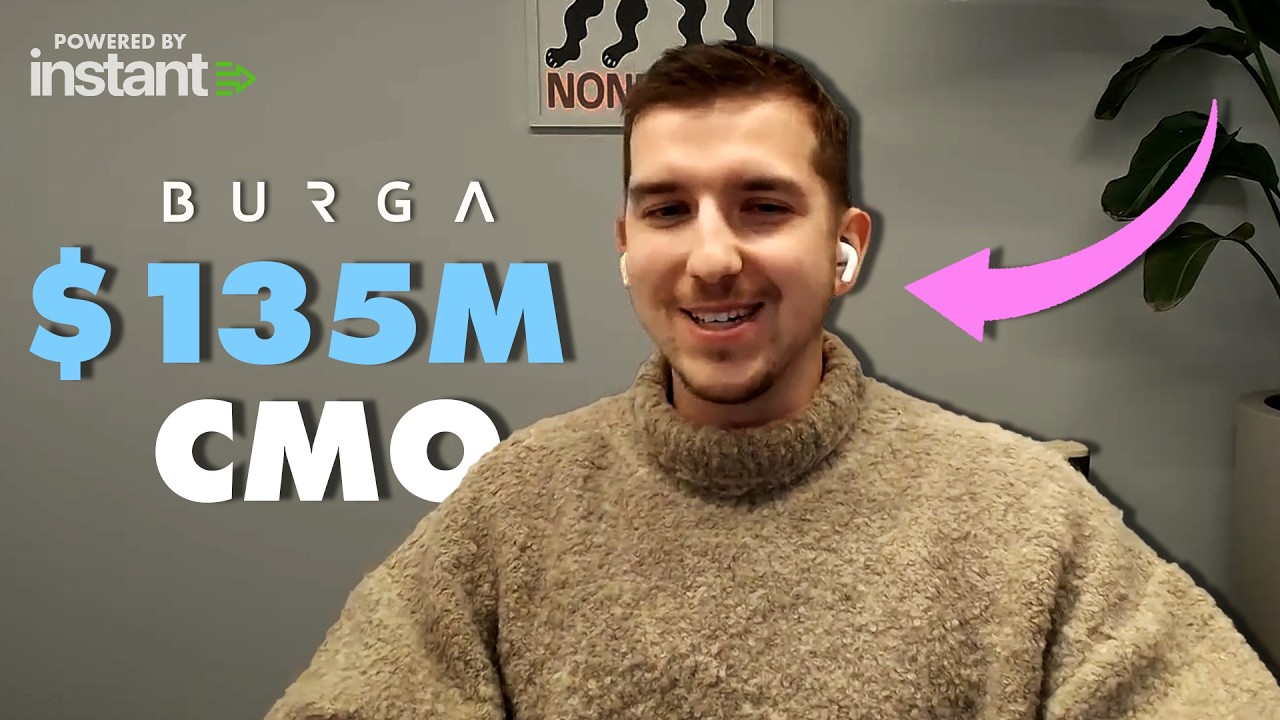
Welcome back to another episode of Chew on This. Today, we are here with Carolus Gelmanis, who is the CMO of Borga. And if you haven't heard about this brand,
they are a fashion accessory brand that's on track to do $135 million this year alone in just e-commerce sales. And they're a global company. Carolus, thank you so much for being here today.
Very excited to chat with you, especially around how you've been able to grow And help build Borga to the brand that it is today. I know your journey is very similar to a lot of those who are listening and watching,
you know, maybe starting as a freelancer, working in agencies, and then now at this, you know, massive brand. For those who are listening right now, who may not know you, would love a quick,
you know, introduction, where you started, what you worked on, and how you got to where you are today and what the future might look like.
Speaker 2:
Cool, cool. Thank you for inviting me to this podcast. I've been A fan and listener for quite some years. And you had a lot of great guests in this show.
So it's really an honor to be one of those people I didn't really imagine at the beginning of my career, but I could get on on this stage. So yeah, this is quite a long story. I'll try to make it more concise.
But basically, since like the last years of school, I was Trying to think of maybe I want to do a business, how to make money online and stuff like that that probably a lot of people can't relate to.
And then we tried to do some sort of like business ideas. I was always the guy who wrote the copy, went on Canva to make some designs, Facebook banners and what you could call like early marketing.
And a funny story is that actually one of the first businesses we tried in school, we were selling screen protectors. So I kind of came back to the same category.
Yeah, maybe the biggest first pivot was One summer with a friend, we had this motivational phase. We were listening to Tony Robbins, business gurus and all that stuff. And we were thinking maybe we could organize a seminar of our own.
We didn't have much to do that summer. And we got a couple lectures, like motivational Lithuanian speakers. We got like a free venue. We thought that it's probably going to be a free event. And we thought of a name.
In Lithuanian, it sounds different, but in English, it's also quite similar. It's what you don't know what you don't know. And it's quite a quite catchy one. And we just made a Facebook event.
And we got like three, four hundred registrations and like three hundred people showed up to the event. And that was kind of a segue to me.
One of the lecturers said, hey, Carlos, maybe you want to help me organizing these seminars and workshops. And that's how I started doing early marketing in like a Lithuanian seminar stage.
And then, through one of the lecturers, I met Domantas. I met my first business partner. And he, at that time, started doing Facebook ads. He had one free client.
And I already had thoughts of maybe I want to do an agency like I can speak to clients, I can get them and maybe I can get some specialists and we all could like share profit and do a small thing in Lithuania.
So we kind of decided to work together as we had similar ideas and that's how we started an agency in Lithuania. It was a super small, we never hired the person so it was always just the two of us.
We had some small clients in Lithuania and And like our biggest client had one and a half thousand monthly spend. So it was like small, small e-commerce stores. But at that stage in Lithuania, no one was doing performance marketing.
We had like a list of 100 shops, top 100 e-commerce shops in Lithuania. And we had a column which said, do we have a pixel or are we not? And like 50% didn't have it. So it was like just boost post and social organic and traditional media.
Yeah, and then we maybe worked a year and a half together. He went to join an agency, another US agency, and I thought what to do next. Should I freelance, build this agency or whatever? And I decided to freelance as a media buyer.
And then I started in Lithuania, then I started to go on Upwork, maybe before it was too crowded as it is right now. And I got some clients and one of the clients I had was a US agency called Boomin. And your friend Colin Maguire.
And yeah, I did a couple gigs for them. And after a month or something, they asked me to come full time to work for them. And I was like,
20 year old living in Lithuania in a small apartment with my cousin and they give me like this full-blown salary come next month to Christmas party in Chicago and all that stuff so I'll always be grateful to Colin and Ryan who kind of believed in me for some reason and yeah I started to work at Boomin and then it went to like We had clients who spent $50,000 a month,
$100,000 a month. I think the biggest was like $200,000 or $300,000 a month client. So it was a big steep from one and a half. And yeah, they taught me a lot. They taught me how to do performance marketing and all this different stuff.
And then after also I think a year and a half at Boomin, I got an offer from Burga. We are a Lithuanian company. And yeah, we were looking for a media buyer to come join their team.
And I really believed in their potential because we had a product fit, we had a great team in-house, but we were also super small at that stage still. Depends on who you ask,
but we did like In 2019 we did like 2-3 million and I joined it at the beginning of 2020 and throughout these almost six years it blew up.
Speaker 3:
Before we get started, a quick word about today's sponsor, Instant. As a brand, you know you're spending real money to drive traffic to your site. Problem is, 90% of the traffic is anonymous.
You don't know who they are, and once they leave, it's pretty much impossible to get them back. That's where Instant comes in. It identifies up to 10 times more of those lost shoppers, so you can send more abandonment emails,
build stronger retargeting audiences, and actually win back that lost revenue. Liquid IV, 3rd Love, Truly Beauty, these massive brands use Instant to get an average ROI of 21.7X and Instant guarantees you a 4X ROI for your money back.
That's right, 4X ROI. With the start of Q4, there's no time to waste. Triple your email sales and lock in smarter retention today. Just go to instant.one slash chew to claim 50% off your first 60 days before this offer expires.
That's instant.one slash chew. Now, let's get back to the episode.
Speaker 1:
Right at the beginning, right, similar to how maybe some of our journeys has also started where we've seen how marketing has shifted over the last decade, right? It was the paid side, the digital side, you know, is obviously like the go to,
you know, everyone talks about meta now, TikTok is, you know, up and coming. And, you know, there's so many different things to start thinking about, like AI, and, you know, how are we leveraging that in our marketing?
And so, I feel like it's like this hockey stick growth of just progression and how people should be thinking about marketing. So it's very, to see it grow from the beginning is very important, right?
And I would consider, you know, yourself and even myself lucky to be able to see how that transgression happened. Going into Borga, right, you know, like you mentioned in 2019, they did maybe a couple million,
right, which for the first year is incredible, right? For brands to come out and hit those numbers is, you obviously have really solid product market fit to your point, right?
But to go from single digit millions to almost 150 million, you know, there's got to be some sauce there, right? So I want to dive into that. What did 2020 look like? What did the growth trajectory look like?
And where did you focus a lot of your time? Because right now, the listeners and the audience of this podcast are probably at that level, right? Like maybe just sub 1 million and probably hovering around 1 to 5 million.
But how do you get to the 10 million, the 50 million, the 100 million?
Speaker 2:
Yeah, it's quite a long story with a lot of different things. And I think there is no secret sauce, but there's a lot of things going into the account. And just to tell you a detail, like Burger is already a 10-year company.
So it's like they needed five years to reach that like 2-3 million and to reach that product fit. Yeah, for some brands it's quicker, for some brands it takes a bit more time.
But yeah, every year was different and every year you find a new marketing strategy, a new growth lever. For us, as many other e-commerce brands, that foundation was the Facebook ads, especially at that time.
I'm not going to say anything unusual, but yeah, it was building a great performance engine in-house, but also combining it with branding activities and and overall brand building. And I think that's going to be my spiel this whole podcast,
because I believe in this performance X brand combination. And I think it is the biggest thing why we grew so quickly in this year as Berga, because if you have a First of course you need a great foundation.
I think the founders of your listeners need to check to reach this 100-200 plus brand level. You need big addressable market, you need great unique product,
especially at this stage when it's so competitive and so many e-commerce brands out there. You need great AOE and you need returning customers. So we are not a consumable product, but you get a new phone every year or two,
you can come back for new devices, I don't know, earpods, you buy an earpods, you buy MacBook case or whatever and you can come back. And I think that also really helped us a lot.
So if you have these great foundations, then it's about marketing and how to push that product forward. So yeah, for the beginning, let's say even until this stage, we are doing like 90% of our budget is going to performance.
So it's going big on that. But even our performance marketing has brand building elements into it. Because we are doing collections every month, we invest a lot into photo shoots, our campaigns, how they look.
And even if we launch, for example, performance collection ads, they are beautifully designed. I don't know if renders or unboxing videos or static images. And we have brand building in-house inside them.
And yeah, it was a Because we never, at the beginning, it was not intentional. We just kind of started doing that. And after some time, we realized that, wow,
it's actually brand building because we have like 50-50 paid and brand performance traffic, let's say from the GA. So revenue comes from both sides.
And if we turn off all our ads, of course, our business will shrink, but it wouldn't go bankrupt. As for many companies that are super performance focused, they could not,
they maybe not have a business in the next month if they turn off ads. So I think it's important to build that base of revenue, that customer base, that fan base, and that organic direct traffic. I love that.
Speaker 1:
I think there's a couple of things that you mentioned, right, is one, building a brand alongside pushing some sort of performance marketing, right? So outside of, you know, having proper photo shoots and investing in high quality content,
right, which is still great that you guys are doing this, right? I'm sure at some point there's You're probably leveraging AI for some things, but I would imagine at the absolute core of it,
still, you know, in-person photo shoots, real models, you know, the actual product in hand. Do you think that really moves the needle against, you know, maybe using AI for some of this stuff?
Speaker 2:
Yeah, I think like AI is great and it's getting better. But for a creative brand like us, it's still not there. And we'll see how it will turn out in the next couple of years. But yeah, it's a core core thing, why BurgerGuru.
From the beginning and it's also in combination of us from the beginning choosing to build in-house. I think that that was one of the greatest decisions we made because we built competences here and we built speed.
Because if we have a studio in our office, we can turn out a creative idea, go shoot it, edit it, and make it live the next day. And if you have like this whole process of freelancers, agencies,
and you only get a handful of creatives each month. So to blow your mind a bit, we are doing like three, four, five thousand ads a month. And we have this huge, of course, at the beginning, the numbers were smaller,
and we build it bit by bit, because at the beginning, we had like three people working on this. It was like me, a media buyer. We had a creative director, graphic designer, and we had a videographer.
And we had in our office, we had like a small cabinet to shoot things. Then we would also organize some like outside shoots on other studios or like near the sea or something with like each collection or campaign.
And then we built our first studio, like 100 square meter studio. And now, I think a year ago, we built like 600 square meter studio. We can do like three shoots at the same time. And we build like full complete sets in-house.
So some of the collections you see are just completely made in the studios, all the production, all the shoots. So right now it's like a robust production like we probably could make an agency of like production and video and photos.
So yeah, it's the main thing that helped us because to get free for 5,000 ads each month plus like branding content, social content, it would probably cost millions of dollars and probably not even possible with an agency.
Speaker 3:
Quick break to talk more about today's sponsor, Instant. Are your abandonment flows making at least 20% of your site's revenue? If not, you're in trouble. Most retention tools have bad short-term memory and even worse opt-in rates.
If you don't catch an email opt-in within hours, that data's gone forever. So why pay for someone to be on your list if your abandoned emails never fire when they come back? Instant fixes that.
It captures those emails, remembers them forever, and then sends shoppers the exact messages they need to come back and buy. It takes minutes to go live, there are no contracts, and they even have a 4X ROI guarantee.
Or simply your money back. Try it now at instant.one slash Chew and receive 50% off your first 60 days for a limited time only. That's instant.one slash Chew. Now, let's get back to the episode.
Speaker 1:
What are some of the other brand activations you guys did to help generate the brand awareness and that organic traffic? Because I feel like this is a piece that a lot of brands are missing.
And to your earlier point, if you turn the tap off on meta, sales would just Disappear, right? So what were some of the things that you guys did to start to build that organic and general brand awareness?
Speaker 2:
Yeah, so it was organic social always from the beginning, also a big focus for us, especially the video content where you can reach new audiences,
especially when TikTok launched and you can get a lot of organic views without doing paid stuff. So that always, till this day,
was and is still a big focus for us and we have also a big team there and we are producing hundreds of content pieces each month through different channels and generating hundreds of millions of views each month.
From those bigger brand activations, we actually haven't done a lot and it's in our plans in the next years, but the majority of the brand building came from ads having the brand element,
organic social as I mentioned, and also influencer marketing. That was a huge part and this is also like If you try to look at Burga Marketing, you will also find volume in here because that's how we built this strategy.
And on the influencer side, we also probably have one of the biggest teams in Europe with influencer marketing in-house. And we are doing like one and a half thousand collabs each month. So it's also like gifting paid, smaller, bigger.
And we have many different strategies how we approach influencers. So we have been doing influencer marketing and especially the gifting side for probably four or five years now.
And I think that also built the brand a lot and it shows in our Post-purchase service also.
Speaker 1:
That's amazing. I love that. How much do you credit scaling internationally to the growth of the brand as well?
Speaker 2:
Also, probably one of the pivotal things because I see this especially in the U.S. brands. We start to focus on the U.S. market. It's huge. There's a lot of potential in there, but they don't think about what's out there.
And from the beginning of Burger, we started selling globally. At the beginning, we only had like an English shop. First at dollars when we had two stores, English, euros, dollars,
and then bit by bit we also started localizing for different markets that we saw potential. But yeah,
we were doing great numbers even without localizations and still to this day we have a good chunk of revenue from non-localized countries that we just do English And maybe local currency because there's a lot of different countries and the competition is in some countries way smaller than in the USA.
So yeah, USA is still our number one market, but we sell We do one sale maybe in 100 plus countries but of course like maybe 30 countries are doing like the majority of our revenues so still like a good spread between different markets.
Speaker 1:
Do you do you need to build the engine differently to be able to serve localized content to those different countries?
Speaker 2:
That's a big challenge. That's a big challenge because it also makes your operations more complex but I think and Our story is an example. You can start without any like Localization, any specified strategy for that country.
Then you can start building on, and we saw great increase and great growth when we started doing localizations. So local language, local currency, payment methods, shipping methods. And then started doing localization ads.
It also grows that country, but it's not like a hockey stick, like it's a process of building your trust in that market.
And you can build that Build the first customer base and get the first revenue and first feedback just doing whatever you do in global stuff for the countries. And we still look like the majority of the marketing we do is global-based,
all the campaigns for collections and everything. The next year we are thinking a bit for a couple of top markets to start creating those More localized strategies, how can we grow in those single markets, but they are already huge for us.
So at the beginning, I'm sure it's possible to do without that because it adds a lot of operational complexity to have a country manager for each country and specialized ads and all that.
Speaker 1:
Yeah, I mean, just thinking about it, right? Because you guys have multiple product categories, then you multiply that by the amount of countries that you're in, right? It just seems like a lot, right?
So what does the team actually look like? Like how many people are on the team? What roles are you typically hiring for to build out this entire, you know, ecosystem?
Speaker 2:
Yeah, that that is also probably one of the pivotal things by why we are growing because our operations Not just in marketing, but overall company, it's quite complex and I think it would be really hard to replicate if you would try,
especially from zero. So from the marketing side of it, we have a hundred people team. It's quite a big team. My philosophy and overall company philosophy from the beginning was to build in-house.
And one of the reasons why we do that is we want to, as I think I mentioned already at the beginning of the podcast, is to have The competencies in-house, especially the core ones, so we can control and learn.
And then the speed side, so we can do all of these different product categories, different markets. And we have two or three bigger launches each month, like collection products and many other small ones.
So it's many, many, many different things happening each month with the ads amounts, influencers amounts mentioned. So we have right now four main teams in marketing. We have the partnership side, so it's influencer and affiliate marketing.
Then we have growth team who has the media buyers and has the whole creative side. So what's not sure how other companies structure it, but maybe what is unique to us is we build We have creative strategists,
graphic designers, and videographers specialized for growth for ads. So that's how we're able to do like those thousands of ads each month.
And they specialize on it and don't distract themselves with different materials, only with performance and growth. Then we have the brand team, which is also quite big.
We have creative people, we have a production studio, we have copywriters, we have a big social media team, and we all work on different stuff, graphic designers.
And then, if you can imagine, we only this year started to grow our operations team. It was quite a lot to handle and we are now right now have like a five, six person team handling the operations and helping make this machine work better.
Speaker 1:
No, it's amazing. When it comes to hiring, what I want one, like, what is one tip to make sure that you are making the right choice? And what's one mistake to avoid?
Speaker 2:
Yeah, that is a good question because hiring is probably the most important thing that you do because people are building the brand, not robots, not AI yet. So yeah, it's a really important decision to make.
One tip is probably to Invest into this process to really teach yourself how to run interviews, how to ask questions, and how to not only do like a surface work, but how to ask follow-up questions, how to go deeper,
and we even have like tables built in of what kind of like Skills do you need? What kind of questions are you asking for each like skill or personality trait?
Then you can give a rank from let's say 1 to 5 for each and then you can better scope the candidate and does it fit and another great tip is to Get more people into the interview process.
Don't yourself one person make the decision because you're not gonna see all the different things and gathering people from even from different departments to to interview the person and get their opinion of what do they think maybe we can get some red flags what you didn't see and The mistake that people do mmm One of the couple of mistakes I did through my career was when hiring for the position.
I don't understand that I haven't myself had experience with or I'm not I don't have that specific skill. So right now I learned to if I have a position like that is to Try to gather as much information as possible before the interviews.
Try to speak with different people who have that skill or are in that position. What would they ask? What are the most important things?
So you can better prepare for that person because if the person is really charismatic and And we can really tell you that we are good, but then after a couple of months you see that, oh, I did a mistake.
So it's really important to not only Depend on the charisma but go deeper into the level and if you don't understand that you need to somehow understand it more or get a person who understands it to be on the interview with you together so you don't make a mistake.
Speaker 1:
what does the marketing channel mix look like at this stage of the business right like obviously you have your Metas, your TikToks, your Apple ovens, your Google But as you get to this monster size, Top of Funnel is key, right?
Just to continue building brand awareness, which you guys have done an incredible job at, but what does the mix look like? Are you guys doing TV now? Are you doing out of home?
What does that look like and how do you decide where to put the next dollar?
Speaker 2:
Yeah, that's one of the key questions we are asking ourselves for next year. As right now, from a paid side, it's majority Facebook meta, then it's Google.
We started investing more into YouTube this year, also through that lens of top of funnel. And overall, even if we spend a lot on the performance ads, we had This strategy of going into,
we track things through Northbeam, so looking at the new customer percentage, new visits percentage, and pushing ads, even if we have smaller ROI, we Probably going to push that ad that has more new customers,
more new visits, because you can see patterns. You can see some, for example, static ads may have an amazing gross, but you see that we are mostly pushing the returning customers and you have to find that balance.
So you can find a lot of top of funnel in your current performance setup, I think. But for the additional channels, yeah, also like TikTok, we were spending quite a lot on TikTok,
but we kind of this year started spending less because we didn't run some experiments and it wasn't that incremental for us. Yeah, we have like Snapchat, Pinterest, AppLovin, but it was a really small part of paid ad side.
Then we have a good chunk of influencer marketing. We spend on that. And these are currently our biggest channels. And for the next year,
we are thinking about and already planning our first campaigns at the beginning of the year to test TV out of home, connected TV and go into these other more traditional, let's say, channels.
And we are also thinking overall to invest more into brand marketing side, not just through those like traditional channels,
but also through the campaigns, maybe collaborations with other brands or some other like creative viral stunt campaigns to grab attention.
Speaker 1:
I love that. This has been amazing. Before I let you go, I got I got some rapid fire questions for you.
Speaker 2:
Cool.
Speaker 1:
All right.
Speaker 3:
Ready?
Speaker 1:
iPhone or Android?
Speaker 2:
Right now, iPhone. I was an Android Windows guy before I joined Burga, but right now I'm working at Fashion Brands, so I have to have an iPhone, but I'm still a Windows guy.
Speaker 1:
I love that. One paid media best practice brands should drop immediately.
Speaker 2:
I maybe answer this in a creative way, but so not about the best practice we should drop. But I think they should drop believing that media buying can save their business. It's all about the creative. It's all about the brand, the product.
And if you have a good foundation, then yeah, great media buying can grow your brand. But if you don't have that, no great tactic is going to save you.
Speaker 1:
Have you ever cracked your phone screen? And if so, how?
Speaker 2:
Yeah, so I have before joining Burga, but for the past five years with a case on my phone, I haven't done it.
Unknown Speaker:
That's good.
Speaker 1:
Most underrated acquisition channel right now?
Speaker 2:
So it's probably gonna be a same answer as the media buying best practice I think Like I'm not gonna say like new unique channels.
Everyone knows those channels but it's more about the creative side and I think creativity is The biggest growth channel right now.
Speaker 1:
Mm-hmm What was the first cell phone you ever had?
Speaker 2:
I think I had, I'm trying to remember, but I think I had like a Samsung flip phone. I'm not sure like what was the name, like Siemens or something. I'm not remembering like how it was named, but yeah, one of those flip ones.
Speaker 1:
I had this black and white Motorola, like no color, no camera, it was crazy. Last one, what risk, one risk you're glad you took early in your career?
Speaker 2:
Probably going not through the traditional career route that's like school, university, junior position, senior, team lead, and so on. I kind of dove into the ocean of like, okay, freelance, seminars, agency, in-house,
and just kind of Organically went into the stage and I think that gave me a big upper hand because I when you go through a non-traditional way your mind also probably thinks through a non-traditional way and you don't put boundaries yourself that you I have to go through these positions and you just kind of believe it you can do it and and you just kind of go straight for it.
Speaker 3:
Before we wrap up, just a quick reminder about Instant. A good abandonment email can make all the difference, but 88% of shoppers never get one.
With Instant, you can send up to 10 times more retention emails and use AI to personalize every single message.
Fast-growing brands like Higher Dose, Garrett Popcorn and Karen Kane have tripled their abandonment flow revenue since going live. You could be next. Don't miss out.
Book a demo today at instant.one slash Chew and receive 50% off your first 60 days. That's instant.one slash Chew. Now, let's get back to the episode.
Speaker 1:
Carlos, you've been a freelancer to working at an agency to now this monster, monster brand. It feels like you've seen almost every side of e-commerce. I would love one final chew or takeaway for the listeners and viewers of this episode.
What's one piece of advice you would want to give for our audience to go back and implement into their business starting today?
Speaker 2:
Would you like to, from the career point of view, marketing point of view, business...
Speaker 1:
You decide.
Speaker 2:
Yeah, I think it would be to build the core competences in-house. I already talked about this through the podcast.
I think without it we wouldn't be where we are right now and to have a strong team that can have the speed of testing and I think especially at this stage of e-commerce and competition speed is everything and you have to have it to win.
Speaker 1:
Love that. Chew on that. If you want more from us, follow us on Twitter, follow us on Instagram, follow us on TikTok, and check out the website ChewOnThis.io.
This transcript page is part of the Billion Dollar Sellers Content Hub. Explore more content →