Ecom Podcast
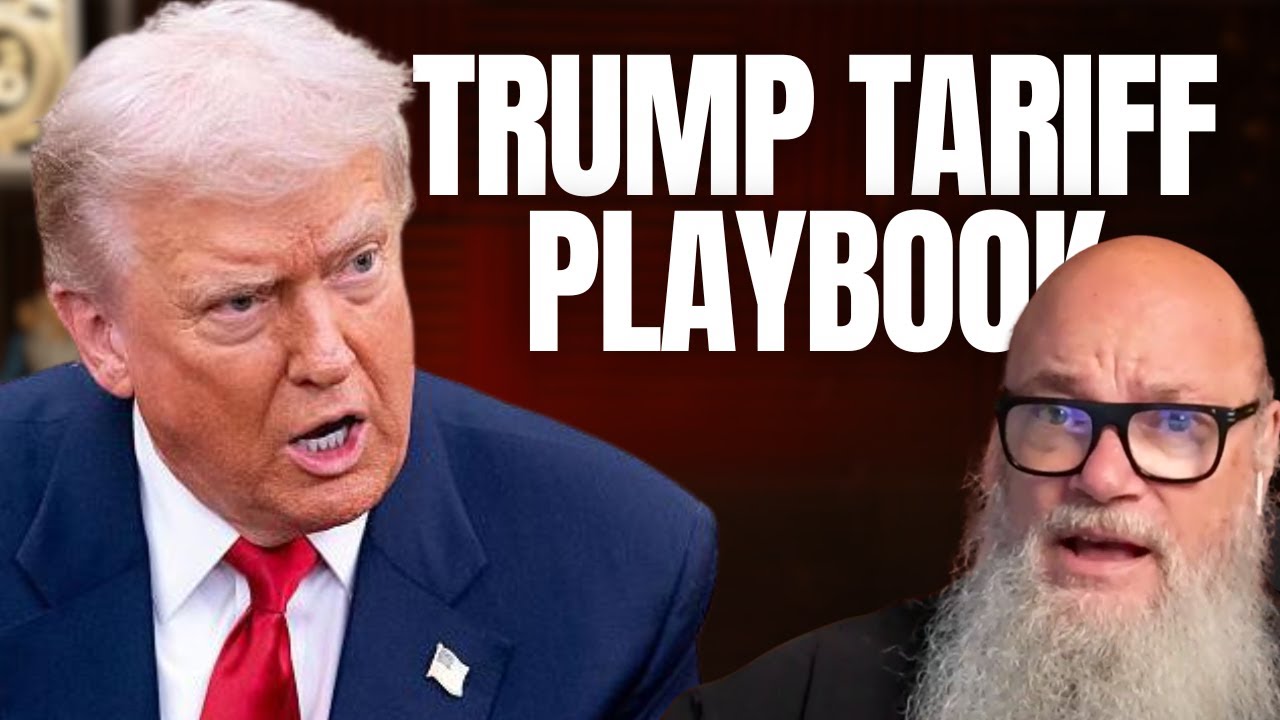
Trump Tariffs & The China Playbook: How to Stay Profitable on Amazon / Lyden Smithers
Summary
"Lyden Smithers shares strategies to stay profitable amid Trump tariffs by optimizing global sourcing and supply chains, helping Amazon sellers mitigate additional costs and drive growth even as tariffs fluctuate, such as adjusting slides four times in one night to keep up with changes."
Full Content
Trump Tariffs & The China Playbook: How to Stay Profitable on Amazon / Lyden Smithers
Speaker 2:
Today, we're going to be discussing Trump Tariffs and the China Playbook, how smart brands stay profitable. Our guest today is the president and co-founder of Titan Network, overseeing $100 million in annual sales on Amazon.
His deep knowledge of global sourcing, manufacturing, partnerships, and supply chain optimization has helped countless entrepreneurs streamline operations, reduce costs, and maximize profitability to enable Exponential growth.
And this is a first time guest on our podcast, Lyden Smithers, and we'll get to Lyden in a second. But first of all, we want to just give a shout out to some of our sponsors.
We could not continue to keep on putting on this podcast without our sponsors. So we love you. Thank you for your support. And just to give a quick shout out to Sellerboard, Hey, look at that, the Titan Network and Connect Cash.
If you have any comments or questions, throw them in the comment section. Now let's sit back, relax and welcome our guest. I've been a fan of Titan Network for a while and always want to help out wherever I can.
I've been to a lot of your events and it's an awesome group. For those of us who might not know about Titan, you want to just talk a little bit about that?
Speaker 1:
Yeah, of course. So Titan's been around a while now and you've been to some of our events. Yep. But we're an online eCommerce mastermind community.
Started off predominantly for Amazon sellers, but the wider eCommerce with Shopify and TikTok shop obviously coming through very strong now. We're an online community. We have our own proprietary tool set that underpins our strategies.
And we're not just one person, myself or Dan or Athena, standing on a hill teaching it from our experiences. We are operators as well. We have 17 of our own brands.
And then all of our mentors and leaders across the pack are feeding into that machine that keeps us up to date with the latest strategies.
I'll say we've got the software underpinning that and then we do a lot of live events around the world. We have meetups in 21 cities and we do masterminds. I've got one coming up here in Australia in a couple of months.
So yeah, there's a lot going on. We have a lot of fun and make a lot of money.
Speaker 2:
Ah, very good. Yeah, I know a lot of our listeners as well as some of the events I've gone to, like the one in Toronto. I know a few people that have joined up and they just love the Titan Network.
So anyways, if you're a listener and you want to get more information, check it out. Let's talk about some fun stuff. When I was at BDSS in Iceland and Dan was there, Athena was there,
and Dan was going absolutely nuts because that's when the announcement of the tariffs happened. And every day, multiple times a day, things were just changing. And I remember just being with him and just, you know, he was asking my opinion.
I was asking his opinion and it was crazy. So why don't we start with that?
Let's start talking about some Trump tariffs and what's happening right now and how does that or what's the importance of this right now and how is it affecting sellers?
Speaker 1:
Yeah, so it's been an exciting year with a couple of rounds of tariffs and then delays and stuff like that. I know Dan Athena went to Iceland. I couldn't make it. I was very upset. But I heard it was a great one, as always.
But yeah, so obviously when the tariffs were announced, it's funny, I was on the second round of tariffs. I was on my way on a plane from Gold Coast to Sydney to speak at an event on tariffs.
And the evening before, four times there was tweets back and forward between the president. So it's 145, but it's 115. I kept going up and I was like, damn it, I need to change my slides again.
So I was changing my slides before the morning and then, yeah, it's been a crazy one. And seeing it unfold on Twitter has been a weird experience, right? This is where we get our political news now, from social platforms.
But as it relates to us, obviously it had an impact for us. We're currently on a pause, a set rate until the 10th of November. So it'll be interesting to see what happens then. But we actually saw it as an opportunity to get to China.
I took my entire team to China and thought we're going to have to tackle this because we don't want to just be hiking up our prices. So we went over to China, got really smart about reverse engineering the production lines,
understanding our packaging, understanding our molds and how many units are created with a single mold. Can we change our approach to that? So instead of creating four, can we create 24 out of each injection?
And just really got very particular about supply chain. Unlocked free storage in China and just analyzed our P&L to a point where we can shave 0.5% here, 1% here. How can we really tighten our belts? And guess what?
The Chinese factories were very open to negotiation. The relationships that we have with them is a partnership. It's not me sat opposite side of the desk trying to negotiate with them.
It's both of us sat on the same side of the desk staring at our problem and seeing how we go over this together. So we actually managed to, at 54% I think it was,
we managed to create space in the supply chain and get more efficient to a point where we actually end up 0.5% Higher profit in CM3 through those activities.
So when a lot of people were looking at the hacks like how do I get around paying the tariff and how can I send to another country and then put a label on and then send it in and these sort of grey area things.
Everybody can make their own decisions and there's certain risks and as long as you understand the risks involved and your tolerance to it,
we really went back to basics and what we know is like how do we get the most efficient we possibly could be in our supply chain and unlock economies of scale and all these different things.
So I think it was important to put on your business owner and P&L analysis heads and go, right, how do we reduce costs, I suppose.
Speaker 2:
Yeah, you know, that whole the gray side, it just comes back to bite you. It's not a matter of if, it's when. And there are so many severe penalties, just for an example, not so much on the tariffs,
but something I know really well is HTS codes. And just playing around with those, you don't get penalized on the shipment that comes in. You get penalized on the lifetime of that product. So they go back and they nail you.
And the same thing here. If you're screwing around with declarations, man, you will be sorry. You'll save a little bit of money. The point is you don't even have to.
People were in an absolute panic and I can just remember, you know, people just freaking out. Oh, this is the death, you know, of our product. And it wasn't. You just had to think and think. I don't even say outside of the box,
but a lot of people never considered really trying to renegotiate with their suppliers in China. And we have to face the fact that those manufacturers are scrambling as well. They need business and they were losing business.
So, you know, how do you get that back? And you did the right thing. You went over and you started talking to them.
Speaker 1:
Absolutely. Yeah, and we know the importance of guanxi, as they call it, like relationships and win-win situations and building that trust face-to-face in China.
You've been to China, Norm, so you understand their culture and the importance of that face-to-face. And when people are sending panic emails going, oh, the tariffs are coming in, I need you to split this with me.
Well, if that split hits their bottom line by 10%, most factories in China only operate on a 10 to 15% margin. So if you're asking them to reduce the cost of their product by 10%, you're taking out all their profit. That isn't win-win.
That's win-lose. Win-lose does not end well for anybody. It becomes a lose-lose for everybody, right? And we know this about the Chinese culture as well. They're not forthcoming with suggestions on how to improve products, how to reduce costs.
Despite being experts in it, they're not necessarily forthcoming, which is why I go to China. I go to the factory. I'm like, right, show me the production line. Why are we wasting product there?
Why are we using this grade stainless steel when it's not necessarily for a boat, for example, and it's going to be subject to seawater? Can we reduce the quality of the stainless steel,
but still not reduce the quality of the end product because it's a salt and pepper grinder? So it's just understanding those different things, the different levers you can pull,
which you're not going to get unless you get in there and understand the production line and take a look around. And it just comes back to the relationship of being able to have transparency and go, right, look, we're in this together.
How do we get over it? Can I buy more raw material up front? Does that reduce the cost of the raw material that you have on hand? Can I store there instead of using 3PL in the US?
Something else that we do is we have access to Chinese freight forwarders that won't deal with foreign companies. They'll only deal with Chinese companies. So through our suppliers, because we have the relationship,
they're able to vouch for us and we're able to ship our product through them, which reduces the costs. Now, coming back to the grey area thing, you can take a look at that grey area and take some risks if you want to,
but something like splitting out an invoice, not just under the clearing invoice, which is completely very dark grey, right?
Splitting out an invoice into man hours and products or marketing and products and things like that and getting creative like that on a product that hasn't been shipped before is something you can probably do and it wouldn't be too much of an issue in paying in two different invoices.
And then coming back to your point about HTS codes, it's risky when you've already shipped under a HTS code. If it's a new product and you haven't shipped under it and you're not changing the HTS code and it's actually relevant,
like don't ship a phone case as a paperweight. Right, but if you've got exercise mat and yoga mat and sports mat and they have different tariffs, they're all the same thing essentially, right? Ship it as the right one.
So HCS codes is a really good thing to understand and get into and see what the different levels are, but obviously at the moment we're on a pause and sort of out the window with that one at the moment,
but it's definitely worth understanding them for sure.
Speaker 2:
Now, you were talking about, you know, sitting down, working with your manufacturer about doing the little things. It might be packaging. It might be configuration, changing up the way that you're putting the boxes into the container.
You know, there's all sorts of different things that you can do. You want to just run through, you know, maybe four or five of them just to give the audience a bit of an idea.
Speaker 1:
Yeah, of course. So I obviously mentioned a couple already around storage and stuff like that, but one that I shared, I wasn't in Iceland, but I was in Hawaii and I shared in the hack contest,
I shared, which I don't necessarily see as a hack, but a tip and something that people tend to overlook is most people go to their factory and say, how much is this phone case, including packaging? And they come back and say, it's $3.
But what they don't do is ask how much the packaging is because you're speaking to an expert in creating phone cases, not an expert in packaging. And sometimes they'll spit it out and they go, oh, the packaging is 50 cents.
And I'm like, why is it 50 cents? Because I know that's probably should be about 10 cents. So understanding your packaging and then going out and finding another packaging supplier. I did this with some bags that we have.
We have like a Hessian bag and they were charging $1 for the bag. And what I was able to do is go and source the bag somewhere else for like 30 cents.
And then give them the bags and also coming back to that guanxi and relationship and supporting each other in business, introduce them to the factory that I found to use them moving forward on their other clients.
Where they can take the extra clip or they can pass it on to their client if they wanted to. So all of a sudden I've opened up a new profit center for them as well by reducing it by finding a factory and also reduced our costs.
So packaging is a big one. The mold one is something that potentially people don't think about. So let's say we have an injection mold and each time that mold goes into the machine, it creates four silicon spaghettis.
What if we spend a few thousand dollars and create a new mold so that each time it happens, we get 24 silicon spatulas out and we save time, we can produce them faster and there's less man input on that.
What you might be able to do is reduce a few cents there as well. And then just, again, changing up the materials. Do we need to have this level of stainless steel? Or as an example, I used to create a silicon baking mat.
And it was very high quality. I really loved the baking mat, but I just couldn't get the price down. And I was like, listen, and again, they're not forthcoming. When I went there, I was like, so where's the raw material come from?
They're like, oh, we import the silicon from Germany. I'm like, why are you doing that? Can you not buy it in China? He's like, oh, we can buy it in China. I'm like, is it not as good? He's like, no, it is as good.
I'm like, I'm guessing it's cheaper. He's like, it is cheaper. I'm like, can we do that? Yeah, I thought you wanted German grade so you could claim it. I'm like, I didn't even know it was German, so I haven't been claiming it anyway.
It's not part of my marketing anyway, so reduce the cost by understanding where your raw material comes from. And I think one of the things that we do that People focus on the order now, right?
We always forecast out at least 12 months in advance. And if you go with a 12-month forecast, we're able to negotiate a lot better because you're showing the big picture, the long-term plan and the partnership that you're creating.
You're also giving them a higher number on what they could potentially earn if they were able to. So part of my training that I do for payment terms, which works with pricing as well, is the before and after.
Currently, so what I want to do is order $500,000 worth of stock from you. Currently, with your payment terms that you've got right now, I can order $200,000. Do you want $500,000 or $200,000 over the next year?
If you give me the terms, then I can give you the bigger order. So it's not just going and asking for something. It has to be a win-win. It has to be giving something in return and working together. But that works for pricing as well.
And then when you're also talking about 12 months ahead, they can plan ahead. They can then take that forecast to their raw material supplier and the economies of scale by ordering bulk raw material.
Offer to pay for the silicone beads or offer to pay for the stainless steel tubing or whatever it might be up front, store it so we've reduced the cost of raw material which can then be passed on to the unit cost.
So just trying to unlock all these different areas and getting 0.5% here, 1% there, 1% here, 1% on shipping, all of a sudden that 7%,
8% on the bottom line that was affected is now 1% because instead of trying to take If you can reduce 7% out of PPC or marketing spend or add 7% to the price which is going to kill your conversion based on a price sensitive market,
if you can find all these different areas in the supply chain and reduce them all by a bit, you get to the same result without affecting your velocity or marketing input.
Speaker 2:
That's interesting that you talked about the packaging. That's one of the things I've been doing for years is just negotiating on the product itself and then going out to my own sources for packaging and you're 100% right.
They could tack on 30% 40% 50% and you just save all of that and by introducing the manufacturer to that manufacturer it's just yeah win-win-win and you save so much money.
But the other thing too is the type of packaging that you can get away with. So, you know, people might be able to get away with a thick cardstock rather than a rigid cardboard. And that's going to save you on weight.
It's going to save you on a lot of cash. But there's all sorts of alternative packaging out there. I just remember the one beauty supply that we were using, it was a solid, and we could just put it in this really cool, flexible,
I don't want to say it was a wax paper, but it was, how do you describe it? It's almost like a parchment paper, but we were able to get a hold of it, emboss it, and it ended up looking like a higher perceived value, which is my next point.
With everything that's going on and if you think that you have to put on, you know, the seven or 10 cents or a buck or whatever it is, a lot of the time, I'll just say, what about your perceived value?
Go back to your packaging, your manufacturing, your packaging manufacturer, check out your listing, make sure that it's optimized and don't go out at the bottom, come up at the top.
I always say that there's three tiers on pricing on Amazon. You know, the ones that's just product cannibalization and the top one that you're really making profit.
Just go out there and spend a little bit extra sometimes and you'll end up being able to double. And I've done this, don't want to say a thousand times, but a ton. And it's worked every single time. Just going out with higher perceived value.
So the other thing...
Speaker 1:
The higher perceived value from lowering costs as well. So everybody's about saving the planet and eco-friendly and so we should be. And by switching from a nice colorful loud box,
which would be good for a retail store on the shelf to having a brown box.
Speaker 2:
Yeah, craft.
Speaker 1:
You look more premium and eco-friendly and even recalibrating the box.
We've had products that are malleable like fabric products that come in a square box and we change that to a flat box and then you get underneath on the FBA fee because of the size limit and all of a sudden you just save on FBA by re-changing up the box,
reduce the cost of the box, reduce the FBA fee and actually come out with something that's cheaper but the perceived value as you said. So I absolutely love that approach.
Speaker 2:
Want more unfiltered tips from top eCommerce experts? Well, hit subscribe and you'll never miss a Lunch With Norm episode. Now let's talk about, you know, this and we've touched on it, but unlocking these, you know, extended payment terms.
So you started to talk about it. Can you get into detail on that?
Speaker 1:
Yeah, absolutely. So when I first got into this industry, I come from working with my dad on the construction and I used to have to...
I'm from a small island in the Atlantic, Tenerife in the Canary Islands, for anybody who knows where it is. So everything's imported, right? And everything takes a long time, a little bit like importing from China.
And then we used to refurbish hotels and bars and kitchens and bathrooms and stuff like that and we'd have to order the material and a lot of the time we'd have to pay for the material and we'd get a deposit from the client but the materials were more than the deposit.
So I was used to negotiating, can I pay for the material after it arrives and stuff like that. So when I came into the Amazon industry and everyone was like, we need a loan,
we need to access financing, I need to use a credit card, I need this. I'm like, why don't you just pay for it later? Everyone's like, well, that's not going to happen because they're all the way in China and they're not going to trust you.
And I was like, huh, hang on a minute. I know I can do this. So I jumped on a plane and went to China and face-to-face value and something that is their culture, but also the way I am as well.
If I'm going to send $100,000 across the world, I want to shoot man's head, right? So I sort of developed a process which again is just presenting the win-win. Talk about the challenge. Talk about the opportunity.
So the opportunity is that I can sell so much more. Have a look at what I've achieved to date. Have a look at these other marketplaces I can go into. Have a look at these additional products I can buy from you.
This is what the forecast looks like. Again, that's $500,000. However, your payment terms don't allow me to get to that because of the cash flow and the time spent on the water and in production and being able to sell it.
Plus, Amazon doesn't pay for a couple of weeks and that cash flow cycle is killed. So, presenting that forward-looking plan allows them to be able to give you the payment terms. And it's all about the before and after.
There's a six-step process I've got. If anybody wants to reach out to me, then I can probably send you a recording of exactly how to do it. But essentially, just presenting the long-term vision. And this is what it looks like.
With the current terms, this is what it looks like afterwards. I've managed to unlock really good payment terms, presenting that alongside building the relationship,
going to the factory, spending time, taking gifts, breaking bread together, eating dinner together, having a few beers together with some of them, and building that relationship and trust will enable you,
coupled with Actually presenting a win-win situation will allow you to unlock those terms. And as a standard, we don't have anything under 90 days across all of our products, but we have up to 180 days with a 10% deposit on some of them.
And that comes through, I'm not suggesting you're gonna get 180 days on your first attempt, but that's what we've managed to build up to over time.
And if you do unlock 60 days, 90 days, one key thing that's a good indicator of trust You've got 90 days to pay it, pay it on 75, pay it on 80, if you have the cash flow available.
And then when you ask the 120 on the next one, they know you're good for it. And just small indications of showcasing you're trustworthy and also showcasing you have the ability to grow an Amazon business or an eCommerce business.
And that might be from previous sales history, or if you're just starting out, there's other ways. I have this background in marketing. I have access to these influencers. I have this marketing plan.
Showcase why they should trust you and why they should trust that you're going to be able to sell this product. Reduce the cash and get them paid.
Speaker 2:
Right. We call that the circle of life. And what we talk to our clients about is, all right, you've got your base. Let's say you have a thousand units in your 3PL. Ship 500 over to Amazon and put an alert on.
So when it gets down to about 250, you know you've got a shift from your 3PL over to Amazon. You negotiate with your supplier, very similar to what you've done, but your next order,
let's say it's 1,000 units, we've agreed to have it in storage. So it's already there, already printed, already ready to go, and we put a small deposit on it. And we've done this with multiple clients. So there's a small deposit there.
So once that trigger happens and we're saying, okay, we need to get it on the water, the thousand units is on the water, in a warehouse, ready to go again. They put in their order for another thousand units, which goes into their warehouse.
So there is no panic, you know, and if we do have to fly something over, then we can, but getting those terms, you're so right. If you cause a red flag, if they give you those terms and you don't pay five days later,
they're not gonna have a very good feeling about it. And your chances of getting better terms, you know, if you're selling the same amount might be pretty tough. But we've got, I've never got 180 days.
I've heard of people that have, but 90 days, oh yeah. And that just loosens up everybody's cashflow.
Speaker 1:
Yeah, absolutely. 98 payment terms could mean that you could launch two, three, four more products. So something that I don't like to do this, and you don't have to,
in fact, actually after negotiating payment terms and producing the bigger order value that you're going to be placing, I normally reduce the price as well. Because I'm like, well, you know, when we first met, if I place a bigger order,
I get a lower price, right? Because economies of scale, like you nail the terms first, always go terms first, it's the most impactful thing to your business, and then ask for the price reduction because you're placing a bigger order.
And they're going to get economies of scale through the printing company, the packaging or whatever it might be. But yeah, I speak to so many people. I'm going to China Magic very quickly and taking a lot of students with us on our trip.
And they're like, I want to get cheaper pricing. And I'm like, you've got a 45% margin. You don't need cheaper pricing. What you need to do is launch more products that have a 45% margin. You don't even mention price. Go in for payment terms.
Nail the payment terms. That frees up $250,000 in cash flow, meaning you can happily launch three, four, five more products without having to put your hand in your pocket and invest in launch costs.
And then once you shook hands on the payment terms, then go for pricing, because you can never negotiate low enough pricing, right? But at the same time, I think a lot of people, the word negotiation comes into their head, they go pricing.
I'm like... I will pay more per unit if it means I get better payment terms. And people don't understand that, but I'm like, I'd rather drop my profit margin on a product from 25% to 23% but unlock hundreds of thousands of dollars,
meaning I can launch four or five more products, right? So you just have to look at the big picture and people automatically go to price production when it's not always,
I mean, payment terms is 99% of the time is more impactful to your business.
Speaker 2:
One of the other ways of negotiating with this, just payment terms, is going on the angle of we need these marketing dollars. So we're getting into a cash crunch because we've got the same thing that you just said. It's on the water.
It goes to Amazon. They take time to pay and we're getting into, let's say, fourth quarter. We need marketing dollars. And the only way we can loosen up that cash is if we can get these terms. And a lot of times they'll give you terms.
But not on your first order. Not on your first order. It's not going to happen.
Speaker 1:
Yeah, absolutely. The forecast I showed you, I need marketing dollars to hit that forecast, right?
Speaker 2:
Okay, so at the bottom of the hour, if you're a first-time listener, we do something at the top of the hour. It's called the Wheel of Kelsey. That's where we give away a prize to one of our listeners. So today, we've got a great prize.
Well, Lyden, why don't you tell us about it?
Speaker 1:
Yes, so the prize that we're giving away to one of the listeners is a one-on-one supply chain efficiency strategy session with me. So in that session, what we'll do is we'll jump on. I'll understand your supply chain,
take a look at what the best piece of action that we can take in your business to either reduce costs, unlock different areas of the business where the stuff we've been talking about today,
reduce costs, and maybe even look at how we extend payment terms to impact your business. So we're going to jump on a session. I'm going to ask some stuff ahead of time, and then we're going to run through,
and you're going to walk away with an action plan to be able to take to your suppliers, negotiate, and get you some results.
Speaker 2:
That's awesome. And we also have a discount code for China Magic. Anybody who applies, and you're going to have to let me know the code, but you'll get a $500 discount, is that right?
Speaker 1:
Absolutely, yeah. Anybody who wants to come on to the next China Magic where we do this in person. So China Magic is a trip that we run to China and we take a group of students,
if you like, with us and I take them to Canton Fair, teach them how to navigate the fair, how to unlock the best pricing, Payment terms, exclusivity deals,
lower MOQs and just find vetted companies and factories within the Canton Fair that you're not going to find online because they don't show their products online and then also train you and prepare you to visit factories with that pitch deck that we spoke about with the six-step guide on how to negotiate better payment terms and pricing and prepare you for that and all the while having mastermind sessions every night And obviously having support at the fair where we,
myself and my mentor team can come into the booth with you if you're feeling overwhelmed and just support you through that process for anybody's first time in China.
So if you mention on a sales call that you got a code Lunch With Norm code, then you will get a $500 discount on the China Magic ticket.
Speaker 2:
All right. And Kelsey, I'll put the code into the comment section as well. All right, but to get that, all you have to do is hashtag WheelOfKelsey or tag two people, you get a second entry.
The other way is go to our newsletter, LWN.News, and you can enter there. Now, the prizes are given the following week. So this week's is from last week's podcast,
and that's where everybody who wants to enter from the newsletter gets that chance. Okay, Kels, can we go to a sponsor, please? Did you know Amazon profit is more than revenue minus ads?
Sellerboard calculates your true profitability, factoring in every fee, return, shipping cost, and even cost of goods using FIFO logic. That's First In First Out logic.
Plus, they automate your PPC, forecast inventory, and avoid stockouts, reclaim money with Amazon reimbursements, set FBM shipping by period, and track Walmart profits with the same dashboard.
And you don't even have to have an Amazon account. You can try it for free for two months, Sellerboard. Know your numbers, scale your business. You know, this next topic that we're going to be talking about is one of my favorites.
I don't know if a lot of listeners know the importance of this and that's actually going, it's face to face with your supplier, especially your Chinese supplier. It's part of this culture. I got to give you a story before we get into this.
Our family used to own two factories in Taiwan and we still have one in China, believe it or not. It's kind of a, you know, it's not just right. We can't outright own it, but we have some of the factories there.
But before we did that, My brother and I would go over, we would negotiate with different, this was in Taiwan, just different manufacturers over there. And this was EVA. So there was a bunch of EVA, really good quality EVA manufacturers.
And we had this lady, Katie, who used to drive us around and she was our translator and she was awesome. So the one day we went into this manufacturer, it was a big one,
and the guy wouldn't give us a time of day after we introduced ourselves. Hi, I'm Norm. Hi, this is Steve.
Speaker 1:
Blah, blah, blah, blah.
Speaker 2:
I had some tea. Rude. Like even our translator was, we came out of that meeting going, what happened? What happened? So the next day she got us together and she said, oh, I found out the reason why. Okay. Why was he, you know, such a jerk?
Well, it turns out my brother's name is Steve. It turns out that there's been a Steve so-and-so in Taiwan that's been screwing these EVA manufacturers. Well, he just happened to be named Steve and they just shut us down.
But it turned out, everything turned out, actually I put this in the newsletter, after our negotiations, We became very good friends. We'd go over and meet with him on a regular basis, but after that meeting,
we went up to one of these hotels, the five-star hotels. He bought us dinner and a ton of drinks, and we were actually piggyback fighting. In the hallways of this hotel, Mr. Cao, I remember, oh my God.
So face-to-face, it is the best and I want you to just expand on that. You know, why is it, you know, a lot of people just don't understand the Chinese culture and why it is that important.
Speaker 1:
Yeah, absolutely, and it's part of my culture as well. Like I said earlier, if I was going to go into business with you, Norm, and I'd never met you and I was going to send $100,000 into your bank account,
I probably want to jump on a flight and come and shake your hand and have a chat and see if we share the same values and this is going to be a good partnership and we actually get along, right?
And so it's the way I feel about it as well, but we've obviously been programmed to, through the courses and stuff, 10 years ago when I started, oh, you just go on Alibaba, put a badge on it and you're done.
Alibaba's a great resource for finding suppliers, but before I go into business properly, I want to meet these guys, right? But they're the same. So I'll tell you another story. I went over to Shenzhen to meet a factory post-COVID.
So I hadn't been there for a couple of years. So I went to meet Lucy, who was my sales rep. And then she was like giggling and stuff. And I was like, why are you laughing, Lucy? And she's like, I've just never met a white person before.
I thought that was really funny. I was like, so you've got how many clients? She's like, I manage 30 clients. I'm like, and you've never met any of them? They're like, no, no, no, never met any of them. COVID as well, don't get me wrong.
I'm like, well, I'm the first one that she's met out of her 30 clients in person. We're going to go have dinner with her boss. We're going to sit down. We got 90-day payment terms, which is great.
But then any time I need a favor and I message Lucy and I say, I need you to get some stock out quickly or I need you to source some stuff. And imagine all 30 clients asked us, who's going to get what they want?
Who's top of the list when it happens? The fact that we've met in person, we've built a relationship, we've had dinner together. The Chinese are a bit like the Italians and the Spanish when it's very family style food as well.
So going out and I know so many people go to China and go, I want to skip the dinner because it's not really my thing. Never skip the dinner. It's part of the building the relationship and sitting down.
And I've had to eat some pretty terrible stuff. To get my payment terms in the past. And they know this as well. They know there's cultural differences. And there's a big stigma about, don't be rude, you have to eat it.
It's more of them testing you and putting you on the spot and seeing if you're going to eat it. And then some of the older business size and factory owners want you to get drunk. And if you can out drink them, they'll give you the pricing.
Speaker 2:
That's what happened. That's what happened.
Speaker 1:
It sounds like you managed to get those terms anyway, man, from your story. But yeah, even the smallest things like asking questions about their city. Everyone in China is very proud of where they're from and their city.
As an example, I went to Nanjing. I've been to Nanjing a few times. I went to Nanjing recently, well, last October. And I just quoted that no duck gets out of Nanjing alive. Because I knew this quote from someone else from Nanjing.
And they were like, wow, how'd you know that? That's like the phrase of our city. It's because they kill so many ducks, right? Because they eat a lot of duck, right? So like, no duck gets out of Nanjing alive. How did you know that?
And do you know what? I'm 10 steps ahead on building that relationship before we get going. Or asking where their city is, if you know something about their city. So everybody is so focused on the business, they forget the friendship, right?
And this is why we're in business. This is why a lot of people are in eCommerce. They don't want a nine to five corporate job. They want to work with friends. They want to enjoy their job.
And part of it is traveling around China and learning about local cultures, but showing that you care about it and you understand a little bit. Learn a couple of phrases. I always get laughed at because I know how to say, 我要冰啤酒。
The pronunciation is well off there, but it means I want a cold beer, right? So learning certain things...
Speaker 2:
You think it means that.
Speaker 1:
Well, that's what I got told. Yeah, so learning these small things, you wouldn't believe the small things. And then the gifting as well, Norm. Another story for you, another faux pas here, right? So always take gifts.
Always take a second suitcase full of gifts. Normally from where you're from, like I used to live in England and I'm Irish, so I take Irish whiskey or I take English tea.
The tea in China is much better than England, so probably just drink the tea when you get there. For the ladies, I had a few female bosses to go and see, and I've got these beautiful candles, these white candles that I was going to take.
If you gave that to somebody in Australia or UK or whatever, that's a nice gift. It's a candle you put on the side. Ladies like candles. Luckily, one of my employees stopped me. She's like, what did you buy for the ladies, by the way?
I was like, oh, these white calendars. She's like, what are you doing? Like, that means death. And I was like, oh, shit. So I found out like the cultural differences, it's good to try and understand these things.
I was about to hand over this gift thinking I was being wonderful and it's wishing death upon the people, right? So understanding the culture and the gifting thing is a big part of it.
But just a small gift, a bottle of wine or something just goes a long way. Yeah, don't skip the dinner. Don't turn down the drink that they're ordering off you.
Spend the time with them and that is how you build a deep relationship that's going to be long lasting and if there's any issues, it's going to get solved.
If you need a favor, you're going to be top of the list and too many people rush over that. Like go over there, build a relationship and have fun. It's fun to go and do these things.
Speaker 2:
Oh yeah, it's a lot of fun. It's productive and you're building a relationship but I was just going to say before you go over and it could be by province but Just country in general,
any country, it's always good just to search and find out what's culturally acceptable and what's taboo. I forget the country I was in, but I turned my knife the wrong way and I was told that you have to turn it facing you.
Otherwise, same sort of thing. You're wishing, not death, but you know, it's insulting to the other person. There's all these little things that you can do that can tick off somebody.
This has been really good, just talking about the face-to-face contact. Let's talk about the big one now, the Canton Fair. Why is that? It's out there. Everybody talks about it. Few go. Why is this important?
Speaker 1:
Obviously, we've had great resources online to try and find factories. The thing about the Canton Fair is it's the biggest one in the world. It's across three phases depending on category and there's 30,000 booths at each of those phases.
Like if you go without a plan, I talk about going with a plan all the time. If you go without a plan like I did the first time when Athena invited me to China Magic,
I was wandering around trying to window shop and it was just, it's too overwhelming. The size of the fair is completely ridiculous. But the good thing about Canton Fair is they vet all of the factories that come into the fair.
When you're online and behind a screen and you don't understand like on Alibaba or 1688, whatever it might be, you don't necessarily know who you're talking to.
But going into the Fed and having that face-to-face contact with them and being able to see who you might be dealing with, pick up the product, feel it and unlock these factories and find these factories that just aren't online.
A lot of the serious exhibitors at Canton Fair don't put their products online because they get people hundreds of emails a day on Alibaba going, can I have 20 units? Can I have a lower MOQ? Your price is too expensive.
And just non-serious buyers. Canton Fair is a place where serious factories come to meet serious buyers. And the fact that you've gone to China is a It's a great showing that you're serious,
serious buyer and they're really hungry to do business with you. And then when you're there, make sure you're asking the right questions.
One is, and everybody thinks this is, and it is absolutely correct, the main reason is to vet the factory. Ask how many workers they've got. Is it 50? It's a small factory.
Perhaps they don't have the cash flow to support your terms that you're looking for. Is it 5,000? Maybe you're not important enough. Match where you are in your journey with a factory of your size.
It doesn't mean that you wouldn't work with them or they might not work with you. But it's just good to gather that information. What is their biggest market? Who else do they supply? Have they shipped to your market before?
Do they know what certifications are needed? And gathering all this information that you can do very, very quickly. We've all been on Alibaba, sent 20 questions and five of them get answered.
And then it's back and forward and back and forward. In going to Canton Fair, you can vet 20 factories, choose the factory you want, Show them your sample, mitigate any lost in translation things,
have a sample created and sent to your hotel, or go and visit the factory, build the relationship, get the sample, come home with the production sample, having placed the deposit in a week's time.
Now, everybody knows that normally takes six to eight, nine months, a year sometimes, back and forward, samples from China to the U.S., back, expensive as well, shipping all this stuff.
So you can speed up that production line by accessing these serious factories. So for me, I went to Canton Fair for the first time in 2017 and outside of COVID,
I haven't missed one just because of the access to business and the speed to market you can accelerate. And yeah, it's a non-negotiable for me. It's twice a year. It's part of my annual planning.
Speaker 2:
I think a lot of these factories, like you were saying on Alibaba, they just get 200 emails a day and it's always about negotiating one-offs, lowering the MOQ. Is it okay when you're at the Canton Fair to ask,
like you're testing out a product and you see four or five really cool different products and you want to test them out, is it okay to ask them to lower their MOQ?
Speaker 1:
Absolutely, absolutely. My favorite question is why is the MOQ what it is? What is the MOQ? It's 5,000. Okay, why is it? Oh, because we have to order 5,000 boxes. Okay, but if I paid for 5,000 boxes and you store them, what would the MOQ be?
It'd be 700 units. Okay, that's better. So asking why, why can't it give me terms? Why is the pricing this? Why is the MOQ this? And understanding the reasons behind that will allow you to unlock more.
And of course, when we're at the fair, like, how much is this product? What is the MOQ? Can you create in a different color? Those product questions are always very important.
But I like to ask a couple of questions about the product, but then lean more into, okay, so where is your factory? Oh, it's in Ningbo. Okay, so after the fair, if we If we continue this conversation, could I visit the factory?
That gives an indication automatically whether you plan to go or not. I would always ask, would it be possible for me to visit the factory and meet your boss? It gives an indication that I'm a very serious buyer.
I say that early on in the conversation so they're engaged in me and they're locked in. Because if I'm saying I want to come to the factory, they know I'm serious. And then I ask how many workers they've got.
How many years have they been in business? And I gather information about the factory. Asking these questions gives me the information, but it also shows that I know what I'm doing. And I'm not a newbie here.
I'm not walking into a booth and going, how much is that? Oh, too expensive. What's the MOQ? Nah, too many. And it's just giving off a bad vibe, right? You want to start building that relationship from the get-go.
And you want them engaged and being able to speak to you. And a quick tip amongst the tariffs. I did this on my pre-event training for China Magic yesterday. I would always say, I sell in the U.S. market. The U.S. market is my biggest one.
I don't do that anymore because the tariff situation has them nervous. You've got to understand that they've had a lot of cancelled orders and stuff because of the tariffs in the U.S.
So always present yourself as a global company that sells in multiple marketplaces. The USA might be one of those because otherwise what's happening is that initial engagement that you've got with them,
they switch off a little bit because they're like, oh, we're really looking for Europeans, right? Just at the moment until like everything settles down. But yeah, it's just something that I noticed on the last trip.
Like they were being put off by people talking about the USA. So always talk about the bigger picture and you're in multiple marketplaces, which most people are striving for anyway.
Speaker 2:
Right now with the Trump tariffs, if we go back to the first question, what are some mistakes that people are doing?
Speaker 1:
So I'll talk about one of the big mistakes I made that I've spoken about before when I first started out. So Dan Ashburn and myself, when we started out about 10 years ago or over 10 years ago,
we were selling salt and pepper grinders made of glass and we would ship them into the US. I was working at the factory, didn't really know what I was doing. I hadn't been to China. We shipped them all in.
Back in the day, it was pretty easy to launch on Amazon. You bought some reviews and you were at the top of the page and stuff. We were flying. We were like, we're going to be millionaires next year, Dan. This is going to be perfect.
And then the reviews and the returns started coming in and they were receiving boxes full of broken vats because I hadn't done a drop test. I hadn't sent a QC. I hadn't done anything.
And all the dollars we had went into buying these glass sort of pepper shakers or grinders and all the glass broke. So that was a big learning curve for me.
So if I couple that to today with Lyden told me to get more efficient on my packaging and stuff like that, let's just make sure the packaging still serves the purpose it's meant to as well, right?
We don't want to make the mistake where, yeah, it's okay, just make it one wall instead of two wall. If you've got products that need protecting, we don't want to obviously put the product in jeopardy by reducing the cost of packaging.
Make sure it still serves the purpose it's meant to. Don't make it too thin so it rips in transit and stuff like that.
That was a big mistake from the beginning that I had and I wouldn't want somebody to take what we've said today about packaging both of us and make the same mistake.
Speaker 2:
No, that is for sure and especially January 1st. Amazon prep is gone. We ship out these non-alcoholic spirits and they all have no boxes. They'd always go in bubble wrap. I've tried to, you know, again, perceived value.
I tried to get them to put a box. We designed a box, never went for it, but now the prep's gone. So do you know how much extra it's going to cost for us to get those tubes to put the It's crazy. Like that's by itself.
I could buy 5,000 of these air tubes. I think it was 275 per.
Speaker 1:
Wow.
Speaker 2:
It just added to the cost, you know, and we have to sticker it and it's crazy because these are big brands. We can't just print the outside. There's no box. So we have to sticker the effin skew. So yeah, it's it's a big change for us.
But this is a reminder. Just like you said, those drop tests. Now you have to really make sure that you can fulfill this. If there was any prep going on at Amazon, January 1st, that ends. So January 1st, 2026.
Speaker 1:
They're definitely going that way with the shipping product packaging. Yeah, they're trying to get rid of the boxes. We've all received like an item this big from Amazon in a box this big. Yeah, we need to do something about it.
So yeah, you can save money by shipping in its own package. So if you have a box that has all the information it needs and it's good enough to ship out, it can be a box around a more wow factor, perceived value box inside of it,
but it's probably the way to go. But yeah, that's outrageous, Norm.
Speaker 2:
Yeah, lots of fun. All right. Well, before we get to the last sponsor, give us some of your contact information.
Speaker 1:
Yes, so Lyden Smithers. You can reach me at lydensmithers.com or on any of the... I'm fortunate to have a unique name. So if you search me on Facebook or Instagram or TikTok or any of those, you can find me pretty easy.
Or hello at lydensmithers.com or lydensmithers.com there as well. You can get a hold of me pretty easily.
Speaker 2:
All right, and just one more time, if you have never gone to the Canton Fair and you're interested, China Magic has an incredible event. It's not only the Canton Fair, but it's all these masterminds. Everybody in the industry talks about it.
So if you are interested, reach out to them. I don't get anything for this. So you get a $500 discount. Kelsey will put the link in here and just reach out to Lyden or Athene or Dan and just head over there,
especially if it's your first time. Are you an Amazon seller that checked out your listing and said, it should be doing better? What am I doing wrong? There's got to be a better way. Well, guess what? There probably is.
You just haven't had someone tell you exactly what's working and what's not. Flat World Network is for frustrated Amazon sellers. We'll take a look at your listing, your rank, your PPC, your traffic, and guess what?
We're going to tell you the good, the bad, and the ugly about your listing. And if you're interested, we'll even fix it for you. So, if you're serious about scaling, go to flatworldnetwork.com and book your free audit today.
Well, thank you so much. I know it's pretty early where you are. Well, I guess it's eight now, right?
Speaker 1:
I am, yeah.
Speaker 2:
Tomorrow.
Speaker 1:
In the future, Norman.
Speaker 2:
Oh, that's right. You're in the future. Well, thanks a lot for coming on. This was awesome. We've got to get you back on sooner than five years.
Speaker 1:
Yes, absolutely, yeah. I had a lot of fun, Norm. Really great to see you recently and it was great to talk about China and all that good stuff today, so I appreciate it.
Speaker 2:
All right, no problem. It was great having you. All right, everybody. Well, thank you so much for tuning in today. Hope you learned a little bit. If you do want any more information or if you're interested in joining some of our groups,
we have our WhatsApp group. We have our newsletter. We have the podcast. Pretty much we've got everything covered. If you want to join a community, we got you covered. I think that's it for today. We will see you live next Wednesday.
Thanks a lot. Have a great day.
Unknown Speaker:
Thanks for listening.
This transcript page is part of the Billion Dollar Sellers Content Hub. Explore more content →