Ecom Podcast
TikTok Is Secretly Pushing You Into Amazon's Warehouse : Here's Why (And How to Profit)
Summary
Highway to Sell shares actionable Amazon selling tactics and market insights.
Full Content
TikTok Is Secretly Pushing You Into Amazon's Warehouse : Here's Why (And How to Profit)
Speaker 1:
Amazon just launched a 15% discount for TikTok sellers and nobody's talking about what this actually means. If you're selling on TikTok shop and fulfilling orders yourself, your business model is about to break unless Yes,
you understand what's happening here. We've been tracking this since the first rumors in late 2025. On January 15th, Amazon made it official with something called MCF Preferred Pricing. The timing of this isn't coincidental.
Now in this video, I'm going to break down exactly what TikTok is doing, why Amazon is offering these discounts and how to actually qualify for them and whether this deal makes sense for your margins. Because here's what's wild.
This partnership might be the best thing that's happening to TikTok sellers or it might be a trap. It depends entirely on your volume and your margins. Okay, so let's start with what is actually happening here.
For the last two years, TikTok shop has been the Wild West. You can sell products, fulfill them yourself, ship from wherever, use whatever carrier, TikTok didn't care, as long as the orders went out. Now that's changing fast.
TikTok is pushing sellers towards integrated fulfillment solutions, specifically Amazon's MultiChannelFulfillment, and they're not being subtle about it. So here's what's happened on the ground.
Sellers are reporting that TikTok is blocking or restricting seller fulfilled orders. Not officially announced, not in any press release but if you're in the TikTok seller forums, you've seen the complaints.
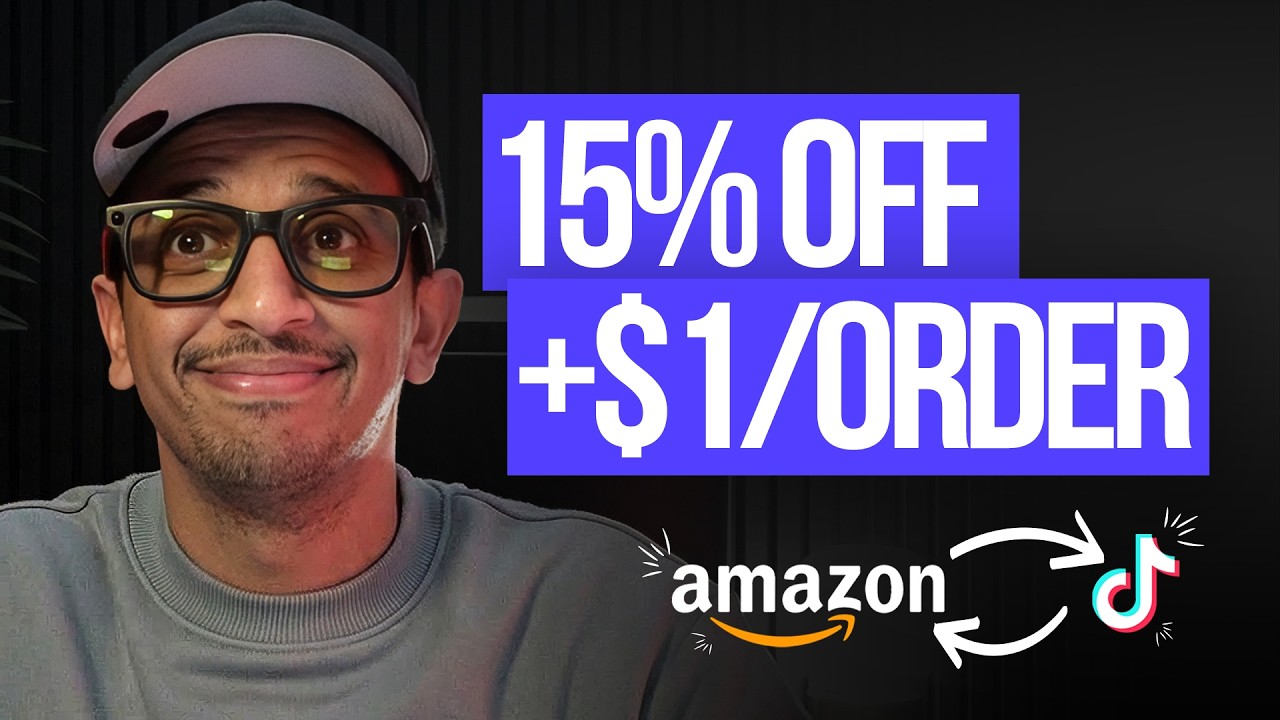
Now at the same time, Amazon launched MCF preferred pricing on January 15th. The deal, 15% off outbound fulfillment fees plus a $1 FBA credit for every unit you ship through MCF.
That credit is capped at $50,000 annually so we're talking up to 50k orders before you max out. The timing here is not a coincidence. TikTok needs reliable fulfillment to compete with Amazon's delivery speeds.
Amazon wants access to TikTok's viral traffic and younger demographic. This is a handshake deal disguised as a separate announcement. And the Oracle connection matters too. TikTok's US operations run through Oracle's cloud infrastructure.
That's the deal that keeps TikTok alive in the US. Amazon and Oracle aren't exactly friends, but They're both American companies with aligned interests in keeping TikTok operational and profitable. So what does this mean practically?
If you're a TikTok shop seller who's been fulfilling orders from your garage or a small 3PL, that path is getting harder. TikTok wants the reliability metric that come from Amazon's fulfillment network.
97% plus on-time delivery rate, professional packaging, predictable shipping windows. You're being nudged towards MCF whether you like it or not. The question is whether you fight it or profit from it.
Okay, so now let's look at the math On MCF preferred pricing. So here's where sellers get confused. Amazon announced fee increases across the board for 2026. MCF fees went up, AWD fees went up, buy with prime fees went up.
So when they announce a discount, the natural reaction is skepticism. Is this actually a discount or is it a discount on inflated prices that nets out the same cost? For high-volume TikTok sellers specifically, this is a real discount.
The math works, but only if you qualify. So let me break down the numbers. The 15% discount applies to outbound fulfillment fees, that's the picking, packaging and shipping portion of MCF.
For a standard size item that might be $4 to $5 normally, with the discount you're looking at $3.40 to $4.45. Then you add a $1 credit per unit, that credit goes towards FBA fees.
So if you're also selling on Amazon, which most TikTok sellers are, You're offsetting costs on your primary channel. So let's say you're doing 2,000 TikTok orders per month.
That's $2,000 in FBA credits monthly, $24,000 annually, plus 15% off every MCF shipment. So on a $4.50 average fulfillment fee, you're saving 68 cents per order from the discount alone. That's another $1,360 monthly. $16,320 annually.
Combined savings over $40k a year if you're doing 2,000 orders monthly. That's real money you're saving. But here's the catch, you need to qualify for preferred pricing.
Amazon hasn't published exact thresholds but based on seller forum discussion, it's auto-applied to accounts with consistent MCF volume. New sellers or low volume sellers won't see these rates immediately.
If you're doing under 500 TikTok orders per month, this might not move the needle enough to justify switching from your current fulfillment setup. The savings are proportional to volume.
But if you're doing 1000 plus orders monthly and you're not on MCF yet, you're leaving money on the table. The discount plus credits can offset 20 to 30 percent of your fulfillment costs and that goes straight to margin.
Okay, so now let's talk about how to actually set this up. So when most sellers here integrate TikTok with Amazon Fulfillment and assume it's complicated, they picture API connections, developer work, manual order transfer.
It's not that hard anymore. There are apps now that handle the entire connection. TikTok order comes in, automatically routes to your Amazon inventory, ships via MCF, tracking update on TikTok. You don't touch anything.
So here's the setup process. First, you need inventory in Amazon's FBA. If you're already selling on Amazon, you probably have this. If not, you need to send inventory to Amazon's warehouse and get it checked in.
That takes 1-2 weeks depending on Second, you connect TikTok shop to MCF through an integrated app. The main options right now are Webby and Geek Seller and there are a few others.
Most offer free trials and monthly costs run between $50 and $200 depending on order volume. The app syncs your TikTok catalogue with your Amazon inventory.
When an order comes through TikTok, the app creates an MCF fulfillment request automatically and Amazon Picks, Packs and Ships. Tracking uploads back to TikTok, customers get their order in 2-3 days with Amazon's delivery network.
Now, there is one important detail. MCF ships in unbranded packaging. No Amazon smile on the box. Your customers don't know Amazon fulfilled it. That matters for brand perception, especially if you're building a DTC presence on TikTok.
The practical move, if you're already on Amazon FBA, FBA, test this with a small portion of your TikTok orders first. Set up an integration, run 50 to 100 orders through it, verify the flow works and then scale up.
If you're not on Amazon yet, this is a forcing function to get there. The inventory centralization benefits go beyond TikTok. You can fulfill Shopify orders, Walmart orders, your own website orders, all from the same Amazon stock.
One warehouse feeding every channel, That's a real play here. Now let's talk about the strategy implications. Surface level, this looks like a logistical story. TikTok wants better fulfillment. Amazon wants more volume.
Sellers get caught in the middle but there's something bigger happening here. TikTok and Amazon are building a shared commerce pipeline. TikTok drives discovery and viral demand. Amazon handles fulfillment and delivery.
The traditional compete for the customer model is becoming collaborate on the transaction. So look at the data. Analytics from charm.io show that TikTok shop scales correlate strongly with Amazon sales lifts.
When a product goes viral on TikTok, Amazon sales for that product spikes within 48 hours. That makes sense. Someone sees a product on TikTok, maybe buys it there, maybe searches Amazon to compare prices or read reviews.
Often ends up buying on Amazon anyway. The platforms aren't competing for the same purchase, they're competing Competing for different strategies for the same customer journey. So why would they fight each other?
It's better to build bridges here. TikTok gets customers' logistical credibility. Amazon gets TikTok's traffic and younger users. Sellers who figure out how to operate across both platforms will do really well.
The sellers who get squeezed are the ones stuck in the middle. Too small for MCF preferred pricing. Too dependent on TikTok to ignore its fulfillment requirements. Not enough margin to absorb the higher fees. Now here's the strategic question.
For your business, are you building a TikTok brand, an Amazon brand or a brand that uses both platforms as a distribution channel? If you're TikTok shop only, this partner shop is a warning sign.
You're dependent on a platform that's incredibly dependent on Amazon. That's two layers of platform risk. If you're Amazon only, TikTok becomes a customer acquisition channel that The MCF integration makes that seamless.
If you're building a real brand across channels, this is an opportunity. Centralize inventory in Amazon, use TikTok for viral discovery, Capture the customer wherever they want to buy.
The winners in 2026 aren't platform-specific sellers, they're channel agnostic brands with integrated fulfillment. So this leaves the question, should you actually do this? So I've laid out the benefits but this is not right for everyone.
Let me be direct about who should jump on this. Now this makes sense if you have volume and margin. It doesn't make sense if you're low volume or low margin.
Do this if you're doing 1000 plus TikTok orders monthly, you have healthy margins, so I'm talking 30 plus gross profit, you're already on Amazon or planning to be and you want to simplify operations.
Please don't do this if you're under 500 orders monthly on TikTok. The savings won't offset the setup hassle. Or you're selling low margin products where every dollar matters, MCF fees will still be higher than your current 3PL.
Or you need branded packaging, MCF ships unbranded only. And also watch out for the fee cap. That $50,000 annual credit limit means the $1 unit benefit maxes out at 50,000 orders.
If you're doing more than that, you're getting a 15% discount but no additional credits beyond the cap. So run your own numbers before committing. Take your current TikTok fulfillment costs, model out what MCF would cost with a 15% discount,
add the $1 credit benefit and see if you come out ahead. Now if you're doing meaningful TikTok volume, the math will work. But most isn't all. So here's what's actually happening in ecommerce right now.
The platforms aren't fighting for loyalty anymore, they're building infrastructure that assumes You will use all of them. TikTok drives discovery. Amazon handles fulfillment.
You sit in the middle and profit from both if you're set up correctly. But here's what most sellers miss. Centralized fulfillment only works if you have demand to fulfill. And demand starts with discovery.
Knowing what content to create, what products are trending, what people actually want before your competitors. Google just rebuilt their Trends tool with Gemini built directly in it.
It tells you exactly what's rising, what intent is behind Behind each search and where the gaps are. It's like having a content strategist that sees Google's data in real time.
I broke down exactly how to use it step by step in my last video above. If you just watched this and you're still thinking about scaling across channels,
that video shows you how to find the products and content angle that actually have momentum right now. Link is up here. Go watch it.
This transcript page is part of the Billion Dollar Sellers Content Hub. Explore more content →