Ecom Podcast
This Underrated Ad Platform Outperforms Meta & Google
Summary
Chew on This shares actionable Amazon selling tactics and market insights.
Full Content
This Underrated Ad Platform Outperforms Meta & Google
Speaker 1:
Welcome back to another episode of Chew on This.
Today's a special episode brought to you by AppLovin and I'm gonna be sitting down with Joe Yackwell from who's the CEO of Within and he's here gonna be talking about how he's been working with hundreds of brands that are diversifying away from meta and he's gonna talk about some of the tips tactics on what you should really focus on as a brand.
Joe, first of all, thank you so much for making your way all the way across the water here and gracing our audience with your presence. For the few people who may not know you, give a little bit about your background.
Speaker 2:
Absolutely. And thank you so much for having me. It's great to be here today. So I'm the founder and CEO of Within. I started the company about 11 years in March. And then we started another company called Breakfast.io about four years ago.
And before that, I was really on the client side. So I actually, believe it or not, never worked at an agency a day in my life outside of starting this one. And it's really what led me here is that I was running marketing first for Quidzy,
which owned and operated diapers.com, soap.com, wag.com, and a few other brands, and helped run marketing there across the, at the time, nine websites, which then got sold to Amazon.
And then I went over to Vitamin Shoppe where I ran consumer marketing across the ecommerce business and the retail business, doing both acquisition marketing and retention marketing. And through that experience,
it just seemed like the agencies that I had worked with or inherited were really thinking about things more like a vendor and really through the lens of like channel first, not really the business first.
And I saw a big opportunity really to operate more like an extension of our clients' teams. And that's really the ethos of our business that It still exists today ever since we started is, you know,
how do we think about maximizing the profitability of that business over a certain period of time that they kind of look at as a time horizon and then wrapping a marketing strategy around that and really not the other way around,
which is what we saw in the market of, you know, here's how I do meta or here's how I do Google and I'll just do that for you.
Speaker 1:
I love that. That's awesome. So, you know, one thing I definitely want to ask because I, Sometimes envy the fact that people, some people get to have a really bird's eye view of what's going on in the market, right?
I think everyone else kind of looks at their brand and like, oh, well, things are really, really shitty right now, or things are really, really good. What's going on this year in your mind if you had to wrap up this year, right?
And maybe just explain what you're seeing from your view in the ecommerce space. Can you give us a little bit of color?
Speaker 2:
Yeah, I'll kind of zoom out like a little bit actually to kind of take you there. You know, I think the cycle that we've seen a lot of brands go through is You know, during kind of the peak e-com days of COVID, right, it was all growth.
It was a lot easier to grow. There was a ton of consumer demand there. And I think, you know, brands really rode that wave. You know, valuations were super high. The valuations are primarily driven by revenue, not necessarily profit.
And then we saw that really change, right? A couple of years after that, all of a sudden, you know, interest rates started to rise, the economy started to tighten, you know, stimmy checks weren't coming in anymore.
And then all of a sudden, it was like back to profitability, right? And I think the primary way that brands really drove that shift internally was Okay, let's cut back on upper funnel marketing.
Let's cut back on brand and consideration type marketing. And let's just really just lean into purchase optimized media. And I think that worked, right?
Like, you know, it was more profitable, especially in the immediate term, because that brand marketing, consideration based marketing has a longer time horizon.
So if you turn it off tomorrow, it's not like the business tanks and then you can kind of ride that wave of profitability. And then you wake up one day and realize, like, we're not growing anymore, right?
And that's kind of where we saw brands about, like, let's say, like, a year ago or so. And over the course of this last year, to answer your question, we're seeing brands now realize,
like, we have to go back into this kind of brand marketing, consideration marketing to grow share. If you break it down,
it makes a lot of sense because Purchase Optimized Media is really driven to optimize for conversion inside of like a biddable window. And that window is like 7 days for Meta, 30 days for Google.
You are literally telling those platforms, this person that you're going to go and reach isn't going to convert in 7 or 30. Don't even bother. And that's great for, again, low funnel intent, but you can't grow share that way.
And I think that's where brands are today, is on that journey back up, where profit's still important, but so is growth. And there is a media mix that really drives that. And I think that's where they're now headed.
Speaker 1:
Great point. I really appreciate that viewpoint. And you touched on something, which is This media mix and I think for, not for so long, but at least for like a good chunk in the last five years, it's felt like meta, meta, meta, meta.
Everything was like starting at meta. There was a lot of breadth around meta. And now I think like, you know, people are talking about a lot of other channels, right? Whether it's TikTok, Snapchat, YouTube, AppLovin.
What I'm curious on is what's been your guys' take on diversification? How do you, when you have a brand that's maybe hyper reliant on just one channel, how do you kind of look at it and say, hey, here's where you need to guys,
here's when is the right time to diversify? Or when is kind of like the some of the signals you're looking for to say, hey, we should explore something else?
Speaker 2:
Yeah, so, you know, I like to think about it like bottoms up, right? Like if you only had $1, how would you spend it, right? And then you kind of just keep tacking on and the answer continues to change, right?
And in the beginning, right, Google and Meta are obviously going to be the first places you go, right? No one's going to replace Google and Meta as, you know, that kind of first starting point.
At a certain point though, that next dollar and that next dollar and that next dollar,
you get to a point where that next dollar is actually better spent in another channel as your first dollar in that other channel relative to the next dollar in Google or Meta, right? Because it's all about marginal efficiency, right?
I can't spend another 100K a month on Google or Meta that is gonna perform at the same ROAS or CPA or LTV to CAC as the previous 100K, right? You're bidding more and more and more To scale more and more and more.
Now, obviously, there's tons of optimizations you can make to scale without your CPA going up, of course, right? But I'm saying all other things being equal, if the only thing you want to do is scale like right this second,
you have to bid up. And if you're not on more channels, then it's the only lever you have. Whereas entering a new channel literally shifts that efficient frontier curve out if we want to like have fun with like a You know,
Economics 101 here, right? The Efficient Frontier Curve is defined by the opportunities you have to bid in the market. And if you only have two, between Google and Meta, then you've defined that curve.
If you add more channels, you have more opportunities to put money to work. That Efficiency Frontier Curve literally gets pushed out, which is exactly what you want to do to maximize your return on investment. So, literally, where is that?
It's different for different brands. Like, as like a general rule of thumb, you know, the first $100K a month, you're probably going to be spending on Google and Meta. That next $100K a month is where you're going to start to see, you know,
more and more of those opportunities in more channels start to emerge. And that's where you really have to start being smart about budget allocation and data sufficiency.
Speaker 1:
Great, great. And I'm curious in terms of like, when you're looking at some of the operators and talking to some of these founders about diversifying, right?
What's kind of some of the main objections or pain points that you've seen many of them kind of come up with that seems like a common denominator?
Speaker 2:
Yeah, I think there's always a question of where do I go next, right? There are a bunch of options, obviously. And then the other question is creative. Do we have the creative to support it?
And then if you think about the creative component along with the literal effort of the optimization itself, Is that effort worth it relative to the impact? If you're only going to put another $1,000 a month to work,
is it worth launching an entirely new channel, managing that new channel, creating content for that new channel?
Speaker 1:
No.
Speaker 2:
But if you are at a point where your budgets are more scalable and you can deploy budget onto a new channel that is worth the effort of creative and optimization, then it's an opportunity that is worth going after.
Speaker 1:
Well said. So you launched Breakfast.io to help brands produce more authentic content. What is kind of, I think, the creative when you're starting to look at new channels, right? Obviously you need to be native to those platforms,
but is there a certain style or certain type of content that is a great starting point when you're trying to expand into new platforms or is it really platform specific?
Speaker 2:
Yeah, so I think things are platform specific, right? Like if you're on TikTok, there's going to be a certain experience that you expect, right? If you're seeing an ad while you're playing a game, right, which is where AppLovin serves,
like there's a certain creative that you're going to expect. And the same thing is true for each platform. Now, we're very big on this concept of there's a few pillars to being really successful with creative. A lot of volume.
A lot of variety, really authentic, which is kind of twofold, authentic to the platform, which is kind of what we were talking about right now, and authentic to the audience.
And then lastly, like a really good hook in the first couple seconds. That last one's actually kind of an interesting one as it relates to the different channels that we're talking about,
because most channels, almost all of them, AppLovin are skippable, right? You can just scroll past it. So that first one or two seconds is so, so critical, right?
This is where Meta's recent announcement around Andromeda is all about, you know, how differentiated is the hook, right?
They don't even really care if the rest of the ad is the same as much as they care about the first couple seconds not being the same. Whereas, you know, like certain ad formats on YouTube, AppLovin is not skippable.
So you can get away with, just as an example, a different type of creative treatment there because you're not trying to really focus on stopping the scroll.
So there are just some things to think about in terms of how you really can create content that makes sense for the platform and its capabilities and the user experience.
Speaker 1:
Makes sense. You know, there used to be a world where like when you're Understanding and like evaluating how your creative performed. I think we kind of had an era where it's like click-through rate, click-through rate,
click-through rate and then it's like look at CPM then you gotta look at CPC and then it started to become well what's your thumb stop ratio what's this right?
Now I feel like there is so many data points and then everyone has their own theory of what works and what it really should boil down to is what's also converting, right?
Is it driving, if it's just driving really good click-through rate but low quality traffic, doesn't matter, right? How do you guys go about Looking at the data points,
what are some of your North Stars on some of the platform specific metrics?
Speaker 2:
Yeah, so I think the first just like principally, I think where brands really struggle is that they get in their own way around trying to fight against the algorithm. So just kind of before I even get into the metrics we look at,
I would just talk about the principle first around the platforms are going to choose the ad that best achieves the goal that you set for the platform.
And the input that you give the platform around what you want to achieve, what KPI you're asking for, right? And how it's that objective is really set up. Is going to define the ads that work, not you, right?
We have a situation right now where we're doing all the creative for a client, but we don't manage their media. We made them 75 ads a month and their agency literally chooses 10 ads out of the 75,
like humans in a room being like, these 10 I like, these 65 I don't. That is just not how things work, right? And contrary to that, what we would say is, I don't know which 10 are gonna work, neither do you, but the platform does, right?
And I don't even really have to pick a metric. I could give the platform all 75 ads and it will spend on the ones that work the best. Now, do we look at metrics? Of course, right?
We're looking at those metrics not to tell the platform which ad to serve. We're looking at those metrics to figure out What is and isn't working for that ad so that I can make a better ad?
So I might have an ad that's currently my top performer. I might have another ad that's my second top performer. And if I see that the thumb stop rate on one ad is better than the other, but the conversion rate on the other ad is better,
I'm going to now look at that and say, can I combine these two, right? Can I take the hook of the ad that has a really good thumbstop rate and combine it with something else,
whether it's the call to action or whatever else is happening in the other ad that we think is driving conversion, right? So of course we look at thumbstop rate, we look at click-through rate, we look at conversion rate,
but again, those are things that we look at to analyze and break down why this is happening in this ad, not which ad we think should drive the budget.
That is where you do not want to get in the way of the platform because the platform understands much better than you or any human what to serve to who and when based on the objective you set.
Speaker 1:
No, it makes a lot of sense. What do you say to the people who upload these ads and often complain that Meta is giving all the spend to this one creative? I need to go and move out some of these creatives and force spend on these other ones.
Speaker 2:
That's my favorite.
Speaker 1:
Okay, I want to hear it because I hear it too much.
Speaker 2:
So not only is that my favorite, right, but The idea that you can force the spend to go somewhere else, or the other one that comes up a lot that like sounds more logical, but just is straight up like not true.
If we were running like an episode of MythBusters, like we would go and do it. We've literally busted this myth with like 100 case studies. Is that like.
No, no, no, what's really happening here is that this ad has so much history and that's why it's working. And if we just paused it and let other ads get the spin and get the history, then they would work.
Speaker 1:
Not true, not true, right?
Speaker 2:
So really, you know, what's happening here is it's just the best ad you have, right? And what I think a lot of brands who create a lot of content start to realize is that it is a numbers game.
So as a rule of thumb, we see that about one out of every 100 ads becomes a top spending ad. Like if you literally judge- That's a 1% hit rate. 1%, right? Now again, I'm defining this hit as a top spending, like the number one spending ad.
Speaker 1:
Got it.
Speaker 2:
But still, right? It's a really eye-opening thing to understand, which is I'm going to make 100 ads. Only one of them is going to beat my current top performing ad.
So if you think of that example where that person who's frustrated sitting there going, this ad from six months ago is still top spending and my creative team hates it and it's not even great for my brand and whatever the case is, right?
The first question I ask is how many ads are you making a month? Because if they're making 10 ads a month, I'd be like, hey, you're signed up for 10 months on this ad, right? Because it's going to take you on average 100 ads to find one.
You're making 10 ads a month. It's going to take you 10 times to beat that winner.
Speaker 1:
Do you say that rule?
Speaker 2:
That metric is irregardless of spend levels. What's not is how many ads should you make a month, right? Because in the end of the day, creative costs money, right?
And obviously, if you spend 10 grand a month, making 100 ads a month doesn't make any sense, right? It's still the same metric, though. So the question is, what is the juice of making more content?
And we built our own creative calculator based on dozens and dozens of experiments and case studies and client data to understand How much content should you make based on your spend level?
And while I don't have the calculator here obviously today, what I'll tell you is that It gets into the hundreds of ads. We have a client right now, they spend about two, three million a month. We're making them 200 ads a month.
For that client, it makes sense because they're going to find two winners, not every 10 months, every single month they're going to find new winners on average. For that amount of budget, it makes a lot of sense.
Brands, for some reason, look at media spend relative to creative spend as if they are coming from two different wallets, right? Money's money. And if I could take money out of your working media dollars, put it into creative,
and the net result of all that money is a better ROI, why wouldn't you do it? And I think brands are underinvested typically in creative relative to their media spend as a ratio.
Speaker 1:
Yeah, really well said. I think we see it a lot too. Even when we're doing certain like consulting calls or like we'll talk to some founders. And I think a lot of times it's like, oh no, I can't spend more on creative.
Like, it's like, oh, no way. Like I'm already spending 10K on an agency. And it's like, but you're spending a half a million dollars here. It's like, it also cannot be like this comparison lopsided thing either.
Like, does that math make sense to you, right?
Speaker 2:
It's actually easy to A-B test too, right? Because I could say to you in that example, you could say, hey, look, let's just really make it really simple. We'll make 50 ads, right?
In one, you can pick five or whatever it is that you're making now. You can even pick them. I don't care. I'll still beat you, right? Pick what you think are the best ads, run that against half the budget,
and then I'll take all the ads and run it against the other half the budget, and you'll see what works better. And even if you let people pick, it's still not going to work.
Speaker 1:
Now, great, great, great, great insight. Truly spoken from someone obviously who's been running tons of brands. But I think, you know, on this same note, I want to take the same kind of discussion and now move it towards like,
if you were to talk about one platform diversification, let's say we have a brand that wants to go to and say, hey, I'm ready to explore AppLovin. Let's just take for example, right?
And this is a brand, I just want to put a scenario that's spending a million dollars a month on meta, okay, or collectively meta Google, right? Draw me out like how you from your angle would go and explore a new channel like AppLovin.
Where are you starting? Because I think the other problem is Diversification of channels has really not been introduced to enough systems. I think with meta, there is systems. Google, there is systems, right?
It's like, hey, this is really how you need to start your approach. I think so much of these other things like a Pinterest or AppLovin and stuff like that, it's kind of come about us and it's like, all right, let's just hop on the platform,
right? And it's like, we'll figure out what we need to give it to, but walk us through if you guys have derived a system and how you'd approach A brand starting in AppLovin.
Speaker 2:
Yeah, so I think the foundation is always set in measurement first, right? Like why even enter a new channel if you don't know how you're going to measure it, right? Because then you just might as well not even start.
You're going to get to that point and say, well, now what do I do, right? And measurement, you know, is key in general across Google and Meta.
You should already have a measurement system or framework set in place just for budget allocation between Google and Meta in the first place. And you can use a similar system to launch new channels.
I think incrementality testing is actually very misunderstood. I don't think people realize what they're testing or what they're measuring when they're running an incrementality test.
So let's take an example like we're going to go and launch on let's say AppLovin, right? What you're measuring if you do an incrementality test on AppLovin for $100K is literally in that,
let's say you take your example, I think you said a million a month, right? You're literally saying, what is the marginal return of spending $100K incrementally over and above the million I'm already spending on Google and Meta?
That is what you're testing. If you compare the performance of that $100K against the spend that you already have on Google and Meta, you are literally not doing the thing you just measured.
Speaker 1:
And setting up this platform for some level of failure.
Speaker 2:
For sure, right? Because what you really are measuring in that example, if you wanted to run this more fairly, is what is that new $100K on AppLovin performing at relative to the next $100K I would spend on Google and Meta?
Not the first million, right? If all you did was flip the order, if you started out with AppLovin, just as an example, right? And the first 100K you spent was on AppLovin, or the first million you spent was on AppLovin,
and then you tested the next 100K in Google or Meta, right? It would not produce the same result, right? So you are actually only testing the new layering of that incremental budget over and above your existing budget.
That's what you're measuring, right? I don't think most people actually appreciate that Like understanding of the measurement philosophy. So I just want to kind of mention that first. Love that.
The second thing is where should I go test, right? So like why would you test on AppLovin versus Pinterest versus Snapchat versus TikTok or whatever these channels are that you're looking at after Google and Meta,
assuming those two are your starting point. And the first thing for me is Footprint, right? Snapchat, Pinterest, right? Footprint is way smaller than TikTok and AppLovin.
And the reason why that's true is because you have to be on Pinterest or on Snapchat to see those ads. Same thing with TikTok. TikTok's just, you know, a bigger platform.
For AppLovin, it's not the same comparison because people aren't on AppLovin, right? If you ask your consumers, where'd you hear about us? And you have AppLovin in the dropdown menu, they're like, what are you talking about, right?
But AppLovin is serving in all the games or obviously not every single one, right? But gaming in general. And most people are gaming in one way, shape or form, which means that they are reaching most of the people in the United States,
right? And obviously a lot globally as well. I think it's like a billion globally. The first question is like scalability. Now, if you have a nichey product that for some reason makes a ton of sense overlapping with a Pinterest or a Snapchat,
then yeah, maybe you should go there first, right? Like, you know, we've done a bunch of stuff in wedding, right? Like Pinterest is great for wedding as an example.
So like I probably would go, you know, for that client, go to Pinterest first. But if you're more mass market and you don't have a particular niche that for some reason really skews heavily towards a Snapchat,
which oftentimes like a younger audience, like we have clients that sell things to teens, like that might make sense. But otherwise, AppLovin is the next place that we would go simply because of the scalability of it, of the audience.
And then in terms of setting it up for success, AppLovin sends a lot of brands to us on the Breakfast.io side of things because Like Meta, it needs a lot of content, right?
Because they want to figure out using their AI algorithms, what should we serve to who? And because the platform has so much scale, if you give it five ads,
right, then it might not work because it doesn't have the right content for the right user at the right time. So very similar to Meta, we want to give AppLovin a ton of content, right? UGC happens to work super well there.
Again, similar to the size of the budget, but I would say if you're going to start out on AppLovin and you're not going to start with at least like 50 ads, you're not setting it up for success.
So can you repurpose ads that you've already made for meta? Absolutely, you can. And you can definitely start that way. And over time, you'll start to realize that there is a little bit of a different game that you're playing on AppLovin,
mainly because it's not skippable. That you can then do things that you wouldn't want to do in other platforms.
But it's actually an interesting opportunity because you have more time to serve that message in a way that doesn't have to have this rushed hook in the front. So you can do things that are different with that hook.
That hook might actually be better suited at the end. Because that's where the content is going to be over and you want to get them to click out. So those are just some things to think about for measurement, to channel selection,
to setting it up for success with creative, and kind of how I would compare those different things.
Speaker 1:
Excellent. I'm curious, I mean, you guys have been touted as, you know, one of the best agencies to work with, even on pure play AppLovin side, right?
I'm curious, like, Are there certain brands or categories or niches that like you've seen as like, hey, this is a no brainer, almost always works versus like, ah, this one, like, this one's a little bit more trickier.
I'm curious on your thoughts, like, I've equally heard where people are like, oh, AppLovin doesn't work for for our category. I'm like, Actually, there's many examples it does.
I think you're writing it off because maybe you haven't tested it right, but just curious from your more global perspective of being able to work with so many brands on it. Is that true?
Is it meant for really one type of a few types of categories?
Speaker 2:
I don't think that that's true for any. It's a channel that reaches so many people. How could it be true that it doesn't work for this category, but it reaches the whole country? It just doesn't make sense to me.
Now, are certain channels going to be easier to activate for certain types of brands? Sure. Based on the way that the ads serve and where they serve for AppLovin, things that have lower consideration, lower average price point,
I think are just easier to get quicker wins and scale. I think brands that have higher price points and therefore higher consideration, it just takes longer to mature and realize.
And again, think about that consideration relative to your test. It all comes back to if you're launching a new channel, how are you testing? Because otherwise, you're just going to turn it off, right?
If the consideration timeframe For your product is four weeks, right? How long should you run the test is gonna be the question, right? Now a lot of people will say four weeks.
What that would mean is every single person that you reached on the first day is the only people that you care about because every person after that didn't get four weeks.
I would say the minimum for that example would be eight weeks because you want to have all of those people have a chance to convert. You might even say, we're going to turn it off after four weeks. Wait the next four, right?
And then measure the eight as an example, right? So I think there's so much about the test design that turns into whether it works or not for your brand or your category that people have to be very thoughtful about.
And again, if you're not going to be thoughtful about it, then just don't do it.
Speaker 1:
I love that.
Speaker 2:
Right? Because it is about effort and impact. You're putting in all the effort and then you're not even giving an opportunity to make an impact.
Speaker 1:
That's right. What really well said, you know, we had a couple of brands on the pod, Mary Ruth, as well as Breeze. And Nick Shackelford, I remember him saying, like, AppLovin is becoming a point where it's like toe to toe with us on meta.
And, you know, one of the things he said, it was like, if you don't give the platform the right chance to succeed, then you were never looking for this to be more than just ancillary spend.
And I'm curious, like, are there brands where AppLovin's become something that you guys are like, hey,
we're going to consider this toe to toe with Meta or toe to toe with anywhere else they were spending more because of how much growth you've seen?
Speaker 2:
Yeah, so, you know, I think, in general, we see AppLovin work across a variety of brands, right? It could be, like you said before, you know, what type of brands, high consideration brands, whether it's like, you know, Ruggable or Casper.
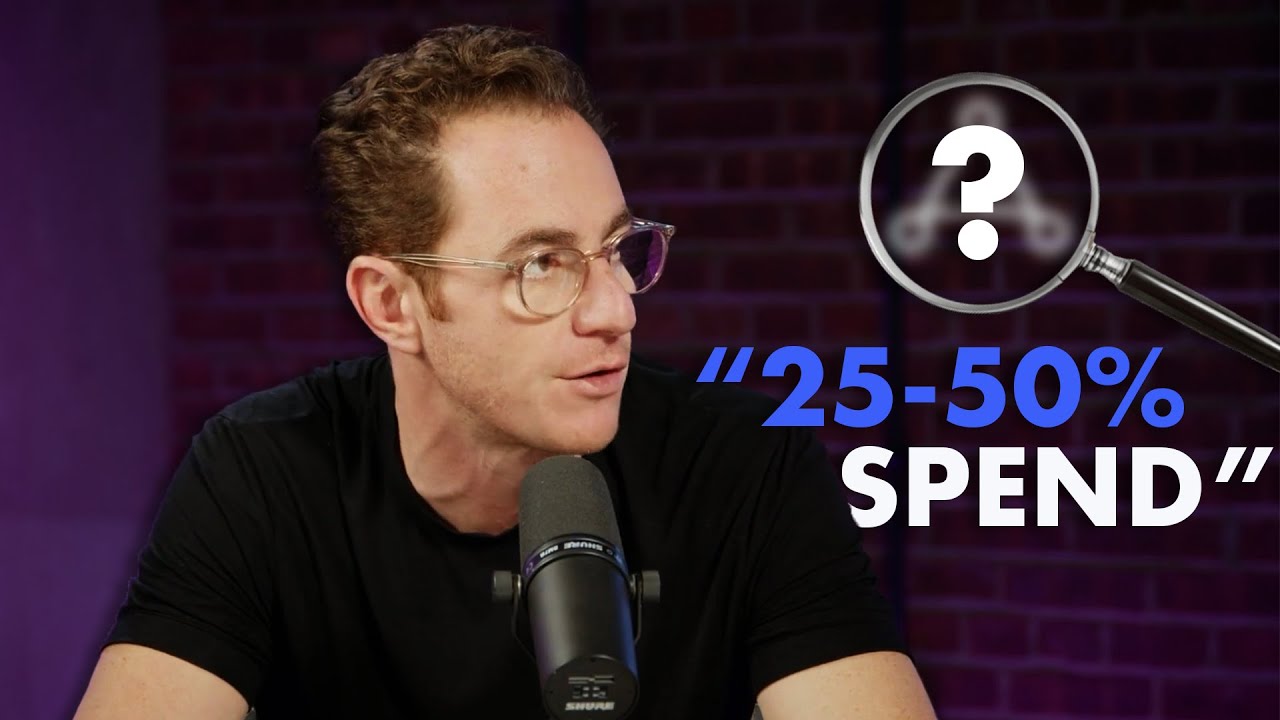
Or things that are more impulse buys, right? Like Perfume.com. And it really ranges in terms of how much spend they end up getting. I would say like on the low side, we're seeing something like 5%.
I think for some brands, I'm talking specifically about enterprise here too, where the budgets are much bigger. We see other brands up to 20, 25% of their spend.
I don't quite necessarily see 50% all the time, but we do see it sometimes as well. And again, that's where it really comes down to like, who is your audience and what is your creative strategy? But it is possible. And I think, you know,
if you think about an enterprise brand spending 20% of their media on a channel that a lot of brands aren't even on, like that's super, super interesting.
I think the other thing that we're seeing is that, you know, the Axon platform is very AI driven. It's much more similar to a Pmax or an Advantage Plus than it is to like a regular, you know, kind of static campaign type.
And because of that and the fact that so many brands are still not even on the platform. It means that the more AppLovin scales with brands, the more that AppLovin will scale for you. Because like Meta, how does Meta work so well?
It's not just because Meta has all of this social data, it's because Meta has all this commerce data. It knows that you're visiting this site, you're looking at these types of products, because those sites are all pixeled.
Speaker 1:
And it's a model that's built over 10 plus years.
Speaker 2:
100%, but it's not just that the algorithm is built, it's that the data itself on the users and the sites that they're on is built. So as more and more brands literally just set up AppLovin pixels on their site,
the more and more that AppLovin will understand what consumers are engaging with what type of content for what types of products, it will actually perform better. So if the only thing you did was just sit on the platform and just waited,
You'd see more scale solely because the platform's getting more efficient by more brands putting their pixels on and running spend through it and letting the algorithm learn on it.
Speaker 1:
That's brilliant. I think closing thought on the AppLovin piece and diversification in general, right? When it comes to creative specifically on AppLovin, When it comes to these end cards,
any tips you can give because I think a lot of people have taken the route of, let me take my meta winners and then I'm just going to go and create some end cards.
But, you know, is there anything that you would say tactically has been a standout of like, oh, do it this way or think about it this way that you can maybe call out here?
Speaker 2:
Yeah, so if your brand is promotional, right, then we typically see the best performance with simplicity, right? Logo, promo, button, like keep it simple. You know, it's, I use like the analogy of like the shampoo commercial where like,
you know, it's like, it makes your hair soft, it makes your hair shiny, it makes your hair strong and it's like, it's like they give you like a hundred value props and then you're like, wait, what does that thing do again?
It does everything like that's like an all-in-one printer, right? And people take that strategy with end cards with like, and jam this message and jam this message, right? Keep it simple. You know, the user is playing a game.
It's really important to put yourself in the shoes of a user, right? Like, what are they doing? They're playing a game, right? They're waiting for that ad to finish to potentially keep playing or go and shop, right?
So you want to make that end card simple so that they can really digest that message and make that choice. Like, do I want to click out or do I want to go back and play that game? And if you clutter that too much, right,
it becomes white noise and then they just go back to playing the game.
Speaker 1:
Well said. Incredible insights. I do want to spend a few minutes doing a little bit of rapid fire because you've been incredible on all the insights. So for the few people who don't know some of your inner secrets, let's hear them.
All right, let's do it. Question number one. Most underrated marketing channel right now?
Speaker 2:
Yeah, so I think AppLovin does get a lot of hype, but I still think from an adoption perspective it's one of the lowest, so I would probably say AppLovin for that one.
Speaker 1:
Fair. One creative format every DTC brand should test?
Speaker 2:
UGC for sure. I think so many brands are so sensitive about the way they show up that the way they end up showing up is always the same. And while that sounds good to certain people of like, oh, that just means we're being consistent.
It also means you're not testing outside your comfort zone. And you could see even luxury brands do that well. Like my favorite example of that is like what Laura Piana does with the Gestalt guy, if I want to say it properly, right?
Like people would be like, Laura Piana would never be on TikTok or whatever, but it's like, yeah, they are. They do it in a way that makes sense for them.
Speaker 1:
Correct. Great, great example. Biggest mistake founders make when diversifying.
Speaker 2:
Not setting up the right expectations for test design.
And the easy gut check is you should have a piece of paper that you can look at before the test runs and understand exactly why you will or won't scale it that you don't have to wing it after.
Don't set up a test and then say we'll analyze the results at the end and then make a decision. What are you analyzing? Set it up in advance. These are the things that need to happen.
This is what it needs to look like and if this happens, we will scale it or do something else. If not, not. But test design should be set up up front and you should know what success looks like before you even press go.
Speaker 1:
Yeah, love that. What metric matters most for long-term growth?
Speaker 2:
To me, LTV the CAC, right? I think every business is the same. We're all trying to make money, right? Your business, my business, all of my clients, everyone's trying to make money. The question is on what time horizon, right?
I think some people will say things like, well, Amazon's not trying to make money. Of course they are, right? They just have a longer time horizon. And that's what LTV CAC is all about. Is your time horizon two months? Is it two years?
Is it five years? But LTV the CAC is the name of the game.
Speaker 1:
It's amazing. Lastly, I think you're an incredible founder. What keeps you motivated as a founder?
Speaker 2:
I'm personally, this is a me thing, just like addicted to the action, which is why I love my business because there's always new things. There's always challenges. There's new client business models that I have to understand and optimize to.
Their platforms are changing. Regulation is changing. Consumer demand is changing. The way that investors think changes, which is what changes our clients' needs.
So just everything changing all around me all the time is what just keeps me super engaged and I'm kind of addicted to the adrenaline of that change.
Speaker 1:
I love that. Joe, you've, for someone who's built incredible agency, incredible platform with Breakfast, and has probably the privilege to not be as in touch with things,
you're incredibly, incredibly well knowledgeable, you've shared incredible insights, and I really, really appreciate that. To leave our audience with one last thing, one thing to chew on, one thing you want them to do,
whatever it may be, any topic, what would be that one thing to chew on?
Speaker 2:
Really question how you invest in creative relative to media and whether or not you really have the right mix of that investment, not just your media mix, right, but your actual media versus creative mix.
And I would say that most brands are under-invested in creative relative to media, and that doesn't mean you need more budget. Take some money out of work media, put it into creative, and if you can get a better return, let it fly.
Speaker 1:
Chew on that.
Unknown Speaker:
If you want more from us, follow us on Twitter, follow us on Instagram, follow us on TikTok, and check out the website, chewonthis.io.
This transcript page is part of the Billion Dollar Sellers Content Hub. Explore more content →