Podcast
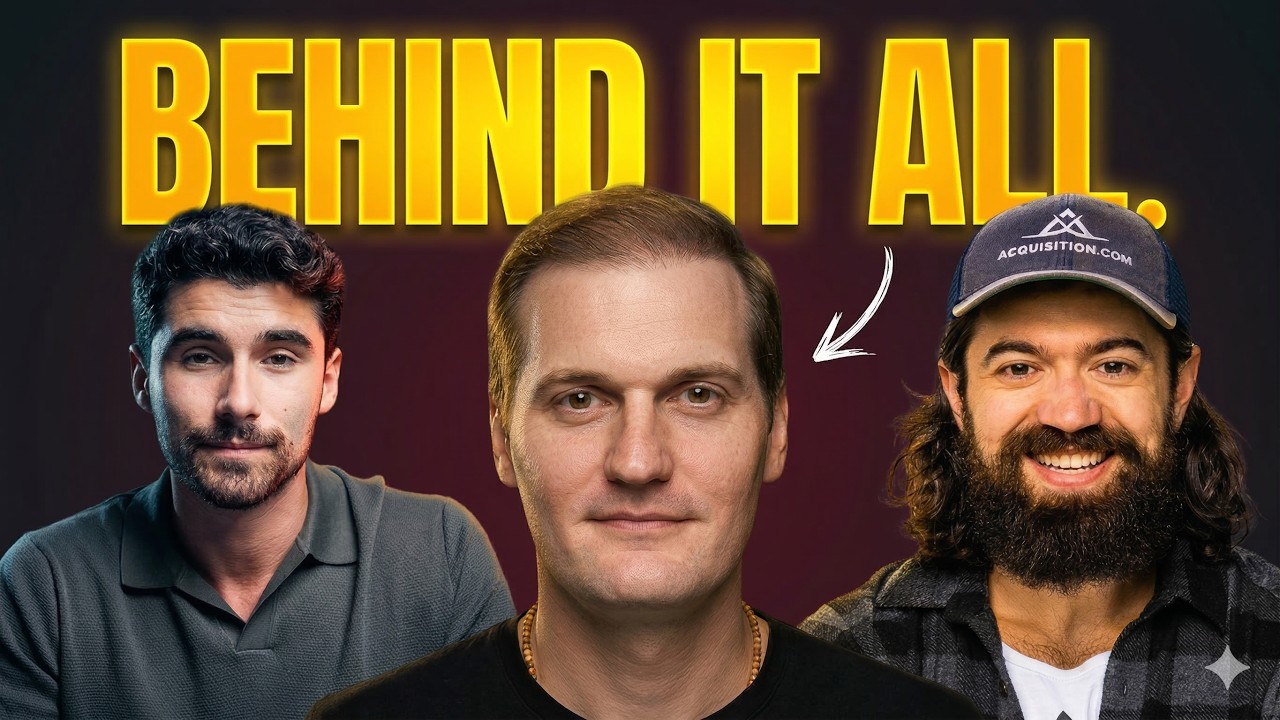
The Webinar GOAT: The Secret to $100M Webinars
Summary
The Webinar GOAT: The Secret to $100M Webinars - Most people run webinars completely wrong. In this episode of Marketing Misfits, hosts Norm Farrar a...
Transcript
Most webinars, the high majority are just run wrong. The one biggest change that people can make to their webinars these days, and I pioneered this change, and I used to advocate for it all the way back in 2008, is we just tell them upfront we're selling them. >> What is it that makes webinars so powerful? >> Iman Godzy, who I've now done two eight figure launches with this year. We sat down when we started working together and I said, "How many people do you think are going to buy?" One of the most successful webinars of all time was a Hormosi one that he did over $100 million on his book launch for $100 million offers. I know you consulted a little bit on that. What do you think made that work? >> I will provide you value. You will leave better than you came. You will be able to do things you couldn't do before. >> You're watching Marketing Misfits with Norm Ferrar and Kevin K. >> What's up? What's up, Mr. Ferrar? How you doing today? Good. How's it going, Kev? >> Yeah. Refilling your coffee, ready for another awesome podcast. >> 100%. >> I think this is going to be a fascinating podcast for a lot of people because some people know the name of our guest today. Some people have no clue who he who he is, but he's probably one of the greatest minds out there when it comes to selling one to many uh or even one to one, but especially one to many. Um, I've known uh about this guy since I think I first heard him speak in like 2014 on amazing.com. He was doing a pitch trying to get people to buy like a $5,000 course. Didn't know anything about the guy. Just like, man, this guy's really good at what he's doing, the psychology of what he's doing, how he's leading up. Turns out he was like the number one affiliate. Did like some crazy tens of millions of dollars uh on on this deal. Uh, and he's gone on since then, and now I'm sure we'll talk about he's done a $57 million webinar. Uh, he's done, uh, doing some stuff with this young guy in Dubai that's just like over the top crazy. He's told us some stuff. He's one of the co-founders of the Driven Mastermind, which I'm a member of, uh, and always delivering just massive value. So, I'm super stoked to have him on. And you and I do a few webinars, and uh, you know, we make we make a a penny or two here or there, but nothing like this guy does. and I'm talking to him about coming out to my event in April in Nashville and hopefully hopefully he'll be able to make it out for I know his birthday is right around that time and there's a driven mastermind shortly after my event, but hopefully he can get out there. Uh but uh it's just a fascinating mind, one of the smartest guys uh and uh super stoked to have him on today. You know, what was your first experience with uh with with our guest today? >> I was one of the members of Rapid Crush way back when. >> So he got you to spend money. He got me to spend money and I was happy to do it because uh it really did change where I was going. So uh and he's changed so many people's lives. So why don't we just get him on here? Jason Fladlin. >> Let's do it. Mr. Jason. >> Tada. There he is. There he is. He magically appears. How you doing, Jason? >> I'm doing good, Kevin. Norm, it's such a pleasure to be here. >> Now, I want you to take note, Norm, of this guy's face right now. Look at the the energy in his face. You've seen some other stuff in the past where he didn't have this smile. He didn't have this glow. This is the glow of love. This is the glow of being in love, of meeting his match, of meeting his dream. And he still, you know, usually when you get married or you you get a new girlfriend, it, you know, you have that halo effect or that little thing that lasts for month, 2 months, something like that. You've been married 77 years, so you you you don't know what this is anymore, Norm. He still got that. What is it like, Jason, to just be finally madly in love? >> Yeah. I mean, it makes everything else in life easier. >> It does. >> Simple answer. Yes. >> Simple answer. Simple. >> Oh. >> Oh. So we never gave you a formal introduction and uh you know I I was mentioning about Rapid Crush and that was that was the beginning wasn't it of your webinar success really even further back than that. So, I started selling product in 2007 on the internet, $4 ebooks, uh, you know, big-time level stuff, right? Uh, and then I got some success because really the things that I were publishing were helping people. And it's a weird concept in the information business to actually create things that transform people. U, selling is one thing, transforming is another thing. And I was really good at the transformational part uh more by accident than on purpose. But when I recognized it, I started building systems around it. And then from that, I just said, okay, if I can help somebody transform with an ebook, maybe I can help them transform better with an audio program. Maybe I can help them transform even better with a video program. And then the ultimate is transforming by having interaction. And that is what a webinar represents. So I started doing webinars in 2008. And then I was pretty successful with them pretty quickly. And then >> this before Zoom or before this like go to webinar or >> go to webinar. Yeah. >> Yeah. The good old days of go to webinar. And so I was doing well with webinars and then I wanted to get in the software business because I thought well what's another way I can help people succeed? If I teach them that's one thing but if I give them an interface then that will allow them to do things that normally they can't do even if they know how to do them. Uh, and so I partnered with a guy named Wilson Matoss to launch a software. And guys, I may be the first, if not one of the first people to ever use a webinar to sell software because we're talking, this is 2010. And so we partnered together on it. Went really well. We said, "Hey, we should form a company." So we formed Rapid Crush January 1st, 2011. It's easy to remember. One, one, one. Yeah. And uh yeah, it's been we're still partners here almost 15 years later now at this point in time. It might be the longest running partnership in this industry and we're still going at it. So a lot has changed, but at this the center of it is webinars still. I remember you did some a launchpad. What's this like 16 17 18 somewhere around in there? And everybody on Amazon was trying to figure out how can I launch, how can I get and you guys did a software tool and it was like 10 grand or something where you did monthly payments of a thousand or something. I bought it something like that. But you you went on a webinar and I I'll never forget >> you're like you had just started doing the pitch or I don't know remember the exact but you're like a few minutes into the pitch and all of a sudden you you were you're usually very fluid and very uh good and you're just almost like without words. you're like uh stumbling a little bit almost and I think that your partner was telling you stop. We've already sold the whole thing out or something like that and y'all did like was it like $1.5 million in like 2 minutes or or of opening a part or something like that like that? >> Yeah, we had planned to originally launch a hundred because I like to just because you can sell doesn't mean you should right. So when we're launching new things, we are trying to underell the units so we can make sure the customer has a positive experience. And so in that particular case when we launched Launchpad, it was we're going to open it up to 100 people Amazon sellers at 10K. So you can just run the math. It's a million dollars. Uh pretty good payday. I expected to have to earn it over several hours of being like I I mean no brainers still take brains, right? is like even if it's almost a sure thing, people are like, "Yeah, but this one weird reason may be stopping me from succeeding and I don't want to buy because I'm afraid of the boogeyman kind of a deal." Uh, but this was an instance, you're right, Kevin, I open up the offer and I'm just getting warmed up, just getting ready to dig in and spend a couple hours talking it through and we we sold 114 spots in a few minutes and then Will just pulled the plug on it. He's like, "Dude, I can't get a hold of you because I didn't look at my text messages yet because I generally do a pitch and then check in with Will to see where we need to go." And he was like, I just had to pull the plug. So, 1 point uh like 1.14 million in a few minutes. Closed it down. Second time we did that, it was 3.29 million when we opened that webinar up again next time. Those were the days. Those are the days, guys. >> You put You put amazing on the map, too, with webinars. I mean, they were kind of doing their thing. And you came in on what, AMZ 3 or four? Uh, >> no, we were there from the very beginning. >> Oh, the very beginning. Okay. >> Yeah. So, 2013 ASM1, we were the number one affiliate, ASM2, number one affiliate, ASM3. But see, here's the difference, Kevin. This is we took a whole another level of success for affiliate marketing. So, I'll never forget this because they had this badge system. And so if you sold X numbers, you got like the one sale badge, five cell badge, 10 cell badge, 20 cell badge, 50 100 sale badge, etc. Uh we sold so many units that they didn't even make a badge for the amount of units that we sold because it was beyond the scope of what they thought was possible. And so they made the badge and it had Will's face and my face on it and that was the badge. >> Yeah. And that was ASM 3. And then ASM4 was bigger than that. And then ASM5 is when we sold $9.8 million as an affiliate of somebody else's product, which is still the record to this very day in sales uh as an affiliate. And yeah, those Yeah, that was the the 2015. I think I joined you ASM3 and what you did like I couldn't believe the offer and that's what you're famous for right now is just that huge value stack and uh I think nobody could compete with you because nobody had that value stack and I knew a lot of affiliates back then and uh all of a sudden you went out there and you had a couple of days beforehand if I remember right there was the rapid crush like the private event that we went to. Uh it was great. Uh you really >> outdid any other affiliate that was out there. Like >> that was fun. Yeah. >> Wasn't anybody even close. >> I wish affiliate marketing was still in style because it's a perfectly valid business model. But the kids these days are so addicted to social and paid advertising that they don't know. They have no idea the power of affiliate marketing. Are they paying more when they're doing I mean I know you're doing a lot with the guy in Dubai and y'all we'll talk about that maybe in a minute but y >> is it is it cheaper per lead to drive it off of social than it is off of affiliate? >> Uh sometimes you know it's the biggest power in these promotions that people underestimate is even if it is cheaper on social or really it is cheaper on social but it's harder in time. paid can be cheaper in some instances, but what you get with affiliates that you can't get anywhere else is you get an additional endorsement. >> So if one person that you have affinity for is this is really good. That's fantastic. If somebody else who you have even more affinity forces buy this person's product, not buy my product, buy your product and you like me and then I say if you buy through me, I will also do X, Y, and Z for you for free. like you don't pay extra. I will give you extra stuff and you pay the same price as you would if you didn't get the extra stuff. And because we have a relationship, I can tailor make it specifically for my audience for what I offer. And then that's like you can't get that with advertising. You can't get that with social. That's an additional persuasive capability that is only reserved for um influencers and for affiliates. And people just have gotten away from it because you can scale more these days with paid and with social. But these models before we could scale, before we could advertise really to the level you can now. Uh we tapped into that kind of stuff. Uh my best clients that I work with generally do a blend of both. They do a combination of of paid and free and affiliates. Uh but it's hard to do all of them at once. So if people want to do a certain way and you try to convince them other ways, you're probably going to lose. So you just take what people are most excited to do and you extend it to the capacity in which it can handle. >> So you must get bombarded with every company, you know, with tons of companies just bombarding you. What are you looking for in in a company to even start to work with them, to even think about working with them? >> That's a great question. So, and Kevin says the money that is a pretty critical part of it. >> This is class first class seats and money. >> Yeah. I mean, yeah, the money is a is a is a core part of it, but it's not the only part because I've had some companies come up to me offering me large amounts of monies that just >> ethically don't align with the values that I have. So, the number one value that I have is impact. Um, I want to be able to have impact on the audience that I can reach. And so the more impact I can have both in quantity and quality, ideally optimized for both, the more interested I am in the the project. And the number one consideration when I take on a deal with a client is if I don't feel for their market, they have the number one best product or offer or offering, I don't want to do it. Because the biggest secret to winning, guys, is play games where you can't lose. Like, this is the trick more than anything. Success comes from knowing which games to play. And you want to play games where you have a huge advantage. And the number one advantage that you can have as a marketer is having a substantially superior product. We just then have to figure out how to position it. But if it's if it's not already an amazing product, it's hard to make up for that with marketing. you have to work 10 times as hard and you don't get the impact. So I would rather not have to work as hard by having a superior product to get the impact and then also work hard because now we can put in as much effort as possible on a truly exceptional thing. What is it that makes webinars so powerful for selling? what what is it that you know people go in and in the early days I can see it they're like hey I'm going to learn something and people always say give value give value give away the farm because they're not going to do it most of them aren't going to do it anyway and it's you're just going to and then when you get to the pit you're giving your value you're doing your preliminary stuff or whatever and then you get to the pitch you always see in the comments ah here comes the pitch here comes the sale and then people are bailing and left and right what is it though they still work uh especially if done right and you have a technique we'll talk about some of that in a um to do it. But what is it? >> Why are webinars still even in today's world powerful? >> Yeah. I mean, so there's there's this matrix of efficiency and effectiveness that goes into any marketing campaign. So hyper efficient campaigns would be onetoone in person. You and I sitting down, hey Kevin, what are you struggling with? Let me see if I can help you. diagnosing your particular needs and then answering your questions specifically and only related to you at the expense of everybody else. That is going to be the most effective type of marketing that you could ever design. It is the least efficient marketing you can design because I can only talk to one person at a time and I have to customize every single form of communication to that individual. Now you can build teams, you can send teams out there, you can do that. Uh but that's a lot of work, right? Um, on the other side, what is incredibly efficient but not very effective is mass market communication. Like you could take out an ad uh on the radio and you might reach 20 million people, but it's not very effective. And so you're like, well, I'm trading in efficiency for effectiveness. And the intersection of those two is the success of a marketing campaign. How do we be as efficient as possible and also be as effective as possible? And the webinar is probably the best tool for most industries for that intersection. We have the ability to feel and come as close to one as one-on-one as possible while reaching as many people as we possibly can simultaneously. And to really get further into uh the the nuance of why it's successful, it's really this. Uh 7% of a market spends 70% of its money. And if we're targeting and we can find a way to target just those 7%. Then we will have such an outsized return on everybody else that's targeting everybody in that market. And so in most markets, people that are in that 7% they the more you can inform them, the more attracted they are towards you because they want to make an informed purchasing decision because they spend most of the money and information helps them make better decisions. So 90% of the market, 93% of the market will never attend a webinar because they don't care about information because they don't need to make an informed purchase decision. However, a few small percentage of the market will 100% want to spend a lot of time to gather the right intelligence to make an informed decision because they're going to make a big decision. And this is what is really good about a webinar is it naturally attracts as a byproduct the segment of the market that accounts for the largest amount of its spend. And now if you optimize for that, even better. But even if you don't know that, just the fact that you're doing it is like a beacon for the small segment of the market that spends a large amount of its money. >> So, I'm sure we're going to get into the framework, but what I find is I I'll go to a webinar and I'll start watching a webinar and probably h the majority of the time I leave that webinar very quickly because it's not set up properly. I'm hearing about whoever's putting it on for the first 20 or 30 minutes. I'm gone. Uh they're not teaching me anything. Uh or they hide the pitch. >> Like you know it's coming >> and all they're doing is they're leading up to it but they're not giving you the information like any information but you know there's a pitch and it gets into two hours and like I'm out of there in about 45 minutes. I I I find that most webinars, and I don't know if you would agree with me, but most webinars, the high majority are just run wrong. >> Yeah. Yeah. They got to follow the perfect webinar format, right, Jason? >> Well, I mean, >> that's a joke. >> I mean, I got something better than the perfect. >> Yeah, >> that's an insight. People that know that was a joke. No, I just did a call with Russell yesterday talking about collaborating on something, but I I can't discuss that right now. >> Uh, however, >> I would agree with you that a lot of people who haven't studied under me are doing webinars completely wrong. uh we are seeing a lot better improvement over the years in webinars because finally after you know doing this for a million years I have become the preeminent source in def facto guru or as I have been known to be called the webinar goat greatest of all time at webinars uh people have figured that out now so we're seeing less and less bad webinars than we ever did we're seeing more effective webinars than we ever have before um so in one sense I'm happy um Now, in another sense, thank you. I need to get some coffee, boys, so we can keep this going. Uh, in another sense, I think the one biggest change that people can make to their webinars these days, and I pioneered this change, and I used to advocate for it all the way back in 2008, is we just tell them up front we're selling them. >> It's just as simple as that. So the one that I teach the most to people and the one that I suggest the most and the one that I do the most is at the beginning of the webinar I say essentially something along the following lines. I say I have two objectives for you here today. My first objective is to XYZ. It's whatever we promise in terms of the experience that we're going to give them for free and you should give a transformative experience for free. Like you have them there. The most effective way to sell somebody is to turn them into your ideal client and then put a product in front of them. If that be it's simple, right? If it requires you to know X, Y, and Z and understand ABC in order for you to make the best purchasing decision, I am going to turn you into that person and then put the product in front of you. This is a big secret to my success. Now, I will do that independent of whether you buy me money or not. I will provide you value. You will leave better than you came. You will be able to do things you couldn't do before. I will do that for you for free. You don't have to pay me. Like that's step one of the webinar. But then step number two is for the right people. If you design an offer correctly, it will literally be more expensive for them to say no than it will be to say yes. And this is really what you're looking for. If you want to think about it in in terms uh here's a really interesting conversation I had in April earlier this year. So Iman uh Iman Godzi who I've now done two eight figure uh launches with this year in a single year and we're doing another one in January here next month uh from this recording. Um we sat down when we started working together and I said uh how many people do you think are going to buy uh and that would make you happy? and he gave me the number and it was a 1.5% conversion rate on total leads which is a good number if you think about it. Um if you can get 100,000 leads and 1.5% by uh these registrations or show up. >> Yeah, registrations, right? This is how we measure things. It's like here's the total number of potential clients we can sell in this campaign and here's how many we sold and that's what I want to sell. That's what I want to optimize for. So, if you get a 100,000 leads and you sell 1 and a half% of that, uh, my math is not my strong suit, but I think that's 1,500 sales. >> Yeah. >> And if your product, if your price of your product is 100 is $1,000, which is low, that's 1.5 million in sales. Okay. On a 1.5% conversion rate, which means 98% of people told you no after you spent a bunch of time and provided a whole lot of service to them, right? But it also means you made over a million in sales. Now, if you get that to 2%, now you go from $ 1.5 million to $2 million. If you get that to 3%, you go to $3 million. So, you can double your your revenue essentially doubling your profit with that extra increase because you don't pay anything more for the lead, etc. But what's really interesting is even if you double your profits, you go from 98 and a half people telling you no to 97 people telling you no, right? So even after all of this process of qualification, opt-in, show rate, most people are still going to say no. And that's okay. They say no and they are positively transformed and they feel better about themselves and maybe they spend money with you in the future. They probably tell people about you. You have positive brand affinity. They could open up doors for you. There's a lot of intangible ways that that will come back around and pay you off. Fantastic. And for a few percentage of people, it will literally, I'm not talking figuratively, literally more be more expensive for them to say no than to say yes. Because even if it's somebody who could do it on their own and it takes 6 months and you have an offer that gets them there in 6 weeks, the opportunity cost for that individual will be greater than just paying you the money to get there sooner. Like even though I can cut my own hair, guys, I still pay the barber. It's more expensive for me to do this. >> Hey, Norm, you'll love this, man. I talked to a seller the other day doing 50K a month, but when I asked them what their actual profit was, they just kind of stared at me. >> Are you serious? That's kind of like driving blindfolded. >> Exactly, man. I told them, "You got to check out Sellerboard. This cool profit tool that's built just for Amazon sellers. It tracks everything like fees, PPC, refunds, promos, even changing cogs during using FIFO. >> Aha. But does it do FBM shipping costs, too? >> Sure does. That way you can keep your quarter 4 chaos totally under control and know your numbers because not only does it do that, but it automates your PPC bids. It forecasts inventory. It sends review requests and even helps you get reimbursements from Amazon. Now, that's like having a CFO in your back pocket. >> You know what? It's just $15 a month, but you got to go to sellerboard.com/misfits. sellerboard.com/misfits. And if you do that, they'll even throw in a free two-month trial. >> So, you want me to say go to sellerboard.com misfits and get your number straight before your accountant loses it? >> Exactly. All right. And I heard you say one time, correct me if I'm wrong, that in the webinars that you help write and produce and deliver, you consider was it 12% conversion rate and below not so successful? Like you shoot for like 12 to 15% on the ones that you're heavily involved in. >> Yeah. And everything is a subjective number in this business and this is what drives me nuts on a webinar. like I get you a 100% conversion rate and we can go broke in the process because I could sell a $100 bill for $10, right? Uh and then I could get you to buy twice. I could get a 150% conversion rate on a webinar and I will be bankrupt by the time the webinar is over with. On the flip side, I could get a 1% conversion rate on a webinar, but if I'm selling a $100,000 offer and I sell 10 of those, uh I could be richer with a worse conversion rate because I could do more takeaway selling. I could do more a qualification etc etc right um so generally when people talk conversion rate in this business uh they tend to exaggerate it by playing with the numbers so they'll say well my pitch when I started on the pitch we had 100 people on that saw the pitch and 12 of them bought therefore I had a 12% conversion rate they forget to mention the 176 people who dropped off before the pitch they just they just forget that those existed and That's the metric when a lot of people talk about conversion rate. So in that context for most offers at most price points in most markets, um it's relatively low. But if it's genuine, the way I measure it, because I want to make it as hard as possible for me to be successful, so I rise to the occasion. It's like if a person showed up for a tenth of a second and left, I count them as a person on the webinar. And so we're doing the math based on that. Here's how many people we sold. This is what our conversion rate is as a result of that. And typically, when we sell more expensive products, if I'm selling a $3,000 product, I will generally make more money than if I sell a $1,000 product, but I will also have a lower conversion rate. So, I will have a lesser conversion rate, but more profit. I prefer profit over conversion rate. Uh but to an average person that doesn't have the skill level yet because they haven't done the work I've done, uh they're probably going to make money at a lesser price point because the higher you charge on the front end, the more skill you have to have in general in order to make the sale occur. I I know there's a meme out there, guys, that it's like uh it's easier to it's it's just as easy to charge higher prices as it is to charge lower prices. That's not true. >> So most infomercial I mean most webinars are info-based products. Have you ever done it with a physical, you know, sell a vacuum some some vacuum cleaner or something like that? Do they work just as well to sell a physical vac a vacuum cleaner uh as they do to sell a course or a training or or something? >> Uh generally no. So there are exceptions that where it can work really well. The good news is is that you should consider it if you're going to sell a physical product when we can do uh a webinar. Now, if you take a step back, some of the most successful physical product brands in the world are sold in webinar like situations like Home Shopping Network, >> infomercials, the George Foreman grill, that's essentially a webinar in the sense, right? And so the same principles apply, just the way they're applied vary from physical to digital. My my favorite webinars though are both where we we sell a digital product and then we give a physical product as a bonus when they buy the digital product or vice versa. we sell a physical product and then we give away the digital product uh or the multiple digital um bonuses as a result. So the best offers are a hybrid of different what I call modalities that allow the user to say wow when I buy this I get this this and this and this and this which is not that different. You know, I did some work with Kevin Harrington. He was original Shark Tank member. Really the guy that put Billy Maze on the map. And that whole But wait, there's more. Same principle as what we do on a webinar where it's like when you buy X, you get Y, Z, ABC 1, 2, and 3. Um, and maybe not as cheesily done on a webinar these days as it was done in the infomercials back in the 80s, but principles still apply. We want to create an overwhelmingly uh irresistible offer and then we want to do the prerequisite value build so by the time we reveal that offer they can appreciate its value. Because if you want to think about it to somebody who's never truly like had experience um in a market, it's hard for them to know what is and what isn't valuable. Um you know, like say for example, I'm not a watch guy really. Um, I'm a little bit of a watch guy, just enough um that there's certain brands that I have a large affinity for. And so, like a PC is not going to have the same appeal that a Rolex will have. Everybody knows what a Rolex is. A guy can buy a Rolex for $5,000 and now he can claim to own a Rolex. So, there's an entry level to that that even somebody that doesn't have a lot of money can feel luxurious and wear a luxurious brand. Uh, and you can appreciate that and it's iconic and there's value there. A PC is harder to appreciate, especially some of these ones that look very plain but cost like $50,000, $100,000 or more. And it's because they're so thin and they develop such mechanisms that are the only the best W watch builders in the world could make, right? And so only somebody who knows that can appreciate its value and its rarity, etc., and therefore understand that it's a good investment. Because by the way, watches are great investments. If you know how to buy, if you buy it, typically by the time you're done wearing it, you'll sell it for more than you paid for it, right? And again, somebody on the outside, just go to Reddit and they'll be like, I don't know why anybody would buy a $100,000 watch. Uh cuz they'll wear it for 10 years and then they'll sell it for $120,000. Like that's one of the reasons why they could buy it or they have more money. So it doesn't matter if you can't afford it, they can. Right? So similar principles apply in every product. The more somebody can appreciate the value of the thing, the more they're likely to invest in it, especially when they realize its value visav other options and alternatives. Uh, and so that principle just rings true no matter what you're selling and no matter who you're selling it to, especially when you're selling it to the best buyers in the market. Once they can appreciate more of what went into it to make it valuable and how it's hard to find that value elsewhere, then they will be more than happy to make the investment. But we have to educate them. So, let's create the best offer first and then let's build that understanding and appreciation of value so when we show them the offer, they know why it's a good deal. >> You nailed it. And that doesn't have to be on a webinar. Remember Kevin, we went to uh AI Bot Summit and I don't know if you want to you'll tell the story better than I can, but what Perry did, Perry Belure, when he went up on stage, >> were you at the AI bot summit last January, um January 2025, Jason, were you well, what Perry did, I mean the AI bot summit is he provides value. It's basically an inerson webinar. He provides he provides value. And then he told me that room had roughly 500 people. He he used some term for it. I called them like sellable seats or something like that. There's 262 sellable seats because the other people were already in Ignite or driven or whatever. So his goal was to get people into Ignite. So he he suddenly made a pitch and the way he does it is is not just go up there and just sell it hard. have a few people stand up at, you know, key times and and vouch for how good the thing the ignite is and stuff. And so like a little underhanded kind of subtle pitch and then he'll make a little pitch for it or Jason sometimes will get up at some events and then I remember that first day he was disappointed in the results. So he was like, "Man, the the results are just I think he sold like 12 or 15. It was something really not not much." And they went back to the room that night and had a brainstorm with himself or with Emma with with whoever with the team and like get on Alibaba and these people need an immediate win. They need something that can win immediately. How much is a a printing uh embroidery machine? How much is a you know these little devices that put a logo on a shirt or whatever it was? Came in with like five or six of them that were like 300 bucks a piece. The next day came back in said, "Hey, you know what? was thinking last night, everybody, you need uh you need something to help you out here because you know, you spend $3,000 to join or 4,000, whatever it is, to join Ignite. Uh you know, you need something to get you some money back really quick. So, everybody that joins today, I'm going to give you your choice, one of these five machines. It's going to take about 3 months for you to get it cuz we got to order them and and they'll get here. And he turned that from 15 or 20 sales or whatever the small number was into 150 to 200 just by adding that premium and thinking on the fly and doing that. And that's mixing exactly what you're saying, mixing a physical product with a digital product. And it was brilliant the way it worked out. >> Yeah. This just goes to show you the power of having the right in this case bonus to really make somebody go over the edge. Here's the tough thing about selling that everybody struggles with. A cell that is 99% closed is worth zero dollars. Uh it's a binary state. Very few things in life are like that. Uh even these days, guys, gender is no longer a binary thing amongst most people, right? Uh there's 172 different flavors these days. Uh but selling is yes or no. At the end of the day, uh almost sold is as valuable to you as not sold at all. And so bonuses are one of the ways in which we can increase conversion rate, which is one of the reasons why I love webinars, too. If we screw it up on the webinar, we'll know and then we can make an adjustment sometimes even on the spot. But if not, we go back next week if we're running a if we're not doing big launches, which by the way, guys, most people shouldn't do launches. Only a few people should do launches in this space. Um, most most people would benefit more from doing webinars on a consistent basis where you take the feedback cycle. We did it this week. Here's what went well. Here's what we can improve upon. Then you take that, you apply it next week, you make an adjustment, you try it again, and you will fail your way to success quicker than you could think your way to success in that situation. Um, so you would know, we tried this bonus or we tried this offer, people seem very interested in it, but didn't buy it. I wonder what would happen if blank to go back to the ASM days every launch we changed the bonus package we kept the things that worked and we try to make them better and then we remove the things that didn't grab and replace them and then we spent sometimes 6 months in between to create new things cuz we knew this was a limit that prevented us from making more sales. I don't want to have that limit again next time. So, what can we create in between so we can give it away for free on the next launch? Guys, the very best offer in the world in my opinion is Amex. If you have the right AX card, like the perks you get on that are insane. So, we went to Veil recently. We did a little vacation before uh I went to South Africa and um you know the hotel it was a four-season hotel like we get some sort of credit there that for breakfast and man if you even look at the menu they charge you $100 at the four seasons right like uh so it's we get a $100 credit every day on breakfast from AX I don't know how this works guys I don't understand it but it but it's like you do you get a a credit on the Uber. I don't know why or how it works, but you do. And then you start adding it up. They I think they buy Audible books for you. You get an Audible subscription. You get a Clear subscription. So when you go through the airport, you got to go through Clear. Um and I'm like, none of these things really have much to do. Uh if you buy up to$10,000 or $15,000 worth of jewelry, AMX will insure it automatically. Like stuff like that. And if you look at the laundry list of all the perks and bonuses you get just by being an AX card holder that have nothing to do with AX itself, like with credit cards, it's like the best offer ever. >> Yeah, that's the bonus stack you always I think taught make the bonuses worth more than the what they're paying. And that's with the AMX. It's $695 for the card you're talking about. It's I think probably the the platinum. Uh it's $695 annual fee, but for that it's $2,675. I just know this because I just talked to someone yesterday because I'm maximizing my credit card stuff. $2,675 hardcore like specifically named things not counting the extra insurance and y specifically named like your $139 clear credit and your $200 flight credit and your free breakfast or whatever you know all those. >> So that's that's three times the value of what you paid >> and they know most not everybody's going to use that stuff just like you know when you do did a rapid crush most people aren't going to touch the bonuses. Uh but it's a perceived value and in their mind they have access to it and they can they have the util they have the ability to use them if they want. So they feel like this is a good value. >> Yeah. Yeah. And I mean this anybody can do this for any offer that they make. How do I differentiate from every other alternative out there? So I'm head and shoulders better than anything else that they can buy. And then the easiest way to do that is with bonuses. >> But people inflate the bonuses. They'll list off. Look, this is two hours with me is 1,900 bucks and this training is normally 35 and they never sold it for 3500. They'll list this thing $19,200 worth of bonuses if you buy my $800 deal and it's all People are starting to see through that. So, what's how do you do that properly? >> Yeah. So, there's a lot of ways that you can do that. Like, um and by the way, you should you should create bonuses that are inherently valuable. It's just to lie. Not only is that like FTC doesn't allow you to do that anymore. Not that everybody abides by their suggestions. They're not really suggestions either. Uh but it's also just not a good business practice. Um you should find ways to arbitrage value things that are cheap or free to you that your buyers can't have access to. That's one of the ways you solve for this. Uh so for example, you know, in our space, I could call up a hundred different people today and be like, "Hey, um do you have anything that you've created that's really valuable that I can give away for free?" And I I I could walk by the end of the day, I could have 50 different really high valued resources that people would give me because they want in front of my buyers, right? like whether I I even I could give them leads or not give them leads for a lot of people because it's a sunk cost to them. They've already developed the product. They'll give it to me. They trust me to distribute it on their behalf. It cost them very little. There's no risk involved to them really. There's only potential upside. So, a lot of people will say yes to that. Now, an end consumer can't do that. They can't call the people that I can call on the phone and make those deals, right? Uh so I use my position for the benefit of my audience and that's just one example on that. Uh on a on a physical product side we can buy wholesale Kevin and we can distribute on retail. So we have a buying power if we use our money to allow us to get things sometimes on 10 cents of the dollar. And then if we don't have to sell them, if we just give them away for free, I can literally say this thing that is retailed at X is yours for free. And if you buy five things at wholesale that are 10% of the cost, you literally could then add them all together and the retail the actual retail value, not the perceived value, the actual retail value could be higher than what you're charging for the entire package. So, if you were to buy five of these things on their own, it would cost you X. You get them all for free when you buy my thing, which is Y. And Y is cheaper than X. So, they're like, "Huh, okay. I'll spend $500 to get $1,000." Now, you want to make those things that they would like to buy, are going to buy anyway, or it would make sense for them to buy and then that becomes really good bonuses. Um, so for example, in the Amazon space, we knew a lot of people needed help sourcing products to get started. Um, so we would pay for a procurement agent to go procure them products. If they went and they bought straight, if they hired the agent themselves, not only would the time be a problem and the talent search would be a problem because who should they hire? They don't know who to hire. Uh, so there's some risk involved in that. But additionally, I could go to a procurement agent and just be like, "Listen, can I pay you a flat rate?" And then I'll send you clients and you fulfill on them. And so my cost of fulfillment on that is significantly less than if they paid retail for it. And I get a vet. So I have a high quality procurement agent. Um, so we know it's good. So they don't have to find that person and manage that person. we manage that person but we've just democratized this value across the market versus any individual would not have the capabilities to do that. We just find a way to creatively make it profitable for us and advant advantageous to the user in a way that they can't substitute it and that's the secret and then you use the webinar to sell it uh once you have the best offer possible because then you could talk about part of your webinar content can be a critical element of success on Amazon is sourcing the right products. Here's the challenge with sourcing the right products. The challenge is you have to know who you're going to to source it and here's all the ways it could go wrong. So if you're if you're looking to source on your own, that's going to be tricky. You should consider a procurement agent. The challenge with procurement agents is XYZ. So here are the criteria that you should consider when hiring a procurement agent. We teach them how to do it on their own. And then we find then they find out if they sign up with us, we just have you just use our procurement agent. Simple. Now, if you can't afford us, great. Then you're going to have to go off on your own and do what we taught you, which is still good. So, we don't leave you hopeless. You just have to do it the way that you pay for in time and your own effort versus paying us to substitute our time and effort in your place. And for again certain percentage of customers, that's going to be cheaper than not buying. And that's, you know, that's how we satisfy both the buyers and the non- buyers. Everybody leaves better. Uh, and but we do this creatively with the offer. And then to close the loop that I talked about earlier, this is how we then set them up to appreciate the value. The the more that they know that goes into what is what is a successful procurement agent, how to find them, the nuance of that, the considerations, the ways it can go wrong, the more they will appreciate the value of having the right vetted procurement agent selecting products on their behalf. As an example, right? Hey, Norm, do you know any sellers out there that are just burned out during this uh ecom game? >> You know, I I know a lot of people that have talked to us, you know, when we go to events, and it's not only that, they don't know where to start. >> And who would you recommend they talk to? >> The first one that comes to mind is is Quiet Light Brokerage. And here's why. They're going to build you up. They're going to understand your company. And at the end of the day, you're going to know how to maximize your valuation. So, the very first thing you need to do is go and get your free confidential evaluation at quietllight.com. They're going to ask a couple questions. Uh, you're going to meet up. It's one- on-one with uh somebody over there and then, you know, let the games begin. >> Awesome. What was that website again? >> It's quiet.com. >> Awesome. I'm going to head over there. >> Oh, go ahead, Nor. Oh, I'm more I'm interested in the technology side. So, you got somebody coming over to you. Uh it looks like it's a great product, but then you deliver and they use everything that you're talking about right now and they they crack the code and they're getting lots of too many orders which crashes their system. Do you ever see you, you know, times where that happens where perfect product, great execution, great customer service, but they didn't think ahead to have the proper technology. They didn't check their Stripe link to see if it works. >> Yeah, I've seen that. Oh yeah. Oh yeah. Oh yeah. Yep. I mean, oftent times those are easy to fix and what's hard to fix is market fit, right? So, do we have the right product to the right market at the right time, communicated in the right way? Uh, that's generally a bigger challenge. Now, there are some simple things that you should do on the technology side. I'm a huge fan of beta launches. So, before we go out there guns blazing, let's test it on a local level for small stakes to see uh everything. Uh, listen guys, they say I'm the best in the world at this and I mess up as much as I get right, but you guys don't see me mess up because I test it often. I test it in small situations where the risk is low if I mess it up. Um, and then I only take I in general, I'm not perfect, but I try to strive to the ideal of test it small and then based upon that scale it winner large. Then we go back and we do all the other kind of stuff. Uh so if we screw up on the tech side early on, we will screw up with the least amount of people. It'll be the easiest to fix and then we will fix it before we go big time. A lot of people just want to go go out and go crazy. Um now with that said, you can never fail proof at 100%. So, like the launch that Iman and I did earlier, um it was in end of September, beginning of October, um we had so many leads and we were putting them all in WhatsApp groups. We crashed WhatsApp on a card open like what do you do, right? Like you pivot on the fly. Um people will respond very favorably when they see you handle a stressful situation with grace and courage. um that can actually increase sales is not so much making things not go wrong but responding in a way that shows leaderships when things go wrong. That is super powerful. And you did that on the Aman deal. You told a story in driven y >> where you it's day one or day two or something. You're kind of in the background just pitching in here there. All of a sudden the chat was getting super super negative. >> Yeah. Uh, and you had to come in and reset the frame, reset the psychology, and you turned that whole thing around. >> Yeah, it was it was it was almost better that that happened than if nobody was upset in the first place, right? Uh, not that I would program for that, but when I came in in April for that launch, I didn't really have a lot of influence on the scripting and the pacing and and at largecale events to super mass market, top top of funnel. So markets have sophistication and you want to match the sophistication. Uh the least sophisticated they are the more pacing becomes a consideration. Um so in in super under sophisticated markets, this has nothing to do with intelligence by the way. Uh sophistication as we call it is the level of experience they have with this type of marketing and with investing in themselves and that kind of sophistication. And all of us at one point in time have had zero experience to that. So our frame of reference and our context is different and it and it will shift over time with experience. And so this is a market who hasn't typically experienced this type of thing before. Um and so this market wants to immediately get to the results. They want to know the answer right away. They don't want the setup. They don't want the building. They don't want the rapport. Um because they don't know any different. They're used to these quick ads that market to them right away. and they think this is really weird that why would we spend 55 minutes or an hour to make a point. So I had to explain to the audience why it was ridiculous to expect really valuable things to be instantly gratifiable. Um and so this is the power of doing these webinars on the fly again is I I this is how I did it. I said to the audience I I did two reframes. This is called a reframe. super valuable skill works no matter where you use it. Everybody who wants to have influence, impact, and be persuasive should learn what I'm about to teach. Okay? It's called a reframe. So, a frame is the context in which people understand the content. Okay? So, the the context is more important than content. A lot of people make this mistake. They say content is king. It isn't. Context is king. Um, so if I, you know, the context is the following. Take this amount of medication to be well. If you don't know the context, if you take medication and it makes you well, and you say, well, I'll take 10 pills. If two pills work good, 10 pills will work better. No, the context says, take two pills and you'll be good. Take 10 pills and you'll die. Oh, okay. Now I have the context. Now I know where to fit the content in. So the context that I provided to them was I gave them this understanding. I first set it up with a story. So their frame is get to the point. Why is this taking so long? I expected to be enlightened. Why am I not enlightening? Why are you still laying laying foundation? They weren't using these words exactly. They were a little bit more aggressive, but that's essentially where the the the complaints. There's no way you're going to sell somebody when they're in that state of mind. Uh and by the way, this was on day one. This is a challenge structure which is a little bit different but similar to a webinar. Um, and I'm just getting them in a state of mind to be receptive to the message on day two. So I had to reframe this. And so the way I reframed it is first I told the story the marshmallow experiment at Stanford. I said, you know, here's an interesting thing that happened. They took uh these young children, they put them in groups, they put marshmallows in front of them, and they said, "Listen, you can have one marshmallow right now, but if you wait for 15 minutes, if you don't eat this marshmallow, we'll give you two marshmallows." And then what they discovered is the kids who ate the marshmallow immediately, they followed them later in life, and they discovered they weren't very successful. And the kids that could delay gratification just for a little bit, not forever, but for a little bit, they tracked them later on in life and they discovered that they were very successful. And then the scientists had this idea, could we teach delayed gratification? So, they went back to those same kids uh that that wouldn't be able to delay gratification, a group of them. They trained them to delay gratification and then they discovered later on in life they were just as su successful as the kids that were naturally able to delay gratification. So this is the first reframe. Um, so I've given them now new context to consider their behavior and all right so they're like okay I'm not asking them to delay forever but I'm asking them that delayed gratification for a short period of time may serve them better uh than not and so that was the first reframe I did and then the second one that I did was a personal reframe I said I want you to think of your favorite movie if you just skipped to the last five minutes of it and watched the ending of it would it still have been your favorite movie. And then they're like, "Oh, I got it." All right. And then I say to them, I said, "Listen, I'm like you. I want everything right away immediately." But I also understand that truly the things that have impacted my life the most, I've had to put a little time into them first in order to get something out of them. And all of a sudden, the whole audience, for the most part, like the whole sentiment overall of that audience, and we had 55,000 people on live, right? This is insane. uh can and this is a public chat on YouTube YouTube live instantly changed the whole messaging and and I want a level of respect and authority with that audience that you couldn't get any other way and then that showed up on day two when we sold and this is a principle of marketing that I I talk about a lot that most people miss and it's this guys don't tell show. So so many people tell in marketing and very few people show in marketing. So I didn't I didn't just tell them that this was valuable and I didn't tell them that I could help them. I showed them that I could help them. I showed them that I had value because I transformed them from a limited state to a more empowering state. And man, this is something that webinars will allow you to do that's harder to do in other media is showing, not just telling. Um, and yeah, that was that was a good experience. Now, I've got a question for you. One of the most successful webinars of all time was a Hormosi one that he did uh in late 2025 or fall a spring fall of 2025. 100 million over $und00 million on his book launch for hundred million dollar offers. I know you consulted a little bit on that. >> Yep. >> What do you think made that work? Uh it's brilliant what he did and getting everybody to buy >> Yeah. >> 100 books to give to their friends and most of them those books are still sitting in a warehouse and haven't been sent out. But it was a brilliant offer. But what made that work? And now a lot of people are going to try to copy that format and they're going to fail miserably. Can you talk a little bit about those two things? >> Yeah, I mean it was so many factors that were done excell excellently chained together. Um, so it's very hard in marketing to do more than one thing at a at a 10 out of 10 level because it takes like everything just to be a genius in one area of business and man you are really cooking if you're a genius at two areas in business and you can connect them together. So generally clients that are really good at paid are not very good at social and clients that are really good at social are not very good at paid. Generally speaking clients that are really good at lead genen are not very good at conversion and clients that are really good at conversion are not very good at lead genen. Generally speaking people that are good at teaching are not good at selling and people that are good at selling are not good at teaching. Right? Um so some of us can get good at teaching and selling. I'm I'm blessed to be able to do both of those things. Uh, but that's still just on the conversion side. So, how do we get good at teaching and selling and then get good at lead genen and then get good at funnel building and then get good at analytics and then get good at blah blah blah branding, etc., etc. Um, and so Alex was able to chain together a lot of things individually that are excellent on their own and then compound them by connecting them so they can have a multiplicative effect. uh and that will be incredibly challenging for somebody to duplicate also in business. Um numbers are weird. So I have many clients who have produced more revenue in the same time period uh than that launch did. They just didn't collect it all at once. Right? So sometimes for whatever decision, whatever reason, you decide to do a buildup and then you collect a lot of money all at once or you decide to collect large chunks of money, but they go under the radar. Like nobody writes articles about it, talks about it, all that kind of stuff, but it happens consistently. And so some of these big campaigns, and I' I've been part of them, I've done them myself, right? Sometimes it's the launch is a hund00 million or $50 million or $20 million, but it was six months or a year or two years or three years of buildup to harvest that, right? You know, I live in Brentwood, guys, and I could walk down the street and I could see a $50 million house here, $20 million house there, $30 million house there, uh, or more. Um, and most of these people, none of them would rec you would not recognize them anywhere. They're not on social media. nobody's ever heard about them. Uh but they're able to build wealth and typically the way that they did was quietly and stealthily over a long period of time. Um so you have to calibrate to that like if we really want to have and there should be dramatic demonstrations. This is what I call them. Uh there are strategic reasons to have dramatic demonstrations where you show the world at large you break the 4-minute mile. Uh but generally the way you do that is you sacrifice revenue in the short term to continue to build up value to the pressure point is so big that when you relieve that pressure it gets results like that. Uh and so you just got to factor that into your calculus. Um but you know Alex did something that that I've seen that the most successful people do when they do these launches is they hire the right experts um to help them along the way. And it's not a expert, it's multiple experts in multiple fields. And then they can calibrate each individual's expertise into the bigger picture. Uh, and that's brilliant. Uh, and it's very rare. Uh, because if I get on and you ask me to give you advice, I'm going to give you advice from my context of what I know to be true, but you have a bigger picture of your business than I do. So, you have to take what I'm giving you that works well and you have to fit it into the bigger picture of your business and connect those things together. And that can be challenging. Are you looking to quickly boost new Amazon product launches or scale up existing listings to reach first page positioning? The influencer platform Stack Influence can help. That's right. Stack Influence pushes high volume external traffic sales straight to Amazon listings using micro influencers that you only have to pay with your products. They've helped upand cominging brands like Magic Spoon compete with Cheerios for top category positioning while also helping Fortune 500 brands like Unilver launch their new products. Right now is one of the best times to get started with Stack Influence. You can sign up at stackinfluence.com or click the link in this video down in the description notes below and mention Misfits. That's m i sf ts to get 10% off your first campaign. stackinfluence.com. >> How many consultants do you think he had? >> I don't know. Um but here's the secret and this is true everywhere. Uh the more you see a personal brand do well where it appears to be an individual, the larger the team is behind them. The the less it appears that there's a team behind somebody who's really famous, the larger the team actually is. Uh in general, I'm not speaking to any individual, but the pattern because I've worked with some of the biggest names in the world and I'm friends with really big people. um the less it appears that people are helping them in public, the more often people are actually helping them in private. Um it's fascinating. Um but you know, it tracks, right? Like I think about this cuz we're doing really well in social finally. Like this is exciting to me. We had 3 million views on Facebook alone in the last 28 days. Uh we got a reel going right now that's going to hit a million just on its own. And then we just got another one that hitund and some thousand. This is just on Facebook. Uh, I think we've had 5 million views over the last 30 days, which is phenomenal, guys, because I've been on the road more than I've been home. And the social media has taken the least amount of of my personal attention to develop cuz I built a really good team. Um, and we're just starting, but I have like eight people. Um, and I have a whole team around me and we're looking towards the long term of what that team would look like and who we would put on it and how we would build for it. And then that got me thinking. I'm like, I'm not some sort of genius here who's just discovered some big secret. Like, if you look at any I I'll give you the big insight. We're watching Suits the other night, my wife and I. Have you guys ever seen Suits? You know what I'm talking about? >> Yeah. >> Oh, it's so good. >> I've seen I haven't I heard of it. I haven't seen it. >> It's so good. Uh it's like written for people like us. So, it's it's like a soap opera for men. Uh basically, right? And for people that are that like law because my my wife has a law degree and she runs a company where law is a big part of what they do. Um and there was this cool story like storyline and the writing was phenomenal because a guy comes to them and he tells them no immediately like to close this deal. The guy says no and he goes good. And he goes why are you saying good? I said no. He goes it'll be so much better than when you say yes later. Something along those lines. And I'm like oh that's a money line. I'm like writing this down. I'm like, I'm going to use this on a close, you know, and my wife's sitting there cuz I told her, I'm like, this writing is exceptional. And she's like, I know what I'm going to do. I'm like, what are you going to do? She says, I'm going to find you the actual writers that worked on suits cuz we live in LA, right? She's like, I will find you literal script writers cuz there's not one, there's a whole team of them. Um, and you know, if you start thinking about how they produce film in television, there's directors, there's producers, there's screenwriters, and you just see the actors reading their lines. And I'm like, "Oh, yeah, that makes a lot of sense." Uh, there's a whole team and a whole production assembly line. And the same is true of personal brands online. like I am I am the conduit that puts a persona around my ideas, but I need a team in order to do that to be competitive on social media in 2026. And that's really exciting to me, you know. So, we're now getting into the brand building space. We're now getting out there more publicly. Uh, and that's that's fun for me. But the reality is is because I've went down this avenue now. Um, and I guys, I used to be the sole creator of everything that I was doing essentially when it came to webinars. I would design my own slides. I would write my own scripts. I would uh fulfill upon the offers that I sold, right? Uh, and it made me really good, but it also limited my scope of what I could do and what I could take on. Um, and >> you have the coach helping you with that, right? You have four like interns. Uh, >> yeah, we have 12 now, right? >> 12 now. >> Yeah. I think something like that. Um, I want to get to even more. Um, but it's uh it's it's exciting to me because it just shows you where your impact can go to the next level. Um, it's funny because when you're starting, this is the curse of success. The better you get individually, the harder it is for you to find people that can come anywhere close to what you can do. Uh, so the the tendency is to then keep doing it on your own. Uh, but what your goal is is not to make people that can do what you do as good as you can do. Your your goal is to find how you chunk down what you do into individual parts and then have people specialize in those parts and then they will do those parts better than you could ever do them. U and then you combine those together and that's where the ultimate advantage uh is is at. And so that's what's really exciting about what we're doing now cuz like I'll give you guys an example. There's one thing on webinars that a lot of people can do that will help them convert better on webinars and that's tie downs. Um, so a lot of people will make a point and then they'll just move on. It's like cool. But if you make a point and then you tie it down, you can say now that you understand this, are you committed to following this to have the change you want in your life? I'm just that's just a generic one. Like you would want to make it more specific to that circumstance and situation, right? But that's a tie down. You don't just give advice, you get somebody to uh agree that they will follow that advice or you even just get them to agree that what you said was useful. Now that you understand this, are you grateful that you have this knowledge you didn't have before? Yes. If if you don't tie down the value you give, it will run away just like if you don't put a dog on a leash, it will run away, right? So it's uh you have to tie down the value. So, if you had somebody that was a specialist that alls they did was become the world's best tie-down expert, I could train that. I could train that all day long. And that would be one of their roles is to go back and make sure the tie downs were properly uh secured. Uh and you know, all of this stuff is true. Generally speaking, the more slides you have, the better your webinar is. So if somebody's job is just to find uh where you stay on a slide too long and build more slides so you have more movement and they own that they will be better. Uh and we're doing this with AI. We're getting more narrow on the context of how we use AI and then we're just combining those narrow contexts together to have a better advantage overall. Um but yeah, this is the biggest secrets I think that um are going to really change the game in 2026. Now, Kevin, we go back a long time, and I've been in this business forever. There used to be a time where you couldn't hire any talent from this industry natively because you had to go in other industries and pull them in here and try to educate them. Uh, but these days, there are kids that have grown up on YouTube when they were 14, have access to more total knowledge for free than you and I could afford when we paid hundreds of thousand dollars for it, because you and I have both spent millions of dollars on our education. That same education is now free. A kid can watch it when he's 14. When he's 18, his first job can be working for a digital marketing company. Uh, and this is now the talent pool in which we can hire from, which is new, the first time in history this has ever been the case. And so I think the big future moving forward is how do we empower this newly emerging workforce to combine with the techniques that generally require genius and individual excellence in order to accomplish it. And I think this is the future. Uh and at least that's where I'm investing my resources and time in order to do that. Yeah. >> I have one quick question before Norm wraps this up and just changing the subject just real quick. You're co co-owner of the driven mastermind. What's the value of a mastermind? You know, why should someone It took me a while to understand this. And and my problem with spending 35 or 40,000, whatever the price is now, uh to join a >> You're a great buyer, Kevin. When you don't know what the price is, you're just like, >> I know what I paid, but I don't know what the current price is. I I got It's raised since what I paid. >> Yeah. Like all good things, they go up. I paid 30 grants, but I know it was 35 and I don't know if it went up to 40, but whatever the price is. It took me a long time to pay for that because I was like, anytime I join a mastermind, I'm the one providing all the value. Yeah. >> Or I'm not getting anything out. And Driven was the first time where I'm actually getting value from it. Um, and but a lot of people are hesitant to pay $35,000 to join a mastermind to get on a weekly call and to go to potentially four events per year if you can make it in your schedule. >> Why the heck should someone actually do consider doing that? What's the value of a mastermind? >> A true mastermind, not a get together for the weekend and something. >> Yeah. I mean, there's this set and setting. These are the two things that will influence your success or lack thereof in life. Set and setting. So there's your mindset and then there's the setting that you're in. Um of the two, setting has more impact than mindset. Uh if you are raised in a rich family, you will probably be rich. uh your zip code is the number one indicator of if you want to predict success financially, right? You still could be all messed up mentally, but if financial success is your measurement, the number one factor more than anything else is zip code. That is setting um you know, so it's like you can have the mindset of I'm going to go out and I'm going to start crushing workouts every single day. I'm going to get fit. I'm going to exercise and you you probably will fail like because that's really hard to do. But if you are living in an environment where everybody around you is exercising and you're the only one not, you will exercise not necessarily because you want to be healthier cuz you don't want to feel like an outcast. You're weird and people the physical pain of being weird is greater than the physical pain of starting an exercise campaign. Um and so your setting will influence your results more than your set your mindset. And they are they're interrelated. Um, so this the the mindset will enhance around the setting and the greater the mindset, the more you can choose the setting that you're in. This is why it's not an accident that you know even still to this day like I got back from South Africa. I was listening to one of the co-founders of Loom was there and he did an interview and he was giving us some game. It was really awesome. Uh so I'm at a mastermind in South Africa and uh this guy was one of three co-founders that sold his company for $975 million. Uh so a pretty good payday. And he was talking about how still to this day 93% of these big companies come live in Silicon Valley. Like forget like the United States. The United States almost has a complete strangle hold on all the biggest tech companies in the world. Like it's crazy how they're almost all concentrated to the United States. They're not coming out of Europe for the most part. They're not act they're not coming out of Asia for the most part. Even Nvidia, that's a US-based company. Like a lot I had to look that up cuz I didn't know that for sure. And that's like in Silicon Valley. Uh, and so it's it's interesting how influential the setting can be in everything you do and how people that are successful, they then tend to go into environments to increase their success. Uh, so this is why a mastermind can be incredibly impactful. Um, of many reasons. Uh, but a lot of it too is when you make a commitment, you're investing in your future self. And so you are paying today for the person you want to become in the future. And the more you can you can make investments and align your behavior with who your future self is, the sooner that future self will become the present self. And I think this is one of the the leverage points that a lot of people don't understand and discount when it comes to masterminds. Uh because if you really do the exercise, who is my future self? Like if my goal is X and and this is the time frame that I want to accomplish it in three years I want to be X then you could say okay let's jump three years into the future you're ex now what do you do on a day-to-day basis what's your mentality like what are your beliefs what are your habits what is the environment that's it like where does your attention move towards how do you carry yourself what are the views you have how do you identify right and then we make a list of that and we inventory that and we say how do we bring that future yourself into the present as fast as possible. Uh, and one of the ways you do that is you make big bets on your future self in the present. So, making huge investments of time and money in the in the present that are very significant, I might add, because dropping a lot of money and spending a lot of time traveling all over the world is a tremendous investment. Um, it is more likely to influence the future self to show up quicker in the present. And I think that's a big value that people had. It used to be masterminds used to have anformational advantage. It's less that these days because information is more accessible than ever. Like man guys, the game that we drop here today just on this podcast is incredible and it's 100% free. Um so we we don't see information being so much an advantage anymore, but information is the least important thing. It's the setting that you're in that will determine your success. Um, more than anything, people don't like to admit that, guys. >> You're a product of the five people you spend the most time with or whatever that saying is. >> Yeah, 100%. Uh, you know, we >> Norm, we're done. We're done, Norm. >> I guess I'm going to succeed now. I got to find Now, now you have a chance. I won't be bringing you down. >> Yeah. And I mean, you know, the funny thing, too, is it go you go to context. Sometimes the best insight you get is when you're sitting together in a relaxed sitting. Say you're having dinner together or you're standing at a bar together or you go for a walk in the morning together. Uh and oftent times that's where the most definitive insights you get. They're not in formal structured environments. They're when your conscious mind relaxes and that's generally where the breakthroughs occur. Um so yeah, it's I find that happens a lot. I I go to them myself. public. I said, I just I flew from LA to New York, which was 5 hours, to then fly to Cape Town, which was almost 15 and a half hours uh just for 3 days um at a mastermind to then turn around and fly home. Uh and I got back on Friday, guys. And it's Tuesday when we're recording this. Uh yeah. So it's a gets a you pay the price but you pay it because the return on it is worth the cost. Hey Kevin King and Norm Ferrar here. If you've been enjoying this episode of Marketing Misfits, thanks for listening this far. Continue listening. We got some more valuable stuff coming up. Be sure to hit that subscribe button if you're listening to this on your favorite podcast player or if you're watching this on YouTube or Spotify. Make sure you subscribe to our channel because you don't want to miss a single episode of The Marketing Misfits. Have you subscribed yet, Norm? >> Well, this is an old guy alert. Should I subscribe to my own podcast? >> Yeah, but what if you forget to show up one time? It's just me on here. You're not going to know what I say. >> I'll I'll buy you a beard and you can sit in my chair, too. We'll just You can go back and forth with one another. Yikes. But that being said, don't forget to subscribe, share it. Oh, and if you really like this content, somewhere up there, there's a banner. Click on it and you'll go to another episode of the Marketing Misfits. >> Make sure you don't miss a single episode because you don't want to be like Norm. All right, we are at the top of the hour and we always ask our guests, our misfits, if they know a misfit. You know, I was just texting him today, Garrett Gunderson, because I've been studying social and I saw him pop off on it. He's a real cool guy from way back in the day. I met him in the Amazon space, actually. Uh he's a maverick when it comes to money. So, uh I would recommend him. >> He's incredible. I just saw him in um uh a movie with Ron Lynch. He was uh yeah, one of the presenters. He's awesome. >> Yeah, Ron's a great guy, too. >> Oh, yeah. Absolutely. He should be on uh probably in a few more weeks. >> But uh yeah, >> Jason, how do people get a hold of you? >> Uh they my favorite way is you go and buy this book on Amazon, right? One to many. Uh I screwed up, guys. I gave away all the secrets for $20. It's like I regret it to this very day. Uh but hey, it'll come back to me some point sometime in the future. I keep telling myself and then you know now we're popping off on Instagram. So yeah, >> Jason people that read the book now hire you for 150 grand to do a webinar for them. So it is pay you can't tell me it's not paying off. >> I we we shut that business down, guys. It wasn't I know this is going to sound insane to people listening, but $150,000 wasn't enough for us. Uh yeah, yeah, yeah. >> Cool. >> You know, 150 bucks is, you know, I'm clawing at it. So, >> no, we're changing the model next year. We're going to do more of an advisory firm kind of an offering versus a uh a service-based um you know, I've been in this business 18 year, guys. I'm still learning every I've learned more this in the last year than I have learned in any previous year in this business. >> Well, they say when you quit learning uh you quit earning. >> True. >> Mhm. Very good. >> I think that's very true. Well, thanks Jason for coming on. I appreciate you taking the time out of your busy schedule to uh to join us and uh deliver some gold today. >> My pleasure. >> We've been waiting for this for a long time. >> Awesome. >> All right, let's see. I will remove you. Man, he dropped a ton of knowledge today. >> No, there's uh one bomb after another. So, if you if you you might want to go back and listen to this episode again uh or read the transcript uh and take some notes because Jason was just uh banging them out of the park is one home run after another on what he was saying. What like I said at the beginning, one of the smartest guys I know in the space uh very very good at what he does. uh and someone that uh you should be paying attention to um and and listening to. And if you want more direct access to him and and not pay him 150,000 or whatever the number is, you can join the driven mastermind. Uh and uh you know, you get more access, you get to know the guy a little bit better. Uh and uh that's that's super valuable as well. Um, but Norm, uh, we got a lot of really good guests have been coming on the the this Marketing Mets podcast and if if someone is new, how do they go back and watch the previous ones or what do they do to make sure they don't miss anything? Well, if you like the long form format, you can go to YouTube and it's uh Marketing Misfits uh Marketing Misfits podcast. If you like the short form, if you just want those nuggets, we have three minute uh or less uh clips and you can find them on YouTube as well under Marketing Misfits clips. What? >> And on Tik Tok, too, right? The clips. >> Yes, they're on Tik Tok. And they're doing pretty good. So, uh yeah, Marketing Misfits on Tik Tok. >> Awesome. Well, we're here every Tuesday with a brand new episode. So, uh looking forward to seeing you guys again next week. Hit that subscribe button. If if you like this episode, forward it to somebody. I mean, some a lot of people need to hear what uh Jason just had to share. So, if you know someone in the industry or someone in marketing or webinars or just whatever it may be, uh forward this to them so they can uh uh hear the this wisdom as well. Don't just keep it to yourself. Share. Abundance is everywhere. And Kevin's giving away $300 physical products for anybody who does and shares. Just keep that in mind. >> That's right. I'll come up with something off Alibaba. It'll be here next year. Next year it'll arrive. >> All right, everybody. I'll see you later. >> Take care.
This transcript page is part of the Billion Dollar Sellers Content Hub. Explore more content →