Ecom Podcast
The Unfiltered Truth About Retention...
Summary
"Boost your retention by integrating email, SMS, loyalty programs, and physical mailers, as New Standard Co. shows how these tactics helped brands like True Classic and AG1 enhance customer loyalty and scale effectively."
Full Content
The Unfiltered Truth About Retention...
Speaker 4:
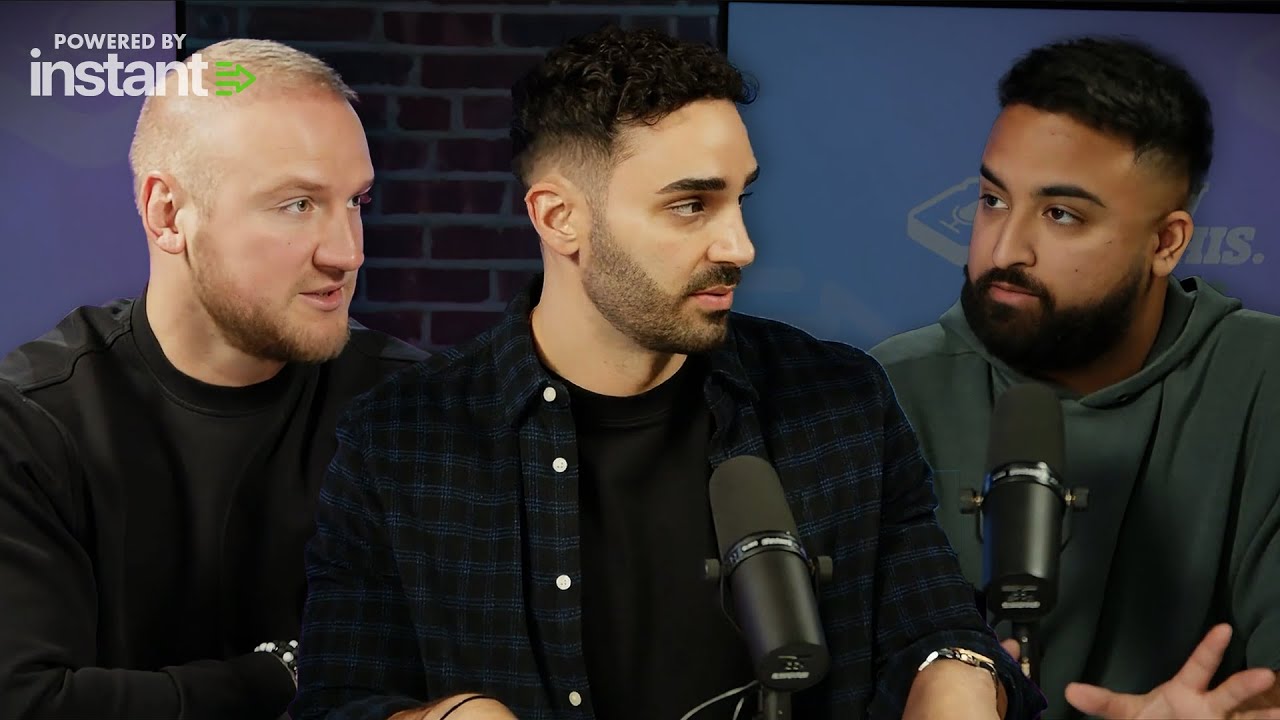
Welcome back to another episode of Chew on This. Today I'm joined by two retention killers, Firas and Eric, who are the co-founders of New Standard Co. Agency.
These guys are absolute masterminds when it comes to email strategy, SMS, anything retention related. These are the guys that are running the strategies behind brands like True Classic, AG1, Carraway, and even Built.
So today's episode is jam packed with information on how to improve your retention strategies, and some really cool hot takes that we actually get into. Guys, thank you for being here today. I know you guys just flew in from the west coast.
So you know, really excited to have you here. But for those who may not know, you would love a quick introduction from both of you.
Speaker 1:
Eric Rausch, co-founder of New Standard Co. I've been doing retention for over a decade, working with many brands you've heard of, many brands you haven't heard of. And love every minute of it.
Speaker 2:
Thank you for having us. For us, Corey, I have been in the DTC space for about six years or so. My first foray was starting a jewelry brand, scaling it to eight figures in sales,
learned retention because it's hard to get guys to buy jewelry and it's harder to get them to buy jewelry again.
Speaker 4:
Yep.
Speaker 2:
Realized that most email and SMS agencies sucked and that kind of brought us to this point.
Speaker 4:
Love that. I think, I've said this a couple times on the podcast,
but the operators that I trust are the ones that have been very hands-on with their own brand and kind of building something for themselves because they understand what goes into it.
Versus like, you might have an agency, they're like, yeah, we know what the basics are, we know how to set up automations and campaigns and this and that, but if you don't have the true knowledge of Okay, well, here's my business.
Here's, you know, the different segments and understanding that truly, I don't think retention can like retention strategies are as powerful as it can be.
Speaker 2:
I think that's one of the biggest things that actually builds trust, right? Like when we come on a call and we're talking to a client, we're like, hey, we both come from the brand side. Even most of our team comes from the brand side.
The operators trust us and they trust that we look at retention and e-comm as a whole. So one of the things that we always talk about is like, okay, email and SMS is a big part of what we do, but that's one sliver of retention, right?
It's email and SMS, it's loyalty programs, it's physical mailers, it's mobile applications, it's subscription metrics, it's customer support, it's the product, it's all these different things that us coming from the brand side,
we understand how email and SMS fits into retention. Just as important, how retention fits into e-com, because it's a system, right?
We all know the golden formula, traffic times conversion rate times average order value or payback period equals sales. And then the money that you make from the sales, you dump it into trying to get the cheapest, most qualified traffic.
And like, if I, again, learned this the hard way, if you don't have your retention dialed in, it's really, really hard to scale the acquisition side.
Speaker 3:
Before we get started, a quick word about today's sponsor, Instant. As a brand, you know you're spending real money to drive traffic to your site. Problem is, 90% of the traffic is anonymous.
You don't know who they are, and once they leave, it's pretty much impossible to get them back. That's where Instant comes in. It identifies up to 10 times more of those lost shoppers, so you can send more abandonment emails,
build stronger retargeting audiences, and actually win back that lost revenue. Liquid IV, 3rd Love, Truly Beauty, these massive brands use Instant to get an average ROI of 21.7X and Instant guarantees you a 4X ROI or your money back.
That's right, 4X ROI. With the start of Q4, there's no time to waste. Triple your email sales and lock in smarter retention today. Just go to instant.one slash chew to claim 50% off your first 60 days before this offer expires.
That's instant.one slash chew. Now, let's get back to the episode.
Speaker 4:
When people think and say retention, they just go to email and SMS immediately. Send out campaigns, just keep blasting the list, etc, etc. But there's way more to it, right?
Is that what separates you guys apart from everybody else that calls themselves retention agencies?
Speaker 1:
Yeah, I mean when we talk to people, the customer service aspect of it and knowing the experience of like getting the product and coming back is a really underestimated and incredibly powerful part of retention.
If you're talking to the customer happiness team or success team or whoever, what are the customers complaining about? What are the customers loving? How can you highlight that in your acquisition channels?
Because retention does start on the acquisition side. If the customer knows what to expect pre, post and during the order process, their retention is most likely going to be sustained. They're going to come back. They're going to buy more.
So if there's a disconnect between what the customer is expecting and what they're getting, that means you're not talking to the customer happiness team and you don't have a holistic picture on like, what are we selling to them?
What are they buying? And then what are they getting?
Speaker 2:
Yeah, just to add to that, like just to get super tactical, I think one of the things that's really set us apart from the competition is that we look at every single brand and try to optimize for what the brand needs to be optimized.
So And AG1 is optimizing for something different than a true classic. A Caraway with a super high AOV or Alice Lane, a furniture company, even higher AOV is optimizing for something different than, you know, a built basics.
So you have to look at every single thing, every, what we call like layer two metrics, right? So a lot of email and SMS agencies are going to report on open rates, click rates, placed order rates. Cool. That doesn't tell the whole story.
You have to look at the layer two metrics, which is dependent on the brand, right? So like an AG1 or any subscription brand, you have to live in the metrics and say, okay, what are the top reasons people cancel? Could be overstock.
It could be flavor. It could be whatever price. And how do I do any type of risk reversal in the onboarding and make sure that they're educated,
they're using the product, you're building habitual use cases so that you get to that rebuild period and you're not canceling.
Speaker 1:
Yeah, and the onboarding for that is pre-purchase, during purchase as a chipping, and then post-purchase, right? A lot of people don't really think of retention on the acquisition side of email,
SMS, direct mail, whatever, to where once you get your email and they haven't purchased, you're acquiring them, but it's still retention because you're just setting the stage on. Now you're really interacting with the brand.
We're telling stories back and forth to each other, whatever it is. All of that is expectation setting to continually get the repeat purchase over and over again.
Speaker 4:
I love that. I think one thing that you mentioned, which not a lot of people think about, is that retention starts from acquisition, obviously, right?
When people think acquisition, they think, oh, I'm just going to set up an ad on Meta and set up a landing page. There's my customer. One thing I like to say is when people buy from you, they're not fully sold yet.
You've just convinced them to take out their wallets and pay you for this, probably convince them with a 90-day guarantee, but the rest of that, that 90 days, it's up to you to convince them to continue buying.
So I want to start from the beginning of How brands should be thinking about retention from that first step, right? Obviously, you know, when you're coming in from, say, an ad, you get on a landing page,
I think there's two really entry points to collecting data from a consumer or maybe even three, right? One could be, you know, a quiz. Another one could be like your main pop-up offer. Three could be, you know, abandoned carts, right?
So how do you guys think about retention from the very beginning at those touch points?
Speaker 2:
Yeah, that's actually incredibly important and you kind of touched on it on your last comment there. Oftentimes, subscription brands will come to us, and I'm picking on them, I know,
but there's a particular reason, and they'll be like, hey, we need to work on month three churn. Focus on month three churn. We'll say, okay, what does your pop-up in your welcome series say?
Like, why are you worried about the pop-up in the welcome series? Well, like you said, if somebody sees an ad that's telling a different story than the website, that's telling a different story than the pop-up,
and you're not educating them in the welcome series, what makes you think that making a change in month three is gonna have any impact on month three churn that all of this other stuff won't?
So, to answer your point more directly, I think it's, you know, the ad part, You know, right? Like there's always this push between is the ad on brand? It's like listen, let's try to get the conversion and try to get the traffic, right?
But in general, if you're saying the same thing across the board and you're educating people on the value of your product, starting from the ad, consistent with the landing page, optimizing the pop-up, offer testing,
telling the same story through the welcome, into the abandonments, and then we can talk about the post-purchase or the onboarding right into the brand after they've actually made the purchase.
Speaker 1:
100%.
Speaker 4:
I love that. Is there any takeaways from that one that if you are a brand owner and you're kind of figuring out, you know, is the email, you know, sequence makes sense for you?
What advice do you have for operators to maybe take a look at today in their accounts and say like, okay, this may need some changing and this may need some, you know.
Speaker 1:
Yeah, especially if you're a subscription brand, obviously we keep talking about them. You can measure every single email that you have as granularly as you want on your rebill and churn rate.
And you know, so someone purchases and then they're looking at email three post delivery, right? Does this help her or maintain neutrality on your churn? What are you talking about in it?
At the same time, you're also looking at your number one, two, and three reasons for cancellations because it means over the course of the purchase to the rebill, you didn't convince them that it was either working,
you didn't convince them how to take it properly, you didn't take them that it was valuable to them. Whatever reason, cancellation, right? Even if it's taste, great. Throw some recipes in the first email.
So as you get down like the process, If they're canceling, you know, for most subscription brands, they're canceling because they have too much product. Say, I have too much, I don't need it. You go, great. Can you do a push on subscription?
You just give them two weeks. Or does your product work better if it's taken every single day at a certain time? Awesome. Then you start hammering habituality of it. Here's how to take it every day.
Here's what happens if you do take it every day. Or is the product realistically something that you take once every couple days? Then does the 30-day rebill, like, make sense? How much quantity is in your product?
So all of these things combat it. You know, when we work with subscription brands too, especially like an AG1 or like an Avi or whatever, you also are combating like customer perception.
If you're taking AG1 at work and you're shaking it up and it's nine o'clock and you're really excited to take it, And then coworker Karen comes by and they go, what are you, what is that?
If you're not armed with educational basis of like, this is what the product is, this is why I'm taking it, this is what it does, you're going to sound like an idiot to company or customer Karen.
And then you're going to get made fun of and you're going to feel bad about doing it. But if you can take that moment because you got educated on the entire process, this is my daily health drink. This is what it does for me.
This is why I take it. Then Karen leaves and she can tell her husband or whoever like, hey, this is a great product. I think you should take it. And now you've not only built a customer, but now let's say, you know, AG1 Bob is his name.
Like he walks around like now I'm the health guy at work and he puffs his chest out. So like now you're building customer loyalty versus a moment of like, man, if I shake this and someone asks me what it is, I have no clue.
Speaker 4:
Yeah. One thing that I liked that you mentioned was the content matters the most, right? So for example, if somebody is canceling because they don't like the flavor, you're going to throw recipes at them.
If they're canceling because they can't tell if it's actually working, you have to educate them on what to actually look for. So what do you say to the people that will use email or set up automation?
So for example, like your welcome flow, it's like, oh, get 20% off here, you know, enter your email. And then Five emails are all about that offer, right? Why does content matter more than just offers?
Speaker 2:
If people don't know why they're buying, like if people just use the thing because they got sold, it's not as sticky. That's like the simplest way that I could put it, right? Like if you're just like, oh, I bought this as it,
it typically impacts a lot of lower price CPG products too. It's like impulse purchases. That's why text messages work so good for like 20, 30, $40 CPG products. You're like, ah, Fuck it. My health does need a boost, right? Buy.
But like, if they don't actually understand what they're buying, like we just started working with a brand called We're Ultra Pouches and we're doing this whole discovery with them.
You look at their product and you think it's like a nicotine alternative, but it's actually a good-for-you nootropic. Kind of like a MagicMind or something, which is another one of our clients.
If you take it consistently, it helps your brain, etc. You have to understand what the actual benefit is. More so in subscription brands or products that you ingest versus like a t-shirt.
T-shirt, it's like, if it looks nice, fits nice, you know, washes nice, okay, cool, like I'm more so buying a lifestyle and a feeling. But when it comes to something that you're actually like putting in your body,
if you don't know what it is, you're not gonna feel loyal to it. Like I even feel myself, when we first signed AG1 two years ago, I was like, mom, we just signed AG1. And she's like, oh, that's really cool.
I don't know who they are, what do they do? And I was like, I don't really like I kind of know but like I don't really know it's just a whole lot of words that I can't really understand like I think it's good for you.
So we had to do this whole thought experiment about what is it that you're selling and then we like whittled it down with our team to like daily health drink, right?
And I think brands Even founders, especially, and marketing managers, whatever, are so in the weeds on things and they want everything to be everything. They want every email to say everything. They want every communication to be everything.
And it's like, guys, we have to be succinct about what the story is that we're trying to tell. If I can't walk away from this and tell you in one sentence or less what the hell it is that I'm taking, it just doesn't matter.
Speaker 1:
That's the hardest part about working with founder-led supplement brands in particular. They have their 15 things that they want to say, and you're like, great, we have a month to tell that story until their rebill comes.
It doesn't need to be an email 1, 2, 3, 4, 5, and 6. Email 1 can talk about X. Email 2 could talk about Y. And all these things start compounding with each other. And then you can also say like, yeah,
every email is a story on like why you're taking this product to begin with.
Speaker 4:
Now, I love that. Building off that last point, right? So if every email that you're trying to craft and create this journey and become this like storyteller for the brand, right?
One thing you mentioned earlier was the ads like, in my opinion, I agree, you can use ugly ads and you can try and get the sale. But a lot of founders and Brand operators are like, well, I have a brand and an image that I want to maintain.
And, you know, I don't want to be this like really sus product that, you know, I saw this really dodgy ad on Meta and I, and I purchased, right?
So one, how do you guys maintain brand identity, but then also make sure that you are performance driven?
Speaker 2:
The old push and pull. Dude, we laugh about this all the time, right? Because it's, It's a constant. Healthy tension between like KPIs and brand, right?
We worked with Yeezy early on and unless you're someone like a Yeezy where you could send out a piece of shit literally and people will buy, you should just be focused on KPIs, right? But you don't wanna like, there's a fine line.
You don't wanna have no CTA because it's against your brand or have a, you know.
Speaker 1:
Bro, Yeezy wanted no CTA for a while for the Super Bowl launch. We sent out a little vulture image and it did like 19 million dollars and we're like, maybe he's right.
Speaker 2:
That's the thing because it doesn't matter, right? You reach a certain point where you can literally send anything out and it doesn't matter.
For most people though, The important things that you need to focus on, at least in any given email, is what is the offer? What are you saying above the fold? Do you have a clear call to action? Where are you sending them?
What is the landing page? And then the next most important thing is just below the fold. What are you talking about there? What are you merchandising? You should probably put some top sellers.
And then frankly, most people are not scrolling past 30% of the email, just like any given website. Like if it's past 33%, you're gonna get like 5% of people who go past that, right?
So you wanna make sure that you're getting the point across. And at the end of the day, are you optimizing for brand or are you optimizing for KPIs? As long as it looks, feels, smells like the brand, you're using the brand guidelines,
If you're not saying anything weird, it matches the brand voice, then you should be optimizing for revenue.
Speaker 1:
Yeah, you can also test this. You can actually test if one of your brand tent poles is actually hurting sales or rebill rate. Like, hey, we really want to talk about saving the orcas in the water, whatever, which is a good cost.
But I can then show you data, potentially, that every time you mention this, people actually churn because they hate orcas for whatever reason, right? All of this can be tested if it's set up properly.
And some brands want to hear it, some brands don't. Some brands will say like, hey, I know this is going to be less revenue producing, but it's more on brand, so I care more about brand.
And we've had some clients where they've changed their outlook in general because we've shown them like, guys, when we do this, it just produces much more revenue. And they're like, yeah, I want revenue more than I care about my brand.
And then they just pivot down that path.
Speaker 2:
What about the old founder story? Tell them the founder story and welcome email one that everyone always wants to make the email about them.
Speaker 1:
That's really actually one of the, especially with slightly smaller brands, not when you get to like these enterprise brands, the founder-led brands really want to tell their story in Welcome Series 1, like right under the hero,
if not in the hero. And it's this like four paragraph about us straight from the website. That is like, guys, your first welcome email should be, here's the offer, here's the code,
here's your top products and merchandise, maybe some social proof, and then send them to the website to buy. Maybe the second or third email could talk about your founder story, but they don't care. They don't know who you are.
They don't know why they should care why you are who you are. So just give them products to buy, and then in the post-purchase, talk to them about you.
Speaker 4:
I completely get that because I've seen the brands that have done that. And like as a marketer, I'm kind of like. Cool, this makes sense on paper, but as a consumer, I don't give a shit.
I bought the product because I liked it and it was going to solve a problem. I don't care why you made it. Kudos to you, but whatever.
Speaker 2:
The crazy thing about that, though, is even when it comes to more complicated products, even outside of the founder story, like an AG1, if we're picking on them or whatever,
even an Obvi, if you have the ingredients that you want to talk about, The people that care are gonna find it and you just make it easy to find. You know,
so like you don't want to have the founder on the first section like in the A spot or maybe even the B spot, but maybe the C spot, right? The third spot of the email. It's like, hey, here's a little bit about us.
If you want to learn more, click here. Hey, here's a little bit about our ingredients and the science behind it. If you want to learn a little more, click here. But it doesn't have to be everything is everything.
Speaker 1:
We went down that path with AG1 specifically. They had a customer demographic that was an active subscriber that was just absolutely nerding out the Hubermans of the world about science. But that's 20% of their subset.
80% are like, tell me what it is in one sentence and move on. So we actually came up with on their onboarding series, a scale to conversation. It's where we talk to you like you are a high school graduate.
We would talk to you like you're a college graduate. And we would talk to you like you're a PhD thesis in neurology. And in that it was like level one, level two, level three on like, what's the question that you'll get asked?
And here's how to answer it. And then we would link them To the research and clinical studies page that you can then explore that on your own. But if you're just in and out of like,
I just want to know what my green drink tastes like and why, then you can read the email and go about your day. But if you wanted to explore that, we offer that path, but we didn't tailor the 20% to the 80%.
Speaker 4:
I love that.
Speaker 3:
Quick break to talk more about today's sponsor, Instant. Are your abandonment flows making at least 20% of your site's revenue? If not, you're in trouble. Most retention tools have bad short-term memory and even worse opt-in rates.
If you don't catch an email opt-in within hours, that date is gone forever. So why pay for someone to be on your list if your abandoned emails never fire when they come back? Instant fixes that.
It captures those emails, remembers them forever, and then sends shoppers the exact messages They need to come back and buy. It takes minutes to go live.
There are no contracts and they even have a 4X ROI guaranteed or simply your money back. Try it now at instant.one slash Chew and receive 50% off your first 60 days for a limited time only. That's instant.one slash Chew.
Now, let's get back to the episode.
Speaker 4:
To your point, it's like, well, you might have somebody who wants to learn at an eighth grade level and a college level and a PhD level, but like giving them that option is important,
but then figuring out how to create those buckets from the brand's end, I think is very important. So any tips from you guys on how you guys truly are able to segment accordingly?
Speaker 2:
Yeah. I mean, do you want corporate answer or do you want hot takes?
Speaker 4:
I love the hot takes. Yeah.
Speaker 2:
Okay. I think personalization for the most part is a buzzword that sounds great and is great for brands that can do it, but most brands can't.
What I mean by that is if you have the information, if you have the adequate data to personalize, Perfect.
Like if I can reach Ash at the exact time that I know he's most prone to purchasing and I'm giving him the messaging that he wants based on the products that he's looked at and you know, blah, blah, blah, blah, blah. Great.
Most DTC brands don't even have their customer's first name. They don't have their gender. They don't, their locations are messed up. Like they don't really have the data to personalize.
So that's kind of the hot take is like, okay, what's going to, I mean, New Era, another one of our clients, right? They're a 10-figure brand.
They send a lot of campaigns a month and they're super segmented because they're always talking about sports and they're always trying to hit people with sports affinities. So they're a really good brand.
We're like, okay, I have some tangible data that I can actually personalize. And it works, right? But a lot of brands don't have that data. And so they try to spend they spend an extraordinary amount of time and effort trying to personalize.
And in most cases, it drives negative or zero incremental revenue versus just Giving, like personalizing enough. So if I give you, right, based on like your behavior that I've seen on,
you know, triggered flows or whatever, based on the segmentation that we do and some concrete things that we actually know that you like, are you engaged, are you not? What have you purchased before?
Beyond that, most DTC brands don't actually have the information to segment the way that they want.
Speaker 1:
And the time ROI on the actual person doing that work, and we see this all the time, A CMO, a founder, somebody will leave some conference where somebody who hasn't been in an account for a decade says, you need to personalize everything.
Personalization is the key to the future. Then they come back to their office or whatever and they say, company, I need you guys to personalize. And that's it. So the question is like, what are we personalizing? What does it gain?
And then the actual like senior email manager, whoever who has to do it, Like the time that they have to spend organizing the data to do it can easily and most often just be beaten by business as usual of here's my best customer,
here's my best product, here's my best landing page, go. And that's it. And we test this all the time. And typically, that little funnel beats out personalization. And even if it doesn't, the question is like, okay,
the 15 hours that that person spent setting up that flow conditional split logic, They could have whipped up a win-back flow that makes 10x the revenue.
They could have tested welcome series one and post-purchase one emails five different times and made more money.
So like what are you personalizing and what are you really getting out of it outside of people who have already purchased before?
Where it really makes a little more sense because all you're going on for prospects is like maybe an answer to a quiz that like yeah, I chose you know for Obvi I chose fat loss and 2% more than I wanted to just have clear skin.
And so now all I'm being hit with is fat loss and it's like, well, that's like only part of my buying reason. But if you hit him with all the USPs and you hit him with all the top selling products, they can make their own choice themselves.
Because the whole goal is to just get them on the website. Get them on the website to a top converting landing page and let the customer do what they want to do.
Speaker 4:
I like that take because it involves less work, obviously. But why do you guys think that the conversation has been so based around like, oh, you got to segment further.
You have to like, you have post-purchase survey data, you have the quiz data. Like I know if somebody wants to do X and then Y and then somebody wants to do X and then Z and I'm going to fuck with them.
So instead of sending one email to 100,000 people, I'm sending 10 emails to 10,000 people. Why do you think that's been the narrative?
Speaker 1:
Because they're not the ones doing the work. Someone who does the work can just push back and say, can you let me test? And they'll probably win. And there's just so many more things to optimize.
But what you're saying still holds a lot of water. If you have the data and you can action on the data and it's the right data that moves the needle, then you should do it.
But if you don't have the data, like New Era is a great example of this. You don't want to send a Yankees hat to someone who lives in Boston. You don't want to send a Dodgers hat to someone who lives in New York.
But you have that data because they've looked at the Dodgers hat, they live in New York or whatever. But you can also send that same email, let's just say, and you put a Boston Yankees and Dodger hat in the email.
And now you can send the same email to all three of them, right? Unless the Dodgers just won or whatever, which they did. Then you need a little more personalization there.
But like take your top five DMAs, shoot them the same email with the top five hats in it. And if I'm a Cubs fan, which I am, go Cubs, and I see Yankees hat,
I'm still going to think about the Cubs and I'm going to click on the Yankees hat and then toggle to the Cubs and then convert on the Cubs.
Speaker 2:
And if you think about just from like a resource perspective too, the way that a lot of brands are set up is retention is often an afterthought to acquisition. And so the resources that are used for acquisition,
so like the designers that are used to make ads are also used to make emails. And if you think about the time that they spend making 10 emails instead of two emails and what that time value of money or the value of the time actually is,
and you realize that if they would have just focused that time on what drives most of the revenue, you would have made more money.
Like if you're sitting here and you're trying to send 10 emails instead of two and you don't have an active test on your pop-up, You don't have your top five flows optimized, your welcome, your abandonments, your post-purchase optimized,
and you don't have tests running in the first one to two emails of all of those critical flows, and you're not running tests on your segmentation, your general segmentation,
what's working and where you're getting the incrementality between buyers 30, 60, 90, 120, 150, 180. But you're spending all this time trying to sell somebody something based on some survey they did one time.
You're missing the point, right? You're in the minutia. You're spending all this time and money trying to optimize for this 5, 10,
15% incrementality that you could get instead of spending all your time on the 80% of stuff that's actually driving the revenue. That's where we see the personalization trap happen.
Speaker 1:
And it's not subject line testing, as you touched on, which is the lowest denominator of testing on earth.
Speaker 2:
Yes, public service announcement. If you are consistently testing subject lines.
Speaker 1:
Don't apply to work at New Standards.
Speaker 2:
Don't work at New Standards.
Speaker 4:
I love that. I guess to wrap up that topic, for operators that are kind of like maybe just starting out or trying to figure out their email side of stuff, what is the advice? Should I continue to go broad?
Should I spend time segmenting with what I can? What is that like?
Speaker 1:
Segmentation is key. He touched on it two seconds ago. There's segmentation that is within master segmentation. That is our form of personalization of truly measuring incrementality,
which you can dive deep into to get actual insights versus purchased once, did this or whatever lives in here. You can do incrementality testing of like, you know, buyers engaged, non-buyers engaged and windows like that.
But on top of all of that, you're still looking to execute the global sweeping thing of how do I get the best product from the best customer the most often to the best landing page.
That's what you should be focusing on and all the rest of it is just like secondary and tertiary objectives.
Speaker 2:
Also, just to get even more tactical, most people don't know that you could send to a lot of different segments in Klaviyo, right?
You could send to like 15. So why are you not utilizing that if it doesn't mean a customer is in multiple different segments, they're getting 15 emails, right? It just means that you can set up your segmentation in a way,
and we're not gonna tell you what it is, because part of it is our secret sauce, but you can set up your segmentation in a way,
again, like Eric said, if it's buyers, non-buyers over certain periods of time, And you can look and physically see. Okay, this segment is dog shit. They're not converting. This segment has high clicks, no revenue.
When we talk about belly fat, this segment cracks off. When we talk about clear skin, this segment cracks off.
So you can literally see on every single send what messaging resonates with what segment and then you could use that to inform flows and you could use that to inform future sends instead of just sending to,
like Eric said, master engaged all. That teaches you literally nothing. You don't have it broken out in any way.
Speaker 1:
That's the key. It's exactly what you said. If you have a baseline of every email to the Winback 180 audience does seven grand. Great. One email does 15 grand and it's not a promo.
Why is that email not being tested in your Winback flow the next week against your lowest performing Winback email to see if it outperforms because the whole audience that you're sending that to just told you that this message resonates with me more than any other message you've been sending me.
And you're like, great, now you're in my Winback flow. And the next one that outperforms will go test against that.
Speaker 4:
I love that. Okay, so that's a topic that I wanted to kind of go through, which is when you kind of set up your email marketing or SMS marketing, the first couple of things that you do is welcome flow, abandon flow.
Browse, maybe post-purchase and then maybe win back, right? I feel like when you kind of list it out like that, each flow maybe having three to five emails, like it's a lot of fucking emails, right?
So how do you, once you've completed that and you're like, oh, I'm done, like it's all set up, like I don't have to worry about it. Wrong, you do have to worry about it.
But how are you guys thinking about further optimization after you've kind of completed the first round?
Speaker 1:
We grill everyone who works with us on this. We'll ask them, like, what are five tests you can run in an abandoned checkout flow, and they'll list five, and if subject line's in it, stop. But then we'll ask, what are five more?
And then if we're really like, what's five more? So the answer to your question is Everything that you're testing can inform your greater business objective as a whole. You can test what landing page converts the best in the welcome flow.
Is it your top best sellers? Is it your new arrivals? Is it your clearance page? Like what is it? What converts the best? You can test landing page. All of these things you can test timing, which again is like still kind of low denominator,
but you can look at To inform other things, hey, when we send a lifestyle image in the hero, it performs better than a product image.
Speaker 2:
Cool.
Speaker 1:
If we send a lifestyle image with a face in it, it performs better than a lifestyle image with no face in it. Awesome. If we send a lifestyle image that's a woman with a face in it, it performs better.
So all of these things, so then let's say last week, now you're in Black Friday. I know that this type of image in the hero image will perform the best because I've tested it against 10 other things.
So your number one email of the year now has a woman with a face in it to a landing page that converts the most and your Black Friday email would have made 50 grand.
Now it's making 175 because you've optimized all the tests to lead you into when the brand asks you what are the 5, 10 things that I need to do in an email. You need the CTA to say this. You need it to link to this page.
You need these kind of hero images. You need these product merchandising. You need this type of social proof. All that's been tested and vetted in key one through three, and then you just keep going onward in perpetuity.
Speaker 2:
And you know, you said something that we hear a lot, nothing's ever done, right? Just like in business, nothing is ever done. It's just at a point in time and you need to continuously improve it.
So if I was to say like, what gets the award for the most overlooked thing, it's gonna be the pop-up. What gets the award for the most neglected thing, it's gonna be the flows. The flows are always the most neglected.
It's like, dude, We're so caught up in sending campaigns. We just don't have time to dig into the flows, check if smart sending is on, run split tests, do all these things. It's just always, always, always a mess.
When it comes to flows, because it's so impacted by the amount of spend, the amount of traffic that you generate to the site. If you cut all of the ads off tomorrow, your flows are gonna tank.
So the goals with the flows are to increase the efficiency. These things are always churning in the background and we optimize on the flow side for the revenue per delivery, revenue per email, revenue per user, whatever you want to call it.
But basically, every email that goes out, we want to make as much money as humanly possible. So we're constantly optimizing the flows so that every send makes you even a few cents more because when you extrapolate that out,
Over tens, hundreds, millions of cents, you're talking real money. And then you correlate that with the campaigns as well. It's a balancing act. You need to make sure that you understand how much people are getting hit.
Speaker 4:
Guys, this has been incredible. For those of you who are just getting started out with your brand or even kind of a little bit seasoned, a lot of tips and tricks here.
Don't fall for the hype on personalization, which is honestly probably the greatest hot take of the year, in my opinion. I might make that the title of the video.
Speaker 1:
Anytime. Let's talk about it.
Speaker 2:
Right.
Speaker 4:
But before we go, I have some rapid fire questions for you guys just to wrap up. But we'll just kick off. What's one lesson from running your own DTC brand that still shapes how you operate today?
Speaker 2:
Unit economics. We look at every client from a unit economics perspective when we think about our P&L and when we think about, more importantly, their P&L. We need to understand, right, like a lot of agencies out there are like,
You know, here you get 10 emails a month and if you go to 11, we're gonna charge you $250. And as somebody who operated a brand,
I understand that I want a lean agency that is an extension of my team that is gonna help me hit goals like my acquisition channels and not nickel and dime me if I gotta do something else.
Speaker 1:
He said it.
Speaker 4:
Most underrated retention channel right now?
Speaker 1:
We actually talk about this a lot. We do think it's the customer service channel for a variety of reasons.
A lot of people might say SMS, but if you truly understand what the flags from your active paying customers are to your customer service channel,
You can not only combat that on your acquisition landing pages, acquisition ads, acquisition emails and SMSs, you can also then expectation set on the backend so you're really tapped in non-stop to,
we know that customers aren't happy with the unboxing experience. Great, let's fix it. We know customers are not happy with the return window. Great, let's fix it. We know customers say our product tastes like butt. Awesome, let's fix it.
If you're not tapped into that, you really can't retain anybody because no matter how good your marketing is, if your product is ass, it's ass.
Speaker 4:
Fair enough. What is one metric that you personally track the most when judging success? If you had to pick one.
Speaker 2:
Revenue.
Speaker 1:
Revenue.
Speaker 4:
Yeah, fair. Obviously.
Speaker 1:
Revenue for email, Sendero.
Speaker 2:
Well, it's all like, you know, you could talk about average days between orders, customer lifetime value, reduction of churn, all these different things, but what are you doing all of those for? It's revenue.
And however you want to measure revenue, if you want to measure it in the first 30 days,
because your contribution margin on your first purchase is not very strong and you need to figure out how to get someone to come back and purchase as quickly as possible, cool, let's focus on revenue in the first 30 days.
If you're a subscription brand and you need a 60 or a 90-day payback period and you're underwater on your acquisition, cool, let's chat 90-day. But at the end of the day, it's revenue. You can change the time period if you want.
Speaker 1:
But you're a brand owner. If any agency that you ever worked with or any person who runs a channel that you ever worked with came to you and was highlighting numbers that If you weren't revenue and you were down in revenue,
you would be like, none of this matters to me. Where's my money?
Speaker 4:
No, fair. That is fair. That is very fair. This is just for shits and gigs. If I had to remove revenue as the metric, what is the other metric?
Speaker 1:
Repeat purchase percentage.
Speaker 2:
I was going to say the same thing. How quickly are they coming back and buying again?
Speaker 4:
Last one, what's one risk you're glad you took early on with New Standard Go?
Speaker 1:
Eat baby, go for it.
Speaker 2:
Doubling our revenue. I always like to tell this story.
Speaker 1:
Retainer.
Speaker 2:
Doubling, yeah, biggest risk, doubling our revenue. Doubling our retainer. Doubling our retainer. I always like to tell this story. Shout out Jimmy Kim. When we first started early on, he gave us three referrals.
One was a clothing brand, another one was a clothing brand, and the third one was True Classic. And we had just kind of gotten started. We didn't have our messaging dialed in, and we made a pitch to the first one,
the first clothing brand, and we requested a 5K retainer, and they turned us down. And then right after, we made a pitch to the second clothing brand, and we offered them a 6K retainer, and they turned us down.
And then we made a pitch to True Classic, and we pitched them a 15K retainer, and they signed on. So we knew that we could deliver the work but it was like the framing and taking that chance and doubling,
tripling our retainer requests and it panned out.
Speaker 3:
I agree.
Speaker 4:
I think it makes sense. I think it's like the, again, this is maybe for like the agency owners out there, but if you are trying to compete on price, it doesn't necessarily translate to value.
Whereas I want to ask you the question, well, why are you worth 15? Like, why, why am I spending 20? Am I going to get 20 worth of results? And that's the, that's the guy I want to talk to.
Speaker 1:
That's the agency bait-and-switch that everyone's known for. But when you work with us and we hire very strictly, you come on to a meeting that is run by one of our strategists and they're savages.
They'll sit with a CMO of a nine-figure brand and they'll be like, let's go. And they'll talk numbers. They'll get after it. You're not talking to Someone offshore who, you know, goes through a playbook.
It's like, what is your KPI that you're trying to solve for? And a strategist from New Standard will then go, here are the 70 things that I can do right now that'll attack that KPI. Which one do you want to prioritize?
Speaker 3:
Before we wrap up, just a quick reminder about Instant. A good abandonment email can make all the difference, but 88% of shoppers never get one.
With Instant, you can send up to 10 times more retention emails and use AI to personalize every single message.
Fast-growing brands like Higher Dose, Garrett Popcorn and Karen Kane have tripled their abandonment flow revenue since going live. You could be next. Don't miss out.
Book a demo today at instant.one slash Chew and receive 50% off your first 60 days. That's instant.one slash Chew. Now, let's get back to the episode.
Speaker 4:
One final, final, one piece of advice for the audience that's listening or watching. One final takeaway. What's that? One piece of advice somebody could implement in their business starting today.
Speaker 2:
You need to understand what your business needs outside of just revenue. I know I said earlier that revenue is what it ultimately boils up to, but if you don't understand your golden formula,
like if you can't tell me What your customer acquisition costs are and how much money you're losing or making on the first purchase and how much the retention channels need to make up for that and how much your repeat purchase amount needs to be relative to your new customer revenue in order for you to scale,
then you truly have no idea what you're doing and you're just blindly optimizing. So my biggest one single thing if you understand nothing about Else,
just understand what retention metrics are needed for you to be profitable and what retention metrics are needed for you to scale your business and then figure out how to get there.
Speaker 1:
Every channel manager should be an expert in their channel and every channel manager should have a holistic understanding of e-commerce and DTC as a whole.
And all of that leads into you should have a weekly or bi-weekly WBR that's integrated with every single channel manager so every single person on your team knows This is what that channel is doing. This is how they're successful.
These are the wins that channel is seeing. These are the messages that that channel is doing that's resonating and I can implement that on my team for my channel. If you're not having this WBR, everyone is operating in their own silo.
They're not communicating. Everyone is saying a different thing and it's just a very confusing experience to the customer. But if you do have that integrated marketing team,
it's just a seamless experience from the paid ad to the website to the pop-up to the acquisition channels within the brand and the retention and buybacks and your customer service team.
So if you know all of that and they're all communicating, your brand is going to take off.
Speaker 4:
Love that. Chew on that. If you want more from us, follow us on Twitter, follow us on Instagram, follow us on TikTok, and check out the website chewonthis.io.
This transcript page is part of the Billion Dollar Sellers Content Hub. Explore more content →