Podcast
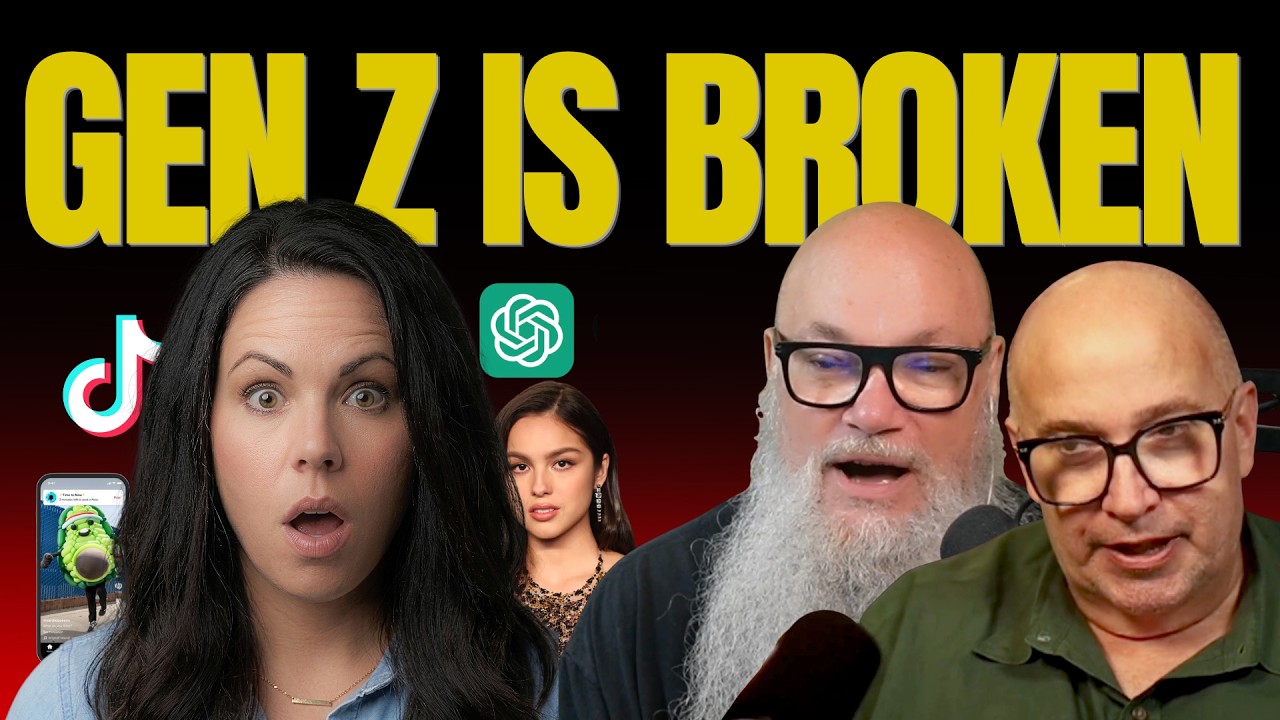
The Dark Psychology of Gen Z Buyers
Summary
The Dark Psychology of Gen Z Buyers - Why are traditional marketing frameworks completely failing with today’s younger consumers? Because ...
Transcript
The psychology of marketing hasn't changed in thousands of years. The tools have changed, the method of delivery has changed, but the actual psychology hasn't changed. So books that were written a hundred years ago are still relevant today. >> Younger generations are so fascinating and the way that they look at the world is drastically different than Boomer, Gen X, millennial. Like all of the older generations either grew up in a time period where they remember there was no internet, things were just calmer, simpler. So they're very sensitive to nostalgic things, things that just feel like the 90s is very visceral. For Jenzers, they understand I will never be wealthy. But also, I can't even get a job. AI is taking everything I could possibly get a hold of. I'm not interested in getting into a lot of debt, so they're foregoing things like college. They also don't necessarily want to buy houses. They're okay with renting for the most part, but rent is expensive basically everywhere. So you'll see this with Jenzers. There's a lot of disheartened. You'll hear a lot of pain cuz they're in this mode of just like what's the point? >> So, how would you market to them? >> The AI is not emotional. How do you get to the emotional side of a human being to sell them something or get them to take an action that you want them to take? >> Oh, I love this. Okay, so >> you're watching Marketing Misfits with Norm Ferrar and Kevin K. >> So, uh, what's up, Mr. Norm? How you doing? >> Are you going to really ask me that? Yeah, I'm going to really ask you that. I know. I know. I know. You're still recovering from a jet lag from uh >> from smoking seven cigars a day in Vegas. >> Do you know Do you know how many cigars? You know what? I got the rapper. I kept every rapper. It was 23 cigars >> over what was that? Five days. >> Something like that. I I I believe it because you live up there in the great white north where you can't go outside and because it's -23° so you're like I'm taking advantage of this. I did and I think I paid for it because I missed my not missed my flight. It was canceled and then I had to take that bloody overnight and I'm still recouping. So today you're going to be asking most of the questions. I am going to say Kev will you talk more? When have you ever said or heard more put this put this down because you're saying that I should actually talk more. Yeah. Today's going to be an interesting topic because you know we we cover a lot of different things here on the marketing misfits podcast and one of my favorites uh of all in marketing is the psychology of marketing. um you know marketing and psychology th those two uh disciplines go hand inand and a lot of people don't realize that those two two schools of thought are really closely tied and and they are and if you understand the psychology of marketing you can market and sell a lot more if you can have empathy if you can get in their shoes and understand the emotional and what makes the triggers that make people buy. And you know, I have a presentation that's called the psychology of marketing that I've done and I think I showed it to you. You're at my house a couple years ago before and I I did a quick walkthrough with you on it and you're like, "Yeah, that was that was pretty good." But I don't know if you've ever seen me present the whole thing. Um, but I've done that a couple times and of all the presentations that I've done, hundreds and hundreds of stages, people always say that was one of the best and one of their favorites. I'll be doing it again in Nashville. Um, and today our our guest is that's exactly what she specializes in is why do people buy? And so I think this is going to be fascinating and enlightening for for quite a few people. So if you want, we can go ahead and uh bring her on. I mean, bring Sarah on and uh introduce her uh to the crowd. >> Okay, let me bring There we go. I pressed the right button. >> You did. You did. You didn't eject me. You didn't eject me. I'm safe. I'm safe. Sometimes he just said to check me, but honorable. >> So, welcome Sarah. Can you tell us a little bit about yourself? >> Yes. Um, I'm Sarah. Uh, I'm currently a DDC consultant. So, I work predominantly with e-commerce brands. Um, but I'm lucky enough to have kind of I don't even know like fell into a job that I think is perfectly suited to this particular topic cuz I actually help DTOC brands um apply more psychology and behavior science specifically to paid advertising. But psychology kind of applies everywhere. So I fit in a lot of boxes. But yeah, I've been doing this for, let's see, I I started my agency when I was 21. >> So two years. >> Two years ago. Yes. I'm going to be 38 this year. Oh my gosh. So I've been doing this a long time and I've been in ecom for almost seven years. So yeah, it's been fun. >> Very good. >> So when you say ecom, um, Norman and I come from the Amazon world. So that we're very well known for Amazon sellers. We've been doing that 12 years or so. Uh and we're I've run a course over there. 220,000 people have gone through how to sell on Amazon. >> Amazing. >> Um we both had podcast in that space uh that we individually did. >> Um but there's a big big movement now to where people that were just Amazon or they were just Shopify or just uh Woo Commerce or whatever, they're they're realizing, hey, we need to be omni channel. We need to be omni present. Can't just be on one anymore. So there's a lot of these disciplines are kind of crossing whereas yes >> in the past what you were doing with a a brand like Ovi or some OBV or something like that >> would be siloed from what we're maybe teaching people how to do on Amazon how to maximize >> you're doing demand generation and emotional marketing. We're >> we're teaching people how to step in front of demand and actually capture is already bringing in and now those two are kind of merging with social commerce and everything else that's going on. Um and so it's um what have you found? So you said seven years ago you went into ecom what made that shift? Were you just doing DTOC just or or something or big brands before that or something else or local >> or what what made that shift? >> I was in like a weird bucket because I started so young so early. I was like 21 years old. This was I mean 20 when did I get married? So that would have been 2010 2011 somewhere in there. Um, and the the interesting part about this time period is way before like Tik Tok was a thing. Like it was even before like um Woo Commerce became known like we didn't have Shopify. Like we didn't have any of this stuff. So we were just starting with websites, blogs. We just barely had Amazon YouTube. >> Yeah. Stores. I was like people don't like if you didn't grow up in that era. I'm like gosh it's so easy to grow a business these days. But back then we didn't have that. So, because we didn't have a lot of like tutorials and things, I kept having all of these people come in for at the time just my freelancing business and they would ask, "Do you know how to do email? Do you know how to do like WordPress websites? Can you help us set up our blog?" All these different things. And I kept saying yes because I was 20 and I needed the money. So, I was like, "Absolutely, I know how to do that." Then I'd have to go learn very quickly how to do this. So, I'd go to the library of all places um and pick up all these books on marketing and how to do all these things. Right next to that section was like this giant other section on like neuroscience and psychology and like early childhood development and economics and I just kind of got hooked on this stuff because it was so interesting. I was like this is fascinating. So, I just kind of read through tons and tons of textbooks from the library for about 10 years. And then in about 2017, 2018, I had a client that said, "Do you know how to run Facebook ads because I've got some hotels in Jackson Hole that need somebody to run their ads." And of course, I was like, "Yes, absolutely." Because I needed the money. So, I I just started running ads. And it was interesting because that was lead gen based. And then from there, I kind of just fell into more and more like media buying roles. and then eventually made my way over to ecom because I had somebody come in and say, "Do you know how to run ads for products?" And I said, "Absolutely." So, from there, I I did I don't think anybody kind of knew who I was or that I had any psychology knowledge at all, even though I'd been studying for 10 plus years. I got on Twitter in that was probably 2020, right after my second was born. So, I was home with a 2-year-old and a newborn stuck inside wiping down all of our groceries, like couldn't go anywhere. I was like, I'm going to lose my mind. So, I went I went on Twitter just to talk to people because I was like I'm still marketing sort of uh part-time and moming full-time and then from there it just kind of exploded because I kept sharing all these different things that I was learning about psychology and marketing and I think I just hit it right at the right time because from there it just kind of exploded. So, I fell into it but it ah it's like a perfect role for me. So is Tether Insights your your company is that mostly a Facebook a ad a agency or what is it p what's the primary focus? Tether Insights is a tool um specifically for DTOC brands who need to solve ideiation like what ideas should we put into the ad account and that was built off of like six straight years of working with tons and tons of brands startups all the way up to the nine figure ones um consistently that was the only thing that I kept seeing people really struggle with is we understand how to make ads we know how to make a static or UGC or whatever it is we don't know how to translate data into a good idea for an ad. We have like our stack of like 15 different templates that we use before and afters or you know some sort of UGC story, those type of things. But we have a really hard time being creative with new concepts. So the tether OS is interesting because this tool will go out and scrape the internet for conversations around your topic, your industry, and then we'll distill them down into new concepts so that you can just come in, open it up, and then there will be your stack of ads that you can develop for the day. >> So >> yeah, that one was that project. >> So So was that is that was that around before AI or is that something? >> That's an A. Yep. That's after AI cuz I don't think it would have been easy to build it without AI because it's scraping. So, it's going out and looking at social conversations on Reddit and Tik Tok and Instagram. >> So, it's like a Wario Aario or something like that. Um, with Appify built in uh and then some AI layered over the top. Okay. So, that's cool. >> Yeah. I mean, so I mean, I always say, and I'm an old guy, so I've been in direct marketing since I was 13 years old or something like that. And that that was back uh, you know, back when the dinosaurs were still roaming the earth. Um, but but the psychology of marketing hasn't changed in thousands of years. >> Human psychology, I mean, it evolves a little bit. The tools have changed, the method of delivery has changed, but the actual psychology hasn't changed. So I mean books that were written a h 100red years ago u are still relevant today when you just got to apply them to the AI side of things or copywriting that was done in the 50s is still those principles are still applied today and I think a lot of the younger generation they'll see some new thing and they think it's a new shiny object and this was just this was just invented >> and and they it wasn't um so and now with AI you can take all that massive knowledge and you can take all like the tools like your tool that just goes and scrapes the conversations and you mash those together and you can brainstorm some brilliant stuff. Uh >> yes, >> that that's it's amazing what you can what you can actually do. >> What are you what are you seeing the biggest change that's happened in these last like four or five years from the advertising side once AI and there's there's a lot of people that are against AI too. Uh there I mean I was just at a newsletter conference um two weeks ago and there's a a fellow on stage financial newsletter doing millions of dollars and someone asked the question how did they use AI in their business. He says we don't I don't believe in AI it's just a fad. Um and then about half the room clapped. >> Yeah they said that about e-commerce too. >> Yeah I know I know but what I'm saying is that I just was baffled. I'm like, okay, these are the people that use Chat GBT like Google and they don't understand what it can actually do if you know how to how to move the levers. So, what what's how is that's my long way of saying how has everything changed in the last few years. And what are you seeing going on out there? >> Oh my gosh. Um, it is difficult to describe unless I think you're sitting in it every single day like I am. It's interesting because I have found different categories of marketing will have a very different response to it. Copywriters, I think, got real freaked out real fast. Newsletters as well, because it was like, this is what I built my entire livelihood off of. If you can build unlimited amounts of content in a fraction of the time, what does that mean for my job and my skill set that I've spent 25 years cultivating? It's very scary. In ecom, we took it and like ran to the moon with it. Like we I think we got really excited about the potential, specifically when it comes to cost. So I look at this from a psychology lens of everybody's optimizing for something different. Every marketing department has a very different goal that they see in their head. For copywriters, newsletters, those type of things, written content, their goal is to captivate, right? I need somebody to pay attention to me and I need them to get sucked into the way that I express myself through copy. AI is kind of a threat to that. For ecom, our goal is cost reduction always. like we need to cut down our cost to the minimum of what we can actually handle for the business. Mostly because I'm the founder. I may be bootstrapped. I'm fronting all of this with my money from my real life, from my kids and my, you know, my entire family. All of us are writing off of what this business does. So all I can think about is cut cost, cut cost. So we took it initially and started to cut personnel was the very first thing we started to do, which I don't know that I love. I take AI with a great salt. It's very powerful, but it's it's not there yet. It's like kind of working with a three-year-old. Like, it understands some of the world, but it doesn't it can't experience it. So, oftentimes it'll bring stuff back that's just not correct. So, ecom started to test whether we could start to use it as an ideator where you could use it for a strategist, whether we could build ads with it, we could write copy with it, and they've done a pretty good job, honestly, injecting it into everywhere. Now ecom is starting to attempt to replace largecale people like CMOs. We want to see if it can replace the entirety of that like tier. Can it replace our CFO? Can it replace our CTO? Like it it's interesting how everybody is um looking at this because the capability is there, but it's the execution that decides whether or not it can actually be what you want it to be. So yeah. Hey, Norm, you'll love this, man. I talked to a seller the other day doing 50K a month, but when I asked them what their actual profit was, they just kind of stared at me. Are you serious? That's kind of like driving blindfolded. >> Exactly, man. I told them, "You got to check out Sellerboard. This cool profit tool that's built just for Amazon sellers. It tracks everything like fees, PPC, refunds, promos, even changing cogs during using FIFO. >> Aha. But does it do FBM shipping costs, too? Sure does. That way you can keep your quarter 4 chaos totally under control and know your numbers because not only does it do that, but it makes your PPC bids, it forecasts inventory, it sends review requests, and even helps you get reimbursements from Amazon. Now, that's like having a CFO in your back pocket. >> You know what? It's just $15 a month, but you got to go to sellerboard.com/misfits. sellerboard.com/misfits. And if you do that, they'll even throw in a free two-month trial. >> So, you want me to say go to sellerboard.commisfits and get your number straight before your accountant loses it? >> Exactly. All right. We just came back from a uh a large Amazon show and I got to talk to a bunch of people and there are so many people that haven't even they haven't even started with AI or they're afraid to dive into it. And when they can have a tool like this or an app like yours where they can get the best of the best, why, you know, here's some psychology. Why wouldn't they use it? >> Yeah. I mean, I would tend to agree. I I've tested it in all kinds of capacity. I use it predominantly for uh outlines, right? So, if I'm generating copy for something or content, I will use it to generate the full outline structure and then I'll go back and rewrite it myself because I want it to sound like a human. I will also use it to develop very small SAS tools, little ones that it's like an interactive something. I need a survey kind of a tool. Somebody can fill something out. those type of things I'm pretty well versed at. But there's some people who have connected it to every piece of their business and it's starting to analyze the structure of like their P&L from 5 years ago as it compares to today and then make decisions in the ad account based on that. I mean, some people are getting really really technical and sophisticated with it. I don't know. I'm on the fence. >> I I think the winner >> Yeah. I think it's rapidly changing and and there's there's people that are using, you know, like Open Claw and have like eight different Mac Minis set up and each one of these mag minis has a name. One's Johnny, one's Susie, one's Billy, and each one has a different role and they're replacing a lot of low-level VAs that were just doing spreadsheets and compiling spreadsheets. And that's it's great for some of that, >> but I've been I wish I had more time to dive into it, but I've been using it lately um just in from a marketing point of view. I'm I'm running a conference in Nashville uh in April called Ecom Mastery AI and it's it's an e-commerce conference where I've got 300 400 sell e-commerce sellers coming in. I got 100 creators. I've got 41 speakers. I've got all this stuff and we've been marketing that and conference stuff is difficult right now to market getting people to to fly in somewhere and to to come to a conference. It it's it's it's not easy. And so by I can split test though different angles and different hooks really really fast in all of our ad copy on Facebook and and find out what works. I can spin up a hundred different things in in a matter of minutes with AI and some of the imaging tools and see what works. And a perfect example is just doing landing pages. I mean um we we want part of this event is called creators meet sellers and it's kind of >> this is not a selfish plug by the way. Yeah, it's not. But but it's a good example though. It's a plug and an example. So it inside the uh uh inside my main event is my Facebook person says, "Kevin, you have like three events in one here." It's like every time we talk, I learn something new. And so it gets kind of buried, you know, this this fact that you can bring your products where you're going to have a table you can set up and I have creators that are doing 2 million, 3 million, 4 million GMV and and supplements and beauty and all this stuff that will come and you'll meet them face to face and make deals face to face. Um, and it's a valuable thing, but it's kind of getting lost. He's like, why don't we do some testing where we send traffic just for that event? You know, that's like the gateway landing page. >> Well, in the past, I would have had to, okay, call up my designer, call up somebody. Can you whip up a landing page for this? Uh, and I could go now there's tools like Lovable and Built and some of these others, you know, that you can do it, but I all I did literally this it took me about 25 minutes last night to whip up a landing page and I all I did is speak verbally into a recorder on my phone. I took that and I translate I transcribed it with clip 2.com which I use for everything. I uploaded that to Claude Opus 4.6. I said, I gave it some specs. I said, I need to make a landing page. These are my goals. I need to convert this. I need to this. This button needs to say this. This, it needs to link to here. I want you to use these three pictures and integrate them into the design. And within three or four minutes, I had the indu the index.html file. I took that. I put it up on a website. It's a brand. It's a website ready to go. And it's damn well written and damn well good. Um, and that the ability to do AI to use it for something like that when it comes to marketing. And I can go in, I can test it. I could tell it, okay, now spin up another version. Now spin up five different one. One that's aimed at million-dollar sellers. One that's aimed at this, one that's aimed at that. Now flip it. Make it aimed at creators to actually come. And I can knock that stuff out in no time. >> Yeah. >> Super fast and and really really good. If you know how to prompt it and it's not prompt, well, it's not prompting, it's briefing it. That's where a lot of people, they write prompts, not briefs. If you give it a brief and you use these latest tools, it's amazing what you can do. >> Yeah. >> And and that's where and you can test psychological hooks and you can test all these different things that just would you didn't have time or the capacity. You need a whole team to do in the past. And so that's where I think the advantages are right now. It's not in okay, it's going to replace a CMO. I think you still need the CMO, but the CMO can have a lot of many CMOs underneath them and they're just they're just monitoring. What do you what's your thoughts on all that? >> Yeah, I I think it's interesting because it's a it's uh very indicative of team psychology, which I'm like going deep into team psychology right now because consumer psychology we've had a lot of information on for quite a long time because as you said there's I mean there's things about consumption behavior that don't change. It's just kind of like a part of being human. Team psychology is interesting though cuz like like I talked about it's that orientation that changes how you use the tools. So for someone like yourself who's obviously very good communicator verbally in particular, very very good about talking about your concepts and mapping it out and giving it a structure before you actually say it, that's a pretty rare skill set. But because you have that, it's very easy for you to go to AI and describe exactly what you need. For somebody that lacks that skill set, AI is terrifying because they've heard that it can do this, but they're like, I don't understand how like how am I supposed to do this? And I find this to be true for different brain types. So typically the more creative you are, the more expressive you typically are verbally. Not always, but most of the time. So you you have an easier time talking to Claude or chat or whoever it is. If you're more technically focused, you understand what you need, but you can't describe it as well verbally, which I find interesting. Sometimes you can do it in written communication, but oftentimes you need a picture. I need to be able to show it what I want. And those tend to be the people, in my experience at least, that struggle to get AI to do what they're trying to get it to do because the communication barrier causes a lot of friction. >> That's a good point. That's the slop. It's like, make me a website that will sell my events and you're just going to get crap. Um, but if you know how to prompt it or brief it, >> that that that's Yeah, that's a good point. That's like photographers when >> people are worried, well, photographers are out of business now. Some of the photographers I know, I mean, one of my best friends and business partner another business is a a fashion photographer. Comes from that world. He he loves to take hold of his camera and, you know, shoot a real person. You know, he that's part of who he is, but he also knows f-stops and and apertures and all this other kind of stuff. And he can go into AI and he can create amazing stuff because he knows the technical side, knows how to tell it exactly what to do. knows movement and he knows okay if I we just did a whole bunch of AI characters like look if I tell give the AI the person's voice if I give it Norm's voice and say this is his voice the AI can pick out p personalities out of that and then when it makes little video it will incorporate some of that personality by using some of his voice and so we know how to do that cigar cigar and we made sure it had a cigar and a Coke Zero in there. So, you say that's not me. >> The AI is getting so good at analyzing language. And I think people forgot that it's a language model. It's meant to look at what you're saying or communicating written or verbal. That's what it's supposed to do. Numbers it struggles with cuz that's not what it's really built on. It's built at looking how we've communicated verbally or written-wise for generations. So I it's fascinating when you dig into it because I think that's the reason why people struggle with it is because it's meant to look at things that you can't see or hear, but it can pull out subtext. It can see underneath everything that's being communicated and understand because this person is communicating in this way. They probably mean this, not this. >> Well, it's emotional triggers. I mean, it's emotional. >> You can't when you're reading the most written stuff is not emotional. I mean, some writers can get you take you down a path that becomes emotional, but but when someone speaks it, their pauses, their everything, it it picks up the emotion, their up and downs in the voice tone. Um, it it picks all that up. And so I think that's I from that point of view would video testimonials I know your tool probably scrapes reviews is probably one of the things that looking for patterns and different things I would assume but a written written one versus a video one I would think a video one would be much stronger to actually get into that emotional hooks and that emotional than a text one. Is is that true? >> Yes. Yeah. For the most part, transcripts when you run them through AI is difficult because it can sort of see video, but it can't see it the way we see it. So, it'll take screenshots basically of every single clip that it can identify and then it will try and map the transcript, the written transcript to each spot that it sees that uh communication in, if that makes sense. So, it's looking story book. It's not seeing video movement, right? And that's the toughest part. Eventually, I think it'll probably get to the point where it's >> like a flip book. It's like a flip book. >> It's like a flip book. continuous. Okay. >> Yeah. So, the toughest part about that is like it can't really tell when things are migrating in the story or when things get more intense or less intense. It can sort of see it but not super well. >> I'm curious what's going to happen in the future when AI versus AI. It's just a battle of AI. And then, you know, will the misspel word or something that's a little bit more human win out over the perfectly crafted, perfectly psychological uh, you know, ad? I I'm not sure how it's going to work, but how can if it's going to be if it's going to be competing against each other and let's say it has the same prompt, who's going to win? In that particular case, I think it's going to be the AI that can communicate better, which right now is Claude. I don't think it will always be Claude, but right now it's typically Claude is a better communicator. >> The AI against AI is really interesting though because I feel like that's already happening because we're seeing AI bots creating content for AI bots. And you're also seeing it uh in workplaces. So oftent times nowadays, you have to draft your resume as if you're talking to the AI, not as if you're talking to the recruiter because they're sending thousands of these reviews or these résumés through an AI system and say based upon what we need, go find me the top like candidates for this particular role. And if you're not optimizing your resume for Claude to look at, then you're you're even if you're qualified, you're not going to make it through. So this is what I find really interesting is we almost have it's almost as if we got a brand new species on the planet that could instantly integrate with our society and cultures and systems and economy and all kinds of different things. But that particular being is very young like I said it's very much three-year-old. So we have to teach it a lot still. But it's it's starting to create its own world basically and things that it can do that we are not a part of which I find terrifying but fascinating to watch. So yeah, I mean to your point AI competing with AI is already happening and it's it's going to get worse. >> So do you really find it terrifying? >> I do just because I understand what this does to the human brain and this is this is the scary part because I have too much psychology knowledge. uh humans are not meant to have this much information being displayed to them all the time. And secondary to that, this amount of information that you typically get from AI is unending. You could talk to Claude all day every day. It would never stop talking to you. In fact, you'll never get to like a nice resolution in the conversation unless you tell it, "I'm good. We're done talking." Continue to ask you questions. What do you think about this? Should I draft this? Do you want me to go in this direction? you could constantly talk to it till you're blue in the face. This is not normal for brains to process this way. Typically, we have to have an end to a conversation because our concentration only lasts for about 20 minutes. Um, and that's not attention. It's just concentration only lasts for about 20 minutes. So, I get nervous because if we have this involved in everything, you're gonna kind of really max out on the ability for us to understand when something's presented to us. We can consume it. That's what the brain is for. It's supposed to bring in information. You're not going to be able to understand what's being communicated very easily, though. >> It's like you have too much information. >> Too much. Yeah. >> Yeah. You know, I had a Yeah, sorry about the cigars, but I was in I Kevin wasn't with me. He was off doing something. I was having my cigar and then I wanted to know more about it. So, you know, I I typed it in and I asked you the details about the manufacturer, the tobacco, blah blah blah blah blah, and said, "Oh, I see that you enjoy these types of cigars." Yes, I do. I always say please and thank you. I don't know why. And he said, "Would you would you like to know more about these cigars?" Yes, I would. So, it just kept going. Oh, based on this, there are three or there are eight rare cigars that you should be looking at. >> Oh, please let me know. Would you like to know where to buy them? Yes, I would. And I had to basically say, "Would you please stop?" >> Yes, please. >> And going. Well, that's just natural proclivity of the brain. Like the human brain loves open loops. And this is the reason why Claude Gemini chat, the very first thing they did when they developed this like bot that could talk to you is they made it so it would open a loop. Every single time it stopped talking, it asked you a question. >> What do you want to do next? And I'm like, that's rude first of all for these an advantage of us. Like we can't not answer. It's so hard to stop the brain from doing that. But yeah, I mean to to your point too, this is the interesting part is because some of these AI companies are now running ads towards that conversation because eventually they'll get you to a point where you're going to say, "Yes, I want to know how to buy more of these or where to go and then they can inject all kinds of companies in here." It makes me nervous cuz they are there's no boundaries yet. There's no legislation on this. There's nothing that says we can or cannot ask you a question that will take you in this direction. And then second to that, the psychology of this AI is super fascinating because all of them across the board have told us, every single AI company have told us in some capacity that the AI was built to be helpful. It was built to be helpful. It's supposed to be overly kind, overly assistant, right? Like it's supposed to go into these conversations that make you feel like you're a genius for whatever it is that you're saying to this entity. And it bothers me because I'm like, that's also another psychological mechanism that's just not healthy for people. Nobody should be told that their ideas are amazing all the time. That's how you get kids who just can't cope when they're told you did something wrong. >> This is also the reason why I mean, just personally, I don't I refuse to get my kids AI. They've asked me a couple times, can I talk to chat? And I'm like, no, I'm even involved in the business. And I'm like, >> how old how old are your kids or your oldest? >> My eldest is eight and my youngest is five. So they're at that age where they understand it and their friends are now like have access to it and I'm like no >> no no not yet. >> So one of the things that that you do in some of your ads I think is you you're jumping on micro trends. >> Yes. >> And and AI definitely helps you I mean that's why you I'm sure that's why you built Tether Insights is one of the things that helps you find what people are talking about and find these trends >> and and you're jumping on those. What what's how is that going? Um, and is is that just getting impressions and followers or does that actually turn into sales? Because you know the day that used to be social media and all this stuff has changed where it used to be followers would see your stuff. Now your followers often don't see your stuff. It it's uh it's changed the whole thing is changed. So, how how does that >> talk? >> Well, that's fair. The I I think outside of like the personal conversation of just like should we be using this at all, which I have thoughts on obviously because we just went over the other side of this is it's incredibly beneficial. Like it's a really cool tool. It's very akin, I think, to when the internet became a thing before. Like, yeah, we we had a lot of good information, but it was difficult to share and like some parties had access to it, some parties didn't. Then the internet became a thing and now everybody has it. that comes with two sides of the coin. Some of it dark, some of it not. Similar with AI. Now, the the bright side to AI I find really beneficial because it helps us understand a little bit more of um exactly what we're trying to communicate. So, with Tether and with some of the other tools that I've built, all I'm trying to understand is like what do people actually think about the products and the categories and the emotions and all of the marketing we're trying to put in place. And these are things that I like intuitively just because I'm I need to know things. cuz I'm very nosy. I'm like, why are you doing that? Like, why are you smoking cigars instead of like something different? That's so interesting. What do you love about them? Like, where did you get this? Like, I need to know all these things, right, about consumption. So, I naturally I just gravitate towards the psychology side of things. But if you're not like naturally inclined to that, it's hard to find information on this. AI makes it a lot more accessible. So in general when we go into looking at ads in particular, one of the things that we've struggled with heavily for years and years is we understand how to get a person to make a purchase. Direct response is a big part of that because we understand all the different things we need to put in place to get this person in the door. Uh the ADA framework I think is probably one of the biggest and most well-known frameworks around this. So you're driving this some sort of attention, building some sort of interest, desire, getting them towards an action. But that's just one of many, many, many ways that people are buying now. So to your point, the algorithms have changed drastically over the last couple years. And almost all of them, with the exception of kind of Twitter, have switched to this like interest level kind of algorithm where it used to be I would follow a person, I just see a lot of their posts, and as long as I keep following people, I'm going to see a lot of the content that I like to consume. Now, even if you don't follow that person, you're going to get content delivered to you that just might fit the personality type that you have. If you're interested in crocheting, we'll send you some of that. If you're interested in craft beer, we'll send you some of that. Like, you kind of get this mixed mash of content going on because of Tik Tok. Really, it was Tik Tok's fault that all of this happened. So because of that, we can now use AI to really help us understand if we are producing ads for an ecosystem that prioritizes interest levels over following levels, what kinds of ads should we make, right? And this is where it gets down to what you're talking about before where these I'm trying to follow these micro trends or micro moments because what we saw from Tik Tok is Tik Tok's algorithm prioritizes very specific situations inside your concept. So we used to be able to run marketing that was just like do you want to lose weight like we have a a product for you get a discount 10% off whatever it is. That stopped working as well. It still works but it's inefficient. It's very expensive to acquire a customer with do you want to lose weight. Instead, we are now seeing concepts where we talk about the fact that you're supposed to go see your friend and you both just turned 40 this year. It's not a problem, but that that girl has lost like 25 lbs and she looks amazing. Are you do you really want to go to this lunchon looking the way that you want to look? Like you really probably should do something about this before you go to that lunchon with your friend who just lost 25 pounds. That seems really specific, but that's the type of content that the algorithms want. Hyper specific. So, all that to be said, I'm using AI currently to try and figure out how many different hypers like specific situations can we put into ads. >> Hey, Norm, do you know any sellers out there that are just burned out doing this uh ecom game? You know, I I know a lot of people that have talked to us, you know, when we go to events, and it's not only that, they don't know where to start. And >> who would you recommend they talk to? The >> first one that comes to mind is is Quiet Light Brokerage. And here's why. They're going to build you up. They're going to understand your company. And at the end of the day, you're going to know how to maximize your valuation. So, the very first thing you need to do is go and get your free confidential uh valuation at quiet.com. They're going to ask a couple questions. Uh you're going to meet up. It's one-on-one with uh somebody over there and then, you know, let the games begin. >> Awesome. What was that website again? >> It's quiet.com. >> Awesome. I'm going to head over there >> and you can create those ads at scale with UGC and stuff with AI and you can >> you can knock out a hundred of them in different angles or different hooks or what do I changing one word even >> uh and then then if you want you can go have real humans make make that that's that's the beauty of it of it. Um, >> Kev, do you even need real humans? >> Well, at some point people are going to want real humans, but yeah, but you can test it for sure. And sometimes AI, it's getting so good that sometimes you can't tell if it's human human or not. I mean, I know you're doing some stuff on personalization u and personal like what like what you just said was a form of personalization, but >> um I'm doing it right now with AI. I I went uh to Annex Singles uh Avatar deal and I shot paid him a lot of money and we shot like 31 different >> scenes all 8K all everything of me sitting behind a desk, standing, walking, doing all this stuff. I recorded everything for 11 Labs and this week I'm going to be testing it for the first time where I'm sending out um emails for my event instead of sending sending an email. I'm going to personalize every single video. So you'll get a video an email that says >> something something to the effect on the subject line. Sarah, I made a quick video for you. It's 30 seconds. Um and then you open up and simple little text in there. I made this quick 30 second video for you. Uh watch it and let me know what you think. uh some some old open loop and you watch it and I'm there's going to be me saying, "Hi, Sarah. Um and then some other variable I'll put in there. I don't know h how's everything in uh in Memphis or whatever. I hope you're able to make it to Nashville." And so I'm going to test that that level of personalization will make it look like I did every single one of those videos, but I didn't. It's all AI. So, but there's there's some universal avatars that you can appeal to, I think, when it comes to selling. There's some certain emotional things and there's certain things that I think it's uh there's like eight different core human uh psychological, money, sex, you know, fear, there's all these, but but there's there's like 12 kind of universal avatars that you've come up with. Um, can you talk about those a little bit that basically it doesn't matter what industry there's there's one of those is going to fit? >> Yes, these are so interesting because these are the ones that I find um are most applicable to basically any brand, any category, but they're built on the way humans communicate. So, I should probably give like context for how I actually built them because they're like hyper specific. Um, but they they only really apply to how you're communicating like a message. So when I was uh first starting out on the industry, there was not a lot of education around creative strategy or how should we look at ads, how should we apply more psychology. So I was going to all of this old old psychology trying to figure out how can I apply like you know plutick's wheel of emotions in this particular situation. So, I went through a bunch of different random psychology models and I eventually landed on um veilance and intensity or some people call the veilance and arousal model and um self-discre theory were the two that I've landed on. Don't ask me how I got to those. It was just like I did a ton of studying and way too many like research hours late at night. So, I >> too much craft beer, right? >> Too much craft beer. Exactly. Just way too many hours of reading. So, uh the veilance and intensity model is interesting. Um, this is usually mapped to four different zones. Each zone will tell you two things. It'll tell you how intense the emotion is, right? So, is it like super super mild emotion that we're feeling or super intense? And then it will also tell you whether it's a positive emotion or negative emotion is typically how that gets set up. So, um, inside this kind of map, there's four different zones that I can map to. So, I started with that. The second model that I started to use was self-discre theory, which basically states from a psychology lens at least. Everybody uh on the planet has three selves that they kind of switch in and off right out of all day long depending on the situation that they're in. Each self is interesting because it kind of directs how you approach situations and what you're thinking about at that moment. So for instance, actual self is really just about right now. This is the person I am in the current self. I'm not really thinking about the future. I'm not thinking about the past. I'm just thinking about today. That's actual self. Ideal self is future focused. So that's like aspirational. Who I wish I was, who I who I want to be, the goals that I'm going after. That's ideal self. And then ought self is really interesting because that's much more guilt focused. It's past thinking where it's like I should have done something about this, but I didn't. And now I just feel bad. So that's basically three different selves that we kind of switch in and out of and then four different zones. So I eventually just map them all together. I can basically apply every single self to every single zone and that came up with 12 kind of distinct avatars that I could use. So that's how it came about. Now the avatars themselves are interesting because the titles for them have morphed a little bit. I originally started with trying to map these titles to uh viewpoints I guess you could say. So I had you know like the optimist or or the optimizer. I had one that was like the minimalist. I had one that was the protector, one that was the rebel. These type of things. The toughest part about it though is over time people started generating AI avatars for themselves and AI started adopting some of those terms because I think it was just easy I guess. I don't know. So I was using similar terms to what the AI was using and it wasn't accurate enough for me. The AI ones were generalized. >> So I I've basically just termed them as like you know veilance zone one plus actual self is what we're going after. And that seems to be easier. Keeps it a little bit more defined for people who are learning it. So yeah, it's been interesting to apply though. Weird results. >> So how are you applying that then? So when you have a brand, let's say you've done work with OVI, right? Those >> Yeah. Yeah. Yeah. >> Supplement guys. So when they come to you and say, "Okay, we want you to help us market this this supplement." >> So what do you sit down and do? What what's that process? Okay, I got to figure out which of these avatars is your client. Or maybe you got three of these avatars. or okay, now we're going to design an ad for each one. We're going to test six different variations of or or whatever. Walk me through how that process works. >> Typically, what I like to start with is basically running two different styles of analysis. One on the internal team and then one on the customer themselves. And the reason I'm doing this is because I'm trying to find discrepancy between the two. We often think that we're communicating really well when we're not at all. And I use this example a lot, but I I always tell people like I could tell my husband, "Did you take out the trash?" like, "Oh, it would be so nice if you could do that for me. Please, please, please." That would be a great help. Or I can say, "Why did you not take out the trash?" Like, "Are you dumb? I have asked you this five times. Like, what is wrong with you?" It's a different It's a different veilance than intent. It's also a different self that I'm using. It's just communication. But one of them says like, "I really need help. Please, I'm so sorry." And the other one says, "You're an idiot." Right? So, what I'm trying to do with these avatars is understand how are we currently communicating to our customers? which veilance zone do we overindex on a lot and I can tell you with pretty good confidence most um supplements in particular are over aspirational or very very very shameful they use a lot of shame right like you should have done this why haven't you lost the weight yet you now is the year like what's wrong why haven't you done this is typically the language they are using even though it's wrapped very nice where it's like lose the last 25 lbs that's very aspirational, but it's wrapped in this kind of uh like we talk about subtext that just says you should have done this last week, why haven't you type of a thing and that's it just depending on your market that doesn't hit well often. So I'll take a look at like how we are communicating as a team and then I want to go take a look at how the customers are communicating about this because it's changed a lot. customers do not want what they used to want. Um, especially if you're younger and that is more market level research. I'm trying to understand what happened in supplements in the last 20 years cuz now we have GLP1 in here and that's a very different conversation. That's a totally different behavior model. It's also a magic pill. It actually is a magic pill for a lot of people. So, why would I buy a supplement that takes me 8 weeks to 12 weeks just to see anything move when I could get rid of all 40 pounds in the next month with GLP? >> So, how is the >> how is that changing with the younger generation? >> Younger generations are so fascinating. I have a Gen Alpha in my family um and then I have a few Gen Zers in my family, too. And the way that they look at the world is drastically different than Boomer, Gen X, millennial. Like all all of the older generations either grew up in a time period where they remember there was no internet, right? And things were just calmer, simpler. So they're very sensitive to nostalgic things. Things that just feel like the '9s is very visceral for a Gen Xer. For Gen Zers, they understand I will never be wealthy. And not not just I will never be wealthy. I can't grow wealth like my grandparents, my boomer grandparents have all of the cash. But also, I can't even get a job. Like, AI is taking everything I could possibly get a hold of and I I'm I'm not interested in getting into a lot of debt, so they're foregoing things like college. They also don't necessarily want to buy houses. They're okay with renting for the most part, but rent is expensive basically everywhere. So, you'll see this with Jenzers. There's a lot of disheartened. You'll hear a lot of pain cuz they're in this mode of just like what's the point? What's the point? Right now, that's interesting. What's the point? Because that causes the brain to believe that there is no way out and the best thing I can do is just sit and tolerate it. So, you'll find motivation issues with Gen Z. They have a really hard time. And again, these are all generalizations. Sorry, Jenzers who are listening who are very motivated. There's obviously many of you who are really, really good at what you're doing and make it a life for yourself. A huge majority though just are like >> So how would you market to them? >> If you're going to market to a Jenzier, the very first thing you need to do is appreciate the fact that they exist. I I feel like a lot of Jenzers don't feel like they're a part of the conversation because the boomers, the Gen Xers, and the millennials are driving a lot of >> Gen Z is what age? Typically, >> typically Jenzers I need to look up the exact age range, but you can term these as somewhere between probably 12 and 24 right now. >> Okay. Okay. Maybe a little bit older, but yeah, somewhere in that age range. Um, because uh I'm an old mill I'm a young millennial. There we go. Um, because I'm an 88 baby, so I act like a Gen Xer, but I have a millennial kind of mindset. Just I'm in that weird crack in the industry. But for for the Gen Zers, it's really interesting because what they technically have heard is you can have anything you want. And it's technically true, right? If I want to create a movie today, I can. I can be a Hollywood director today because there's AI. I could create anything I want. I can have it at any time I want. They can also push a button and get food delivered to their door. They can push a button and get razors delivered and toilet paper delivered. They don't have to leave their houses. They typically don't even have to learn how to drive because we have Uber. So, this this particular customer type is very sensitive to over what's the word? Inflation of message. They don't like hypy stuff. They would rather you just talk to them like a real person and they really just give me the brass tax. Make it simple for me so that I don't have to try and figure out what your marketing speak is trying to say. Most of this they want in very clear terms and don't hype it. Keep it very very simple. >> So is this very similar like just what you're hearing or what you were saying is it similar to marketing in Europe? >> They don't like the hype. They want it direct. >> Very direct. Yep. This Oh, and I saw something the other day. Uh IKEA is starting to run these products that literally are just like red products. It's a red packaging for all sorts of different categories that just says coffee on it. No other marketing. It just says coffee or it says toilet paper or it says band-aids. And they're exploding with this right now because I think people are like, "Thank God." Like every package you see has something about this is going to change you from the inside out and you're going to become the best version of yourself and people are like no I'm not. >> That's that toilet paper you had in your house that said this is going to change you norm from the inside out. >> And I understand like where it came from. Like the direct response era was interesting because everybody who owns marketing right now grew up in direct response. All of us in here are somewhere between the ages of 25 and 55. So, we have a hard time with it, I think, because to us, I'm like, direct response is what I need to do. That's what I was told. That's what I was taught. That's what I'm good at. And the younger generations are like, I don't want that. Like, that's a lot. Please don't tell me my toilet paper is going to change my life because it's it's crazy. It's a crazy time out there. So, yeah. >> So, how are you dialing in on those audiences? So if you're running something with a supplement brand with say it's obby is that >> how do you I mean there's some segmentation and demographic data that you can get from different stuff but the data >> deter the da the data is >> critical the science behind where you're getting this and the validity of that data can make or break stuff >> so what's how how what's the best ways to to get that and ver trust but verify >> I think it's very similar to uh how Most brands these days are not necessarily looking at the ad account as their single source of truth. They're looking at things like myrrh, right? We want to look at the whole picture. Get me my marketing efficiency ratio so I can take a look at everything that's coming in and we can decide which way to go. We have to get blended data which kind of sucks, >> but same with kind of the consumption side. So if you're going to go look at consumers, I tend to go to some of the more reputable sources of trying to gather market level data. So, I try to go to GWI. Brand watch is typically a good one. There's a couple other ones that I don't use anymore because they've gotten into some hot water, but I try and go to these bigger sources and take a look at what kind of data they have because they've been studying it for long time. They have longevity to it. Secondary to that, I always take a look at obviously what data can we source ourselves. So post-purchase surveys I think are one of the most underutilized for forms of gathering data just because it allows us to get any sort of insight that we want uh with people who are either very actively involved in the business or not involved at all. So I will typically run two different surveys on top of just gathering market level data. one goes to newsletter like lists um that are either high LTV customers or somebody that's purchased from us at least twice so I can get some data on like good solid customers. I will also run a cold traffic survey through a platform called 1Q which is like botree human certified like quality people who have opted in to take a survey and I'll run surveys over there as well so I can get um data from just like completely cold audiences and then I like to compare the two. So, I try and run tandem surveys that have almost exactly the same, if not exactly the same questions and then see what the differences are. And then we try and run those at least once a quarter because one snapshot on one day is not going to tell you anything. It's just going to tell you here's what happened on that Tuesday, not what do people believe over time. So, it's a lot of work, but surveys in particular, I think, are highly beneficial. And I hope to God someday they bring back focus groups because I love love love focus groups. Um and in particular focus groups that are this gonna sound weird but like over Zoom I would love to see people in their own homes showing us this is where I keep my coffee. This is the reason why it's on this shelf. This is how I take it down. This is how I open it up. I actually don't use a spoon. I dump it into the cup and then I pour the water on top of it. I want to see that because I'm like I had no idea that people didn't know they were supposed to use a filter with our coffee. We got to go back and we got to start selling filters. It's that kind of qualitative data and experiential data that I think is probably going to be kind of wave of the future type of thing. But yeah, I try everything >> in the in the US there's no such thing as privacy. Um it it doesn't exist. And so I mean everything you do online is tracked. Um maybe an anonymously but the anonymous data can be put together to figure out who you are pretty pretty easily. And there's there's co-ops with >> some of the biggest mobile companies and some of the biggest credit card companies and a bunch of others dump data into anonymously >> and then people match that up and you can get intentbased data and you can get demographics on them. You get all kinds of stuff. >> Very true. um that happens in GDPR in Europe, you know, says that doesn't happen. It still happens anyway. Um but so that kind of with that kind of access and that kind of data at your fingertips, what does that do for a marketer? It's like it's like >> a little kid in a candy store. >> Yes. Oh, I actually find the opposite. Most marketers find it debilitating. Like it is there's so much data I don't even know what to do with it all. And even if I knew what to do with it, I I don't have the team that can source it. I don't have the AI that can like build it. I I sort of understand what to do or what this means. But I've got so many pieces of data now that I'm drowning, which is I'm poor marketers out here. I'm like, this is almost a detriment because uh information overload, analysis paralysis is a real thing. Once you have everybody has access to all the same things as well, execution becomes your differentiator and everybody's executing with AI. So eventually we all start to look the same. And I saw a quote the other day by somebody. I need to find the exact resource. Somebody was talking about the fact I'm not really worried that AI is going to take my job. I'm actually more worried that I'm going to start to think like AI that I don't have the ability to be creative because I'm sourcing everything from the computer. And I'm like, this is the reason why I try really hard not to use it for everything and force myself to do the hard things by myself because I want to protect my brain. But yes, I mean, to your point, you can get access to data at any point. I could get it at 2 am and it'd be probably pretty accurate. My my goal then as a marketer is >> Norm, I told you to stop that. I told you >> you got to get like super clear on what your point of view is and then you got to get even clearer on how you communicate it to your customer. Those are the only two things that you own that AI cannot replicate easily. >> So how do you do the emotional drivers? I mean how do you how do you use this data? I think you have something what's it called CIM or something like that. >> What what what is what is that now? How do you get how do you AI is not emotional. How do you get to the emotional side of a human being to sell them something or get them to take an action that you want them to take? >> Oh, I love this. Okay, so the DM is interesting because it's morphed to morph. Again, that's another kind of um like it started out as a research package and it originally was called the core identity map because all I was trying to do was pull out these core identities of the consumers, meaning the emotions. Why were they purchasing way deep down? That's all I was trying to surface. Now, it's kind of expanded. So we we term this as the creative intelligence map so I can help you understand here's what your customers really feel about this product and this category. Here's how your team kind of looks at this problem and here's the delta between the two. So I need you guys to switch what you think so it maps to what your customer thinks. So, a great example of this, I just worked with a brand actually that's in supplements that their entire team 100% believed that like we need to push as much organ meat kind of like messaging as possible. Our customers need education and as much scientific education as possible. When I went into the data, their customers do not care about meat snacks in general. Like there it's not something they think about. It's not something they worry about. They don't lie awake at night like worrying about which flavor that they're going to go get at the grocery store. Meat snacks are just a means to an end. It was just I use them so that my kids have something to eat before soccer or I use it as a meal uh bridge, something to get me from lunch to dinner that's not going to cost me a lot of calories and that's about it. And this I find is tied to category psychology. So, I have a lot of brands who want desperately to be in a different category that they're in. And I have to be very gentle and say, "I'm so sorry. You're in supplements. You're not in neutropics. You're not in like mushroom gummies. That's what you think you're in." To a consumer, you're in supplements. You're a gummy. >> You know what's interesting with with marketing and with AI and with your tool, you're you're putting together the best of the best, right? and creating um the best possible way to do your brand or your ads. >> However, there's a whole other layer out there and there's actually a couple of different layers. There is the influencer creator level which they might >> bastardize your whole message and then you've got your true customer which you're pulling out their their um their brand voice as well, right? Or their customer voice, the voice of the customer. But uh you might be wanting to push one thing and you find out that the new creator or the true tick tocker uh is giving out a completely different message. >> Yes. >> How how would you even control that? Well, some of the best brands on the planet, some of the ones that have the best longevity, who has the best legacy in the history on the planet, have destroyed themselves because they tried to inject themselves into conversation that their their customer did not want them involved in. Budweiser is a good example. Budweiser, Jaguar, Jaguar, Pepsi. I'm like, you guys got to stop. Just because the data says people are interested in it does not mean you need to actually have an opinion on it. Yeah, >> you can you can keep your opinion to yourself and you probably should because of the category psychology. You are a soda, you're a soft drink, you're beer, right? Like you're a luxury car manufacturer. People are going to automatically respond with, "How would you know what my experience is, your luxury, right? Or your beer, like your soft drinks. How would you know?" Right? So, you can't compete. You cannot go in and try and and and force your opinion into a conversation that does not include you as a brand. You can be supportive, but you got to be so careful. So, Dove is a good example of this. They actually got injected into a very sensitive conversation around women and in particular how women see themselves as they age through the teen years. So, this was back in like 2014, I think. Went and did a giant qualitative research to ask specifically young girls like, "How do you feel about like puberty? How do you feel about going through this? It's not fun, but we want to know like what is it that comes out strongest for you? And one of the uh biggest pieces of data points that they uncovered was in this particular group, girls kind of felt that it was not okay to be a girl, that like you throw like a girl, you run like a girl, right? Like you catch like a girl, you punch like a girl. That was a detriment to them because they were like, I'm I'm not a girl, but I'm not a woman. I don't know what I am. I'm like somewhere in the freaking middle and I'm stressed by this. And now societyy's telling me that it's just not okay to be anything that I am. So Dove went and they ran this giant like a girl campaign. It was like hashtagged all over the place and exploded their sales became one of the best campaigns they've ever run in history specifically because they understood the message that these women were hearing and they understood how to communicate to it. It wasn't just let's get an influencer on board who's in this conversation and hopefully just attach our product to them. It was, let's actually draft a message that connects with these people pretty deeply before we try and sell anything. All we want to do is tell these women it's okay to be women. And that's it. >> Hey, Kevin King and Norm Ferrar here. If you've been enjoying this episode of Marketing Misfits, thanks for listening this far. Continue listening. We got some more valuable stuff coming up. Be sure to hit that subscribe button if you're listening to this on your favorite podcast player or if you're watching this on YouTube or Spotify. Make sure you subscribe to our channel because you don't want to miss a single episode of the Marketing Misfits. Have you subscribed yet, Norm? >> Well, this is an old guy alert. Should I subscribe to my own podcast? >> Yeah, but what if you forget to show up one time? It's just me on here. You're not going to know what I say. >> I'll I'll buy you a beard and you can sit in my chair, too. We'll just You can go back and forth with one another. Yikes. But that being said, don't forget to subscribe, share it. Oh, and if you really like this content, somewhere up there, there's a banner. Click on it, and you'll go to another episode of the Marketing Misfits. >> Make sure you don't miss a single episode because you don't want to be like Norm. So, >> what do you do when it Sorry, >> what do you flops? You gave the examples of those three. >> What do you do to fix it? What do you do when something flops and you're like, "Oh, we got to fix this or can you fix it?" >> Depending on the situation, how uh how hard you went at the actual concept, sometimes you cannot come back from it. Budweiser cannot come back from this because they alienated who their actual customer was which was typically older generations who were not a part of this conversation and did not want to be a part of this conversation. What they tried to do was say we have taken a stance and we've decided that this particular viewpoint is okay with us when their entire customer base had already said we're not comfortable with this. Right. So they took a stance against their customer. That's what they did. >> Didn't Jaguar stop making cars? >> Yeah. I mean, Jaguar really had to pull back heavily after their because again, they were trying to appeal to the younger generation without understanding the younger generation can't afford you. They can't even afford rent. They can't even afford groceries. Like, I understand you don't want to die as a legacy brand, but you got to be so careful with how you go about this conversation of trying to inject yourself into the younger generation. Some of this comes down to execution. So, if you've done something like this and you're like, crap, that did not land. The best thing you can do is one apologize always. I always tell people you need to say sorry if you've offended somebody even if you don't agree with the apology. You somehow in some way like you know asserted yourself on their identity and you need to address the fact that they got hurt. That's number one. Number two in here is to ask what should we have done? Because anytime you're in conflict with a human, be it your wife, your spouse, like your kids, whatever it is, you don't need to assume that they're angry for the reason you think they're angry. >> Cuz I think Budweiser thought, "Oh, they're angry because we partnered with this particular influencer." No, they were angry because you took a stance against who they were as individuals and as humans. >> They're not concerned about the influencer. It was the identity. And that's um like we've talked about this quite a bit just the way that larger companies are using influencers. They just feel and I like I know there's every time I see this on TV I go why are you doing this? You >> are you know that they just threw in somebody or they're trying to film and have that kind of creator genre and it doesn't work. Some cases it does but most of the time I bet you it doesn't. >> Nope. Nope. No. And it's it's usually because uh and this is something that I'm diving into like deep with AI these days is understanding for most humans at least. You tend to hear what you expect is coming out, not what's actually coming out. And that's just human communication because the brain is a predictive model. It's not supposed to hear things. It's just supposed to ingest information. So I think the brands are sitting here thinking, "Oh, this influencer is in this camp. We should 100% partner with them because this this will be great. our customers would love this. They're interested in that topic. The problem is though, they're only they're only basing that idea off of what they understand about their customer. And if you don't really get what your customer wants, you're going to go off in the weeds and have no idea that that was the wrong direction entirely until you've spent millions of dollars on that campaign and it flops. So, yeah, >> learning to listen, I guess, is the core takeaway there. And that's what I've been doing. I've been trying to I have been listening. I've been so you know just and I forgot what time it is. We are at the top of the hour. I've got one mystic question for before you you wrap it up. Norma. Sure. >> What's a what's a rule in marketing that's a widely generally accepted rule that you happily break? >> And why? >> I have beef with all kinds of things. I have beef with the ADA framework. I don't believe that this is the correct way to market to people. I don't love this like just agitate and irritate them into their problem and then sell to them because typically it'll get you people who have a problem but they don't have one that needs to be solved long term. And if you want to stay as a business, the way that you acquire a customer really does affect how well you grow and how long you're going to be around. So I disagree with the ADA copyrightiting model. I have a lot of people who disagree with me and that's totally fine. I think it's time to move on from that one. >> And that's why you're a misfit. >> And that's why. >> So, it is the top of the hour. And Sarah, uh, we always ask our misfits if they know a misfit. >> Yes, I know quite a few. Um, what kind of misfit do you want? Do you want like a DTOC misfit? Do you want like a psychology? >> It could it could be in psychology. It could be any type of marketing, sales, you name it. if they're a misfit and they're involved with business, we're open. >> Okay, so one of my favorite misfits, it's actually a really close friend of mine. Um his name is Nate Legos. He kind of adopted a little bit of like the psychology lens that I have and took and ran with it. He's uh CMO right now of Adapt Naturals um supplement company doing incredibly well kind of revamping, restructuring how they acquire customers over there. But his key like misfit uh I don't even know like tag I would put on him is the fact that like the guy copyrights better than anybody I've ever seen and consistently bit beats AI with his copywriting that he does and has tested this in many many different formats. So yeah, talk to Nate if you guys want to understand like human level copywriting that can defeat AI because he's doing a pretty good job. >> That sounds great. I know when Kevin goes like this when you're talking about >> Yeah, >> that's a good one. >> Yep. Especially when it comes to like uh performance copywriting, the man is really skilled. So, yes, Nate. >> Very good. >> So, if people want to get a hold of you or find out more or inquire about your tools or your agency or whatever, what's the best way for them to do that? >> You can follow me at Sarah Levenger, basically anywhere you consume content. Um, I'm only really active on like LinkedIn and Twitter. I'm trying to get better other social media, but it's just a lot of work these days. So, outside of those two though, uh, sarger.co is the consulting website. And then if you want to check out, um, Tether, this one's specifically for ideiation for ads. That one is tetherinsights.io. >> Fantastic. All right, Sarah. Well, thank you for coming on the podcast today. >> Thank you. It was a lot great conversation. >> This was fun. Thank you. I'm going to remove you now. Sorry. >> Totally fine. >> That was great. >> That was good. I always love talking about the behavioral the psychology. You know, a lot of times people are all about the hacks or about the like little little tactics, but when you get into the why and the emotional side of things, it's always I I love that kind of thing. I always like, you know, when she was sitting there describing um, you know, the the Zoom call, the wish I could do a focus group on a Zoom call and she was talking about why I keep my coffee. I was thinking about you, Norm. I was thinking about, yeah, why does Norm go and smoke five cigars? Uh, so can I can I get into the emotional what what's the emotional trigger there that I need to get into get you on the Zoom call so I can see exactly, you know, and then target you and market to you for for that emotional pain point or that emotional satisfaction or whatever it is that that's driving that. That's >> Well, you're usually right beside me with the five. >> I know. I know. So So I'm usually the uh Well, I'm just coming along, you know, cuz I'm your buddy. I just I just don't don't want you to sit there by yourself, you know, cuz >> Sure. Exactly. >> That's why you're two fisting these cigars. >> No, but this this good stuff. Uh Sarah was great. Uh and uh that was uh that that was awesome information uh that everybody needs to take to heart and uh definitely check out her tool uh and that that may give you some some good ideas on uh what where you need to go next. Speaking of where you need to go next, would that be like to mismarket misfits.news norm? >> Uh yeah, we have a few different places now. So we just launched uh a couple of weeks ago the newsletter called misfits.news. So it's not.com, it's not.co, it's news. And we made it real easy. Misfits.news. Uh and we've got a couple other places as well. If you're interested in our YouTube channel, we got Marketing Misfits podcast and that's for the long long form content. And we also have short clips. These are the nuggets that we take out of every uh podcast. They're less than 3 minutes long. And that's at marketing misfits clips. That's it. Clips. And we have Mark If you want to know more, you can go to marketingmisfits.co. Do we have a newsletter link on that site now, Norm? So they can find the newsletter from what? But we might not have that. >> We might not. >> We need to put that in a CMS link for sure up on the top of that. Uh but there's a new episode of the the podcast comes out every single Tuesday. We've been doing this uh for 2 years. Uh don't not planning on stopping anytime soon. And then check out the newsletter that now comes out every Wednesday uh as well. So uh thanks for joining us today. Hopefully you learned a little bit and have a few things that you can implement. Uh, and we will see you all again next week. >> And Kelsey, if you're listening, uh, please change that and put the link onto the website. >> All right, everybody. >> Take care, everybody.
This transcript page is part of the Billion Dollar Sellers Content Hub. Explore more content →