Podcast
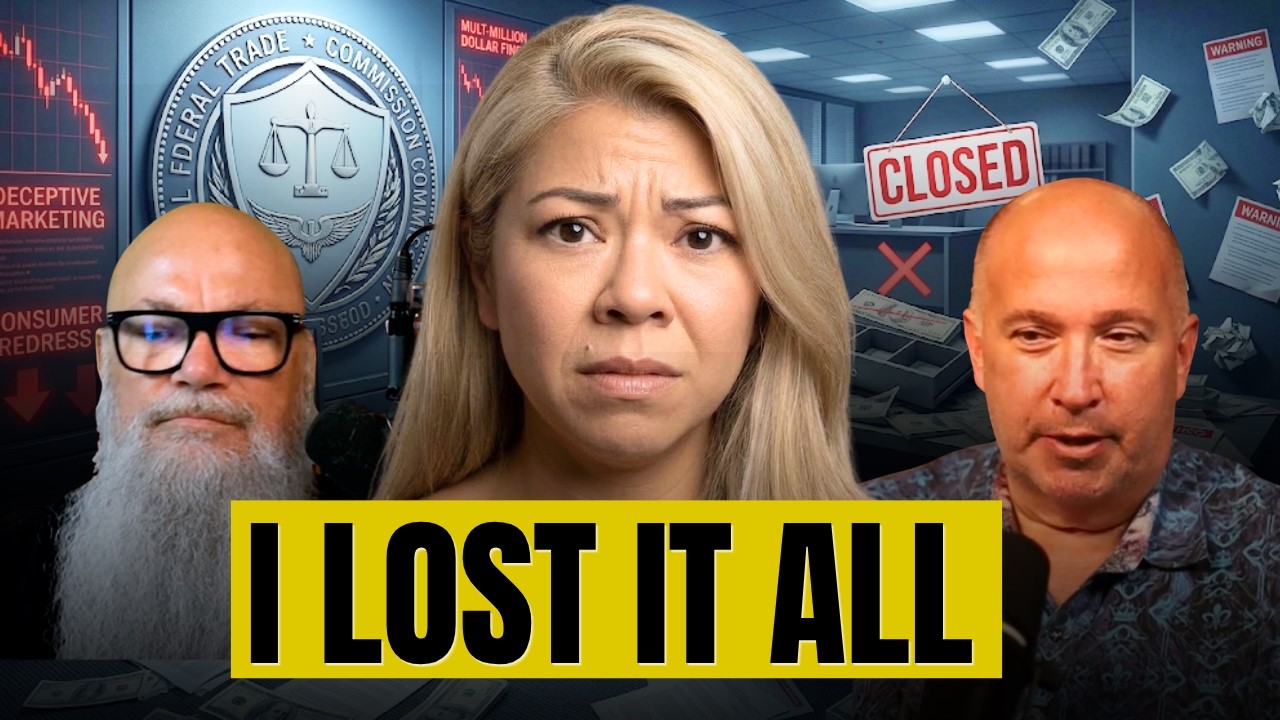
Targeted by the FTC: The $56M Comeback Story
Summary
"Scaling too fast can put a massive target on your back, as Mary Dee discovered when the FTC froze her $56M agency's bank accounts. Low-ticket offers like $49 guides draw intense regulatory scrutiny, turning them into magnets for complaints. Shifting away from a rigid 'retirement' mindset can help avoid burnout by integrating passions into daily life."
Transcript
The first half of my life I spent answering every email right away, answering every text message, being very available, and also I did it all. And it was only after getting sued by the FDC, having all my money taken from [music] me, at the same time having breast cancer. In that moment, that's where we go, oh, let me re-evaluate some [music] things. >> I made money by the time I was 28, and then by the time I was turning 29, it was gone. Most people, they believe retirement [music] is this destination that they have to get to because that's when they're free to do what they actually want to do. But a life well-lived is one where we can learn to sprinkle all of the things we love along the way. >> Our society has it backwards is what we push onto people in the way that things should be. I fight against that. It's amazing how with the [music] right tools and the right advice, we can actually live a life that feels so good and we don't necessarily need to [music] be a 10 million millionaire. >> You're watching Marketing Misfits with Norm [music] Ferrar and Kevin K. >> Well, I got a question for you, Norm. I mean, you you've been you're a fossil as as you self claim Fossil. >> You've been doing this uh business stuff for a long time. You've built agencies. You've built companies. We have an agency together right now. We [music] done a lot of stuff. Uh a lot of experiences, a lot of uh water under the bridge. How do you keep it fun? How do you keep doing what you're doing as an entrepreneur and like keep the spark? Keep the or do you do you sometimes like you know what going to quit everything and go sit on a beach and watch the fish? >> There have been times I've said that. But uh no, this is uh this is something that uh is very important not only in a company but just for your own mind. If if you're not having fun and it just becomes a job and that's exactly what it what it is and you want to get out and that's the same thing that your employees or contractors are going to feel. You you've got to at some point make it fun or enjoyable. >> Yeah, you do. True. And then and sometimes though, even though it might be fun, [clears throat] the government comes knocking. [music] That could be the IRS, it could be the >> What happened, Kevin? >> Whatever, and you got to deal with a sudden pain in the ass. Uh, and it takes the fun out of the whole thing and sometimes makes you wonder, is this all worth it? Uh, and you and I have both have experienced some of that. I've dealt with the mafia. I've dealt with the IRS. I've dealt with a bunch of things. But our guest today has dealt with the FTC. and when it comes to uh digital [music] agencies and digital products and selling online, she went through a pretty big uh battle with the FTC. So, [music] uh that's kind of shaped the way she approaches stuff. But one of her things is like she want she helps companies come and put the fund back in [music] and and among another another among many other things [music] as well. So, I think >> was that a little tongue twister there, Kev? I got I [music] ate an almond beforehand. and it was shifting, you know, in my mouth from one side that little piece that was [music] left over was shifting. So, it get my tongue. But no, this is going to be a this is going to be a a different type of podcast than we normally do, but I think it's going to be very helpful for quite a few people. >> All right. Well, let's bring on our guest, Mary D. >> Hi. >> Hi, guys. >> Hi, Mary. How are you? >> I'm feeling good, feeling strong. [music] >> All right. It's another day in paradise, right? >> It is. [laughter] Um, so who who the heck is Mary D? [laughter] >> Well, that's a loaded question. It actually uh it depends on who you are as to [music] how you see me. And I think that that's true for all of us, right? We have a lens in which we we see someone. I think like if we we say the word Oprah Winfrey, we think, "Oh, Oprah is a what?" To some people, she's like an entrepreneur. To other persons, she's [music] like a wealthy media mogul. to someone else. She is a lonely woman who maybe has has or hasn't found love in her life. Like there's so many like different ways that we can spin how we perceive someone. So, it honestly depends on probably how you have uh how you know about me. And um if that's by the work I've done, then that could be because you were in a uh organization I was part of and you got to be maybe an affiliate there and you saw me at events and you got to spend a lot of time with me. It just it depends on the lens, but I will say that in general, I'm an adviser. I'm a mentor, and I am just someone who wants to spread a lot of good in the world, Kevin. That's what I'd say I am. >> So, what do you want to be most out of all these things, the different professions? What's the one that you want to be known as? >> When I think about my life, >> on your tombstone? >> Yeah, what's my to that's a great question. I think that's a one worth reflecting for everybody. What's on your tombstone is I would say that I would love for people to know me as someone who showed them how to love others and love themselves. >> I think mine would be fossil carved in stone. [laughter] >> Well, mine would be that probably the philosophy I would want something along the lines of the philosophy I live by. Life is about the experiences you have and the people you meet. uh it's not about [clears throat] how much money you have in the bank which is where a lot of uh a lot of us in western society especially in the United States because of the culture are all business people are motivated by money and by who has the most who has the biggest car the biggest bank the biggest best vacation and it's not about that and so many people like I need to be a billionaire I'm like why >> I need to be I need to have a hundred million in the bank why uh what there is a certain number that you know that most mine's 10 million. Uh that you know if I had 10 million I'm good um sitting in the bank and I could do whatever the heck I want and I know I can live the life that I want to live just taking four 4% of that out a year and why do I need to achieve more than that? Um and so I think that message gets lost with a lot of entrepreneurs and it causes them to steer their ship in the wrong direction and causes a lot of pain in their personal life, their business life and everything. As an adviser, do you see a lot of that kind of stuff happening? Oh, absolutely. So, I it's it's interesting to hear you say this because I feel like part of the journey that many of us go through, especially if you're an entrepreneur, is there's usually that first pain. And the pain is typically around money, meaning we grow up poor or we feel the pressure of needing to perform for love, uh perform for our whether it's our community and our friends and family just to be like, "Okay, look at me. I'm not a total loser." uh and and it's being able to have uh chasing the significance of whatever the thing is. And money typically is is is an easy thing to kind of equate to success, right? Because we see it all the time in marketing. We've we especially see it in old school marketing. Um [snorts] which by the way, for all the affiliates who rented out mansions and rented out cars and then you know showed the world that that was the life like I'm >> Why did you do that? Why did you do that? [laughter] I told you to not rent that Lambo. I told you. >> I'm telling you. I'm like, >> we've seen that. We We've seen people in our business. >> We know people that have done that. Those exact things. Yeah. It's it's bad. >> And it's bad. It's bad. And and it sets the wrong tone because what happens is we are we're we're selling the story that money will buy you happiness. And we're selling the story. And so that's what those those those things do. When I say we, I'm talking about the folks that are are doing that line of marketing or using money as the motivator. So, there is some truth. Money does bring you some freedoms and some choices. So, that that is also can be your truth. But what I would say to the folks that are are running down that line is it's really important to know why you're doing what you're doing and what you're doing it for. So, if it's I want to reach So, so Kevin, you were clear. You're like, my number is 10 million and it's because I want to have lots of choices. I want to live a lifestyle that feels good for me and like I don't want to have to worry about these things. So great, like you have a very clear kind of path to why that needs to be that. And I'm guessing that by you saying that means you're not going to break your back trying to get to 11 million. >> No, >> you're going to get to 10, you're like, "Oh, this feels great." And I'm my guess is that you can even fall short of 10 million and you'll still probably be relatively comfortable and you'll go, "Actually, I didn't even need 10 million. Look at this. I only needed five or whatever the number is. And so happiness is one of those things that we procure from the inside out. And that is often a lesson we have to learn while we're running towards the things that we think are going to bring us happiness. And oftentimes that path also goes of entrepreneurship goes to having a high high where you suddenly make your first million or your first two million. You buy all the things and then you go, "Oh crap, I still feel like so empty inside. I'm not filling the hole of happiness and we forget to do all the things that actually do bring us joy." And it's one of those things where you also see like couples, right? they get married maybe younger or they get married um at a time of their life where they don't have much and they they don't know what they know now and time goes on and then you watch those relationships and they either crumble or they grow apart because it's the same thing. They start getting to understand life. They start having experiences and they're like, "Oh, like just because he looks like a supermodel, that's not enough. Like I actually want him to like hold me tight at night. that I want him to bring me flowers and tell me I'm pretty. So, >> he does. He [laughter] does. >> You're the one. She's describing you. You're the one that's been with Connie since [laughter] had nothing. Made it all. Lost it all. And then Connie still coupons. >> Yeah. [laughter] But, you know what what's funny what you're saying is that Yeah. When you're young, um I was fortunate. I had a business. Um I I made money by the time I was 28 and then by the time I was turning 29 it was gone. >> So but up to that point you know you're happy every you nothing can go wrong until it does and then all these things Kevin said at the beginning about you know well I call it getting kicked between the legs and getting up then doing it again and doing it again resilience. But now, if the same circumstances happened, it wouldn't be that big of a deal. It was back then. I mean, it was super depressing. And then you're having to slowly build up that happiness again. And even now, there's tons of precautions um we make just because of those events that happened way back when. >> I mean, Norm has done well uh and he's had some very successful business and had a few that, you know, didn't do as well. and he's at a point where he could retire right now, but he's like he wants that one last little thing. One last little thing. Uh and he and I have a business together, and that's what we're we're trying uh an agency together, and we're trying to get that one last little thing for him and get my 10 million for me. But but so when did you become satisfied? Because Norm, he's told me, and correct me if I'm wrong, Norm, you know, he's got enough he could retire right now. He lives in Canada, so you know, it doesn't cost much to be in the 51st state. So you can uh [laughter] But um he he could retire, but he's like, "No, I need that one last thing." So a lot of us have that in us. Like people ask me, "Kevin, would you ever retire?" I was like, "No, I don't think I ever could. I'm an entrepreneur by heart. I've got to be doing something." And that doesn't mean I got to build the next hundred million dollar company unless it makes sense. But I see so many I have a good friends that exited for I don't know. I don't know. they about 80 million bucks uh when they were in their mid to late 40s and they did nothing for a year and then they got bored and then went through a depression. So how do you how do you get that balance of like knowing getting the fulfillment along with the success so that when one either one or both of them can happen together or or they can happen together or one or the other at least can keep you going. >> Great question. So this is what I found. Most people are saying, "Let me hustle. Let me do this thing. Let me grow this thing. Let me hit my number. Let me get blah blah blah. And then I'll retire." So what what I'm hearing when someone says that is that they believe retirement is this destination that they have to get to because that's when they're free to do what they actually want to do. But a life well-lived is one where we can learn to sprinkle all of the things we love along the way. Um, I give this example. I love to sing. I love like karaoke. I love belting it out in the shower. I love rolling my windows down and putting on my best, you know, 80s and 90s track and just enjoying myself. Now, all of that said, if I had to do it and I had to go do a a performance every like every week, every weekend, let's pretend like my nights were spent doing concerts and doing that, I probably would hate it. I would loathe it. It would take the fun out of why I enjoy singing and entertaining. So, this is where I'm like, okay, how do we work through life, grabbing those things that we love and doing them along the way, all the things. So, we don't wait until we're retired to hike. We don't wait until we're retired to read. We don't wait until we're retired to spend real time with the people we love. Instead, we figure out ways to do that now, even in the achievement. Because that way when retirement shows up, you're like, I don't need to retire my life from anything because I love the life I've built. I get to sing once a week. I get to play with my children or my grandchildren. I get to go on that hike. I get to karaoke with my friends on Thursdays and bingo on Saturdays or whatever it is that you love. So that's what I would say to that is it depends on your definition of retirement. In the same way that this all when we talk about money and we're talking about business depends on your what's successful what does success mean for you? So it sounds to me and Norm you can correct me on this but it sounds to me like success feels like still being able to be like hey I still got this and I can impact whether it's through your agency or through mentoring other people through their agencies uh through helping other people who are early in the game make money. So, you get to partake some of your wisdom. Like, that's some legacy stuff we're starting to talk about. And that feels good. It feels good to be like, "Wow, I'm leaving a little legacy. I'm leaving a little bit of something on someone who's able to look back and be like, "Wow, Norm helped me with that." And I really love that he gave me that marketing nugget, or that he introduced me to this white label that was amazing, or he showed me how to have better campaigns, whatever it is. And so, that's that's what I'd say to that. Hey Norm, I've got a quick question for you. I'm trying to manage all my affiliate and creator programs from Amazon, from Shopify, from Walmart, but it's just a freaking mess. I mean, I've got reporting coming from here and there, all these different Slack messages. Do you know if there's like a unified dashboard where I can do this all in one place? >> Yeah, absolutely. And you're right, it is a mess. A lot of brands are complaining about that. But there is a place that has a solution. It's called Lavanta. And they let brands recruit partners, track performance, manage payouts, send product samples, and even run creator programs across every major marketplace all in one place. And guess what? Brands can spend less time on tools and more time making profit. >> Is that the one that you sent me a link for like a 10% off coupon? gold or enterprise plan a few few days ago. >> You got it. >> Oh, cool, man. I think I've got that link here. Was it lavanta.io/misfits? >> Yep, you got it. >> le van na.iomisfits. >> Awesome. I'm going to go uh go hit them up right now and get that 10% off. >> Perfect. Me, too. I always say build your business around your life, not your life around your business. >> That's right. That's right. And it took me a long time. >> Get that backwards. Get that backwards. >> That's right. >> I I when I turned 40, I'm way beyond 40 now. When I turned 40, I decided to travel for a year and because I was doing a lot of travel already, but I was like, there's a lot of places I want to go that don't make sense for business or to do whatever I was doing. I want to go to Bali. it didn't make sense for the business I was doing at the time to make an excuse to go to Bali to write that off. So, I went to Bali and that started a seven-year journey where I had [clears throat] already been to like 20some countries at that point, but now I've been to 96 and all seven continents and I spent a lot of money. I spent probably half a million bucks. I wasn't backpacking uh but I wasn't staying in like fancy five stars unless it made sense. You know, if I'm in Tahiti, I'm going to stay over the water. That's part of the experience. I'm going to spend $1,000 a night. it was back then. But people were like, "Kevin, you're crazy. You should have taken that half a million bucks." And I probably bought half a million dollars of status been my house statues and artwork and different things. Like that was stupid. You should have invested that money and you could have used that. That's the advice I got from almost everybody. You could have invested that and that would have been when you turned 65 or 70 and retire now you'd have 5 million. Then you could go travel and you could do it. I was like, "No, no, no, no. You guys got it all wrong. You got it all freaking backwards. It's the best investment I ever made. changed my whole outlook on the world, on people, on everything. Um, and what if I was 65 and 70 and had bad hips or couldn't walk or whatever, uh, had asthma or something all of a sudden I I couldn't do all those things. And so, I think we have it, our society has it wrong, has it backwards is what we push onto people in the way that things should be. And I fight against that. >> Yeah. My mom said it to me best because I've been a a world traveler since since I could. So 18, got my passport and I've been to now over 36 countries and and still counting. And what I will say to that is she said to me, you know, she said, "You're doing it right." She goes, "Because most people wait till they get old to travel." She says, "But when you're old, you have to pee all the time." [laughter] >> So true. [laughter] She was not wrong. She was not wrong. Yeah. And I also think there's so much enrichment we get when we share cultures. Um for those people who are very dazzled by our, you know, first world problems here in America, like what kind of car are we driving, what kind of houses are we living in? When you do go and visit countries that don't have the wealth that we have here, it is so eyeopening. It creates more compassion and it creates more awareness of like, oh, like you can go to a place like Thailand where people are so happy and so smiley and yet they live in what we would call poverty. And so I feel like this is where we we can miss out sometimes on just the beauty that exists in front of us because we're in this bubble. We're in this just very narrow bubble of like what we see and what we grow we grew up with. You know, it's like so normal to be a kid that goes to school here and you think about college. That's that's normal. That's a normal American way. But it's not normal in many other countries. Education is hard to come by. You know, there's there's kids out there with one pair of shoes and two pairs of clothes and they're on a farm just doing what they do with their families because there isn't the same level of of baseline around education >> and expectations, too. [laughter] >> Yeah. [snorts] >> So, let's go down a different rabbit hole. >> Let's talk about your title, a chief fun officer. What the heck is a chief fun officer? What do you do [laughter] >> as an advisor? Norm, I have decided that one of my north stars is being able to have fun and that most people are just not having enough fun in their life. And that's half of the battle. So, I will say this, it's also easier when you're making a phone call to call back the chief fund adviser. I mean, who doesn't want to call back the chief fund adviser? So, it makes it fun, it makes it easy, and it also just takes the seriousness out of all these like titles. And uh again, it's go we're going back to the significance that everyone is chasing with um who they need to be labeled as. And the truth is we're all multiaceted. You know, we're lovers, we're mothers, we're fathers, we're sisters, we're aunts and uncles, we're business owners. >> So, it's very interesting. So, you're the chief fun officer. And Kevin, uh, very similar title. He's the chief FU officer in our company. [laughter] >> That stands for I'm just missing the N. >> Oh, yeah. Yeah, that's it. >> Missing the N. I misspelling. >> Typo. >> It's a typo. Typo. So you look at some of these big corporations like Google and Facebook and some of these guys where you know I'm in Austin, Texas and so down the road is huge campuses for Apple and Google and stuff and they have these just massive fun places for the people to actually work with. Are you talking about that kind of thing where it's like break up the day? It's not a 9 to5 type of day and like you work for two hours and then you go play ping pong for an hour and then you you know whatever or is it more getting that work life balance of you work hard and then you play hard? Um or what what is the how does that mix? >> Yeah, those are great questions. So this is how I would say they mix. They mix depending on the person and this goes back to what is your definition of success. If it's being able to coach your kids soccer teams on Thursdays and to take them to school in the morning and pick them up in the afternoon and it's time freedom, then that's fun for you. That's enriching for you. So building a life that allows you to do that would be an option, right? Or it would be it'd be what you're going for. And for others, Kevin, it might actually be what you just said, which is like, I want to be on a call with you guys, and when I'm done, I want to go take my dog across the street to the park and I want to do some stretches and put my feet in the grass and I want to go get myself a boba tea and call it a day, you know? Or maybe that's just a little part of my day and now I'm going to come back and then I'm going to knock out a little more work. I'm going to have a couple calls with my clients and then I'm going to shut it all down at 5:00 p.m. and when my lover walks through the door, we get to spend the rest of the evening just having a good time together, enjoying a face- tof face meal and and a movie or whatever it is. And that's why I said it depends on the person. Some people get so much joy out of the work that they're doing. So, let's pretend you are a men's coach and you love that work. that is just work that fuels you and you love the energy of other people then being in that work for you know five or six hours a day may feel energizing for you. So it's about finding your definition of success and creating that life around those things. The first half of my life I my my life in work I spent answering every email right away answering every text message being very available and also I did it all. I was the glue. And man, the glue is a rough place to be because you have to be sticky all the time. And it was only after getting sued by the FDC, having all my money taken from me, having to rebuild all over again. At the same time, having breast cancer, which so now I'm dealing with not just my money going away, but also my health is getting scary. like all of these things at the same time was a really really big like, oh, we got to try something different because this isn't working. And in that moment, that's where we go, oh, let me re-evaluate some things. And it's been beautiful to come out of the other side of it and go, okay, I've built many wonderful businesses before. I can do that again. No problem. I have I can take control of how I'm feeling, what I choose to put in my body, how I choose to treat my body. Okay, got it. Doing that. And then I can go, okay, how do I want to build this differently and create more leverage and make it all happen in a way that feels really good for me. Now, my time is not instantly answering all the things. It's there's none of that. I have a block of time where I do those things and then I'm like, what's really important to me? It's shutting things down at five o'clock and it's winging my lover walk through the door and us having a beautiful evening together and it's visiting my parents every month because I love them and I know they're not going to be around for that much longer. So, it's having those things that you do and creating that life that you want. And by the way, I didn't need $10 million to do that. It's amazing how with the right tools and the right advice, we can actually live a life that feels so good and we don't necessarily need to be a 10 million millionaire. >> That's good good point. So when you when you said you found a way to shift so that you're not this the glue, that's a big problem. And I I know that how does someone because a lot of times entrepreneurs are really bad. It's like they don't want to let go. They don't want to like, oh, nobody can do it better than me. >> Huge problem. >> Nobody can do it better than me. Norm's a big systems guy. He's putting in systems and getting out of the way. And just by the way, as an aside, Norm's passion is smoking cigars. So, he loves, you know, he he he always finds a couple hours in every day to go and and uh smoke a cigars, but he builds that into everything that he does. That's why you see the cigar smoker smoking the logo here uh of the Misfits podcast. So, how do you actually, you know, like as uh as an agency or as a company or whatever, what is that sticking point that keeps you from going from like seven to eight figures that really that that is there and you got to let go of and you maybe have to take a step back, take three steps forward. Can you talk about that a little bit, your advice on that? >> Absolutely. Absolutely. So what I found is that one of the drivers of very successful people is that often times one of their one of the things that makes them fantastic is also the things that keeps them from getting to the thing they really want and that is control. It's control and so how we view control is the first thing. So, a lot of these have to do with our inner, as you could tell from the things I've talked about today around success and, you know, how we how we feel about life. It has a lot to do with how we're all defining these things for ourselves. And so often we're putting ourselves into a box of a thing. And it's when we learn to let go of the box that suddenly the world opens up and we're like, "Oh, I've been controlling or I believe I've been controlling these things." And what the control has done is just created a lot of resistance. And so there's a level of control, right? So if Norm's building systems, he's building those systems because he's saying we can control the environment around certain processes and how things are done. If we have systems, I would say that's a very healthy level of control. And then you have the control, which was you were talking about, Kevin, which is no one can do it better than me. So, I have to be the only one and I'm not going to let this stuff go. And for as long as we continue to believe that that's the truth, that's where they'll stay. They will continue to hit that wall and they'll continue to hit that plateau because there's no growth. There's no growth in being the only one and being the only man on the island to do all the things. So, this is where we are built for collaboration and we are built to interact with each other. So, think of life like a grand puzzle, right? We are all a piece of this puzzle and through our different chapters of life, we have to learn how to find those pieces that interlock best with us so we can keep completing the puzzle as we go along. And this is part of it. And so a big piece of it is how do you set yourself free from this level of control that you think you need to have and put in good systems and processes like Norm's talking about so that you can have a a level of control over certain factors and then you you bring in good people, people who are better than you ideally at those things to come help you so that you don't have to do it all because you are going to get so much further. further when you can leverage your time and actual expertise and whatever your magic is and then let someone else come in and do all those other things that you are not willing to let go of under this guise of control that is probably not really true. It's just the story that you're repeating to yourself that is keeping you at that plateau, keeping you hitting the glass wall because you're like, I see it on the other side. I can't get through. But it's because you put the glass wall there. And so that's that's what I would look at for >> people will actually hire and they always say hire good people and get out of their way is a is one philosophy that some people have. I think it's actually a good philosophy. But some people hire good people and then try to micromanage them >> and they give up the uh quote unquote in their mind the control, but they're still micromanaging everything that they do. So how do you how do you advise people to get out of that mindset? So that's probably not like a one-hour answer or a a five minute answer because it's so different for everyone. And what I will say is for the person that is struggling with that, they're probably also seeing that pattern in their personal life somewhere. So these things are very interchangeable and they'll see it in their own relationships at home. They may see it in the resistance they get from their children. Uh past for you if your children are teenagers, those guys are unpredictable. uh but for you know for the for the normal kind of run of life what I would say is that it's it's it's a pattern and it's it's a pattern that's usually built around something that either we learned and need to unlearn or it's a safety mechanism that we probably built. um there's a a it's like um an avatar for lack of a better word of hypervigilance, right? And so that often comes from kids who were raised latch key, might have been left on their own more, had to solve a lot of problems by themselves, which I realize is probably describing every kid that grew up in the late 70s and 80s, but still um that hyper vigilance shows up as we grow up. And it's helpful because we were resourceful and we can go through any problem. We can tackle anything, right? We can pull up our bootstraps and go. However, the kind of dark side of that is sometimes we have a hard time letting things go. And we have a hard time just saying, I'm going to trust that I'm putting the right people in the right place or that I'm hiring the right people to do this work. people who are better than me at this or people who I have systems built around so that there is a level of control around the work they're doing so I don't have to micromanage them and then once we learn to do that we set ourselves free and we set other people free to go you trust me I'm going to be brilliant for you back in the 80s and 90s I had a um hyperrowth company every time I took a step forward I take two steps back it was driving me crazy it it was a nightmare I ended up going to a um a conference put on by EO and YPO about uh performancebased culture and through that I enrolled in Peter Gerber's um E-Myth Academy and it turned out it was this was exactly me. I would be 24 25 hours a day and then I try to hire somebody. They could never do it as good as I could do it. So I take the job back. they were a crappy employee and I would do it all myself. Then I'd hire got to the point where 25 hours a day, hire somebody. And it taught me that I'm not the guy to train. I should either hire a consultant or hire somebody that can train this person, tell the person everything that I want to have done. And then they actually helped teach me to train people, but they trained our top level people. And now everything is com uh a performance-based culture. If Kevin knows like I have a five-page policy on how to uh do a cup of coffee, you know, it's just it's everything. But it's now I don't worry about it. And the beauty of it is that when you do this properly, people can have a 4-day week, pay them for a five day week, they're happy they're do. And by the way, fun. We our company at that time, that's what it was. Like we'd get together, we'd have bar, and a lot of people think this is wrong nowadays, but we had barbecues. We would have we would give um uh 4-day vacations out. We would do whatever it was, but that kept the incentive up. It wasn't a the monetization for the people. A lot of it was just the fun and the incentives that we gave out, but every single aspect of the company we had process and systemizes for systems for. >> Yes. So important. >> It sounds like you had a great company culture too, Norm, because it sounds like there was a lot of celebration, which is always, you know, a piece that I I go often into companies and advise on their how they manage their teams because what people forget is they think they're just going to throw more money at people and that that's going to make them happy. And don't get me wrong, there are some people in your organization who are going to be very happy with you throwing some money at them, >> right? But many of them, especially when we're talking about your I'm not going to call it non-revenue because customer service can certainly be a revenue avenue, but your maybe less revenue producing type folks. They're going to be even happier when you have no Fridays or every other Friday off or they get to rotate Saturdays or they get to leave at 3:00 to go pick their kids up from school, whatever. you know, the work from home flexibility or um being able to come and support you at events because events are fun and they get to talk to customers, whatever it is, ice cream Thursdays, you know, like those are the things that they really look forward to because it's connection and it's about more than just hustling, just doing the work. It's like, can we come to an environment where work is a little bit of a reward? And so that's a really great culture and it's it's really fun to um know that there's that that you're tackling that in your own organization because I find that that's the secret sauce is it's figuring out what it actually what makes people actually tick and what makes them feel seen. And if you can do that, then your organization shows up ready to work, ready to rock, ready to back you 100%. And because they know you feel the same about them, they're feeling very fulfilled because you're not having to to to teach them to go figure out how to have work life balance. You are actually embodying it and showing them how to do it just by your company culture. >> Sometimes it's just noticing them and acknowledging them. >> Oh, all the time. Absolutely. Yeah. Yeah. We we all we all love to know that we're doing well. We love to hear someone say and whether it's like some like like Norm, I like your beard. I'm sure that you put effort into some kind of oil that you probably put into your beard. >> Oh, I like you. >> Making sure [laughter] that it's, you know, you have a special comb. Like there's, you know, there's there's a quality to it. So, we like to be seen and acknowledged for the things that we make effort for. And also the things that may be natural like, "Hey, Kevin, I love your smile." Now, Kevin maybe doesn't every day look in the mirror and go, "Let me do my smile exercises." He just naturally has it, but it feels good. It feels good to to have someone else say something nice about you. And that doesn't stop, especially when we're working. And a lot of times working hard, you know, to to do something as a team or a community. Uh, it feels it feels good. >> I don't think I ever told you, Norma, but that that pet rock that you put on my desk last time you were here with my name on it was really touching. That was that was really >> That's the one I threw at you. [laughter] Okay. So, so Mary, what the heck is cosmic obligation? You've talked about everybody's got this cosmic obligation. That sounds like a bunch of woo woo tree hugger stuff, but what but break that down. It's not, but break that down and what is that? >> So, a cosmic obligation is what I call and I do call in my woowoo folks with this one. So, it's help. >> Okay. All right, >> for the this is for this one's for that one is the the is for the because they totally get it. They totally get it. And this is for my folks who say, "Well, I don't need to build that thing or do the thing or be on a stage or tell my story because who am I to do that? There's someone else. Kevin's doing it better. Norm's doing it better. So, I'm just going to stay small. I'm not going to go for my dreams. I'm not going to do the things. And why I call it a cosmic obligation, what the cosmic obligation is, it is whatever your soul's calling is or whatever is driving you to that idea or to the thing that is sitting in the back of your mind when you go to sleep and it's there when you wake up and it taps you once in a while to go, "Hey, don't forget I've been asking you to write that book for like 20 years now. When are you when are you going to share that story? So, [snorts] it's those things that I call a cosmic obligation because what it is is it's that energy of you completing a thing, doing a thing, making a relationship, right? It can be it can be lots of things, but that is your cosmic obligation. And it's not going to go away until you address it or get to the end of your life and go, "Man, I wish I would have, could have, should have done XYZ." >> Man, things are getting tough out there. Our dudes are getting squeezed. things are changing. AI is playing a big role in what's going on in the e-commerce world, and there's a lot of people that are they're that are pretty worried. What What should they consider doing? >> Well, I think one of the best things they could probably do is go to an expert that understands the market sentiment right now. First one that comes to mind is is Quiet Brokerage. And here's why. They're going to build you up. They're going to understand your company. And at the end of the day, you're going to know how to maximize your valuation. So, the very first thing you need to do is go and get your free confidential valuation at quietite.com and then, you know, let the games begin. Awesome. What was that website again? >> It's quiet.com. Awesome. I'm going to head over there. >> So, what if you're not That's just not you. You're like you're comfortable being the soldier. You're comfortable being the person told what to do. You have no desire to be an entrepreneur, be a leader, or be seen. You just want to stay in your little hole, your little hole, and just do your little thing and go home and play your little video games. >> Well, what I would say to that person is number one, they're probably not in front of me because they're not out necessarily seeking seeking what I have to offer or what you have to offer. And this is also what I'll say is just because someone chooses not to be entrepreneurial doesn't doesn't isn't a bad thing, right? I think that as entrepreneurs we we know that we are a very special we are a special bunch and also there is something really beautiful about someone who can be steady and consistent and do the thing that for them if stability is where they get their comfort then that's what it tells me like if that if a job speaks stability to somebody if that's how they're defining stability and that feels like regular income. It feels like benefits. It feels like, okay, I know everything's taken care of and that makes me feel good in my body. Then live your life. Do it. My my brother is a he has been a fireman/paramed for the Cape Canaveral uh out out in Florida for his whole life. That's like the first job he got um out of school and he's never had a different one. and he is well past retirement age. But you know why he goes to work every day? It's because he has the most flexible schedule ever. He trades his time so he can basically spend hunting season hunting. And he is happy to show up when when these younger guys don't want to show up because he's getting like a thousand bucks a day to show up and sit around and if they get a call it's because some tourist you know got heat stroke or stubbed their toe. So he's retire already. you know, like I said, he could retire and he's he's already a multi-millionaire. And so he he did that not being this super digital marketing entrepreneur, but he did it with stability, consistency, and the right investments. So, I think there's a lot of avenues for us to get to what we want, Kevin. But for the person who does feel called to speak, for the person who does feel called to write a book, who does feel called to do something that they might consider a little uncomfortable, that's where I say, "Ooh, move towards that discomfort." Because that's where the gold is and that's where the richness lies and that's where just living life exists. It's in getting to those growth edges and being like, I'm just going to jump. >> How important is it for entrepreneurs to be around other entrepreneurs? Norm and I are pretty well known in the Amazon seller community. Um, and you know, you go to the someone just I was on a call with someone this morning who just has got a software tool and they hadn't really been in the Amazon seller community for like a till about a year ago or so uh until they started seeing that there's an opportunity there. And they told me they went to a couple events and they're like these people, these entrepreneurs and this they're they're like gung-ho and they're like, you know, partying hard, working hard. They're they they have this uniqueness I've never seen in any other type of thing. So, how how important is it for people for entrepreneurs especially to get with their people? >> Oh man, community is what will hold you up when stuff is hard. When stuff is hard and when you're hitting a wall or when you want to know how someone else is getting through this Google slap or whatever the thing, you know, or or hey, tariffs are showing up. What am I supposed to do? How am I getting uh you know it's COVID, how am I getting my stuff shipped back over from Japan? Like this is where community really comes in. And it's because you're with other people who can understand your pain, who can understand your successes, who can also cheer you on, and who can give you an edge. Right? It's the same reason why when a a kid goes to medical school, they have to do their internship with other medical professionals that ideally have been doing it a lot longer than them. So in in the same way, we don't necessarily want to learn from someone who hasn't done what we're doing. We want to be in this circle where we go okay we're all doing this thing and there's room enough for all of us by the way uh to share these successes share best practices and in so many other times collaborate to share resources I mean how many times have you know we looked at the new CRM that's showing up or this project management software or this AEO tool or whatever it is and you just go okay like who can talk about this who's been using it who says this sucks. Who says this is great? Who's worked with Norm and loves his systems and processes? Let's go. Let's go see Norm because he's he's done this and he's he's able to go enjoy his cigars and primp on his beard. Uh because he's got time because he has systems and processes. Kevin has his own rock farm on his desk apparently. And [laughter] so he has time to nurture his rocks. He must be doing something right. Let's go see him. >> And there's another there's another area as well. Part of this community is just not the network. It's breaking bread and getting to know people way beyond the Amazon community. Getting to know them and then um just being able to uh we'll say play hard, you know, go out at night and go out to dinner and now you're experiencing things with people. So in any community I think that's like that if you get beyond just oh how you know what's the best app you know oh let's join this mastermind uh I think that's one of the biggest elements >> absolutely I was just in an event this last weekend and the very first group of women that I stopped to talk to so you guys don't know this about me but I will bring my dog sometimes to events so she travels with me a lot and she's a little cute wiener dog and so [snorts] she's a showstopper. Everyone wants to stop and touch her and she's so good. She's just social and easy. So, here we are in this circle and we start talking about our animals and how much we love them and how short their life is. And then we start talking about our parents and we start talking about death. So, this sudden this this business event that we're at, we're connecting and what we're connecting over is actually like life and loss and grief. And that's what the conversation turned into. But it built so much connection that of course when things moved on into a business conversation or just a hey let's have lunch or let's just go have fun. It was easy to do because we're creating friendships, right? We're finding the thread that connects us all. And and all of us have it in some way, shape or form. We just have to spend enough time with someone to know that. [snorts] And the the other piece of it I'll say is I have literally been on a vacation across the world years ago. I was in Thailand and I think I had posted something and literally had a guy that I was only Facebook friends with for years and he was someone I I knew. He had his own community this and that and I had mine and he said, "Hey, I saw that you're in Thailand. I happen to be here. Do you want to get together for lunch?" And I was like, "Oh, that's amazing." And we got to connect and we got to talk and then we got to talk a little business, talk a little life. And I was like, "Wow, like where else can we do that?" Right? you have entrepreneurs who know each other and we're connected by some thread. And he was like, "Wow." He's like, "I've been following you for seven years and I've never gotten the chance to meet you. We haven't crossed, you know, paths in person. So, I just thought this was a good opportunity." And I was like, "That's amazing. I love this." And so, I feel like that is just one more way we get to connect, we get to do stuff together, we get to play together, we get to life together. Some of [snorts] my very, very best relationships have all come out of um this industry. I mean, I can look back on my very first events and the people I've met and I can still see them in my life today, whether we're doing business, whether we still play together. Um, and it's it's amazing. And I think that at the end of the day, Norm, it for sure it's the community. Uh, I remember when I got breast cancer, all who do you think was calling me? It was all of my associates, all the people in the community who who are just calling to encourage me. And like I was like, "Oh, I felt so lifted." And I was like, "This is what it's about." >> Yeah. I met Norm. Norm and I met through community like 10 years ago and now he sleeps in my bed. >> Oh, nice. Tell me more about this love. [laughter] >> Not with me. He sleeps in the guest bed. Not with me. [laughter] >> Air conditioner. He's got everything over there. his own refrigerator. Like, no. [laughter] >> Including dog ice cream. >> Including dog ice cream. >> No, I've got a little wiener dog right here u next to me as well. Little little 15-month old puppy. Um >> um So, yeah. And I I do like time of this recording, next week, I have a big event I do in Austin called Market Masters, and we do it in a mansion. It's an 18,000 foot mansion. and it's decorated like the 1920s Gatsby uh and and I have about a hundred people coming and a lot of people say that's I do a lot of events. I host and speak at a lot of events and they say that's their favorite in the entire ecom industry because of that what you just said because it's I bring in my chef. I bring in my masseuse. It's like it's like a weekend summer camp for entrepreneurs and where you're you're learning. There's no presentations. There's workshops and there's hot seats and you walk way out of that with with new friends, new connections and an amazing experience with other people like you. And then we do a big party one night that's crazy. Uh, you know, it's kids games. So, it's taking it's like little children's games and stuff sometimes and people just especially when you drink, you just get into it and it's it it creates a lot of uh a lot of bonds and relationships. So, I think that's important is to find that balance. And a lot of people don't. They just stay in their own little cubby hole and they stay in their house and like I can't afford to join a $35,000. Mine's not $35,000, but a $35,000 mastermind. I can't afford to pay $5,000, you know, with airfare and hotel and everything to go to some event. >> It's should be the other way around. It's just you can't afford not to. But people the mindset >> is I mean I was that way for a while and I would not join I get invited to join masterminds 30 grand 35 grand 50 grand. I'm like no I'm going to be providing most of the value because in most my world I was usually one of the more experienced people but then I finally joined one and I was like you know what I still one of the most experienced people here but I'm getting value. one thing that somebody says or one connection that I make can change everything and it has. And so that's worth way more than $35,000 or or whatever you may pay, but getting people and entrepreneurs to switch that mindset is difficult uh to where you're not get in rooms where you're not the smartest person. Getting get make these connections. How do you teach somebody that's just got their head down, they're building their business or they're doing their thing and they don't realize the value of getting outside their box? How do you get people to get into that mindset? >> It's difficult. I tell people all the time, you need to do this and Norm listens uh occasionally, but but how do I get people to >> to like, dude, get out of your box. Get out of your comfort zone. Go go go do something that's going to make you better. H well there's two approaches Kevin one one of them is you can try to convince them and then sometimes you will right and we might call that the hard sale uh and and when that happens there's a 5050% chance that they're going to come out of that experience and go oh my gosh Kevin I'm so glad that you beat me over the head with that thing because I got so much value or they're going to still be in their own head and the whole time they're going to be commiserating over the fact that they just spent $30,000 and they can't get past that and then they're going to be like, "I hate you. I just spent $30,000 and I couldn't get out of my own head." So, the other path to that would be to help people come to their own conclusion on why they should or shouldn't do a thing. And so much of this is timing. And the other part is what I was talking about before, which is can we lean into those growth edges? Can we go towards the thing that makes us the most uncomfortable? Right? It's it's hard to have sticky conversations, but can we lean in and do it? And can we do it in our business life with our teams and our our people who are building this with us? Can we do it with our business partners when things get a little edgy or do we just throw rocks? Maybe that's a way we at least get their attention. [laughter and snorts] Or, you know, these are are just some of the methods that show up. And so so much of that is understanding too that we want to honor where someone is at in their journey. And one of the ways I found to help people come to their own conclusions on why something is so great. Cuz I agree with you. It's being in those rooms where you go, "Oh, I get it now. I'm I'm happy to write down this check. I'm happy to to run this card and make this happen in this room because I know what I'm showing up to and that it's going to be far far more worth. It's going to be 10 times what I put into it, what I'm going to get out of it. But people don't know that until they experience it for themselves. And so what they can do is you can encourage them to go talk to or go collect information about the five people that they find the most successful that they want to be like, right? Because then what we're looking for are the patterns that those people do. And if they go to those people and can see that, oh, Kevin is a part of like four masterminds that are all 30K plus deals and wow, he's living the life I want. That's a clue. That's a clue. And you can go, hey, that's a breadcrumb for you right there. You could totally eat it up and do your first. Just get in that room and see how it feels. And then now they get to go, okay, how do I invest in myself? And that's the hardest part most people have is they are used to giving and maybe even overgiving to everybody else or putting it all in their eggs in this one basket that they forget like we have to fill our tank first. And oftent times it's in making those big investments in ourselves. Um the thing that floores me the most is people who sell high ticket packages that don't invest in anything high ticket themselves. meaning they want to be a $50,000 a month coach, but they've never paid for a $50,000 a month coach. [snorts] So, it's really fascinating to me to go, okay, well, that's a growth edge, right? You get an opportunity to see why why would other people pay you when you won't even invest that in your own self to go get what you need and to go or and and even go get what you don't even know you need? Because that's usually what happens in those rooms is you go, "Oh, I got something I didn't even know I needed." Okay, we've got to go down another path here. Okay, >> because you skipped over it and I'm trying to figure out what the heck this is. What happened with the FTC? >> Oh, oh my goodness. Okay. Yeah. No, happy to tell this story. So, oh man, the FTC, I got to tell you, I have never felt more like like I was a criminal is how they made it how I felt. And I was like, "Wow, this is weird to me." Because the FTC, for those of you that may or may not know, they are a like they're if they're suing you, it's a civil suit. So, it's it's, you know, they're suing like, you know, Walmart or they're suing Verizon or they're suing a digital marketing company for claims. Um, there's so many different things that kind of fall under their rules and they're very broad, meaning they're not specific and that's why they can often get into the door. So, I was running a digital marketing company. Um, one of which I was technically not the owner, Norm, but because my name was on the bank account and anyone that name that was on on the primary bank account actually was named as like a primary in the lawsuit. So, built a digital marketing company. um we did 0 to 36 million our first year and then our second year we were right around 56 million and then that's where the FTC came in and we got sued and they had a kind of a laundry list of things. Um I'll tell you what one of them is which I would go back and do differently and this is one I share really really uh with anyone who is out there figuring out digital marketing and business. One of the flags that came through for us, which I didn't know again until after the fact, was the fact that we had multiple entities. So, in our product line, we had five different products and initially we had opened an entity for each of them, but then we came back around and we said, "No, we're not going to separate them. We're going to be one company selling five products." But those created flags because apparently in the world of terrorism that is how terrorism is funded is by opening all these kind of shell companies. Um and so to to find that out on the back end and be like whoa wait a minute you're telling me that some judge signed off on part of this because you used that as a you know they could possibly be funding terrorism which of course we weren't. Um so when they come in and and sue you uh it's painful. I literally uh was two weeks out of surgery. I had just gone out for the first time. I was going to buy a van from a friend of mine. I went to the bank to pull out $7,000 and the teller looked at me and she said, "I'm so sorry. Your account is frozen." And I said, "My account is frozen. That that's weird. My taxes are paid. I don't have any collections notices of any sort of kind. My finances are in order. [gasps] That can't be right." So, I said, "Well, can you check my business account? Can you check my other accounts with this? you know, I'm on another business account. So, she looks, she says, "Yeah, all these are frozen." And I'm like, "Wow, this is this is super strange." She goes, "I'm so sorry. I can't tell you why because the paperwork is still being uploaded." >> So, all I can do is go home and go, "Huh, this is weird." So, a few hours later, of course, someone comes through the door and they come with giant boxes of documents and I realize, "Oh, I see. This business is getting sued." And then of course the our our sales guy calls us and says, "Hey, apparently they raided our old office, but nobody was there." And I was like, "Oh, that's a great use of taxpayer money that they didn't even know we weren't in that office anymore." So anyway, they uh we we got sued. Um it was painful. It was long. What my attorney said was going to happen happened. He said they just want all your money. They hoped that they would get in there and see all these millions of dollars in your bank account, but there weren't because our affiliate program paid out like 60%. So, money would come in, but we were paying it right out to all of our affiliates. We're just doing our thing, doing our events. And at the end of the day, what I'll say is it doesn't didn't matter that our disclaimers were big. you know, it didn't none of that. None of that mattered because by the time the FTC is done with you, there's nothing left. They've frozen everything. So, it doesn't matter if you wash out of that kind of on the right side or the wrong side, uh, however you want to view that. And it's unfortunate. It felt like a big black eye and a punch to the gut. And it also reminded me that this was a two-year-old business. You know, I've been doing business a long time and and doing it well. And this is money that can be made again. This is community that can be rebuilt. And to this day, I still get messages from people who are like, "Man, I sure do miss you guys and I miss what we did." And I'm like, "Yeah, it was it was a fun run." And now we get to regroup and we get to reinvent and we get to move on. Um, and this is the other thing I'll say is back when I got sued, which is back in 2018. Um, at the time the FTC was allowed to kind of like freeze all your accounts and they could kind of secretly go in and get a judge to do all this before you actually got sue your lawsuit in hand. They actually don't do that anymore. Um, for the most part these days, they learned to write letters. Uh, so they'll they'll usually write you a letter in advance and say, "Hey, we feel like you're doing something wrong. We want to talk to you." And then through that process, people usually get a little freaked out and end up settling with them before they ever even have to go to court, before they ever even have to go through that process. >> What happens if you're doing nothing wrong? [clears throat] >> It depends, Norm. It depends. Because when it comes to the eyes of the FTC, they can consider lots of things that you consider doing right, they consider doing wrong. And that's why I said it it my disclaimers can be this big, the biggest font I can use, or they can be the smallest font. And it doesn't matter because by the time you you you you try to fight it all, it just they're they're they have the upper hand. They are the FTC. the rules are broad and so they can they're you're you're going to probably have you settle out before you can do anything else because you're probably going to run out of money because your accounts are frozen or you know you're going to run out of just energy because it's a lot of energy and I was literally the very last person to sign sign off on my settlement agreement because I just was like this is so wrong. I feel like this is the mafia. And it it made me realize, wow, I could have been a drug dealer selling drugs as an actual criminal and I would have more rights right now than I do through a civil suit with the FTC. And that was really disappointing. But it also made me a lot smarter and it made me understand that there are so many pieces of compliance. Um, and also I think because we moved so big so fast that we were a moving target. And so part of me goes, there's something to be said for growing slow and easy and still doing great work and still being able to, you know, sell great products in the marketplace. >> Hey, Kevin King and Norm Ferrar here. If you've been enjoying this episode of Marketing Misfits, thanks for listening this far. Continue listening. We got some more valuable stuff coming up. Be sure to hit that subscribe button if you're listening to this on your favorite podcast player or if you're watching this on YouTube or Spotify. Make sure you subscribe to our channel because you don't want to miss a single episode of The Marketing Misfits. Have you subscribed yet, Norm? >> Well, this is an old guy alert. Should I subscribe to my own podcast? >> Yeah, but what if you forget to show up one time? It's just me on here. You're not going to know what I say. >> I'll I'll buy you a beard and you can sit in my chair, too. We'll just you can go back and forth with one another. Yikes. But that being said, don't forget to subscribe, share it. Oh, and if you really like this content, somewhere up there there's a banner. Click on it and you'll go to another episode of the Marketing Misfits. >> Make sure you don't miss a single episode because you don't want to be like Norm. [laughter] Are you comfortable to say what what a couple of the things where they were after what something that just maybe people >> So the credit card piece right because they could call it credit card laundering but at the end of the day that's not what we're doing. We just opened some entities we didn't use and then we have our regular um so what happens is they didn't just they don't come in on just one thing they come in on multiple multiple things. Um the other one was coaching. So it was the we had a program that had coaches attached to it taking people through the process. They they said that what happens is your least your least sophisticated consumer and this is their verbiage not mine has to be able to to basically do the thing you say you're going to do. Our our course was named um how to make six figures in 90 days. It didn't say you would make six figures in 90 days. It was just a howto and then there was a course attached to it and it walked through the affiliate marketing model and how you could sell other people's products or your own products. And we had a coach that took them through that system and that process. Our lead magnet was really cheap. It was like a $49 product. So, my problem wasn't with my consumers and the the clients who paid $30,000 for events and masterminds and all that stuff. It was with the least sophisticated group of consumers, which is normally your largest batch when you have a very low-end front-end offer. And so this is where they would bring in the sad story of well, you know, Janet is a single mom and she's 19 and she's a waitress and she bought your course and she didn't make six figures in 90 days. So that was also so that's where they pull in truth in advertising. And so it was some that would be one very clear example for you of one of the main their main shticks with us. >> Oh, that's sorry you went through that. Uh but uh I know some people have done that been been through similar things and it's it's no fun. And I've been through the IRS ringer myself on on some stuff >> and the and dealt with the mafia too. Uh so I I know what it's like to go to the bank and like what happened to my money? [laughter] >> Yeah. Yeah. It part was not >> mine. It was norm shoe shopping. >> Taking my buddy's money. [laughter] >> Yeah. Yeah. No, it definitely was not a fun process. I don't recommend it. Um, and also it it gives me some it gives me I don't know a a war story >> from the ind, you know, an industry war story. And I feel like I'm also really empowered to be able to also assist my clients and and able to say, "Hey, that looks that looks a little too gray, you know, or like some things are very black and white and some things are shades of gray." And the question >> you just reminded me I just made a note. I don't know if you saw it when you were telling that story. I picked up a phone because it I'll forget it. We have for our agency we have a spreadsheet uh that the the spreadsheet is uh shows how they can do with cold email. It's it's estimates. It's not promises. And same with warm. It's like give us your figures. We plug it in. This is kind of you know what you might be able to expect just to set expectations. And I say it on the call like hey this is not a promise. This is not a guarantee. This is just, you know, but it doesn't say it on that spreadsheet. So if they screenshot that, it doesn't say it there. So I'm like, I just made a note. Put that on the spreadsheet. So it's if someone screenshots it, results not typical. These are estimates. Uh so so >> yeah, I mean it >> just save me a norm from a lawsuit. >> Yeah. [laughter] Yeah. And there there's a lot of things, you know, in disclaimers in your terms and conditions. And and this is what I will say is after being on the stand and having to testify, I have never come out of a lawsuit feeling so good because I was like, "Wow, I had great systems and processes. We had a 99% uh customer service rate. like I could look back from those levels of compliance and feel really solid about how things were run and also just like well crap we were just we were in that pile and it was the luck of the draw with all of that and we were unlucky and now I've learned from it and I get to now it empowers me. It gives me an extra tool in my box to go out to my clients and be like hey this is black, this is white, here are shades of gray. How far do you want to dance in those shades of gray? and you know how how are you clear and are you consistent and are you in integrity in the products that you're selling and how you're selling them and that's the bottom line. >> So you left the courthouse, got in your car, rolled down the windows and sang a song all [laughter] >> always. >> All right, we are at the top. We're past the top of the hour. >> We're having too much fun with Mary. Mary, if people want to reach out or know more about you or follow you or get the scoop, uh, what's the best way for them to do that? >> Oh, so many easy ways. So, all my handles for social media are the Mary D. So, that's t h m a r y d e. And you can go right to my website, which is mary d m a r y.net. >> Perfect. All right. At the end of every podcast, we ask our misfit if they know a misfit. M. Oo, I would say I know lots of misfits. I am going to call in my misfit. I know it's taking me a second. >> We'll put the Jeopardy song on for you. >> I want to I want to give you guys a really good Oh, Sebastian Cruz. >> Okay, very good. >> He's my misfit. Yeah, you guys are going to love him. He's great. >> Awesome. >> That's awesome. All right, Mary, that's it for today. You're no longer in the firing line. [laughter] >> You were awesome. >> That was great. Thanks, Mary. >> Yay. That was fun. That was fun, guys. >> Awesome. >> There goes my thing again. There we go. I'm back. Okay, Mary. We'll see you later. >> Okay. this bloody computer with those magic corners that keeps >> that was great. Uh it's different uh getting into a different mindset and different way of thinking and that was some really good advice from Mary there. I think uh I think people will enjoy that episode. >> Oh yeah, there's so many different areas that we covered, especially the FTC. That uh that's surprising. I mean, you got to dig in. You got to do some research and make sure you're compliant with everything. >> Yep. Yeah. The bigger you get, the more the bigger the target. That's like like she said, >> there we go. >> That fast growth put target on your back. Uh for sure. And then dealing with the public, you know, and the type of people you're dealing with, they expect one thing, get something different. Um uh enough of them complain, think they can get something out of it, they will. >> Yep. >> All right. Out of it. What what can you get out of it if you go to the marketingmisfits.co? >> Well, I would suggest going to YouTube and going to marketing misfits podcast where you can listen to all of these long form podcasts or if you just want the threeinut version. Um, we we dissect each of the long versions and we put them up at on YouTube at marketingmisfits clips and we have a new newsletter out there at where you can go to misfits.news. Yeah, it's comes out newsletter comes out every Wednesday. It's Misfits newsletter. It's got a lot of actionable tactical stuff, summaries of some of the podcast. If you don't want to listen to the whole podcast, [music] you can get some of the good nuggets out of it. And then new episode of this podcast comes out every single [music] Tuesday. So that means I got to see you again next Tuesday. No one. I got to I got to look at your beard again. Can you just like put on like a green screen thing down below so like the beard doesn't show? And >> All right, everybody. I'll be closing off the show today. Thanks for watching. Kevin's being annoying. Annoying. We'll see you later. >> [music]
This transcript page is part of the Billion Dollar Sellers Content Hub. Explore more content →