Ecom Podcast
Story Of The Most Important Founder You've Never Heard Of
Summary
Learn from Demis Hassabis, founder of DeepMind, whose AI innovations laid the groundwork for OpenAI and ChatGPT, highlighting the importance of visionary leadership and strategic foresight in developing transformative technologies that can redefine industries.
Full Content
Story Of The Most Important Founder You've Never Heard Of
Speaker 1:
Sam, I think today we should talk about somebody who is one of the most important founders in the world, one of the most brilliant founders in the world that nobody talks about.
Unknown Speaker:
I feel like I can rule the world. I know I can be what I want to. I put my all in it like no days off on the road.
Speaker 1:
I don't even know how to say this guy's name properly. And he is one of the most important tech founders in the world. His name is Demis Hassabis.
Speaker 2:
Is he currently the guy who's like warning people? Is he on like a podcast tour warning people?
Speaker 1:
No, no, no. He's pro AI. So he's not warning people.
Speaker 2:
No, then I don't know anything about him. Enlighten me.
Speaker 1:
Okay, so this guy is Demis the Menace is what I'm going to call this guy because this guy is an absolute animal. Okay, so I watched this documentary called The Thinking Game. It's on Prime Video if anybody wants to go watch it.
I'd heard good things from some smart people, so I thought, okay, let me check it out. And let me just first lay out my case for Demis as Billy of the Week because he's kind of legendary.
I didn't understand how much of a prodigy this guy was. And this was a documentary that was like, you know, pretty straightforward, but like this could have easily been a movie like The Social Network,
because The Social Network basically covered the most transformative, young, brilliant founder from the kind of 2004 to 2010 era, which is Zuck. And it talks about Zuck in college and how he's this kid and, you know,
all the ups and downs he goes through trying to build this thing. Demis is maybe that guy now, him and Sam Altman. They're both basically two guys who are creating the most important technology of all time.
Speaker 2:
You think those are the two guys? Those are the guys?
Speaker 1:
Well, Elon would be the other, right? So Elon's the obvious other person that needs a movie and has a crazy life. But this guy, I think, is the most underrated, less talked about for who he is. Okay, so who is he?
He started this company called Deepmind. Deepmind got bought by Google. And Deepmind is basically Google's AI play. And the Deepmind team, which was basically a research team that was building AI, is the reason that OpenAI exists.
It is the reason that ChatGPT exists. It is the reason Elon is interested in AI. It was very much because Elon met with Demis and basically Demis big-dogged him a little bit. He was like, oh yeah, I'm working on the most important thing ever.
And Elon who's building rockets and electric cars. He's like, I'm saving the planet. I'm going to space. That's my portfolio. And Demis said, well, what we're building will be the most important invention humans will ever make.
It will be the last invention. It's artificial general intelligence. So a computer that can think and learn better than humans.
And the reason why this is called The Last Invention is because once you invent an artificial general intelligence, it's basically like its own little species. So it's computers that can think and learn.
They will then do the thinking and learning and inventing far faster pace than we will. So they'll invent all the new shit after that.
Speaker 2:
He has that conviction throughout the documentary.
Speaker 1:
And he's had it since he was a kid. OK, so here's the here's the cool story. That's the very basic setup. But here's the story. So he grows up. He's got these like hippie parents. His dad is a musician and they look very bohemian.
He gets into chess and by the age of six, he is one of the best chess players in the world.
Speaker 2:
Among all humans?
Speaker 1:
Yes, so first he wins the under eight championship when he's only six in Europe. And at one point he's ranked the second best chess player in the world for his age. So he's an elite, elite chess player as a young kid.
And he uses his chest, he would go to the, his parents would basically drive him to these chest tournaments he would win as this, and he looks tiny. Even now he looks like baby face.
He looked like such a little kid when he's sitting there at these tables. He would basically go win prize money and then use the prize money to buy his first computer. So Chess gets him a computer.
When he gets a computer, he starts making games on the computer. He builds a chess game, builds other little games, and he starts a hacking club with friends at school. He's basically like, wow, computers and chess, this is my life.
Speaker 2:
If you had to create a stereotype for a good movie character who's a James Bond villain or a mega genius, This is how they all start. The stories all start the same way.
Speaker 1:
And by the way, he tells the story of this incredible origin story. So he goes,
my parents took me to this tournament of 300 best players in Europe and it was like on a mountain in a church and it shows the church and it shows 150 chess tables lined up. 300 players are going to be there.
And he's only, I don't know, he's eight years old or something at this point. He's tiny. And he's playing against the Danish national champion, a 30-year-old man, is playing against him.
And he describes basically the chess tournament was no timer. So this game with this 30-year-old dude goes for 10 plus hours. And he's just playing and he's like, I'm pretty sure it's a draw, but this guy's not conceding that it's a draw,
so I just have to keep playing. And this guy's just wearing out this little kid over hours and hours and hours. They only have like five pieces on the board and it's just like a stalemate basically, but he won't give it.
He won't say it's a stalemate. And he describes how at the end basically this guy kind of like tricks him a little bit and he ends up losing when what should have been a stalemate.
He makes one wrong move at the end and the guy laughs at him, stands up and laughs and says, you know, it should have been a stalemate. You should have just done this and it would have been a stalemate, like rubs it in his face basically.
And he's so upset at this tournament and that this like kind of grown man humiliating him. He looks around and he's just like, what am I doing? He's like, that was a horrible experience. And he goes, If you took the 300 people in this room,
the brainpower in this room that we're just spending on this 10-hour tournament here, we could cure cancer. And he's like, forget chess. I'm not going after chess anymore. I'm so done with chess after this bad experience.
I'm gonna go for computers. I'm gonna try to figure out how to harness the brainpower of humans and combine it with computers. How do I get computers that could think?
And the documentary is called Thinking Game because they interviewed him when he was a six-year-old. And they're like, so why do you, like a TV network was like, why do you love chess so much?
And he goes, it's just, it's a good thinking game.
Speaker 2:
What a fun hang. What a fun hang. Could you imagine your boy played with him?
Speaker 1:
Okay, so listen to this from Boy Wonder. So he gets into Cambridge, but he's too young to go. So he has to wait a year to go to Cambridge because he decides I'm going to go to Cambridge. I'm going to study AI.
He's like 14, 15 years old at this point. And in his gap, so he's like, they need him to wait a year. He can't go till he's 17. So he says, okay, why don't I try to get a job? I'll work in the meantime.
And I'm not going to do chess tournaments. I'm going to do something with computers. And so this company called Bullfrog, which made like the most popular computer games at the time in Europe.
They were the number one production company of games. They held a contest. And it was also cool to see like Gaming was so new at the time. The CEO of the gaming company was like, dude, there was no recruiters.
We couldn't be like, hey, go get us the best game programmers. There were no game programmers. It wasn't even a job yet. And it just reminded me of like what the frontiers always look like.
It's like little signals of you're in the right spot is when there's not even recruiters for the thing. There's no agencies yet for the thing. There's no name for the job.
Speaker 2:
And for context, by the way, he's 50 years old now. He's 49. So we're talking the late 80s.
Speaker 1:
Right. Yeah. Yeah.
Speaker 2:
Long time ago.
Speaker 1:
Hey, I got something pretty cool to share with you guys. So if you're like me, you listen to podcasts or YouTube videos, you like to take notes, you're here to learn, and that's a lot of effort.
Sometimes you're on the go and you can't do it. And so the folks at Hubspot who are sponsoring the podcast have done something pretty cool for you. They have created the MFM Vault.
It's a place to go find notes and resources that they pull from the different episodes that we do. So if we have a guest on that shares their five-point framework,
they write down those five points with the examples that the guest gave and they put the notes there for you. So if you want to access the vault, it's totally free.
All you gotta do is click the link in the description below and you can access all the notes and the stuff in the vault. We're gonna keep adding to this, trying to make it better over time. Thank you to Hubspot.
This is a very cool way for them to sponsor the podcast, but by instead of telling you to go buy their stuff, they're actually giving you something instead. So he enters this contest, he wins, and he gets a job there.
And the first game he works on is, did you ever play Rollercoaster Tycoon?
Speaker 2:
Of course, yeah.
Speaker 1:
So he was built, Europe had the equivalent called Theme Park, and he built Theme Park with this guy. It became a smash hit when he's 16 years old.
And his job in Theme Park, he was not building the park builder, but the guest The guest logic, so AI basically, it's like you're going to have a thousand guests walking around, but they need to do sensible things.
Speaker 2:
Like a thousand sim characters decided to go on a ride.
Speaker 1:
Yeah, that are going into your theme park. So they were like, oh, just make them walk around on a random path. But he's like, no, no, no, this is AI. I want to work on AI.
So he goes, He makes it so that if you make the rollercoaster too crazy, they'll puke. And the odds of them puking go up if there's a burger joint next to the rollercoaster. And so he creates all this logic that was not in games at the time.
Like this very intelligent logic around the autonomous characters in this game. And even the people there were like, dude, why do you care so much about this? And he says at the time, there's a line in the movie where he goes,
Today, the whole world agrees with something that I knew 20 plus years ago, that AI is the most important technology that we're ever going to build and that that was the only thing that was worth working on.
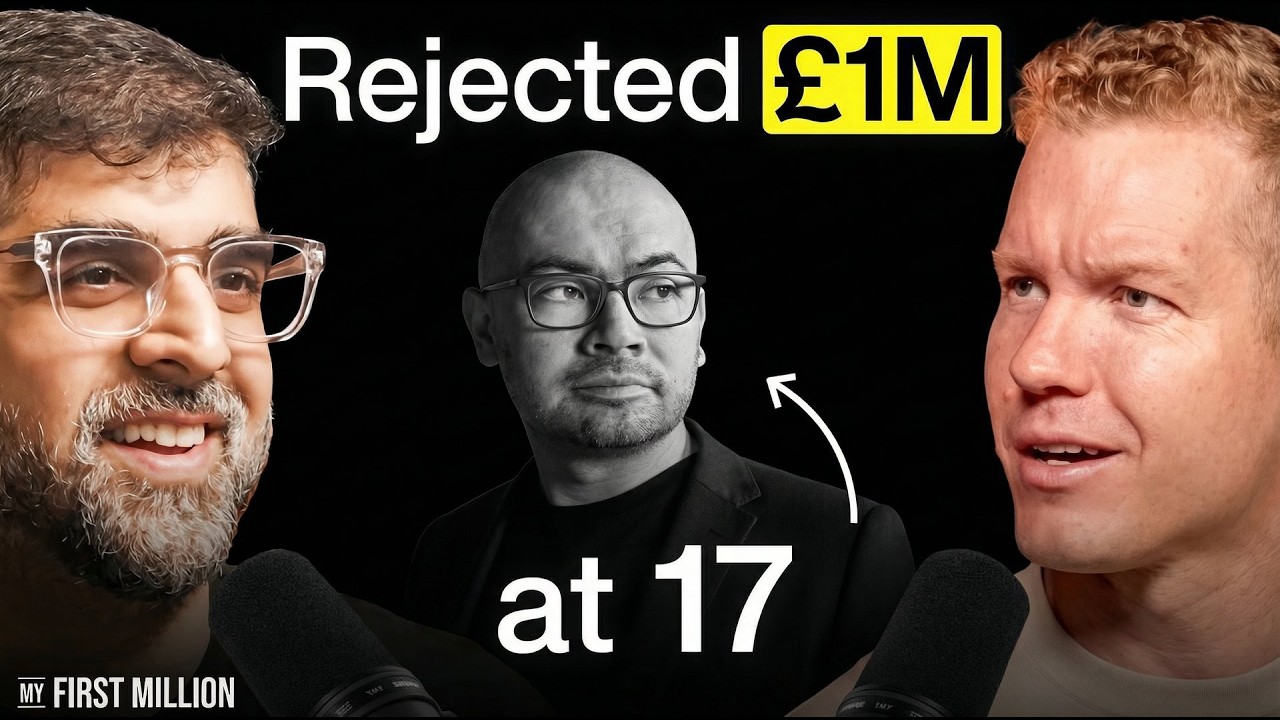
So even at the game companies working on AI. Okay, so he's now 17. He can go to Cambridge. The guy who owns the company offers him a million pounds to stay. And he's like, I'm a poor kid. I'm 17 years old.
He offers me a million pounds, more than a million dollars. And this is back in the like...
Speaker 2:
Yes, that's 8 million USD.
Speaker 1:
Yeah, like a huge offer just to stay. And he's like, no, I want to go, I want to build AI. So he turns it down and he stays broke and he goes to college. And at college, he basically, you know, meets this other guy,
the only other guy he knew that was equally obsessed with AI and neuroscience and like how the mind works and then teaching computers to think like a human mind.
Speaker 2:
I thought you were going to say that he partied hard and hooked up with tons of girls.
Speaker 1:
He's like, we would drink beers and we would play foosball and we would talk AI.
Speaker 2:
He's like, we were crazy.
Speaker 1:
Okay, so then he decides at some point that he's going to start this company. Now, nobody really believes in AI at the time. In fact, in the scientific community, AI was not a thing. Because it's not science, really.
There's no like testable hypotheses that you could go do. You couldn't go into a lab and do AI. The entrepreneurship community also didn't really respect AI. It's this sci-fi topic. There's been no commercial companies doing this.
So there's nobody who believes in this. Well, guess who believes when nobody believes? Guess who loves a good old contrarian bet? Teal. If Teal becomes the first backer of Deepmind.
Speaker 2:
Are you kidding me?
Speaker 1:
No. So how legendary is Peter Teal that he's the origin funder of Deepmind?
Speaker 2:
I think that people talk about this, but I don't think it talks about enough. I think Tim Dillon's a comedian where he was like, everyone thinks the president of the United States is like most powerful,
but there's one person who's never around. You can't see him, but he truly runs everything. And that's Peter Thiel. And he was saying that like at Trump's inauguration, it was like J.D. Vance, who's a Thiel guy.
It was all the CEOs, Thiel guy, Thiel guy, Zuck, Thiel guy, you know, and it was like Peter Thiel is the guy. And then I recently read a whole bunch of old quotes from him.
And it's just like everything he says is timeless and has been true so often.
Speaker 1:
He's like a city, dude. He's like a place that people are from.
Speaker 2:
It's very strange.
Speaker 1:
Oh yeah, Zuckey grew up in Teal. Oh, Ethereum, you like that? Well, he grew up in Teal. Oh yeah, yeah, that's true too.
Speaker 2:
It's very interesting.
Speaker 1:
Elon Musk, yep. He actually first company merged with Peter Thiel's company and Peter Thiel was the CEO.
Speaker 2:
So a lot of times it starts with Plato or Socrates where it like, well, Socrates taught Plato. Plato taught Alexander the Great and also Aristotle. And it's sort of like there's like this one person that's like the lineage.
Yeah, it's very strange.
Speaker 1:
So Teal becomes the backer. The second significant backer was Elon Musk. So Teal tells Elon about this. Elon meets Demis. Demis says that big dog line of basically like, I'm working on the most important thing in the world.
Elon is like, wait a minute, what's going on here? He ends up funding this. Okay, so he gets a little bit of funding from some crazy believers.
And now the part of the movie that I think is just incredible is showing them building This monster that is AI.
Speaker 2:
So when you say build, is there actual physical building as well?
Speaker 1:
So what they would show, no, so at the time, it's them on a whiteboard with really complicated math equations talking about, well,
what if we took this technique from deep learning and we merged it with this technique over here about neural nets and like, you know, what if we could get something new? And that's what they did is they got Q star plus deeper, you know,
they combined these two different ways of learning. Don't ask me what any of those words mean. But the thing they show is a little TV screen with the Atari game of Pong.
And so it's so funny that this whole thing starts with Pong and it starts with games and so much like the most brilliant people in the world staring at this Atari game trying to be like, how can we teach the computer to play this game?
And he talks about like, because he grew up on chess, And he was super competitive and games were how he learned to think. He's like, maybe games will be how the computer learns to think.
Because games have rules, they have rewards, they have a board where you can see all the information, and you could do it a bunch of times and get better and better and better at it. You can run a lot of simulations very quickly.
So the rate of learning, he basically was like, the way kids learn is games. So maybe that's the way we can build a childlike computer program to also learn.
Speaker 2:
I think one of his breakthroughs was when they played the Asian game, right? Yeah.
Speaker 1:
So before that, it starts with Pong. I didn't actually know this. And they basically said, look, Don't tell it anything about Pong. Just tell it one thing. Score go up is good. So at the beginning they show it and they're all watching it.
They're all just like sitting there watching and the computer hits it, like the game hits it, and then their AI player like doesn't even move its paddle. It's like, ah, down one.
Next time it like moves its paddle the wrong way, we're down two. Next time, moves its paddle the wrong way, almost recovers but misses it, down three. And then it hits the ball once and they're all like, but then it still loses the point.
And it basically, you know, it starts out terrible. By a hundred games, it's competitive. By 200 games, it's like as good as the best humans are playing the game. And by 500 games, it's never losing a point.
They're like, okay, that was remarkable. Let's carry on. And so they had this first objective, which is let's, without telling it, because again, the goal was, he goes, what is AGI? It's, it can think and it can learn.
So we can't just tell it the rules. We can't just tell it how to win. We can't give it strategy and then it executes it. No, no, no. It has to figure it out itself. Like a kid learning how to walk and it stumbles and it starts to figure out,
oh, if I put my center of mass here, that's how I walk. So they wouldn't tell it anything about the game except for whoever has a higher score at the end, that's a good thing. Go for it, computer. And then they had it learn like 50 games.
So then the next one was like Brick Breaker. Have you ever played that game on Blackberry? Where it's like breaking bricks and it says the same thing. 100 games, terrible. 200 games, pretty good, as good as most humans.
500 games, it's unstoppable. And it figured out this strategy in Brick Breaker where you tunnel in through the sides and then the ball will just keep bouncing on the top and break all the bricks on its own without it having to hit you.
And it's like, okay, that's cool. Next, let's do chess. So then they show it doing chess and the one of the kind of like the first aha moments was it started to invent its own strategy a little bit.
But just a little bit like, oh, it's got its own style. OK, that's kind of interesting. It's got its own little attacking style. That's pretty cool. It beats Stockfish, which is the best chess program out there.
And they're like, well, that's good because Stockfish beats all the pros. If this beats Stockfish, that means it's the best at chess. Then they went to Go.
Speaker 2:
And so Go, I didn't entirely understand what it almost looks like Chinese checkers, but it sounds like it's more complicated.
And they claim that it's the most complicated game on earth because it has the most permutations on how you could possibly win or lose.
Speaker 1:
Right. There are more board configurations in Go than there are atoms in the universe. So you can't like just think it through. You know, there's too many combinations.
You have to be actually fluid that in any situation you're in, be able to figure out the right move. So people had always thought Go is too hard. No computers had ever beaten Go before.
And so they start and they created this program called AlphaGo. So AlphaGo, basically what they did, Which was, this is kind of nerdy, but I liked hearing how they did it actually.
They gave it a thousand or a thousand or a hundred thousand games from strong amateur players. They said, here's a hundred thousand games. Learn from this.
Speaker 2:
Past games. So they gave them like, like the, the play by play.
Speaker 1:
Yeah, like the move by move thing. And it learns all that. And then it said, cool, based on what you learn, now play yourself. So based on what you know, you play yourself, see if you can get better. And it played itself like a million times.
Okay, so that's kind of interesting. Maybe that'll get a new result. So they go to Korea. For this test though, like we're gonna go play this guy Lee Sedol. And Lee Sedol is, you know, a grandmaster Go player.
He's one of the best players of the past, you know, two decades. He's the man. And they show them like getting off the plane and there's like hundreds of photographers taking pictures like today, the computer versus man, man versus machine.
And like, I didn't actually see any of this when this was happening. I don't know if you did either. But like, again, in this small corner of the earth.
Speaker 2:
This storyline is as old as John Henry. Do you remember John Henry, who was like, The strongest man. The strongest man who is using the jackhammer through the mountain trying to race the new steam engine who can like pile through stuff.
And he's trying to beat the steam engine and he works so hard that his heart explodes. And that's like the story. It's the legend.
Speaker 1:
That's basically what happens except the guy's mind exploded.
Speaker 2:
Yeah. So this like storyline is perfect.
Speaker 1:
So they sit down and the game is going as usual. And they have a line from Eric Schmidt. So Eric Schmidt This is from Google. He was the former CEO of Google and a super technical guy. And Google had bought Deepmind at this point.
Speaker 2:
Dude, I saw the price. One of the greatest deals of all time, potentially.
Speaker 1:
So they bought it for, I think, 400 million pounds. So it was like, you know, 500 something million dollars. And there's a great line from Demis in this. I don't know if you saw this part where they're like, his investors didn't want to sell.
And he goes, he said this line that I really like. It was kind of a frame-breaker for me. I don't think most people when they listen to this line would even think twice about it. But for me, it was a little bit of a frame-breaker.
He was basically in like a frenzy. He's like, this is so important. There's so much to do. My life is only so long. I want to see this happen. And he's like, we have so much to do.
If we can just get this funding and be left alone to go do what we needed to do, Then I might actually get to see this thing in my lifetime. And that's what matters.
And he's like, what's a few billion dollars for five years extra of my life getting to work on this?
Speaker 2:
He was like, would you trade a few billion dollars? He goes, I could sell for a few extra more billion and make billions of dollars. But let me ask you something.
If you're going to die, would you spend billions of dollars to live an additional five years? Of course you would. And that's what he said he was going to do here. It's such a good line. Someone changed my perspective on having children.
Someone was like, do you think you're going to love your kids when they're born? I was like, yeah. He's like, well, then why wouldn't you have them sooner so you have an additional life with them?
Speaker 1:
Time with them. Yeah. He has another line later that's kind of like this. He was talking about like, what a new breakthrough that they were going to have. And he's like, it's going to be the most exciting thing ever. How will we get sleep?
I won't be able to sleep. And he was just like that fired up 10 years into the mission. And so I just thought like when people talk about mission driven, This is what they mean when the guy's like, there's so much to do.
I don't know if it'll happen in my lifetime. The most exciting thing in my life is if this happens while I'm still alive, I will do everything in my power to make this happen while I'm still alive.
And I thought that that was just like a next level of mission driven excitement.
Speaker 2:
I want to read you a cool quote. Okay, so I'm reading this book. Can you see this? It sounds silly, but hear me out.
Speaker 1:
The Quick and Easy Way to Effective Speaking by Dale Carnegie. Oh, very cool.
Speaker 2:
So Dale Carnegie famously wrote How to Win Friends and Influence People. He was actually more famous originally because he created the Dale Carnegie Speaking Program.
And so they had locations all over the country and hundreds of thousands of people went through his programs.
Speaker 1:
Including Warren Buffett, who says it was the most important class he ever took. And he had the diploma from the speaking class on his wall next to his office, not his college diploma.
Speaker 2:
And he even taught. He was a Dale Carnegie instructor. And there's this amazing quote. And so basically, Dale Carnegie, one of his premises is that public speaking, he calls it the royal road to self-confidence.
He says, if you want to be a more confident person, you should actually learn how to publicly speak. Because when you control the minds of many men, you control yourself, you know, it makes you more confident.
And one of his axioms or whatever for how you get better is you have to envision the end goal. And he has this amazing quote from William James, where it's like the godfathers of modern psychology.
And there's an amazing quote of William James. He says, in almost any subject, your passion for the subject will save you. If you care enough for a result, you will most certainly attain it. If you wish to be good, you will be good.
If you wish to be rich, you will be rich. If you wish to be learned, you will be learned. Only then you must really wish these things and wish them with exclusiveness and not wish 100 other incompatible things just as strongly.
And his point being is whatever you truly want, if you want it bad enough, your passion will carry you enough to acquire all the skills and have the determination to see it through the end. And I wrote this down that this guy,
you see it from the beginning and where he is now, this quote applies to him.
Speaker 1:
That's great. Today's episode is brought to you by Hubspot. Did you know that most businesses only use 20% of their data? That's like reading a book but then tearing out four-fifths of the pages. Point is, you miss a lot.
And unless you're using Hubspot, the customer platform that gives you access to the data you need to grow your business, the insights that are trapped in emails, call logs, transcripts, all that unstructured data makes all the difference.
Because when you know more, you grow more. And so if you want to read the whole book instead of just reading part of it, visit Hubspot.com. Okay, little segue. Have you ever seen the Tony Robbins TED Talk he gave?
Speaker 2:
Yeah, probably. I've seen many of his talks.
Speaker 1:
So Tony's normal talk, like his seminar, is like a four day, 12 hours a day on stage thing. So the TED Talk is 18 minutes. So he gets on stage, he's like, all right, like I usually talk for 12 hours at a time.
Let's see what I can do in 18 minutes. And he gets to this point in the talk and he's like, what stops us from getting what we want? And then people are like, I don't, he goes, I don't have the, and people are like, time.
He's like, yeah, all right, time. I don't have the money. I don't have the skills. I don't have the network. I don't have, and he writes all these resources that you lack down.
And then one guy in the crowd goes, I didn't have the Supreme Court justices. And he looks through the darkness. He's like, who said that?
Speaker 2:
It was Al Gore.
Speaker 1:
It was Al Gore who had just lost the presidential election. I remember in Florida, there was a recount and he was like two justices short or something like that. And everybody has a big laugh. And then Tony says, he goes, you know,
I don't think that's why you lost because I saw you yesterday on this TED stage talking about climate change. You know Gore is like super passionate about climate change. He was like one of the big advocates for climate change.
And he goes, if you had talked like that in your presidential debates, you'd have never needed the Supreme Court justices. You were on fire yesterday. I didn't see that when you were debating Bush.
And he basically says, he goes, the only resource you need is resourcefulness. He goes, because look, if you're just, like you said, if you're just lit on fire to do something, You just ask yourself the following question.
If I'm determined enough, if I'm charismatic enough, if I'm charming enough, if I'm playful enough, if I'm creative enough, if I am motivated enough, I'm persistent enough, can I not achieve anything I want?
Can I not overcome all those things that I lacked? It's like, of course. You didn't have the resources. You didn't have the money. But if you're determined and you're charming and you're persuasive, you'll go get the funding.
It's like this master skill that's underneath it. I actually catch myself doing this all the time where I feel like I lack something and I'll literally go say that almost like an affirmation.
Like, well, if I'm playful enough and I'm determined enough and I'm charismatic enough and I'm persuasive enough and I'm determined enough, can I not get this thing I want?
Speaker 2:
Of course I can.
Speaker 1:
Like, oh, they're closed? I could probably get them to open. Oh, this guy said no? I could probably get him to say yes, right? And then each one of those things, that's just like this universal skill we all have if you remind yourself.
Speaker 2:
That's pretty badass. And I don't even think you need to be charming. This guy Demis, he was pretty black and white, but when I listened to him, I'm like, You're an unstoppable force. You care about this so much.
Speaker 1:
He is what Paul Graham calls a fierce nerd. I think that fierce nerd essay is actually Hall of Fame level for Paul Graham. And you see it when you see somebody like Demis and how competitive he is with foosball and chess.
And then he's also that way with trying to win the like protein folding problem. All right, back to the story. So they're sitting there with the best Korean Go player in the world, Lee Sedol.
And there's this move, Move 37. And I think if they write the Book of Humanity or the Movie of Humanity, Move 37 is like the uh-oh moment. It's like the moment in movies where, you know, in a rom-com, it's when the guy bumps into the girl,
she drops her papers on the ground, then they pick them up and they look each other in the eyes. It's like the spark. This is the spark of like where AI really took off. And it's move 37. So basically, they're playing Lee Sedol.
The expectation is Lee Sedol will win because Go is so hard and he's the best, but we'll put up a good showing. We'll be as good as the best players against Lee Sedol.
And in move 37, the computer does something and right away the announcers are like, oh my, oh, what is that? And Lee Sedol, you can literally, they show him like sweating and thinking and he's like, what the hell just happened?
They go, and they go, I think we might've just seen an original move by AlphaGo. And Lee Sedol is like, just, he doesn't know what to do. He's like really perplexed by this moment. They go, no human would have made that move.
And it was the first time that it wasn't just pattern matching, like, let's mimic what a human would do or say, but less good than a human would say or do it.
Or maybe it's a little bit faster because it's a computer, but it's still doing what a human would do. It was the first time it was like, That was novel. That was a creative breakthrough and it beats Lisa Dole.
Speaker 2:
It's like when in a horror movie, the robot turns who says, I'm in charge now. This is that moment.
Speaker 1:
Exactly. And so I'd never actually seen the clip and the way the movie shows it, I think is wonderful. So then right afterwards, Eric Schmidt's like, holy shit. And he goes to Demis and he goes, what's next? Where does this end?
And he goes, when we beat the Chinese guy. I didn't even know about this part. It's like, then there was a Chinese guy who was the actual number one ranked player in the world. They go to China to play this guy.
And now it's like, what's going to happen? This computer just beat Lee Sedol. Can it beat the Chinese guy? And I just love that they even called him the Chinese guy.
It was like the most relatable thing that this absolute super genius with like a 10,000 IQ said. I was like, oh, he's just like me. We would just call him the Chinese guy. Like that was cool. And so they go and they play.
Had you ever heard about this?
Speaker 2:
No. So I just, if you go on YouTube and type in Move37, there's videos with hundreds of thousands and millions of views.
And it's all like, For example, retelling the story of Move37 or there's Magnus Carlsen talking about how Move37 teaches you about XYZ. It's become like an acronym or like an analogy for when this will find...
Speaker 1:
It's like a four-minute mile, right?
Speaker 2:
Yeah, exactly. It's like... Exactly what it is, a four-minute mile. It's just a phrase that doesn't even mean Move37 anymore. It's grown beyond that.
Speaker 1:
Totally, totally. I see your little public speaking brain is picking up on all these little, you know, magic, the magic of tiny words, huh?
Speaker 2:
Thanks, Dale. Thanks, Dale.
Speaker 1:
Thanks to our guest today, Dale Carnegie.
Speaker 2:
Thank you.
Speaker 1:
Okay, so then it goes to, they play the Chinese guy. Now, here's the crazy thing about playing the Chinese guy. AlphaGo's whooping ass. And it's like putting the pressure on the number one player in the world.
Speaker 2:
Is the Chinese guy just smoking six while he's doing this?
Speaker 1:
Because that's why he's actually a pretty young looking guy. But the crazy thing is, as he starts to put the pressure on the Chinese guy, they cut the feed in China.
Speaker 2:
No way.
Speaker 1:
How badass is that? They cut the feed of the broadcast. They're like, no, we will not lose face like this. And they call that in the movie. They're like, this is like the Sputnik moment where China was like, wake up call. We're getting into AI.
And so this actually triggered the AI race for why China got so into it and how they cut the feed so dramatic. I thought that was incredible.
Speaker 2:
That's crazy. OK, awesome.
Speaker 1:
OK, so then they go, they continue with the game. So let's fast forward. They do StarCraft next, which StarCraft is interesting just from a... Why StarCraft? Because both players are playing at the same time.
So it's not turn by turn like you go...
Speaker 2:
Is StarCraft like a fighting game? I don't know what it is.
Speaker 1:
Yeah, I think it's called like a MOBA or whatever. It's like basically a game where, you know, you have a map, you have a base, you have a base, they have a base, you got to attack their base with characters.
You have to move them around the map. There's a fog of war. The whole map is not revealed. Both players are playing simultaneously. So now it's even harder.
Speaker 2:
You're acting like you don't know what you're talking about. I don't play that. But anyway, so there's this main character. Here's what he does.
Speaker 1:
I don't play Starcraft, but, you know, I've been around enough dorks to know. All right. It doesn't actually beat the best StarCraft player in the world. That guy wins. Okay, but it was a good showing.
Anyways, then I think what's the next step? What's the next step that really stood out to me? There's this one last part about protein folding. So are you are you familiar with what they've been doing with this?
Speaker 2:
All I know is that no one had ever solved it and basically within days or weeks or something like that They solved something that took 50 years to get up to that point.
Speaker 1:
Actually, it took years, which is cool I didn't actually realize this. So so Demis is basically talking about they're like, all right, we did good in games,
but he's like before AGI he's like He's basically like AI-assisted science is going to be the thing. And I don't think this gets talked about very much nowadays. Like, maybe AI could cure cancer.
But this guy is seriously like, no, AI should cure cancer and all disease.
Speaker 2:
Yeah, because it's not clear how math can or math or that type of like.
Speaker 1:
How ChatGPT cures cancer. That link seems very broad.
Speaker 2:
Why do you need more data and more effort? It's as if in order to cure cancer, you're just like, let's throw these 50 drug at them. Oh, that one kind of worked. Let's like soup up the drug and throw it 550 more times.
That's sort of how in your head you think cure cancer, not like can you math your way out of it.
Speaker 1:
Correct. Now, what I've realized in watching this and hanging out with AI people is one of the most important things in the world is basically prediction. So, I remember I invested in this guy who was a self-driving car entrepreneur.
He had worked at the Uber self-driving car team and he took me to this little garage and he had this like golf cart.
Speaker 2:
This was in like 2019 or 18, right? This was pre-pandemic.
Speaker 1:
Even before that, maybe, yeah.
Speaker 2:
I remember I met him.
Speaker 1:
No, no, that was probably the time. It was, yeah, right before I started my fund. So, 2018, 2019, you're right. And he drove me around in a self-driving golf cart in a self-storage facility. So, it's like you get a peek of the future.
It's amazing. This is, you know, before Tesla had it and whatever. But, like, you know, it wasn't perfect. You could only do it in a very controlled, you know, environment.
But he basically said, like, look, everybody who's working on this knows there's these, like, four or five steps of self-driving. And I didn't, I don't remember all of them, but one was, like, predict,
you know, so it's basically like vision. So, you got to see the world. Then, based on what you see, the next step is prediction. So, okay, I saw that that car was right there. Where will it be in two seconds?
I need to predict where it's going to be. That's the whole basis of self-driving is planning, prediction. There's like an action step or whatever. There's like five steps.
So that kind of planning and prediction step is the key to how AI affects all these industries. So, ChatGPT is planning and prediction of what is the next token or let's just use word.
What's the next word that would probably go in this sentence? You know, the roses are red.
I think it's going to be red because I've seen roses are red so many times that my prediction score very confidently would say the next word in the roses are is red. Okay, great.
Speaker 2:
How do self-driving cars work?
Speaker 1:
Same thing. If I see a car there, my prediction is it's going to be here in the next one second. So therefore, I need to do a new action. The same thing applies to science and curing all these diseases,
which is you need to know what a protein structure looks like. Based on the shape of the protein structure, if you can predict the protein structure,
then it's not so hard to figure out what should you attach to it to either destroy that protein or soup it up and make it more strong or whatever, right? You know where to bind on the protein.
Okay, so I didn't know about this thing, but it's called CASP. So CASP is this competition that had been going on for years. And it's basically the Olympics of protein folding.
So if you do like a sequence, you're like amino acids, it's always got this amino acid, this amino acid, this amino, you get this 10 amino acids. Cool. You know what's in it, but you don't know what it looks like. Okay.
You don't know the structure of how it's folded up into this like little tiny knot, a very unique structure.
Speaker 2:
When you say folding, figure out the shape of the knot.
Speaker 1:
The shape of it.
Speaker 2:
And you need to know the shape in order for what?
Speaker 1:
To design a drug that's going to do anything to it.
Speaker 2:
So you could kill it or grow it or shrink it.
Speaker 1:
Like imagine I said, hey, you're going to park this car at this address.
Speaker 2:
Cool.
Speaker 1:
But if you don't know what the garage looks like, you're just going to smash into the house, right? Like you might know the location of it, but you don't know where to park the car. So how do you park the drug that's going to attack this,
that's going to either kill it or enhance it? You need to know what the shape of it. So the way they do is one by one. So they create this competition to be like, can anyone use computers to predict the protein folding?
Because doing this manually is untenable. And for years, if you look at the graph, it was like, you know, like kind of this like 20%, 30% prediction accuracy for like a decade. So Demis decides, he's like, this is what we're going to do.
We're going to throw our resources behind this. And the first time they do it, they win the competition. But they're like, great, we're trying to go to the moon and we just have like the tallest ladder. The ladder doesn't get to the moon.
And so they were actually incredibly disappointed. And he's like, this was like a bitter taste of we really tried. We won, but not by enough to even solve the protein.
We're like, we're here to solve the protein folding problem, not win the competition. And to solve it, you need 90 percent plus accuracy.
And he describes this like the next year where they basically like, so we went back to the drawing board. I try to come up with new ideas. I thought it was a cool CEO moment.
So he was like, I know when you need to come up with a creative idea, you can't force it. Squeezing it doesn't make creativity come out when you just push the team. We need an answer now. That's not gonna get the best idea.
Speaker 2:
That's interesting because that's the opposite of what I would think and there have been people who would say constraints are the answer.
Speaker 1:
So they used constraints, but what they didn't do was basically put everybody into fight or flight mode. Because when you're in fight or flight,
it's kind of like why your best ideas come to you when you're in the shower or when you're relaxed or when you're in your sleep or when you're on a walk. Because the brain, like you have two modes.
One is executive mode where you're doing tasks and that's good at doing tasks, but it's not good at making new connections between existing fuzzy data.
Speaker 2:
Dude, that's so interesting because this is how Henry Ford, so Henry Ford, basically there's an engine block. So it's a block of metal and you put cylinders in there and that's how a combustible engine works.
But before that was one block, it used to be two blocks and it kept breaking. I mentioned two blocks and it screwed things together and it was holding them back from taking over the world.
Henry Ford got a team of four engineers of the company of thousands of people and the story is that he I brought them to a small office. He goes, this is your guys' workshop. And they're like, what are we doing?
He's like, you see that big-ass block of metal? Figure out how to put four f****** holes in there and four pistons and make it work. And they're like, Henry, sir, that's impossible. He goes, I'll see you guys in a quarter.
And apparently the story is that he went back like eight quarters in a row. So it was something like two years. And then finally, they got it. But it took two years. But he did allow them, this is four of you. This is your job.
Just figure it out and let me know.
Speaker 1:
Exactly. And this is also how, if you read about like Steve Jobs with the, he was like, no keyboard on the phone. And they're like, but the Blackberry, you know, keyboard, like you gotta write emails. He's like, no keyboard on the phone.
And they're like, but how would we, the accuracy, I mean, screens today don't, he's like. No keyboard on the phone. And so then they had to go invent multitouch and figure it out. So he gave them the constraint that you got to do it in this.
These are the constraints. But then I give you the time to go explore and figure out like which path might work.
Speaker 2:
That's interesting.
Speaker 1:
And they also did this with the game thing, by the way, when they did the go thing, the first one was, again, train on 100,000 games. Then they created AlphaZero, where they said, now try to make it win with no prior human knowledge.
Because he's like, if we're ever going to do new novel things, you got to assume we're not going to have a database of 100,000 good humans at doing this to use. And so they did.
They created AlphaZero, which could win in chess and go just by playing itself like 10 million times or whatever. It figured it out. And so similarly here, they're like, you got to go back to the drawing board.
And he described, he goes, first, I'm going to give them the constraint. Second, I'm going to let them be creative and try to go to the drawing board, figure out multiple different possible ways this might work.
He goes, and then when they pick one, he goes, I know this is when it's time to push. He goes, because first we will get worse than we were before.
Then after some time, we'll pick an approach and we'll get right back close to where we were before. It goes, and that's when it's time to push. I've seen it so many times before and we'll explode through. And I was like,
that's pretty dope how he kind of had developed judgment on the scientific process and the creative process enough to know when do you push and when do you not push.
Speaker 2:
Dude, that's so great. We're learning all these techniques and I'm putting it all together. Hermosi had this cool thing that he said when I talked to him once.
He was like, basically, I've noticed that when you start something new, The results go down 20% right off the bat. So if you're training your sales team on something new, their conversion rate is actually gonna drop from 50% down to,
you know, it'll drop 20%, so down 10 points. But eventually it will go up if you pick the right thing. And so the question is basically make sure you pick the right thing because if it's gonna go down 20%,
that means you need it to double its improvement in order for it to be worth it. So you pick the right thing. Otherwise, you're just back to square one and you went down 20% for a quarter.
Speaker 1:
Right. And so knowing that these J-curve progress things exist is important because the amateur would panic. The amateur would not go forward.
Speaker 2:
That was actually my biggest learning this year running a company was like expect new things to suck or bring everything down. Therefore, make your project selection perfect or high quality.
Speaker 1:
Right. Anyways, they end up crushing the thing and they show kind of like how they did it. They end up getting 90% prediction accuracy and they basically solve the single protein folding question.
Now, there's also like multi-protein and there's like variations and there's like all these other... Now, they moved on to harder things. But it's pretty crazy that the line graph was like, you know, 20, 30 percent, 23 percent,
and then went to 90 in one year when they like went back to the drawing board and figured it out. And how ecstatic they were. They're like, you know, this just changed the world.
People don't realize this yet, but this just changed the world. And it's reminded me of your inflections thing, which you should say, describe your inflections thing for entrepreneurs.
I think it's one of the best like axioms or principles you have.
Speaker 2:
Yeah, basically, and I didn't invent this. I think it was Maples, Mike Maples, I think. I don't remember exactly. But basically, the idea is that in order for a lot of like big breakthrough ideas to truly happen,
not like small businesses that make tens of millions of dollars, but like culture changing companies, you basically have to have inflections. And so there's a handful of inflections that matter. There could be regulatory inflections.
So during COVID, BetterHelp and all these telemedicine things existed because we changed the rules on who doctors can serve. It could be Cultural inflections, so like the Me Too movement, that changed a bunch of stuff.
Or it could be, why does Uber exist? Well, there was a technology inflection. Everyone now had a cell phone that had GPS on their phone, therefore they could call an Uber wherever they were.
And there's about five or six different categories of inflections, and you have to spot the inflections to know what's actually worth going after, because you needed an inflection in order for a culture-changing company to exist.
Speaker 1:
And so I think this alpha fold stuff where figuring out the protein folding is a massive inflection. And I didn't really know what the businesses were around this, but I kind of like Googled afterwards.
I was talking to Grok and asking him about this. So there's some pretty cool companies. I didn't realize, first of all, Google has their own company. They spun out from this.
So basically, Google has spun out this company that is Basically trying to cure all disease. That's the mission.
Speaker 2:
No big deal.
Speaker 1:
And their thought process is like, well, with AI, we can, you know, from first principles change the way that drug development and discovery works. Because if we can predict how the proteins fold,
then we can We have a way higher hit rate on the targets we designed with the drugs. Then we should be able to simulate if it's going to work with it before we even get to clinical trials. We should be able to run, you know,
hundreds of thousands of simulations to see how effective this can be, get the probability of success higher so that when we enter a trial, we have a way higher hit rate.
This company, by the way, their first round of funding was $600 million as they spun it out of Google and Deepmind. Demis is the CEO, I think, of Isomorphic Labs. There's a world where Google becomes the drug company that cures.
Right now, they're working on malaria and these different things.
Speaker 2:
He's the CEO of Deepmind. As well?
Speaker 1:
Yeah.
Speaker 2:
Wow. The H1 on isomorphiclabs.com, the headline is Solve All Disease. We're entering a new era of drug discovery, one where the frontier of AI can unlock deeper insights, faster breakthroughs, and life-changing medicines.
Speaker 1:
If I was doing a Sarah's List episode right now, Isomorphic Labs will be one of those where I'd be like, go be a PR person there. Go be a junior account manager there.
Speaker 2:
Yeah, there's a cafeteria workers. Yeah, you guys have a cafeteria.
Speaker 1:
You literally show up and you say, hey, I'm the best coffee bringer to your desk or ever. Give me a job here. I will find ways to be useful every single day. Whether it's in any job you have, I need to be at this company.
Because I can't think of, you know, how many companies have a more noble mission, but actually a shot of cracking it because there's a new tech vector to go chase.
Speaker 2:
So how does the documentary, like where does he leave it?
Speaker 1:
The end is weird because it's actually like the beginning, they're still in the beginning stages of what they're doing. So it's like they end the documentary, but it's like the AI stuff is just starting to work.
So they end it with after the AlphaFold thing, people like all these, like it was a big thing in the science community. And so all these researchers and drug companies were like, hey, can we get access to this?
Because if we know the protein structures, This will be tremendously helpful. So they're like, oh, we should set up like a service where you can request a protein and then we tell you how it's folded and then blah, blah, blah.
And then Demis was like, can we just fold all the proteins? And they're like, what? And he's like, how long would it take to fold all proteins known in existence? And they're like, I don't get it in like two months.
He's like, well, why don't we do that? Let's fold them and give it all away. And he's like, let's just make it open for anybody. Let's go run the computer, fold all the proteins, give it all away. And so that's what they did at the end.
They folded 200 million plus, basically every known protein in existence. And they made it available and the end is basically like researchers from around the world showing up on their Google Analytics like logging in.
We have 100,000 concurrent users. We have, you know, they now have 3 million users and that's everyone from like someone in Africa running, you know, a small lab to universities to Eli Lilly.
Who are all using them to be smarter and better about how they do, you know, medicine.
Speaker 2:
Dude, how are all the guys who work at Isomorphic Labs and Deepmind and Demis, how are they all not like Andrew Tate looking dudes like the most tan like a Jack dudes ever because like if you can cure taking peptides,
if you can cure all disease, like how are they not like the hottest people on earth?
Speaker 1:
I think the way you become that smart is you don't care about stuff like that. Right.
Speaker 2:
Like, no, you become that smart because you are bullied. But now you're going to you're going to seek revenge. And the issue with bullying going away is that none of these nerds are going to exist. You know what I mean?
Speaker 1:
It's like, I know we're getting close when Demis is 6'4 and has visible lats.
Speaker 2:
Yeah. Why does he not look like Adonis? That's my question. I think when Larry, I don't pay attention to the news too much, but when Larry Ellison and Masa San and Trump and Altman did this thing where it was like,
You know, a hundred trillion dollars or something like ludicrous number. It was under the premise of like, this is going to cure disease. And Larry Ellison, I do know that Larry Ellison's in his 80s, I think, or close.
Speaker 1:
Looking good, Larry.
Speaker 2:
Close too. And he's looking great. And his wife, like, is like a 30 year old. But for some reason, they don't look like that much of a different age, even though there is literally a 50 year difference.
And it was under the premise of like, we, you know, Larry's interested in solving death and therefore we must do that. Whenever I hear that, I just think that's just words that are meaningless.
But now that I know a little bit more about the topic just from you now, is that actually a legitimate thing?
Speaker 1:
Well, I'm glad you're asking me because as a pre-med student, I'm clearly an expert of this. No, it's hard to know.
Speaker 2:
As someone who took one class on this 15 years ago.
Speaker 1:
Somebody got a C in physics, had to repeat in the summer.
Speaker 2:
It's like on Instagram when people report, like you see like Instagram videos of people with their children and like the kids like on an iPad or screaming and someone's like, well, as a mother, I could never, it's like, dude,
You mean as a human being like I don't care. Okay, you don't like as a mother does not mean that you're right Mom not special. Yeah as a as a father like brother. I everyone's a father.
Speaker 1:
Okay, I don't care There's a line where they're talking to like one of the OG's of artificial intelligence and they were saying like, you know What are predictions and he goes?
It's hard to predict what's going to happen as we make this intelligence into superintelligence. It's like asking a gorilla to explain Einstein's theory of relativity. And when I heard that, I go, oh yeah,
we're going to be the gorillas out of this whole thing, right? Because clearly, if you're making intelligence smarter than any human, you're creating the next race. It's like to an animal.
If they just saw a human at first, they'd be like, yeah, looks kind of skinny. They got a little funny little extra appendage on their hand, you know, all right, cool. They walk upright. Oh, cool. But they're pretty slow, actually.
And then you're like, fast forward, you know, 200 years. And, you know, you see the blue angels flying above you.
Speaker 2:
200 years?
Speaker 1:
Yeah, I don't know. No sense of time. 2000 years maybe or 20, I don't know.
Speaker 2:
Speaking of gorillas, we are a few brain cells away from gorillas.
Speaker 1:
But just like what humans have done is like kind of incomprehensible to any, to our closest animal, you know, relative. That's what's going to happen here, which I think is pretty crazy.
Alright, let's take a quick break because I got to tell you a story. Let me tell you about the first time I tried to run payroll for my team. I was using a traditional bank and you know the type. It's got a janky interface.
It's built like a 2002 tax form and it was open only during business hours and I hit send and it froze. They flagged the transaction. They locked my account.
They put me on hold for 45 minutes and then they told me I got to visit my local branch. And that was the day I started looking for a new banking solution. After asking a few founders what they were using, I found out about Mercury.
And so now my payroll is two clicks. I can wire money, I can pay invoices, I can reimburse the team, all from one clean dashboard. That's why I use it for all of my companies. And so do 200,000 other startup founders.
And so if you're looking to level up your banking, head to mercury.com and apply in minutes. Mercury is a financial technology company, not a bank.
Banking services are provided through Choice Financial Group, Column NA, and Evolve Bank and Trust members FDIC.
Speaker 2:
I don't know if you listen to Mark Manson. He's the man. Basically, he did a podcast. I think it was his second most recent one. It's a Q&A maybe. Finding Your Purpose, Failing Better, and the AI Future.
So it was basically like an end of the year Q&A, which we actually did as well. And he tells a story about how he built an AI product recently. And so someone asked him, what do you think about the future of AI?
And he was like, well, I just built an AI product. And I realized a few things. One, AI is amazing in that it's better than 95% of people at certain things.
But the vast majority of value in the world is created by people who are 99.9% better at people than human things. You still need these experts. And AI can be great, but it's not an expert. But then he also said, You know,
there's maximalists who think that AI is going to come really soon and take over the world and we're all going to be worthless. And there's other people who think that, you know, it might happen over many decades,
but we're probably going to be fine. And he was like, I tend to be in that category. And the reason being is that when a lot of people think about AI,
they think that it's just going to take all of our jobs and we're not going to work anymore. But human desire is not fixed. And when you're thinking about AI, oftentimes people think desire is fixed,
meaning once you hit a certain level of productivity, you will not do stuff. And he's like, that's just false. For example, if we look at the Industrial Revolution, people said the same thing when certain stuff started happening.
And then you look at like the Victorian era where we started getting electricity, things like that. People made the same claim of we're not going to work again. We need universal income and all this stuff.
And he's like, Humans just always want more. And because of that, I don't think that there's ever going to be a point where we are useless. It's just going to be different. And I thought that was a really great perspective on it.
And that's one of the first times I've heard a perspective on it, other than maybe Darmesh talking about it, where I felt calmer, where I was like, desires is not fixed. We will evolve.
Speaker 1:
Yeah, it's interesting. I don't know. Have you read this? There's this book. I haven't read it yet, but it's called if anyone builds it, everyone dies.
Speaker 2:
I don't think I'm going to be reading that one.
Speaker 1:
Yeah.
Speaker 2:
Yeah.
Speaker 1:
I mean, it's a crazy documentary. And I think, you know, what my meta takeaway is, I love that they were filming this the whole time.
I'm glad that smartphones and video and these video platforms are so popular now because Imagine 10 years from now, I think we're going to have 10 times the number of documentary, behind-the-scenes, building-it type of things.
Right now, it feels like a fluke whenever this happens. We did a podcast about the Kanye documentary. And the craziest thing about the Kanye documentary is not about Kanye. It's about the guy who just decided, you know what,
I'm going to just film this young guy in Chicago over a 10-year period because I think he's got something here, which is like one of the greatest calls ever. Before Kanye was Kanye, this guy started filming.
And I think we were lucky that that ever happened. That's like a lottery ticket level win for society that that guy just decided to film this. Religiously, when there was no reason to believe that he should do that.
Conor McGregor did this on his way up and he's like, I'm going to be the best. You know, like, yeah, I'm a plumber now and there's never been an Irish champion, but I'm going to do it. And he basically started filming a documentary.
And because of that, you get this incredible look at what it was like on the come up. It's incredibly inspirational whenever this happens. I'm just glad that they did this and I hope more people do this. That was my big picture takeaway.
It was really not even about DeepMind itself.
Speaker 2:
I was going to say that, the need for human craft goods. So for example, you could buy anything you want, but some people still want the handmade shit from Italy and they want to know the story behind it.
And when you're talking about the story about him playing the Chinese guy and the Korean guy, like there's still a human is half of the story. And arguably, like, I mean, arguably it is necessary to the story.
We are still drawn to stories and stories in my head is sort of an analogy to like where humans fit into this thing. We're still drawn to these like human elements of all of these stories, which makes me believe like,
well, we have to be part of this experience. And like,
we're not going to be completely outsourced because it's what the most interesting part is that this genius guy Ted's called his shop this whole time and has been interested in this for years. Like that's actually the most compelling part.
Speaker 1:
Yeah. Yeah. Although, you know, I think you don't want to be relegated to like, well, we'll still make handmade goods. It's like that's the one percent. Ninety nine percent is the is the mass manufacture things.
You also don't want it to be where. Well, we'll always be interested in human like entertainment and it's like, but everything else will be done by the air.
Speaker 2:
No, but I don't mean that.
Speaker 1:
But I mean, like, you know, like when you fly on a plane, you're not like, can I get the one where the pilot's doing all the work? Right. You're like, OK, cool. This is run by a computer that's way safer than a pilot. Great.
I'm glad there is a pilot, but like the computer could fly.
Speaker 2:
But I just think that I'm not. I mean, part of me is nervous, but I do like, well, a big part of me is actually nervous.
Speaker 1:
But most of me.
Speaker 2:
It's like it's like when people say like, well, some people say some people say it's not a big of a deal. Most don't.
Speaker 1:
Few people got their head in the sand.
Speaker 2:
Most don't, but some do. I just think that, like, we still are going to play an important role. And like, I'm not too worried, although I am very worried.
Speaker 1:
There's also this funny thing that happened on the documentary point. Did you see the founder of Robin Hood talking about his documentary?
Speaker 2:
No. What'd he say?
Speaker 1:
So I didn't know this. I'm Vlad from Robinhood. When Robinhood was getting started, he put up a Kickstarter saying, hey, I'm going to try to build this company that's going to change the way the financial markets work.
And if you guys fund $10,000, we'll film it because how cool would it be to see Steve Jobs building Apple? How cool would it be to have seen these guys building Google? That's what we're going to do.
And then it didn't hit its Kickstarter goal, and they didn't do it. Isn't that crazy? The Kickstarter project is still up. You can see the trailer. By the way, I can see why it didn't get funded. The trailer was garbage.
But the idea and him being like, he's like, yeah, in hindsight, that was right. That would have been awesome. But we didn't hit the 10K. We only got to $2,000 donated, so we didn't do it.
Speaker 2:
So funny. Oh, my God. I mean, did he actually compare himself to Steve Jobs? I don't remember what he said.
Speaker 1:
I think he's not comparing himself. He's just kind of like trying to get you excited about why should you care about this company you've never heard of? And he's like, well, imagine if the great companies had had this at the beginning,
you would have wanted that, right? Oh, my God.
Speaker 2:
That's so funny.
Speaker 1:
He called a shot. He just didn't, like, nobody cared.
Speaker 2:
Yeah, but think, like, I've talked about this. I love doing home movies. So I try to, like, every day I take a three minute video of my family, of us doing something, and I have it on, like, a secret YouTube channel. What's it called?
Sam's Super Stop Secret Channel. Don't look. But all the videos are unlisted. You can even see if you wanted to. But because a YouTube short can be three minutes now.
The problem with a lot of these videos that you take with your family or with your friends, they're just like 10 seconds and you're like telling your friend like, wait, repeat, hold on, do it again versus like, here we are.
Remember when you're a kid and your dad's like, here we are, Christmas morning. It's 2004. We're doing this. Those are the best. Those are the best videos. Thank God we have these phones because that's really what a video should be.
It's like a three minute to five minute video of someone narrating, saying what's going on. No one's performing. Versus now, whenever I put my phone out, it's always like, wait, hold on. Tell me that joke again. How do you feel?
Speaker 1:
So I definitely land on the optimistic side. I think he's a badass and I loved hearing his story. I think it's super mission driven. I think it's super cool that these guys believe 20 years before anybody else.
I think it's super cool they filmed the thing. I think the breakthroughs they're doing. I like seeing use of AI that's not all the same, which is like today the ChatGPT experience is so dominant that it feels like that's what AI is.
And it's kind of like early internet, like getting online and being like, aim. Or AWOL News, like this is the internet. And it's like, no, dude, there's so much more that's going to come.
That's how I felt when I heard more about the protein folding stuff and how they did the game stuff and how that's going to apply to all these other domains. And I'd walked away being like, oh man,
if I was kind of young and just trying to figure things out, if you're high potential and you don't know where to go, like, I got two words that'll probably make you a billion dollars. Computational biology.
Just go there and just go play around. If you're an entrepreneur, like forget building a GPT wrapper, build an alpha fold wrapper. I think you could build a multi-billion dollar, like what Cursor did.
Cursor basically said, they didn't make the model. They were like, well take Claude. But we'll just wrap this in a tool that programmers can use that will be very useful for programmers. Go do that for pharmaceutical companies.
Go do that for research labs. Go create, or you realize that with protein folding, people are gonna wanna test protein, like the actual protein synthesis in the real world. That demand is gonna go up 100x.
Go create wet labs and just do the tests for the people who are using computers to come up with their hypotheses. That demand is gonna go 1,000x. I was like, man, there's so much opportunity for anybody who wants it.
Speaker 2:
I got two words for you. I thought it was going to be like, suck it, but it was computational biology. You led me down a path. I thought you were going one way, not the other way. That was great. This was a great episode. All right. That's it.
That's the pod. All right, my friends, I have a new podcast for you guys to check out. It's called Content is Profit, and it's hosted by Luis and Fonzie Cameo.
After years of building content teams and frameworks for companies like Red Bull and Orange Theory Fitness, Luis and Fonzie are on a mission to bridge the gap between content and revenue.
In each episode, you're going to hear from top entrepreneurs and creators, and you're going to hear them share their secrets and strategies to turn their content into profit.
So you can check out Content Is Profit wherever you get your podcasts.
This transcript page is part of the Billion Dollar Sellers Content Hub. Explore more content →