Ecom Podcast
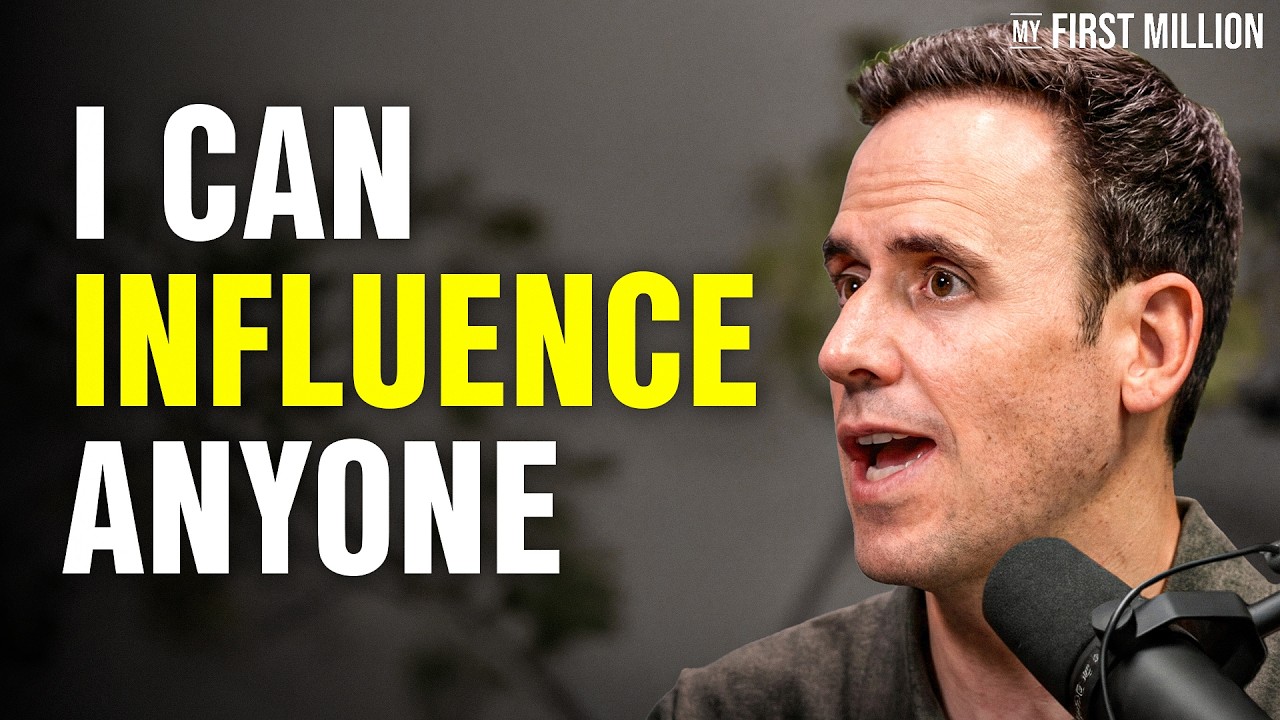
Oz Pearlman: How To "Read" Minds, Influence Anyone, and Never Fear Rejection
Summary
My First Million shares actionable Amazon selling tactics and market insights.
Full Content
Oz Pearlman: How To "Read" Minds, Influence Anyone, and Never Fear Rejection
Speaker 1:
How to convince people and how to win them over is the most important thing in life.
Speaker 2:
How did you do that?
Speaker 1:
There's skills that have nothing to do with my tricks that allow me to walk into a room, be remembered, engage with people and create deeper bonds. Those three things are a cheat code in life. But I would say 90% of people don't have that.
So how do you develop that?
Speaker 2:
How do you explain what you do?
Speaker 1:
Everyone knows what a magician is. Think of this as a magician of the mind. There are no props. Rather than tell you here, pick a card, you put it back and I find it.
Speaker 2:
You're so intimidating. You are a horrible herring. Are there any cool crimes that you could commit?
Speaker 1:
So if I was using this to steal your financial information and then use it to potentially steal from you, could I do that? Absolutely. Could I? Absolutely.
Unknown Speaker:
I feel like I could rule the world. I know I could be what I want to. I put my all in it.
Speaker 1:
Watch, let's try something really fun. Time for money. This is the perfect example. Let's say, what is life about, right? Is it having more zeros in your bank account? My first million? I like the two commas, but where do you spend that money?
How do you use it effectively? Here's what you do. You're having a birthday party. We're going to hypothetically play this out right now. Milestone birthday. Sam, make this up right now. I like spontaneity.
How many guests are in the room at your birthday party? Be very specific. How many guests do you see Being there. Can I tell you? Yeah, make it up right now.
Speaker 2:
Small, ten.
Speaker 1:
Oh, so it's ten people. Ten people, that's... and did everyone that you invited attend?
Speaker 2:
No.
Speaker 1:
Oh, okay. Ouch. Okay. So you're in the room and now this is where I want to envision this. We're gonna play this scenario because you've had birthday parties before and obviously you've seen... you walk in the room. You're saying hi.
It's ten people and this is... close your eyes. Is it a surprise, not a surprise, is it?
Speaker 2:
Yes.
Speaker 1:
But okay, so you've walked around the room, you've said hi to people, and open your eyes, and this is what I tell you, I say one person you walk up to, they give you a big old hug, and it means a lot that you're here right now,
and you look this person in the face. Can you picture that person's face?
Speaker 2:
Yes.
Speaker 1:
Could I have known that you were gonna tell me there were ten people at the birthday party?
Speaker 2:
I don't know.
Speaker 1:
But did I tell you to set this up? Is there any way I could have known how many people you'd have at this party or who they would be?
Speaker 2:
Of course not.
Speaker 1:
How? Right, how? And then the person that would hug you, right? How could we know this if they had a birthday party a mile? So would you attend their party?
Speaker 2:
For a really big one.
Speaker 1:
That's interesting how you thought. For a really big one. I wonder if they live far away. And in your mind you were thinking, Have I been to their party before watch this Let's let's switch it Somebody just came up.
They hugged you at your birthday party could have been anyone you look them in the eye You were thinking in your head when I go to their birthday party And I saw I know you know this person's birthday instantly could tell I'm trying to react January February March April May June July August September October November December Close your eyes,
okay, I'm gonna just show the camera and Open your eyes. There is absolutely no way I could know who you would have thought of. Are we in agreement?
Speaker 2:
Yeah.
Speaker 1:
Or anything about them, personal details. What month is that person born in?
Speaker 2:
July.
Speaker 1:
July, July. July has 31 days. I'm born in July. That's my birthday month. Think beginning, middle, end, beginning, middle, end. Close your eyes one more time. So nobody, okay, I'm going to go with this. I'm going to go with this.
I'm going to commit. I think it's a guy. Open your eyes. In fact, when you looked at them, you looked up directly at them. Similar height. Are they older than you?
Speaker 2:
They're older than me.
Speaker 1:
I could tell. It was a deferential thing. What's their birthday?
Speaker 2:
July 10th.
Speaker 1:
July 10th. And then you gave them a hug. You looked them right in the eye. You go, it really means a lot that you're here. John. Is it John?
Speaker 2:
Yes. That's crazy. I hate that. My brother's name is John. Uh, that's, that's absolutely insane. Uh, that's crazy. It makes me emotional a little bit. Uh, my brother.
I was telling my, uh, this, we had a nanny at our house this morning and I was like, I'm, uh, talking to this guy. I was like, he's a mentalist. And she's like, huh? Yeah. What is there?
Oh, what do you explain or how do you explain what you do?
Speaker 1:
So everyone knows what a magician is. So think of this as a magician of the mind. There are no props rather than tell you here, pick a card, you put it back and I find it.
I can just have you think of a card and see if I can deduce where your mind went. It's how to influence people. It's how to pick up on what they're thinking and how to make it seem as if I can read people's minds,
right, which we all know is impossible. But I say all the time, I can't read minds. I don't possess supernatural powers. I am not psychic. I don't talk to the dead. I don't know the future.
I've just found ways to influence you and get information out of you that you can't explain through a variety of different methods. It's kind of an elevated form of magic. It truly is.
I find the purest form of entertainment is stand-up comedy. It's you, a microphone, and potentially thousands or tens of thousands or millions of people. Just the spoken word. Magic involves props and I don't, I don't dislike magic.
I love magic. I started as a magician, but as I evolved, I got rid of the props, rid of the props, rid of the props. And if you saw me last night to show for 1200 people in a few days,
show for 4000 people, I will show up with virtually nothing. If you lost my luggage, I could do the show with literally a marker and a flip chart because that's not the show. I'm the show. So to describe it, it's a magician.
Speaker 2:
What's interesting about what you do,
so I've known who you are for a while because I studied like magic when I was a kid and like a lot of I mean I was I was a very stereotypical kind of nerdy introverted kid wanting to like be loved by people and I studied this stuff.
Speaker 1:
Join the club.
Speaker 2:
Yes, which I want to talk to you all about that that club. So I've known about you for a little bit and then I was reading your book.
I thought I was going to learn more about like how to read people's minds or how to like do magic or something like that. You're basically like a modern version of how to win friends and influence people.
Speaker 1:
That's the hook. If I could distill all of the skills I've learned in the last 30 years doing what I do, which is really interacting with people, that's truly what I do.
I've learned that what my product is, and everyone should know what their product is, is people always think you're there to fool them if you're a magician. That's not it at all.
I create very memorable moments, and for a lot of the companies I work for, what do I mean by memorable moments?
When I leave, something people talk about, And the skills that I use within my profession that are not the magic and not the mentalism, but if I quit this business today, started a new business tomorrow,
what could I use from these 30 years that would make me successful at any business? I believe these are the core skills. So it's a reinvention of that book.
Speaker 2:
Alright, so a lot of people watch and listen to the show because they want to hear us just tell them exactly what to do when it comes to starting or growing a business. Now, a lot of people message Sean and I and they say, alright,
I want to start something on the side. Is this a good idea? Is that a good idea? And again, what they're really just saying is just give me the ideas. Well, my friends, You're in luck.
So, my old company, The Hustle, they put together a hundred different side hustle ideas and they have appropriately called it the Side Hustle Idea Database. It's a list of a hundred pretty good ideas, frankly. I went through them.
They're awesome. And it gives you how to start them, how to grow them, things like that. It gives you a little bit of inspiration. So, check it out. It's called the Side Hustle Idea Database. It's in the description below. You'll see the link.
Click it. Check it out. Let me know in the comments what you think. What are the one or two things that people are most transformed in their lives based off of what they learned from your book or from you?
Speaker 1:
I think one of the biggest ones is how to make your fear of rejection disappear. So that one, to me personally, I could see it from a young age, was my biggest hurdle. The book starts out with me in my teenage years.
I got into magic when I was 13. I don't know what you were.
Speaker 2:
Sam, do you remember Scotch and Soda?
Speaker 1:
Of course.
Speaker 2:
I remember I got that trick, and that was my trick, and then the quarter trick, and yeah, that was my first two.
Speaker 1:
David Blaine. You saw the David Blaine Street Magic. I'm buying everything. I was really into trick decks. So I started doing the tricks and I got a restaurant gig when I was 14. I walked in, I talk about in the book,
I don't know where I got the the cojones to go in there, you know, my mom was with me and just I knew how to do a sales call at a young age of how to go in,
how to convince them, how to use benefits oriented language and I got this gig and within Two weeks of me doing it, I realized that my biggest hurdle was when I went out to people, they would reject me and it hurt.
You know what I mean, Sam? You go to three tables in a row, we're like, get out of here, kid. It's very bruising and it's very difficult to approach the next table and not have a bad attitude.
And so again, I saw this vision of I wanna buy more tricks. Tricks are expensive. My parents were divorced. I don't have money. So if I keep doing this, I need this path to make money to buy more tricks. It was very linear, A to B.
And so I realized I have to find a way to overcome this part where people have the ability to hurt my feelings and I have to, so I just, at that point, and I describe it really clearly, I almost became my own agent.
If you're in showbiz, you have an agent who handles your negotiations, who does all the icky stuff you don't want to do. You don't get a movie star on the phone. I can't call Michael B. Jordan right now and negotiate.
You negotiate with this person's agent. I didn't have an agent. I'm a 14-year-old twerp. I'm four foot nothing. I'm walking up to your table at an Italian restaurant.
So I created this separation in my mind where I no longer took it personally when I was rejected. I said, that's not me. They don't know Oz Pearlman. That's Oz the magician.
It was this cognitive dissociation where I was able to take the negativity and put it on someone else that they don't know. Oh, it's the tricks. I gotta work on these tricks. And I didn't take it personal. And it was truly transformative.
And I believe that that ability To overcome rejection and like that fear of it, because not even rejection, it's the fear of it and failure. So many people, when they start a business or go after their goals,
they don't go full in because they keep one foot out. You know, it's like you don't jump in the pool, you keep one foot out to protect yourself if it goes wrong.
That's what I've learned and what sets me apart from my competitors, I think greatly, is that ability to focus on goals, not care if there's hurdles. I don't care if there's a no or a no or a no, it's a not yet and I,
I have, to this point, achieved way more than I thought I would and I'm not even done. I'm nowhere close.
Speaker 2:
When I was 14, I remember I read this book called The Game. Have you read The Game?
Speaker 1:
Of course. Oh my god. It has a little bit of an ick factor, but the way it discusses and quantifies and creates terminology for interactions with people is incredible.
Speaker 2:
So The Game is a book, basically. I think I was a 14. It created this word called pickup artist. I read it because it was like, it's like a little bit James Bond-y where you're like,
it's like an adventure book about hearing these guys who are nerds going to hook up with these girls. But the reality is, is I read it and many other people read it is because I was 14 and I was desperate to get a girl to like me,
you know, and I wanted a relationship. I didn't want to like hook you up with girls. That wasn't even like... A possibility. It was like, can I please convince a girl to like me?
Speaker 1:
Yeah.
Speaker 2:
And so I studied that book and then I was reading what your work and watching your podcast and you do these things where you talk about approaching people and you're like,
I'll approach someone like, cause I think what you say is you've talked about the bunch. You're like, I have to walk into a room of 500 people or 10 people and I have to control the energy. Yep.
And so I've learned that if I walk up to them and I'll say, hey, I got to run in a second. But first, before I leave, I've been told by the owner of the restaurant to do something special for you. And that seems like a...
You just made that phrase up, but like every part of that sentence has a very particular purpose.
Speaker 1:
Yes.
Speaker 2:
And when you study like how to meet girls, it's like, oh, he just put a time constraint on that. Oh, he's coming up at an angle as if he's going straight out of the game.
Speaker 1:
I don't even I'm not even trying to window dress it. That's 100 percent things that were learned in the game and that are from the world of pickup artists where it's iterating.
It's just like any type of software platform, changing little ingredients in a recipe and seeing how they do. And the other part of the recipe is other people and what makes them feel comfortable.
And a big one that I analyze is when you leave an event, who did you remember? I'm just, I'm obsessed with that term, who did you remember? Who stood out to you and why? And normally you don't think about it.
It's like in the game, who are the naturals? The people who have natural game, who didn't learn it. But how do they know that they walk up and they have this cool, calm composure? What's it like when you walk into a bar,
you smile and you approach the first person you look at and you say, hey, how's it going? Oh, I had to come say hi to you. That confidence is contagious, right? That energy of someone who does that naturally.
But I would say 90% of people don't have that. So how do you develop that? And how do you not have the fear of, oh, what am I going to say to them? If they say this, they're going to think I'm stupid, right?
All of the inner dialogue that kind of talks you out of what you could be and your full potential. So the packaging was magic for me when I was a kid, but underneath the magic and the skill that we bring to the table,
and especially as a mentalist having done this for so many years, there's skills that have nothing to do with my tricks, nothing that allow me to walk into a room, be remembered, You know, engage with people and create deeper bonds.
Those three things are a cheat code in life. If you're able to do them, you will succeed at anything you do. I don't care what business you're in. I don't care if it's interpersonal.
I don't care if you're a teacher who is selling attention to their students or a mom trying to get their kids to listen and eat their vegetables and do their homework.
How to convince people and how to win them over is the most important thing in life.
Speaker 2:
Are there any cool crimes that you could commit?
Speaker 1:
I mean, I could commit tremendous financial crimes because my job is a con man. It's exactly the same as a con man, but it's an honest con.
Speaker 2:
Of course.
Speaker 1:
Right? So a hundred years ago is when, it's a little fuzzy when, is when I don't want to call them con men, but psychics who would take your money to talk to dead people or to tell you your future,
they would take your money and that was the transaction and whether you were getting the product you paid for, I don't know. That's up to you. I'm not going to say whether psychics are real or not.
I'm going to let people believe what they want, but whether or not you can prove that, it's a matter of kind of faith. I am not selling a product that's false or fake. I'm telling you from the start it's fake. I couldn't be more honest.
This is built on magic. I have no supernatural psychic powers. It's a learnable, repeatable skill.
Speaker 2:
Well then why is this not being taught?
Speaker 1:
Because I'm crafting a narrative that doesn't generalize. So again, the beauty of it is that you believe these skills could generalize to every part of your life. They're hyper-focused.
Speaker 2:
Yeah, but I was joking with someone and I was like, This guy's so powerful and he's using it to guess a bunch of losers people's ATM pin number.
Speaker 1:
It's like what a waste Seth Meyers was recently on TV with with Kate Hudson and and she was talking about me because I did some for Hugh and Hugh Jackman is great clip and And Seth Meyers at the funniest joke where he goes, you know,
I think he might be an alien But why did the aliens send the mentalist here and then go you don't be great for this bar mitzvahs and parties It's like what a waste Such a good joke. Seth Meyers, man, very funny.
He's a great comedian and it had me laughing so hard. I posted it, but it was so funny. But it's because it's funny, but you don't realize how true that is. So if you were to use this in a different sense,
so if I was using this to steal your financial information and then use it to potentially steal from you, could I do that? Absolutely. Could I? Absolutely.
It's not that different of a subset of what I'm doing, guiding you to giving me the information. It's really what scammers do.
Speaker 2:
So we've been in here, I don't know how long we've been in here, but you came in earlier, we talked for 10 minutes. Have you clocked me for the second that, like, were you making, it was like Robocop making calculations the second?
Speaker 1:
Yeah, I mean, there's a bunch of calculations. I normally come into these things with a little more info.
Speaker 2:
Yeah, I felt like... You know how like that story of like someone goes to prison and they um they gotta like uh in the first day they gotta like kick someone's ass?
Speaker 1:
Yeah.
Speaker 2:
Yeah.
Speaker 1:
That's it. Day one.
Speaker 2:
Yeah. So, you came in and I was like.
Speaker 1:
If you wanna read the book, the last chapter is me going to jail.
Speaker 2:
I know and I read that and I spent time in jail too.
Speaker 1:
How many days? Uh. For months.
Speaker 2:
Five days. Wow.
Speaker 1:
For what?
Speaker 2:
DUIs and fighting. In college, I'm 14 years sober, but I went through, I was basically intoxicated for like two years every 24 hours a day.
Speaker 1:
And you'd be like a raging drunk, like into fights?
Speaker 2:
Yeah, I was just like a risk taker. I was like, I was just reckless and I only cared about myself. And so I just did a lot of dumb shit.
Speaker 1:
You're just lucky you made it through it, huh?
Speaker 2:
Yo, my god, you're gonna learn a lesson. Getting arrested and going to jail, it changed my life because I was there and I was like, what am I doing? Then I read that you were in jail for kind of like a serious,
it could have potentially, but it could have ruined my life.
Speaker 1:
I used to shoplift. I would shoplift things I didn't even need or want.
Speaker 2:
Were you good?
Speaker 1:
Amazing.
Speaker 2:
Yeah.
Speaker 1:
But think about it. I was a sleight of hand expert. So I used to be at a 7-Eleven. I could shoplift. It was like Mission Impossible with Tom Cruise. Remember when we had the CD and he swiped like this and it was gone? That was me. Okay?
What were you?
Speaker 2:
Selling candy?
Speaker 1:
I used to steal cigars. And I didn't smoke cigars. So how stupid is that? Can we discuss that for a moment? I would steal them from my friends and I would take them and there's...
Speaker 2:
Aren't cigars behind the counter?
Speaker 1:
So I could do it behind the counter. I could do it anywhere.
Speaker 2:
What?
Speaker 1:
Oh man, I'm like expert. Well, you gotta understand again. So I could do there. I'm not gonna give away magic secrets, but I could literally take something in my hands and just go like this and it's gone. And you'd be like, what the fuck?
And I would do that, but also I'd misdirect. I'd say, oh, I'm putting it back, and then it was gone then. Like, you thought I put it back. It's kind of like the way you could pickpocket somebody.
I could take your phone and say, oh, let me put it back. And you don't know that it's already gone again, because a pickpocket touches you here, does this misdirection, right? When you look there, that's training.
That's misdirection 101, beginner. I didn't tell you to look there, but you instantly look there. That's the same tactic. I used to steal stuff, and so I peer pressured my friends. I won't tell the whole story.
I don't want to ruin it if anyone does buy the book, but it was in college. It was drunken stupidity. We stole a bunch of stuff from a Papa John's, and then at night we went back to house party.
We were wearing Papa John's t-shirts that we had stolen from dirty ones, and a Papa John's phone going around the party, house party, like 25 people. You want Papa John's? Who wants pepperoni? Like just running around.
Speaker 2:
Like you stole someone's cell phone at the Papa John's?
Speaker 1:
This is too early for a cell phone. This is in 2002. This is like a landline broken phone.
Speaker 2:
You like unplugged it and took the...
Speaker 1:
It was broken.
Speaker 2:
Oh, got it.
Speaker 1:
Because, you know, it's a college one. They have like 20 phones on it because all they're doing is answering phones. So one of them had been cracked. So down the middle was a crack. So it was broken. So it wasn't attached.
Speaker 2:
But it had the logo on it.
Speaker 1:
It had everything. So I just swiped it, put it, I had like a poofy fake North Face, I don't know if you're familiar with North Face, in my jacket right here, like instantly gone. And I just stole that one.
And I made my friends go steal something. So they went in, it was a bathroom slash locker room. So one of the lockers wasn't closed all the way.
So they had it like open by a corner and they just reached in and took a bunch of t-shirts that were dirty. They turned up being like grease stains.
Speaker 2:
It's a good get, good caper.
Speaker 1:
Yes, great caper. And so I got woken up at about, I don't even know, two or three in the morning and I was, I was like wearing like tighty whities and I'm wearing the Papa John's shirt, which was way too big for me because I'm like small.
And I get woken up by a dude being like, yo, the cops are here. And I thought it was a noise violation because I'm like, So drunk he passed out. I'm like, I don't live here, dude. What do you want from me?
And he's like, no, the cops are here for you. I'm like, for me? And then like one minute later, I think this guy, they come in and the cops are in and they're like, you're under arrest. And I'm like, under arrest for what?
And they're like, felony larceny. First words out of their mouth, which I'm like, felony. I'm like, true. And then I go, stealing what? And they go, from a Papa John's. And I'm like... And they didn't even let me put pants on.
And this was in Big Rapids, Michigan, McCauley County. It's like, yeah, it's like negative 10 Fahrenheit. And I'm literally perp walked out. I thank God they let me get, um, I got, I got my, I don't get my contacts or my glass.
I can't remember. I think they let me get my contacts. So I was near legal blind before I got LASIK. And man in these like tiny tight tighty whiteys, they brought my pants with me. It was like so unnecessary the whole thing.
Arrested us, brought us in and we were in jail for three and a half days.
Speaker 2:
Yeah, I mean you stole something. It worked.
Speaker 1:
Changed my life, never stole since. That same instance, different person, wrong thing, can't get a job in finance. The path just is so different. But I was very very smart and I don't say that I'm not trying to be cocky,
but school came very easily to me and math came incredibly easy and so It allowed me, and I'm just so lucky that I was able to get great grades while completely messing up in other sectors of my life where normally those things are,
there's a linear correlation. Like if you're doing a ton of drugs, you're probably failing out of school. I wasn't somehow. I was still getting straight A's and doing well and covering my tracks.
And so there's differences of, and then I stopped drinking a couple years ago. I didn't really have a problem, but it just was a change that I decided to make. And I think it was a healthier path.
Unknown Speaker:
Today's episode is brought to you by Hubspot. Did you know that most businesses only use 20% of their data? That's like reading a book but then tearing out four-fifths of the pages. Point is, you miss a lot.
And unless you're using Hubspot, the customer platform that gives you access to the data you need to grow your business, the insights that are trapped in emails, call logs, transcripts, all that unstructured data makes all the difference.
Because when you know more, you grow more. And so if you want to read the whole book instead of just reading part of it, visit Hubspot.com.
Speaker 2:
When I was a kid, I was a competitive runner. I went to college, like I said, on a running scholarship. And I thought that I was like, if I achieve my potential, I could at least make the Olympic trials.
And I never did because I partied too much in college. But the hard thing about running is dealing with the pressure before you run. Because you know that even if you win the race and succeed, you're going to be in pain.
And regardless, you're going to be nervous. It's the most, it's a very fear driven sport. And I developed this alter ego called the machine. Where I was like, I am a racing horse in the aisle getting ready to go and racing horses,
they're not nervous. They don't think about any of this. They're just there. And so I would think, I was like, I'm just a machine. And I would like look down on myself and be like, well, there's the machine.
I am nervous, but it doesn't matter. The machine's not nervous and he's about to race. I'm so happy the machine exists. And that was like an alter ego. And it was the exact same thing of like disassociating in order to perform.
And it's the same thing actually with starting a business. I've started and sold the company and by maybe some traditional measures, I've been a success.
But I still am like incredibly fearful about starting any new project or before this podcast. And like what is interesting about starting new things is you realize that like the repetitions,
you say, I must accept that this fear is going to happen. But I have practiced so often that like doing getting past the fear and I just accept that this is part of the journey, not Why am I fearful?
Speaker 1:
Right.
Speaker 2:
So, I think that most everything someone can improve on, but whether you're going to be in the NBA or not, it's likely due to were you born seven feet tall or not.
Speaker 1:
Yeah, I would agree.
Speaker 2:
Like, you know, a five foot five guy can like maximize potential for basketball, but like LeBron James was born and he worked hard.
Speaker 1:
And he worked hard, yeah.
Speaker 2:
It's a skill and a talent. Where does this rank on skill versus talent? Like, how much can you teach me in order to be better and do things like you do?
Speaker 1:
I would like to think that it's mostly skill based. If you were willing to put in the work, you'd probably get very, very good. There's just no question.
Where's the ceiling that like you hit that I have gone over or that other people that are at the top of the game would have gone over? I am, uh, I think that the core skill for me is, is one of relentless drive.
So I'm willing to overcome failure consistently. Like I'll fail and I don't mind it. A lot of other people would fail enough times and be like, Oh, but like it's failure for you.
Speaker 2:
You're in a group of seven people trying to do a trick and it just, yeah, exactly.
Speaker 1:
Bombs. Yes.
Speaker 2:
When was the last time you bond?
Speaker 1:
Again, define what bombing is because as you get better and better, you get to move the goalposts. You get to change the rules. So you're defining something that I define very differently.
Speaker 2:
It's not binary.
Speaker 1:
It's not binary at all because you only know if something's right if you knew what was wrong. But listen to me because that's really poignant. You only know if it's wrong if I've set the terms as you think this,
I guess this, I didn't get it, it's wrong. What if you're watching a movie and there's three director's cuts and you never saw the other director's cuts? A good example is I did something with Josh Allen, quarterback for the Bills,
where Josh Allen was told, hey, if I talk to you, do we know each other? He said, no, no. I said, did I set this up, Josh? No. I give him the ball and I say, look around the room and throw the ball to anybody.
I wrote it down and he throws it to the first guy. It's him. I go, throw it to another guy. I wrote it down. It's him. It's like, how are you doing this? I guess the two players he threw the ball to, I go,
I know who you're gonna throw the ball to right now. I'm not gonna write it. I can prove a hundred percent. I know exactly who you're gonna throw the ball to. I go, put the marker, put this, go throw something. I go, I knew you would do that.
And he's like, yeah, how do I know that? I go, think of your ATM pin code. And I go, does your wife even know? And he goes, no. And everyone started to applaud. It was pretty funny. It's like a little bit rude.
And so I then guessed this guy's ATM pin code. He freaks out. And then I had the two other guys stand up. And I go, what's your jersey number? His jersey number is 88. Next guy, what's your jersey number?
50. Their jersey numbers were the third guy's ATM pin code to his bank. Amazing trick. No one's ever done that before. What would have happened if I got it miserably wrong, which I have before? I never did the last part.
All I did was guess two of these people. And then I guessed 18 people and you'd have been blown away. And you would have never seen that the whole thing to me went wrong, but you didn't know that. Do you understand what I'm saying?
So you don't know what's next. So in a lot of the tricks you've had, like they're called multiple outs. I have different ways that this can end. I have, you know, it's like when I did a t-shirt reveal on the Today Show and Al Roker goes,
what underwear are you wearing? I'm like, you don't even know the half of it, brother.
Speaker 2:
Did you have underwear on?
Speaker 1:
No. But that's a funny point because you just don't know where I would have gone with it because I don't tell you and I have the element of surprise to my advantage. So as I've gotten better at my craft,
I've realized that I get to call the shots and know where it's going to go. So a lot of times you don't know if I got it wrong or if I get it wrong, I will then overcome that hurdle and get it right.
And it's actually stronger because it looks like you got it wrong and then, oh my God, He got it after all. It builds drama.
Speaker 2:
Are there people above you where you're like, man, I would love to be good as this person?
Speaker 1:
Or are you at what I do?
Speaker 2:
Yeah. Are you at the top?
Speaker 1:
Again, I'm not going to answer that for you. Just do a Google search and you can kind of figure that out for yourself. But at this point right now, it's it's indisputable. It's not even it's like when you describe LeBron at the moment.
But again, you've got to understand there's waves, there's peaks and valleys. It's silly to ever think that everything's going to stay the same. You've got to stay at the top of your game and keep reinventing.
But I'm not going to define that for you. I'm going to let you look at objective metrics. Subjectively, there's tremendous amounts of people that I admire.
People that are, there could be kids, there's a 19-year-old person who does what I'm watching. I'm like, wow, this is cutting edge. This is new stuff. It's silly not to learn from everyone. As soon as you do that, you start dying.
Speaker 2:
When you are learning a new trick or a new skill, can you walk me through your routine on how you focus?
Speaker 1:
The weird part about me is that I do so many TV and media appearances. Think of a comedian. A comedian has to work out new material and then they tell the joke at a comedy seller or some club and they keep refining,
refining, refining and then it's very funny and then they've got their material for a special. I like the parallel because comedy is the closest thing to what I do.
I have to create new material for when I go on TV because if you keep doing the same thing it gets very tired. So I constantly, when you see me on these things, I'm doing that strength. For the first time ever.
So when you see like the thing with Josh Allen, I'd never done that before. Before I did it in the room for them, I had never done that before. That was the first time, which is like kind of the craziest thing to realize.
Because I can't burn my material that I do in my normal sets, like in my corporate show and in my place where I'm performing for audience members. If I did that all on TV, it would lose its luster for when I do it in paid performances.
So what I'm constantly doing is thinking of what's the ending, And rewinding backwards and it's just like reverse engineering, which I think is really my skill set. I went to school for engineering.
I know my solution and I'm just trying to figure out a way to get to it. Do you understand what I mean? It's like a proof in math.
Speaker 2:
Well, I do that with business. So when I was 24, my first company, I said, I grew up poor and I was like, I remember distinctly having this feeling of like I'm afraid my mom's car is gonna run out of gas.
Speaker 1:
Wow.
Speaker 2:
And it like created trauma.
Speaker 1:
I believe it, yeah.
Speaker 2:
I don't want to feel that anymore. I want to be rich.
Speaker 1:
You knew you wanted to be rich?
Speaker 2:
Yes.
Speaker 1:
At what age?
Speaker 2:
Nineteen.
Speaker 1:
That's pretty interesting.
Speaker 2:
Maybe even before that but I was like at 19 I was like when I went to college I worked for people and they were rich and I was like rich people are real people.
Speaker 1:
Right.
Speaker 2:
Oh my god this is like a thing I could touch this isn't like a TV thing and then I asked a rich person I said like what's rich?
Speaker 1:
Right.
Speaker 2:
And they were like well I spend $50,000 a month and I was like well you're the richest person I know.
Speaker 1:
Right.
Speaker 2:
And then I looked at this have you heard of a safety withdrawal rate? So, the safety withdrawal rate is if you have a liquid pot of money, you can withdraw 3% of the money.
Speaker 1:
Sure, sure. I didn't know that's what you're calling it, but yeah.
Speaker 2:
Yeah.
Speaker 1:
How can you have a perpetual motion machine where you just live off the principle?
Speaker 2:
Yeah, where you're like free. You will never run out of money as long as you stay within the rules that you've created.
Speaker 1:
Right.
Speaker 2:
And some rich guy was like, well, $50,000 is how much I spend. And I was like, that's an astronomical amount of money. At the time, I was spending $1,500 a month in college. I don't know. So I did the math. I'm like 30%.
I was like, okay, so I need $20 million. Right.
Speaker 1:
So it's like 600. Yeah.
Speaker 2:
Yeah. So I was like, how do I get to $20 million by the age of 30? Like, okay, well, I think I did the thing called Icky Guy. Have you heard of Icky Guy?
Speaker 1:
No.
Speaker 2:
What you're good at, what the world wants, what the world wants to pay for, what you're passionate about. The goal is to find something in the middle.
Speaker 1:
Smart.
Speaker 2:
That's like how you get in like flow a little bit. I like to write. So I settled on creating a newsletter, a newsletter company. So I was like, okay, so in order to get 20 million by 30,
I have to build a company that could probably sell for 30 or $40 million, which means if it's going to be media, I probably have to be doing 18 million in revenue with this EBITDA.
The way I would get there is I would create a newsletter that gets to this many subscribers. And if I do that by year, Four, that means by year three, I got to be here. Year two, I got to be here.
And then it was like, okay, every month, this is where I need to be at each month.
Speaker 1:
That's intense.
Speaker 2:
And so I was like, well, if I could just set this up to where all I have to do is worry about what I have to achieve next month and next month and next quarter, then I can allow myself not to worry. So it's just like execution mode. Wow.
And so the idea was like, I'll do that. And so I ended up in, I sold my company when I was 31. So it worked.
Speaker 1:
That's the ultra runner mentality right there. You don't think to yourself, like I've done a race that was 153 miles and I felt like crap very early on.
Speaker 2:
And you just go to the next mile.
Speaker 1:
You just have to get to the next thing that you're going to do. Whether it's a mile, whether for me it's the next gel, which is going to be in 20 minutes. And that's all I'm thinking about is just get to that gel. Do not extend beyond that.
The first time I did this race called the Spartaflon, it's in Greece, 153 miles in 36 hours. There's a lot of these races you hear that are longer. This one is arguably the hardest because the cutoff is very tight.
Like a lot of these other ones are glorified. You could walk like this 250 miler. You can walk the whole, you could, people are going to get pissed, but you can jog and walk.
Speaker 2:
Five days, right?
Speaker 1:
They do it literally that 250 I see like you have to like calculate the hours I'm like how many hours this is so this is you have to run this whole thing or you're out You're out most people are cut by 50 miles into this race.
It's it's that challenging So at that race, there's a video of me and a buddy of mine. It's on YouTube. We're at mile 54 He goes, oh my god,
we only have 99 miles to go and I literally say shut your mouth The guy just I was I DNF that year I didn't finish and I was crushed because that thought of right now I still have a hundred miles to run It broke me. It broke my spirit.
I just couldn't, I couldn't, I couldn't feel that. It's exactly what you just said, which is I'm gonna make 20 million dollars by the time I'm 30. I'm already 27. I'm nowhere near, like you just crumble. It's like a diet.
It's instead of just saying stay focused on the next step. We're getting to 10,000 subscribers. Don't worry about getting to a million. We're that close. Let's focus on now. And I think that's the best way to do it. That's the best way in life.
Speaker 2:
Me and my partner Sean, we call it A-B-Z. So, Z is the long-term vision that inspires you, but that's not helpful. Rather, it's good for inspiration. It's not good for daily action. You're at A, you don't worry about C, D, or anything else.
You just learn about, you're at A, I worry about B. Then when I get to B, I worry about C. And so that's kind of like the idea. And so anyway, I read this about you reverse engineering your trick and I was like,
okay, here's one of these metaphors for life because that's like works perfectly for like anything.
Speaker 1:
Honestly, and it's weird how that happens where things are going. I also have a bad problem where when I'm at my peak, when things are at their best, I have this fatalistic pursuit of like, oh man, things are too good right now.
I can't continue to go better. And so I'm like, I'm not enjoying the present moment of things being incredible. And everyone's like, dude, you're doing this, this. I'm like, yeah, but what's next?
And so that's a mindset I have to kind of overcome a lot of the time, which is always Just, you know, being stuck in like fifth gear and saying, what am I going to do next? What's going to be even bigger and better?
Speaker 2:
You're worried about next all the time.
Speaker 1:
I should be deriving joy because I'm doing things that if you had told me 10 years ago I'd be doing, they'd be impossible. It's like, oh, I'm at the Golden Globes with all the winners. I'm now hosting the White House Correspondents Dinner.
Like I'm good. Like there are things that I would not have dreamed of occurring that had you rewound and said to me, You're going to do this and this. I'd be like, there's just no way that's true.
And now when you're in it, you don't really enjoy it in the same way because it's a, it's a means to an ends, but I don't know what the ends are. It's a hamster wheel that never stops.
It's kind of like we've now entered this cycle of a content game where all of us are vying for eyeballs and it never ends. It's like I have friends who are partners at law firms.
I remember my sister, I have two sisters that are older than me. When I first moved to New York, I was 17. I had an internship over the summer. Michigan.
Speaker 2:
I'm from Missouri, so good Midwestern guys.
Speaker 1:
Right? Very friendly. And I was here, it's just like your thing, where I met this gay couple. And these guys were both partners in a law firm. No kids. Each of them made over a million dollars a year. Okay? I'm like, what? Do you understand?
I can't even comprehend that number. It's unfathomable. And this is in 2000. And I just don't even understand. They go to restaurants every night. I'm like, you eat at restaurants every night?
I haven't been able to eat dessert more than once a year on my birthday. Everything about this is insane. And I can't get over it. It's exactly like what you just said.
And so when you're viewing this from an outside perspective, I just can't explain how you get, once you start attaining those levels, No longer see it the way you did before.
Speaker 2:
What do you do with the money once you've already made it? This is a question Sean and I ask our successful guests all the time. And the reason we ask it is because if you are successful, if you do have a little bit of money,
information on how to spend or invest your money, it's actually really hard to come by. And I know this because inside of Hampton, which is my community of founders, people ask this question all the time.
People have made $10 or $50 million. How do you spend it? How do you invest it? And so to help solve this problem and answer this question, I actually interviewed 80 plus founders,
guys like Scott Galloway, Alex Ramosi, Brian Johnson, people who are worth $50, $100, even billions of dollars. And we got them to reveal everything.
So their net worths, how much they pay themselves, their monthly expenses, their portfolio, things like that. And we turn these 80 interviews into one document.
And I don't think you can find this type of information literally anywhere on the internet. And it's completely free. So if you want to see behind the net worths of people who are worth billions of dollars and their portfolios,
their expenses, everything, you go to joinhampton.com slash reveal. Again, joinhampton.com slash reveal. Check it out. What can I do to improve my odds that I can guess that someone's lying to me?
Speaker 1:
So I've gone into a bit of like lie detection, but the thing is I'm not a body language expert.
So like I'm not there's people that that's what they study and even then it's wishy-washy as to like how effective is this like looking at you know, it's almost like only vitamins. What's the efficacy? How much can you really figure it out?
To know if people are lying to you, I think that the key way that I do it within the construct of my show, I set up very strict parameters of questions that I can Potentially get the answer to easier. It's not a daily life thing.
This skill doesn't generalize. Does that make sense? Yeah,
so you don't think that you are if I'm in a show and I ask you a very certain question like think if the card is red think if it's black think if it's this and I'm Trying to get to a limited subset.
There's 52 cards in a deck and I'm getting down to one I have a series of very pointed questions and ways that I can influence you to get there but to ask you What do you think of my business? How much is it worth?
And seeing the answer you give me, that's a much broader span of answers.
Speaker 2:
Have you been able to use this, for example, giving feedback to your wife or your coworker?
Speaker 1:
I would say that I've had very good luck with things that are very simplistic and numerical based, like real estate negotiations, where it's a very clear cut.
We're trying to get to a number, and I'm trying to see where I think their number stops and where my number stops, and trying to figure that out and deduce, like, are we going to go back and forth?
Speaker 2:
How do you do that? I mean, how did you do that?
Speaker 1:
Well, I use a lot of emotion. So it's the same thing as what I use in my show, which is excitability, which is the con man's tools. So when I've sold every property that I've sold at a profit, every single one, I want a feeding frenzy.
So whereas other people will say, well, emotionally based, I've owned this thing. They're all worth this much. I'm going to price it this. And I hope I would rather price something 10% less, get a hundred people in the door for an open house,
have this person's spouse saying, we got to get this, honey.
There hasn't been anything on the market for $4.99 and it went Right under the 500 of StreetEasy that your search is and we got to get in this place and see it on day one and then have emotions come into play.
Because once you're emotionally invested, that's when things start to happen. That's when people start getting reckless. It's the same as behavioral economics. When everyone's selling, you should be buying.
Warren Buffett 101. But when everyone's selling, you're calling your financial advisor. Tanking, it's tanking. Oil's about to be 200. What do we do right now? Stay the course, baby. Come on, look at the long term.
Buy right now when people are panicking. So I use that to my advantage. In my show, I do the same thing. So when I've sold properties,
I've always underpriced them considerably and then taken the momentum and then utilized the fact that when people think they're competing with others, They're going to work against themselves. You can literally have no other offers.
Speaker 2:
How many properties have you sold?
Speaker 1:
I think four or five. And they've all been out of profit and done very well. And I think that that's been because I understand not just the way people lie, but I can observe the way people behave in situations.
Speaker 2:
When you were, how old were you when you met your wife? 26. So presumably you're good already.
Speaker 1:
Not really.
Speaker 2:
You weren't good yet?
Speaker 1:
I was a pretty good magician but I was like a pretty not lackluster mentalist. I didn't do as much mentalism then.
Speaker 2:
What age did you get good?
Speaker 1:
I mean I'm still getting good but I That's a difficult question. Probably over the next five years, I started improving.
Speaker 2:
Early 30s where you're like, okay, I got something's going on.
Speaker 1:
Well, it's been 11 years ago that I became a mentalist. I literally branded as Oz the Mentalist instead of kind of being a bit of both and I just decided this is what I'm gonna do and not really do magic.
Again, this is like nuance, but I don't do almost any magic in my show anymore.
Speaker 2:
Who's the most successful magician? David Copperfield. Is he a billionaire?
Speaker 1:
He's a workhorse. I mean, no one has his ethic. He's on a different level.
Speaker 2:
I think I read that he does, was it 500 shows a year?
Speaker 1:
Plus, well, until April 30th. He's wrapping up.
Speaker 2:
Wait, so how many shows did he do?
Speaker 1:
In his life?
Speaker 2:
No, a year.
Speaker 1:
In cinema, I think 500 to 600, which if you understand what that maps out to, if you look in Vegas, they have their shows dialed in with teams that really know what they're doing. And again, you're the performer.
I'm not saying that anyone's taking the heat off of you, but anything that can be Outsourced, that can be taken off your hands, like ruthless efficiency. It's amazing what some of the people do who have a show in their own theater.
Speaker 2:
When you were getting into the business, were you like, this is the person?
Speaker 1:
Absolutely not.
Speaker 2:
Who did you aspire to be?
Speaker 1:
So you never know this person, but I stumbled into the corporate sector because I used to work on Wall Street. So I saw corporate events as like the kind of the top of the mountain because two things.
One, I have the right look and the right lingo and terminology. I come from the world of corporations, so I'm a safe bet. And I started to understand that When a corporate event, when somebody wants to come in,
they want to, maybe it's internal, like an SKO, right? You want to rah-rah-rah. When you're pumped up, use a little bit of messaging and leave there feeling inspired. Or maybe it's external, it's client-facing.
We want to win over clients, make them feel appreciated and have that kind of night that's memorable that we talk about. In both instances, let's say you hire a musician. Not everyone likes to see music, right?
You could spend ten million dollars and get Paul McCartney. What if I'm not a Beatles fan? Not everyone is. Then it's, you haven't really gotten the full ROI. If you get a comedian, I love comedy, but comedians can sometimes offend.
Your sense of humor isn't mine. I, this is very lucky, I have the one product that almost everyone in the universe loves. Wow. The wow and amazement transcends and it's universal. So do you understand what I'm saying?
If you do it effectively, it applies to everyone and that transcends language barriers. You could drop me in Tokyo and I could make friends in one minute. I would do more magic, but I could instantly go, oh, that, do you see that,
that feeling, that feeling is very special. It's like, it's like the same way as certain things are carnal desires. Sex appeal, food, right? There's certain things that are just like hardwired in our DNA.
For whatever reason, wow, is very strong emotion. So I knew that I could do that. Second, they don't spend their own money. So when you go to see a concert or to a show, you worked really hard for that money, Sam.
You gotta go plunk your own money. You gotta get a babysitter. You gotta do all this stuff. A corporate event, you're spending the company's money. Much easier, B to B, than B to C, If I ever opened a business, never consumer-facing.
I don't want that drama. I want B2B. I want to go enterprise. I want big amounts of money being given to me and not a lot of oversight. People say you're good, boom, ready to go.
It's just such a simpler pursuit than getting a million people to spend $1. I'd rather get one person to sign a check for $1 million.
Speaker 2:
What, um, how big's the team? Is it just you?
Speaker 1:
The team is pretty small.
Speaker 2:
Who is it?
Speaker 1:
So, I mean, depends what you describe as a team, but I have my manager. I have an agency that helps as well. I have a video editor. I have somebody that helps with social media, but all of them are kind of like contractors.
It's mostly me and my manager.
Speaker 2:
And so do you have an angle in mind for your career?
Speaker 1:
God, I want to offload some of the stuff that I don't like. I'd like the team to be bigger, but really sharper. And I keep wanting to trade money for time because that's really I'm just running into this issue of Money and time.
Speaker 2:
Where is your time spent right now that you think is a waste?
Speaker 1:
Oh, without a doubt on on like skills that I'm not good at just like administrative oversight.
Things that I need a very strong executive assistant to do that just takes it off my plate that I can outsource just day-to-day management of tasks that I detest.
Speaker 2:
That seems like a that's like the most straightforward thing ever.
Speaker 1:
So I know it is but I just had very bad luck with hiring in recent years where they it's and it's mostly my fault.
Speaker 2:
Do people find you intimidating to work for because of what they see you do?
Speaker 1:
Maybe that could be true.
Speaker 2:
How does like your eldest kid on a whole there but like if they like are old enough to know like what you do.
Speaker 1:
Yeah.
Speaker 2:
And like, does your eldest find you just as dad or do they know that you're you have superpowers?
Speaker 1:
I think they take a lot of pride, which is really touching like when I see them talk about me or hear about me to other people. In the day-to-day, not really, but what's very funny is that all my kids, they know they get a laugh out of me.
So they obviously, you know how kids are so perceptive that if they know something's funny, they'll keep doing it. So all my kids, if you ask them what my name is, they'll say Oz the Mentalist,
which cracks me up every time, even down to my two-year-old. So it's just very funny that they'll call me that. And then if I'm in public, they're like, he's a mentalist. I'm like, don't tell people that.
Speaker 2:
So you read this by III there's this book called 13 mentalist, is that right 13 steps of mentalism? Yes. Sorry. It's 13 steps of mentalism I think you said that that was like the book that got you Rogan asked me on the spies of what book?
Speaker 1:
Yeah, it's it's that's that's that's like the Bible.
Speaker 2:
That's the initial one What was the one that impact what was the source the the primary source for you to learn? That was like the biggest impact on you.
Speaker 1:
So the biggest impact on me was a book, but it's so inside you wouldn't find it. It's even out of print. It was The Business of Mentalism. It had no tricks in it, and it was all about theory. I keep trying to distill.
It's the same way I would say there's an economy of words when you watch a really good stand-up comic. Timing, like how do you take a joke and tighten it? I kept trying to figure out what am I doing?
I know this sounds so silly, like what am I doing and why am I doing it? There's such key things that sound so simple that most of us, we don't have guiding principles. We just kind of go through life, we stumble into a profession,
we keep doing it and you kind of hit a certain level and I think the people that somehow jump and raise to the height, they look at themselves from an outside perspective. When I'm doing this, I always assume, why does anyone care?
Like, why does anyone care? Why do you care? Because this is about your brother. Your most important thing in your life are the people you care about. You know, your wife, your kids, right?
Family, finances, your future, your faith, like things that appeal. I try to make this about you. I try to give you a memory, a feeling that you'll take and the story you tell is How do you guess my brother John's name and birthday?
Think about it. The exact same thing. I could have just guessed a date that had no meaning to you and it wouldn't have been the same story.
Speaker 2:
I think like the emotion that I feel talking to you, I mean obviously that's insane how you do that, but like in my head I'm like okay, magic's not real. He's just mastered this skill. That's true.
And the feeling that I have is this person is so much better at his skill set than I am at my skill set.
Speaker 1:
Why are you comparing? I don't know how you think it's so apples and oranges.
Speaker 2:
No, but what I'm saying is I am so inspired at the level of mastery that this person has that I want to become a master at whatever it is that I choose.
It's sort of like I don't need to be a fan of swimming, but when I see Michael Phelps swim, it's a work of art. And that is what I feel like. I feel like I'm in like the presence of just someone who's the best of the best of the best.
And I find that inspiring. And I'm also like, I want to learn how to be the best.
Speaker 1:
I couldn't say it any clearer. That's exactly how I feel. Like I, when I meet people that, that have committed their life to something and are exceptional at it, and if they are the best, it's just so inspiring. It's, it's exactly that.
Rather than say, putting myself down, I'm just like, wow, this gives me something. It gives me fuel.
Speaker 2:
Yeah, we've done 800 of these episodes. I've talked to 20 billionaires probably. I don't know a lot.
Speaker 1:
I know the billionaires. We've talked to people that are just like inspiring. They've built businesses that have been like really just... I like the people that are so driven that all the obstacles put in front of them doesn't matter.
They're going to find a way to go through brick walls.
Speaker 2:
This sounds messed up. I don't find Elon Musk to be particularly inspiring because I don't want to like trade spots with him.
Speaker 1:
Right.
Speaker 2:
But what I love is people who carve their own path. And I think business and capitalism is the most practical way to carve your own path, but I'm obsessed with people who are world-class artists or someone who owns a bodega down the street,
but they have every single protein bar because they've found that that's their niche and they're just on top of it. I'm obsessed with that. The people who just said, I'm going to let my freak flag fly and this is the path that I'm going.
Have there been any titans of industry or famous people who you've met and they've been very challenging to read and you were like,
That's why you're successful or you've noticed other attributes where you're like you are more difficult than the average show and now I understand why you're at the top of your game.
Speaker 1:
So I've it's funny you you mentioned Jeff Bezos and I met Jeff Bezos last year and I had him in my show and it was awesome. It was it's it's honestly like top 10 moments of career what I did with him.
So, I mean, I'll tell the story, I'll keep it short, but it was a room, probably the most powerful room I've ever been in. It's this big event in Aspen and just, wow, everybody in there is CEOs,
people that run companies, like, just name the people and save the list of names. Bill Gates is here, you know, Ted Sarandos, we got Jeff Bezos, like, that's just everyone. There's about 200 people in the room, 300.
And so my kids, we have an Alexa speaker and I just, I wanted a heartwarming story. It's very true. It humanizes me when off they're performing, but I said, there's one person in this room that I told my kids was here and they don't,
they don't care about any of the rest of you, but this one person to them has created true magic. And I go, the Alexa speaker in my house gets asked a hundred questions a day, at least. What's this? What's this? Alexa this?
And I told them, the person who invented Alexa is going to be in the room with me. So Mr. Bezos, please stand up. It was just a very funny moment, very poignant. I go, you get to now ask me any question you want.
Ask me any question and sit there, marinate. But think to yourself, what if I had access to all the data in the world, which you do, AWS, and I could look up anything about you? Ask me a question nobody would know the answer to.
Not your wife, not your brother, not your sister. Try to go back through your life like it's a movie and think of something so obscure, so impossible, so I don't care what it is, but ask me a question.
Who'd I get in a fight with in third grade? You know like it was just like and so and I'm not gonna go through the whole thing But how I got it. Yep, and it was I got it.
It was just a crazy moment It was just it's one of those moments that I'll never forget because it was just in this room right time right place a challenge there's nothing like a challenge where somebody challenges you and And it was wild.
It was a wild moment and it's somebody where it's like it also Every one of those is a little internal of like Internal boost not of self-esteem but like but it validates because these are some of the most intelligent people in the world by far and to be able to take my craft my craft is to reverse engineer the human mind to know how people think and to amaze them and also to some level deceive them and the fact they just pulled it off or they just have no idea how you could have possibly done that.
That's a rare commodity.
Speaker 2:
Yeah, it's crazy hanging out with you because I have this book up here, Persuasion. You know who wrote that?
Speaker 1:
Of course.
Speaker 2:
Robert Trudy, his book Influence. I read that when I was going through my period. I was like, I have this ability to convince people of certain things. Not like you, but I was like, I have this ability to convince a girl to go out with me.
I have this ability to sell stuff.
Let's get this shit right and I remember reading that book and it like changed my life and I was like I get my act right but then I'm like hanging out with you now and I'm like this is like Robert Cialdini times 100.
Robert Cialdini is very sharp. Yeah, I mean what you're doing is like him times way more, you know, it's crazy.
Speaker 1:
I bet he'd enjoy it but he it's also done again through a certain lens where it's it's it's done for the sake of entertainment and it's very specific.
Speaker 2:
Do you want to do one more trick?
Speaker 1:
Yeah, let's do one more thing. Let's do one thing which is again, I like this. I like this idea, My First Million. It's a very smart title for a podcast, right?
Speaker 2:
It's like, we make fun of it. We thought it was a horrible name.
Speaker 1:
I think it's funny because it leads with the right foot. It's like, this is what it is. You take it or leave it. You're going to like it. And it's a certain culture. Um, you decided in your mind, I had a number.
Once you had that number, you've achieved exit velocity. You have enough money. You can make it in life. You get to enjoy your life more. I want you to imagine you spin a globe. I always like to go back to a visual, hold it in your hand.
And you point at one place and you go, I would love to go there. Number one place in the world. Right? I walked in here earlier and I said to you, what would you do? You have all the money in the world. Think where I love to go.
And imagine you point at that one place right now. Can you see it in your mind? Like try to point at it.
Speaker 2:
I've been there before.
Speaker 1:
Interesting question. Hold on. If you've been there before, no, you've never been there before. I think the place you thought of normally people will travel over. You've been to a bunch of places. I think you don't need a passport.
It's in the US, isn't it? Reverse psychology. You decided like, what if I'll do this? That's really funny. Where everybody else would say Maldives, Seychelles, I'm gonna go crazy, Machu Picchu,
you decided I'm gonna try and keep it local to throw him off and probably didn't get it, probably didn't get it. How did I think domestic? Where, where was the, where was it? Where you never been there, where did you think of say it?
Speaker 2:
Jackson Hole, Wyoming.
Speaker 1:
Jackson Hole, Wyoming. Airbnb didn't hire you. You had to pivot, correct? Yeah. You just, in your mind, pivoted, just like any good entrepreneur does. And you go, do I have to be there? Do I have to have been there?
That question right then, you thought of somewhere else, look at me, was Paris, wasn't it?
Speaker 2:
Yeah. That's awesome, dude.
Speaker 1:
That's it. My first million.
Speaker 2:
You're comfortable to be around. You are a horrible herring. Thanks, dude.
Speaker 1:
Thank you. We're going to go run some time.
Speaker 2:
That's it. That's the pod. Oh, my God. If you made it this far, then you're going to love what I'm about to tell you. So there's this amazing entrepreneur. His name's Neil Patel. He's been on MFM.
He's one of our favorite guests, and he has a podcast. It's called Marketing School, and it's brought to you by the Hubspot Podcast Network.
Marketing School brings you daily actionable digital marketing lessons learned from years and years of being in the trenches. They have over 100 million downloads and over 2,500 episodes.
Marketing School gives you bite-sized marketing wisdom that you can implement immediately. Whether you have a new website or you already have this huge established business,
you're going to learn about the latest SEO, content marketing, social media, email marketing, conversion optimization, and general online marketing strategies that work today. You can get Marketing School wherever you get your podcasts.
This transcript page is part of the Billion Dollar Sellers Content Hub. Explore more content →