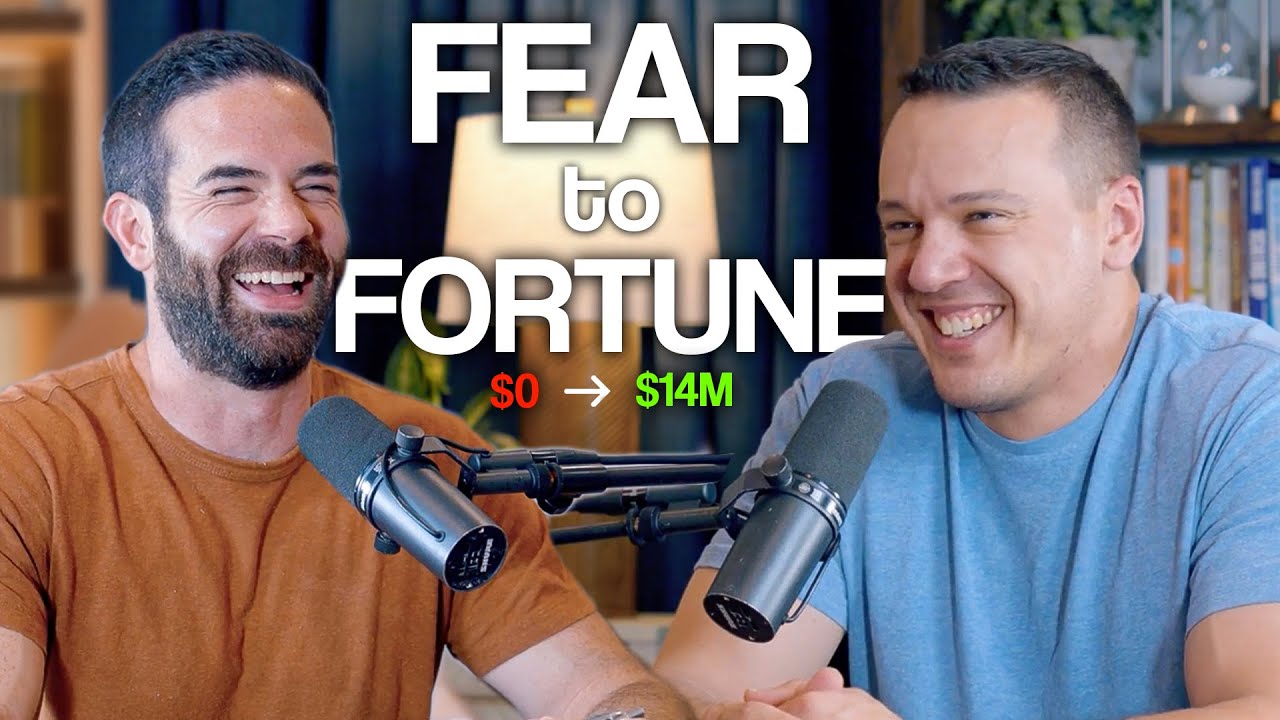
Ecom Podcast
Overcoming Fear and Unlocking Value: A Founder's Journey from Zero to $14 Million
Summary
"Many founders can immediately boost revenue by raising prices 20% with minimal risk, as shown by a founder who sold his gym marketing platform for $14 million—an 11x revenue multiple—highlighting the importance of understanding market value and strategic buyer motivations."
Full Content
Overcoming Fear and Unlocking Value: A Founder's Journey from Zero to $14 Million
Speaker 1:
Almost every founder I've coached as a first-time founder could immediately raise their prices by 20% that day with very little downside and all the upside. But it's just, it's a fear. It's like a psychological fear. I went through it.
I didn't know how to test the market. I didn't have the confidence to run a pricing test. I didn't have the confidence to get told no.
It's easy when you've spent all your time in small bootstrapped operations where you can fit around the dining room table to just assume that like rules are trash, processes are trash, go fast, break shit.
As you grow up in business, there are diminishing returns on operating that way. If you can figure out how they are calculating the offer that they gave you, instead of just arbitrarily negotiating on the offer itself,
you can figure out what the ingredients are and then figure out how to use them to your advantage. The advice that I give people regularly is that I'm not trying to hurt your feelings, but your business probably isn't that complicated.
Stop doing all sorts of crazy stuff and do things one at a time until it's sustainable and it works. It's simple. It's just hard.
Speaker 2:
It's simple. It's just hard. Matt, you sold your company for eight figures in 2020. What was that company?
Speaker 1:
It was called Up Launch. It was a marketing platform for gyms.
Speaker 2:
And how much did you sell for?
Speaker 1:
The deal size was a little over $14 million.
Speaker 2:
$14 million? Yeah. Okay. How did that deal come about?
Speaker 1:
They called me randomly. So it was interesting. It was a private equity-backed company that purchased us and I got two phone calls that both felt random within a two-week period.
One of them was from an associate of the PE firm, which most founders get all the time. And I almost didn't take the call. I thought it was a telemarketer, you know, my car's extended warranty or something.
And I chatted with them, whatever, you know, surface level conversation. And then one of the other portfolio companies, and I didn't even know that the PE firm was the backer of the portfolio company.
I didn't even know their relationship yet. So at the same time, The portfolio company was calling us to explore a partnership, which was like a super logical partnership in the space.
And so we started the partnership route, chatted with them, figured out the connection, and then we started kicking tires, but it was a long road. It was like nine months.
Speaker 2:
So they pursued you.
Speaker 1:
Yeah.
Speaker 2:
You weren't looking for an exit.
Speaker 1:
No. I told them on the first phone call, I said, I'll sign your NDA and we can talk, but I'm not selling you the company. So just don't feel bad if I waste your time.
Unknown Speaker:
Whoops.
Speaker 2:
What was the revenue of the company?
Speaker 1:
It was a little over 1.5. So it was like a, 11x multiple.
Speaker 2:
Okay, on revenue.
Speaker 1:
Yeah.
Speaker 2:
1.5 million dollar top line and you sold for 14.5. Yeah. How does that math math? So like most people will do poor man's math and say five times profit.
Speaker 1:
Yeah, yeah, yeah. So I think it's the incentive of the purchaser. I think there were a couple of things that worked in our favor. Like they were a, are a roll-up of a lot of different fitness brands.
And so I think that Part of the strategy for them was rounding out the portfolio of services that they could provide to the different market segments that they served. So they have three different levels.
So they do a lot of work with YMCAs and JCCs in their non-profit segment, like health clubs and then small boutique gyms, which is where we played. They didn't have a CRM for that segment.
And so I think as they were going through their PE cycle, having a well-rounded offering for that market segment added more value than our revenue.
Speaker 2:
So translation, what that means is that you fit well into their portfolio.
Speaker 1:
They called us a bolt-on, like you literally use those words, and I kind of felt bad. I'm like, guys, I'm not like an alternator, like what's up, you know, but they were like, oh, it's a bolt-on acquisition to the main thing.
Speaker 2:
That still seems like an absurd. Markup.
Speaker 1:
Yeah, so some of it was tied up in an earner.
Speaker 2:
I'm forgetting, there's something really interesting and hopeful about this because in my case, my business was profiting three point something.
We sold for 16 and the PE company ended up bankrupting the business, so I didn't get all that money.
Speaker 1:
Sure.
Speaker 2:
Right. And I would call that like a normal story. We sell for a five times multiple, didn't get all the money, and then I bought back the company. Classic PE story. But in your case, getting to 1.5 million in top line, that's totally doable.
And then you sell for 14 or 11X revenue. There's something really hopeful about that.
Speaker 1:
There is, but I also don't want to misrepresent the deal. So part of it was an earn out. Part of it was an upfront consideration. So the 14 was the total deal size. And so I was not interested in selling the company.
I think that's pretty important to the whole story. And they were interested in buying it. And so we went back and forth on the upfront portion of the consideration quite some time.
There's still a pretty decent valuation gap because I pretty much told them, like, you're purchasing my opportunity cost of continuing to grow the company. It was two months before COVID, so I only had a crystal ball.
And so the earn out was structured to basically offset my risk of selling the company earlier than I wanted to. And at the time that we sold, I was pretty hopeful that we'd be able to continue growing.
We'd grown, you know, a couple hundred percent over the prior 18 months. All that good stuff. So I was feeling good about our prospects, you know, five weeks after we sold, COVID happened and that changed the whole environment.
So we didn't see all of the 14, similar to your story.
Speaker 2:
Okay, you didn't get all of that. Correct.
Speaker 1:
Yeah.
Speaker 2:
Okay. And I'm guessing that the earnouts At least the portions that you did get came as a result of being part of a bigger portfolio because they can plug in more client flow and grow the company faster.
Speaker 1:
That was the idea. That was the intent behind it. The earn out didn't materialize for us at all because the market got demolished five seconds after we closed the deal. But that was the intent behind it.
I think it's an important thing for people selling a small company into a big company is the cross-sell and up-sell opportunities within the portfolio. When that team is solution selling, it's an attractive Prospect,
it's hard to pull off in real life, but it's an attractive prospect for the purchaser.
Speaker 2:
That is an interesting clarification because most people will just see the headline and say deal worth Fourteen five or in my case deal worth 16 million sure, but I didn't get all that money.
You didn't get all that money So what did you walk away with about six and a half for the team? Okay. Yeah, not bad No, if you could go back and prepare the company for exit differently, would you have changed anything?
Speaker 1:
Only everything. Yeah So tell me what yeah, I think I mean first time founder no idea what I was doing we gosh, so We ran the business like a landscaping company from a financial perspective, like we were on cash books the whole time.
And it wasn't until I reverse-engineered how they were calculating our valuation and realized that it benefited us to convert to accrual accounting. 48 hours before due diligence. So we ran a hurry up offense, like read the whole books.
Speaker 2:
Same more. What do you mean by they were valuing the company?
Speaker 1:
Okay. So this is the, I'll emphasize this is the best advice I got from a mentor of mine about negotiating the deal.
Any deal is if you can figure out how they are calculating the offer that they gave you instead of just arbitrarily negotiating on the offer itself,
You can figure out what the ingredients are and then figure out how to use them to your advantage.
Speaker 2:
Wow. I wish somebody had told me that.
Speaker 1:
So for this deal, they were calculating our valuation off of trailing 12 months revenue. It's like, cool. I don't have to tell them I'm worth more. I'm on a growth tear. I can just slow things down. So I slowed things down.
And every time I slowed things down, my trailing 12th month dropped off and a new growth month tacked on. And at the end, I was able to say, Hey guys, I agree with your multiple. It's super reasonable. Can we just like true this up?
Cause it's been 60 days.
Unknown Speaker:
Sure.
Speaker 2:
And that's okay.
Speaker 1:
Well, it was okay. Like their CFO was great. Like he was really good and he knew the game and he said, I remember the conversation. He goes, okay, but just so we're clear, this is the final number.
So it's like, he's like, you know, I see what you're doing. It's cool. But like, you're not going to do it twice. So here's the number. But it was fair because I mean, we were on a growth there.
We're bringing new logos in, you know, every single day that it was still ours. So yeah.
Speaker 2:
So you figured out how they were valuing you and you wished that you had prepared a little bit differently.
Speaker 1:
Yeah. Yeah. I think having the books squared away would have been better. The interesting thing about getting purchased by a large company, at least in our experience, is that typically the due diligence process is pretty standardized.
So you're going to go through the same process as a low seven-figure company as you are if you're a $50 million acquisition target, which meant I had a second full-time job for 60 days.
And so there was a stack of papers with words I had never seen before. I was a fireman. I was squirting water for a living. Now I'm selling a software company. It's just crazy. So I was going through that whole process.
Just realizing the depth of analytics that they wanted, you know, like the cohort breakdowns of customers and churn and, you know, gosh, like stuff that you would have never thought you needed because you didn't need it to run the company.
For sure. Right. Like I track churn. I've always been a numbers nerd, but I didn't have it broken down 17 different ways that they wanted it broken down. So yeah, it was absolutely working two jobs.
And that's a big risk for founders is like, you know, you don't realize the gravity of going through due diligence and you go all in on that, stop running the company. If the deals fall through, you have major problems.
Speaker 2:
So what would you have changed had you known all of that getting ready for exit?
Speaker 1:
Yeah, I would have had better granularity on the data that I was tracking. So I wouldn't have had to run a hurry up offense and put it together at the last minute.
I would have been a little bit more well-versed in how to run a SaaS P&L and be on accrual accounting and have the books done properly. It was fascinating.
Those two things sucked up a few dozen hours of our time while we're also negotiating the deal and running the company. And I had some massive personal challenges at the same time, which I'm happy to talk about if it serves you.
But there was a lot going on, I guess, is the subtext. And so I think the problem with that stuff is it doesn't make you money. You just have to do it to get through.
Speaker 2:
Well, if there's a carrot at the end. Sure.
Speaker 1:
As an operator of the business, it's not making you money to go recalculate all your numbers.
Speaker 2:
This is why as boring and seemingly non-impactful as it looks on paper, one of the first things we do When we are advising a brand that is over a million dollars that wants to scale to five or ten is that we make them do their books.
Because most people don't. Yes, they have their bookkeeping, but they don't actually have any real forecasting or any real P&L or balance sheets.
Which make it very difficult to go get inventory financing or to get any growth capital or to negotiate with your suppliers, all things that could dramatically drive down costs.
Speaker 1:
For sure.
Speaker 2:
Knowing, having that visibility opens up the doors into a lot of different interesting conversations, which is why we make people do it first because it informs all other decisions.
You mentioned that you were a fireman Three years before you sold the company. So you were only full-time in this business for three years. So you go from fireman to a multi-million dollar exit in a couple of years. That's a big transition.
You also became a leader of people in that time. I'm curious what leadership skills from being in the firehouse translated over into overseeing a multi-million dollar exit.
Speaker 1:
Yeah, so many. And I'll tell you, it helped that my co-founder was in the firehouse with me. So we were firemen together first, then we started the company together, which was cool. There was a lot of...
Speaker 2:
Firemen make great entrepreneurs.
Speaker 1:
100%.
Speaker 2:
I don't know why. I've never been a fireman.
Speaker 1:
Well, I can tell you.
Speaker 2:
Tell me.
Speaker 1:
Yeah, so the whole job of being a fireman is you're making permanent decisions based on incomplete data sets in 10 seconds or less. You go up to a house, you look at it, Okay, here's what I think we got to do.
Then you go do it, and you better do it right. And so if you think about entrepreneurship, you're making somewhat less permanent decisions, but still impactful, incomplete data, really fast-paced.
So it's being able to be decisive, I think, is the meta skill that actually helps you.
Speaker 2:
That makes sense.
Speaker 1:
Yeah. It's been a weird amount of time thinking about it, honestly.
Speaker 2:
Because there's a lot of the line, and you have to make a decision one way or the other. And a lot of entrepreneurs have never had to make those decisions. So they just agonize over them and they're weighing the costs and the benefits.
And it's really best that you just make a decision. Yeah.
Speaker 1:
Cause you can make the decision, right? Like it's not about making the right decision. You make the decision, right. You do the best you can and then go clean it up.
Speaker 2:
You know, once you sold, what did you learn about business that you didn't know as a bootstrap founder?
Speaker 1:
Once I sold, I think one of the biggest things that I learned is that I think it's easy for small bootstrap founders to turn their nose up at how large companies operate, and I think a lot of it's justified.
But I also, being on the other side of it, I worked in a 700-person company after the acquisition for over a year. I was able to kind of see the other side of that coin and realize that The way things are done,
there's a certain reason for some of them being done that way. Some of the management overhead makes sense. Some of the decision-making process makes sense, even though I still think things could be different in most large companies.
But I think that it's easy when you've spent all your time in small bootstrapped operations where you can fit around the dining room table to just assume that rules are trash,
processes are trash, go fast, break shit, blah, blah, blah, blah, blah. As you grow up in business, there are diminishing returns on operating that way.
Speaker 2:
I heard you say on a podcast, I want to make sure I get this quote right, that there's a strong correlation between pricing and self-worth.
Speaker 1:
Hmm. Yes.
Speaker 2:
Explain what you mean by that.
Speaker 1:
Yeah. So, I mean, I've coached a lot of founders through my time at SaaS Academy and I think pricing shows up as a reflection of your like money beliefs that you probably grew up with as a kid.
And a lot of founders that I've worked with, mostly first-time founders, they have this fear of charging value-based pricing, really charging what the software is worth, figuring out what the market can sustain.
And instead, they find all of the reasons why their software is suboptimal, they're new, it's new, it doesn't have this feature, and they'll end up charging, man, like half of what they should be.
Almost every founder I've coached as a first-time founder could immediately raise their prices by 20% that day with very little downside and all the upside. But it's just, it's a fear. It's like a psychological fear. I went through it.
You know, because I just, I didn't know how to test the market. I didn't know, I didn't have the confidence to run a pricing test. I didn't have the confidence to get told no because it was too expensive.
I just wanted to be told yes and my thing is great and it can help us. Here's my credit card.
And so we priced accordingly for a while and you're doing just as much work and making half as much money and eventually you smarten up and realize that it's wasteful.
Speaker 2:
What are people afraid of? When they're afraid to raise their prices.
Speaker 1:
Rejection and failure. The same thing that every human is always afraid of, I feel like. So they're afraid of rejection, not realizing that rejection in a sales process is a feature, not a bug.
Like if you're not losing One out of every five deals to a money objection, you're probably leaving money on the table. Like if nobody thinks you're charging too much, you're probably charging too little.
And I think that it took a long time for me personally to reframe that objection into something that was actually a positive signal that I was pushing the upper quartile of where I needed to be on pricing. So I think that's one.
And then just failure because with higher pricing comes higher expectations. With higher expectations comes a higher likelihood to churn or quit using your product or service if it's not good enough.
And so it's easier to only be all right if you're only charging a little bit of money. It's safer.
Speaker 2:
That rings true for me. And I have found personally, for me, that I will listen to that fear if I'm afraid of not performing and lower my prices, but what will happen is I will then do a substandard job.
So I now price to the point where it raises the floor of how we will perform. And now I feel more confident about that pricing structure. That has been my own personal experience.
How did you wrestle with or overcome that internal resistance of raising pricing?
Speaker 1:
I didn't overcome it in my first company. We could have charged more the whole time. There were two or three opportunities for us to make that company a lot more valuable that as a first-time founder, I didn't execute on. That's one of them.
I didn't overcome it until I started working with Dan Martell and SaaS Academy, and I was a customer of SaaS Academy first, and I remember the fear I felt buying,
that was the first time I ever bought business coaching, number one, and we were broke, so we paid for it out of our pockets, and it was a lot of money. And so I- How much was it? At the time, it was 24K for a year.
Speaker 2:
Okay. And so- And you were still small at the time?
Speaker 1:
So we were, we had, let me list you out all of my mistakes. So we were a founding team of five, We were making $18,000 a month in recurring revenue. We had a 50% revenue share with a partner, which is a whole rabbit hole.
Speaker 2:
Oh dear.
Speaker 1:
So we're making $9,000 a month in actual top line revenue. Haven't even gone below the real top line yet. So yeah, I mean, cool. Nine grand divided by five equals broke, right? We didn't have anything.
And so four out of the five of us weren't getting paid at all. Jake and I were pretty much just ATM machines, just pouring cash into the company, hooray. And there we have one guy, and this is that founder resilience story. I love this guy.
His name's also Matt. He was our CTO. He's back with me in my current company now, which is cool. This guy was living in Tennessee with a newborn child and his wife in his in-law's basement.
So imagine you get married to your wife, you have a kid, and then you move into her parents' basement, and you're working for this ding-dong that you've never met with this company that's making no revenue.
And you're like, I could get a job as a software engineer, like tomorrow, making okay money. And we could, oh, I don't know, not live in a basement with our child. And this dude gutted it out for like a year,
making next to nothing and just built 16 hours a day, six days a week, like a savage. And like without him, we wouldn't have done it. It's just, it's a cool thing. It worked out, but man, it shouldn't have, right? Like so many reasons.
Speaker 2:
So you scraped together 24K.
Speaker 1:
Yeah. I bought the business coaching and I was so nervous. And then I joined that company and I was on the other side of that transaction.
Speaker 2:
So I just want to make sure we're clear on this. So you're making almost no money.
Speaker 1:
Yeah.
Speaker 2:
And there's this business coach named Dan Martell who's done SaaS before. And somehow he convinces you to fork over 24k because you think it's going to help you grow.
And you've got all kinds of resistance coming up about making this payment and is this going to work? But somehow you justify that this is worth the investment. And that experience somehow, I think, shifted you.
Speaker 1:
Yeah, well, because it worked. What worked? The promise came true. And the promise in a coaching company is fascinating because I don't believe that a business coaching program provides ROI.
I think it creates the container where you can extract ROI from it. You can go to the best coach in the world and still not listen to them and suck and not get anything out of it. But it was a great container.
When I was able to show up into that program, pretty much did everything Dan told us to do. Installed the frameworks, didn't change anything, one after another.
And that was the only thing that got my head out of the sand and got us growing again. I realized that people can make a transaction that they're objectively terrified about, and it's not always a scam.
It's not always some charlatan, you know? And I didn't know Dan at all. In fact, the whole way we got into his sales funnel is hilarious, but I didn't know him at all.
He could have absolutely been You know, a nobody and it turns out he was legit and it worked out really well.
And so I think that seeing that the like the value proposition actually came true and it worked made me more confident at getting sales prospects over their own fear when I had the confidence in the thing that I was selling that it was also going to work.
Speaker 2:
And that started to change your frame about pricing as a tool.
Speaker 1:
Yeah, well, similar to you, I think that when you charge that price, like that price that makes you feel a little bit scared inside for yourself to ask for the money, right? When you're at that. Level of what the market will tolerate.
You also, as long as you can manage your cost structures, you have the margin to figure out how to deliver really, really well. So you don't need to wrestle with this existential fear of this is what my customer needs,
but I'm going to have a negative margin if I go do it. You have the room. And so I just, I think it's kind of a beautiful thing, honestly, because you have, you know,
the ability to get them over the hump and you have the money to reinvest to make sure that the thing you sold them comes true. And that is, I think the core premise of business, right? You find a gap, you're at X. I'll take some money.
I'll get you to why. Let's make it come true.
Speaker 2:
This statement of there being a strong correlation between pricing and self-worth, do you think that this also applies to things like valuation?
Speaker 1:
I think that it's different because in valuation scenarios, you're getting external validation, right? You're asking someone else to put the value on you, whereas, and like, yes,
you can kind of, you know, try to raise at the valuation that you dictate, sure, but it comes from the investor saying, yes, I think you're worth this. Here you go. So it's similar.
You know, it's similar, Ryan, but I don't know why it feels different.
Speaker 2:
Are you wrestling with this question right now?
Speaker 1:
Yeah, a little bit.
Speaker 2:
Because this is something I processed when I was going through my acquisition where they were setting the price.
Speaker 1:
Oh, interesting. I was thinking about it from an investment standpoint, not from an acquisition standpoint, yeah.
Speaker 2:
And they were making an offer and then we were negotiating from that offer. And something that I wish I had known was that I can set my own terms.
Speaker 1:
Yes.
Speaker 2:
So I can go to them and say, oh, great, you want to put an offer on the company? Here are my terms. And I would have never known that. It's just a big private equity firm that's dangling a big check in front of me.
How high do you want me to jump? I have to have empathy for that 29-year-old kid who got a big check dangled in front of him, but the 37-year-old version of me is saying, this is my price. These are my terms.
This is what I'll negotiate on and what I won't negotiate on. If you want to do business, great. If not, I hope you find your next deal. I'll make some recommendations for you.
Speaker 1:
Yeah. No, I think in that context, it's a lot more clear. I was able to show up in a bit of the latter, and it was only because there were three people that really helped me.
Dan was one, an investor in our company, Alan was another one, and then later in the game, our lawyer, Julie, she was great. She said to me one time when I was getting deal fatigue at the end of this thing,
I was just so exhausted from going back and forth, she said, you have to remember, this is the biggest transaction of your life, and for them, it's Tuesday. So just hold your ground and do your thing. And I was like, that's good advice.
Speaker 2:
That is really good advice. I've heard you say that one of the keys of building a sellable business is building a business that is awesome to run. So something that is worth selling ...is just an awesome business.
Most founders don't build businesses that are awesome to run. They are scrambling every which way to try to keep up. So how do you start going through the process of going from a chaotic business to a business that is awesome to run?
Speaker 1:
When I say it's awesome to run, it's a bit subjective. And what I mean by it is that it's got to be a business that reflects the way the founder wants to operate. And that can be objectively good or bad.
There are ways that you could probably operate your businesses that might make it worth more, but that don't serve you personally. You kind of don't want to play the game that way. I think we all have that.
Speaker 2:
I've been told a hundred ways that capitalism would be bigger if somebody else hosted the podcast. Sorry. I like to do this.
Speaker 1:
I could tell. I mean, you see handwriting the notes. I'm like, you like doing it, you know? And so I think that The way that we leave money on the table during the sales process is you sell when you're tired of running the business.
And then you already have all the scars from only putting in 70% of your best effort because you're already tired of running the damn thing. And then you're selling the best you can make it look.
As much lipstick you can put on that thing, make it look pretty, negotiate the valuation. If your buyer knows what they're doing, they're going to see through it, you're going to pay a tax.
If you can make a business that's awesome to run that you truly don't want to sell, it will be inherently more valuable because you are showing up kicking ass every day.
And that is the business they're going to have to pry out of your freaking fingers with the right number. That's what I mean. It's not a tactical thing.
It's like you personally as the founder, the business will reflect you if you build it right. And if you love the thing, then you're only going to sell it when it makes sense to sell something you love.
Speaker 2:
Why do you think so many founders get caught in that trap?
Speaker 1:
I think it's a mixture of two things. I think, number one, entrepreneurs have notoriously short attention spans and we get tired of our businesses before they actually reach their full potential or their shelf life,
however you want to term it. And we just get ready to do something else. It's funny when you talk about people with marketing, especially like, oh, this podcast channel is working so well, so it totally makes sense to go do Facebook ads.
Maybe, except in no way does that make any sense at all. So I think we do that with our businesses. So that's one way. And the second one is just a tactical thing, right?
I just think that sometimes the complexity of the business as the revenue goes up, it exceeds what the founder is willing or able to manage. And management and leadership are different, right?
You can be a great leader and not want to manage it.
Speaker 2:
What do you mean the revenue gets too big to manage for that founder?
Speaker 1:
Revenue goes up, so team size inherently goes up. Team size goes up. Organizational complexity goes up. And then you feel like you're pushing papers around all day and not building stuff like you were back in the day.
Speaker 2:
My observation, both personally when I've hit ceilings and with people that I advise or mentor,
that there is a different level of leadership that is required and the amount of people that you can lead and the capacity at which you can lead them that often prevents them from hiring the roles that need to be in place in order to free them up to be able to enjoy the business again.
And that is a lot of personal work. And so that is a plateau that happens when somebody is wearing all of the hats and managing all of the roles.
And then they, of course, are going to get distracted by something else because they don't like their day-to-day existence within that business. I want to come back to the kind of quip you made about podcasting and Facebook ads,
because you have a really good point that you talk about in your book.
But I'm curious if you have one to three moves that somebody could make to start to pull themselves out of that grind and start to free them up to focus on a business that they find awesome to run. Yeah.
Speaker 1:
Yeah. Well, we were talking before we started recording. You had talked about building organizational charts and just putting job titles and responsibilities instead of names.
You know, I think that having the Business mapped out to the job level is really, really important because I think that...
Speaker 2:
The business mapped out to the job level.
Speaker 1:
Yeah, not to the role. So let me use the right words. Not to the role saying like not to like head of marketing, head of demand gen, you know, marketer, but down to like runs the Facebook ads, you know, talks to the customers,
replies to the support tickets. Like one level down where if you're working in a company, I have, you know, seven different tasks that I do.
If you can map the business out that way and figure out specifically which tasks you need to offload to make you not hate the business,
I think at that point you can start to create the roles that you need to hire instead of just copying and pasting from some org chart that you saw in a blog post one time. I should have a CS person. They should do this and this and that.
If you love podcasting, you probably have someone who does marketing, but you still podcast. It would make sense to your earlier point to have someone else host the podcast, but it's something you like doing.
It's like mapping out to the task level, hosting podcast, Ryan, forever. So I think that by breaking it down, like most people just break it down to the roles. I need a marketing person.
And you could be a savant at Facebook ads and figure out all the best stuff to say and people are just, you know, chucking money at you, but you offload it because you feel like you should to go like do strategy. I don't know.
And then all of a sudden your ads stop performing and your business stops making money and then you fire the marketing person. You take it back over and you're like, damn, I can't figure out how to scale.
Like sometimes if you're great at something, you love doing it, you should just keep doing it.
Speaker 2:
You talk in your book about the $2 million Facebook ad.
Speaker 1:
Yeah, from TrainUle.
Speaker 2:
And why don't you tell that story, and then I have some questions for you.
Speaker 1:
Yeah, so it's funny. So Chris and Jonathan Ronzio founded this company, TrainUle, and I remember it because they were SaaS Academy clients for a long time. And they told this story in a training that they did for us at an event,
I think it was down in Atlanta. And they had recorded a video-based Facebook ad at the time. This was like mid-2000s, 2015s, I think. And they recorded this ad and. It started working and they started to get leads and they were down to like,
they had last like $3,000 I think, right? And so they put this three grand into the ad and they were like, I just need to get like five or six sales and then I'll get enough money from the initial payment for the subscriptions.
I can like reinvest.
Speaker 2:
I need to get five customers to cover my $3,000 in ad spend.
Speaker 1:
And then you do it again next month and you do it again next month. And they had gone through this whole thing about like how wildly good their CAC payback period, right? Their amount of time to recover their acquisition cost,
like how compressed it got because their ad was performing so well. And they ran that ad for an obscenely long period of time. And it was just, it was a really cool story of like having the staying power.
And so the reason that I think entrepreneurs don't do this is because they don't actually do the numbers behind the ads, right? Or behind whatever the example is.
Speaker 2:
Explain to me what's so amazing about this story.
Speaker 1:
It's so amazing is that they had the discipline to not change it. Because think about it, like you look at your marketing every day. For your business, every entrepreneur looks at their marketing every day. You're going to get so tired of it.
You're so tired of it. Everything's old. Everything sucks. Everything's boring. In the meantime, you haven't scratched the surface of your total addressable market. Most of your prospects have no idea you exist for most businesses.
And so then we change things so often and there's so much that's never seen the light of day because you're still figuring out distribution.
So the fact that those two guys had the discipline to double down on the ad that was working and keep hammering and hammering and hammering it because the unit economics worked beautifully. They knew their numbers.
They knew they were getting the cash back out. They knew that it was a world-class payback period and they're really good operators and they just kept running it. The thing that's remarkable about it is that they didn't get tired of it.
They ran the business like a business. And that's why they're crushing it today.
Speaker 2:
There's also something interesting about this. I only need five clients. And so I know that they were hustling for those five clients. And that means having a tremendous amount of attention on the leads that are coming in from that one ad.
I think this is the magic that founders miss, is they're looking for the ad that will blow up their sales and give them scale. So they're running a bunch of different ads.
But the actual delta ...is in how those leads are treated once they hit a page or fill out a form or opt in. Because you can close a lot of gaps with good touch points after someone becomes a lead.
Speaker 1:
Absolutely. You're touching on one of my personal mantras here in business.
Speaker 2:
That's where I want to go with this.
Speaker 1:
Yeah. So it's always an execution problem until proven otherwise. I say this weekly with my team. Everything is an execution problem. I'll give you an example, a real conversation from two weeks ago.
So for our current company, we run bi-weekly workshops like webinars. And we had had the question like, is this the right channel for us? All this high-level stuff. And I sat the guys down and I said, let's look at this for a minute.
How many registrations are we getting? We went down every number in the funnel, right? What's our on-page conversion rate? What's our show-up rate? What's our retention rate? What's our conversion rate at the end of the workshop?
And I had five or six different opportunities to improve the execution of the workshops we were already doing. And I said, huh,
do we think it makes sense to like get better at the thing that's already sort of working or not put the effort in and go be beginners at the next thing? When you say it like that, it's obvious.
It's always an execution problem until you know that you have left every stone, like you've looked under every stone.
Speaker 2:
Share more about that. What were some of the things that you found that you could improve?
Speaker 1:
Our landing page needed optimization. There weren't enough people that were hitting the page that were registering for the webinar. So we started experimenting with like, our show rate was too low.
So we started experimenting with not doing replays to try to like incentivize people to show up live. So we take away the replay. The retention was actually really good, which was also a wonderful thing to see, right?
So we measure it at the, like the five minute mark and then we make the offer. Cause then like knowing what problem not to fix is just as important as knowing what problem to fix. Or you'd be like, oh, we didn't convert a lot of people.
Let's go change the topic. Dude, like, 87% of the people stayed until I made the pitch like, Wayne, change the topic. I'm going to teach it the same way,
but I need to do a better pitch because I need to get more people to actually book the sales call. So it's like you break it the same way you break down a company into the task level. You break down the funnel into the task level, right?
My task is to get people to this page, to get them to opt in, to get them to show up, to get them to stay, to get them to convert. You break it down that way, like, cool, all it is is an assembly line.
And some of your little robots are working really well, and some of your little robots need a tune-up.
Speaker 2:
And you're saying that the temptation was to say, no more webinars. Let's go build a new funnel.
Speaker 1:
Yeah.
Speaker 2:
Let's go advertise on a new platform. Let's change up the whole strategy. This thing doesn't work anymore. Yeah. I once, I sat down with my chief of staff and I was basically like,
I want you to look at our P&L for the last three years and find out the months we made the most money, and then we're going to look at what we did in those months.
Speaker 1:
And do more of it.
Speaker 2:
And it was very obvious. In every single one of those months, we had done a class. We sold a class. I taught my ass off for three to five days, and then we sold something at the end. And I was like, that works great. Let's never do that again.
Let's just come up with every other idea, which is what we had been doing for the last two years. It was like, and so finally just sat down and said, this is going to be our new, this is what we're going to commit to for a year.
We're going to do classes and then we're going to sell stuff. And then we're going to do classes and sell stuff.
And what I'm hearing you say is that you can have a simple sales mechanism and get really good at that simple sales mechanism and drill down and fix those numbers and make things work.
Speaker 1:
100%.
Speaker 2:
But that requires that you are not focused on 14 other different things.
Speaker 1:
Yeah, absolutely. And further, especially for small businesses trying to get to their first million in revenue, like people obsess over the right marketing channel, right? Where are my people hanging out? Should I do ads? Should I not do ads?
You can make a million dollars on any marketing channel if you execute it at a request level. You can absolutely do it. So don't worry about picking the right channel. Just get good at one and do that and then figure it out later.
Speaker 2:
One of our portfolio companies is called Switch Supplements. Best-selling product is a sleep supplement. Works great. Kill Switch. Sleep like you're dead. And we'll send you some. It's good. We should buy some on Amazon and leave a review.
We've built the foundation of that company with one-to-one outreach. What does that mean? You post a piece of content and 37 people see it, but we reach out to those 37 people and say, have you tried Kill Switch?
Okay, here's a $20 credit for your first order. Let us know if we can help. Now, that doesn't scale quickly. That doesn't free up time right away. That's work. And it works. It's boring and it works.
And now we can, oh, that piece of content got a lot of interesting leads. Let's run a little bit of traffic to that one ad. And that is how I have learned through beating my head against the wall of how real predictable scale happens.
It's not that you are trying to make something work that isn't, it's that you amplify what is working.
Speaker 1:
Yeah, absolutely. And it's funny because if you talk to like paid ads people, this whole concept of like high velocity testing of like a control and the variant and you're trying to beat the ad that was working the best,
it's obvious to them. But that principle works in any area of business and life. You have something that worked up to a certain extent, and then you try something new to amplify it and compound on the success that you've already had.
It's exactly what you were just talking about. Is it so much more effective to run traffic to the proven thing than to go invent something new and run traffic to it and see if it's better than the thing you tried?
Speaker 2:
When you put down the 24K, To start to grow the business seemed like that was a transformational moment for you. You also said that you became a product of the experience. It worked. It changed your understanding of pricing. Yeah.
What else did you learn in that experience or working with Dan Martell that impacted the way that you did business moving forward?
Speaker 1:
Yeah, the very first thing I learned 72 hours after I gave him the money was that success leaves clues. So that program at the time, it had three in-person events per year.
Fascinating, three days after I joined, one of them was in Toronto, just randomly happening. So I had a passport, bought a plane ticket, got on the plane. And I sat down in that room. It was all about sales. That was the theme of the event.
And I looked to my left and my right, and everyone around me was making a whole lot more money than me. And they were all doing things that were pretty similar. You know who the one guy who was doing everything different was in that room?
The same one who had no money. So I looked around and I said, okay, one of these things is not like the other. I'm running a completely different business model and I'm the guy who absolutely is least likely to take everyone to dinner. Sick.
I'm failing an IQ test. Let's go home and change it. And so it was this interesting thing that like, I had this realization that like, we're not flying to Mars here. Like we're running a B2B SaaS company that's barely making any money.
I should probably go find people who are doing it better than me and do what they do. And so I just, I did immediate like ego killer. I just showed up. I said, I sat in the front row with my little notebook, taking all my little notes.
I said, I'm just going to learn everything I can from everybody here. I still have like lifelong friends from that room in that exact experience. And I, I had it in a notebook. I still have the notebook. I wish I brought it.
I still have the exact notebook from that event, and I wrote it all on the whiteboard. I called Jake, the fireman-turned-co-founder who I built that company with.
I said, okay, dude, we're changing everything, and we went through one training from the list every week for 12 weeks, rebuilt the entire go-to-market, got out of the partnership, brought him into our company,
started selling direct-to-gyms again. Whole nine yards and that's when we started growing. So I kind of just had to show up and shut up and learn from people who were better than me. Like that was it.
Speaker 2:
What were some of those key changes that you made that you learned from that experience?
Speaker 1:
Yeah, so we were selling entirely through partners. Like their paper, they were closing the deals. We were just like the technology in the background. Sounds really cute on paper until you realize you can't control any money.
So it's not a great way to run the business. And so that was probably the biggest thing as I sat through world-class training on how to run product demos and how to sell software and how to fill sales funnels.
And I realized that in my current model, I could control precisely zero of those outcomes in my business. So I said, all right, I have to have control over us getting customers. So that was the biggest thing. I realized I was joking.
They're like, what'd you change? I said, oh, nothing, just the whole go-to-market and basically the entire business. No big deal. But that was it. I realized I had to bring it all back in-house and just go get customers.
Speaker 2:
This statement that you changed the product.
Speaker 1:
No. So we unchanged the product. So we made the classic first-time founder mistake of saying the following words that have killed hundreds of companies. This could work for everyone, right?
Speaker 2:
Uh-huh.
Speaker 1:
And so we started out in gyms, right? My co-founder, Jake, opened a CrossFit gym in Pennsylvania. We were figuring out marketing for his gym. That's the whole origin story. Then we built it into software.
And then we sold the gyms and it worked really well. And then we said, this can work for everyone. And so we found a partner who was going to go sell the gyms.
And then we started rolling it out to photographers in this industry and that industry. And all of a sudden we were for no one. And so we had to, we killed the whole partnership program, killed every other industry,
brought the one gym partner in. His name was Mike. He ran CS for us for years. And we went back to just serving gyms. So if you're for everyone, you're for no one. Everyone says it all the time, but it's true.
Speaker 2:
It is true. So the first thing we make people do is tell me who your customer is.
Speaker 1:
Yeah, it almost killed us. Almost killed the business.
Speaker 2:
What do you mean?
Speaker 1:
I mean, just if we hadn't made that one decision of focusing in.
Speaker 2:
Focusing on who you serve.
Speaker 1:
Yeah, on GemOwners specifically and being the marketing platform for GemOwners at that time. If we had not focused in at the time we'd done it, we were done. The math was the math. I had set a threshold. It's funny, the power of a good spouse.
I had set a threshold and I said, all right, if I'm not making at least 30 grand personally, like a low bar, right, a year, P.S. for everyone listening, within 12 months of leaving the fire department, I'll go back to the firehouse.
And 12 months came and went and I looked at her and I was like, all right, babe. And she's like, are you crazy? Better go figure this out.
So it was about six months after that was when we got the business coaching and when everything started to change. But yeah, it was just, dude, it was wild. We just, we had to niche back down. We would have, what, another six months maybe.
And then finally you're saying, okay, I failed and go back to driving fire trucks.
Speaker 2:
That's interesting because It's the same product. Yeah. And you're saying that if you had not narrowed in on who you serve, you would have been out of business in six months. Product didn't change.
The thing that changed was who you were focused in on and how you were communicating with them.
Speaker 1:
Yeah. How we talked about it and what we built to support them.
Speaker 2:
Why'd that make such a big difference? I mean, we're not talking about a small difference. Some of the difference between going out of business and an eight-figure valuation, six million to you and the team. That's a big swing.
This is a multi-million dollar decision to focus in on somebody. Why in your own words is that so important?
Speaker 1:
Because if you can't convince somebody that something is built for them, they don't care about it. Especially when you're working in like a tight vertical where people want everything to be for them.
If you think about it, let's get into specifics. I think it'll serve the conversation. We were selling a $300 a month marketing automation platform, emails and text message automation and stuff like that.
It was 2016, so it was relatively new. We're still competing against a $20 a month active campaign subscription. You could do everything for $20 a month and a whole lot of sweat equity that we could do,
but it was, hey, our campaigns are professionally written. We are marketers. We know what to write because we are you. We, our co-founder, our COO, Jake, he owned a CrossFit gym. Our writer, who writes the emails, ran a CrossFit gym.
It was authentically for them. And so that was the difference. Without that specialization, we couldn't sell a $300 a month product against a $20 a month product.
Hormozy talks about this in his book, where it's like the more specialized you become, the higher of a price you can command. It was a classic case of that being true. And all of a sudden, because we were building for that specific person,
We could do a lot more of the work for them because they didn't have to go write all the emails. They didn't have to go figure out what kind of branding would look cool.
Like we knew what they wanted and we could build for them and they could solve the problem ten times as fast and they were happy to pay a little extra money because they got the members.
Speaker 2:
You recently launched your second venture. So you're climbing the second mountain, if you will.
Speaker 1:
Yeah.
Speaker 2:
How is your mindset different going into a second venture than growing and scaling the first?
Speaker 1:
I'm very focused on making new mistakes. If you know me well, it's no surprise to anyone who knows me well, I did a whole bunch of research around what will cause second-time founders to fail.
The biggest thing that I could find, it's not like a well-documented body of research on this, but from people who had written articles and so on, I had figured out that one of the things is actually overconfidence.
It's saying because it worked once, I got it all figured out, I can go run the same playbook again. In the meantime, it's 10 years later, everything's different, new product, new market, and you think you're a badass,
and all of a sudden, you make a whole bunch of mistakes that you were too blind to see coming and you fail. So I try to walk into every situation just assuming that I'm an idiot and not from a self-deprecating standpoint,
but from like a I want to just learn and I'm assuming that I have tons of blind spots. And so I try really hard to remember the lessons I learned the first time and sometimes need to remind myself.
I started testing two marketing channels at the same time and then I said, hey, dummy, you wrote a book on this. Open to page 87 and go read it before you go to bed tonight. So that was humbling in and of itself.
It's like, damn, I don't have self-control. And other than that, like also not expecting myself to not make mistakes because I think if you have that standard and you say, I'm a second time founder, I got this figured out,
then you're not going to see your mistakes and you're going to make a hundred times more of them and you'll drive the business into a wall.
So I'm just on patrol for messing up and I'm just trying to mess up differently than the last time and fix it faster.
I do think that I'm more confident in my ability to recover from the mistakes because I've had some whoppers and came out the other side okay. So I think the work capacity is up, which is good. But yeah.
Speaker 2:
Can I ask you a personal question?
Speaker 1:
Of course.
Speaker 2:
So your revenue right now is?
Speaker 1:
Yeah, 360K, super small.
Speaker 2:
A six-figure business? Is your ego hurt that you go from having a multi-million dollar exit to being back at $30,000 a month in revenue?
Speaker 1:
Not even a little bit.
Speaker 2:
Then you're more enlightened than me because I definitely had that for a long time after my exit.
Speaker 1:
Yeah.
Speaker 2:
I'm starting over at zero and my ego can't handle starting over at zero when I'm used to this dump of dopamine that I got in my bank account. So why does it not bother you?
Speaker 1:
Because I love to build. Someone asked me on a podcast once, they said, what was the thing that you're most proud of going through the company and all that? And it was about creating jobs and leaning into the team, more so than the company,
more so than the valuation of the money or any of that kind of stuff. I love building a wonderful container for people to come to work and do their best work. And so for me, being able to get back in the seat and I have a small team,
five people, counting me, But the people that I have are doing their best work and they're happy and they have upside. Everyone has an equity slice in this new company, which I'm really proud of.
And so I feel really fulfilled being able to build that and I have everything structured in a way I've got optionality regardless of how big or small it gets, we can still be okay.
And don't get me wrong, I'm going big with it, but we'll still be okay. So it's just fulfilling, man.
Speaker 2:
You decided to raise capital for the second venture.
Speaker 1:
A small amount, yeah.
Speaker 2:
Why'd you do that?
Speaker 1:
It wasn't about the money. I put a bunch of capital into the business myself also. So Martel Ventures from Dan Martel backed us. I mostly did that deal because A, I like what they're building.
They're very AI-first, AI-focused in the network that it brings. And I also just love working with Dan. He's someone that I value our relationship. He values our relationship. We've done three different ventures together.
He's coached me in one and worked in SaaS Academy, partner in that business, and now over here with Precision. I didn't raise money for the money. It's not really about that.
I could have gotten money in a ton of different places, including my bank account, which is probably the smartest place to get it from. But I did it because I wanted him involved.
Speaker 2:
Tell me about the value of having the right backers or investors as part of a deal.
Speaker 1:
You have to think through the moats that still exist when you're starting the business and then how those backers can help you create one of them for yourself. So we're recording this in 2025, right?
AI is happening, like writing code, I don't believe is really a defensible moat anymore, at least not for long. Distribution and media certainly is, right, as we sit on this podcast today. That was a big part of why I wanted Dan in my world,
aside from the fact that we go way back and we get along really well, is because distribution is still a very defensible moat in the world in business.
And so by having someone with a prominent following of my ideal customers backing my business, that gives me what I consider to be an unfair advantage. That is why that deal makes sense.
Speaker 2:
A lot of people think that investors are just about the capital. But what you're highlighting is that the people who have a vested stake can open doors for you. In the same way, I'm an investor in a company called Outstanding Foods.
And I own, you know, this much of the business. But when they call me and ask for my advice on TikTok Shop,
I pick up the phone and give them the best advice I have and then make the introduction to the agency that is best to do that and roll out the red carpet for them because I have a vested stake.
It's a small vested stake, but I have a vested stake.
Speaker 1:
Yeah.
Speaker 2:
And there's something very magical that happens when you start to assemble your team and it's not just employees. But it's the vested partners, whether that is investors or advisors, that have a stake in your success.
Speaker 1:
Yeah, and that's why I don't, yeah, like, I mean, especially as someone who's exited a business, it's not about the money, right?
It's really about the people and the skills and the introductions and the distribution and the brainpower that you can put together. That's the true advantage, to your point.
Speaker 2:
I've had exits and a lot of things are still about money.
Speaker 1:
I think the outcome is. You might be a better person than me. You just don't know me well enough yet.
I guess what I'm trying to say is that I think that I would rather raise less money or no money from people that didn't also bring intangibles to the table. I would do a deal on worse terms for the right person.
Speaker 2:
How do you support a team of five with a revenue of $360,000? Division.
Speaker 1:
No, I'm just kidding. So it's interesting. So we structured the company where I took a percentage of the company and set it aside for the employee pool out of day one. And not with stock options, with phantom equity on a one-year vest.
They have financial upside, period. And so we set total compensation targets, but then they will take a percentage of that that we negotiate when they come in,
and we'll put a percentage into the pool so they have future upside in the company. And so that does two things. It lets me protect our runway, which is great, but it also creates a beautiful, self-managing, high-performance culture.
So you think about it. Like everyone, every employee, the first thing they want to pull out of the toolbox is, I just need a person. I just need more people. It's going to be a person to manage that. It will be good.
And now when we have this constraint of every full-timer in our business participates in the equity pool, if we hire someone, that's immediate dilution for everybody else on the team.
And so the bet that they're all making is that if we hire Jimmy into our team, Jimmy is going to create value in the company that's going to outpace his dilution or he's not going to make his year and we're going to come take it back.
That's a beautiful thing because everyone wants a culture and standards that work that way, but a lot of people don't come off the equity and create the incentive plans that it takes to actually bring it to life.
So that's how we're doing it.
Speaker 2:
There's a built-in accountability there.
Speaker 1:
Yeah. And for me, because if I tolerate subpar performance and force dilution upon my team members, they're either going to like slip my throat in the middle of the night or quit. Neither of which is good.
Speaker 2:
You could probably do the same thing with profit shares.
Speaker 1:
A hundred percent. The mechanism is less important than the way it's received and the way it benefits people.
Speaker 2:
It's a forcing function to hold each other accountable. And to take personal responsibility for your own performance.
Speaker 1:
And I love that it holds me accountable. Cause like, so two things for that, like I don't participate in that pool. Um, number one, it's just for them.
And also I know that I have to hold myself to a high standard as the guy who has to do the firing. Like I cannot get comfortable and avoid the uncomfortable conversations. I'm a lover of people.
I hate that part of the job and it forces me to run the business to that same high standard that I would expect of myself if I was them.
Speaker 2:
Matt, you were a stuck entrepreneur for a couple of years, and then you had an exit, and then over at SaaS Academy, you saw a lot of other entrepreneurs, many of whom were stuck.
I have a large client base that often comes to us because they have a good product, but they're just stuck. You mentioned that once you focus on the person and you simplified the model and got really good at that, things got unstuck.
What advice do you have for entrepreneurs who believe in what they're trying to do but are stuck in their growth?
Speaker 1:
Most of the entrepreneurs I've talked to that are stuck are really smart and really good at overcomplicating things. I'm very good at overcomplicating things. I'm a recovering overbuilder.
I don't know if you're one as well, but I am for sure.
Speaker 2:
Every idea is a good one. Let's do them all.
Speaker 1:
Yeah.
Speaker 2:
We could do this and this and this and this and this.
Speaker 1:
100%. And then everyone's got 15 steps and so on and so on and so on. It feels good to plan for people like us. And a lot of entrepreneurs, I think, are like that.
So the advice that I give people regularly is that I'm not trying to hurt your feelings, but your business probably isn't that complicated. It's only complicated if you make it complicated.
So figure out the simplest form of the business and master the execution of those basics and have the discipline to force yourself to focus on those basics. And those basics, like we talk about in the book, right?
Get more customers, keep them longer, make them more valuable over time. That is a recurring revenue business. I coach SaaS. That's my world. That's a SaaS company. You get them in, you keep them around, you expand the revenue.
Those are the skills. There's marketing channels and a funnel and a sales process and customer health and all the little Legos that go in there, but there's a dozen core competencies within those three levers.
Just get great at them and stop doing all sorts of crazy stuff and do things one at a time until it's sustainable and it works. It's simple. It's just hard.
Speaker 2:
It's simple. It's just hard. Three years from now, let's say you get a call. You think it's a telemarketer, but again, it's someone who wants to buy your business.
What's different about your negotiations this time than the last time they called?
Speaker 1:
Hmm. Not a lot, honestly. I think that my bar might be a little bit higher, but the way that I think about The negotiation in general is it's a bit of a ratio, right?
Because everyone focuses on the money, which is critically important for sure. But there's also your drive to keep operating the business. I knew with the first business that I didn't have 20 years of the fitness industry in me,
which is part of why I wanted to sell. My co-founder felt the same way. How is it different? It's tough for me to say now because I don't know how I'll be feeling about the industry.
If I'm loving what I'm doing, my number will be really high. Everyone has a number. And people say they don't have a number. Like, I love those people. I have a number. I don't know what it is, but it exists.
But I think that it's a tough shot for me to call and say, how will it be different? I think it would be different because I'd be more in tune with how I'm feeling about the business because I've been down the road before.
And I think I'm also more likely to be running an awesome business that I don't want to sell.
Speaker 2:
You probably will prepare for an exit much earlier than 48 hours before you go to due diligence.
Speaker 1:
I hope so. I hope so.
Speaker 2:
What will you prepare for ahead of time this time?
Speaker 1:
Yeah, I think that I would like to be the initiator when I sell this business. I think that was a key differentiator from last time.
Speaker 2:
What does that mean, the initiator?
Speaker 1:
I want to decide when I want to sell the business and I want to go through a process for it and get a number of prospects competing for the business that I'm trying to sell.
Speaker 2:
You want to go to market.
Speaker 1:
Yeah, ideally. I think that it was My good outcome, there was a lot of luck involved, and I think a lot of entrepreneurs say that, but I would prefer to be less lucky and more deliberate this time out.
Speaker 2:
Matt, it's great to see you.
Speaker 1:
You too, brother.
Speaker 2:
Thanks for being here on Capitalism.com.
Speaker 1:
Thank you, man. It's awesome.
This transcript page is part of the Billion Dollar Sellers Content Hub. Explore more content →