Ecom Podcast
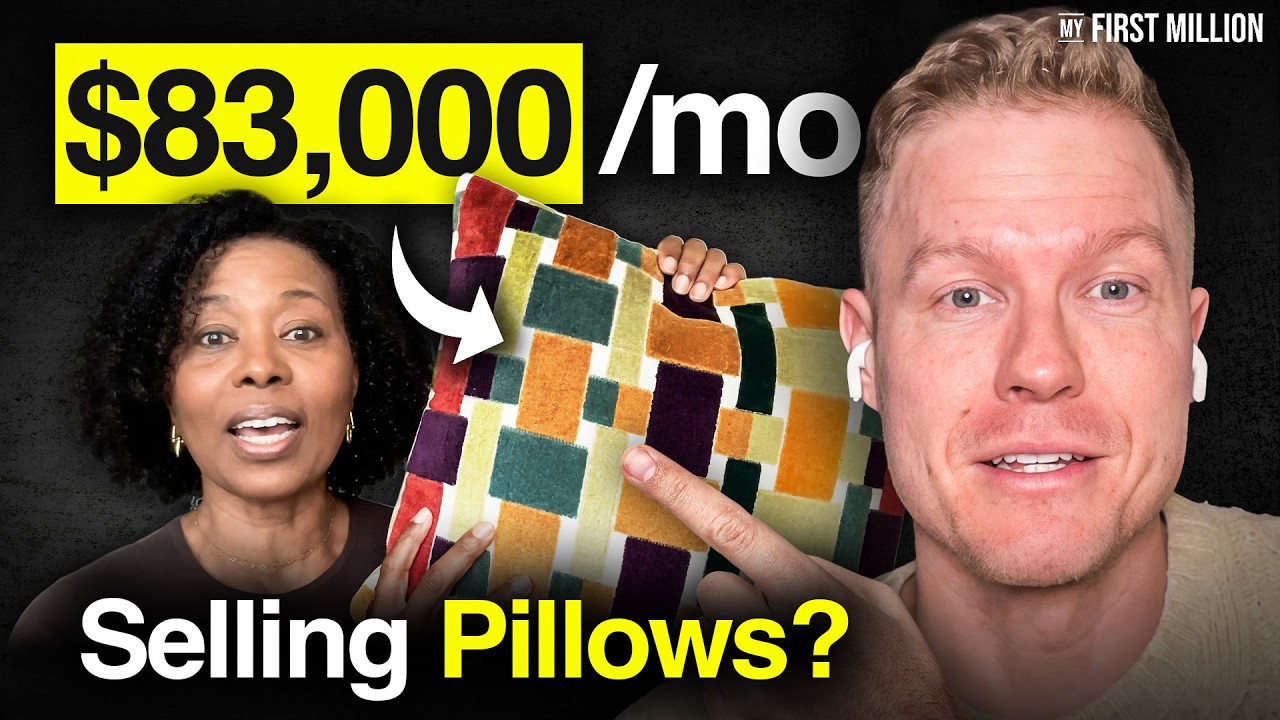
My mother-in-law's side hustle made $1M selling pillows?!?
Summary
"Starting with just $10,000 and no prior e-commerce experience, Smithy Sodine's pillow business reached seven figures by leveraging her passion for sewing and learning Shopify from scratch, proving that anyone can achieve success with determination and creativity."
Full Content
My mother-in-law's side hustle made $1M selling pillows?!?
Speaker 2:
So how do you create a multi-million dollar business starting with only $10,000 without having much of a plan,
without doing a lot of research, without even knowing how to use Shopify or basically you had to learn the internet from scratch? Well, we have talked about this a little bit on this podcast,
but I finally wanted to do an episode with a very special person. My mother-in-law. So about five years ago, my mother-in-law sat me down. She goes, Sam, I have this idea for a business. I want to start this pillow company.
Can you teach me how to do it? I gave the most generic advice ever on how to do it, not expecting her to do anything. Turns out she listened and she Googled and found actually significantly better advice.
And she built a company that is now making millions a year in revenue. She started it in her early 50s and it's killing it. And after years of just kind of quietly chugging along and building this epic business,
I asked my mother-in-law, Smithy Sodine, to come on the pod and give her story. If you are in your 30s, 40s, or 50s and you are thinking about starting a business and you're sort of overthinking,
you're not sure what to do, or even if you're in your 20s and you want to figure out how to change your life, this is probably the most relatable and I think inspirational episodes that we have ever done.
So it's a very special episode for me for obvious reasons. I love her to death, but I think you guys are going to like it. Check it out. So let me set the stage here, Smithy.
Speaker 1:
Okay.
Speaker 2:
Do you even listen to the podcast?
Speaker 1:
I do. I do listen to some episodes.
Speaker 2:
All right. So the story is this. Basically, you came over in your early teens as an immigrant. You had some kids and you were a stay-at-home mom. And then the kids grew up and you were like, well, I'm not really sure what to do next.
And so you kind of were like trying a bunch of different stuff. I think at one point you got your real estate license and you did something a lot of people want or they think about. They think like, I want to start something.
I want to like do something. And you thought about it for a couple years, I think. And then all of a sudden we had a conversation and you basically told me what you were going to do.
And I wasn't sure if I even believed that you were going to do it. But basically you were like, I'm going to start a pillow business. You had done zero research. You didn't do any market research.
And then all of a sudden, two weeks later, you have this online store. And before I know it, you had a bunch of sales. And now, after doing this for six years, you've made multiple millions in revenue.
I don't know if you want to say what it is, or you could say the numbers, but you've built a seven-figure business without any internet experience or any research. We talked about you on the podcast, and that was pretty cool.
And a lot of people have asked. And so, we have Smithy here, who's actually my mother-in-law.
Speaker 1:
Well, okay, I'll just change a few little bits of information in that summary. So I came to the U.S. with my family when I was 16 years old. So it was in 1983.
We lived in Miami for a couple of years and then I wind up going to school in New York City. I wanted to be in the fashion industry. Sewing has always been a passion of mine. So I've My grandparents sewed and my mom did.
So I learned from them and then I wind up Just liking it. It was just a way to express myself, my creativity. I made clothes for myself and then I wanted to go to Fashion Institute of Technology to study fashion.
So I wound up being majoring in pattern making. I also had to work full-time and while I was going to school part-time. So I never graduated from FIT.
Speaker 2:
I didn't know you went to FIT. That's pretty cool.
Speaker 1:
Yes, I went to FIT for about a couple of years, maybe two, three years part-time. I was really close to graduation. Then I got married, had a child, your wife, and decided that I wanted to move out of New York City.
We moved to the suburbs and there was no fashion industry in the suburbs. I really didn't want to travel back and forth to work in the city. Then I stayed at home. I became a stay-at-home mom for about three or four years.
Then I realized, oh, wow, I'm raising a child, but I don't have enough information to raise her. What am I going to do? Like, when she needs knowledge, how am I going to help her and so on? I'm like, okay, fine.
I'll go to school to become a teacher. So I went to school, major, did a dual major, English, Lit, and Education. I actually went to school for 10 years while I was raising my kids and I wound up with a master's degree in linguistics.
Then it really helped having children, but I always sewed or did alterations for my neighbors. Vests were in style in the 1990s, so I made vests and sewed them on the side. So I was always sewing, doing something in that field.
I started teaching. I thought for a while my husband and I own a business. I helped out and then when the business was winding down, I was like, I really needed to work to keep working. I was just too young to retire.
So I really brainstormed I have a lot of ideas and then pillows just kept coming back to me because my friends always asked me to make them for them. I made them for my sisters. I made them for everybody. So I'm like, okay, pillows, you know.
It was funny because everyone kept discouraging me. They're saying, why would you want to sell pillows? How many pillows can you sell? This is ridiculous. Nobody buys pillows. But I bought a ton of them and made a ton of them.
So I know women like them and people in general like them.
Speaker 2:
When you said pillows, to me, I was thinking like pillows I put my head on at night and go to bed. You're talking about like fancy decorative pillows, like throw pillows.
Speaker 1:
Okay, yes, you're right. I should correct that. I made decorative pillows, the couch pillows, the sofa pillows, and also the decorative bed pillows that people use.
So I thought to myself, well, I really don't want to sell millions of pillows. I just wanted to sell enough. And I also wanted to keep myself engaged. And something that I was passionate about.
I was passionate about working with textile, looking at fabric, shopping for them. I had closets full of them. So that's what I wind up doing. It was definitely tricky because I knew how to sew and I knew how to shop for the fabric.
I had a pretty good eye for interior design. The problem was I had no knowledge of an online business. The technology part was a problem. So I had to really learn a lot in order to open an online store.
Speaker 2:
For the listener, and Ari, if you want to say this as well, Google, okay, so Smithy's name is S-M-I-T-H-E, but she spelled it Smithy with a Y, so the word Smith and a Y. Smithy Hongkator, you guys got to Google that right now.
And if you go to it, you'll see your website, but more importantly, click the Etsy link. And I'm not looking at it now, but I'm going off memory.
I think it says that you have sold or you've had 17,000 orders and those orders could be multiple pillows. And the reviews are like 4.9 out of 5 stars. And it's like 3 or 4 or 5,000 reviews. Is that right?
Speaker 1:
I have very, very, very good reviews. I think there are multiple aspects of the business. There's a consultant side of it where I help people select pillows for their homes.
There's another side of it where you actually have to manufacture the pillows. We get an order, make the pillows, pack and ship to the client.
But you also, I have customers, you know, the customer service, you have to It's a service to the client. So I really try to maintain a relationship with my clients. I treat them the way that I want to be treated.
So I respond to their questions right away. If they request something that I cannot do, I make sure that I express it. I'm, hey, I can do that. So let's try something else.
Or maybe I might even recommend somewhere else for them to find a product that they're looking for. So customer service is really important to me because I want to be treated well. The reviews are a reflection of that.
Speaker 2:
Yeah, they're crazy high and right now, just so people have context, right now I think you have, I don't know how many employees you have, four, five or six? How many do you have?
Speaker 1:
So they're really all subcontractors. I use about five to six subcontractors, yeah.
Speaker 2:
And you have like a, I don't know what you call it, an office, a workspace where you have, I've been there and you have these five or six.
Speaker 1:
I have a workroom.
Speaker 2:
A workroom. And you're just sewing. Like I think people, it's pretty cool because I think a lot of people listen to this. They're like, Oh, I'm going to go like find something online and just resell it.
You have five or six people in there with sewing machines and you're, and you're, and you're sewing them. Like you guys are actually, and so like a lot of people brag about made in America, which I love.
I love made in America stuff, but you're like making all this in New Jersey. This is just like, it's just a crazy how, straightforward. You made this process and it has worked really, really well.
Speaker 1:
It's very simple. We don't stock pillow covers. We don't stock them. We stock fabric. So I have about 400 different rolls of fabrics in my workroom. Someone places an order and we make the pillow that day or that week.
We ship within three to five days from the time you order to making it, packing and ship. It's pretty simple. I have people who help me with the sewing, but I do all the buying. All the creative side is all me.
And we also make the answer, the actual, what you were thinking about, the pillows, the stuffing. We also make them there. Pack them and ship. It was so simple to start this business in terms of financial investment.
I started it with $10,000 and I've never invested another penny in it.
Speaker 2:
All right, so a lot of people watch and listen to this show because they want to hear us just tell them exactly what to do when it comes to starting or growing a business. Now, a lot of people message Sean and I and they say, all right,
I want to start something on the side. Is this a good idea? Is that a good idea? And again, what they're really just saying is just give me the ideas. Well, my friends, You're in luck.
So my old company, The Hustle, they put together a hundred different side hustle ideas, and they have appropriately called it the Side Hustle Idea Database. It's a list of a hundred pretty good ideas, frankly. I went through them.
They're awesome. And it gives you how to start them, how to grow them, things like that. It gives you a little bit of inspiration. So check it out. It's called the Side Hustle Idea Database. It's in the description below. You'll see the link.
Click it. Check it out. Let me know in the comments what you think. Can I retell the story of how I remember it? And I've probably exaggerated it so many times that I don't know what is the truth or what's an exaggeration.
And you could tell me what is true and what's not. So basically, if I remember correctly, five or six years ago, you drove me to the airport. Sarah and I were still living, I think, in San Francisco or Austin. I don't remember.
And I was there by myself on a work trip and you drove me. I was like, why do you want to drive me? And you're like, I want to talk to you about something. And I was like, what do you want to talk about?
And you're like, I want to start this pillow thing. A pillow business. Can you like just like tell me anything you think I should know? And I was like, oh, wow. OK, well,
and in my head I was thinking this is just another conversation that I've had tens of thousands of times where someone tells me something they're going to do and they're never going to do it. But I think, OK, well, I'll just like.
I don't really know anything about like e-com, but I could just tell you like what this thing called Shopify is and I could tell you that you probably might want to buy some ads. You probably want to do this.
I gave you the most generic thing ever that you could just have Googled. And then two weeks later, I get a link to I think it was a website or an Etsy store.
And I was like, oh, this person has a company named exactly what you were going to name your company. And you're like, oh, no, this is mine. I did what you said. I created an Etsy or I think a Shopify store, something like that, WooCommerce.
And I flew down to North Carolina and I bought a bunch of fabrics and I am now getting my friends to buy the stuff to give me a good review. And that's where we are. Is that right?
Speaker 1:
That's basically how that's basically how it happened. I wanted to understand what And e-commerce entails, because again, I know how to sell,
but someone my age or most people my age have a very hard time understanding the e-commerce concept and all the lingo that goes along with it. Like what is SEO? What is You know, conversion rates, you know, all this stuff.
So I wanted to understand from your perspective what you understood and really should I buy ads or not? Like what is this exactly? And I was able to pick your brand and I got a lot of information about it.
And also I needed encouragement from From people who were maybe young, young entrepreneurs, people who were doing it, and you were. You were always creating new companies. You're always talking about businesses, what you're up to.
So I wanted some encouragement and you provided that. That was cool.
Speaker 2:
How did your first customers find you?
Speaker 1:
So Etsy is a wonderful platform. Etsy made it pretty easy. At the beginning, you're right. I needed a couple of reviews. I have I sold for like so many of my friends and family.
So I had to get a couple of people to buy a few pillows and then just write a couple of reviews. But the first time I actually had a client that I have never met. I ordered something. It was amazing. It was exhilarating. I was so excited.
And that feeling that you get, like someone says, hey, you're worth something. And when it kept happening, I really kept doing it. It really helped. I started my business in 2020. In January 2020, I opened my Etsy store.
And March 2020, we shut down for COVID. So COVID really helped launch my business. I think the first month in January, I sold about maybe like $300 of pillows.
February, maybe about $500. But by the end of March, April, I was selling multiple thousand dollars of pillows. And then the issue was I couldn't Keep up the demand. I couldn't make them all by myself, but I did for the first nine months.
I did make them all by myself, packed them and shipped them and all that and then eventually I had to find help.
Speaker 2:
So I'm known on this podcast. It's so funny. I have like my home life and then I've got like this like public life and people on the audience and they They know me as someone who asks very blunt questions.
Speaker 1:
Yes, you do. I know that too.
Speaker 2:
I was like, I'm still going to ask blunt questions, but I respect you. You can respectfully tell me, Sam. I'm not answering that.
Speaker 1:
I will definitely do that.
Speaker 2:
When were you able to pay yourself?
Speaker 1:
I was able to pay myself the very first year.
Speaker 2:
Do you remember how much or you want to say how much or no?
Speaker 1:
I think the first year maybe I made like $60,000. It wasn't a lot.
Speaker 2:
What was the most money you made as a teacher? Probably about $67,000. So you beat your or you match your teaching your job in one year.
Speaker 1:
The first year. Yeah.
Speaker 2:
That's pretty awesome. How's that feel?
Speaker 1:
Oh, it was it was great. I did enjoy teaching as well. So I don't regret it. It was fun. I thought I was rewarding as well. So but it's nice to be able to do this and get paid well for doing it.
Speaker 2:
In order to give the viewer and listener some context, are you able to say how much revenue or profit or sales you're going to be doing in 26 or 25? So I can tell you this.
Speaker 1:
In 2025, my business, my revenue grew by 100%. So we are in the seven figures now. In terms of profit, I make a very healthy profit. I'm very happy with the income that I make.
Speaker 2:
So, I know what it is, and I'm not going to say what it is, but I will say that I know people who have businesses that do $20 million in revenue,
econ businesses that do $20 million in revenue, and I have a feeling you're making more money than they are in terms of...
Speaker 1:
I don't know about that, but I would say that I do very well. I love what I do. I never think about it as work work. I love it, and you know that, but I think it's a viable way to measure your success. So, I do try to. I pay myself.
But in 2026, our goal is to probably try to grow the business by at least 50%. And I think I can definitely do that. I have a very clear path ahead to how to grow the business. And I know you think it's really funny. That's how we started.
Speaker 2:
One of the many reasons why I wanted to do a podcast with you was because You know, me and Sean,
we get all these people reaching out to us that say they want to start whatever and they like write up these complicated reasons or these complicated business plans or something like that. And we're like, that's just not important.
Just like start something in a week. Just move fast, you know, momentum to your first dollar. And I don't know if this is like a genetic thing or people can become this, but there's this weird thing that I tend to have. Sean has it.
You definitely have it where I almost call it like being a caveman where you're like smart enough. You can be really smart, but at the same time, you're like, this seems so simple. It's just straightforward. I'm not going to overthink it.
I'm just going to do step one, step two, step three, whereas a lot of people tend to overthink things.
Speaker 1:
Well, I think a lot of people would think about it, they don't take action. So I'm okay making mistakes. I've always been that way, but I've also taken action on the things that I wanted to do. I'll give you a quick example.
So when I moved to the US, I was 16. I went to high school. I went from Catholic schools in Haiti to high school in one of the worst neighborhoods in Miami, right? So high school was horrible. I didn't know the language.
The students were awful to us in general, and I wanted to not stay in high school. I had three years left, but I was like, well, I really don't want to be here. So I decided to go to night school as well.
So I did three years in high school and two years without knowing English. So I graduated and got out. So I just knew that there are ways to do things. If you really want to do something, there's always a path to take.
There's always a way to do it. For me, it was that. I learned how to do. I know I can definitely say that I know my business from inside out. I knew from how to manage the website, how I take all my photos.
And the learning curve was really huge because then I had to learn Photoshop, Canva, and tons of other programs. But I also knew that, again, I could learn. I never doubted myself that I couldn't learn things.
So you just break it down in small chunks and you learn a little bit every day. So at the end of the month, it's like all of a sudden I know how to use Photoshop.
And I know like your audience generally are really young entrepreneurs, but I think I was thinking, well, what kind of value can I add to your podcast?
And I think the value would be in people who are maybe in their 50s and don't want to retire or want to have a different kind of career who really had a passion that they didn't have an opportunity to follow. And for me, that's what I did.
Speaker 2:
It's pretty crazy. I remember looking at some photos of you when you were still in Haiti, and I was like, Isn't it incredible that in such a short amount of time, in one lifetime,
you can go from living in an entirely different country to then going to one of the busiest parts in America, New York City, Manhattan, where you live, owning a multi-million dollar e-company.
I'm so inspired and fascinated about how far someone could come. I was just reading Barack Obama's book, his biography, and he was telling the story about how,
I think it was his father's father, so his Kenyan grandfather, or maybe it was his Kenyan aunt, who came to America for the inauguration, and they were from Kenya, and they were living in the countryside of Kenya, not the most nice setup.
And I was like, isn't this incredible that in two generations you go from just being a person in Kenya to like holding this baby and you're like, this baby is going to be the future president of America, not even Kenya, of America.
And I was like, it's just incredible like how far that the journey of two or three generations. And then I was like, you know, it's pretty incredible.
I've got a bunch of immigrant friends or immigrant family members now, you being one of them. And the place where they are is so far from where they started. And I think that's like very inspiring.
Speaker 1:
But immigrants don't feel like they have a lot to lose. So if and I would consider myself to be first generation immigrant, but my parents.
Really, we're the first generation immigrants, but they came here when they were already in their 40s. So it was too late for them. So they sacrificed a lot so that we could do well. So if you've traveled this far, you actually,
you've left your homeland and you travel to a foreign land to make a new life. Immigrants kind of feel like they have nothing to lose. They have to give it their all because you're displaced.
You feel displaced all the time anyway, like you're not, fully from one place or the other. So you really have to go for it because the opportunities are here. We left there because there weren't any opportunities.
So we won't want to be here and not take advantage of the opportunities offered to us or Try to, really hard. I love New York though. I have to say even growing up in Haiti, there used to be a 7-Up commercial that was filmed in Times Square.
I thought it was amazing. I wanted to be right here in New York and you know how obsessed I am with New York City.
Speaker 2:
You're the most New York person I know. Like when we walk in the street, I'm like, Swetha, you have to slow down.
Speaker 1:
Once you leave here, you become a little bit more aggressive, but I do like the energy of New York. It's a really cool place, but I had that idea. I knew I would be in New York at a very young age.
Unknown Speaker:
Today's episode is brought to you by Hubspot. Did you know that most businesses only use 20% of their data? That's like reading a book but then tearing out four-fifths of the pages. Point is, you miss a lot.
And unless you're using Hubspot, the customer platform that gives you access to the data you need to grow your business, the insights that are trapped in emails, call logs, transcripts,
all that unstructured data makes all the difference because when you know more, you grow more. And so if you want to read the whole book instead of just reading part of it, visit Hubspot.com.
Speaker 2:
You know, on this podcast, we've talked to like, you know, billionaires and people have these like companies worth tens of billions of dollars. And Sean and I always say we're like,
We're equally impressed by them as we are a small business that is small but does great work because what we love are people who kind of blaze their own path and kind of like turn dreams into reality.
And it doesn't exactly matter how big the reality is. It's just really cool to see people kick their dent in the world.
And I think that like the takeaway when I talked to you and why I wanted you on was because I think that inertia is strong. I think that people tend to do the same thing for years, and it's hard to break that.
And the older you get, it's just for the reason of inertia. You've been doing the same things for a long time, and so you're like, I don't want to change.
And what was fascinating was, I don't know if it's true that you were wanting to start something for a while, but I do know you were...
Speaker 1:
I did.
Speaker 2:
I think you had thought of it. Maybe I heard you brainstorm out loud. But then what was interesting is you went from Maybe talking about all these other things, talking about a pillow business and then launching it literally in two weeks.
And then like before I knew it, I think, I don't remember what you did your first year, but it was like, I remember the first time you told me you crossed six figures. I was like, are you serious?
Speaker 1:
I think a lot of people like to change the look of their home. It's a new season. It's really a very easy way to transform your space without spending a huge amount of money.
And the way that we were able to build our website, we also work with interior designers. Interior designers buy a ton of pillows.
Speaker 2:
Is there a world where you would want to go really hard and turn this into a big $100M Plus company?
Speaker 1:
I don't know. I think I really like working one-on-one with the clients. If it were to be really big, I think I would lose that aspect of it. So I don't know. I am considering a wholesale program though. So stores will contact me.
They want to buy the pillows. And I've done some business with some smaller local stores. So if I wanted to sell the pillows on a national, international level, they would not be made to order anymore.
So I will stock the pillows or get a lot of orders ahead of time. And maybe Bloomingdales might want to order a hundred of them for their store in New York or something like that. So that would be wholesale.
They will be buying by the gross, which is 144 of them at a time.
Speaker 2:
Are you going to do anything besides pillows?
Speaker 1:
For the time being, no, but there are different kinds of pillows that I would like to consider. Maybe throws. I actually hired a group of artisans to make throws for Smithy Home Couture. Do you know what a throw is, Sam?
Just like a blanket for your couch.
Speaker 2:
I thought a throw pillow. Yeah, I don't know. I thought a throw pillow was a term. Wait, I've been telling people throw pillows. Is that the wrong word?
Speaker 1:
Same thing, throw pillows, but a throw would be like just a blanket. So people often ask, you know, do you have throws to match with your pillows? That's something that I will look into. I am looking into.
Speaker 2:
On one hand, I'm like, I don't want you to do this because You watch your grandkids on Wednesdays, which I'm a huge recipient of that, so I like that. But on the other hand, I'm like, man, you totally could become Martha Stewart.
This is for the listener. If you guys ever go to Smithy's house, it's like the most perfectly decorated home. And it's like it looks it's insane and the way that you make dinners. It's like you are basically Martha Stewart.
Speaker 1:
Yes, I like home decor gardening and cooking.
Speaker 2:
Yes, and I'm like you could definitely become a thing and make this a thing and I'm like. That sounds awesome.
Speaker 1:
I'm just conflicted. Do I want to change the business model or not? So this year will be the year that I think I will make this decision. Right now I love working one-on-one with the clients a lot.
And I also have a great work and life balance. I have very flexible hours. I can spend a lot of time with my grandkids, your children, and there's a lot to lose by going bigger. So I have to really consider if that's what I want to do.
It's so interesting because I listen to your podcast of like the young entrepreneurs and And I think it's amazing how well that they're doing and they're really excited. They take the really small business and scale it up and really fast.
And I want to do that, but by doing that, I believe that I'll have a lot to lose.
Speaker 2:
I think what you have is actually the ideal situation, which is intentionality. I think that there's a lot of people, myself included, even though I try to be really intentional,
but there's a lot of people who They do things, you know, it's sort of like a ready-fire aim. They kind of just like do stuff and like whatever happens, happens.
And then sometimes, we actually just talked about this in a previous podcast, you kind of eventually, if you don't do it intentionally, you can build your own prison where you're kind of like trapped in this thing that you created.
You seem to have this good attitude of like knowing what you want and who you are versus The dopamine rush of more, more, more.
Speaker 1:
Well, I would say that I had that in my 30s. Like it was a time to build a career, a family, and to make sure that you're financially stable for your family, right? I did have to pay college tuitions for our children.
We did have to pay college tuition. So we worked really hard so that I could have this time where I can really think about what I want to do moving forward. And to really follow something that I really liked and I'm interested in.
So I wake up every day, I'm interested about going to work. I spend hours online looking at fabrics. I love this. So I had to work really, we had to grind first in order for me to have this time.
And I think there are a lot of people who do do that. Why am I in a situation where you get to later on in life and You still want to work, but you don't want to do things that you don't enjoy doing.
So I do very well financially selling pillows and I love doing it. I'm actually making money doing something that I used to do for free for people. So that's amazing.
Speaker 2:
What do you do with the money once you've already made it? This is a question Sean and I ask our successful guests all the time. And the reason we ask it is because if you are successful, if you do have a little bit of money,
information on how to spend or invest your money is actually really hard to come by. And I know this because inside of Hampton, which is my community of founders, people ask this question all the time. People have made $10 or $50 million.
How do you spend it? How do you invest it? And so to help solve this problem and answer this question, I actually interviewed 80 plus founders,
guys like Scott Galloway, Alex Ramosi, Brian Johnson, people who are worth 50, 100, even billions of dollars. And we got them to reveal everything.
So their net worths, how much they pay themselves, their monthly expenses, their portfolio, things like that. And we turned these 80 interviews into one document.
And I don't think you can find this type of information literally anywhere on the internet. And it's completely free. So if you want to see behind the net worths of people who are worth billions of dollars and their portfolios,
their expenses, everything, you go to joinhampton.com slash reveal. Again, joinhampton.com slash reveal. Check it out. I remember one time I tweeted out your story, and I think, I forget, what's the guy's name? Marcus Leomonas?
You know, I'm talking about the guy who is the chairman of Bed, Bath & Beyond.
Speaker 1:
He's from Bed, Bath & Beyond, yes.
Speaker 2:
And he's part of the TV show, I think it's called The Prophet. I think he's a pretty big deal. And he tweeted at you, and he was like, hey, email me. Let's get you in Bed, Bath & Beyond.
And I remember I was like, Swithi, I think this is a huge deal. And you very calm and collectively were like, that's interesting. Maybe I'll reach out or something like that. It was just like, like, there was like, it was just smooth.
It was just straight.
Speaker 1:
There was no, I really believe like, no one will give you anything for free. Like if he wants He talked to me. There's something for him, so I have to evaluate what is it that he wants out of this. Is it going to be worth it for me?
As it turned out, I think it was a good opportunity, but it just didn't work out for us. I didn't like their business model, so I did go. We did have our pillows on Bed Bath & Beyond, but after two or three months, I pulled them out.
I don't have to do anything I don't want to do, which is great. It's a great place to be in. I really like that. But we're on Wayfair. I do very well on Wayfair. We have a very strong presence on Wayfair and I love Wayfair.
And I know a lot of people complain about Wayfair, but I like it. I like working with them. Their software is very simple and we do great business. I know Wayfair sells a lot of stock items. But we're still a made-to-order company on Wayfair.
We get tons of orders for Wayfair, and then we make them that day, and then we ship them. And we have very low returns on Wayfair. Maybe I think the return is 5%. So it works for us. If it didn't work out, I'll just also not sell on Wayfair.
Our website is doing very well. Between Etsy, Wayfair and our website, we are doing very well. There's also another service that we offer that interior designers really like and some of our clients use it too.
So we allow clients and interior designers to ship their own fabrics. If they can't find a fabric that they like on my website, they ship their own fabrics and I provide the labor to sew the pillows and ship it back to them.
Speaker 2:
This is fun. I love celebrating your success. Last question. Explain the first time that you met me when I was dating Sarah.
Speaker 1:
Oh, yes. Okay. Well, that was our first trip to San Francisco, I think. I went there and dropped her off in San Francisco because she landed a great job and all that. So I took her to San Francisco, made sure she was settled down.
And then the next time that we went to San Francisco, she said she was dating someone and she wanted us to meet you. And of course, as parents, we were really like concerned, like, oh my God, who is she dating?
All the way in San Francisco, we live in New York and all that. And you insisted that We went directly from the airport to your space, your house. I was like, wait a second.
Why can't we just, why can't he wait for us to meet him tomorrow at dinner like a normal family will do? And so I was like, mom, can you please just go to his house? He really wants you to meet his dog.
And I was like, oh my God, all right, fine. I'll go. We'll go. We'll go to his house to meet his dog. And your dog turned out to be like this huge, massive pit bull. I was terrified. I was like, oh, my God.
And then, of course, you started doing all the tricks with him and with Sid. And I was really cool.
Speaker 2:
I thought the first time we met was when I was eating a hot dog or something.
Speaker 1:
Oh, yeah. That's the next day. Do you want me to tell the story of the next day, too?
Speaker 2:
Yeah.
Speaker 1:
OK.
Speaker 2:
Yeah.
Speaker 1:
Oh, first, I have to say that night before we left your house and we were leaving, I was like, goodbye, Sam. And you said to us, oh, wait, you didn't say goodbye to Sid. And I thought I was very cute.
I was like, oh my God, he thinks his dog is a baby. Okay. And then the next day, I think I had mentioned that I wanted to go to the botanical garden. I love flowers and all that. And you said you wanted to go with us. And I was like, what?
He wants to go to the botanical garden? I think you were really cool to want to spend time with Sarah's parents. Most guys would be like, Oh, it's nice to meet you. Bye. But you wanted to spend time with us. I thought it was cool.
And you wind up, we drove there, you wind up going there on your motorcycle. And you walked up to us with a hot dog dripping with sauerkraut and ketchup. It was like falling to the ground. I was like, What is this? It's just awful.
I'm like, Sarah, you sure you want to date this guy? But I really, I really trusted Zara. I felt like she's an amazing person. I always felt like she was an amazing person. And I really trusted her judgment. And she really seems to like you.
And I was like, okay, so I guess we really should get to know Sam. As it turned out, you're pretty cool.
Speaker 2:
Ari, you guys will have to Google Sam Parr fat and you'll see photos of what I looked like back then. But I was significantly heavier than I am now and I was much sloppier. When I look back at those photos, I'm like, oh my God,
I can't believe Sarah talked to me when I walked up to her. And then I remember, I think we were dating for First of all, when I met Sarah, I don't remember how I said it, but I was like, you seem kind of fancy.
Did you go to a good college or something? She's like, I went to Penn. I was like, is that a good school? I don't know anything. She's like, yeah, it's called Wharton.
She didn't say it in a rude way, but she's like, yeah, it's this thing called Wharton. It's kind of big. It's part of the Ivy League. I was like, what's the Ivy League? I don't even know what that is. I had to look it up. New York City.
My parents live in Manhattan. I was like, people live in Manhattan. That's a thing. And then six or 12 months later, I go to New York for the first time ever. I was such a, I don't know how you could describe what I was.
I was a little bit of a hillbilly, but I went to New York City and I remember seeing your apartment and it was on floor 50 or something. And I was like,
This is the highest I've ever been like in a building and I can't believe that someone lives here and I remember walking in and I walked in as if it was like my parents or like, you know, like parents recording something on video.
I like the whole thing. I was holding an iPhone like recording everything. I was like, I can't believe someone lives here. It was crazy.
Speaker 1:
You know that of course my husband tells this story all the time because we're like We thought you were a keeper that day, literally. That day made a huge difference because you walk into the apartment. I must say we had an amazing view.
We could see all the way downtown. It was just spectacular. And you weren't in the apartment for like five or ten minutes. You pulled out your phone and you FaceTime your parents. You're like, you have to see this view.
And Jeff and I thought it was so endearing that the first thing you wanted to do was to reach out to your parents to share the moment with them. So we're like, well, this guy's amazing. If he likes his parents.
And his mom, he has this kind of relationship with his mom. Maybe he'll be all right. Maybe he'll be wanting to do the same thing with Sarah. And so far it's been proven true. So that's really cool.
Speaker 2:
I think people on having, so my parents are entrepreneurs as well. You guys are entrepreneurs. Jeff, your husband started a really successful company as well. And I think my parents have a successful company. And I think that not at one point,
Have my parents or you or Jeff ever said like, are you sure that you should go and do and start this business versus going and get this job? Like when I told my parents I was going to leave school and move to San Francisco,
they were like, We'll come help you pack like that, like support. And I remember like I've told you some of my like before I started Hampton, I think I like would brainstorm different ideas. And like there was never like, are you sure?
It was always like, that sounds interesting.
Speaker 1:
Yeah, I can't wait to see what you do next.
Speaker 2:
Well, what I mean is having entrepreneurial parents just emotionally support you versus say, are you sure you don't want to play it safe? I think it's such a huge advantage. When I started my business, I purposely didn't ask for any money.
I wanted to do it on my own. But what I had was even more valuable, which was emotional support. And I think that's a huge deal.
Speaker 1:
Yeah, I agree. I think it's a huge deal. And for us, it's like I said, I really think it's very exciting. Like you have such great ideas, like everything that you try to do. I'm always excited because I want to see what's the outcome.
Were you able to do it? It's a challenge and I think that's the way we grow. We take on challenges and sometimes they work out and sometimes they don't. But if you don't try, you will never know.
Speaker 2:
So let's promote you here. All right. So Smithy, I'm going to Google it. So do you want people to go Smithy Home?
Speaker 1:
SmithyHomeCouture.com.
Speaker 2:
And then do you use Instagram at all?
Speaker 1:
I do have an Instagram, smithyhomecouture.
Speaker 2:
I think you've got to promote yourself sometimes. I think that getting people bought into your lifestyle, I think is a win. Are you never going to do that?
Speaker 1:
I'm afraid of cameras.
Speaker 2:
Thank God you're doing this podcast.
Speaker 1:
I know. I know. It's interesting. It's probably because it's with you, too. So it's not so intimidating.
Speaker 2:
All right. Well, thank you for doing this. Let's see what happens. And that's it. That's the pod. All right, my friends, I have a new podcast for you guys to check out. It's called Content is Profit, and it's hosted by Luis and Fonzie Cameo.
After years of building content teams and frameworks for companies like Red Bull and Orange Theory Fitness, Luis and Fonzie are on a mission to bridge the gap between content and revenue.
In each episode, you're gonna hear from top entrepreneurs and creators, and you're gonna hear them share their secrets and strategies to turn their content into profit. So you can check out content is profit wherever you get your podcasts.
This transcript page is part of the Billion Dollar Sellers Content Hub. Explore more content →