Podcast
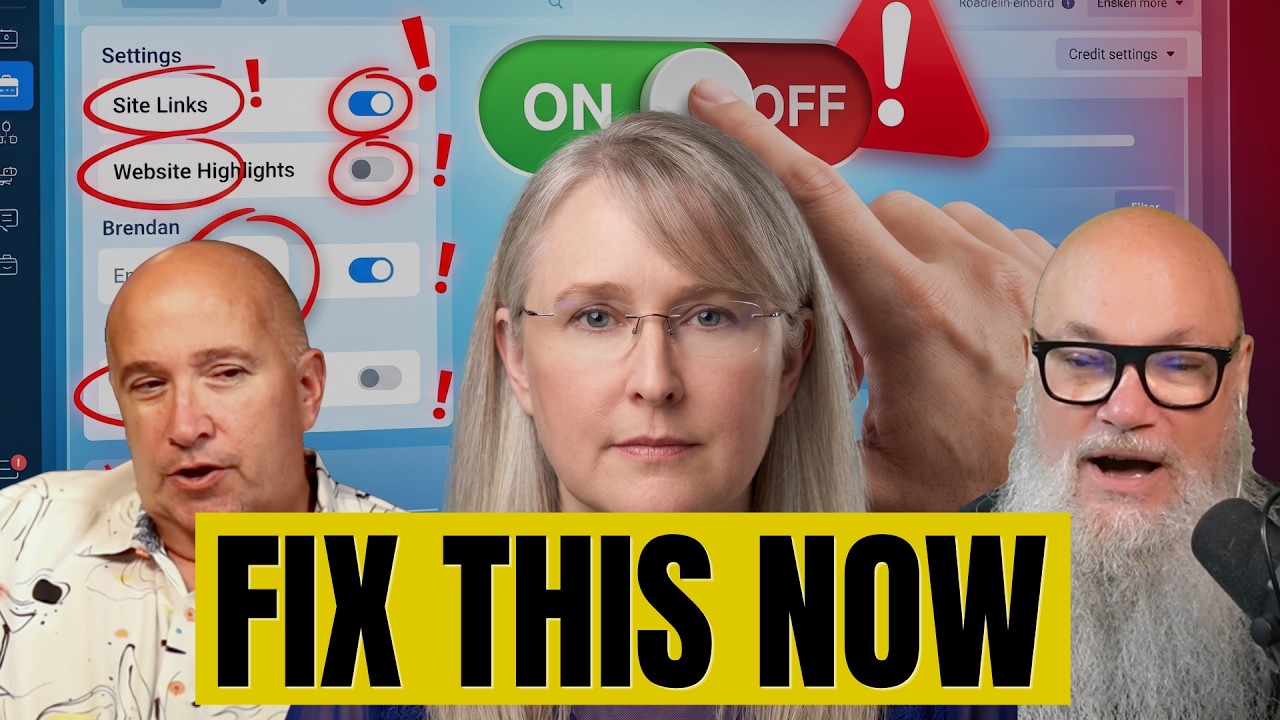
Meta's AI is Ruining Your Ads (Turn These Settings OFF)
Summary
"Meta's Ads Manager has hidden AI settings like Website Highlights and Personalization Destinations that you need to turn off to avoid creative disasters like showing random site icons or sold-out banners in ads. Boost ROAS by switching to a 'Just-in-Time' automated webinar model, jumping attendance rates from 22% to 75%. Use the 5-Pack AI Input Framework to create laser-focused avatars and authentic ad copy using just your voice."
Transcript
What makes a successful campaign these days? Funny enough, it's knowing a lot of times what to turn off. There are three different kind of strategies in Facebook, depending on what you're advertising. >> I've hired Facebook agencies before and very little is discussed. They just take it, they run your account, they take your money, you lose money, then you say, "I'll never hire an agency again." >> I've had people talk about this before where they said that they've tried agencies and it hasn't worked out. And almost always because those agencies were only looking at the first piece of the funnel. And whether ads work, it has to do with the whole funnel. The ads are just a piece of it. >> What about red flags? If you're interviewing and trying to bring on that Facebook agency, they answer a certain way that you just hang up. [music] >> You're watching Marketing Misfits with Norm Farrar and Kevin K. It is. >> Yeah, I was going to say you don't even >> It's almost out, but you know, I got my popcorn ready because we got a great podcast today. You said you're carrying the whole thing. >> You always complain and I ask too many questions. >> Well, you do. >> You can't get a word in edgewise. So, so yeah, exactly. I just drink some popcorn in >> and I'll let you talk to Victoria and just uh, you know, uh, and have fun. >> Okay. And if you want to be rude, that's that's fine as well. [laughter] >> All right. All right. I'll put the popcorn away. >> Okay. >> I'll put the popcorn away. But I know you've run a few uh you've done a little bit on Facebook, right? >> One or two things. Yeah. >> Yeah. So, I mean, I remember I dabbled for the first time on ads on Facebook like 10 years ago, and it's changed a lot. It's super sophisticated. I know some people say besides Google, maybe Facebook knows you better than any anybody else out there and can really hone in and target [music] the right people and because of their reach, was it 3 billion something active users or something like some crazy number like that? >> I think that's right. It's it's like and then you got WhatsApp and Instagram uh piggybacking on the back of it and their whatever they call it u threads that I don't think that's really taken off u as well as they had hoped but so it's a whole infrastructure of stuff and there's someone that when when I was doing my event in Nashville it's like I need to run Facebook ads but I don't want to learn this stuff I don't need to do this so I I talked around one of the masterminds I'm in and every all the the fingers kept pointing back to one person and that's who our guest is [music] today, Victoria Griggs, saying that she's she's the one you want to to do this. And so I I hired her and um I think she did a great job and she did an excellent job. Uh her and her agency, which is basically her um [laughter] and uh I was I was impressed. Uh so I think she might be able to share a thing or two with our audience about uh how to do Facebook. And and Norm, I hope you got your your notebook ready because I think you you'll have a few notes too for your cigar stuff. Kevin, >> you are my notebook. >> Oh, I am your notebook. >> Yeah, you usually take the notes and send it over to me. So, thank you. >> Thank you in advance. >> It's like the movie. What's that movie? The notebook where it was like a two lovers or something. So, is it like that? >> X day. Stop. [laughter] This is Victoria. Don't go down any other rabbit holes. >> Save Save yourself. Bring Victoria. >> All right. There we go. >> Hey, guys. By the way, I thought the same thing when you said, "Is it like this the movie?" I thought, "That's a love story." And then [laughter] what'd you get there? It's >> exactly what I was thinking. >> He wishes. >> I wish. >> Last time Noran tried to hold my hand, I told him, "No, not now, Norm. Later." [laughter] >> But maybe I should log off. >> Let you guys have a moment. >> Yeah. [laughter] >> I love your background, Victoria. You're you're kind of uh in in theme today. I love uh I love the the attention to detail there. >> Yeah, thank you. I you know what, you guys I have to up my game. I've been seeing your podcast. I got see gold jackets and cigars and slinky backgrounds. You guys have your slinky background there with lit signs. So, I had to up my game. I actually went and found this background just just for today. Just for today. It's a welcome to my bar. So, so those of you that aren't aren't are listening to this and aren't watching on YouTube, Norman and I have like a cigar lounge kind of with a chair and cigars up on the shelf and stuff as our background. And then so what Victoria did, she went out and she found a lounge. You see all the beer, all the the not beer, but uh looks like alcohol um bottles, >> booze bottles, >> really cool looking lounge. So, we're all in the lounge today, Norm. >> Very good. It's nice being in the lounge. [laughter] anything to anything to spice up Facebook and meta discussions. I tell you, [laughter] >> it needs a little boost, >> you know, but it's it's a pain point that a lot of people have because there's a lot of people that that try to run ads and they just don't have success and now Meta is actually doing more and more things for you. Uh so it's going to be interesting to get your take. But be before we we do that before you were this Facebook uh guru um you were working the corporate 9 to5 right >> I was you know what for 17 years so I 17 years I know I was kind of in the wool corporate I went you know grew up thinking that there was really no other no other path of go to school go to a good go to a good college get a job and do well and exceed up the ranks there and that was really the the the only thought that I had of what a career would be and um you know to my surprise I ended up kind of outgrowing that and I feel like a lot of people are there now but this is 2012 so from 95 to 2012 I started out in a corporate consulting background so it was one of the big six at the time I don't even know if there are how many there are left but Anderson consulting it's called Accenture now but I was there for about five years management consulting and then went into a string of startups here in Silicon Valley I still live outside of San Francisco so was in product management and marketing and finally got kind of itchy and made my way into my own agency in 2012 and pretty soon after that into Facebook and I've been mostly a Facebook only agency since then but I tell you those early days were pretty pretty formative. [laughter] So it's it took a while to shake some of the corporate I still still feel it feel it hanging on a lot of that mentality. So you're one of those 25 year olds being a consultant that doesn't know that has no experience but you're advising companies with very expensive reports on what to do. >> Well the good news is the good news [laughter] something like that. >> Well the good news is they actually it's you're walking through a process which is so funny now that you know we've come full circle to AI because they took us out of college and you know we went to a six-week boot camp and the sixe boot camp at a college. So, Accentra had actually bought a college that was in St. Charles, Illinois, shortly, you know, just outside of Chicago and they flew in consultants from all over and they had six weeks of they call it boot camp and you're kind of learning the SOPs. And so, when you go in, you're going into clients, huge corporate clients, and you're mapping business processes. And so you're interviewing and taking notes and mapping business processes and then as a team and the senior people figuring out how to use technology to make that more efficient. So, you know, yes, you're part of of advising companies, but you're kind of doing the leg work and the grunt work of mapping processes. And who knew that that stuff would come around to be pretty helpful these days with AI and the rest? Now, the way that you when we worked together on the Facebook stuff, the way that you approached it was that way is mapping a process and like the the way that you came about and did the stuff wasn't like, okay, what what's your ads? What's your you got some images for me? Okay, I'll I'll run it. It's like, no, you you built out a whole website like you went I mean, you vibe coded a whole website for for the brand. And I was like, you created like you went into uh one of the copywriting tools uh and avatars and you did all this really cool stuff uh which which mo nobody else would have done. Uh is that from that background of the corporate uh process type of thing? >> Oh, absolutely. So it's all I think in um I have probably I don't know if it's a good or bad thing, but I kind of have an unnatural love of Excel. I'm so sad it's going away and we just chat and ask about our numbers now. But um I love Excel and and flowcharts and it just makes everything make sense. And so you know part of that corporate background was the rigor of trying to figure out well what's the lay of the land before we implement and then being able to fall back on that to diagnose. So, one of the challenges that we had on your campaign, Kevin, was that you offer so much, you know, you your your uh events are crazy. So, so many good so many good things on there. And I think, you know, our initial version of the website, it was, you know, we know that when you're doing ads and and having advertising towards certain avatars, you really want to speak to what they want to see. Uh, and it was it was tricky because your website showed all of the amazing things that they could have regardless of where they were in their e-commerce journey. So, they could be just starting out, they could be a creator, not a seller, they could be, you know, multi-million dollar company and there's a home for everyone at your event and you did a really good job of providing value at every stage. It's just hard to communicate that all on one page. So I think early on when we were seeing some of the ads not doing as well as we wanted them to, we needed to take a step back and figure out what kind of layer can we put in front of that. So that's what we really started doing was putting a a vi vibe coded a website to go in in front of your main landing page just to help segment people so we could talk to them more specifically in the ads. >> Hey Norm, I've got a quick question for you. I'm trying to manage all my affiliate and creator programs from Amazon, from Shopify, from Walmart, but it's just a freaking mess. I mean, I've got reporting coming from here and there. There's all these different Slack messages. Do you know if there's like a unified dashboard where I can do this all in one place? >> Yeah, absolutely. And you're right, it is a mess. A lot of brands are complaining about that. But there is a place that has a solution. and it's called Lavanta and they let brands recruit partners, track performance, manage payouts, send product samples, and even run creator programs across every major marketplace all in one place. And guess what? Brands can spend less time on tools and more time making profit. >> Is that the one that you sent me a link for like a 10% off coupon their gold or enterprise plan a few few days ago? >> You got it. Oh, cool, man. I think I've got that link here. Was it lavanta.iomisfits? >> Yep, you got it. >> le v a n t a.iomisfits. >> Awesome. I'm going to go uh go hit them up right now and get that 10% off. >> Perfect. Me, too. >> Was it was it specific funnels that you were creating? So it's one funnel but actually there was a kind of a split page. So it was it was one website but it was basically find your path was on the main page and there were three boxes to find the path. So as they clicked on they did go to a different page. So in a way it was a funnel but you could the what makes it different is that you could still navigate to that in the menu. So, it was a little mini site that sat in front of the event site, but from that front page, we could direct them to a very tailored experience based on where they were in their business journey because like I said, you know, you were there, Norm. You know that uh you know, and you helped um it felt like you were MCing right along with with everything. And I mean, you guys put on such an amazing show together. It's amazing. So having sh talking about all that value from the Oracle bars of having people go and be able to ask questions and the booths and the breakouts and the um the creators showing the the people coming the what did you call it the it um I'm blanking it was the creator studio >> you had the the creator studio where they could broadcast and um >> some of [laughter] So what we did is we pre-qualified let them self-qualify by taking them to a landing page and then tailoring the message depending on how they self-qualified. So th those three options. So rather than trying to isolate them at the Facebook level and say who who are the people who aren't selling, who are the people that I mean we did that some of that too, but >> yeah, >> where you landed, you self-qualified and you went down a certain funnel and that increased the conversions and created the messaging and because we were having problems with people going, I didn't know that was happening. I didn't know that was part of this event because there's there was so much stuff there. So that just goes back to the point of you really got to segment and you really got to talk to who is your avatar and talk to them in the way that they they want to be be heard and you went in created those avatars. You took a lot of the information. So, you have me and this is an exercise that everybody out there doing marketing should do is you have me whether it's an event or your product or it's a um something that whatever you whatever you sell or whatever you're doing or trying to promote you have me just talk and talk into a recorder and I talk for like normal I can talk. So, I talk for like 25 >> talk. Yeah. 25 25 or 30 minutes just like describing it just just rambling on, you know, whatever came to my mind. And then we transcribed that. And then you used that as part of the the source material to actually help create the website. And to and then you went and created based on that you had another tool AI tool say okay what kind of avatar is this and describe the avatar and do some research and use Manis and some others tools and create these like okay these are the profiles and now now we need to speak to each of these profiles. uh and and that that was a process that I think a lot of people don't take when when they're creating their marketing that was uh first time I'd had someone an agency or someone that I working with actually [snorts] take it to that level. Uh and you know it could be taken to even much bigger levels but just that level made a huge difference and I think that's a step that a lot of people listening to this need to take. >> Can can we back this up just a bit? So I if you were working with somebody brand new, >> are there five or 10 steps that action steps that you would take? I've hired uh f uh Facebook agencies before and very little conversation. You know, it's very little is discussed. They just take it, they run your account, they take your money, you lose money, then you say, "I'll never hire an agency again." >> Oh, no. >> But normally terrible. Well, what's your process? So, how are you different? What are these steps that you would ask? I'm kind of curious. >> Yeah, absolutely. Well, actually, you know, Kevin's was a a good case study in that we started out with a a really strong offer. And by the way, not everyone is starting out with a strong offer, but um so a lot of times the process starts even earlier than that where I'm actually helping with funnel design sometimes. So depending on where someone is in the process, the overall I would describe it as done for you on the ads and done with you on the funnel. And sometimes people say, well, I know I need Facebook as a channel, but they don't really have their funnel dialed in. So maybe we're having funnel discussions and designs before we even run the ads. Or there's the case like what we did with Kevin where there's already a very strong offer. But regardless, I kind of go through the same thing where I break down and I have a a process that's largely driven by AI, but still at this point very human human-driven AI. So maybe I can uh you know, as these agents become uh better and better and my skills become better and better, I can automate uh more of it. But what I do is I'll take a look at um the offer and I start with um the sales page, breaking down breaking down avatars for the sales page. But I also um have what Kevin probably didn't see is I also do a lot with tone of voice. So not based on the sales page, I actually try to get tone of voice from the spoken word. So not only did I get Kevin's background on the event, but actually tone of voice analysis as well. So it's feels very authentic and genuine. So there's a really great three-step prompt. It ends up with about a 12page tone of voice document that um can really help with the ads. So I'll take in and have these I just separate out have an AI inputs folder and the AI inputs folder will have the transcript of the sales page any video transcripts a tone of voice analysis avatar documents and description of the promo and so >> how do you get the tone of voice >> so the tone of voice um there >> is that by reading reading what's been written or is that by listening to this audio or how does that the tone of voice get created? >> Yeah, good question. So, I prefer to take tone of voice from spoken material versus we can do a tone of voice on a sales page is how people write or an email how they write. But a lot of times those are generated by AI anyway. What I like are video or to um video transcripts. And even better if that video transcript is not someone reading a script that has been written written by AI, but is just kind of off the cuff talking. And um so I take the transcript of that and I run it through there's a three-prong process and I'll give credit where credit's due because I'm a big fan of that. But there's a school group automations by Jack and he did years ago a tone of voice which is to this day the best tone of voice analysis I've ever seen. And it's a three-step tone of voice analysis where it's such a big prompt that you have to break it into three. So you feed the the transcript in and it does and I forget the names of it and there's some like mezo and I mean there are like three different levels of tone of this tone of voice and so I do the first chunk and I get that and I put it into a Google doc. I run the second prompt, append that to the Google doc, and then the third and by the time it's done, it's a 12page tone of voice document that's really specific um to that to that person and even that promo because sometimes, you know, what we're talking about in that promo has a slightly different feel to it than the overall brand. It might be kind of um you know, not like a brand level tone of voice, but more of a promo level tone of voice or just a a particular person communicating with you. So that's that's a key piece that goes in. So I have this, you know, kind of folder of AI inputs and that can help drive the rest. And, you know, from there I I start to break out different angles. That's another thing that we did, Kevin, quite a bit of is broke out angles. So on this new mini site that we put in front of your event site, looking to see what angles were really resonating with people because there were beginners, intermediate, and advanced. So we needed to do quite a bit of of work on the angles, and those those are things that we can test pretty quickly in the ads, but then they inform the website. And then so you do those and then is there anything else to the process before you start running ads or that's the basic underlying? >> Oh, so yeah. So there's research, there's gathering all of this, which are my kind of my five main input documents, which is our tone of voice, the sales page, any any kind of transcripts or analysis, the um tone of voice, sales page, transcript, the avatar documents, and I'm missing one that I'll think of in a minute, but there are basically a pack of five. That's step number one. And then I'll use those to start generating angles. Um, so I look at angles from and I look at different um AI brains. So I'll go Claude, Manis, Po, Chat, GBT, you know, Gemini. I'll kind of get different feedback for um using these AI inputs, but I give all of them the same prompt. So basically say, hey, here's here are all these documents I'm going to give you and um I was going to say I could oh I'll I can share uh something in a moment here but anyway so here are these things that I would give you and what what angles would you test from that? So from there what I'm looking for are creative um not necessarily ad copy but angles and then for each angle I'll kind of pick the winners and say okay now you know maybe I had 15 angles in mind but for the first five now let's go and look at three different ways of testing that angle. So, I'll start to break down those um angles into different headlines and different ways of of talking and layering on different customer segments like that intermediate, beginner, or advanced. So, all of this happens before we run an ad. And then after we run an ad, it's kind of going back and refining it um throughout. So, most of I find that most of my the success that I'm able to see in Facebook ads actually happens outside of the ads manager. >> So, it's the foundational stuff that you're doing. And then do you use these these AI tools and these things that these prompts and these things that you've developed to actually then create the ads and create the images or influence the images or or is AI creating those or you going in doing it based on that or is it giving you a framework or JSON or how does that work? >> Yeah, good question. It is actually I would say all the above except me going in and I create things in Canva but I don't have the skills to create things in Photoshop but luckily the technology has caught up to me so I don't need to do Photoshop uh to be able to create some pretty good-look graphics now. None of us do right but that's the beauty of AI. So that is um you being able to direct. So the one of the the tips that I love is that I ask AI to help me brainstorm images and even if I have think I have something pretty good in mind I'll ask for give me you know three or five different ideas and once it gives me the ideas then I say okay create image number one and so I find that AI will give me much better output if I ask it to help participate in the suggestions and the design. So, it'll give me its own prompt for, hey, here's kind of an image I'm thinking about. And then when I say create that, it's way better than it could have been if I just thought of the prompt on my own. >> Is it just describing the image and saying, okay, woman sitting at a table with a coffee cup >> uh in a in a c a French cafe and you're like, "Yeah, that's cool." Or is it creating like a little thumbnail? So, you kind of have a visual of it. And you're saying, "Okay, make this higher resolution now." Or what's that process? >> No, it describes it actually. So, it does. And it's the thing about it is because I think that it has participated in kind of coming up with that suggestion. If I were to take that prompt and put it somewhere else, it doesn't always produce as good of a result is if I just stay right in that same like if I'm in chat GPT and I'll stay right inside of chat. Obviously in claude I'm uh well with design now maybe but I still it's design is still I don't think fantastic for images just yet. It's good for power or slides and things. I've tried it, but I haven't had great luck with just generate this image. But it's coming, I'm sure. But right now, I I love chat. I love Gemini. Um, and so I would take those prompts and put them into it. But when I'm in chat GPT, it'll give me an idea of it. And if I just say, execute that, I find that it does much better. Um, because it knows what it had in mind. It might give me a two sentence description and then it comes up with this really rich, detailed, gorgeous picture that it wouldn't have been able to do with just those two sentences. And I think it's because I'm involving it in the in the process in the creation process. >> Then you just then you could always just go back write a simple prompt for revisions as well. >> Oh, sure. Yeah. Oh, and and that's that all that always happens. Um I I had a uh a couple years ago I was actually running ads for an event and this is before you could edit. you had, you know, you couldn't go in and edit specific things and you um I was debating about whether to share my screen and bring it up because I think I still have a PowerPoint of it. It was kind of funny. I did a little uh I did a training course on on this five-step process. So, actually I can bring you up and show you the flow here in a minute. But, um it is I was almost ready to create this ad. And this is I don't know if you guys remember it was probably a year and a half ago Chad GBT like just had a massive um shift in how well it was able to create images and from that I was I was very excited about it. It was the first time it was really getting words right and so there were at the time like pretty sophisticated images for AI. So, I was almost ready to launch one and then I saw it and at the very bottom the call to action um which should should have said claim your free pass was claim your free ass and it to [laughter] me [clears throat] and I was like oh it almost got me. So I had to go into Canva and luckily Canva has the great AI tools. You can grab text from images and just edit the text. So I was able to fix it >> almost magic something right? Yeah, they have um there's a a thing of it's called grab text and so when you edit there's a a place in Canva that's their AI tools and just grab text and you can can highlight and fix it >> and it's grab text not grab ass right I'm gonna see just um out of curiosity if I can uh pull that up this is just >> I think the fifth one that you me uh earlier that you were talking about was that pain points >> you know what I did add the pain points but I actually added that after. Um, that was one that I I tack on to the bottom of the avatar. So, I almost consider that as part of the avatar now. Well, um, let me show you guys here. >> Uh, and the stage. There we go. >> Oh, there it goes. >> Yeah, >> now we see it. Yeah, we see it. >> Okay. Yeah. So, this is really the process, right? Um, there's this preparing and brainstorming angles. Um, and so this is the tonal voice analysis I was talking about, detailed avatars, the customer diary, all the promotion documents. And then this was the the fifth one was just any of the own research like going into Facebook ads library. Um, I love Reddit forums as well. So things like that. Um, but I just wanted to to show you this was a case study that uh we did for a fellow mastermind member actually. But this this 12 pages this shows you kind of what's in the tone of voice analysis. So, it ends up being quite quite sophisticated and long. Um, but I just want to go through and I will find to you guys. By the way, here is an example of I need your help uh with creating different ads. And so, I'll feed this in so you guys can kind of screenshot that prompt. I'll feed in the same prompt and those same documents to different AI tools and it'll give me some ideas. Sometimes it's the it's the angle first and then the ads. Sometimes it's just the ads. Um, and I work backwards from the angles. I like to try both angles and then ads versus um, sometimes when you just ask for ads, it'll put the the angles there anyway for you. But I do like to kind of ask for both. Um, and then iterating and brainstorming angles. But then what I'm what I'm getting to is the um, so these are ones that this is a year and a half ago. So these these are not good by today's standards, but back in the day they was like, "Wow, look at what AI can do these days." Um, but this was it. So this was where it almost got me. So check out the button at the bottom. >> Oh yeah, I [laughter] see it there. Yeah, >> it almost got me. Almost got me. So anyway, that was the one where I was like I was just so enamored. I thought, "Oh, you know, now you can do all this stuff with AI again." Year and a half ago. So take it for what it is. You look at those images now and you think, "Okay, they're not all that great based on what we can do today." But at the time it was a big step forward. Um, but that was I was loving the fact that all the other text was right and it almost got by me. >> Is there anything different that you're doing right now? So last year was old school. What about this year? >> You know what? It's funny because I think just like a lot of a lot of things in marketing, the process is the same, but the tools are different, you know? So it's still going and finding avatars. It's still I mean all of that core marketing stuff I think you still have to do. They're just good basic marketing principles. The what changes are how good of results you get back and also the tools that we would use. Um whereas before you know pri just prior to that promotion that I did um with someone that was uh and by the way the whole training they allowed me to do a a whole presentation on that case study. And so that's why I could share, you know, share the the details of it. [clears throat] But um back in the day, it was literally a few weeks before that I wouldn't have been able to create those images. I would have been an idiogram because idiogram at the time was the only one that could do text and chat GBT just came out and could do text. And now pretty much everyone can handle text. But and now the quality of the images are so much better in these different tools too. So I would say um that has changed. And I'm just trying to think if there's anything fundamental. Oh gosh, the big thing is the ease where I could spend a weekend and vibe code a whole new website for Kevin whereas before it would have really taken a long time in like high level or something to drag and drop and create something. So I think that has opened up as marketers and especially for paid ads it's opened up so many opportunities to be able to really tailor se segments and messaging and shift things on the fly. The the the number of things that we can split test now has gotten so much easier. um mainly because of the vibe coding like for Kevin we built his site in lovable and it was you know I don't have the skills to go and and build a website as gorgeous as what lovable create by me with me chatting with it. >> So that that [clears throat] was uh I think that's something that's also what you knew this year that wasn't there wasn't there before. >> So once you've got all this basic stuff done and you start running the ads what is the key that to running successful Facebook campaigns? Um, is it a margin? Is it or you don't really have the targeting anymore like you used to? I mean, yeah, you got some custom audiences and some things you can do on a on a smaller level, but all it's running a lot their AI is running a lot of it for you. And they're like, just give us what you want. Give us what you're we're trying to do and get out of the way. And so now, how does what is the key to running successful Facebook ads and why Facebook and not uh something else, >> you know? I mean, I'm a fan a big believer that all channels have their place and so Facebook may or may not be the best thing for, you know, whatever it is that you as the viewer are are working on. But a lot of times it is just because people that has so many people, you know, I think as we're talking about the was it like three billion or more like who knows it's a lot. Um I lose track of how many but it keeps growing every year and they say well the f I was looking at some studies that say well the growth has slowed. Well, of course it's slowed because they've gotten everybody, you know, like you can only contain that space, that pace so long before like they own the world. And so they're just about there. Um, and so but it still grows every year. It's amazing. And so Facebook, they have an extraordinary amount of data about people. Um, it is it's frustrating as someone, you know, I after I started my own agency, I I switched into Facebook ads pretty fast. So I've been a Facebook only ads agency for 2012 to we're in 20 14 years uh over over 14 years now. So I'm in the ads manager every day for 14 years. So, I see how it's changed and a lot of times it's a little bit frustrating because that control, a lot of the control has gone away. And Zuckerberg has obviously many times publicly come out and said that their goal is to put agencies out of business because they just want you to be able to give money and say, "Give me sales and make it happen." Right now, I I have no doubt with his resources and their amazing brains at FA at Facebook and Meta that they'll probably get there. But for right now, it's we're kind of in teenager land. So, you know what makes a successful campaign these days? Funny enough, it's knowing a lot of times what to turn off because it's like whack-a-ole. It's like a video game in there. You know, it takes me way longer to create an ad these days because I'm having to turn off so many of the weird AI things that it tries to turn on for us that as marketers we would never want to turn on. Like, I don't know if you guys have seen this, but they I mean, I'll just pick a couple. They have one that's called site links and it's an AI something that's added and it's added automatically most of the time when you create campaigns you have to deselect it and the site link is we will ignore where you want your ad to go and we'll pick a page on your site and send it there. >> Yeah. And I'm like who who thinks that would be a good idea? Like you your your whole ad is around this one thing. And the um the kind of the challenging thing that we see in meta right now and from an agency side is very challenging is that Meta constantly comes out with these new things and they come out like full boore it's just turned on and so if you have ads that are running and they release a new feature they'll just turn it on for your ad. And it's only if you go like three screens deep and there might be a littleformational thing that says hey we activated this. There may or may not be thatformational thing. Sometimes it's my client saying, "Um, I saw this. Is this right?" Like that site links. It had never been a thing. Had never existed before. I found out about it because a a client was like, "Why are we running an ad to the Otto page?" And I was like, "Wait, what?" Like, "We are not running an ad to the onetime offer page." The onetime offer page, I'm sure, just in case anyone listening doesn't know, but you buy something and then credit card on file. They say, "Do you want this other thing too?" And you go, "Yep." And whether it's a one click or, you know, have to enter it again. Usually it's a one click. But guess what? That page does convert better. So Facebook rightly looked at all the available pages and said, "That page probably converts pretty well. So we'll run the ad straight there." So I was like, "No." So I had to go in and edit the ad. But the the interesting thing is that when you edit the ad, if you make any changes to an ad, it takes away all of the social proof, the likes, comments, and shares, even if your edit is to turn off the thing that they turned on. >> So, it's becoming um you know, the running successful Facebook campaigns now, like I said, is really it's like whack-a-ole. It's really like what to turn off. Um, they have another fun feature of fun one that's called website highlights and they just pull in random pictures from your CDN, your content delivery network and show them as the main image in your ad. So, for instance, on um it could be an icon. It can be like a little icon that you're using on like your whole sales page. Maybe there's an icon on the side to illustrate a point that could become your whole ad image or >> that and I'm wondering what the hell is the people doing >> like these fools. [laughter] >> I just want to click on it like five times to charge them for being a fool. But that's that's the AI doing it. Okay. >> It's the AI. You know what? There was another one where it'll show you it'll show you kind of like, hey, these are some things that you know it could be pulling in. And one of my clients that they had in the background when something was sold out, they would obviously put a sold out, you know, they would change the landing page to say sold out. Well, that was one of the images that the ad that Facebook wanted to pull in as the main image that I would just run an ad to something that said sold out. So, it's, you know, it's frustrating because sometimes we don't see it until it's live. That was one that, you know, we caught ahead of time. But um there's another one where it was a a client where they have these beautiful tropical getaways for pickle ball and then they also have camps. So it was an ad talking about a beautiful tropical getaway to like Turks and Caos which is you know gorgeous crystal clear water and everything else. and the ad, it had pulled in an image from their back end which was like people in a gym in Ohio or something, you know, and it was like [laughter] it's like just these things do not match. So anyway, it's it's always very interesting um trying to turn things off. >> Hey, Norm, do you know any sellers out there that are just burned out doing this uh ecom game? You know, I I know a lot of people that have talked to us, you know, when we go to events, and it's not only that, they don't know where to start. And >> who would you recommend they talk to? The >> first one that comes to mind is is Quiet Light Brokerage. And here's why. They're going to build you up. They're going to understand your company. And at the end of the day, you're going to know how to maximize your valuation. So, the very first thing you need to do is go and get your free confidential uh valuation at quietite.com. They're going to ask a couple questions. Uh you're going to meet up. It's one- on-one with uh somebody over there and then, you know, let the games begin. Awesome. What What was that website again? >> It's quiet.com. >> Awesome. I'm going to head over there. >> Um in fact, I loaded up something that I would love to share with you guys. So, when thinking about this, um, I I wanted to there are a couple little things that, um, just tips for people who are running their own ads. I thought maybe I would share. >> There you go. >> Oh, goodness gracious. Sorry. >> Go again. [laughter] >> That's right. All my riches. So, I just have a test ad account here, but a couple things I wanted to show you guys. Um, one of the things that we talked about is that, um, by the way, let me just, um, orient orient you. So, this is a brand new ad account. Again, just a test. So, the way that campaigns, I'm assuming that most people know this. I know you have a pretty sophisticated audience, but a lot of times, you know, not everyone runs every channel, so I won't go too into detail, don't worry. But it's um, the Facebook is made up of campaigns, which have one or more adets. A campaign is typically kind of your target. an adset is who you're targeting and then your ads are the you know however many u different ways that you want to try to reach that audience. So that's your real content. Now above all of this they have um Facebook rec I'd say recently but maybe the last year year and a half they've snuck something in which is outside of these layers. They actually have something here called advertising settings which affect all of the campaigns in your account. So, one of the tips that I can share with people, and this is something that we did, Kevin, for you that I thought was really very helpful for us is at the advertising settings level, you can come in and assign your existing customers. Now, this this is you can either create a custom audience, and this is just your usual, you can upload a customer list. You can also, if you've already gone through and created audiences, just choose them in here. But you can assign, hey, here are my existing customers. and existing customers, however you define them. Typically, it's people who've paid you money. It does not include prospects, but it's however you'd like to do it. And then engaged audiences would be prospects. And again, however far you want to take that line. It might also include website visitors. You may also want to include people who've engaged with you in other ways. Um, but it's your it's your choice to be able to define those. But what I found is that the accounts um if they've been running a long time and they're doing great, I wouldn't rock the boat and add these later. But if your if things aren't working or if it's a new account, um definitely set these because what you can do it's it affects all of your campaigns. And the interesting thing is I was actually on Facebook the other day and of course um I try to keep my skills up. I take all kinds of training. You know, I love getting new ideas for what other people are doing on Facebook and how I can better my skills. And there was someone that was like this sneaky, you know, trick that like has all of your campaigns. And I looked and they wanted it was like $197 but yours today for only $49 and in five minutes you can make all of your campaigns perform better and I could tell just from the sales page that this is what they were talking about. It was just this sneaky thing where you can go in and set this. But I was like man I I need to do better about offers. Like I would not see an offer in this and someone was genius enough to put this whole like aha scenario into a whole sales page and charge money for it. Like that's fascinating to me. Um, but this is it's really kind of a sneaky thing because it's it's never been a thing before and they just added it here to your advertising settings. But now what happens when you create a campaign at the campaign level, you'll um one of the options is if you have set those audience segments, see if my uh machine wants to show me the edit button for this. Here it goes. um you can come in and actually it'll tell you that it's not defined because I have it obviously it's a test account I don't have anything in here but you can kind of once you have it this audience segment reporting is set at the campaign level and now when you run your ads first of all it will inform your ads to be able to you know rather than saying hey we're going to start with the whole population of this advantage plus campaign where they've taken away a lot of targeting strate a lot of targeting options and they run your ads to find your best people. This can help shortcut that process. And it really can give you higher quality, but also it lets you see, you know, maybe you're you're running a retargeting ad that you think is reaching your warm audience, but you can now break down by audience segment reporting whether it's new, existing, or engaged. And you can kind of see like, are you really reaching who you think you're reaching? A lot of times you're not. Um, and it's really interesting to be able to see that on a campaign by campaign basis. So it goes all the way down to the ad level for you to be able to see. >> So um that and that was one thing that um I know Kevin we had the conversations of you know are we reaching new people or is it just existing and we found that a lot of our existing targeted audiences still were reaching new people. So that's kind of a trick um a tip that I would give everyone that not everyone knows about is hiding in your advertising settings. And then one more thing because I I know it's we're short on time. This is not like a whole advertising class, but I do have one other little kind of [clears throat] I wanted to point out to people. So I'll let's try again here. >> Okay. >> All right. And so again, all I've done here is I've just loaded up a sample image. So I've come into an ad and all I did is kind of set my target. Oh, I did set it to be a website. Um this is something where they've kind of hidden it. it'll be under collapsed now and they try to get you to go to something on Facebook and your thing. But if you go to single and choose website, that was what I did here. And that opens up some additional AI options, which is why I I wanted to make sure to make that setting on the ads set. Um, but in the ad itself, if we start scrolling through here, it would be nice if they collapse all of the AI settings, but they don't. They're kind of peppered through and new ones appear in random places all the time. So again, I kind of come back to I know we're moving towards this completely, you know, wonderful world of hands-off advertising, but for right now, we're in like really rebellious teenager land where it's they just they do bad things to your ads. So, as we scroll down, something that you'll first of all see is this personalization destinations. This is um and if you click on edit, you have these things. This is where send each person to a page on your website that's most relevant to them. This is another option. This is addition to site links. This is where they just another one. And it look at this. It defaults to on. Okay. Thank you for telling us where you want to send the ad because you can enter the URL. But by the way, we're we're just going to send them anywhere. A page where they're most likely to convert. Um which ends up sending people to like the onetime offer page, you know, so you don't want that. Um so turn it off. Um, they have some of these other product browsing, browser add-ons, um, which is they'll send people to different places. The product browsing, I don't have the catalog tied to this test account, but that, um, also does some kind of interesting things. So, sometimes these things can be good. You know, maybe you want to choose some of these, but just know what they are and be kind of careful. So, there's a batch right here. And then when you come up here, look at this website highlights turns um, defaults to on. So, that's one of the ones I was telling you just pulls random pictures. So, first of all, promotions usually defaults to on. So, it'll be like email signup offers or promo codes. Well, that may not match the promo that you're actually promoting. So, you want to be careful with that. If you do want to use a promo code, actually come and set it. Um, again, I don't have a catalog, so it didn't seem to like that. So, let me not click on that. Um, but branding, it'll try to pull in some of your branding colors and things, but this is the website highlights. So, I'm just um this is a it's funny it can't find any images right now because I'm on it I think because this is a lovable site. It probably doesn't dive into that that um the CDN, but typically you'll start you'll see here it defaults to on and you'll see like little, you know, the icons that you use for bullets. You'll find again that sold out image. you'll find like all kinds of crap in here that is like it just will pull and pick and choose from those things to show as the main image on your ad almost always go and turn that off. Um the other thing for products and this it'll just start showing other products. So for people who are doing ecom this could be a big problem if you have certain things that are on sale in in your ad and next thing you know your ad is talking about a sale and it's showing products that aren't on sale. So that can that can cause a real customer service issue. So that's something here that you really want to, you know, to kind of take a look at as well. Now, as you go through here, this is um if we were to load an ad and let me just, you know, um if I let's go ahead and I'll edit edit the media. So this is, you know, we'll just choose that one thing again. And we go through this is that one page that has a creative setup where I can crop it. um it it'll also try to give me different if I start to type in it'll give me different AI um generated text and things but then it it kind of gives me some different stuff here. So sometime it used to be they were all laughably terrible. Now sometimes they're pretty good. So I might choose one or two of these. They actually also have something that we don't see here but they actually have a video generator as well. But here's one thing that I wanted to talk about. So they call it visual touch-ups. It sounds really good. Um, but until you look at it and it says, I don't know why, um, it is being very glitchy here, but this visual touch-ups, it'll it says it basically will crop your images to fit more placements, but then you end up with like text that's cut off and and weird things. So, visual touch-ups sounds good until you really look to see exactly what that means. Um, some other things to just be aware of here is uh reveal details over time. This one, if they pause on your ad, will then start to reveal your landing page over top. Sometimes you want that and sometimes you actually want to get people to your website so you can pixel them and get them in an audience. So, choosing that actually takes away the power of your ads. Um, so those are just a couple of the a couple of the ones to be aware of in that. Another thing that they'll do is they have related media where if you've run ads in the past, they'll pull in the ads that you've run in the past and say, "Want to use all these with that with this particular ad to?" Well, no, you hardly ever do because those ads were for something else. And so, that's another one you have to go and kind of um that defaults to on and it defaults to a collapsed setting that you've got to go and dig out and turn off. So, u one last area and then I'll I'll stop, I promise. Um, but this is where you can go back into that um these other, you know, area pulls up that same kind of but an expanded set. Notice there are more here that were that were um available before an expanded set of things that you've got to kind of go and look at and turn off. So, it really is kind of an interesting time in Facebook where they're adding more and more of these features all the time. And it is uh it's so it's trying to trying to stay on top and not and not look like an idiot in front of my clients where they're like why are you running an ad to the Otto page? >> But what about that small solar prneur who's trying to use Facebook like looking at all this? I'm not a big um Facebook ads person at all. That's a very that's a weak point for me. I know my strengths. [laughter] >> Yes. that going in there and and trying to do something, I would have messed up. I would have just thrown my budget out the window. And a lot of solarpreneurs, entrepreneurs will try to do this themselves to save a buck from going to an agency. >> Yeah, that's right. And you know, and in all honesty, I'll tell people when they're just getting started, >> it's okay to run some, you know, to to run some things your yourself and you probably should to kind of know a little bit about how they work. Um, and there's a point where, you know, as where I think it makes sense to bring in an agency because these one little thing that's different, one sold out image that comes pulled [clears throat] from AI onto your ad can ruin your ad campaign and literally cost you hundreds if not thousands if you know you don't really catch it in time. And so, in those cases, I think it's worth an agency. But a lot of times, if people are just getting started, I think, you know, when in doubt, it's turning everything off. Some of those things, you know, I I highlighted some of the egregious egregious things that could really harm a campaign. Some of those things are good. You can extend the life of a campaign by having by allowing some more AI images. Facebook does really like some of the its new its own features. It loves its own cooking, you know. So, it's like, hey, if you want uh if you if you use some of our images, I see kind of better results with that, assuming that they are good-look enough and they don't have six fingers or weird. For the longest time they had like weird long forearms. Like the forearms were two feet long. And I mean they just had the fingers were right but the forearms were creepy creepy long. So um and now it's doing this thing where if I have a male figure in the ads the AI will show me suggested images where it's like the man's face with long curly hair and earrings. Like they're kind of like a really bad man in drag. Like they didn't try very hard. You just like put the wig on and put some earrings on or whatever. I mean, I'm sorry if that's not PC. I apologize, but it's uh the images are are really kind of strange that it comes back with sometimes, but I think, you know, if you're just getting started, turning the ball off is probably better than than allowing. There is a setting at the top of in that same advertising settings. There's one where you can opt out of all things AI. Um, and that but two things with that. Um, and it's it's known on, you know, in in Facebook world. In fact, I saw it on the Google overview as well. It's like you can set this, but sometimes Google will just flip it back on and then sometimes it doesn't respect it. Um, anyway, and then certain features aren't even covered by it. So, at least 80% coverage you can go and say, I don't want to participate any of the AI settings, but you do still want to go in and don't click just kind of click through, I think, is maybe the a good lesson if you're getting started to turn everything off. Take the time and go through and look at all of those details. And if you don't know what they do, it's just better to keep them off. So, how do you how does someone hire a Facebook agency? I mean, I I know you've you've come out in the past and said, "Anybody that's charging by the hour is is crazy and you don't you don't like that model, [clears throat] but how how do I evaluate if I'm a marketer listening to this like, all right, like Norm said, you know, this is not my forte. What what how do I bet an agency? Is it based on price? Is it based on how they bill? Is it based on past results? What What should I do if if I'm new? If you were hiring an agency to run your ads um and not knowing anything, what would you look for? >> You know what? I think you're right. Um in terms of past results and you know asking just like you did, you went and said, "Hey, who would you recommend?" And there's something to be said for just, you know, people who've kind of tested them out. Some things that I would look out for are people that have big teams. I might be a little I'm a little biased because I'm a soloreneur operator. I really love I like getting in there. I like the combination of analytics and creativity uh for Facebook ads. When I was in corporate, I ran a team. When I started my own company, I didn't want to do that. You know, you can you can kind of build what you want. I didn't want to manage the people. I really like the craft of it. But a lot of times, you know, the there are some people in the agency who have a lot of experience, but you know, the people working on your account maybe don't. You you know, you kind of get with a junior staff member. That's pretty common. Um going with a larger agency. However, if you have a really like thousands of products in your product line and you need hundreds of creatives, in that case, a large agency with staff and team members to divvy up that workload could be a benefit. So, it's not a one-sizefits-all. Um, but really understanding your, you know, what what you're working on and getting, I think, you know, just feedback and recommendations that's specific to your industry. Another thing that I would caution is I think that there are three different kind of strategies in Facebook depending on what you're advertising. There's kind of the high ticket coaching, consulting, leads, um, event, you know, kind of lead genen. There's e-commerce. Those are very different ad strategies. And then local, that's also very different ad strategy. So, finding people with experience and what it is that you're working on. So, I work with high ticket coaches, consultants, lead genen kind of agencies, and e-commerce. Um, I don't really work with local businesses like how to get people into a pizza shop. I would not be the right person for that. I just don't have experience. There are people who are great at it. Or, you know, how to sell this listing. I haven't done real estate ads. I wouldn't be a great person for real estate ads. So, I think it's, you know, going beyond just is this a good person, but do they have, you know, just like anything, I mean, I'm think saying anything revolutionary, but especially in the ads manager with how detailed it is and how many individual settings that you can do. You know, there are so many different types of campaigns and uh each type of campaign performs pretty differently. So, a campaign that you might do for a local business, like, hey, if you're in the area, pop something up for geo fencing, like, hey, give me a little notification if I'm in the area. That's a very different type of campaign than an ecom or a lead genen. So, finding people with experience in exactly what you're working on. And I in at at the bare minimum, there's three buckets: lead genen, ecom, local. What about red flags? Where do you just run? Like you mentioned a couple, but is there anything that if you're interviewing and trying to bring on a a Facebook agency, they answer a certain way that you just hang up? >> Yes. So, I think a couple things. One is if um if they don't appreciate the full funnel. I've had I've had people talk about this before where they said that they've tried agencies and it hasn't worked out. And almost always because those agencies were only looking at the first piece of the funnel. And whether ads work, it has that's why, you know, it it has to do with the whole funnel. The ads are just a piece of it. One of my one of my pet peeves is when someone says, "I tried Facebook and it didn't work." Like, well, what didn't work? There about eight or 10 steps in that funnel. What didn't work? You know, was it the ads that didn't get the click? Was it the people not showing up to a strategy call or like was it that they abandoned the cart in an ecom situation? So, there are fixes for every piece of the funnel. And if someone doesn't appreciate that and want and actually want to have visibility into all of it and they say, "No, no, I only do ads." That to me is a huge red flag >> because I don't think that they're >> I don't I don't know how I mean like it actually almost gives me heart palpitations to think about Bernina campaign where I couldn't see the rest of it, you know, because I'm like I'm just too much of a control freak for that. But I think your person running your ads should be because that's what you care about as business owners is is it making me money or not? And if there's a handoff where all they're saying is, "I'm getting you clicks." There are a lot of ways that clicks do not equal sales. And there are a lot of fixes for it. But if they're not looking and tracking that, then they're probably not the best fit. That's that's a big red flag. >> Very good. >> So webinars are one of the best sales channels out there. And people will still say from Dan Kennedy to to you name it like webinar is if you need especially on a high ticket type of thing >> webinars are where it's at. You do a lot of cold traffic cold Facebook traffic to a webinar for >> a couple [clears throat] at least one client I know of and maybe maybe more. >> Yeah. A lot. >> Yeah. Absolutely. >> What is what's makes those work? So, walk us through like a a short case study of like, okay, I've got a $1,000 a $1,500 thing I'm selling and I I maybe I have my own list. I can go out to those. That's what Norman and I do for Dragonfish. If we want to do like >> if we want to do something for you know whatever a webinar of ours to a cold audience and we want to expand our audience and we want to get >> we know that if we have 200 qualified people on a webinar you know based on our history and whatever we're going to convert you know 20 10% of those into a paying client. I'm not worried about that side of it. I'm worried about getting the right people into the webinar. What does it take on Facebook to do that? Is it a certain price point like this not going to work if you have a $49 price point or this will work if you got a $1,500 price point, a 10% conversion, you know, you can spend $15,000 on ads. What walk me through some of the things that someone would need to be thinking about if they you want to use Facebook to drive cold traffic to a webinar that will convert, likely convert. >> Yes. And you know what? I am um I'm going to share with you something and I mean I'll be happy to share this with your viewers as well. Um okay, here we go. >> So check this out. Um I created something with a friend of mine, Jimmy Harding. We promoted it to his list and I created the content for it. And so 2015, however, people, you know, this webinar to strategy session has been around for a long time. So the first thing is choosing the right funnel for your type of webinar. So, um, with an automated or live webinar, your the way that your, um, the way that it lays out is a little bit different. And what I want you to do is just kind of I'm not going to go through the details, but just kind of look visually. These are different um, funnels, right? Based on whether you are running an automated or live webinar, whether you allow them to choose to watch it now or later, or whether it's always a just in time automated webinar where it's like starting in 15 minutes. And so the funnel is a little bit different from for each one of these which means that the tracking needs to be a little bit different as well. And what we do is um we have a revenue model. The revenue model is just from the left to right your ad spend and then the you know what does a user do? They they click on an ad there you know they might they register you have a certain attendance rate a conversion just your typical stats all the way through the funnel. So, usually, especially for webinar campaigns, you really want to plan it out and have it work out your numbers on paper before you run any ads. So, let's just say that your you mentioned it was 15 it was a $1,500 um it $1,500 amount per sale. Well, if you were to hit industry averages here, then you would your immediate return on ad spend would be um 50% back. So, you're spending a th000 in ads and you're getting 1500s if all you did was meet the minimums. So you know that let's say a webinar registration page about 25% you know is standard maybe it's 30. However one of the key things is that if you're doing a live webinar it's really hard to get people to sign up and show up. That is actually almost down to 25% these days. It used to be 30 back in 2015. Now it's 22 25% sometimes. However >> 40 to 50 on ours. >> You're that's amazing if it's like a future schedule. One of the ways that normal non-hero non-heroes can create can get some good numbers here and change the math is by offering a just in time option and you can take that attendance rate up to all close to 75%. And now you take a 50% return on ad spend campaign and make it now a 200% return on ad spend campaign. But that's by actually tweaking the funnel and agreeing on targets beforehand. And then as we run the ads week over week, there's actually a version where it you have the actuals here and now we say, "Okay, these actuals compared. What's the KPI that's the most offtarget?" And that's what we're going to work on as a team today to fix or this week to fix. So if the issue is in the ads, okay, I'll take, you know, we'll see what I can do to optimize out on the ad side. However, if it's well, people aren't showing up to their strategy sessions, well then what SMS can we do? Do we need to do some retarget specific retargeting ads or do we want to follow up with the book a call funnel or their email strategies? But we look at that as a team and say what can you do? What can I do to help push people through the funnel so that we jointly own the success of this ad campaign? It's not all just the ads. And that's why when you're asking me what should a good media buyer do, a media buyer, your job isn't to stop here. It's actually to work with your client to help make the money. So you need to really have visibility and insight in the planning process, setting the targets and then monitoring week over week and making sure that you're hitting them or working together to optimize it. So it becomes it becomes very collaborative and not like you know I feel like there's a lot of fingerpointing with you know the media buyer versus non- media buyer and I hear stories of you know you're sending me bad leads well these leads aren't bad like you avoid all of that if you're on the same team working on the same numbers and the same sheets. Hey, Kevin King and Norm Ferrar here. If you've been enjoying this episode of Marketing Misfits, thanks for listening this far. Continue listening. We got some more valuable stuff coming up. Be sure to hit that subscribe button if you're listening to this on your favorite podcast player. Or if you're watching this on YouTube or Spotify, make sure you subscribe to our channel because you don't want to miss a single episode of The Marketing Misfits. Have you subscribed yet, Norm? >> Well, this is an old guy alert. Should I subscribe to my own podcast? >> Yeah, but what if you forget to show up one time? It's just me on here. You're not going to know what I say. >> I'll I'll buy you a beard and you can sit in my chair, too. We'll just You can go back and forth with one another. Yikes. But that being said, don't forget to subscribe, share it. Oh, and if you really like this content, somewhere up there there's a banner. Click on it and you'll go to another episode of the marketing misfits. >> Make sure you don't miss a single episode because you don't want to be like Norm. >> All right. Well, we are at the top of the hour and Kev, do you have any other questions uh for Victoria? >> I've always got questions for Victoria, but I guess >> not don't pull up another file. Don't pull up. >> Don't worry. No, no, it's all good. All good. That's it's really really good stuff. I mean, Victoria is just full of experience and full of knowledge. I mean, we could pick our brain for a while, but if someone else wanted to pick your brain uh and and maybe reach out and find out how they could work with you or what you're up to, how would they do that? >> So, it is victoriarketing.com. So, you can head to the website. Our email is probably the best. Victoria straightlinemarketing.com. spelled just like it sounds. S e r a i g h straight >> linemarketing. [laughter] >> You'd have to grab that first. [laughter] >> You got to claim the free ass before you get the free ass. [laughter] >> We started on this note and we're ending on this note. [clears throat] Full [laughter] circle. Full circle. >> Expect nothing less from you gentlemen. All right, we are at the end of the podcast and at the end of every podcast, we like to ask our misfit if they know a misfit. >> I do know a misfit. I know two misfits. Can I say two or is this just one? >> Okay, so two misfits. You may have already had um this wonderful person Kristen Rushman on. I work with her and several clients. She's an amazing uh email marketer. >> And then also Damon Darnell. He teaches people how to start and grow businesses with drones for aerial photography, videography. >> Oh, very good. All right, Victoria. Well, thank you so much for coming on the podcast today. >> Thank you guys so much for having me on. It's been a blast. I appreciate it. >> Great hanging in the lounge with you. >> Thank you. Welcome to our bar. Come anytime. >> And I grabbed Kevin's ass, too. >> That was me. [laughter] >> All right, Victoria. We'll see you later. Thank you. >> Thank you. Man, there's so much to know when it comes to marketing, Norm. Every time we have a guest on, it's like both of us are pretty experienced and we've been around the block and a lot of things, but every time we have a guest on, it's like, damn, >> another thing I don't know, another thing or it rings a bell, you know, on something else that we're doing. >> Um, it's just it's crazy. >> But, you know, it reminds you how little you do know. you think you know a lot about marketing or you know in [music] your niche or whatever it is and then you see something like this and I know that I I probably would have said something when I'm launching a product. Oh maybe I will do this myself. Facebook is easy. Well this is why you hire experts. It's crazy to try to do it yourself. like the money that you would put out just for those couple of buttons. I mean, you just blow it. >> Yeah. You you spend that to an expert and let them and the good thing about someone like Victoria, she's not just a lot of agencies are are okay, here's my money, run my ads, and they're like, "Okay, we'll make either you give them the ads or they'll make some ads." And that's the extent of it versus her going like, "Let me understand your funnel. Let me let me get this foundational stuff built and then we'll build it up from there." That's just completely the way it should be done, but the way most people don't do it, right? >> And [music] she's not charging any extra for that. It's not, you know, it's just part at least it was part of her fee, monthly fee that that when I was using her. So, it it's it's great. Speaking of, if you want to know a lot of information, we have uh something like if you don't have time to listen to [music] the Misfits podcast, shame on you. You should be every every Tuesday. But if you don't or you want to supplement it or remind yourself of things that we've covered, you can always go to misfits.news. That's the new newsletter that we we started about 2 months ago. It summarizes uh topics based on the current podcast, past podcast. It's a great way to get a lot of actionable nuggets really, really fast and to remind yourself of things that you might have heard on the podcast or stuff that you just you missed. Uh, so it's at misfit.news, but you know what? If you can, you should be listening or watching to the podcast, too. How do they do that, Norm? >> You can easily go over to YouTube [music] and check out Marketing Misfits podcast for all the long episodes. But if you don't have time and you just want the 3minut or under clips, go [music] to Marketing Misfits Clips. And you can also, you don't even have to remind me this time. You can also go to Tik Tok. We have a large selection of clips over there as well. >> That's That's the tick tockers, right? >> That is what you call the tick tockers or >> the t the talkers. >> Yep. Yeah. As you uh call it, the Googles, too, right? >> Oh, yeah. Yeah. Well, we're not on the Googles, are we? We're just on the on the talkers and the YouTubers, right? >> That That's exactly I think where we're at. >> On the two talkers, not not on the Googles. But uh uh but we're always here every Tuesday with a new episode and new episode of the newsletter every Wednesday. So if if you're not subscribed to this channel, hit that subscribe button and go while you're at it, go subscribe at misfits.news. Otherwise, we'll miss you next week. But hopefully we'll see you cuz I I got a little dorm and I I want someone to share the pain with. So please show. [laughter] >> All right, everybody. We will see you later. >> [laughter] >> Take care. [music] [music]
This transcript page is part of the Billion Dollar Sellers Content Hub. Explore more content →