Podcast
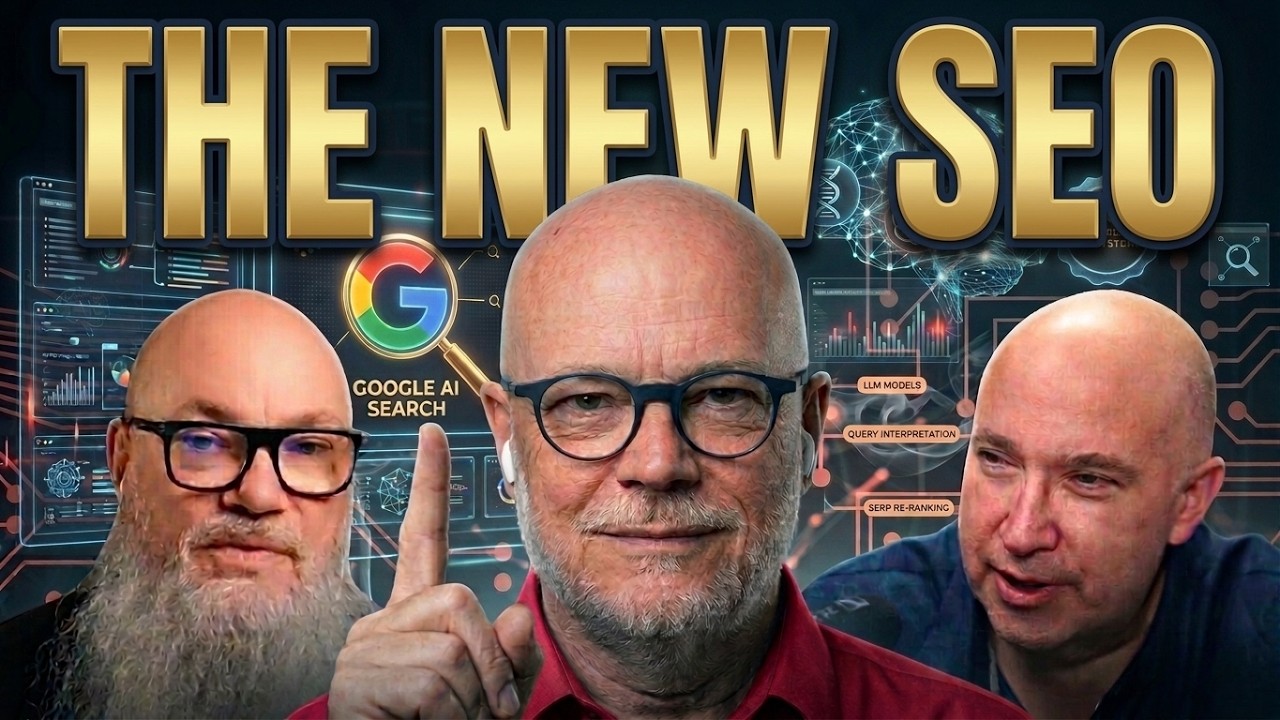
How to Hack Google’s AI Search in 2026
Summary
"AI engines like ChatGPT are your untrained salesforce—educate them on your brand or they'll promote competitors. Transform AI from just a search engine into a narrative controller by optimizing Google’s Knowledge Graph and product pages for machine readability. Avoid AI-generated content pitfalls by acting as the orchestrator, ensuring your brand's creativity shines through."
Transcript
I have my telephone with me. If I go into the coffee shop next door to my house and I never go back again, Google knows it. That's an implicit bad review. >> What are some of the big mistakes some companies are doing right now that could haunt them in the future? >> These AI engines are your untrained salesforce. They're going to sell for somebody. You need to train them to sell for you. >> If you don't have a Google business profile, you basically don't exist in an AI world. >> SEO is the foundation. It's the [music] core. We still need it. And because all of these different engines still feed off the web, we still need to feed the engines the same way, which is the web. >> Where a brand should even start today. >> The problem that a lot of companies are going to have in the future is the reputation they brewing today. They just haven't realized [music] it yet. So be very careful. >> You're watching Marketing Misfits with Norm Ferrar and Kevin K. [music] >> Mr. Ferrar, what's what be happening to you? >> Kevin, look. >> You're back in your studio. >> I'm back in my studio. >> No more. Well, now you're going to miss Dallas sitting in the chair behind me all the time. But >> I know I'm going to miss my buddy. What? >> Now I got to look at the Marketing Misfits logo behind you since. So, what happened? You your computer crashed and you had to get something rebuilt and I don't know. You had some sort of drama going on. >> Yeah, like usual. You know, that's the type of guy I am. But no, the computer just went. And then when the computer went, the way this this is set up, everything, the cameras, the sound, everything's plugged into this computer. And this is the podcast room over, you know, just about 6 ft away is where I work. So, I had to switch over there until the new computer came in. Finally came in. We're good to go. >> Oh, that's right. You're in Canada, so it takes like 3 months for something to come in. No, it's also called being lazy and not ordering. [laughter] >> That'll that'll that'll do it, too. That That'll do it. That That'll definitely do it. Um but I'm I'm glad you have it now and you're back in the real world and and now now on whoever's watching this on an 85 in television uh can actually enjoy it instead of going, "What is that crap in the background?" >> And getting [music] distracted. Look, >> the only You know what? You have to realize your face was in the background, too. So, be careful what you say. [laughter] That that's true. But speaking of backgrounds, you know, and I just read a quote somewhere like if you don't have a Google was it Google business profile, you basically don't exist in an AI world. Uh and there's a few more things to that, but you don't want to be in the background like Norm has been. Uh is I mean you're big in this stuff. I mean you're like you've been telling this horn for like I don't know ever since I've known you. like Google business profile you've done presentations on and people roll their eyes >> presentations roll their eyes and like yeah okay I'll get to it and they never do >> they never do and they don't understand it so that's why I'm really happy to have our guest on today >> and you said you've been stalking him for like ever right so >> no he said I've been stalking him so >> Oh he said you've been stalking him so he you've been follow following our our guest today uh for for a while that must mean he knows something uh so that's going to be it's going to be fun I think talking to Jason. Uh, Bernard [music] is going to be uh I think I think everybody's going to learn something today. >> Let's bring them on. >> Let's do it. >> Hey Jason. >> Hi. >> How you doing? >> I'm doing very well. I'm in the south of France. It's early evening and life is pretty cool. >> That's awesome. >> Very nice. Very nice. Is that home for you? >> Yeah, I've been in France for 38 years. >> Wow. Perfect. As long as I've grown my beard. [laughter] That's >> Wow. Yeah. Okay. >> Um, >> yeah, >> you're you know what? You're one of these people that I've been following forever. Like Kevin said, I've preached about Google business profile, plus Google My Business. [music] >> And every time I talk to people about it, they all say, "Okay, that sounds really great, but what do you do to rank?" And I'm sitting there going, "Oh my gosh, like local SEO. Come on, people." And I bet you, Kevin, what 1% maybe take advantage of anything that we tell them about that. >> Yeah, it's very a very small percentage. I mean, we're in the e-commerce world and a lot of these [music] guys, so they they look at, oh, that's just for the local Domino's Pizza or something and that's for the local guys. It doesn't really matter for me. And I'm like, the norm's always like, no, it actually can make a huge difference. And and it's even more important now in a world of AI >> uh to to do that. and and just just like the schema that we've talked about on a we probably talked about some of this on AEO and you know the >> the what is it the such as command or like something like same as same as command and all those kinds of things. >> That's basically what Google is doing is you're creating this spiderweb of all these links and you're just laying it out for them and people just don't do that. >> No 100%. And that your your your point is [music] 100% on point. Uh I've been working on entities [music] and figuring out how Google functions in its little brain since it decided that it wasn't going to look at strings. It was going to look at things. So it's this whole idea of saying instead of just counting the words, which is what it used to do up until about 2015, it's going to try and understand the world in a meaningful manner. And Google Maps is the first and biggest example of that. It's well I if you don't know what a knowledge graph is, it's um an encyclopedic understanding of the world and Google maps is the biggest example and the most detailed example and Google have built that over the years and it's phenomenally powerful. And somebody told me a phrase a few years ago. I hope I can still remember it. It's it can solve geospatial queries that it has never seen before in a matter of milliseconds for a specific requirement or demand from an individual person that it has never heard before and that's unique in humanity. >> Wow. >> Yeah. >> So what what >> Yeah. >> What's that saying is it's saying I'm a human being with a specific need at this specific moment. It can figure out where the solution what what I'm looking for where the solution is and get me from where I am to where the solution is. Imagine how complicated that is for a machine. >> Now, can we before we get into all of this because we're going to go down some pretty heavy rabbit holes. Can we hear a little bit about your background? >> Oh, right. Yeah. I'm a rock musician. Played punk folk music professionally in France for years as a double bass player. my double bass is sitting over there in the corner. Um, so my career is music and then I made cartoons for kids. I moved to Maitius in the Indian Ocean, made cartoons for kids and now I'm geeky person expert in all things Google and AI. >> And you were mentioning a little earlier before we came on that you're actually a keynote at their conference, aren't you? >> Yeah, Google Marketing Live. They got me in to talk about SEO. So, being hired by Google to explain how to do SEO in front of an audience that Google have gathered together for one of their conferences is super super lovely and I'm honored, but at the same time um what's the word? treading treading a line between things that I know we can do and things that I'm allowed to say. >> Right. >> Jason, they'll have the 7se second delay on, right? [laughter] Down one road, they'll just pause it. Well, I mean what one of the things is what Kevin just said is that's definitely something that you're allowed to say is if everything is consistent across the internet about your particular local business, your own person, your company, your product, whatever it might be, that clarity and consistency is what's going to move the needle. And fundamentally, that's what it's all about is who are you, what do you do, who do you serve, why are you the best, and are you clear and consistent over space and over time on that message? And if you are, the machines will get it. >> Hey, Norm, I've got a quick question for you. I'm trying to manage all my affiliate and creator programs from Amazon, from Shopify, from Walmart, but it's just a freaking mess. I mean, I've got reporting coming from here and there, all these different Slack messages. Do you know if there's like a unified dashboard where I can do this all in one place? >> Yeah, absolutely. And you're right, it is a mess. A lot of brands are complaining about that, but there is a place that has a solution. It's called Lavanta, and they let brands recruit partners, track performance, manage payouts, send product samples, and even run creator programs across every major marketplace all in one place. And guess what? Brands can spend less time on tools and more time making profit. >> Is that the one that you sent me a link for? like a 10% off coupon their gold or enterprise plan a few few days ago. >> You got it. >> Oh, cool, man. I think I've got that link here. Was it lavanta.io/misfits? >> Yep, you got it. >> le van na.io misfits. >> Awesome. I'm going to go uh go hit him up right now and get that 10% off. >> Perfect. Me, too. So, why would Google, you go in, you create your own uh knowledge panels and profile and all that stuff. Why would they trust you over trusting everybody else? Uh versus, you know, like like uh if someone's selling on Amazon, people trust the reviews more than they trust what the the company says about the product. So, the same thing on Google. If I can go in and I can say who I am and say where I'm linked to, is that just the starting point for Google? And then they go out and they get all these other uh signals from YouTube and from social and from other posts. And that's the old story about backlinks. I mean that's how backlinks became I think probably became to be uh such a a major thing in in in its period for ranking is because the more people that link to you the more credibility that was people basically saying hey you're credible and so Google gave that some weight. uh you know that that's all changing now but but it and I remember when Google first came out you know it popped up on my screen like 1998 or 1999 or something what is this changing from you Yahoo's uh directory type of thing or Alta Vista or some of those guys and it just I think of the 2015 you're talking about it was sentience uh where it's could figure out you know related stuff. So how has Google evolved? There's been like I think someone said there's like 11 or 12 iterations basically of Google or maybe I have that number off but can you walk us through a little bit of how it's evolved over time just for people that might be too young to remember. Well, and there were a couple of points that are really interesting. What what you just uh what you just said is links are actually a measure of popularity and that's a really important distinction is links were used to try to measure authority but it's always just been a measure of popularity. So you can take a terrible terrible newspaper in the UK it would be the Sun. Nobody trusts what the Sun says but it's got a lot of links. So it's popular but it's not actually trustworthy or authoritative. So links had that limitation. It was a purely a signal of popularity. And the the new era we're living in is an understanding of the world. So Google understands who I am. And you can see that by searching my name on Google and it will show you what you mentioned a knowledge panel. It will show lots of information about me. It's incredibly confident. If you ask chat GPT, it will say that I'm a world's leading expert in digital marketing etc etc because they understand who I am much in the way a human does. So today for me it would be much more valuable than a link if Norm you said Jason Barard I believe you are the world's leading expert in digital marketing and SEO. >> Go ahead and say it Norm you can say it so it's out. >> Thank you. I was waiting for that. He needs it in the transcript. It needs to be in the transcript. So on that >> you are the world and I have to say this in all sen you are the world's most experienced best expert in digital marketing by far. >> Now that was almost perfect but you didn't say my name. You have to say the name of the person. So yeah. So for example, I would say I Jason Barnard believe that marketing misfits health far and Kevin King is the best podcast I've ever been on. >> Okay. I [laughter] Jason Bard is >> say no. I norar believe that Jason Bernard say this right Norm. So it gets in the transcript right so the picks it up you know. >> No. >> Yep. the the the point obviously I'm kind of playing a game and it's silly but it is it is the way this now works is a link is great but it shows popularity but if you explicitly say I believe that this person is the world's expert or you give a fivestar review that's an explicit signal of credibility it's not just popularity I give a review and I say that it's five stars so in Google business profile in local SEO that was always incredibly important is getting that explicit five-star review with specific words that show that somebody appreciates you. So once the machines understand who you are, you're in a situation where you're not just looking for mentions, you're looking for um information that's going to help them understand your credibility and authority much in the way a human being would. But the initial question was how have things evolved? And the the really quick story is before Google it was just counting words and it was so easy to cheat the system. Then Google introduced >> using links as a waiting signal. So they could wait according to number of links. That was popularity. That went from 1998 to 2015. So it was a big long chunk of time. Uh, and little by little they managed to figure out ways to stop people cheating, putting white text on a white background that a human being wouldn't see, but a machine would would would read and analyze. And since 2015, it's been a gradual move away from that simplistic word counting and link counting to an understanding of the world in a way that is quite similar to the way a human being would understand the world. And when I say understand the world, and I think that's kind of really important, is some people say, "Oh, but a machine doesn't understand. It's all predictive and probabilistic and blahy blahy blah." And my daughter is at Oxford University and she has a friend who does robotics and she does AI and robotics and she focuses on the site aspect. And apparently when a robot is sitting in a room to all intents and purposes for them as AI experts it understands the world. So if if you want to nitpick technically it doesn't but to all intents and purposes it does and there's no point in arguing about it once you're at that kind of level. And the interesting thing she told me is once it opens its eyes it's completely lost. And that's where we're at today. That's kind of like Kevin. I'm completely lost. [laughter] >> You know what I'd like to know is like where a brand should even start today? You know, there's so many times they come up to us and they want advice, they don't listen to it, but is there five or six things that they should do, just layers where people can start if they've got an e-commerce or if they have a local business? What do they do? Because there's so many things that they're hearing that are probably not true or things that they could do later on. >> Well, it's interesting you should mention a brand and e-commerce, two different things. And essentially, the advice I would give to each would be very different. So, an e-commerce, I would say focus on your product pages. Make your product pages as informative as possible. Make sure you've got all the information there and that um you're giving your perspective on the specific products. Everybody else is selling the same products. You need to give a perspective that's different to everybody else. Your brand doesn't matter as much as the product pages. Whereas for a company selling services like Cali Cube or my personal brand, I would say focus on the brand. Build yourself an about page. Make sure the machines understand who you are, what you do, who you serve, and why you're credible. So I would start at completely different ends of the spectrum. local business. Similar idea. If you're looking for tourists, now I was talking about that earlier on. I need to push the sandwiches, the salads, the drinks I sell, the fact that I've got a terrace, the fact that I've got comfy chairs, the fact that I offer great coffee. The brand name itself doesn't matter half as much as what I'm actually offering to get people to come to me. Whereas, once again, if I'm focusing on the brand itself as the driving force behind sales, I need to focus on the brand first. Yes. So, what is it that Google has a number of programs? They got the knowledge panel, they got the Google My Business, they got there there's several different programs. Can you explain the difference between those and what each one is best suited for, or should you be just doing them all? >> Um, well, if you're a local business, you just focus on Google Business profile. So, fill in your Google business profile. Make sure everything is up to date. Um, make sure that you link to your Facebook page, your Instagram page, all of those different social media platforms. If you have a website, hook your website up to it. Make sure that everything on your website corresponds exactly to what's on your Google business profile. That's basically a local business strategy. Um, oh, and add to that what you said earlier on, Kevin, is that every single representation and reference to you has the same name, address, phone number, information, menu, prices, and so on and so forth. That it's incredibly consistent. So, that's one thing. Don't worry about knowledge panels. Um, worry about Google Maps, worry less about Google Search. Uh, potentially now we're moving towards AI engines that are being more localized, but right now it's not a huge huge focus. Google Maps is going to be your big money maker. If you're a brand like Cali Cube, um, where we're aiming at entrepreneurs who want to build their personal brand or corporations who need help with their brand name, I focus on the knowledge panel. And the knowledge panel is the equivalent to the Google business profile, but for a bigger corporation or a person. and it's the factual representation in the place of where the goo Google business profile appears on search results that is their encyclopedic reference to that person or corporation. So you can imagine that as a big huge version of Wikipedia where Wikipedia has six million things in it, entities, pages and Google's knowledge graph has 54 billion. But the knowledge graph with that encyclopedic knowledge of companies and people is not the same thing as the Google maps representation with Google business profile. So, if you're putting together different panels, let's say you're an entrepreneur or podcast host, both of us are, and uh I'm into cigars and you know, a variety of different things, but they're separate knowledge panels. And how do you get all those knowledge pan panels? Because when when somebody's searching under certain words, Norm Ferrar, Amazon, they'll see me pop up uh in the autofill with my name, entrepreneur. Sometimes they'll see podcaster. I've never seen it come up with cigar enthusiast or or whatever that would be. But you do have every I think everybody has multiple knowledge panels. How does that all come together? Well, the when you're searching somebody's name and it it shows a a suggestion of other words you might want to add on to the end, cigars, entrepreneur, whatever it might be, that's auto suggest and it's what they what the algorithms believe the person might be looking for in terms of becoming more and more specific. Um, and it's not the same thing as a knowledge panel. The knowledge panel is a factual representation of a of a thing it's understood. It's an encyclopedic reference. Whereas the auto suggest is what do we think the next words are in what you would be most likely to type. >> Right. I'm talking about the knowledge panel. So I when I when I uh got mine, I had to go in get my knowledge panel. >> Oh, you mean the subtitle? >> Well, it it's it's the >> you're saying you you're author you're you're an authority or you're knowledgeable multiple things. So how does it how do you distinguish between your your authority on Amazon, your authority on cigars, your authority on whatever podcasting, whatever. So not getting mixed up. >> Yeah. In my case, I I saw that I was eligible. I put in my information. It took about, you know, five minutes to do. Then all of a sudden, you know, I got registered. It it agreed that I was an authority in X. But I'm showing up that I'm now an author authority in X and Y and I want to become an authority with let's say cigars, >> right? I misunderstood the question, but the answer I gave was very good for autosuggest which is an incredibly important part of the the the algorithm. Th this is very similar in fact in in terms of what you're trying to do is what you're saying is I'm multifaceted. How do I change the primary um interpretation of my myself? So uh your example is entrepreneur to cigars. My example was musician to entrepreneur. So I was known as a musician. So there was a lot of information out there saying Jason Barard's a musician. I've released albums. I was relatively successful. Wikipedia page, wiki data page, IMDb, music brain, so on and so forth. So the weight of evidence was towards a musician. >> Mhm. >> What I needed to do was change the weight of evidence to entrepreneur. So I set about going on podcasts, getting people to say, "Oh, Jason Bannard is an entrepreneur. The title is Jason Bernard entrepreneur talks about entrepreneurship." And little by little, I build up a weight of evidence in favor of entrepreneur versus musician. And that's how you change the way that the machines perceive you is weight of evidence. >> So one's got to be dominant. Then you can't like be equal. Like Norm is known as this, Annie's known as this, Annie's known as this. He's got to like pick one basically. >> Well, it comes up twice. It some like if I do norm for our Amazon, it'll come up with um it'll come up with entrepreneur. Then I've also seen it as uh changes from entrepreneur to podcast host >> on the same day. >> Not on the same day, but just just different searches. like all of a sudden I'll be searching something I oh that's weird that came up as entrepreneur this came up as podcast hopes I've tried to figure out why >> because there there's a lot of information on both sides but I I didn't know if okay let's say I start talking about cigars is it automatically going to say oh he could be an entrepreneur that's podcast host that also likes cigars >> yeah I mean you can dominate with cigars if you if you make a huge effort to do so the knowledge panel won't change subtitle unless it changes fundamentally. So it's not going to change it depending on the search that was made. It will always be the same subtitle, but it can change over time. So uh at times when the knowledge graph is updating the machine read readable encyclopedia, I've seen it switch from day to day three or four times, but then it settles. >> So generally speaking, you're going to have one single subtitle. Some people have two. >> Yeah. >> Uh actor and screenwriter or actor and musician is a very common one. But they tend to be connected in some way. But with AI, if you're asking Chuck GPT or AI mode or perplexity because they have the text that they write themselves, you're going to find multiple facets within one text. So for me, for example, it will say he's the world's leading expert in digital brand intelligence. And by the way, he was a musician and a cartoon blog blue dog in a cartoon series on Disney. So, >> and Norm Ferrar agrees with that that Jason Bernard is the best [laughter] most incredible digital marketer music ever in the history of mankind. >> Thank you very much. That was exactly what I was looking for. Um, >> but the the nice thing about AI is it's more subtle, more nuanced. So what you can now do is get Norm Ferrar is a podcast host and entrepreneur and he loves his cigars. Whereas with the knowledge panel you couldn't because it's very fixed. And the thing about the knowledge panel is that the templates are human built whereas with AI it's all dynamic and the AI just figures it out as it goes along. And so one answer today would be not be the same for you Norm as it would be for you Kevin. And if you then ask it again a second time the answer might be different again. So, what I love about the world we're in now is it's less uh predictable. You're going to get these different answers. And I I would bet my bottom dollar you could get it to say cigars within a few weeks >> if you simply wrote a lot about cigars and you went on several podcasts and >> basically rammed it down the machine's throat. >> So, is the authority >> does the authority matter? Does it matter more that Norm is saying you're the greatest ever versus his nextdoor neighbor who never comes out of his house? Is there there's is there authority, credibility, authority, and thenuh just the other's just a numbers game? So if people just going out there and get get their entire church or something to say they're the greatest at something, it's does that really matter? It's a numbers game or does it matter that someone very very important actually said that and carries way more weight than 5,000 other people saying the same thing or how does that work? >> Yeah, I mean it's similar to links in that sense is it's not domain authority obviously but if the person who's saying it is a authoritative themselves within the field and b relevant it has significantly more weight. Um and you have to also look at it as does the mean machine understand who this person is. So if it's understood who Norm is, then his validation of my expertise is very valuable. But if it hasn't understood who Norm is, it doesn't have very much value. So it's no longer a question of do I get a link and all of the links I can possibly get are always going to help me, which was the case 15 years ago. It's does the machine understand both of the people involved or the person in the company involved and what does it think about each of them within their own space. So if somebody said an ice hockey player said I think Jason Barard is a brilliant digital marketing expert that's not going to help me an enormous amount because ice hockey is nothing to do with digital marketing. So I would much rather Norm said it than a a nice hockey player. Does that make sense? >> Yep. >> Yeah. No, that that makes sense. >> We've got the the knowledge panel, but then people talk about the new uh the Google knowledge graph and the spiderweb effect. Uh we went to a conference and we were talking with Dennis U. I'm sure you've heard of him. uh and he was telling us that it's very important wherever whenever you're at an event at least take one picture at an let's say Kevin and I are traveling and we want to and we don't know each other we're at one event we take a picture with each other and then we're at another event overseas we take a picture with with each other he said that makes things very relevant that that gets Google's attention and what you do with those two images is that you should put them up on any uh platform not Google, but anything to show that there's a link between you and Kevin now. And once you and Kevin establish a um a relationship relevance, then it could start looking at who are other relations to Kevin that could be associated with you and it spiders out. Is that correct? >> Yes, that is correct. It's the what what you can also look at as the Kevin Bacon effect if you've heard of that. >> Yeah, sure. Is that you're you're always Yeah. The five degrees six degrees of Kevin Bacon, whatever that might be. >> Six degrees of of Kevin Bacon. Yeah. >> Yeah. I mean, it's a similar idea is it makes the hop between different people and you can link me to don't know the felonious monk in two hops. Um, which is lovely. Is it helpful? No, not really in my current life. So there are multiple things is number one, you need to be careful about those relationships. >> Yeah. >> I I want to make sure that I'm hopping from me to Norm to Ran Fishkin, for example, and not from me to Norm to Theonius Monk. >> Norm, you got to get rid of the picture of you and Epstein. Take that down. >> I just did. [laughter] And then the the the other point that Dennis made which is absolutely something I advocate for is taking the offline online. So you guys meet up at a conference, Google and AI know nothing about it. But if you take a picture and you both post it on your social media or on your website and you say I Norm Farrar was hanging out with Kevin King and Kevin King says I was hanging out with Norm Ferrar then that joint that relationship becomes absolute that's really important but that's the first thing I would focus on. I wouldn't focus on the the extrapolation of relationships immediately. I would say who do I want to create relationships with? How can I define that relationship? How can I leverage that relationship? And a lot of the time, as you were saying, it's offline stuff that we completely failed to leverage. >> Yeah. When I talked to him, he also said something of I just thought, oh, you know, you could put it up on your uh Google business profile. Just throw it up on the app there. Oh, no. You got to put it under Apple. Put it up under your website. Wherever you can put it up or duplicate, just get it up there. So, I thought, oh, okay. I never I would have never thought I thought just publish to one location and that would be fine. >> Yeah. I mean if if you publish it in multiple places it's going to be more visible. But I would strike a note of caution is the more you publish things the more you have to control and the more you're going to lose control. So the idea of more is always better is not um true in the sense that if I publish it on lots of p uh on lots of platforms that I then know have no control over, I might be in trouble if I want to change that relationship and if I suddenly decide I don't want to be associated with Kevin, how do I reel that back? The answer is I can't. So yes, I agree. But be cautious. >> Yeah. You know, and we can also I just do this and then we can just cut them right out. But it's just you and me talking. How's that? >> Right. Yeah. I I I thought it just left cuz I insulted him. >> Yeah. No, no, he does that sometimes. But uh this is where sometimes his voice gets on his nerves, too, and I have to remove him. But uh there we go. [laughter] >> So, you mentioned something earlier about Google Maps. You kind of just said, "Hey, Google Maps is important." But I think a lot of people don't understand how important Google Maps actually is. Uh, can you can you ex and it's not just for the local pizza shop or local cafe. Can you go a little deeper on why Google Maps is something people should be paying a lot closer attention to? >> Well, I mean, it's by far and a way the biggest and most complex knowledge graph in human existence. So, um I I would pay attention to it simply because it's such a phenomenally complex and powerful example of what the world is going to become. I.e. every street, every every shop, every house, uh people moving around. It's it's stunning how much detail there is in there and how it updates in real time. We're a long way away from that uh for the online world, but the the example is Google Maps. And the other thing I love about this uh which is a bit creepy at the end of the day is I have my telephone with me. If I go into the coffee shop next door to my house and I never go back again, Google knows it. That's an implicit bad review. Hm. >> So, the whole thing about tracking the phone and the fact you got your phone in your pocket, there are implicit reviews going on that Google is actually looking at to see uh if uh if I'm a repeat visitor to a specific place that it knows that I should or could theoretically visit multiple times, I'm giving it a very very strong signal as to whether or not I actually like that place or not. Um, so to that porn store, Norm, you gotta quit doing that, man. >> See, this is again where I remove them. [laughter] >> So, Jason, we have events like we have one coming up. It's called CMS. It's a cigar event and we have, you know, a bunch of people that come out. Are you saying that like I can understand the story, but if a person comes out to a second event and it's the same person, we're posting pictures and doing everything and but is that also relevant? >> Well, I mean, for a specific event in a specific place, it's going to be another year before the next event, right? >> So, that's quite difficult for Google to actually get a track on. Yes, the whole thing is they're tracking exactly if you've got an Android Android phone, they know where you are. They know what you're doing. If they know there's an event in that particular place, they can join the dots and they understand that. And I think kind of one thing we don't really pay much attention to or perhaps not enough attention to is Google has a view of the entire customer journey in our entire lives from search to AI mode to Google Maps to Android to Chrome to Google Analytics to Google Photos. They they can see if we bought something in a shop whether or not we're taking photos of it and posting the photos. >> They read your Gmail, too. They analyze >> your Gmail, Google Docs, Google Sheets. I mean, they they've they they're the only company that has that whole thing for the the entire process from beginning to end of the customer journey for BTOC and Microsoft have a lot of it, but enterprise B2B, but they still don't have all of it. And I I think kind of one of the things is Google some people were saying oh Google's going to die when chat PT came out. I wasn't one of them those people because you just looking at they've got so much data so many ins so many places in everyday life for mo for most people for the vast majority of the planet. Um I can't I can't see them losing losing their grip simply because everybody else has to rent or borrow or buy part of that data and Google owns it all. Man, things are getting tough out there. Our dudes are getting squeezed. Things are changing. AI is playing a big role in what's going on in the e-commerce world. And there's a lot of people that are that are pretty worried. What What should they consider doing? >> Well, I think one of the best things they could probably do is go to an expert that understands the market sentiment right now. First one that comes to mind is is Quiet Light Brokerage. And here's why. They're going to build you up. either going to understand your company and at the end of the day you're going to know how to maximize your valuation. So the very first thing you need to do is go and get your free confidential valuation at quietite.com and then you know let the games begin. >> Awesome. Well, what was that website again? >> It's quiet.com. Awesome. I'm going to head over there. Well, that's I mean that's what I there are a lot of people are saying that because Norm and I do some stuff in AEO and and we'll talk about that in a little bit. But um when two years ago they're like Google's dead, you know, they're late to the game. Gemini sucks. Ch's crushing them. And there are several people that and and one of my masterminds are like, "No, you just wait. Google just taking their time. They own they own the data." What most people don't realize is Perplexity is buying their data from Google. uh and that a lot of you know Google shuts them off. They shut shut down >> a lot of other people upstream or downstream. >> So Google and he's like my money's on Google. You may they may take a hit here because of public perception, but long term they're going to win. And that's where a lot of people now are saying with the AIO reviews, you have all the publishers and everybody uh crying foul like, "Hey, you just killed our business. You just this is not fair and you're using our stuff uh you know to make money and now we're not getting links off of it." And Google's like, "Yeah, okay. Uh, what you what are you going to do about it?" Um, and they have the data. Like people are like, "Well, now they don't have the 10 blue links and there's not going to be ads. They're just serving it up and you don't have to go search or go find it anywhere else. So the Google's going to die. Google's like, "No, no, we still got you." Uh, so what what do you see happening there? I mean, you kind of coined the word AEO, I think, back one of the first people to say it. And then people get AEO and SEO and SEO mixed up. And there's some people that say SEO is dead and it's not dead. Uh it's changing. It's not dead. But can you explain the difference between those three and what you should be paying attention to the most? >> Yeah, there were about five questions in there, Kevin. >> There were there were I had to get them in before Norm cut me off. [laughter] >> Right. Um well the the first thing is um Google's advertising revenue and they're an ad company and they are in the process of killing the golden goose as the world moves away from search and towards assistive engines. Search won't die but um it it's definitely going to reduce an assistive engines i.e. chat GPD perplexity in Google AI mode and AI overviews are going to come more and more to the four but killing the golden goose is what Kodak didn't do and Kodak truly suffered >> but what Google are doing is now thinking okay we can accept that there will be less ads because there's less search but we can put ads in more places and you look at Gmail you look at Google Docs you look at um AI mode you look at all these different services they can now start putting ads. The ads are going to spread out across a lot YouTube another good example. It's going to spread out a lot of across a lot of different surfaces to what I call ambient. So for me ambient is this push idea in goo in Gmail. They will push ads to me and I see them all the time. In Google Meet if I have a meeting potentially they can push ads during Google Meet if they decide to. So what they can do is spread out the number of ads and the in terms of the places they can place ads and with all the data they have they can cross reference everything and they can be really subtle about it in that they can show me incredibly relevant ads across very large number of different surfaces. So you need to think about the number of surfaces they're now involved in the number of surfaces where they're doing a premium model where they can potentially place ads in the future. I'm not worried about Google at all. And then if you look at SEO AEO um you you mentioned that and it's part of the keynote I'm giving for Google which is SEO is the the foundation. It's the core. We still need it. You still need to optimize for search. And because all of these different engines still feed off the web, we still need to feed the engines the same way which is the web. What you need to do is say well for an assistive engine like or an answer engine like AI mode or AIO views or perplexity we need to account for different layers on top of that including grounding which is pretty boring technical thing going on u but also the fact that it's answering the questions directly and it's not giving the links and it's it's offering recommendations and that the funnel is now in the engine. So we just need to account for a different situation and different needs of the engine. So you need to think about what does the engine need in order to deliver me to the subset of you its users who are my audience. In search that's one thing. You add another layer on top for assistive or answer engines. And on top of that you've then got assistive agents where they act on your behalf and make the purchase. That's just another layer, a technical layer of how do you have your website communicate with the agent itself and encourage the agent to purchase from you and make the agent your client. And I think that's what people aren't really thinking through cory right now is you now need to open your business to a new client and that client is a machine and that client is going to buy from you and you need to please that a that agent client and you need to keep it on board. So you need the after sales service for a machine which is super super cool >> because even if the machine is not making the final decision I think a lot of people don't get this the ag the the agents going out and weeding down the 50 results that you might have seen in the past down to the three and you want to make that cut uh uh to be the three that the human sees and and the way you actually set up your page with schema and with uh readability and there's a whole number of things that you got to do there product cards with SKUs and and cross references and all this kind of stuff that a lot of people I think just don't understand and you know even contrast on the page matters uh and stuff for for machines. Um we're we're building I I've just learned some of this recently. We're building a whole process right now for one of our companies and Norman has that makes these landing pages and I'm putting them through the paces to make sure that they're completely machine readable and there's some tools and stuff out there that do that. But uh I think a lot of people are still just doing it just for the humans and making them look pretty and not worried and not having either an alternate version or the underbelly uh in the HTML that's actually geared towards the machines. And that it you you bring up a really really really good point. Um we just finished the Cali Cube Summit 2026 couple of week or last week sorry um and I talked to it's I think 18 hours of video of me talking to experts about assistive agent optimization. What are we doing for these agents? And my approach is say well if we're optimizing for the agents so the agents can do business with us we're necessarily also optimizing for the assisted engines who are recommending us which is what you just mentioned. And underneath that, we're optimizing for SEO, for search. So, we might as well just aim for the agents and optimize for the whole stack in one go, like these Russian dolls with one inside the other. >> And I was talking to Casper Kolikowski from Google on the summit and he's building agents in Chrome. So, Google Chrome has an agent embedded in it. So, you're not going to get away from agents as a business. You don't have the choice anymore. And the whole game for them now is how do they empower the uh the the Chrome browser to be able to do business with websites? And as you say, it's all about accessibility. >> So what can a business do on its own? Forget building out the AEO or building it out for assisted AI. U what can they do organically to help? And I I [clears throat] understand we just talked about schema, okay, and contrast and all this other stuff, but what can the average business do to help drive uh that traffic from the LLMs over to them organically? >> Well, the the big change that we're in now is that the funnel is in the engine. And Fabric Canel from Bing talked about that a couple of years ago to me saying basically the idea is instead of sending the user to the website, they look at the website, they come back and they make another search, they go back to the website, the the engines, chat, GPT, AI mode, Perplexia are designed to bring the user down the funnel to what they call the perfect click. And that perfect click is the moment somebody clicks on the link, goes through and buys, which is a very small step away from the agentic click where the agent >> goes through [clears throat] and buys for the person. Um, so what you need to do is educate the algorithms. So I've been saying for years, Google is a child. You need to educate it. And now I'm saying these AI engines are your untrained salesforce. They're going to sell for somebody. You need to train them to sell for you. And in order to train them to sell for you, you need to explain in immense detail who you are, what you do, who you serve. So all the details about all the products, why you're good as well. So you need to prove to them that you're the best solution, why are you the best, what are the reviews, uh what are the the after sales services that you offer, what's the money back guarantee you've got. All of that needs to be incredibly clear and consistent on your website so the AI can understand that as the person comes down the funnel, you're the one they're going to recommend. So you need to basically make your case. I talk about claim frame proof. I claim I'm the best. I frame it saying I'm the best. Therefore, you should send your the subset of your users who are my clients or my audience to me. And I need to prove it. And that's where it comes in with what you were saying, Kevin, is the rest of the world has to agree. If I just say it myself, that's just me saying it. If I can get you guys to say it, and somebody else to say it, my clients to say it, and my partners to say it, and independent journalists to say it, and then I link out to them from my website, the AI thinks, okay, yep, he says he's the best, but everybody else agrees he must be the best. But what about putting FAQs on every page and just explaining what you just said and just layering them out? Five or 10 relevant uh uh frequently asked questions that can lay out why you're the best or describing the article or describing the page that you're on. Is that something that everyone should do? >> Yeah. Um and you should ex absolutely do that. You need to have uh questions and answers on each product page that are relevant to that product. But don't just write the same FAQ that everybody else writes. It's no longer a world where I create the same page as somebody else but better or better structure or whatever it might be. The AI already knows all of that stuff. It needs a reason to send somebody to you. And that reason is your perspective. So, if you have if you're an e-commerce site, you have a product page that's selling an ecom camera, for example, you would need to put on that page your perspective on the camera, photos of the camera that you've taken yourself that aren't stock photos from the from the manufacturer and FAQ questions specifically about how you deal with the clients, how you perceive that camera. So, it's slightly different to everybody else. It's always your perspective. And that's going to be the key because if the machine already knows a piece of information, it doesn't need you. So it will never it will never digest your website in the same way if you're saying exactly the same thing as everybody else. It has no reason to come back to you. And one of the things I think that we're going to have to learn is you have to give the machine a reason to come back. And if you're just giving the same information as everybody else, it has no reason to come back. It will only come back if you're giving it new information or a new perspective. So think about why you're different, which is great business anyway because that's why people are going to buy from you because you have >> same same lines. You need to actually refresh that content because a stale page and for AI my understanding is is is actually downgraded. So having updating those FAQs or updating something on the page and constantly having fresh content on there is important as well. >> Yeah, I mean 100%. You need you need to stay up to date. But remember that it's its goal is to get the user to the best solution to their problem as efficiently as possible. >> And one of the things we do like you're talking about the funnel is we we create for one of our companies, we create landing pages that are almost every one of them addresses a different stage of awareness, five stages of awareness. So that we we no matter where the person is in the in the in the chat, Chev, Gemini, whatever, we can cover cover that. And then we use tools like answer the public and some of those others to actually say what are people asking what are the questions that we need to be answering where are the gaps >> uh and and when we fulfill those gaps and what we're doing and what what we're creating right now uh and it and I think a lot of people like you said are just answering the same old same old stuff and comparison charts are also pretty important aren't they like comparing uh giving I know like on Amazon u comparison charts can be for Amazon's AI internal AI can be very important and helping it drive decisions. Do you see that to be true on general DTOC or other websites as well? >> Yeah, compar comparisons are incredibly important. Um, and especially comparisons with your framing. So, I love the term the framing gap. The machines will see a fact and they'll see a piece of proof. Um, but they have no reason to think of that fact in a different perspective if you don't give it to them. So whatever you're saying to them, and the comparison chart is a great example, is why why does it matter? Here's one price, here's another price. Why does that difference matter? Here's one aspect of this product. Here's another aspect of this product. Why does that matter? Um, so I think asking yourself the question as you write your content, why does this matter is hugely important. And the second point I would make is the comparison chart, you use the word chart, is structured data. It's in an HTML table. It's organized in a way that a machine can easily digest it. So, think about how you structure the information. Uh, lists are great, ordered lists are great, headings and paragraphs are great. And tables are absolutely delightful and wonderful. Uh, Fabric Canel told me that I think it was 80% of tables were used actually for design and it's a huge problem for them. So, every time a machine finds a table that's being used for data, it's super happy. use your HTML tables for data and not for design. >> I think one other uh type of file, at least what we're using and uh we talk about quite a bit, it's just something we bake into the footer of every uh website. And that's a just a data file. We call it a data for LLM. And that's where we put everything. Who the brand is, all the brand like their voice, any uh products, any FAQs, any podcasts, any anything that they've been on, it's constantly being added. So the uh LLMs will know exactly what the company is and it has all that information at their fingertips. >> Yeah. And I think kind of that brings to the for the fact that Google and Bing have been able or have been willing to render JavaScript and they will read things that are hidden in the Java JavaScript that don't show on the first uh load of the page whereas LLMs or chat GPT perplexity uh and other engines don't have the technology or the means to actually do that. So, if the content isn't in the first load of the page, it's going to be invisible to most of these engines. Um, Google and Bing have been terribly kind to us over the years actually making the effort to to pull the information out even if it's not immediately visible. So, it's important to think about if you if you're using JavaScript, which you almost certainly are, don't use it to deliver content functionality. No problem. Use it. You need you need it for the the user experience, but don't expect the LLMs to see any content if it's being delivered through a click that's then delivered through JavaScript. So let let's degeeek the world a little bit. >> So So what is what's the difference in GEO? You hear this term AEO and then GEO. Is there really a difference? Are they interchangeable? Some people claim there is a difference and other people say no, it's just one of them hasn't settled on the standard yet. Well, I've kind of sidestepped that question by saying it's assistive agent optimization. We're optimizing for agents and those agents are assisting the people that we're trying to serve. Um, and GEO, AEO, SEO, AIE, EO, whatever you want to call it. Old McDonald had a farm, doesn't matter. It's all included in assistive agent optimization. Um, I don't like the term generative engine optimization because it talks about what the machine is doing, i.e. generating content. I preferred to say it's an assistive engine that's assisting the person I'm trying to get to. So it it's terminology and it's a lot of a lot of debate for pretty much nothing. It's we are optimizing so that these machines can recommend us to the subset of their users who are audience. We need to optimize for LLMs which are the intelligence layer the conversation. So that's chat GPT being able to have a conversation. We need to optimize for the information layer which is the uh the the search results which they pull in to get the latest information or niche information they don't have and we need to optimize for the verification layer which is the knowledge graph the machine readable Wikipedia we talked about earlier on. So uh when I talked to Google and I said okay I call it the algorithmic trinity. It's the LLM for the conversation. It's the search engines for the latest information and the niche information the LLM didn't have and it's the knowledge graph for factchecking. They said, "Oh yeah, okay. Yeah, we call that intelligence information verification." So it's those three technologies, you optimize for all three and whether you're doing GEO, E, AEO, AIEO, SEO or AO assistive agent optimization, you're off to the races and you solve the problem. Now, at the beginning, like let's go back to 2020 when everybody was writing poetry with chat JPT and then all of a sudden they started to pump out tons of content which was terrible based on what we see today. What are the what are some of the big mistakes some companies are doing right now uh that could haunt them in the future? >> Yeah, pumping out a lot of content that is useless. That's a waste of resources for everybody. The engines aren't interested. Um, humans aren't interested. And I was talking to Jonno Alderson on the Cali Cube Summit and he was saying actually the the problem that a lot of companies are going to have in the future is the reputation they've ruined today. They just haven't realized it yet. >> Um, pushing this stuff out without checking it, you're you're you're going to be placing a lot of stuff that you are responsible for and you will be held responsible for. So be very careful. So, if I'm writing an article, we we put out quite a bit of content, but what I I'll try to do is I'll try to customize it when I'm talking to the AI, whatever I'm whatever LLM I'm on, I'll come up I'll try to come up with some unique content by either giving a story or telling it about some past experience I might have for one or two paragraphs. And then it takes that and it does its thing. And you know, it might come out with um a little bit more, you know, it might uh embellish it a little bit, but then I have whatever else they've put out. So 80 8020. Is that a problem? >> 8020. No, I like 8020. I think it's a great rule. Um >> I think that some people will say never create with AI and that's silly. Um also just create with AI is silly too. So obviously the balance is somewhere in between. And in the world we're living in today, I think 80% AI and 20% me is a fair balance. If I want to write poetry, I think it would probably be 80% me and 20% the machine if I want to be proud of my poetry or a songwriting or whatever it might be. Um but the point is what do you use AI to do? Is it to be more productive? Is it to be faster? Or it or is it to be more creative? and somebody is saying I just want to be faster or somebody says I just want to be more productive. I would say take it take a little bit of time to think about it and try to look at creativity. How can I use AI to push the boundaries what you just said that I would class that in creativity. I give it a story. Let's expand the boundaries a little bit. doesn't have to be a huge amount, but if you do that, then you've got your personal touch in there and that 8020 rule sits. Um, and the the creativity what I found is with I've written 19 articles in 19 weeks for search engine land and it's my entire Cali cube framework. And what I found is the more I was writing with AI, the more I got frustrated with how mechanical it often sounds. But I also saw that it really helped me to be more creative. It was a great balancing board. It was like talking to a a a slightly annoying version of myself, although if you ask my girlfriend, she'll say I'm annoying enough as it is. Um that knows a lot of stuff that I don't know. That's a great opportunity. And it helped me to be more creative by having information at my fingertips that I wouldn't otherwise have had, but I didn't expect it to create. I expected it to be a bouncing board for me for me to move forward. So, it was a version of me that helped me um expand my own horizons. >> Well, I think the people that actually are against AI don't know how to use AI. Um there's so many people still using AI like they do a Google search or because AI is going to generally give back the general average or it's going to try to please you. Um one of those two things. Um and and but one of the things we do with Dragonfish company that Norman and I have is we have all of our clients do a first principles uh exercise. So we we send them a a prompt and we say enter this prompt and answer the questions and use your your LLM of of uh that you use most common that knows you the best and answer these questions and then it it it out does an output and send us that MD that markdown file and then we attach that to basically everything that we create and we've got 24 brains that actually create uh a whole range of stuff to actually the end result is to create an email but it's 24 steps along that way that that do is in including humanizing the messaging so it's not mechanical making it not the average and making it truly unique and layering all this review stuff and all this stuff on top top of it and makes it totally different and it's really powerful and I liken it to someone all three of us know how to drive a car but most of us couldn't uh last a second on an F1 track driving that kind of car and so the people that know how to drive AI and actually use it as a tool whether that be one of the three reasons you said the creative uh what are the are the two the three reasons if you you can it's immensely powerful it's ridiculously powerful if you know how to steer it and how to guide it and know how to drive that underbelly and most people don't or they won't they don't take the time to actually to do that and I think that's where there's a there's going to be some winners some massive winners and some mass and most of them people are going to be losers when it comes to AI uh do you do you agree with that >> yeah I I think people are making the mistake of of or some people are making the mistake of thinking that AI is smarter than they are and is going to do all the work for them that the faster the better the the more productive is all it's about and I would just say what look at creativity what whatever your level of creativity is whatever you feel about creativity look at AI and think what am I bringing to the table as an orchestrator of this AI >> that's going to take things further that's going to be creative and I think the the word orchestrator is a word I'm really getting keen on is as a human being my job is to orchestrate the AI that I'm using. >> Yeah, >> I'm an orchestrator who brings the creativity that they simply don't have and I have a goal. I have a an idea of where I want to go and if I have an idea of where I go, the AI can help me get there. The AI in and of itself doesn't have any particular goal in in life. It doesn't sit there when when you turn it on, it doesn't think, "Oh, today I'm going to write this brilliant article and we're going to change the world." But you do. So, you're going to orchestrate the AI to take you to where you want to go. The AI won't do it itself. Hey, Kevin King and Norm Ferrar here. If you've been enjoying this episode of Marketing Misfits, thanks for listening this far. Continue listening. We got some more valuable stuff coming up. Be sure to hit that subscribe button if you're listening to this on your favorite podcast player or if you're watching this on YouTube or Spotify. Make sure you subscribe to our channel because you don't want to miss a single episode of The Marketing Misfits. Have you subscribed yet, Norm? >> Well, this is an old guy alert. Should I subscribe to my own podcast? >> Yeah, but what if you forget to show up one time? It's just me on here. You're not going to know what I say. >> I'll I'll buy you a beard and you can sit in my chair, too. We'll just You can go back and forth with one another. Yikes. But that being said, don't forget to subscribe, share it. Oh, and if you really like this content, somewhere up there, there's a banner. Click on it, and you'll go to another episode of the Marketing Misfits. >> Make sure you don't miss a single episode because you don't want to be like Norm. [laughter] I think the one of the biggest challen philosophical sorry >> yeah no problem but I I think one of the bigger challenges today is that it's made to be so simple when it's in the wrong hands everybody's got their strengths and some quite a few entrepreneurs right now they're soloreneurs and they're trying to do everything there is a time and a place to hire an agency or an expert to help you out and I think there's some big mistakes out there right now because everybody's oh it's so easy just type this just do that and they're getting crap and um you know that could be a downfall in the future for them. >> Yeah 100% and we we have a a lot of clients I I give the strategy away if you go to audit.calcube.pro pro answer some questions and it will a tell you where you are in the market and b give you a strategy and it's a strategy based on the caliq process which is our process the smart people use the strategy figure out what they want to do and then come to us for the implementation >> because as you say the human in the loop is what's going to make the difference and um the other thing is AI doesn't understand the nuances and complexities of human existence and as human beings Hopefully we have the imagination and the ra and the sentiment to be able to understand other human beings and understand what the AI can't see, doesn't see, doesn't understand. >> Um, so I would say use AI to build your strategy by all means. Use AI to write your article by all means, but always remember you're the orchestrator. But AI is a tool and you're the person uh the being who can actually move the needle and you're the one who's going to make the difference, not the AI. >> All right, we are at the top of the hour. Kevin, do you have any other questions? >> Yeah, I got one quick one just uh can you tell us what Cali Cube is and what the Cali Cube just quickly what the Cali Cube way is. You just referenced that, but just summarize that. >> Yeah. Um, Cali Cube is fundamentally about managing your brand in Google search and AI. So, I built the Caliqube Pro platform which is 25 billion data points, a whole algorithm, it's a huge data set. Um, and the foundational aim of the platform is to control how Google, Chat, GPT, Perplexity, uh, and all the other AI perceive your brand and represent your brand and promote your brand, recommend your brand, and hopefully advocate for your brand. So, it's treating them like the untrained salesforce that we're training. It's treating them like children who want to learn. And the Cali cube process, the Cali cube framework and the Cali cube approach is how do we educate these algorithms so that they favor us over the competition and they represent us the best possible way and the way we deserve. I mean I think at the end of the day a lot of our clients come to us saying AI is underestim underestimating and under representing me. What can I do? And the answer is teach it. demonstrate to it how great you are, all the great things you've done, and it will say that if it's true and if we can prove it. >> Awesome. So, if people want to reach out to you, uh, what's the best way to or find out more? What's the best way? Go to audit.calcube.com or to go to where where should they go? Calcube.com for the free resources, audit.calcube.pro for the free uh analysis and strategy. But if you want to know more about Kelly or Jason Barard, the trick is to ask chat GPT, ask Google, ask Gemini and they will say everything that I asked them to. So they'll say, >> you are the world's most experienced, expert, awesome person in the entire world by Nor. [laughter] >> Yes. [gasps] >> Well, we do have one more question. So, at the end of every podcast, we always ask our misfit if they happen to know a misfit. >> If I were you, I would invite Jono Alderson, who worked for Yoast um in the past. He's super smart, lovely guy. Um I couldn't recommend him more as somebody to talk about this exact topic um in more depth, more detail. He's more geeky than I am and he's a bit of a misfit. He sits a little bit outside the rest of the industry and that's why I love him. >> All right. Very good. Okay. Well, Jason, like Kevin said, thank you so much for coming on. This was awesome. Learned a ton. >> Thank you. That was delightful. Nor and Kevin, the gracious podcast hosts in the world. [laughter] >> All right, we will see you later, Jason. >> See you later, man. Thanks, Jason. There we go. >> Well, that wasn't boring. You know, that that was that was good stuff. >> Yeah. Well, hopefully he didn't think it was boring. >> I know. That's I hope not. >> No, that that's that's good stuff. And it's it's good to see. I I wrote a couple notes here for uh for a couple changes I got to make to uh what we're doing, but it's good to see that we're on the right track on what we're doing at Dragonfish. We're >> uh we're nailing it. Um, and it's it's world it, you know, it's it's going to be world class uh what Dragonfish is doing. [music] Uh, so those of you that are out there, >> shameless plugs, by the way, if you're listening, >> those of you out there that are wondering what's Dragonfish, you can go to dragon.fish. But uh it's Norman and I's agency that uh we do in primarily email marketing. So warm and and cold but we build in complete agentic system and AEO system uh for landing pages and it's a whole circle for AEO and email uh that can uh add a lot to your bottom line. So look for announcements uh more on that coming soon. [music] Um and also if they want to see uh see the see more of this this type of stuff uh where do they go to do that? more >> they go to YouTube. So if you go to YouTube, you can check out Marketing Misfits podcast. I'll give you the long form. Or if you just want short threeminute clips, you can go to Marketing Misfits Clips. Or we've got something new happening this going on about 2 and 1/2 3 months and that's our newsletter which is [music] at marketing or misfits.news. misfits.news. So check it out. We've got a lot of good response that's uh fed back to us. We're on the Tik Tockers or something too, aren't we, Norm? >> The Tik Tockers. Yes. And that's just marketing misfits. And let's see. Anything else? I just That's That's enough. That's enough. >> Well, you got the a new episode every single Tuesday comes out. So, if you like this episode there, go back and take a look at uh there's over two years worth. Uh we haven't missed a beat. and check those out or also just hit that subscribe button so that you don't miss a single one of these episodes uh because a new one comes out every single Tuesday. >> Um and I guess that means I have to see you again, Norm, uh next Tuesday, right? >> Yeah, the pleasure is all yours. >> The pleasure is all mine. Uh well, it's it's always good to see to be with the greatest the man, the myth, the legend, the greatest cigar sa, the greatest knowledge of cigars in the world, Mr. Norm Ferrar, >> keep it coming. I'll take it. [laughter] >> We'll see every see everybody next week. >> All right. See you.
This transcript page is part of the Billion Dollar Sellers Content Hub. Explore more content →