Ecom Podcast
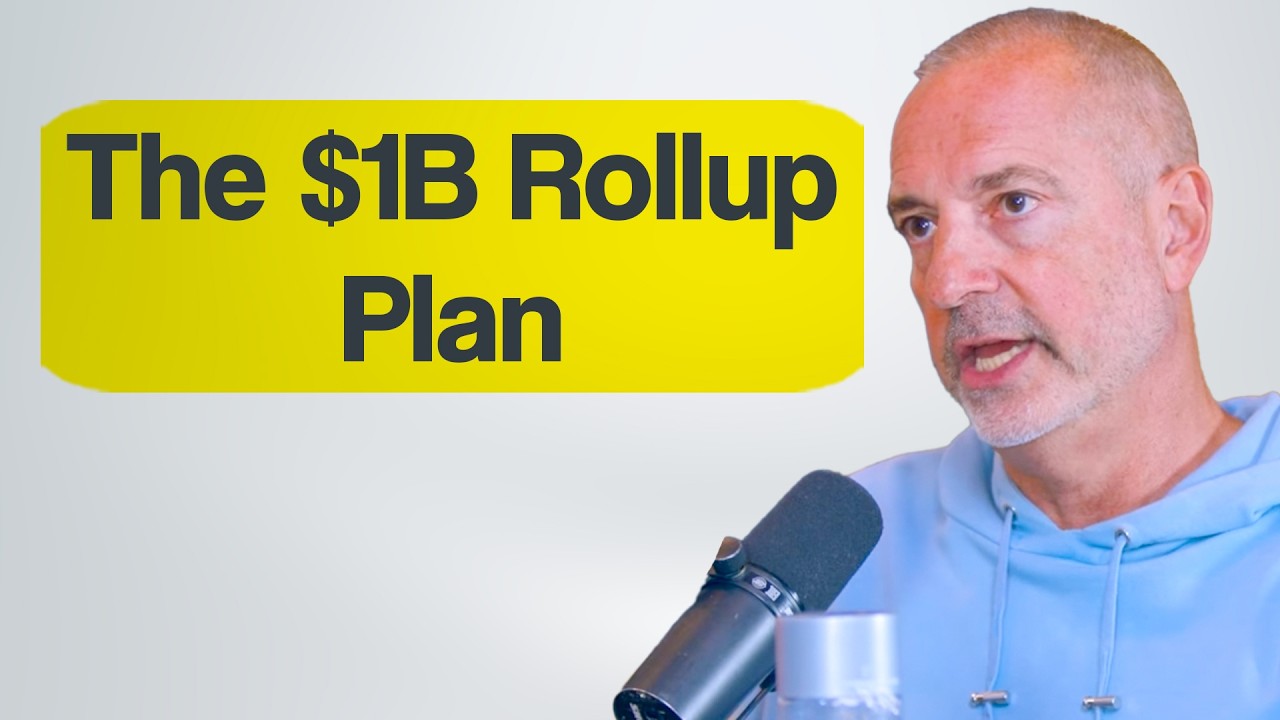
How To Acquire Your Way To $1B w/ Carl Allen
Summary
"Carl Allen reveals that acquiring existing businesses rather than starting new ones can accelerate growth, citing Amazon's $300 million acquisition of Love Film, which became a $35 billion revenue stream, as a prime example."
Full Content
How To Acquire Your Way To $1B w/ Carl Allen
Speaker 2:
I tell all of my e-commerce clients that if you're starting a business without a core customer in mind, you're dead.
Speaker 1:
People don't want to buy products. They want to buy what the products can do for them.
Everything that I've deployed into mainstream business acquisitions and owning those businesses is what I saw happen on Wall Street and seeing how the billion-dollar companies would do their business.
When I'm bringing people in to run my businesses for me, I'm giving them equity. That psychologically shifts their mindset. They will just run harder. They'll break through the walls harder for you. They'll just care a lot more.
They'll start later. They'll stay behind. That's the secret.
Speaker 2:
Carl, I want you to know that at any given time, I have maybe one, maybe two people in my head that I'm like, this is my most mysterious friend. This is my most interesting person in my network, and you are that person to me right now.
So the first thing I want to ask is, how do you make your money?
Speaker 1:
How do I make my money? Buying businesses, private equity. People think I make my money as a coach, but I don't. My coaching business, whilst it's wildly profitable,
is what generates a lot of my deal flow and also a lot of my investors that come into my fund. So, I'm a private equity investor. So, what I do is I do roll-ups. So, I buy several businesses, typically $1 to $3 million a year in profit.
So, I never start businesses. I only ever buy existing businesses. And then I combine them together, and then I sell them as a combined entity. And I make money in several ways by doing that.
One is, obviously, as a majority shareholder in those businesses, I'm generating a lot of cash flow distributions, net of debt service.
As you know, when I'm buying businesses, typically we're putting a lot of debt into those deals for leverage. But then obviously when I exit, there's capital gains that I'm sharing with my private equity partners,
who are the people that have put the capital into the deals.
Speaker 2:
And what's the biggest or most successful roll-up that you've been a part of so far?
Speaker 1:
$26 billion. When I was at HP. So before I was an entrepreneur, I worked on Wall Street.
Speaker 2:
Got it.
Speaker 1:
So I learned to do this.
Speaker 2:
Oh, I didn't know that. So you saw this kind of from the inside with how the big the big businesses play. Yeah. And then when you went out on your own, you started spearheading the same system.
Speaker 1:
That's right.
Speaker 2:
On a smaller scale.
Speaker 1:
Yeah, that's right. So when I saw I graduated in 1992, I went to work for Bank of America. I was doing M&A. And I was buying companies for HP, IBM, Microsoft, GE, Boeing, all these different businesses.
And it taught me a really kind of valuable lesson that if you're a big business and you've got access to capital, You can acquire everything that you need to scale. You want more revenues, just go buy it, right? You don't have to grow it.
You want more profit, you can acquire it. You want more locations, more products, more services, more employees, more of anything, you can acquire it by buying other businesses, right? And we've seen the big businesses do that, right?
So take Amazon, for example, right? Amazon's probably the largest roll-up That there is. They've acquired nearly 200 different companies over the last 30 years. A lot of the things that we take for granted now, they've acquired, right?
Do you watch Amazon Prime?
Speaker 2:
Yeah.
Speaker 1:
The TV, right? So they didn't invent that. That's now a $35 billion a year revenue stream for Amazon. They acquired that business for $300 million.
It's actually a UK company called Love Film, which back in the day was the competitor to Netflix, right?
Speaker 2:
I didn't know that.
Speaker 1:
Yeah, so Love Film and Netflix, before they went into streaming, They had like a mail-order DVD rental business. So you'd go online, you'd sign up, you'd tell them your top 10 titles. They'd send you two. You'd watch them send them back.
They'd send you the new ones. And then when the technology improved, they went into streaming. So Bezos realized many, many years ago that was going to be a big kind of revenue generator for Amazon.
So, rather than create that technology, he acquired it, right? Audible, they didn't create Audible. They acquired it. You can almost imagine Bezos is in his office one day and one of his guys runs in and says,
Jeff, Jeff, we're in trouble, right? There's this company called Audible. You can listen to a book. While you're like walking or driving, like, we're screwed. No one's going to buy our books anymore.
And like, he didn't panic and think, well, let's get the R&D guys in here. Let's figure out how do we replicate that technology. Let's figure out how we market it. No, he acquired.
Speaker 2:
Yeah, he had a few bucks laying around.
Unknown Speaker:
Yeah, he acquired Audible.
Speaker 2:
And it makes sense because once you're blissfully profitable, you have more money than you have people or you have more money than you have exposure. So it makes sense for them to acquire. And also, every time I talk about acquisitions,
there's some pushback about the degradation of a business that will happen after a big conglomerate acquires them. They make these companies better in a lot of cases.
The fact that Jeff Bezos bought Audible was life-changing for me because I can put my book on Amazon and it goes to Audible and I sell four copies on Audible for every physical copy that I sell. So thank you for that acquisition.
Speaker 1:
And a lot of the really big acquisitions he's made, like they bought Zappos, who really pioneered online shoe purchasing. He bought Whole Foods. You've heard the joke, right?
Where he called his assistant one day and said, hey, go get me Whole Foods, not the grocery they bought the business, right? $13 billion. And now the synergies between Amazon and Whole Foods,
primarily through their distribution network and the things that they're doing is amazing. So if you look at Amazon as a company, it's almost a $2 trillion market cap now. It's basically a roll-up, right? All of that.
Profits been stacked across all the businesses that they bought. Microsoft's another great example of a roll-up. Traditionally, it was a desktop software and computing business. Now, their biggest revenue generator is gaming.
They dropped $70 billion to buy Activision. If you're a $1.7 trillion company in terms of market cap, you just give a little bit of your stock To the people that you're buying, their revenue and EBITDA then drops into your income statement.
The street prices you at whatever multiple you're at. So all these companies, when they're buying these other businesses, they're just creating shareholder value instantly, right? And that's what I learned to do in my largest roll-up.
So my last real job, which was 2003 to 2008, I was part of the M&A team at Hewlett-Packard. So I went to work for HP. I joined right at the end of Carly Fiorina's tenure. And then Mark Hurd came in as CEO.
HP had acquired or merged, depending on which way you look at it, with Compaq. It was probably one of the worst deals to ever happen in history. The company got into a pinch. Carly left. They brought Mark Hurd in.
And the first thing he did is he said, well, look, IBM's eaten our lunch, right? HP at that time was a PC and a printing company, made all of its profit from ink,
and IBM had gone off on this journey of becoming more of an enterprise software and services business. And Mark Hurd turned around and said, We need to follow what IBM's done. We don't have the time to build that internally.
At the time, HP's software and services divisions were about a billion dollars each, but HP had all this cash flow from the printing business. It had all the stock that it could trade for other companies. So,
we went off on a $26 billion buying spree and bought loads of software and loads of services companies to basically replicate what IBM had done, and we did it in three years.
So, what IBM had taken 30 years to build, we replicated that in three by making acquisitions.
Speaker 2:
And now that you do this as an entrepreneur, would you tell me about one of the roll-ups that you've been a part of that you oversaw?
Speaker 1:
So, very interesting project where we're acquiring, this is still ongoing, we're acquiring, not in the e-commerce space, medical transportation businesses up in New York State. So, it's a highly fragmented market.
There's about 300 providers. It's like a $4.5 billion industry up there funded primarily by Medicaid. And we're just buying up several of these smaller entities. We're able to buy them for two to three times multiples of their profit.
That's how typically most businesses are valued. And then we just build them up. We can take out lots of duplicate costs, transfer best practices from one business to another, and create a much larger group of businesses,
which will then produce an awful lot of cash flow, which we can use to pay down the financing that we took on to buy these businesses. But then when we get that group to $20-25 million in total profit, And we know who the big buyers are,
right? The big, huge buyers of those companies, both on the trade buying side and on the private equity side as well.
Speaker 2:
Now, on paper, this seems like The greatest possible opportunity for any entrepreneur. You don't have to start anything. You don't have to risk your own life savings. You don't have to be a genius at any one thing. And the multiples are huge.
Now what happens in between there is where all the magic happens.
Speaker 1:
It takes a lot of work.
Speaker 2:
Yeah. It sounds like a lot of work, but on paper, beautiful. So when we reconnected about two years ago, You said in your opening words to me, we were on a Zoom call, and you said, I'm doing a billion-dollar roll-up with my buddy Ross.
I don't know if you've ever done a billion-dollar roll-up, but you said it with such confidence. As if you saw an obvious opportunity. So tell me, what gave you the confidence to know that you were walking into a billion dollar opportunity?
Speaker 1:
Yeah, so it was the combination of my deal-making skills, if you will, and then Ross's skills in the DTC e-commerce space, right? So what we've decided to do, and we're three, almost four acquisitions into this now,
Is our goals to buy between 10 and 15 e-commerce brands, typically between one and $3 million in EBITDA. And we targeted an area of the market, which is still going through hyper growth, which is health, beauty and wellness for women.
Right. So if you think about it. The typical woman online, and a lot of this kind of took off through COVID, right? In COVID, people couldn't go out to shop for these products in stores.
They couldn't go to Macy's or Nordstrom's and buy makeup and all these different things. Women started to pivot more to buying these products and stuff online.
So with the female demographic, they buy things for their hair, their skin, their eyes, their nails, feminine hygiene, and then they take supplements, probiotics, and all these different things, and then some of them buy apparel as well.
So our methodology was if we buy up all these different brands that are in this industry, then we can cross-sell Our products across those mutually exclusive customers because when we looked at these businesses,
and Ross knew this more than me because that's the world that he came from. He was a nine-figure entrepreneur in that DTC e-commerce space. I'd never owned e-commerce businesses before, but when I looked at them,
There was one thing that absolutely blew me away, that the cost of the product that you're selling to the customer was cheaper than the cost to acquire that customer through marketing, right?
Speaker 2:
Meaning the marketing costs to acquire the customer are more than the actual development of the product itself.
Speaker 1:
Yeah, that's right. So let's say you're selling $100...
Speaker 2:
Skin cream.
Speaker 1:
Skin cream. It might cost you $15 per unit to make it, but then it's costing you $35...
Speaker 2:
At least.
Speaker 1:
...in a CPA to acquire that customer.
Speaker 2:
At least.
Speaker 1:
I'd be thrilled if I could get them for $35. And obviously, if they're repeat buyers, then You know that recurring revenues at much higher margins. So, when I looked at that, I thought, well,
what's really interesting is if I've got 100,000 skin cream buyers here and I've got 100,000 hair product buyers here, if I own those two customers, right, I can cross-sell Between those two customer groups,
I can bundle products together. I can remarket to each person. I don't need to pay a JV or an affiliate commission. I own those customers. I can cross-sell between those two groups of customers, right?
And that's great, which means that I can either scale or add revenue at much higher margins,
or can I lower my prices And gain more market share and be more competitive in the market because I'm not having to fund the acquisition cost of getting that customer, right?
So if I want to keep the same contribution margin, I can sell the product for a cheaper price.
Speaker 2:
So, Carl, again, this makes so much sense on paper. But we all know that if you're buying up two businesses, it's a lot of work, right? And there's got to be a really clear thesis and you've got to get a good deal.
But you were so confident that this is a billion-dollar roll-up. It couldn't have just been, oh, on paper, this makes sense and I can cross-promote some products.
Speaker 1:
We properly modeled it up, right? So we looked at what are all the drivers of shareholder value? So when you're building a roll-up, And it's the same for HP, for Amazon, for Microsoft, all the different companies that we talked about.
They're all playing the game of shareholder value, right? If you're a public company, that's the game you have to play because you're enterable to your board and your shareholders.
But any small company, In America or really anywhere can play the same game of shareholder value. And there's five different levers of how you create shareholder value, right?
So one is every time you buy a business and you're using other people's capital to do it, you're buying EBITDA. An EBITDA is worth a multiple, and that creates value.
But then when you combine these businesses together and you cross-sell between them, you're creating free revenue and free EBITDA. When you combine businesses together, there's always cost synergies. There's always better buying power.
There's always duplicate costs that you can take out. There's always organic growth in any business that you buy. And then what we also found is when you look at these different businesses,
and I've looked at Probably 25,000 businesses in my 33 years of doing this. And every business that I've ever looked at has always done at least one thing like really well.
Speaker 2:
Yeah, I remember you saying this when you spoke at our event.
Speaker 1:
Yeah.
Speaker 2:
Which is that you have kind of one magic skill. Yeah, superpower that every business is sort of built around. And sometimes it's unconscious. For me, I've pretty much built everything that I do off of communication and connections.
That's kind of my superpower, right? And I've built everything around that. If you were to plug that into a super data-heavy, by-the-numbers business, my skill set is infinitely applicable to grow that business because it's a new skill set.
It's a new superpower. And so it sounds like you're looking for the superpower in each one of these deals.
Speaker 1:
I am. In fact, I won't buy it. Some people call it a moat. I call it a superpower, right? A moat superpower.
Speaker 2:
That's a really helpful reframe, especially on the private markets.
Speaker 1:
Yeah. So it's like Warren Buffett will call it a moat. I call it a superpower. What's a defensible barrier to my business? So in the e-com space, it could be a world-class 3PL supply chain.
It could be you've cracked the code marketing to a customer on TikTok, right? So,
if you buy another company that has never even been on TikTok and you can leverage that channel to market because you have somebody in your other business that has got the chops,
knows how to do it, if you can cross-pollinate all those different skill sets and create the same moats in all these different businesses, that is what creates shareholder value.
There's a huge hack in corporate finance that we're exploiting. There's two, actually, that we're exploiting when we're building this shareholder value, right? So one of them is that the larger the profit, the larger the multiple.
That's why an Amazon trades at, say, 50 times EBIT. Whereas, most of the businesses that I buy, they're a lot smaller. I'm buying in the two to six range, depending on how good they are.
Speaker 2:
Yeah, for reference, my business, when I sold it, was profiting about $3.2 million a year. We got a 5X multiple. That was about what was expected. But had that been higher, not only would we have gotten five times the profit,
we may have gone seven or eight, because there's fewer of those businesses available.
Speaker 1:
That's right. You were at $10 million of EBITDA in e-com. You're typically going to sell for a 12 to 15 times more.
Speaker 2:
I do have a colleague who listened to the podcast, started a business, got it to that amount and sold it, I think, at a 12x multiple.
Speaker 1:
And one of the reasons for that is 99% of all the businesses in the world Less than ten million dollars in revenues ninety nine percent ninety nine percent yet ninety seven percent of all the capital.
Oh, it's targeting deals above that level. So that's why you go through this huge microeconomic shift between small deals and large deals, right?
Speaker 2:
And what's a large deal? $10 million in EBITDA and up?
Speaker 1:
Yeah. So $10 million in EBITDA and up, you're never going to sell for less than a 10X multiple. Never. Because that's where all the buyers are, right?
If you're a PE fund, or you're a $100 million business, you don't want to buy a $1 million business. You want to buy a $10, $20, $50, $100 million business.
It takes you the same amount of time to do a really big deal than it does to do a small deal. In fact, bigger deals are easier. Because it's easier to do due diligence. You've got more redundancy in the company, more employees, more data.
Speaker 2:
Carl, I just, I love talking to you because it reminds me of how small I think. You know, I mean, when you come from an M&A background, sometimes it's just numbers on a screen.
But to an emotional entrepreneur like myself, there's self-doubt and emotions rolled up in all of these decisions. And it is just so helpful to remember that all of the money is not chasing the small fish.
It's chasing the businesses that are really performing. And so if you set your sales in that direction, then there's this entire bigger world. And that's the game I want to play.
So what advice would you give to seven-figure entrepreneurs like myself? My M&A background is I sold a couple companies and learned a lot of what not to do in that process and are ready to play a bigger game.
What advice would you give for people like us?
Speaker 1:
You're still in the 1%. The fact that you've been through a transaction, you've been through a transaction as a seller, right? So you still experienced the process, but also that, you know, the drama,
the emotion and the psychology that you have to go through. And this was like a massive wake-up call for me when I came out of Wall Street and into Main Street. I started trying to do deals, right?
As a Wall Street dealmaker, it's all about math and tax and law and all those different things. Main Street M&A? It's not really about that. It's about human psychology. I was on a podcast the other day and the person said to me,
if you want to be a dealmaker, you want to do what you do, what's the best degree in college you could go and get? Is it finance? Is it business? I said, no, go and do a degree in psychology.
Learn how to read people and how to influence people. That's the skill set that I never had and I've had to learn by doing as an entrepreneur. But to answer the question, What you've got to look at, really, is you have a business,
you're in a market, you have a customer base, you have a niche, a differentiation, all those different things. So the first thing that you've got to look at is, well, what else do my customers buy? That I don't typically provide. Now,
what most e-commerce entrepreneurs do or what most entrepreneurs do in generally is they'll go down the affiliate route or they'll go down the JV route, right?
Speaker 2:
Or they'll develop it themselves.
Speaker 1:
Or they'll build it themselves. But you don't have to do that, right? You can do what all of the big guys do. Go and acquire those businesses. So if you sell a skin cream, It's all your customers. Ask your customers what else do they want.
If they want a hair product, Don't build it. Don't JV. Go and acquire a business that does that. And then you can sell the skincare to the hair care customers and vice versa.
And then as we just talked about, you bring those two businesses together. There's cost savings. You can transfer the moats, the superpowers between the two. And that's how you create that shareholder value.
And the beauty of this is you can finance those acquisitions with other people's capital. So, buying a business is like buying a house. The majority of an acquisition, assuming you're a good buyer,
like you would be for a house or the house is a good house, there's debt financing that you can raise from a bank or for a smaller deal, the SBA 7A, or through like a credit fund, you can raise that debt financing.
And then there's a piece of the deal that needs to go in as equity. So you could put that in as equity from your own balance sheet, from your business, or you can partner with an investor that will put that in.
And then you're combining that business, you're building that empire, deal by deal, step by step, using other people's financing.
Speaker 2:
And at the end of that process, how much of the business are you usually left with?
Speaker 1:
It depends. It depends how many deals you do.
Speaker 2:
When I sold my company, I found out that the private equity group, gosh, I think they only retained like 20%. I don't even know.
I think they gave a lot to the private investors and we held back equity as sellers and then there was a Mez firm that came in and they had their piece. But the private equity group, they had no skin in the game.
But that also meant that they bankrupted my company. So I got it back. It was a good story at the end. But they were only left with like 20%, which seemed odd to me.
Speaker 1:
So no, that's exactly right. That's what in private equity is called carried interest, right? So the way private equity funds work is it's none of their capital generally. They'll create a fund.
Let's say it's a $100 million fund, and then they will go out and they will get limited partner investors. So, these are banks, high net worths, corporates, pension funds, university endowments. They'll put the capital in to the fund.
And then the fund will go out and they'll invest that money across a whole bunch of deals, bearing in mind for the $100 million of equity that they've raised, they're probably raising five, six, $700 million of debt to do all those deals.
So they buy all these businesses. Some of them will do very, very well and they'll sell. Some of them won't do so well, and they're probably a wash. Some of them might fail.
But let's say that $100 million they turn that into $500 million of profit within, say, a 10-year period, which is like the maximum life of a fund. So the $100 million turns into $500 million.
The $400 million profit, the limited partners are getting 80% of that. The private equity fund is getting 20%. So they've just made $80 million of profit for themselves with none of their capital at risk. So that's why it's askew that way.
Most of the profit goes to the investors that put the money in because they're taking all the risk.
Speaker 2:
Yeah, that makes sense. But I'm getting the sense that that's not how you structure your deals.
Speaker 1:
No, we're typically more of a 50-50. So what we do in our fund is whilst we raise actual real equity investment, we supplement that with credit and other lines of debt. And then we turn all that into equity to do our deals.
Speaker 2:
That resonates with How I want to do deals. But I did one deal of that size and the business didn't perform well. And where I made the mistake is I was not combining it with a superpower.
My thought process was this is actually in a line with my skill sets. I'm going to build this business and acquire other businesses that complement it. But that thesis didn't play out.
And I didn't have the complementary superpower to bring into it. And so that's maybe a little gun-shy to do deals moving forward because I made those investors whole. So, how do you structure deals to where you have a limited downside?
Because I would never do a deal like I did in the past. It almost killed me. So, what do you do to safeguard everyone while still protecting your investors' capital?
Speaker 1:
Yeah. So, it's all about having the right team. So, across my combined portfolios today, I think I'm at 41 businesses that I have some form of investment in. I don't work in any of them.
The only business I work in that I own It's Dealmaker Wealth Society. That's my passion business. That's my coaching. It's a great business. It's an eight-figure business, but I'm actually an employee in that business, believe it or not.
I'm a coach, right? I coach five to eight hours a week. I was just coaching before driving over here today. It's great that we're neighbors now, by the way. But yeah, I have a full management team.
So I recognize that when I buy a business, I'm not the guy that's driving the bus. So I make sure when I acquire a company, I've got a very, very solid management team that's going to run that business for me.
Sometimes that team comes from the business I'm buying. Sometimes I'm supplementing that with a management team that I'm putting in. And then what I'm doing is I'm combining three other things that I'm doing.
So number one, before I make any offers on any businesses, I'm going through a fully vetting procedure, right? And I'll explain what that is in a minute. And then once I've made a determination what I think the valuation is,
and I agree price in terms of the deal with the seller, then we go under something called an LOI. So we sign a letter of intent to buy that business. And do you remember back when you were at school or college, do you ever do science?
In science, you would create a hypothesis, and then you'd go through lab testing, and you would either prove or disprove that scientific hypothesis, that theory. Well, that's what a deal is.
When you go under LOI, you have a hypothetical opinion on what that valuation is, and then you go through very extensive and very rigorous due diligence, legal due diligence, commercial due diligence, and financial due diligence.
To check that exactly what you think you're buying is true. And a lot of cases, things come out of that and sometimes you might abort the deal. Most of the times, you might reprice or restructure in a certain way,
a bit like you would pay for a survey, you know, when you buy a property. You know, if there's 15 roof tiles missing, you're going to knock 5,000 bucks off the price. It's the same when you're buying the business, right?
So, it's having the right due diligence model to check you're buying safely. It's having the right team in the business to execute on the vision and the plan,
and then it's having the right set of KPIs And systems inside of the business so that as an owner-investor, I'm not an operator member, I'm an owner-investor,
I can monitor and track the performance of that business typically in real time. And I have access. I could log into my phone right now and go into all the dashboards of all the businesses that I own,
and I can see exactly how they're tracking. So we run all of our businesses on EOS, which is the Gino Wickman model, which is fascinating, right? So we have scorecards in all of our businesses, and we're tracking both lagging indicators,
which could be revenue, profit, Accounts receivables, cash in the bank, but then we're tracking leading indicators. So, I know how many leads in one of my businesses have been generated this week.
And I know predictably how much revenue that's going to generate 2, 4, 8, 16 weeks from now.
Speaker 2:
It sounds like you have a bit of a playbook that you are bringing into these businesses that keep you from messing with the dials, but keep you in a healthy place of reporting. And I'm sure that that playbook has been developed over time.
Speaker 1:
Well, I stole it from Wall Street.
Speaker 2:
Tell me more.
Speaker 1:
Everything that I do, everything that I know,
everything that I've deployed into Main Street business acquisitions and owning those businesses is what I saw happen on Wall Street and while I was at HP and seeing how the billion-dollar companies would do their business.
I've just taken all of that methodology and plugged it into Main Street. It's very different. Oftentimes, I'll buy a business. I'm buying a lot of construction businesses right now with some partners up in Atlanta, Georgia.
And some of these businesses are 15, 20 years old. They've never seen anything like this, right? They've got manual processes, right? Their invoicing system is boxes of paper, right? It's all very arcane.
So oftentimes, when you're plugging in a lot of this new technology and new ways of thinking, you can get a lot of resistance. In fact, I was in a board meeting yesterday for my group called LCAP, right?
And we had a board meeting yesterday and we've had to let one of our senior people go because they just would not adhere to this kind of new way of doing these things.
If you want to build a billion dollar business by making all these acquisitions, you have to have these standards and controls and processes in place.
Speaker 2:
Yeah, I want to ask more about that because when an entrepreneur starts something, the asset that they're often bringing to the table is an idea and time. That's what they bring to the table. I have an idea.
I'm gonna work my ass off and hopefully some things will happen. You are not bringing either of those to the table. You're not bringing an idea and you're not working your ass off. Something else to the table.
Speaker 1:
That's right.
Speaker 2:
And it sounds like this playbook that you sort of developed is one of the things that you bring to the table. So how would you answer the question, what does Carl bring to the table in these acquisitions?
Speaker 1:
So before I tell you what I'm bringing to the table, I'll tell you why I'm bringing it, right? So if you look at America today, there's about 6.6 million Americans every year will go and start a company from scratch, right?
Cudos to those people. It takes a lot of balls to go and start a business from scratch because to your point, you're bringing an idea and you're bringing time.
What you're not bringing at that juncture, that very first day is capital, cash flow, customers, employees, systems, products, premises, or anything like that, you're just bringing an idea. So building all of that stuff,
I take my hat off to every single entrepreneur that starts a business because I've only ever started one company and that was my dealmaker business. I'm a buyer, not a starter of businesses. For me,
that would scare me to death to start a business from scratch because I know my very good friend Michael Gerber,
who was the author of the e-myth, he says 96% of startups will fail inside of a 10-year period for all of those different reasons. It's just so difficult.
So for me, I'd rather buy a business that's 10 years old that's gone through that You know, that's beaten the odds. It's one of the 4% that survive. And for me, it's like running a marathon and joining the race.
You know, when you watch the marathon for the Olympics, they'll run around the city for 25 miles, and then they'll do the final little bit around the stadium, right? I want to join when they're running the stadium.
I don't want to do the rest of it. So that's my goal. But for me, what I'm bringing is obviously capital to buy businesses. I'm bringing all the experience, the playbook that you mentioned, but really, business is about people, right?
So I'm bringing the right teams to come in and be my lieutenants, my partners inside of those businesses. But now here's the key. Do you want to know the secret hack?
Speaker 2:
Tell me the secret hack.
Speaker 1:
The secret hack, the one thing that makes all this work is the glue that brings us all together. When I'm bringing people in to run my businesses for me, I'm giving them equity. Not giving them bonuses. Not giving them options.
I'm giving them real equity. Because what I found is when you make them a co-owner, They're signing the operating agreement with you for the LLC. They have responsibilities now. They have ownership.
Not only are they getting a salary, they're getting cash flow distribution as a partner, and they're going to get a piece of the deal when it exits. That psychologically shifts their mindset. They will just run harder.
They'll break through the walls harder for you. They'll just care a lot more. They'll start later. They'll stay behind. That's the secret. Because now you've got people that really, really care and want to make this thing super successful.
And in some deals that I do, this is crazy, right? I've given people like half the company. I bought a business once and it was a complicated business. I didn't really want anything to do with the kind of the day-to-day.
I could see the big picture. I brought my GM in to run that business. And I gave him 50% of the company, and he's 17x the size of the company in the last four years. I still own that business. It's absolutely unbelievable.
So he's created me millions of dollars in shareholder value, even though I had to give him half of the company to do it, right? So he and I are co-owners. It's amazing.
Speaker 2:
When you say that it's all about people and it's all about team, What team members are essential to have in place when you are pursuing this strategy?
Speaker 1:
Yeah, so again, you know, I'm a huge fan of the EOS framework. You know, kudos to those guys. And for me, every business has to have, you know, five key people. You've got the three pillars of every business. You have a marketing function.
Someone's making a promise to the customer to get them to buy something. You then have an operations function that's delivering on that promise through fulfillment,
and then you've got a financial function that's keeping the train running on the tracks, right? So all businesses need to have managers in marketing, in ops, and in finance,
but then Whilst that's important, there are two more important people that need to be in that business, right? You need to have the integrator, which is what Gina Wickman calls it. I typically call it the GM.
My friend Brad Chuggers will call it the jockey. Michael Gerber will call it the COO. It doesn't really matter.
Speaker 2:
It's the person in charge.
Speaker 1:
It's the person that's in charge of the day-to-day. And then there's one other person in the business, which is typically the role that I will fill, and that's the role of the visionary. That's the person that's really the architect.
When you build a house, you have an architect that envisages what's going to happen. Then you have the general contractor that's going to manage all the building. That's your integrator, your GM.
Then you've got the trades that are doing actually all of the work.
Speaker 2:
You're watching this physical reaction I'm having, as you said, this part, because I didn't know that that's where you were going to go with the fifth role. And when you said that, I actually felt like my body expand.
Speaker 1:
Because you're a visionary.
Speaker 2:
Correct. Yeah. And I can walk in, and I'm thinking about, I bought my company back a year and a half ago, and we've brought it back to a seven-figure run rate, and I'm doing it in front of my audience,
so everyone's like, this stuff still works. It's the same company, 10 years later. And in that company, The vision is so obvious to me, and I can almost walk into any business and feel like this is where we need to go effortlessly.
But my skill set is in marketing, and that's where I get pulled into it. And so I just had the aha of, oh, We need to bring in somebody in charge of marketing because it keeps me in vision.
Speaker 1:
That's right.
Speaker 2:
I just saw where I get myself into trouble. It's when I spend time in any business being pulled into one of these other four roles.
Speaker 1:
So you've answered your own question now in that where you create shareholder value as an entrepreneur is when you spend the majority of your time in the vision box. The more time you spend in the vision box,
your job If you play in the vision box, it's about strategy, it's about culture, it's about leadership, and it's about doing deals and raising capital. Those are the five things you got to do, right?
You can't be a marketer and be a deal-making visionary, right? But the great news is there's far more marketers around that you can partner with to do that role than there are deal-making visionaries, right? You can't outsource that, right?
Being the visionary, if you're an entrepreneur, you can't outsource that. That comes from you. You're the leader. You're the passion. Take my Dealmaker Wealth Society training business.
We've coached 32,000 dealmakers in nine years all over the world, but mostly here in the US. We've done well over a billion dollars of transactions through our community. I'm the visionary. I'm the leader of the tribe.
I'm like the Yoda, right? They're following me through that journey. If I wasn't in the business, it wouldn't have the same kind of magic, but I'm not doing anything else inside of that business apart from being that visionary coach,
that visionary leader because I don't have to. I never get involved in marketing unless they want me to create a VSL. I never get involved in ops. I never get involved in the financial function,
even though I could log in and tell you to four decimal places what my ROAS is on my Facebook spend this month. I can check all that, but that's what you've got to do to really build shareholder value as an entrepreneur,
which is really the game that you need to be playing both for yourself and your family and for those people that support you and invest in you. You've got to stay in that visionary box. And it's difficult, right? It's very, very difficult.
And Michael Gerber talks about this a lot. You're an avid reader like me. I'm sure you've read the E-Myth Revisited. And I love the phrase in there when he talks about people having the entrepreneurial seizure, right?
The person goes into business as a restauranteur. Because they're a great chef, that the person goes into business to be a CPA firm because they're a great CPA. And it's wrong.
And that's why a lot of businesses fail because they don't have the skills or they don't want to learn the skills to stay in that visionary box and do that work.
Speaker 2:
I'm so glad you shared that. Thank you, Carl. I want to talk about capital because this is probably the biggest question that people run up against is, I don't have money or I've never raised money before. You have.
Speaker 1:
Yeah.
Speaker 2:
And you seem kind of unemotional about it.
Speaker 1:
Yeah.
Speaker 2:
And I would like to hear you comment on how you raise capital and think about it when you're approaching a deal.
Speaker 1:
Yeah, absolutely. So when you're structuring a deal, there's typically, think of a deal, think of the capital in the deal like a pie chart or like a deal pie, right? So in the deal pie, there's three big chunks of that pie.
There's equity, There's external debt financing which typically comes from from say a bank. And then you've got, let's say, other creative sources of financing.
So it could be seller financing, where you're paying the owner a portion of the deal over time. There's something called an earn-out, which I'm sure you're familiar with.
Speaker 2:
So I wrote the word terms down. That's how I would describe that.
Speaker 1:
Yeah. So like an earn-out is where you're paying bonus payments for superior performance. And then when you buy a company, You don't have to buy 100% if you don't want to. You could buy less than that.
The seller can roll over a piece of that ownership into the future, right? So if you ignore those creative pieces, the two main sources of outside capital are debt and equity, right?
So the first thing that you would do when you're looking to do a deal is obviously negotiate the price you're going to pay for the business and then what the closing payment's going to be. So let's say you're selling a business.
So $2 million of EBITDA and you sell it for five times or you're buying it for five times. So it's a $10 million deal. And let's say the seller will do a $7 million closing payment and a $3 million earn out, right?
So you need to go and raise $7 million, call it $8 million to include additional working capital, closing costs, and you might want to take a little bit out as a personal deal fee. So you need $8 million, right?
So the first thing that you will do is you'll go to a bank or you'll go to some form of debt provider. And then what they're going to do is they're going to obviously vet the business,
they're going to do their due diligence, and then they're going to lend you money based on something called the debt service cover ratio,
which is the formula of how much cash flow Is this business generating divided by how much cash needs to go out to service the debt that I'm taking on? A bit like when you mortgage your house.
A bank does the same formula on us when we mortgage our houses. How much does this family earn divided by what's the annual cost of servicing this mortgage? They typically work on a three-to-one ratio.
In a business acquisition, it's between 1.2 and 1.5, right? So that you've got enough cash being generated by the business to service this debt. So once you know how much debt the deal can actually stand,
you then have to go out and raise the rest of the capital in equity. Now, here's the challenge. Equity investors and banks look at deals in a completely different way.
A bank, whilst they're interested in who you are, Have you got chops in the industry? Are you a good investment? But really, it's about debt service cover ratio and it's about collateral, right?
Speaker 2:
It's about minimizing the downside.
Speaker 1:
It's minimizing the downside.
Speaker 2:
So they're looking at all the ways that could go wrong and making sure that they're going to be made whole and they're going to get their payments.
Speaker 1:
Absolutely, right? Am I going to get my money back? Now, the beauty of debt financing in America today for smaller deals, up to 5 million, is you have this wonderful thing called the SBA 7A loan program, which is not a bank.
It's a branch of the federal government, the Small Business Administration, and they guarantee up to 80% of all the debt that a bank like Wells Fargo or Chase will put into a deal.
So if the deal falls over for whatever reason, which delinquency rates We're in the low single digits. The federal government will bail the bank out so the bank doesn't lose, right? But then an equity investor...
Speaker 2:
They're looking for upside. They're looking for, let's take this to the moon.
Speaker 1:
So the equity investor only cares about five things. There's only five things that an equity investor cares about. And I learned this 20 years ago. So 20 years ago, I'd left... I'd left Bank of America.
I'd gone to Chicago to do an MBA, University of Chicago Booth School of Business, and I wanted to work in private equity. So, my first job out of business school, 2002, I think it was, 2001, I went to work for a PE firm in Boston,
Massachusetts. And I remember my first day, I walked into this boardroom and there were stacks and stacks and stacks of pitch books for all these different deals. And every stack was a different – it was a technology PE fund.
So every stack was a different nuance or genre of technology. And my assignment was I had to go through all those pitch decks and determine which were the ones that we would take through to further review.
And I thought, well, how am I going to read all these pitch decks? It's going to take me forever. So the general partner, George, said to me, look, I want you to read the executive summary.
If it doesn't have an executive summary, throw it in the bin. But if it has an executive summary, if you can't answer these five questions within 60 seconds, it goes in the bin.
If these five questions are answered within 60 seconds, keep it and we'll move on. Do you want to know what the five questions are?
Speaker 2:
Hit me.
Speaker 1:
Question number one is what's the big idea? What's the deal? What's the thesis? Why are you doing it? What are the moats and why do people care, right? So, that's the first big question. So, it's not like a me-too deal.
So, for example, I'm going to do an e-com roll-up, okay? Why are you going to do an e-com roll-up? Well, I'm going to be rolling up B2C brands for women in health, beauty and wellness.
We're going to be cross-selling and doing all these different things, transferring moats, et cetera. So that's a big idea. So that's the question number one. Question number two is what's the strategy to create shareholder value?
So, you're talking about arbitrage...
Speaker 2:
I am loving this. I just want you to know I'm having such a good time.
Speaker 1:
So am I. So am I. So am I.
Speaker 2:
As you're talking, it's like you're describing the ideal pitch deck. That's where this is going. You can communicate these five ideas in five slides and give somebody exactly what they need in order to make a decision. Beautiful.
Speaker 1:
So the build of shareholder value is fundamentally at its core, it's a forecast model, right? We're at X today, we're going to Y. And you've got to justify how you're going to do that. Well, we're going to buy these different businesses.
We're going to cross-sell. We're going to integrate. We're going to improve margins. We're going to transfer best practices. This is how we're actually going to do it.
So that's step number two, is what's the strategic way to create shareholder value, which is really all investors truly care about. The third part is team. Who's the team that's going to do it?
You can have the best big idea and thesis in the world. You could have this wonderful way of creating shareholder value, but who's the team? Do they have the chops? Do they have the track record? Very, very, very important.
The founder of the venture capital industry is a guy called John Doar, who's the founding partner of Kleiner Perkins, one of the most famous Silicon Valley VCs that's ever lived.
He has this great saying, better an A-plus man with a B-plus project than the other way around. Right? Better an A plus band than a B plus project, the other way around. Very, very important.
So an investor is looking for that team that can execute, right? Because planning, strategy, vision is great, but business all comes down to kind of, can these people execute? So the team's really, really important.
Now, the fourth part, this is really, they're all important, but this is really important, is the way a bank gets paid, Is capital repayment plus interest, right? An investor, when they come in, their money sits behind the bank.
In terms of the senior position on the deal, right? So their money's at risk. The only way they get their money back is when the business exits in the future. So let's say my deal, I need, I think we said $8 million.
Let's say $8 million is the closing payment. I can raise five from the bank. I need $3 million of equity, right? That equity investor is saying, right, I'm about to give this guy $3 million.
I want a minimum of five times my money, ideally 10. How am I going to get $15 to $30 million out, right? Who's going to buy that business in five, six, or seven years' time?
And then what you have to do when you're pitching is you've built your forecast model, which is step number two. You're saying, well, hey, this thing's got $2 million of EBITDA today.
I'm going to scale it to $10 million of EBITDA within five years because I'm going to do all these amazing things. At $10 million, I can sell for a 10 times multiple, so it's a $100 million exit, right?
You have to prove in your pitch deck Who today is buying those deals that are multiple, right? And there's only really four ways that you can exit a business. You can sell to a larger PE firm. You can sell to a trade or strategic buyer.
You can go through an IPO, which is complicated, expensive, and takes a whole bunch of time, but you can do it. Or you can do things like an ESOP, where it's a tax-advantageous way of employees taking ownership of a business.
You're talking about larger PE or you're talking about a strategic buy buying the business, but you have to prove it. And there are great tools out there like PitchBook.
So, you go on PitchBook and they'll tell you all the deals that are being done. They'll tell you what the multiples are. So, then the investors looking at it and thinking, well, this is great. I love the big idea and I love the thesis.
I love the plan to strategically build shareholder value. This is a great team that I believe in that's got the chops to make this happen. I know who's going to buy this business in five years' time and what they're going to pay for it,
which then leads me on to step number five, which is what are the risk-adjusted returns that I can expect from this deal? And there's two very, very simple calculations that you should never let the investor have to do this.
You can do them and put them in your deck. The first one is MOIC or Multiple On Invested Capital. So let's say the investor wants 30% of the deal, you're offering 30% of the deal. They're putting $3 million in.
We're going to sell at 10 million of EBITDA, 10 times multiple 100 million. So, 3 million goes in, $30 million comes out, assuming no more dilution. That's a 10x multiple on invested capital. So, that's the first calculation, which is good.
But then the second one, which is even more powerful, is the internal rate of return, the IRR. What's the compounded growth rate of that growth in capital? If I'm going from 3 to 30 in two years, that's a very high IRR.
If I'm going from 3 to 30 in 100 years, That's quite a low rate of return.
Speaker 2:
It's the same idea of I know that if I invest $150,000 a year into S&P 500 index funds, in 40 years that's $100 million. It's like I don't need to hit a home run if I give myself a long time horizon.
Speaker 1:
Exactly the same thing. So those are the five things. Those are the only five things that investors care about. What's the big idea? What's the plan to build shareholder value? What's the team that's going to execute?
What's the exit strategy and what are my returns forecasted to be?
Speaker 2:
Carl, I have been thinking for the last year or two,
when I first discovered Just what was possible when you could come up with this creative financing and you could do these types of structures that I just didn't know as a scrappy entrepreneur.
And I have wondered how much of my career was held back by not having a deep understanding of finance. And I feel like you just summarized everything that I need to know about finance in the last 15 minutes.
I would love to hear if there is anything else from Working in the big corporate world, working on Wall Street, in terms of what you wish they had taught in schools or what you wish entrepreneurs knew about finance,
are there any other lessons in there that you would like to share with a group of entrepreneurs?
Speaker 1:
Again, what was a lesson I learned very, very quickly when I moved out of Wall Street to Main Street, and we touched on it a little bit earlier, is that in Main Street deals,
A Main Street business in general, there's a much more focus on relationships and on what I call seller psychology. So, I'll tell you a really quick story. This is my first ever deal outside of Wall Street, right?
So, I've done all these Wall Street deals, retired in 2008, got bored. I'm three weeks in. My wife said to me, you know, get out of the house, go back to work. I didn't want a job anymore.
I've been a corporate, I wouldn't say a corporate slave. I loved my corporate world. It was amazing. But I wanted to be an entrepreneur and do my own thing. So I decided to become a business broker.
Which is a crazy thing to do because I don't typically like business brokers. Most of them, I don't like. But I decided to become a business broker. And I got the job of selling a transportation business, right?
So, I never worked in transportation before, but I knew how to sell businesses because I'd done it as a Wall Street guy. So I put the, it's called an information memorandum.
You put the prospectus together, you do some due diligence on the business, then you go out to market and you find buyers. So found a ton of buyers, negotiated a great deal, and with a night before closing,
and the way brokers work, you get a little bit of an upfront fee, but you make most of your money when it sells, right? Like a closing fee. You'd have been through this when you sold your business.
So it's the night before closing, and the seller's called me and said, hey, We've decided to abort the deal. I've been working on this deal for six months, so I'm not very happy.
And when I went down to see them, and I asked the question, like, why are you selling? They said, well, the buyers come in today. This was a massive, like, big company that was buying them have come in today,
and they told us that they're going to fire all the employees. All they want are the customers, the trucks,
and then they're selling the warehouse and the facility to a large big grocery chain or are going to build a new grocery store on it. And that's how they're going to monetize the deal and the premium valuation that they were paying,
which is about 5 million pounds. This was a UK deal. This was in late 2008. And they said to me, and I'll never forget these words, and if this hadn't happened, I wouldn't be here. I wouldn't be a dealmaker.
I wouldn't even be in private equity. They said to me, we don't care that much about the price. Go find us a buyer that is a safe, trusted pair of hands. And that's something I say almost every day when I'm coaching my dealmaking students.
Speaker 2:
Say that sentence again.
Speaker 1:
Go and find us somebody that will be a safe, trusted pair of hands.
Speaker 2:
I cannot put an exclamation point on that enough about how powerful and universal that is.
Speaker 1:
If they wanted somebody that would protect their employees, protect their legacy, Their brand, obviously improve the business, make it more successful, but look after it, honor it, cherish it, like admire it.
They wanted somebody that wasn't going to hock it up for parts and was just all about money. And I don't know what possessed me. And I looked the owners in the eye and I said, I will buy the business.
And they looked at each other and they said, what? What do you mean you'll buy the business? I said, well, look, I know a lot about this industry now because I've been working with you for six months, right?
There's a lot of assets on this balance sheet and your business has got great cash flow. I can go and raise the capital to probably pay you about half of what this big trade buyer was going to pay for you, right?
I think I can get that deal done within the next 30 days. And I pointed at the sales manager, I pointed at the financial controller, and I pointed at the operator. Remember the three pillars of EOS?
And I said, I'm going to give each of those three 10% of the company to be my partners. We'll have an employee profit share scheme. I will not let one single employee leave this business unless they want to.
And we're going to own and run this business together. And they looked at each other and they said, if you can do that within 30 days, you can have the business. All the due diligence have been done. All the legals have been done.
I just needed to go and raise the money. So I'm driving home from that meeting thinking, right, I've got to call the bank in the morning. I'm going to need a little bit of equity. My wife calls me. She said, how did it go?
Did you manage to get the deal back on track? And I said, well, actually, I've decided that I'm going to buy the business.
Speaker 2:
And is she still your wife today?
Speaker 1:
She's still my wife today. She said to me, well, You're not using any of our money. Do some of that, I won't swear, but she said, do some of that Wall Street. So, go raise the capital. Go do what you do. My wife was a CPA, so she knew the deal.
And that's what I did. I called the bank the following morning, exactly the same way that I've just described it to you. I sent them the numbers. They told me how much debt the deal could support. There was a little bit of equity required.
I partnered with an angel investor. I could have easily put the money in, but I wasn't allowed. So I had to go and get an angel investor to put that money in. So there were actually five partners in that deal. So I owned about 50%.
I had my three 10% shareholders, all my management team, and I had a 20% angel investor who was also from the transport industry. So he was a really kind of good value to add. So it was a five-person board, and we bought that business.
We closed in about three weeks. And then we did one small little tuck-in. And then my angel investor wanted to exit because I think we 3x the value of the business. So I, once we paid all the financing off,
I let the three other owners buy the other two of us out. So I exited that deal about three years later, which was absolutely fantastic. That was my first ever kind of acquisition.
And the lesson that taught me It's that not all small business owners, let's call them baby boomers for all intents and purposes, not all of them think like this, but a lot of them value a safe pair of hands equally,
if not more, to the price and terms that are on offer. I can't say that's as relevant in like e-com. Because you've got a younger kind of entrepreneur that's probably taken a business from zero.
Speaker 2:
I'm sorry to interrupt, but I have experienced more of the desire for safe hands.
Speaker 1:
Okay, perfect.
Speaker 2:
And that is because First of all, the businesses worth buying are the ones that have been around for at least five, six, seven years. The ones that had a rocket ship up, you don't want to buy those businesses anyway.
The people have been growing it for a long time. It's often their first business and they wanna see it succeed. And because valuations are down right now, they're willing to hold back terms or equity.
And that's actually where I want to wrap is hearing your thesis on e-commerce right now. Because you could be in any business. Your background's not in e-commerce.
Speaker 1:
It's one of my four primary buy boxes. So I love e-com.
Speaker 2:
You didn't grow up selling on Amazon and Shopify.
Speaker 1:
No.
Speaker 2:
But you're making a big splash into e-commerce. I have my thesis on why e-commerce is hot right now. Tell me yours.
Speaker 1:
My general view of e-com is I think you've got to pick the right sub-sector of e-commerce. I think that first and foremost, like whilst it might be growing at 10, 11% per year,
there are some pockets of it like the female health and beauty space that I love so much. That's a 19.3% growth market right now. But what I love about e-com is remembering COVID, Everybody that, you know,
even grandmas in Nebraska started buying stuff online. And then what COVID did in a lot of industries is it changed, like, consumer behavior. And when you change your behavior as a consumer, it's kind of hard to go back.
So that's why the e-com space continues to grow. And with the proliferation of technology and all those different things, you know, e-com is going to be around forever. I have some kind of, like, concerns around tariffs.
I was thinking about this driving over, because I knew you were going to ask me about this, is I think a lot of e-com businesses, to make the margins they want, they've got to outsource manufacturing overseas.
I haven't really studied it in too much detail yet, but I know tariffs are going to make that market a lot more competitive. Prices are going to go up, right?
Marketing and ad spend is probably 10x more expensive now than it was like 10 years ago. I know, you know, back when I was running Facebook ads for DealMaker in 2016, you know, I was getting leads for a dollar, right?
Now, they're probably $20, right? It's crazy like how much more expensive advertising has become online. So,
I think it's a harder equation now to make the economics work because With cost of living and all these different things continuing to go up, consumers only have a certain budget, right?
And a lot of the times, like when I'm talking to entrepreneurs and I'm looking at their pitches, you know, I love it when they say to me, yeah, we have no competition, right? Everybody has competition.
Even if you've got the only product in your market, you might not have any direct competition. There's still competition in terms of share of wallet because people only have so much money to spend on certain things, right?
If you're in a market that might be a discretionary spend, Then your market could be under attack by other markets where budgets are actually shrinking.
Speaker 2:
So are you still bullish? Yeah.
Speaker 1:
If you buy the right businesses and you target the right customer. So I'm only buying like, you know, what I buy in apparel business, what I buy online pet products.
No, like for me, My e-com market is health, beauty and wellness for females. I'm targeting 30 to 55 year old affluent and semi-affluent female consumers that are buying hair, skin, beauty, all those different products.
Because you know what's really interesting? That's not really what they're buying. They're buying the benefits of those products, right?
And through marketing, I can understand what the emotional triggers are for the customers to buy those products.
Speaker 2:
Makes sense.
Speaker 1:
Yeah.
Speaker 2:
That comes down to the first question of who is it that you're really targeting? Who is it that you're really serving?
Speaker 1:
Yeah.
Speaker 2:
And you're building not just a business out of serving that person. You're building an entire conglomerate.
Speaker 1:
That's right.
Speaker 2:
That serves that person.
Speaker 1:
That's right.
Speaker 2:
So the aha that I'm seeing is if you buy and acquire businesses that continue to serve that same person.
Speaker 1:
That's right.
Speaker 2:
That's where you can build wallet share and shareholder value.
Speaker 1:
That's right.
Speaker 2:
That's the big aha for me because I tell all of my e-commerce clients that if you're starting a business without a core customer in mind, you're dead. You're just selling a product.
Speaker 1:
100%.
Speaker 2:
Then what you're saying is if you buy a business that doesn't complement the core person, that's right, now you're just distracted.
Speaker 1:
People don't want to buy products. They want to buy what the products can do for them. So if you don't understand that customer, And I'm not talking about them demographically. I'm talking about them psychographically. What are their hopes?
What are their dreams? What are their goals? What are their fears? And if you can speak to that in your product, it doesn't even really matter what the product is if it can help the customer achieve what those goals or their dreams are.
People use the analogy of the hole in the drill, right? I prefer the analogy of the plane ticket and the destination, right? As consumers, we don't buy what we need. We buy what we want, right? I might need a plane ticket.
But I want the destination that the plane's going to take me to, right? I'm going on vacation or I'm going to a meeting or I'm...
Speaker 2:
Great reframe. That's a great reframe.
Speaker 1:
Yeah, I'm going to go see my son in Australia. Like, I'm not buying a plane ticket to sit on the plane for 14 hours because I want to. I'm doing it because I kind of have to, really. So for me, Before I buy any business,
I really spend a lot of time understanding who's the customer and then what's that delta between what they need to buy but what do they want to buy. And then it comes down to the marketing, right?
Are we communicating to that customer in a way that gives them that? You know, one of my mentors, Tony Robbins, calls it the pleasure-pain principle, right? People only buy things So either get out of pain or to get into pleasure.
If your marketing can connect the dots between those two places, they might be in the middle. What's going to happen if you don't buy? You're going to get into pain. What's going to happen if you do buy? We're going to put you into pleasure.
I know a lot more about marketing than I made out before. I have marketers in all my businesses, but this is how I think. When I'm looking at these deals,
I'm really trying to understand who's the core customer and what else can I buy that I can sell to them. It's really important.
Speaker 2:
Carl, I don't usually do this, but I would like to break tradition a bit and just ask for your personal advice. You cool with that?
Speaker 1:
Absolutely. All right, cool.
Speaker 2:
So I have had several opportunities in the last six months to acquire businesses, and some of them look like great opportunities, but turnarounds, and oh man, do I not want to do another turnaround, right?
And some of them are timely because owners are scared because of tariffs, like you said, and they look really interesting. But there are big operations, and I don't know that I can handle that.
I don't know that I want to take on all of that team. But I really just love the idea of acquiring other businesses that serve my core market. And I think if I crack this skill, I will unlock An entirely new chapter of my career.
I think I have the relationships, enough experience, just enough charisma, and the right opportunities to put together a thesis and kind of wait for my pitch.
Speaker 1:
Absolutely.
Speaker 2:
What advice do you have for me?
Speaker 1:
Let me coach you Deal yeah, yeah, you you've got all all the pieces all the ingredients So you just need the big idea right and again think about you know,
we talked about the five investor questions Really you kind of attack it from that point, you know, you you know You're you tick the box on the team, right?
With with you and your network and your relationships and your and your chops now that's already covered So,
you know just pick the industry That you want to do those deals in right and then everything else will just will just flow from there But you mentioned buying turnaround businesses Man, I've got one right now Carl it is.
Speaker 2:
I don't know how they screwed up this deal. It is such a good business underneath, but it needs a complete turnaround, and I just don't know that I have the energy for that.
Speaker 1:
Yeah, and it takes a special skill set to do turnaround deals. Turnaround deals have the one advantage in that you can buy them for pennies on the dollar, and you can get super creative in the deal structure.
But the amount of brain damage it may give you trying to solve those problems, sometimes the juice isn't worth the squeeze. For me, I like buying growing businesses with really healthy margins.
They're throwing off a lot of cash flow, got good people, they're nice and clean. They might be a little bit more expensive to buy. But they're easier to finance, right? They're easier to do those deals.
And then, you know, you can sleep at night, you know, put good operators into those businesses, you know, track them methodically through scoreboards and dashboards and all those different things.
You know, doing a roll-up's like, I'm a big Lego guy. I still build Lego today. It's one of the things I do to relax. I got Legos all over my office, right? Every time I close a deal, I used to buy a Rolex, but not anymore.
I got too many of them. I buy a Lego, right? Every time I close a deal, I'll buy a box of Lego, and it's like my little celebration. And a roll-up's like Lego. You're putting all the different pieces together in a methodical way.
And we talked about it. Doing a roll-up, you're not just throwing these things together and, you know, there's a lot of kind of science and there's a lot of methodology that you kind of got to go through. But turnarounds, not for me.
I've done a couple of those. One of them ended in tears. The other one I did make work, but it was a horrible, horrible experience. You know, the better the business, the easier it is to buy, believe it or not.
Speaker 2:
Because the terms are easier to get from people who want to put money into it.
Speaker 1:
That's right. That's right.
Speaker 2:
It makes sense. I would love to go this direction in my career.
Speaker 1:
Yep. Great. So the place where you start is what we call your buy box, right? So I'm guessing your buy box is going to be e-com.
Speaker 2:
It's not just e-com. It's consumables within e-commerce. And it's not even Consumables, I know the supplement world really well. I really know the supplement world.
Speaker 1:
You have a real unfair advantage then in this marketplace. Most of the students that I coach They're typically W-2s that are working for, say, an IT services company, and they want to go and buy their own IT services business, right?
That's fine. I think for you, having been an entrepreneur, been through the startup world, done an exit, bought a business back, all that experience and wisdom that you've got, that really is a superpower.
Speaker 2:
So what would you suggest I look for in terms of next steps? Because the gaps that I'm seeing from the notes I took are Okay, really good operators, that may be the hardest part of all of this, of who can I slot in to run a company.
Speaker 1:
Yeah, so oftentimes if you buy a business that's large enough, so typically if you're buying a business that's doing over a million dollars of EBITDA, you typically have like We call them a C-suite, right? That's kind of an overstatement.
Yeah, you have management. You have leadership. You've got people in that business that they might not own any of the stock. The equity, but you know, they're the key lieutenants in that business.
So you're inheriting those people and those are the people that you would maintain and then through your network, you can always supplement that and bring other people in to do those deals.
Speaker 2:
So I'm thinking about a lot of deals like my deal with my partner where we exited. I was the visionary. He was the integrator and by the time I was unnecessary to the business. We had maximized our skill set together. And so I was replaceable.
And what I'm hearing you say is from the other side of the table, what could or should have happened is they should have given my partner 10% and empowered him to run the business.
Speaker 1:
That's right.
Speaker 2:
And that's the kind of structure that could fit. So I'm looking for, okay, there's a visionary who has done his time, is no longer necessary to maintain the business. He's bored because the business is just operationally healthy.
There's no more chaos to create.
Speaker 1:
But the business is then sellable. That's what you want from a seller. You want a semi-absentee owner. Where the business is not wholly dependent on them being inside of it, because if that's the case, it's a lot harder to sell it, right?
It's a lot harder to sell a business if you as the owner have to be in it for it to work. No one's going to buy that business. Because it depends on you.
If all the relationships are with you, all the operating systems in your head, it's not going to work. If you're out the business most of the time and you're just the owner, the visionary,
you're checking in from time to time and you're adding value here and there and maybe you're driving the strategic conversation, then that's a completely sellable company because somebody else can come in and they're buying like that.
The business then is like a system. They're buying the system, they're buying the game, and then they can play that game inside of their own environment.
Speaker 2:
Carl, I don't care if anyone else ever listens to this episode. Because I got so much out of this discussion.
Speaker 1:
Thank you.
Speaker 2:
And I feel like you summarized everything that I have been thinking about doing in an hour and a half or so.
Speaker 1:
Great.
Speaker 2:
Thank you.
Speaker 1:
You're welcome.
Speaker 2:
It's great to see you.
Speaker 1:
You too.
Speaker 2:
I hope people look you up and buy all your stuff.
Speaker 1:
Thank you.
Speaker 2:
What would be the best, most profitable thing for people to buy from you?
Speaker 1:
Don't buy any of my training. Go buy my book on Amazon. Or if you hook me up on our at Carl Allen official on Instagram or YouTube, there's a load of free content out there that you can watch.
But the Creative Dealmaker books are a really interesting book that I'm super proud of, right? It's a novel. It's not a technical book. It's a story about a buyer and seller that come together and consummate on an acquisition.
And whilst it gives you the process steps and all the frameworks that both buyer and seller have got to go through,
it talks about the drama and the psychology and the emotion that is often missing from a lot of these different technical books. So yeah, go buy my book, The Creative Dealmaker. It's on Audible as well.
That will give you a great primer in what we do.
Speaker 2:
Carl, great to see you. Thank you for coming.
This transcript page is part of the Billion Dollar Sellers Content Hub. Explore more content →