Ecom Podcast
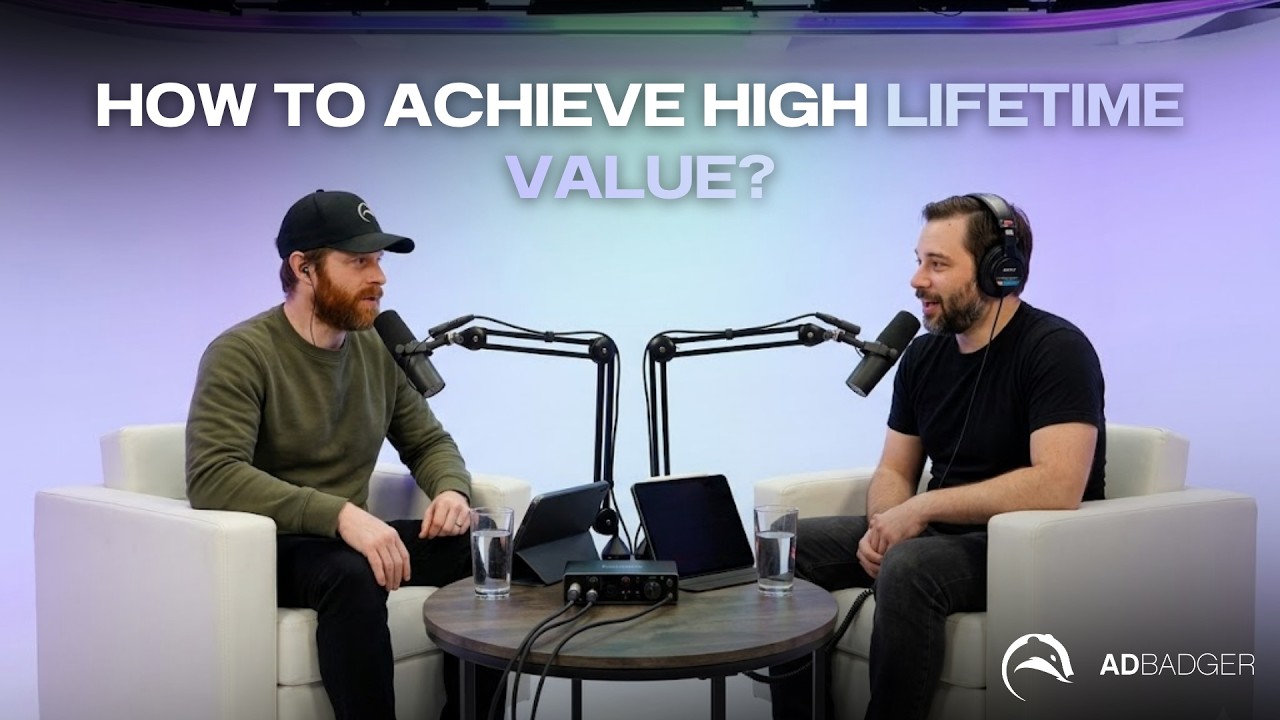
How to Achieve High Lifetime Value? (Classic)
Summary
PPC Den shares actionable Amazon selling tactics and market insights.
Full Content
How to Achieve High Lifetime Value? (Classic)
Unknown Speaker:
What's up, Badger Nation? Hold on to your hats because we're about to unleash a ferocious classic episode from the deep dark archives of The PPC Den podcast. This episode is guaranteed to set your Amazon PPC instincts on fire.
Get ready to navigate the chaos, madness, and mayhem of Amazon advertising and unleash your inner badger.
Speaker 1:
I've got a pop quiz for you. Let's say you're a supplement brand. You have 100% A costs on your Amazon advertising right now. Are you profitable? What if?
Every purchase you have, you know that you'll end up with a certain amount of your customers buying two, three, four, five, 10 more times over their lifetime. How should that change your ACOS goals?
That's what Joe and I are going to be talking about today here on The PPC Den Podcast. Welcome to The PPC Den Podcast. We're going to be talking about lifetime value today and how that should influence your ACOS goals.
This is the world's first and longest running podcast all about Amazon ads. Let's jump in. To The PPC Den.
Unknown Speaker:
I've launched campaigns and picked keywords. I've got my bids, set placements too. And bad mistakes, I've made a few. I've had my share of rankings. We are the PPC Den, my friends. And we'll keep on demanding. We are The PPC Den.
We're talking about Amazon. No time for medicons, cause we'll fix the game, baby.
Speaker 1:
Joe, from Ad Advance, way up there in Minnesota. Welcome back to the show. It's great to have you here.
Speaker 2:
It's great to be on the show again. I'm straight north from you, right?
Speaker 1:
We're just a quick, like two turns away. You hop on 35, boom, you're in Minnesota from Austin.
Speaker 2:
Literally, you drive until the road ends. The I-35 ends in Duluth.
Speaker 1:
Yes, I've seen the end. I've seen the end. So, it's great to have you back on the show. I do have to ask, you know, we're recording this February 8th and I asked you, I was like, oh, you have a white background.
Is that all the snow behind you? You're having a very warm winter as I understand.
Speaker 2:
Yeah, yeah, it's been weird for us where we don't, last year we had a couple feet of snow on the ground throughout the entire winter. Like this year, I've got three kids, my middle kiddo,
he plays hockey and we have outdoor hockey rinks and they're all melted right now. So unseasonably warm, we kind of don't like it because you like the snow, you like ice fishing, snowmobiling, ice skating, all that good stuff.
But yeah, it's been an interesting winter.
Speaker 1:
Oh my gosh, it's going to be 54 degrees where you are today.
Speaker 2:
Yeah. That's crazy. It's not normal. I mean, it feels good, but not normal.
Speaker 1:
And for the Celsius people out there, that's 12 degrees Celsius.
Speaker 2:
February.
Speaker 1:
So I'm excited to touch base. We were talking about sort of what's been on your mind lately. And you know what?
A topic that has never really been fleshed out in a big degree on this show is really Using lifetime value and using repeat purchases to inform your target ACOS.
I think everyone naturally comes to an ACOS target in their mind when they're setting up their Amazon ads of like, okay, I sell a product for $20. My cost of goods is You know, $6, I want to spend this much on,
you know, I have this much Amazon fees, the shipping, a factor in returns, so on and so forth. I'm going to end up with this break-even ACOS and maybe that break-even ACOS is, you know, 30%.
So then maybe they target a 25% target ACOS so they have profitable advertising. What I think is interesting is the factor of repeat purchases. Because when somebody buys something in your advertising account, you will get revenue from it.
And you have an ACOS from that. And you set up your target ACOS thinking in terms of singular purchases. But I guess let's kick it off here. How do people or how should people or how do you,
how have you heard people incorporate repeat purchases that ideally come in For free, essentially, like basically like maybe hopefully we didn't have to pay for it or maybe we do have to pay for it at a very low ACOS.
I guess the question is like, let's begin to combine lifetime value, repeat purchases.
You know, if somebody buys that $20 product, maybe they end up repurchasing and actually the lifetime value per transaction is maybe per customer is maybe You know, $40 instead of just that $20 purchase price. So unwind this a little bit.
Like, how do you think about this?
Speaker 2:
Yeah. So it's been fun taking a step back and we get to see a lot of different brands. And so one thing was interesting for me is. Just painting the picture, just selling on Amazon, selling on e-commerce in general,
it's getting more and more competitive as we go. And everybody's seeing fees go up. Everybody's seeing Amazon ads get more competitive. Costs are going up.
And so what's been really interesting taking a step back is looking at Who's able to spend these bigger advertising budgets? And then why are they able to do that?
So, you know, I hear many times like Amazon ads, it's just getting too expensive for me to even advertise. And these other people are doing that. And how can they be making money?
Speaker 1:
Yeah.
Speaker 2:
And so the key thing that we've taken a step back and looked at and said, what's some of our most successful clients and what are they doing well?
And a repeat trend that we're seeing is it's the people who are able to generate more revenue after that first sale. For that first sale, you're competing against everybody else. And so everybody's kind of on a level playing field there.
But if there are ways that you can generate revenue after that first sale, those are the ones who we see who are able to really build solid brands,
really invest in their marketing, and really be able to beat other people because they're able to bid more for that initial sale.
Speaker 1:
Yeah, there's a classic heuristic in paid advertising I heard maybe 10 years ago, which was he or she who can spend the most per click. And do so profitably is generally the winner in the ad auction.
So whoever can step on the gas the hardest and bid the most and do that in their business so that they're profitable is the winner. And I think that there's certain brands that, and you can tell when you talk to different brands,
some will say, I want to get orders at this ACOS. And sometimes people might say, I want to acquire customers.
At a certain rate or like they're so they're talking about like acquiring customers knowing that what is an average customer worth to them as opposed to just a one and done type sale.
And I guess that that brings up the first question, which is, you know, can every brand incorporate this mindset? You know, are there some brands, you know, maybe they just have one product, right?
So they don't have the opportunity for a repeat purchase. Maybe it's not a consumable. So it's like a one time one purchase product. I guess, you know, does this apply to every brand? If there's brands that it doesn't apply to,
should they maybe begin to think about more of a lifecycle type marketing or a lifecycle brand where somebody buys and then repurchases at some point in time? What are your thoughts on that?
Speaker 2:
So there are definitely some products where it's really hard to drive that next sale. So if I go, I get a new phone and I buy a phone case, there's so many different options and my brand loyalty is probably going to be pretty low.
There are some phone cases that you do come back who have actually built up pretty solid brands. They're usually priced a lot higher. But in general, for products like that, I'm probably not going to have much brand loyalty.
Speaker 1:
It's actually really good because the first brand that came up when you just mentioned that Is like OtterBox.
Speaker 2:
Yep.
Speaker 1:
You know, OtterBox, in case anyone isn't familiar and just, you know, search them. When you search them, you'll probably find their standalone e-commerce site. First, like they've taken a lot of effort to build a brand.
I just searched on Google. The first is an Otterbox branded Google ad. The next is an ad that goes to Amazon. And then the third is their website. The fourth is an organic listing to their Amazon.
The fifth is their Facebook, where they have almost a million followers. They're also on Best Buy. So yeah, so this is a perfect example, right?
There's people that only buy OtterBox phone cases and they're way more expensive and that allows them to invest more in branding and marketing and probably product quality compared to maybe, you know, the one and done type stuff.
Hey, I'm selling a phone case. It's just a commodity. I'm just assuming that people aren't going to buy again. So yeah,
so I guess like if you were to tell me Our phone case is a commodity because you buy one phone case for your phone and you're not going to buy another one again until your next phone and you might just be searching and just randomly picking one on Amazon.
But there is a certain percentage of the market that probably only goes to OtterBox every time. So maybe we use that.
What do you think and what can brands do to maybe become more like an OtterBox type company where I bet A lot of people might think that, hey, I just sell a commodity. It doesn't really matter. I don't need to invest in branding.
Race to the bottom, whereas Otterbox just did the opposite. They're charging $70 for a phone case.
Speaker 2:
Yeah. And for like the Otterbox example, I think it's really interesting because I feel like they established themselves early on before you had all these different more commodity type cases in the space.
And so they had kind of a jumpstart there too.
The downside of taking like the OtterBox approach and really trying to build a brand like that is it requires a huge investment in marketing dollars and marketing assets and building up the million followers and everything else like that too.
And so there's a reason why their cases are going to be, you know, probably $40 to $60 compared to a $10 case on Amazon. A significant amount of their profits are going to marketing itself. And in this instance,
it's a little bit harder because usually I'm only going to buy a new case every time I get a new phone. So like the life cycle, like maybe every year or two, I'm going to go back and buy a different case.
What they've done a really good job is they are one of the few brands that I could look at from like a phone case perspective and say like, okay, they've got extreme quality there. And I've known about them since the early days of phones.
And so it's tricky because you need the margin to be able to invest in your advertising. And to get that initial brand presence, you need that higher value perspective.
And so for a seller, like when I started on Amazon, I simply wouldn't have had that budget. And what happened is then, you know, I could invest in some of the core pieces, but I didn't have that good repeat purchase behavior.
And so prices continued to drop down. And it just leaves you with less margin overall to be able to invest. And so where I've seen a lot of brands that really succeed, it's being able to drive Cross purchases.
So if you do develop a brand and you have many related products, like for instance, one example I always go to is like a running apparel company. If I buy that initial like running shirt or running shorts or running gloves,
now I'm going to be much more likely to come back and buy other products because I took that initial step. I made like the branded materials that I got. There's some really good opportunities to drive more customer loyalty out of me.
Through cross purchases or any consumable products that you're coming back over and over again, it's always interesting to take a step back and see the ads that you're seeing on TV. A lot of them are these consumable,
these CPG type products where you build up that initial brand loyalty and people keep coming back over and over again. There's other instances where we've seen where People will buy,
they'll have different products that then require a subscription after the fact. So if it's a health tracker, getting that initial sale, we're not looking at ACOS because they make all of their money on the subscriptions after the fact.
And so some three key areas where I can see that people can increase lifetime value is trying to drive cross purchases after the sale. Having products that drive repeat purchases just by the nature of the product,
or are there other services that you can offer after the fact? And then kind of like a three and a half one is once I get them to the product detail page or to my brand store,
are there upsells I can do where initially I drove them in with my lower price product? But then I really tried to push them to buy my higher price product, whether it's a higher quantity or just higher quality,
where now I can increase that average order value. If it is just a one-time purchase, how can I increase that average order value by maybe having a higher priced alternative once I've driven them through that ad?
Speaker 1:
Yeah, really well said and well framed. You know, with the Cross purchases, I think to, you know, a brand when you're starting out doesn't need to have everything. Like even if we take Otterbox's model, I'm looking at their website now,
they also started selling wall chargers and they sell cables and they sell power banks and they sell MagSafe chargers and they sell Wireless earbuds now and smartwatches, like they used to not do that, right? Sure.
And I also noticed now that they've expanded their product line. It looks like their cheapest cases are like in the $20 range and their most expensive ones look like they're in like the $80 range.
So, you know, a lot of brands, I heard it put really well one time by Dan Andrews on the Tropical MBA podcast where he said, If you think of PetSmart, they sell a million different products.
But if you're an individual brand, you don't need to start there. Don't start with a million products. Start like an inverted pyramid. Start very small. What is the tip of the spear? How are you going to break into the industry?
And then over time, slowly expand that out to incorporate a lot of these other products. And it's so true. If you look at the Product Opportunity Explorer in Amazon,
it'll tell you how many new products have been launched in any particular niche. And it's a vital requirement for any e-commerce brand, especially one selling on Amazon,
to continuously think of that because it does boost your lifetime value. So I think that in general is a table stakes. We need to be launching more products periodically.
And a lot of people can get Like ideas for new products from their existing search term report that you can start to see maybe trends that are emerging or different kinds of keywords that people are searching for that maybe you don't have.
And that's a really easy place to generate some ideas. You also mentioned having extra value per product. Another interesting story, one of the most successful brands I knew, it's like a solopreneur brand,
and all they sold were this really simple commoditized fitness equipment. It was not this, but I'll just use it because it's a really close example. Imagine they were selling yoga blocks, and then on the back end of that,
they just had At the time it was a Facebook group, but it was a big community and the community wasn't like their brand's community. It was a community about Yoga and fitness and, you know, they owned the community and they were able to,
you know, hey, we just did a product launch or like vote on our next product periodically in between, you know, having a dedicated community of people, they built their tribe.
So I thought, you know, just some more interesting anecdotes about how to boost LTV in a way that, you know, People might not have thought of. So basically, the first way to increase LTV are those three things that you mentioned.
Now, let's say people are going on that path and they're increasing their LTV. How do they begin to incorporate that into a total ACOS? I mentioned earlier like ACOS per order. I want a particular ACOS across my products.
But when we start to think of lifetime value and we begin to incorporate things like cross purchases or just sort of generally assuming that people will come back, I think one report, I don't kick us off here,
one report is the customer loyalty analytics dashboard. Which will actually tell you your repeat purchase rate in any particular time. So I'm looking at a brand now, they have a 3% repeat purchase rate.
So over the course of a year, they had 47,000 customers and it said that 1,400 were repeat purchases. That's about a 3% repeat purchase rate. So let's take that as an example.
If they know that they're going to get 3% repeat purchases from every purchase they get. So again, every 100 orders, they're going to expect three more rolling in. I guess like, should that even be considered?
Is there a particular range that, okay, now we're at a 10% repeat purchase rate. Now we can begin to modify our target ACOS. What is the math here that we should be calculating to modify our target ACOS in advertising?
Speaker 2:
Yeah. So if we're looking at ads, I think you have to start with the product and all right, is this reasonable where I'm going to come back and get a bunch of repeat purchases?
Speaker 1:
Right.
Speaker 2:
You know, if I'm selling a quality tool or something else like that, like hopefully they're not having to come back and buy the same thing for me. That probably indicates that there's an issue there.
Speaker 1:
Yeah.
Speaker 2:
And so if it's like a 3% repeat purchase rate, At that point, it's pretty marginal. And so if I'm looking at target ACOS and really what am I trying to target with my ads? At that point, it's really not going to change my math much.
And so that's where like ACOS and ROAS can be a solid metric. It's when you have these single purchase products and a number of products fall within this category. The flip side is, All right, say if we're in the supplements category.
So we're working with a brand called TruNiagen and it helps with the aging process. And so what we found is that people, once they buy that initial bottle of supplements, they come back and purchase a number of times.
And so we could look at our ROAS for that initial sale for them. Say it's a $20 bottle and say we spend $20 on our advertising to generate that first sale. Alright, we get 20 divided by 20, we get a 1x ROAS or 100% ACOS.
And we could look at that and say, that's really bad. We're not going to make any money off of this. But then if we can go in the metrics and we can see, okay, on average, once we get that first customer,
they come back and they purchase another four bottles after that, on average. Now, instead of that first purchase generating just $20, it's really generated $100 in sales.
And so if I look at that, now I could say, all right, I spent $20 in ads, which we would call our CPA or cost per acquisition, and it generated $100 in lifetime value. Now what I can see is 100 divided by 20.
I've got a 5X ROAS on that new to brand customer or a 20% ACOS. Whereas if I just looked at that first sale, which is going to be the sale that's attributed in the ad console, it's going to say that it's really poor.
And so for those type of clients, we don't even look at ACOS or ROAS on that initial sale. We take it more on a cost per acquisition for a new to brand customer.
And then also combine that with the lifetime value to see, is this making sense or not? And then build upon that.
Speaker 1:
Yeah. You know, I just wrote your example down in the spreadsheet here. Let me go ahead and just map this out in case anyone's watching. So this is basically, you know, No repeats, repeats. So, yeah.
So, in the first case, you spent $20 to get one order for $20 of revenue. So, that was like 100% ACOS. In the second one, When you're factoring the repeats,
one order is actually going to be five because you're going to get four more subsequent orders, giving you an ACOS of 20%. So this is pretty exceptional, right? Like from one order yields five orders for the lifetime value.
In a more simple example, like that 3% Repeat rate, you know, we were looking at, you know, moving from like a 50% ACOS to like a 48% ACOS. So the shift of a repeat purchase rate of like four times, four more orders from the one,
I'm your host, The PPC Den, and I'm here to talk to you about how you can target 50% ACOS or 3% more orders from the one. It can be quite significant in shifting goals. So I guess in terms of the math,
it's sort of worth running a little calculation like this to see where your brand is currently, and then play around with these numbers. Because if I'm looking at something like this, I only get a 3% repeat purchase rate,
I'm probably not going to be shifting my goals too much. Is it worth it moving at one point or not? In this case where we had many multiple orders after the fact because our lifetime value was so strong,
What target ACOS would you target here? Like, would you go after, hey, you know, holistically, when you factor everything, I want to be at that 20%. So I need, I mean, going to target the 100% on ads, ultimately landing at like a 20%.
Or do you sort of shift this and you say, hey, I'm going to go to put the pedal to the metal here and I'm going to maybe spend 25 per order? Because even when I spend 25 per order and push my target ACOS to 125%,
We're still going to only be at a 25% when I factor in all those repurchases. I guess, what factors come into play here when you go from your single order ACOS factoring in your lifetime value?
Speaker 2:
In terms of setting targets and everything, we shift the target from a ROAS or an ACOS And we shift to a cost per acquisition basis. And then we figure out, okay, what's the overall return that we need for our ads?
And we can use that to adjust our strategy and our bids and everything else like that. So individual ACOS in this instance doesn't matter.
Where it gets trickier is that now you're tying together multiple different campaigns into this bigger funnel structure. Because for a lot of these products where there is high lifetime value,
There can also be a lot of education that takes to get somebody to switch or start a new habit or really get tied to our brand and build that brand loyalty.
We've done different studies on the number of times somebody needs to see an ad compared to cost per acquisition. And for brands like this, like supplement brands,
the average is typically about seven to nine times and the sweet spot is right in there and cost per acquisition actually goes down a bit in those areas. That's where it gets tricky is when you're setting individual targets.
Now it's looking more of a holistic picture of your advertising versus individual campaigns. And what is that ACOS or that ROAS that I'm getting at an individual campaign?
Because some lower in the funnel are going to have a much better ROAS because you spent all this time introducing them higher up in the funnel to build that initial brand awareness and loyalty to finally.
And then they click that sponsor product ads and purchase after the fact.
Speaker 1:
Right. It makes total sense, right? So instead of getting tied up in an ACOS, you're sort of looking at cost per acquisition. And when you say acquisition, from a day to day basis, when you're inside the ad console,
Is that a factor that you're using when you're optimizing campaigns where it's like, what's the CPA of this campaign? Let me calculate that really quick. Or what's the CPA of my overall advertising account?
And is it cost per order, essentially, like on the advertising side?
Speaker 2:
Yeah. So if we're looking specifically at the advertising console, it'd be more on a cost per order because it's a little bit harder to segment down from a new to brand basis. If we're looking at bigger picture for like say this client,
we'd be taking it a little bit step further where we'd say a cost per acquisition for a new to brand client.
Speaker 1:
Right.
Speaker 2:
Cause that's the other key piece. And in our example that you just showed, it's a little bit simplified because we're kind of showing best case there.
Speaker 1:
Right.
Speaker 2:
So we acquire them, they're new to brand. They came in, they clicked our ad, we spent $20 and now they come back and repurchase four times. With those four times that they repurchase, sometimes some people may click another ad.
And there's associated costs there too. And so we had to take that into account.
So it's not like magically everybody's new to brand and they all just signed up for a subscribe and save and it just comes and they never had to like search for us again and click an ad.
So there are extra costs that go into some of those repeat purchases. So we like to segment it down even a little bit more on a new brand basis cost per acquisition.
Speaker 1:
I've thought for a long time that even if you were able to track every single thing, everywhere, like imagine you had every single data point of every single person doing absolutely everything,
it still would be really difficult to track and hold that information and actually make meaningful decisions on a day-to-day basis. I guess the question is, When faced with that relative uncertainty that like, okay,
you know, new to brands, we only have four sponsored brands, you know, what about when somebody searches our brand name or something like that? Should that murkiness be a reason to not consider this at all?
Meaning if we go back to how we started, it's just like, I just want an ACOS target and I just want to hit that. And any repeat purchases are just going to be icing on the cake. And I'm not going to use that to maybe shift my goals.
I guess like, Is the murkiness a reason to not shift goals slightly or significantly? What are your thoughts?
Speaker 2:
It depends on the product. And so if I have a product where I know it's going to be a single purchase, then I'm really focused on how much are my ads truly driving to sales. But there's still a murkiness there too.
So like you're saying, even if we had pure 100% data for everything, You never know what that person would have done if they didn't see your ad because they saw your ad and it influenced their decision.
And so what we need is like two like split worlds where one we could not show them the ad and the other one we can show them the ad and then we can get the true incrementality, so the true impact of that ad.
Because in some cases, if they didn't see that ad, like for like brand defense, you know, so you are defending your brand. All right, if they see that ad, Would they click and then buy from you and not your competitor?
If that ad was not there, would they have bought from your competitor? We can do different tests, like search query performance report.
This has provided a lot more information where we can start to now test the incrementality of brand defense. So what you can do is you can cut back how much you're defending your brand,
and then you can look at your market share percentage for those specific terms in the search query performance report. And you can see, all right,
did my market share percentage of sales go up or down if I cut back how much I'm defending my brand? And we finally have some metrics where you can like quantify, like, all right,
what's the true incremental impact of that brand defense spend? Do people just scroll down and find me anyway? Or do they actually purchase from my competitors because they don't show up up top?
So there's tests that you can run in all these areas, but it's constantly murky, and it's always that alternative. If my ad wasn't there, what would they have done? So what I would say in general is, if I'm looking at my products,
and I have products that I don't have a good opportunity to really increase cross-purchases or increase value after the fact, and that's just the way it is, then I'm really sticking to the core metrics on how much are my ads delivering?
What's the total sales? I'm looking at ROAS. I'm still doing some tests on brand defense to see what the true impact is, but overall I think it's much more straightforward.
Then if you have ads or products that really generate higher lifetime value and yet start going further up the funnel, it gets a little bit murkier there. But those marketers are usually used to a little bit of murkiness,
especially as you go further up the funnel, because it's much further away from the sale, but it's generating that brand awareness overall.
Speaker 1:
Well said. Let's go into a rapid fire question. First, I'm going to play the transition music. Alrighty, Joe, let's talk rapid fire things inside Amazon that can provide more insight into driving repeat purchases.
First thing I'd love to touch on, brand tailored promotions. Brand tailored promotions, what's your take on it? Should people be looking at that as a way to boost repeat purchases? Go.
Speaker 2:
Brand tailored promotions are awesome. Both in driving to that initial, getting that sale for card abandoners, but also driving repeat purchases after.
Added benefit with Amazon's DSP, you can actually set up audiences that correlate to the brand tailored promotion audiences. So say if they abandoned carts, we could actually show ads to those who abandoned the carts,
drive them back to the cart, and now they also see the credit or the discount that they can get, which helps to further that sale.
Speaker 1:
Well said. Second thing, sponsored display audiences. So maybe people aren't on DSP. In sponsored display, would you recommend people look at the audiences there,
which are advertising to people that have viewed your products and advertising people who have purchased your products? What's your take?
Speaker 2:
Yeah. So if you have a consumable product, sponsored display is great to drive repeat purchases. Great way to start, and then once you get more advanced or you're starting to spend more budget there, DSP, you get a little bit more control.
Say if somebody goes through my bottle of supplements in 30 days, I can not target them for the first 35 days, and then if they don't repurchase, now I can target them again.
So sponsored display, awesome start, test it, then you can build upon that.
Speaker 1:
Third thing, new to brand and sponsored brands. That metric, new to brand sales, new to brand customers. Most people don't utilize this metric. Should they look at it? When should they look at it? Go.
Speaker 2:
If you have repeat purchases and higher lifetime value, yes. If you're a single purchase, doesn't really matter because you're just looking at overall sales.
Speaker 1:
Fourth question. Amazon Marketing Cloud allows you, you know, one really discussed report is show me purchases from people that saw one ad, two ads, three ads, four ads. So it gives you that incrementality. What's the ROI on that?
And, you know, should people bother with the extra work to get there? How much more sales are they going to make with this information?
Speaker 2:
So single purchase products, not as much value at all. If you have, if you're in supplements or if I'm a CPG brand or if I have this really solid like running apparel brand. Much more value there. And just note,
you can get into DSP for a much cheaper rate if you go through an agency versus going directly to Amazon. So don't think of the big budgets that you hear all the time as the block.
We get people going in really cheaply, and that gives us access to AMC. Amazon Marketing Cloud also can give you the full lifetime value now, because that's a key thing, like the repeat purchase metrics that I see.
They don't always paint the full picture. And sometimes I think under-report the lifetime value. So to get into Amazon Marketing Cloud, you need DSP, but you can get in a lot cheaper than you actually think.
Speaker 1:
Joe, we've done it. That was my first ever rapid fire on the podcast. How was that?
Speaker 2:
I like that, yeah.
Speaker 1:
I'm not really a rapid fire guy.
Speaker 2:
I could have talked a lot more, but I just tried to tone her down a bit.
Speaker 1:
Yes. Well, Joe, way up there in blazing warm Minnesota.
Speaker 2:
My pants are in shorts right now.
Speaker 1:
Thanks so much for joining us here in The PPC Den. In case anyone wanted to touch base with you, maybe ask a question. I sent some fan mail to you. Where can people get in touch with you?
Speaker 2:
Yeah, probably the best couple of cases are LinkedIn. You can check out the podcast, which is The Ad Project, or feel free to go to adadvance.com.
Speaker 1:
Right on. Well, Joe, thank you so much for coming back on The PPC Den Podcast. Talk to you again in the future. Everyone else, I'll see you next time here on The PPC Den Podcast.
Unknown Speaker:
I'm Joe Shelerud.
This transcript page is part of the Billion Dollar Sellers Content Hub. Explore more content →