Ecom Podcast
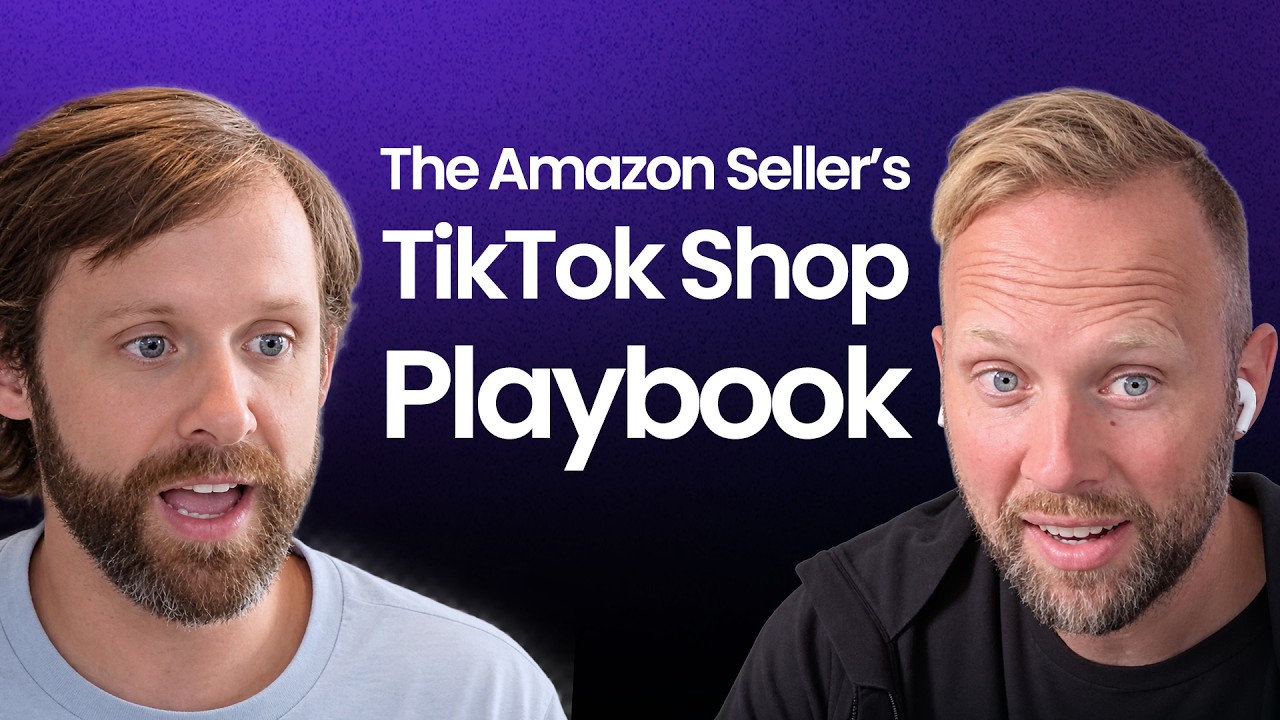
Episode 338 - The TikTok Shop Playbook Amazon Sellers Need to Understand
Summary
TikTok Shop is revolutionizing e-commerce by allowing Amazon sellers to bypass traditional influencer marketing hassles, enabling some to generate $500,000 in sales through direct consumer engagement and checkout features.
Full Content
Episode 338 - The TikTok Shop Playbook Amazon Sellers Need to Understand
Speaker 1:
Welcome to The Smartest Amazon Seller podcast. Super excited today. You know, while we are called The Smartest Amazon Seller podcast, we're not going to talk too much about Amazon. If you know, if you've been listening in,
like I've been very interested in like the next evolution of like Where brands, Amazon sellers are like growing, the kind of the new space and that's TikTok Shop.
And I have someone who founded an agency and has worked with a lot of brands to grow. And like, I know he knows his stuff and you're gonna find out really quickly why. So I've got Jordan West. Welcome to the podcast.
Speaker 2:
Scott, I am excited to talk all things TikTok Shop, especially knowing a little bit about your audience. I think there's going to be a really interesting conversation,
especially for the brands that maybe have tried and it hasn't really gone anywhere. I think that's going to be a really interesting conversation today.
Speaker 1:
Yes. Yes. So, um, let's, you know, you started your agency only two years, but for TikTok two years ago, but for, for, for TikTok Shop, that's about 10 years of like, just like evolution of what people understand and like what,
like, you know, who started early versus people that are starting now and how the, um, I wouldn't be surprised if the way that creators are approaching TikTok shop, uh, you know, as they, as they kind of,
that's evolved a lot in the last few years is like, you know, I know people like in my personal life that have like, kind of like, they're looking to quit their job so they could be TikTok shop creators.
Speaker 2:
Yeah. To be full, a full-time creator. Totally. Yeah. Yeah.
Speaker 1:
It's, um, and it's not a, it's not even that crazy of an idea knowing that, um, It's a steady path for a lot of people and you know, they can kind of, yeah, it's just a. It's crazy the new types of businesses or the new types of ways to,
you know, either make, you know, a living or like, you know, some brands that they're not looking for to make a living. They're looking to like, you know, change their financial trajectory. So tell me a little bit about your background.
Why did you start social commerce club and how, you know, what's, what's, what's, what? Yeah. And then we'll go from there.
Speaker 2:
Awesome. So I came into this space owning eight brands before this. So I owned a bunch of different apparel brands, was really familiar with the apparel world in direct to consumer.
I had a direct consumer agency at the time, but I saw TikTok Shop come around. We'd sold one of our brands. One of our brands went bankrupt and that was it. I had no more brands.
And I was really tired of just like running performance marketing for brands. And I saw a TikTok shop come around and one of my buddies, Brock, he called me up and he's like, Hey, I'm going to do half a million dollars on TikTok shop.
And I did not get it. I was like, okay, what's the big deal? Like you, so you're going to like have checkouts. Like I thought it was just like meta shops. Right.
I thought, okay, well, people are just checking out, like just through that checkout, like who cares comparatively to Shopify. What's the big difference?
Speaker 1:
Yeah.
Speaker 2:
They explained the mechanics to me. Right. And I finally realized, oh my gosh, this is the win-win that I've been looking for in affiliate marketing. I hated with our brands. I hated working with the influencers because with an influencer,
each one of you is always trying to game each other, right? It's like, okay, well, how good, how much money can I get from the brand for a post, right?
And then talk about that product, but I'm not really liable for any sales that actually happen. And then the brand is like, well, maybe this post by this influencer is going to go viral and my CPMs will be super low.
When TikTok Shop came around and it was this closed ecosystem, it was finally the first time that I could see affiliate marketing actually working because of the closed ecosystem.
Speaker 1:
I love how you put that. It's like the first time that like, you know, influencers and brands are like, they're on the same side.
Speaker 2:
You know, totally, totally. It's like what, what is good for you is good for me. Right. That's why. And, and which is why I despise the idea of so many creators right now asking for retainers. I'm like, no, no, no. That's the old model.
Like, sure. We, we just refuse at social commerce club. If anybody asks for a retainer, like no, unless they've worked with us for a while and we're trying to get a bunch of videos from them, but I love the win-win aspect of TikTok shop.
I think that's what is really made it actually grow like a hundred billion dollars globally this year. That is wild. That growth, the growth trajectory is just so astronomically bigger at the early days than Amazon and Shopify.
Like we're like, it will surpass that, which is wild.
Speaker 1:
Yeah, no. And it, um, it's, it's kind of crazy where like, it's that closed loop system that made it so fast. Um, Amazon, like, like if you were to compare it to Amazon and Instagram, like, yeah, some of the stuff is actually there.
You can work with creators and like, you know, have a feel, you know, commission based or whatever. There's tools to patch things, to give visibility, but it's not a closed loop. Now, for some reason, for some reason, the, uh, the, uh,
like it makes like the advertising algorithm a little bit less informed about who would actually want to buy this product and which, which content actually is the best.
Um, and they got magic in a bottle and everyone's kind of trying to like, look over and see what it is.
Speaker 2:
Well, it's the first time like when I own my brands, I tried TikTok and TikTok advertising just did not work, right? The attribution was so bad, yet we would turn TikTok off and suddenly sales were down,
but we could never actually attribute anything over to TikTok. That was a really big thing. So the lightning bolt in my head was like, oh my gosh, we can actually attribute everything on the platform.
What I didn't realize though, Was how much at first, I really didn't understand how massive the halo actually was onto the entire brand and what was happening.
Like you and I were talking about some crazy stats that, that you and I have both observed. I don't know if you want to go first or I want to go first here, but.
Speaker 1:
I mean, I think I've actually already mentioned on the podcast, like that brands that are connected, you know, doing both Amazon, TikTok shop, they're growing at about a rate of 5X. Brands that are just on Amazon and like,
and it's like the more sales they do on TikTok Shop, the faster their growth. It kind of proves that point of the halo effect.
Speaker 2:
It's wild. I mean, so the stats that we see, right? So we have a tool internally Grow Halo and we see this everywhere, right? Like there was a brand that came and worked with us, Portland Leather Goods.
They were doing about $40K a month on the platform before they started working with us. We got them up to $2 million a month. During that time, right, that was just on platform, $2 million a month.
During that time, they started to see an extra $200,000 a day in their retail and .com. And they just couldn't track it. They're like, where is this coming from? The only thing that we have done is TikTok Shop.
It's like, well, of course that's exactly where. And so they just scaled like absolutely crazy during this time and continue to do that. Like again, super anecdotal, but I've got crazy other stats.
Speaker 1:
Well, no, no. I think fundamentally, like I'm also like, I have this other like feeling I'm like, Hey guys, you're not going to be able to track everything.
This is like, if you want to like track every like outcome that happens because of a TikTok shop, You're going to lose because there's a lot of like these impressions, they're different.
They're not, you know, like they actually are changing how people, some people are thinking and perceiving a brand. The moment they see that on a shelf, they're like, Hey, I know that brand. I see it right now.
Now I'm going to grab it off the shelf. Or like, you're going to tell a friend, Hey, I saw an ad about that. That's like totally interesting. And like, so that like initial impression that like, didn't look like it converted to any sale,
like created conversations and changes in different behavior points.
Speaker 2:
In such a massive way, I was telling you this before, but I was giving a keynote a couple of days ago down in San Diego. And we were talking about, and I'm sorry, I was talking about, I feel like I'm talking with the audience,
you know, most of the time, was talking all about the fact that most brands are not going to be super profitable on the channel. And it's really hard. I think like you and I were talking about this before of like, hey,
let's get into like why Amazon-centric brands have not been successful on the platform. Number one, if you go into it, there's these mindsets, right? I used to, it's funny, I'm 40 now.
I used to always think like when somebody was like, ah, you need to like change your mindset. I'm like, that's a big deal. But really, when you have a certain mindset about what something is going to be,
and it does not deliver that, you're gonna be disappointed. So number one, trying to be profitable, super profitable on the channel, this is not the channel for that.
This is the channel Where you are going to get the most amount of eyeballs and the most amount of product demonstrations in front of an audience that is on the platform for like an hour and a half a day.
Looking at your product and then going and purchasing your product either there or somewhere else. I mean, the compelling part about all of this, it was the final loop data that I was telling you about before,
where they looked at all of their brands. So the brands doing a million dollars or more on TikTok Shop in the last 12 months, which is not crazy. It's not even six figures a month, right?
Those brands with their data are growing 3X revenue versus the other brands. Their contribution margin is 3.5X and their EBITDA is 3.7X more than the brands that aren't, right?
So obviously TikTok Shop is working for these brands in a massive way, right? So when you look holistically at the business, so I think one of the big things at first is when brands myopically focus on the P&L of TikTok Shop, right?
Which will happen and I don't blame you, of course, like you want to look at your channels and see, but when you think about this channel, this is an advertising channel. This is a massive top of funnel channel.
Again, I came from the Facebook ads world. You essentially have what Facebook ads had and you get to break even on everything and you get to sample out all of these products and then you get all of this creative.
Mind you, the creative that you get on the other side as well is absolutely massive. And it's proven to convert. So I don't think we need to convince people anymore on TikTok Shop itself.
Speaker 1:
Yeah, no, no, no. Like I, you know, Amazon Seller specifically, like the idea of becoming a brand, like It's crazy hard to actually go from like a solution, just like you have a product to a brand where like,
people know what you stand for, what you, what, like how they feel about your product. And, you know, seeing like up close and personal, you know, people with an idea, people with a product turn into a brand.
That happens on TikTok Shop in a way that just doesn't happen on Amazon.
Speaker 2:
Totally. Totally. You need to either, you need to move to .com, right? If you're going to do this, that was the previous thing, but now TikTok Shop is taking that.
Speaker 1:
Yeah, totally.
Speaker 2:
And it's doing that. And now I really do believe that you need to also have .com in the mix with all of this. I think that's the like, that is the brand growth story of all of this.
And the great news is like, When you start to get traction on the channel, you are going to be told who your brand is. If you don't already know that, right, your creators are going to tell you, right?
As they start to actually make sales for you, they're going to say certain things that you pick up, right? And you're like, oh, okay, this is actually who, like we worked with a, or we still work with them, this giant shoe brand.
And they sent us this one shoe that was just like an absolute dog. It was like, it's not moving. Let's just try and sell it on TikTok Shop. Let's see what happens. What now happens to be their number one women's bestseller.
Sydney Sweeney reps this shoe now because the market told them what to say about the shoe, right? It's like that big of a deal. It's, and I understand this is like a big brand, right?
And some people listening to this are like, well, you know, I'm like, I sell products on Amazon. I really believe that this is the transition that a lot of Amazon sellers need to make is into the brand world.
Speaker 1:
So, a lot of listeners might be like, okay, I'm sold on this. But some brands have still kind of crashed and burnt.
Speaker 2:
Yes.
Speaker 1:
What are some of the tips and tricks of the trade as you've seen? Some that have nailed it and some that maybe like, ah, try again.
Speaker 2:
Totally. I mean, it's not just some brands. I think a ton of brands have tried and failed. So there's a bunch of reasons. So let's get into a few of them. So number one is testing the channel, right?
If you think that this is a test channel, you cannot test this channel. You must go all in. You have to take your chips and move them in to this channel. That is the very first thing.
The second thing is when you move those chips in is actually figuring out what the leading indicators are that you are going to be successful. There are very few Portland leather goods out there where they're doing $40,000 a month.
They come and work with us and they're doing 2 million. That's just that is not how it works, right? More what we see is this slow incremental burn. There's another actually big leather bag brand working with us right now that I cannot say.
But you can just choose from one of the many that are out there that it looks a little bit more like 50K in the first month, 100K in the second month, 300 in the third month. And it'll just like, it'll grow like that.
And so understanding what your forecast actually is and should be is really important because a lot of brands have started, right? They've probably sampled out a ton of samples and not really gotten much back.
Number whatever, I think I'm on three or four here, is the way that you launch. And so the way that we teach at Social Commerce Club to launch is using a blitz.
The idea with a blitz is that you're actually getting all of your samples out to creators and telling them to hold off on the content until a coordinated blitz time. So what this does, And today,
what we're going to talk about is it takes all of the noise that is in the market and turns it into signal in a very small amount of time. During that time is when you're going to deploy the majority of your ad money as well.
What this does is like it just it basically tunes to the algorithm, right? And then things start to go. We have done the Blitz methodology for I don't even know how long.
We stumbled upon it accidentally and we're like, oh, how does this work? Coming from the apparel world, we used to do this all the time. Like weekly, bi-weekly drops, it's the same sort of idea with the blitz.
And so if brands can do that, right, it's really, it's massive. Now, one of the things, sorry, Scott, I'll let you chime in in one sec. One of the big mistakes that brands, and I'll talk specifically to Amazon brands,
Do not understand is that creators are not like a display network, right? They're not an ad buy. These are humans that need human interaction. And so it's not like going on to the back end of an ad platform and just plugging stuff in.
That's not like that will not work, right? You have humans that you need to talk to and help them actually understand how you need to understand how to motivate them. That is a massive part of this, right, is actually motivating creators.
And so that's one of the big mistakes that a lot of brands have made is like they'll just sample out to a bunch of creators, not put them into a creator community, right? Which is massive because then you can't talk to them again.
Some of them will start a discord and there's like 7 trillion discords out there. And so you just get lost in the noise. They'll then try to give them way more commission thinking that that might solve the problem, right?
When the problem really is that they haven't actually built relationships with creators. And that's what it comes down to. Like what we do,
I was just talking with our head of creators and right now he's actually in Boston running what we call a hub day where we bring a bunch of our top creators in and then we bring multiple brands there. And actually do content on the spot.
And so what that does is it actually creates a really, really great relationship with the creators. And not only that, but especially if you have a high AOV product,
it's a really great way to not have to give out a ton of samples and instead bring those creators in. We make the day really special for them. We do this all over the States. Again, Canadians, I always say the States.
So yeah, so that's a little bit in there, Scott. Hopefully that kind of helps of like some of the big mistakes, but I mean, there's more. I'm sure you're thinking right now.
Speaker 1:
I actually totally get the fatigue from the creator standpoint. Like, you know, they're getting reached out to all the time and how, uh, and like, like how many discord, how many of them are getting invited into like,
you know, like these like little, like brand creator communities. It wouldn't be hard to be in 20 to 30 of them. And then again, so the creator's like, well, what do I actually do today? You know, who's going to, who do I believe in?
What can I sell? And so building the relationship is kind of like core to that, building the fan. Yes. And at the end of the day, like, Maybe this is like trite, but like, you know, authenticity like matters.
Like I have been creating content on the podcast, on LinkedIn and all that for like six, seven years. Trust me when I'm like passionate about something, it does better.
Speaker 2:
Yeah. And so you're, you're preaching to the choir here too, Scott. Like you, like it, it, the founder authenticity and the founder connection, Is so important on this platform. So I think again, let's just go back to Portland Leather Goods.
Cause they're one that like, I've been talking about this so much. Curtis, the founder, every single day makes a video for the group. The founder and CEO of a like, I don't,
I don't even know the three or $400 million company every single day is in that creator community talking to the creators, getting them pumped about the product.
Speaker 1:
Oh man.
Speaker 2:
That's crazy.
Speaker 1:
Yeah. It's like, uh, how valuable is a, uh, um, like a promoter, someone that just like, they just like feel it. They're like, I'm going to talk about this. Cause I like it. Here's something dumb in the last 24 hours.
I thought to myself, like, this is like really stupid. Um, but I'm like, Hey, you know what? There's a sandwich shop that I'm like, that like, I know is franchising. And I'm like, I'm a huge, like fan.
You look at my credit card statements and you're seeing it's pot bellies. You're going to see like, you know, like three times a week. Like when I show this off, people are like, who are you? And I, I see to myself, I was like, you know what?
My retirement, like joy would just be like, do you run a pot bellies? As a franchisee and just like share the, like, be like, this is my, I enjoy it.
Now I'm like trying to like connect that to like the same way that like a creator can just do it organically and that how much better will they be at selling? Like, so I don't know. There's just something.
Speaker 2:
Well, there has to, the creator has to actually believe in the thing that they are selling, right? So if you're selling, so if you don't believe in it, right, if you're selling some supplement that you're like,
eh, whatever, I'm just doing this for money. Cool, but if you don't actually believe in the results and you can't be the one, like if you're not the cult leader, I'll tell you, cult leaders do the absolute best.
Cult leader brands do the best on TikTok Shop, right? Because they're able to get people actually on board.
Speaker 1:
What's an example of a cult leader brand?
Speaker 2:
I mean, NeuroGum is a really good example. He's been able to like get in there. And again, his big thing is like he's in there with the creator community, talking to them, leaving voice notes, all of that. And it's not hard guys.
It's really not hard, right, to make a quick video to get people excited about this, but it's knowing your product and knowing why it matters so much and how it will actually change people's lives or whatever that thing does.
So if you have a product that's like not easy to talk about or not easy to demonstrate, doesn't have a great effect, there's no before and after, you're gonna have a hard time on the platform. Right? You really are.
And so you need to understand how to tell that story. Luckily, we have like insanely smart AIs that are smarter than all of us. It's funny. My COO was reaching out recently.
He's like, hey, so what do you think about ChatGPT 6 Sol versus Astra? I was like, I don't know. They're both like way smarter than me. So I actually don't know.
I actually don't know which one's better because I think they've all surpassed my IQ now. And so I don't even know which one is better. Well, obviously, I know that Astra is better, but it doesn't matter to me anymore.
Speaker 1:
I, I feel the same. Everyone's like, Oh my goodness, he's a laser. I'm like, well, it was already good. So like, I have to imagine it's only a little bit sharper. Um, uh, that's very, um, interesting.
I actually have a question on the, what you described on the hub day. Um, yeah. Uh, what, um, Let's say, you know, a brand, they talk to like 40 creators on one of those days. What does the next week look like?
Like how, I guess I'm just asking like how, how effective are those days? And you know, how can they like take that and juice a little bit more? Because I know they're becoming more prevalent.
Speaker 2:
Totally. So the Hub Days do a few different things, Scott, right? So number one, creators, so humans, right? We want in the world of AI and in general,
and I think we've all sort of have this hangover now from social media and COVID and all of these different things, that we want human connection. We want reasons to see people in real life. And so Hub Days do that, right?
So you as a brand get to be at the center of that. Number two, you get to actually help them create the content there and give them the ideas there. So you're going to get a ton of content, right? So like make an audacious goal.
This actually wasn't even from a hub day. This was just from a blitz recently. We got 32 pieces of content per sample, which is just insane. And that was just from running contests and that wasn't even a hub day,
but these hub days, The reality is the end of it, you have so much more of a connection, right? Like when you see somebody in real life and you spend some good time with them.
I always, whenever I'm traveling somewhere, I always try and go find some staff member of mine, right? Because we're all remote and I try and find them and just spend like half a day with them. Those people don't leave, right?
Because you actually care and spent time with them in some sort of way. It's the same thing with creators, right? If you can somehow show them how much you care, that's really what matters. I talk about this quite often.
Creators want two things and it's humans. We just want these things, right? But creators especially want these two things. They want status and respect. And so if you can give them status and respect. Right.
Those things are going to be like a massive, massive driver to them being like, I love that brand. Yeah. You know, I haven't made money in a little while, but like, man, those guys showed me like how much they care for me at this event.
That's, that's cool. Right.
Speaker 1:
Yeah. In a similar vein, do you believe in like running like brands running contests for across their creators? Like, Hey, you know, October, we're doing this. You can win this, you know.
Is that effective or is that kind of like, Getting played out.
Speaker 2:
Yeah, yeah. So yes, yes, if they are done right. So for contests, what I really, again, the principle behind all of this is figuring out where you are putting things out that are noise versus concentrated signal, right?
And so same thing for contests. So what we like to do when we're running contests is keep them small, right? Sorry, the timeframe small so that they actually get the, The prize fast, right?
You want to have in between stimulus and response right from a contest. You want to have that as quick as possible so that there is reinforcing behavior within that.
So we often will run really big contests during a blitz and those blitz moments by the way, they just keep going and going like we then start running ads against all of it and it just is incredible how all this turns.
But those contests, we like to concentrate in like a two or three day period where it's like, hey, if you post, so like this recent one where we got 32 pieces of content per sample,
we said, hey, if you post 20 videos, well, we said, actually, if you post five videos, we're going to give you, it was like 30 bucks. But if you post 20 videos, we're going to give you 250. Well, we had a ton of people post 20 videos,
but by the time that they were done posting their 20 videos, and we said, no AI, they have to have this, they have to have that. We had tons of people posting this.
Well, by the time they hit 20 videos, they had been starting to make a ton of money because they were selling products. Because the more that one creator makes videos, the more their learning loop is tighter, right?
So you want less creators making more videos because they get better and better. Like think about you and me in the podcast world, Scott. How many, like for me, how many podcasts have I been on slash? I'm at like 800 on my podcast.
We're good at this stuff, right? Because we have this learning loop that is just this constant same thing over and over again. And the same thing for creators.
That's why you want to try to convince creators to make as many videos right away as you can so that they can get the learning loop really fast. That's the big thing.
Speaker 1:
I love it. I think that applies with like so many things. I mean, um, uh, I, as you were talking about that, I, we, we, um, I work with affiliates with like my other business and man, like we got to give them some focus.
Speaker 2:
Yeah. Yeah, totally.
Speaker 1:
Things get really broad and it's like, nothing's better than just like, you know, do this one thing at this one time, you know, and How like that creates like an amplified effect that seems like kind of counterintuitive, but like.
Speaker 2:
Think of the Y Combinator, the Y Combinator, do the unscalable, right? I never really understood it back in the day. And I never went through Y Combinator, but I've advised a lot of companies that have gone through Y Combinator.
And it's incredible when you really figure out what the unscalable thing is. So for us with affiliates and with creators, The unscalable thing is sending them an individual voice memo, not blasting the whole group, right?
I'll tell you about some unscalable things I do at social commerce club. So us right now, we're about 120 ish people, just social commerce club within Putty and we're about 550.
Our group of social commerce club people, I do the unscalable thing and I just go jump in people's offices and talk to them for like 20 minutes. It's really hard.
I don't even know how long that would take me to go through everyone, but it's incredible. People are like, man, Jordan, that was just so nice that you came and like talked. I'm not trying to get anything from them. There's no transaction.
I'm like literally just like, Hey, how are you? And creators love that, right? Because it gives them status and respect. We were, I was on a creator call.
It was about 65 creators on one of the biggest cookware brands that you can think of in direct to consumer. And the founder of the brand was on the call and the creators were like, oh my gosh, the founder of this brand is on here.
This is incredible. And he was answering the questions like just wild. That's the kind of stuff you got to do. It's unscalable.
Speaker 1:
I'm a sucker for that message. Like I hear it and every single time I'm like, yes, yes, yes. It's so applicable to everything. Whether you have a team, whether you're working with affiliates, just like, you know,
I, and because of literally, here's how, you know, I'm a sucker for it in the last month, I've probably written and signed, uh, 20 notes to like people. I'm like just trying so hard to do this. Um, and I don't know, it matters.
Like, you know, like the, the, the, the, the flair of a founder is different where like, if you talk to them and you like say something real, People are receptive. I love it.
I think I'm actually really happy to hear you talk about like this very human element to e-commerce, TikTok Shop, these hub days, the founder jumping into the arena with the creators. And yeah, yeah, it's fun.
Speaker 2:
It's doesn't it also just kind of feel like the right thing? Like doesn't in the world of AI and in all of this, like, don't you just want to connect with people?
Speaker 1:
Yeah.
Speaker 2:
Like I.
Speaker 1:
I just came from Seattle's Accelerate and like, I don't know, my wife thinks that like work stuff, work conventions or whatever are boring. And I like, I love them so much.
I can't sleep at night just because of all the conversations coming through. It's just, it's great. I had a blast. And I mean, you just came from a show, probably the same feeling.
Speaker 2:
Totally the same feeling. We're like, I didn't stop talking to people because TikTok Shop is the hot thing right now, right? And everyone wants to know about it.
There's not enough information out there, even though I put out like hundreds of YouTube videos. Everyone wants to know about it where it was like conversation here, just somebody waiting over here.
Boom, boom, boom, boom, boom for like the entire time. And so phenomenal. And I love it. And I would have it no other way.
Speaker 1:
Yes, it's a great refresh to the daily grind of sitting in front of an office. Well, Jordan, I loved some of the things that you shared, insights that I know I've never heard or talked about,
and kind of those little things that move the needle. Or even like help people understand what does it mean to put all your chips in the table? You know?
Speaker 2:
Yeah.
Speaker 1:
What does it mean is like, well, you. You gotta lean in. You gotta like, not just, you know, spray and pray. You gotta like, you gotta be creative. You gotta work with the platform.
So thanks for coming on and giving some info and congrats on, I believe, you know, like, you know, you just like a recent acquisition as you've joined Podium.
Speaker 2:
Yeah. Yeah. It's pretty exciting. Pretty exciting to be a part of the Amazon world too, guys. Like I have a lot to learn in this space. I don't know if you guys can see back here. I've got a little Shopify badge here. I know a ton in that world.
I know a ton in the TikTok shop world and man, oh man, I am drinking from the fire hose in marketplace in Amazon world.
Speaker 1:
Yeah. Yeah. They're all kind of like connecting. I'll tell you one thing that will surprise you. This just happened this morning as Amazon kind of rolled out, like they save a bunch of their announcements.
They're letting people track sales inside of Amazon Seller Central from other channels. So they're now integrating with eBay and Walmart and TikTok Shopping.
So if you're a brand or seller, they're bringing in that sales data inside so you can see it all Together.
Speaker 2:
So crazy. I did not hear about that announcement, but as a tech partner, I am very excited.
Speaker 1:
Yeah, no, no. It's kind of, they've been doing this with their fulfillment for a while. They've been totally like, Hey, multi-channel fulfillment. If you got like inventory in our warehouses, like we want to like be,
or like shipping solution across multiple channels. And now they're like, well, How about we just like bring in those like, you know, so, so people can see the data all in one place.
Very interesting time as, you know, marketplaces like TikTok Shop, Walmart, Amazon kind of like evolve.
Speaker 2:
Totally. Yeah.
Speaker 1:
Okay, well, you know, and in a year or two, the story will change just a little bit. So, exciting times. Thank you so much, Jordan, for coming on.
Congrats on, you know, Social Commerce Club and look forward to chatting with you, speaking with you in the future.
Speaker 2:
Thanks for having me on, Scott. That was a blast.
Speaker 1:
Okay, thanks everyone. That's the pod. We'll catch you on the next one.
Unknown Speaker:
One, two, three.
This transcript page is part of the Billion Dollar Sellers Content Hub. Explore more content →