Podcast
Direct Mail Isn't Dead (It's Thriving)
Summary
Direct Mail Isn't Dead (It's Thriving) - Everyone thinks direct mail is outdated. Meanwhile, it’s still delivering $12 for every $1 spent, r...
Transcript
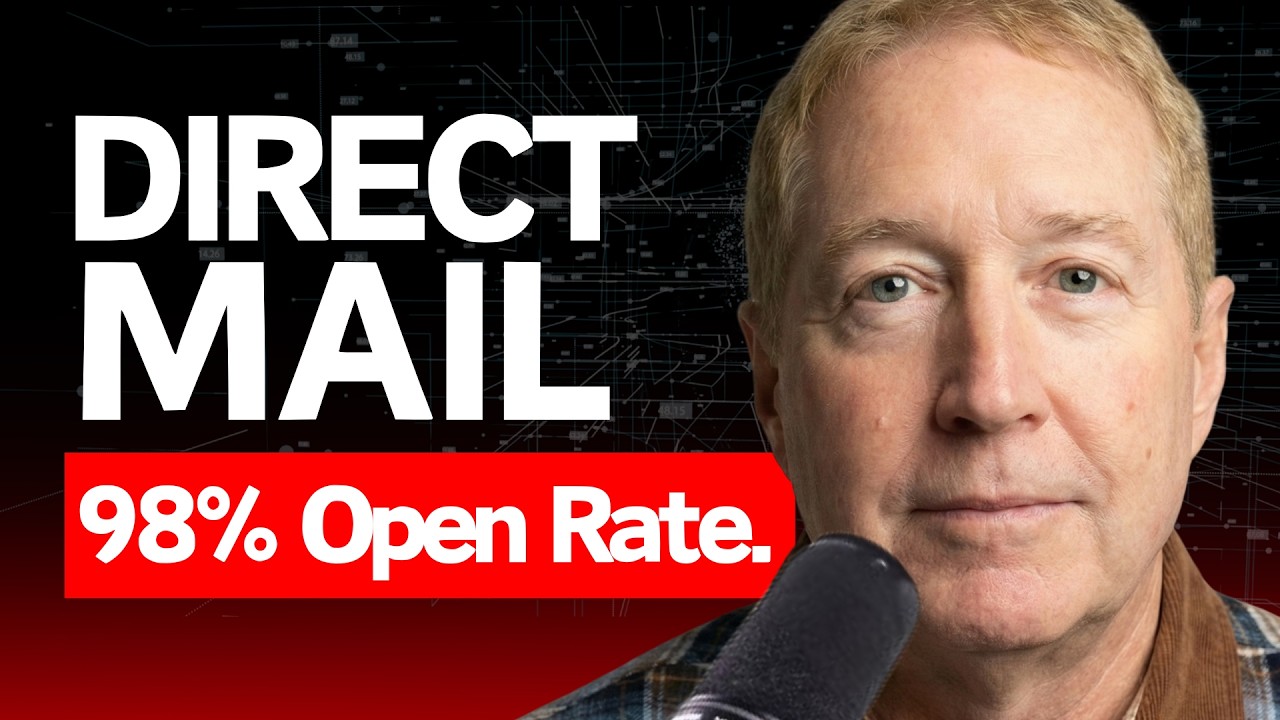
If you think about direct mail as a tool, there are some things that it does that no other tool does. Mail can reach every household and business in America 6 days a week. Secondly, it's proactive communication. I don't have to wait for somebody to find me. I can reach out and find them. Thirdly, there's precise audience targeting. If I want to target Jewish dentists in New Jersey who've purchased a car in the last 6 months, that list probably exists. If I want to do that online, good luck. Finally, it's built into the American psyche. Direct mail is the only thing that gets a 98% open rate. Even if someone's sorting over the trash, they're at least you got a second or two of their time as they they flip through it. You don't get that in any other medium. >> On average, direct mail produces $12 for every dollar invested. Very few marketing mediums can produce those kind of results. Of course, in order to produce those results, we have to know what we're doing. We have to use the tool in the right way and target the right people. You're watching Marketing Misfits with Norm Ferrar and Kevin K. What's up, Mr. Ferrar? How you doing? >> I haven't talked to you in a little while. Although, it looks like every week, but we haven't uh we haven't done a podcast in a in a while, Kev. >> Yeah, I know. My clock is off in here. I was just looking at the time changed a month ago in my studio here. I've got one of those studio clocks and it it it hasn't it's still an hour ahead. I'm like, man, it's been a month since we have recorded, but we we record these in advance. And so, at one point, we were looking at the schedule and we had was it 19 episodes uh ready to release that hasn't been released yet. So, you know, we might have to go to like twice a week or something on a norm, you know, I don't know, just to to move these up. Um or we could just take a vacation, you know, we can just we could just keep track. >> I think the vacation is is nice, you know. I I I picked that, I think. >> Well, or we can go work on some other stuff like uh dragon dragon fish. >> What What's dragonfish? I heard about that four years ago. >> Well, if we quit doing so many podcasts and so many uh cigar trips and so many other things, then uh no, Dragonfish, uh for those of you listening that haven't heard about that, is a new company that Norm and I uh launched. Uh and we we have our first clients in beta right now and we're doing uh email marketing. So, a lot of people in the direct in the e-commerce space just don't know how to do email marketing. They might have a list that they might have been gathering on, but they they really suck when it comes to actually squeezing money out of their list or don't know what to do it or they're afraid to do something with it. And that uh we also do AEO, which is some people call GEO or AI AI AI EO or whatever you want to call it, but it's basically optimizing for AI. So, actually making sure that your website uh your your marketplaces like Amazon and Walmart are all set up to be optimized for the the new wave of AI so that you you are the answer uh for whatever someone might types in. But today's topic uh is actually kind of fits in to the email side of things that we do because it's something that Dragonfish is going to be adding down the road and that's direct mail. Like some people call it snail mail. Uh that's the for you youngans that are listening, that's the little pieces of paper that come into your mailbox and you open it up with a key. Uh if you're in an apartment complex or you go out to the curb and you open the little box and you pull out something, uh believe it or not, uh that still matters. And so that's something Dragonfish is going to be doing. And uh we're going to be talking to an expert in that today, >> right? And that expert is Dr. Wilson Zair. And uh this is going to be really interesting because as a lot of people think that email is just old school and doesn't work anymore which is completely wrong. A lot of people say the same thing about uh direct mail and I can't wait for Dr. Zer to come on and tell us more about his platform and some of the stats about direct mail. So why don't I bring him on right now? >> Just a quick story before you do that. Norm, you know that my background is direct mail. >> So, my that's where I cut my teeth is actually doing direct mail when I was in in high school. Uh, and then into college, I got into trouble for it, but I was doing uh direct mail. And I remember when I was in college, 18, 19 years old, I had the timing down of when the uh the the mailman would come to our apartment complex and uh fill up all the mailboxes. And I would go meet him like every single day. I'd be out there and if if it was 15 minutes late, I'd be pacing because I wanted to see what came in the mail that day. What kind of checks and money orders came into the mail for for what I was doing. So, that's I cut my teeth on this. So, this is going to be this is going to be interesting. >> Yeah, I can't wait. All right. So, let's uh bring in Dr. Zer now. >> Hello, sir. >> Hi. >> Good morning. How are you? >> Good. Good. Good. Good. Good to see you. Good to meet you. >> Oh, nice to meet you, too. Now, I can't wait because there's so many people probably listening right now that would never consider direct mail. But before we get into that, could you tell us a little bit about your background? >> Sure. Um, the question is, where do you want me to start? >> Uh, I have um I have an undergraduate degree in finance with a minor in computer science. I spent five or six years as a software engineer. and then u moved into strategic alliances and executive leadership entrepreneurship um in um I've done worked on a dozen different ventures now right currently I'm working at a company called Zarmail u www.zairmail.com zermail.com. That's like airmail with a Z on the front. And what we do is automate direct mail campaigns. When I'm not um working on a new venture, I tend to teach at the university level. I usually teach marketing, entrepreneurship, finance, and business strategy. >> So, what university is that? A local university or what university is that? Um, most recently I've taught at Eastern Oregon University, but I've also taught at Portland State, Oregon State, uh, Northeastern, uh, Juel Longorn University in Bangkok. I mean, a lot of different places. Um, just trying to keep things interesting. So when you teach entrepreneurship, what I I remember I took a entrepreneurship class in college at Texas A&M and it was one of my favorite classes because it actually it actually applied to me as an entrepreneur and actually I I I enjoyed it. It was a a a lawyer that had his law practice and he taught this on on the side. So what is it that you find that the type of people that come into an entrepreneurship class? What what are those type of people? Are they already entrepreneurs looking to gain an edge or these people that like I've always wanted to own my business. I don't want to work for anybody. So, or what what type of student usually takes those kind of classes? >> That's that's an interesting question and and it really cuts across the spectrum. Um, and it depends on the university, too. You know, at Oregon State, students were required in the business school, students were required to take a class in entrepreneurship. Um, because it's good for the students to know how to do that, but it's also good for the university. It turns out like the football stadium and the new business school were both paid for by generous entrepreneurs. >> Um and in fact I I think in Nvidia the founder of Nvidia actually went to Oregon State. So um I mean for the university it it it pays dividends in you know Eastern Oregon University. We bu I built out an entrepreneurship program there. Um, in the classes you would see um you would see a lot of business students that are, you know, interested in in kind of running their own business. Um, you'd see a lot of students from across the university, maybe in art or music or other places where they're interested in learning how they can take their passion and turn it into a business, you know, when they graduate. Maybe I want to have a gallery. Maybe I want to sell my music to a larger audience. We actually worked on a project for a lady named Nicole Lewis who's a country and western music singer and we we learned about, you know, about um her business, which is her brand and her music and how she took that from a regional um product in Spokane, Washington, and moved to Nashville and spun up her business and worked on recording contracts and streaming and did some voiceover s for Disney movies and and things like that. How did she get started? What did her journey look like? What was her passion? And and really try to inspire the students. Um so I'm not sure if that answers your specific question, but I'm not sure there is just one answer. >> Well, maybe I can phrase it a little bit differently. What not everybody is cut out to be an entrepreneur. what what are the charact and something I a lot of people think they are and Norm and I have done an event called market masters where we have people in there that have businesses and once you start digging like you you're not cut out for this. So what is it that what makes a good candidate for an entrepreneur? What what do you need to actually have a ch a good chance of success as an entrepreneur? >> Oh well there's there's a couple of answers to that too. Um I wish there was just one answer. I mean we we'd love to have a formula and people have been trying to find the formula for a long time but it doesn't really seem to work that way. Um at the university environment we we tend to teach entrepreneurship two different ways and it depends on the school depends on the focus. So one way is to teach entrepreneurship like small business management. I'm going to run a florist or an electrician or a plumber or something of that nature you know. Um and so we teach them how to do you know how to do accounting and how to do marketing and sales and run a small business. So that that's one way to approach the problem. Um the other way is to look at it as as high growth enterprise. So creating the next Google or Amazon or you know Netflix what have you. Um and entrepreneurs I mean if you think it in those terms entrepreneurs change the world. I mean if you look at the you know the the seven largest capitalized companies on the you know publicly traded companies today all those companies were started in the last 50 years. I mean our c our our entire economy is driven by innovation and entrepreneurship and so um we'd love to inspire that next generation of entrepreneurs and give them the tools they need. So, back to your original question, I mean, if if we're thinking about that, you know, if we're thinking about the small business, we need somebody who has a skill, has a passion or some gift, and then they want to be self-directing in that regard, and they need the skills to to do that. If we're talking about high growth enterprise, we need, you know, we need founders that have a vision, a passion, a skills. They need to be able to motivate others. They need to be able to learn from their mistakes. They need to be resilient and they need to keep coming back again and again and again. Most new enterprises fail. That's a fact. You know, 90% of Newton enterprises fail within the first year. Uh in the second year, another 90% of those fail. And so, you know, in order to be successful, you really need to, you know, to understand where you fit. You need to deliver a solid value proposition and you need to be tenacious, right? I mean, that's I mean, at the end of the day, you just really need to want it. >> Hey, Norm, you'll love this, man. I talked to a seller the other day doing 50k a month, but when I asked them what their actual profit was, they just kind of stared at me. >> Are you serious? That's kind of like driving blindfolded. >> Exactly, man. I told them you got to check out Sellerboard, this cool profit tool that's built just for Amazon sellers. It tracks everything like fees, PPC, refunds, promos, even changing cogs during using FIFO. >> Aha. But does it do FBM shipping costs, too? >> Sure does. That way you can keep your quarter four chaos totally under control and know your numbers because not only does it do that, but automates your PPC bids, it forecasts inventory. It sends review requests and even helps you get reimbursements from Amazon. >> Now, that's like having a CFO in your back pocket. You know what? It's just $15 a month, but you got to go to sellerboard.com/misfits. sellerboard.com/misfits. And if you do that, they'll even throw in a free two-month trial. >> So, you want me to say go to sellerboard.com misfits and get your number straight before your accountant loses it? >> Exactly. >> All right. >> And have a high risk tolerance, too, right? >> I I was just going to say that high risk tolerance. Yeah. >> Yeah. You have to have you know you have to um exactly but you know we talk about in finance talk about this idea of being risk risk averse you know but I I wouldn't say that good entrepreneur entrepreneurs are not risk averse but they're very good at managing that risk you know >> norm that's why I don't uh play uh I don't play the casino you know it's the risk I know where to take the the the chances you know every time we're in Vegas we just walk right by cuz it's not a good race. >> Exactly. Yep. We don't want to just give away our money. >> Let's go straight to the car. >> You know, uh I talked to Kevin. We were we went out I Kevin lives in Austin and uh we were going to some October Fest event. Uh I I forget where it was. It was so closer to San Antonio and we're going down the highway and Kevin says, "Norm, have you ever heard of BIES?" I said, "No, what is it?" And it's this hu Do you know what Bies is? >> I don't. >> This is It's crazy. It's the Costco of um gas stations. You know, convenience. It's a convenience store. It's like a Waw Wa but like Costco. You can go in there. There's 100 different uh gas terminals. So, you don't have to wait any time. You can go in there. >> 160 at that 160 >> 160. So, I've never seen anything like it. >> No semis allowed. >> And then you can go inside. It's a clothing store. It's got barbecue. It's got everything. I mean, every soft drink you can possibly imagine. And the cleanest washrooms in America. That's what they stand by. But anyways, I was we went there, we did our thing, and got some great food, went on our way, and I said, "You know what, Kev? What I can't understand is how somebody either for a Costco or a Home Depot or a BIES ever got money for this. Like I'm going I'm going to make something that most gas stations might have four or five different pumps. We're going to do 160 and people are going to stop there and then they're going to go into our huge store and make us really successful. Hey, as an entrepreneur, as a risktaker, the guy who comes up with these types of scenarios, I don't know how they get funded, first of all, but it's brilliant. And I'm sure there's going to be lots more other buckies out there, but for entrepreneurs, that was a gamecher. I think that was a game changer in Texas. >> Yeah. Yeah, they've got about they've got about 25 locations now and each one does I don't know like 1520$20 million uh per location. Uh it's an Aggie that actually started that by the way, Norm. Not going to throw that in. I got to get that in. But yeah, they they've expanded all the way over to Georgia now. But yeah, it's a it's a it's a crazy concept and people even they have their own brand of stuff and people even now uh buy that and arbitrage that on Amazon and stuff for people that aren't in that area or are missing it. But back but back to your point uh what Norm just like how do people get money? I mean you've done a lot of VC things. So when it comes to entrepreneurship sometimes it's Rob Peter to pay Paul or you self-funded a little bit or you you you you funded out of the growth but you said you had what 12 or whatever the number was of uh companies that you started and you had some experience in the VC world. What's it take from an entrepreneur side to actually convince VCs to actually believe in a concept like a like Norm was talking about like a bies? You know, the the thing is Oh, by the way, when you mentioned Buskies, you you you Bies. Yeah. You put in the context of Costco and Costco was a startup, too. The way it started, right, in Seattle, Washington, actually in Kirkland, Washington, and u was venture funded. And that that's it's still one of the fastest growing retailers in the world today. >> But they bought an existing Costco didn't start from scratch. They bought an existing warehouse club and it ended up becoming Costco, I believe. Uh if the storage there's also there's a foundation there uh of something we >> Yes. Price club or something in San Diego. >> Uh I think >> it was founded here in the Northwest. And actually I I know the um one of the original investors. It was based right here in Portland, Oregon. And in fact, uh one of the board of directors was an adviser to one of my old companies. So yeah. No, that's a Northwest success story for sure. >> Yeah, but I think they merged. Maybe maybe it's a merge there. There's something to uh with another warehouse chain um where they they >> I'm sure >> Yeah. >> Yeah. I'm sure along the way there's been some mergers and some consolidation, but the idea itself was hatched here in the Northwest. Um the you know, and and and it's wildly successful, of course, and it sounds like Bucky is too. I mean, back to your original question about financing, it really depends on what you're building and what stage you're at, you know, for an early stage venture, you know, the the primary sources of financing are usually the entrepreneurs's own resources, whether those be savings or loans or, you know, something else, some, you know, trade credit. I mean, there are a lot of different ways to get operating capital. Um but beyond that it tends to be fan uh family and friends you know people who know you and believe in you and trust you. Um beyond that you know we can we can look at angel investors you know so people who are um maybe you know they tend to be people who've been successful in business maybe have some funds want to participate and they'll they'll invest in a new venture and there are networks of you know they're independent angel investors in most communities but they're also nationwide networks like Ketsu forum and others that are that um are gathering place for like-minded investors who want to invest in small ventures. And then we talk we can talk about private equity which is mostly for more established ventures. They have a different risk profile. We can talk in more detail about that if there's interest. And then there's venture capital which we hear about a lot. But most businesses um are not candidates for venture capital. I mean venture capital is you know they venture capital is a you know institutional investment they they uh they receive monies for from others and they reinvest on the on the part of others. um they need to have relatively high rates of return but we know that the failure rate um for new business ventures is really high right so you know so and that's true even for venture capital firms so in that case they have to hope that that one or two of those investments are going to be home runs to produce the kind of returns they want so they're looking for ventures that have a new idea in a big market that can grow very rapidly and and Most small businesses certainly most small businesses don't fit that profile. Most um new technology businesses don't fit it either. So um we really have to match the the business venture and the needs of the business with the source of funding. But the other one I didn't ma me mention is strategic investors. So for example, I had one fund, you know, I've worked on a couple of different ventures that were funded by strategic ventures. one that was um we did a one called eusion that was jointly funded by Intel, Microsoft, French Telecom and Telecom Italia. We did voiceover IP applications and gateways. We had another one we had another one that was funded half by VC but the other half was funded by Hillet Packard because it was something in the printing space that they were interested in. Um so so there's a lot of different ways we can go about doing that but it really depends on the needs the v of the of the venture and matching that with the needs of the source of capital that is available. >> So when I I take a look at what you're doing with zer uh zer it's kind of risky like how did you get into mail? This is one of those Bucky things. I'd be sitting there going, "All right, if I was going to get into a new business, why would I get into direct mail?" I would have thought it was dead. How did you come up and why did you get into it? Yeah, that's a great question. I mean a lot of the you know um the ventures I started working on like a fusion were done right about the time of the internet bubble you know just before that they you know the we what they call the internet economy was blowing up and there was lots of opportunities and it turns out that they have changed the face of the world and commerce as we know it. So that's a good thing. Um but you know if you look at that business we were you we were also working on something called convergence. So we have the internet which is rich um interactive there's a lot of data um and then we have a whole bunch of legacy systems that are well established in business and community and how do we bridge that gap you know so you think about companies like Netflix right you know was able to you know create this transition to streaming although they didn't know they were doing that at the time you know and with eusion we worked worked at the convergence between um the internet and the public telephone network, right? Digital to analog convergence. And really with the air mail, we were looking at the postal service, the existing postal network and um you know electronic communication and how could we make sending a letter as fast and easy as sending an email. Um and I think to the most to for the most part we've been very successful at doing that. So, how long has Zar mail been around? Oh, >> the original Zar mail was started in 1999 for a long time. Yeah. The the original company was started, as I mentioned, it was funded by um Draper Fisher Jervson, Tier One California VC, and Hila Packard. Um that company was hit by um by the triple wang whammy. it was hit by, you know, um the dotcom meltdown um the um oh 9/11 happened about that time frame and then of course the anthrax scare. >> Mhm. >> Um and so during through that we we were very fortunate that you know um ignoring some of the guidance that we were you know received from our VC friends we were very prudent about how we spent our funds and built our capital structure. So we were able to work through that when a lot of our competitors were not. Our largest competitor was a company called E-letter and they were funded by Hummer Windblad, another California VC, and they were burning through about 20 million dollars a quarter. >> And they, you know, they hit the wall at about 1,000 miles an hour and we ended up picking up what was left of it for pennies on the dollar. Um, we ended up doing some other acquisitions in that time frame and and expanding the company. Um, and it was eventually acquired by our largest production partner in Hayward, California. That went through a couple of acquisitions and eventually um, we we you know, we started a webtoint software company um, down the road in 2005. Uh part of our business was doing a maintenance enhancement on that brand on that software and uh but it it was finally acquired by a company so large that it just didn't they could never it was a rounding error. So we got it back for the you know for the cost of the Earls and rebranded it and put it on our new software and it started going again. So um you know we continue to work on it. Um I think this is >> from 1999 you were doing you started this in 1999. That's around the time where everybody said oh direct mail is dead. The new thing the new future is the internet and email. So what what gave you the confidence or what gave a VC the confidence back at that turning point that's like me saying that I don't know right now you know oh don't do anything AI AI is is is dead or something. Uh but you you you do the counter you do something that's actually against the grain or against what the common thinking of the time of of that time was. So what what gave you the confidence to actually like oh direct mail is not dead. Uh you know there's this new internet thing. We're going to merge them together. What what what what signals did you see that uh caused you to have that revelation? >> Well there was a whole lot you know there was a number of different things in the convergence space at that time. I mean people were looking at unified messaging. We were working at voiceover IP. We did the you know the postal um convergence. People were doing you know there was a company called EAC >> which I think is still around at some point still around. Yeah. >> Um so there was a whole whole lot of people looking at this. Now the thing about direct mail that makes it um it interesting is though even though people said that mail volumes you know mail was on the way out and mail volumes have declined I mean mail is still around and it's still you know billions of dollars in industry and and um I think the US postals or the employment at the mo US postals are is still almost half a million employees. I mean, so so while volumes have dec declined, they're still robust. And we mail is all not all, you know, homogeneous either. Think think about um billing and statements, stuff like your visa card statements, your insurance statements, things like that. Transactional mail of that nature is is way down. People do that online as they I pay most of my bills online. That makes sense. But if we're talking about marketing, marketing has always been ROI driven because people the thing that makes mail, one thing that makes mail different from things like email from a financial standpoint is that every piece I send, I have to pay for a postage stamp, which means it doesn't make sense to get it to send it unless I'm going to make a return. So all of those businesses using direct mail had a positive ROI and they continue to have a positive ROI. You know, the direct mail marketing association reports that on average, direct mail produces $12 for every dollar invested. Very few marketing mediums can can produce those kind of results. Of course, it in order to produce those results, we need to be we have to know what we're doing. We have to use the tool in the right way and um and target the right people. There are some things that mail does that no other medium can do. So that I mean this is what segue a little bit into this conversation that always comes up. You know why not digital? I mean if we if we think about digital versus mail, isn't everything going digital? Why would anybody even care about that? And the the thing is that you know I started my career years ago before I even got the degree that we've talked about earlier as a mechanic. I worked in this in a shop. Um, and you know, they at that point in time, they still use something called a flat rate manual. You know, you'd give you a job and it's a RNR transmission and they give you 4.3 hours to do that. And if you could do it in two, you made double the money, right? But if you if you didn't, then you were in the hole for the day. And part of the answer was finding is, you know, one, knowing what you're doing, but two, having the right tools to complete that job and knowing how to use them. It's the same with marketing. We have a whole range of tools we can use and you know we have the customer. We're trying to guide the customer through their journey you know and and build a awareness preference and drive demand and what is the right tool to do that at any point in time and I can tell you lots of stories like that. But if you think about direct mail as a tool there are some things that it does that no other tool does. For example, mail can reach every household and business in America 6 days a week. I mean, most other uh marketing mediums can't do that. Secondly, it's proactive communication. I don't have to wait for them somebody to find me. I can reach out and find them in their home or business. Uh thirdly, there's precise audience targeting. If I want to target Jewish dentists in New Jersey who've purchased a car in the last six months, that list probably exists. If I want to do that online, good luck. >> Um, and then finally, it's built into the American psyche. You know, if the postal service talks about the mail moment, this idea that in the evening the sun comes out, there's music from above and people people check their mailbox and find these gifts, right? That was like me when I was the story I told as a college student when I was waiting for the and it's still to this day I still do direct mail uh in my my e-commerce business and I still have Norm was here one time visiting me uh and I went to the post office and came back with a stack of envelopes about this you know about 2 ft high and he's like what the said it's checks and money orders he's like from what who's sending you checks and money orders who send what is a check what is that and I'm opening them like, "No, this is like Christmas. Every day I go check the mailbox." It's like, "How much did I get today?" >> Kevin, it was money, money, money, money, money. >> But along those lines, a lot of people, the post office, you know, you always hear these negative things about the US Post Office. Oh, they lost $9 billion last year or whatever. Most of that is not from their operations. That's from their pension plan and stuff like that. A lot of people don't realize. So, they get they get clashed in like, "Oh, it doesn't work. They're losing so much money." No, that's not true. you know, uh, Amazon uh, is about to actually thinking about pulling the plug on using the US Postal Service. That's a multi-billion dollar contract. Um, but even Amazon itself sends every Christmas I get stuff in the mail from Amazon, a Christmas catalog to go buy stuff on Amazon that comes through direct direct mail. So, it it's it's not it's not dead. It's super super powerful and it's less competitive now than it used to be. Just like you said, you know, the package volume has gone way up for the post office because of the internet. that's where they're making their money mostly now, not off like you said the bills and statements, but it it's it's a major major thing that so many people overlook. And just like you said, if with the targeting, you can do some of that precision targeting online on on online, but the cost of sending bulk uh bulk or pre-ordered first class or whatever with the printing cost depending on what your how fancy you're getting is less than a click on on Facebook uh in most cases. Uh, and so it's actually cheaper and it's more targeted. Uh, and it stays around. That's why I always tell people like if you send out a coupon example, if I send out an email to you and says, "Hey, uh, we'll we'll send out save $50 off your next order uh, for uh, for whatever," that email gets lost. And you may you may save it or you may, but most likely gets lost. I send you a postcard says $50 off your next order from the front gate catalog. You keep that. it goes on your desk with somewhere or it goes gets pinned to your uh uh refrigerator or whatever and you come back to it and you find it even if you're you forget about it when you're cleaning up your desk. Oh, there's that coupon. Uh so it's it has a much more staying power. Uh and even though people may sort it over the the trash can um if you're doing your job, they're still seeing it more than they're going to see an email. So a lot of people don't understand and the new generation, the younger kids didn't grow up with that. uh you know getting the Sears catalog in the mail or the Victoria Secret catalog or whatever you know that uh it was um they don't understand the power of it and so what you've done with Zar mail though is instead of me have in that old days I had to go get real rent a mailing either I had my own mailing list or I had to rent a mailing list and get it on these big eight track tapes you know from somebody and then print out the labels and send that out and coordinate with the print company coordinate the get my pre-sorted first or my pre uh my bulk mail permit coordinate all that kind of stuff, bag it all up properly, have 200 pieces or more to send to get the discount, all those things. You've taken it with Zar mail and just like it's just like one click basically almost. It's like go online, send one piece or send a 100,000 pieces and just automates the whole process. No having to deal with all the the back docks at the post office and all that kind of stuff, right? >> No, exactly. Yeah, that was the that was the challenge. I mean, direct mail has always been powerful. you know, if we put the right offer in front of the right person, good things happen. And it's relatively easy to find lists to reach the right person. Um, but there are challenges in there's historically there's challenges to doing the mail if you're doing it on the table in the living room. Uh, I've got lots of stories about that. >> I've done I've done that on the table stamp on it and putting it on the thing. Yeah. >> Yeah. No, that's it's >> and you don't get the postal discounts. If you want the postal discounts and you want to do volume mailing in any volume, there's there's a lot to it. It's very technical and they, you know, if you were to go into the retail post office, you know, walk up to the counter and say, you know, I want to do direct mail. What have you got for me? I mean, they wouldn't even know how to respond. >> No, there's not. So, so, but with ZML, you basically you upload a document, upload a list, you see a proof in real time, you like what you see, you push the button, you're in the mail tomorrow with a, you know, a fraction of the cost. So, it literally it takes 60 seconds to launch a direct mail campaign, the mail goes out tomorrow, and you usually see results in two to three days. I mean, so that's everything is tracked. I mean, you could see your piece as it's processed, printed, mailed, and delivered. Um, and we have a new product called Speedy, which is basically a desktop app where you can just drop a PDF or drop a a word file on it. It'll ask you for an address, even just one piece. Push a button and it's in the mail. So, there's no re reason for in that view of the world, there's no reason for a postal meter, which is still a huge business, right? Pney Bose is and their competitors like Quadant. That's a I don't know $6 billion business or something. But now you don't need a postal meter. You can just drop your letter right on your speedy icon on your desktop. Are you looking to quickly boost new Amazon product launches or scale up existing listings to reach first page positioning? The influencer platform Stack Influence can help. >> That's right. Stack Influence pushes high volume external traffic sales straight to Amazon listings using micro influencers that you only have to pay with your products. They've helped upandcoming brands like Magic Spoon compete with Cheerios for top category positioning while also helping Fortune 500 brands like Unilver launch their new products. Right now is one of the best times to get started with Stack Influence. You can sign up at stackinfluence.com or click the link in this video down in the description notes below and mention misfits that's misfitts to get 10% off your first campaign. stackinfluence.com. Now, do you have automations with with uh with since you're you're merging these technologies, do you have automations where there's tools online uh where I can get anonymous data? So, someone comes to my website, they don't fill out a form, but 60 70% of those people I can actually triangulate and figure out who they are and I can get their their email address and I can get their postal address. Um, could do you have automations that will take that data and then feed it to your system through an API and automatically fire out a letter to someone that they just came to my website selling knives. They didn't enter anything. They didn't tell me who they were. They didn't buy anything. But I can trigger an email to them and I can also trigger a catalog or something to go through the mail or um do you do stuff like that as well? >> Yeah. And we it's called retargeting. And there's online retargeting, you know, where you you've seen people, you know, they're stalking you online, the ads follow you around. But if you come to a website, you come to the Zar mail website or um related websites, um we grab the IP address, we try to do a reverse lookup. It's not 100% as you point out. Um if we pull the phys physical address, you'll get a card in the mail, too. And we do that for other clients as well. Um, it's a great application. Um, not all websites have enough volume to really um, take advantage of that the way they'd like, but for those with volume, I mean, it's a great tool. And we we do that even for smaller websites as well. Um, for our service in general, volume's not an issue because we focus on um, automation. So, you can mail one piece of mail through Zar mail. I mean, that's that's just not a problem. most commercial printers that you know where somebody might go for a larger mailing you know if if it's 500 piece 100 piece thousand pieces they don't even want to be bothered with it you know it's just not worth it sail we do that stuff all day long >> so is that your moat uh your USP or what makes you different from everybody else why are people coming to you and not your competitor >> the the thing about um s mail is so we're really a software solution so we we focused a lot on the software. It's super fast and easy. You don't need any experience to use it. And if you don't have any of those pieces, you don't have a letter, we'll help you build it. If you don't have a list, we can help you find it. We we can do all that really quickly, really electronically. Everything's super fast and easy. So for a small to medium business, that person who might go to the post office and not get an answer about how to do direct mail, um we have a fast and easy solution to do it for larger enterprises, for larger mailers. Um it the the the secret sauce or the the key to our solution is the network. We fulfill uh production through a nationwide network of production partners. We do next day mailing, so super fast. We um route jobs electronically and produce produce them near where they need to go, which makes them faster and more eco-friendly. We have almost no, you know, we have unlimited production capacity. We can do interesting things like slice jobs up and spread them across the network so there's no single point of failure. We have we own our own um server farms. We have uh servers in Hillsborough, Oregon, right on top of the transpacific fiber backbone. We're on in Manasses, Virginia, right on top of the tribe um transatlantic fiber backbone, too. We have 100% uptime. Um so >> you're not you're not doing in one printing in one facility in Oregon and it goes out from there and takes two to two to six days for delivery. You got if the address is in Florida, you got a facility close to Florida. So you're dropping it in the stream mail stream clos distribution stream closer uh to that. That also gets you additional discounts on on the bulk mailings and stuff too. >> Right. That's that's true. And and everything we produce is going to be, you know, uh pre-sorted, properly formatted, barcoded, so it flows through the mail very quickly. you know, anywhere we're mailing from, we'll see three-day delivery times, pretty much two to three day delivery times anywhere in the US. >> Do you do individual uh like QR codes? So, I can actually, you know, if I send out a postcard and every every every one of those has a unique QR code so that it comes to the customer and they it just scan this and I can see not how many people went to the website necessarily or ended up buying, but I can see how many people actually basically it's the ver the direct mail version of a click. I can see that they scan this. Do you do you do that kind of stuff on an individual one by one basis as well? >> We have an a unique pen we can attached to each play. Well, so let's start with a QR code. Yes, we do do um QR codes. So, you can do one QR code for all of your pieces. You can have a QR code that's personalized based on the recipient just as the address or any other information is b can be personalized based on the recipient. You know, you'd see that in the mail when somebody sends you a mortgage offer. You know, here's what your current mortgage looks like and you know, based on current interest rates, here's what your new payment would look like. We do that on a, you know, we can make that unique for every recipient based on their actual mortgage numbers. Um, so we can do that with a QR code. Um we also have something called a pin which allows us to if you use that pin they can reach back into they can go back to the internet reach back into an online application and um you know respond to the piece uh or get more additional information. Um the postal service also has a new program called informed delivery. I guess it's not all that new now I mean but I think they have 65 million people using it. So, if you go to the US Postal Service site, you can sign up to receive an email every day that'll show you pictures of the mail you receive. >> And if you're using Zar mail, we can actually put a um, >> you know, picture of the mail piece in there and link it back to a website. So, you're going to double your impressions. And if somebody sees that email and they're interested, they could click it and go right to the website before they even receive the letter. >> Now, Norm's up in Canada. Is he left out of all this or can you send to him, too? I'm Canadian. I'm always, you know, left out of things. >> Yeah. No, no problem reaching Canada. We we can send mail anywhere in the world. Um for larger jobs, we actually do some production in Canada, but for most of the stuff that comes from the site, we we have um mailers that send places or send mail to Canada, Mexico um on a very regular basis. So, that's not a difficult either. Postage is a little more, but it's still automated in the same way. >> Of course, it's a lot more. It's Canada. >> Oh my gosh. So, let's say um I'm an entrepreneur, business owner, marketer, and I'm on the fence. I can't get my head around direct mail being old school. Can you give us some examples or how do we get these people to understand, you know, why they should be looking at direct mail? We've talked about a few things, but if you could just give us a couple of examples to get them over to the other side. >> Um, once again, I I I think it's a tool, right? I mean, it's a tool and and it's not going to be useful for, you know, it's not going to be the best tool for every campaign, but it is, you know, it is the best best tool for a lot of campaigns. Um, and it does work very well in conjunction with digital things. So, one example I have is we worked on recently worked on a school voucher initiative, school voucher, school bond initiative in Eastern Oregon University. We have worked on voucher stuff too in the past. Um and uh basically what what was going on there is they had an opportunity from the state of Oregon. The state of Oregon was offering grants up to a $2 million grant for um school improvements. They had aging athletic facilities that need to be replaced. If they could generate, you know, if they created a bond, the state would match that revenue. So it was a very good deal for the district. They wanted to get that bond through voters. They know that the last one that they worked on um years earlier was just narrowly approved. They were up all night waiting for it. It approved by, you know, I think they won by just just a handful of votes. Um in this case, they engaged us in the process. Um we of course created a website where we could create, you know, where we could have information on that campaign. We were able to post videos of students who have used the facility, generations of students and and other content in Oregon. It's it's the it's vote by mail. It has been for the last 30 years at least. Um and and the cost drives that decision. It's just a lot more efficient to do it that way. Um, but in a in an environment where you vote by mail, I can go down to the elections office and I can buy list or in our case just for the cost of media get a list of registered voters in the county. I can overlay that based on homeowners versus renters because most of the taxes here are paid by homeowners through property taxes. And then I could I I can divide those lists again by those who have kids in school and those who don't. And based on those audiences, I can give them different messages. For those who have homes with kids in schools, that's pretty direct. Your kids are going to benefit directly for this. For those who have kids, you know, who are going to be paying and the kids are not in school, we can talk about how their kids benefited from that when they were in school and how they're investing in the community. And the folks that are renters, of course, they're just it's upside. So, we can talk to them about how great the facility is going to be. um we we can reach out and and touch those voters once early on in the cycle, election cycle, and and explain to them what this bond is all about and how they benefit from it. Um we also know that when when some people who receive ballots um vote right away, you know, when those ballots arrive, um but some of them wait right until election day. So, we're able to go out once we know when the ballots will be delivered in the mail. We hit them with a one mail piece right before the ballots are delivered. We hit them with a second mail piece right before the due date for the election. We mixed that together with um personal outreach. We did, you know, coffee meetings at the Lions Club. We went and talked to the parent teachers association. We had the parent teachers send stuff out to their social media network. We did yard signs. We did door hangers. We did, you know, we did a little bit of walking doortodoor. The combination of all of that allowed us to get a resounding victory. They weren't up waiting till the end of the night. It had passed overwhelmingly. But that was but it we were able to do that by using a collection of the right tools in the right way to to help voters along their journey. And a lot of uh other products are the same way. I mean I we for our business, we're in a direct mail business, but we use Google Adwords, we use email with a newsletter, we also use direct mail, but we use them in different ways for different customers to help um really to help our customers find the value that unique value that we can deliver. >> It's different touch points in the marketing in the marketing plan. Um and they support they support each other. That's where a lot of people they just look at it as as a cost center uh at a cost or they just like Norm said, they just don't understand it. Um and they don't understand the value of doing it. We have a friend uh Mark Messer uh who's in the supplement business uh that Norm and I uh know and he sells supplements, not too much on Amazon, mostly on his own website. But uh ever since he I got put on his list cuz he we were at an event and he said, "Hey, I'm going to send you some free supplements." Now I'm getting regular mail pieces in the mail from from him. Uh, and that's part of just part of their strategy and it's it works. I it it's I I think just like you said, people don't realize the value of the tool or they and like they don't know how to use the tool. Uh, cuz that's and they're not they're not familiar with it because the most of the marketers today or the students at your university that you're you're teaching, the vast majority of those didn't grow up they grew up in a digital world. They didn't grow up in a physical world. And there's something about holding a piece of mail in your hand, you know, the texture, the paper, the the imagery. And I always say that direct mail is the only thing that gets a 98% open rate. Uh you don't get a 98% open rate on your on your uh emails. But even if someone's sorting over the trash, they're at least you got a second or two of their time as they they flip through it. And you don't get that anywhere in any other medium, >> right? No, that's that's that's true. I mean, deliverability is is very good, too. I mean, >> and you can follow them. You can I mean, you have NCOA, so you can follow them for four years. So, if someone moves or someone dies or whatever, um you're going to you can you find that out. You run it before you do a big mailing. Uh most people don't realize this. You run it through a just like you should do with email. Uh that's what Dragonfish does. You run it through a cleaning service that will update the addresses, tell you which ones are missing, an apartment number, tell you which ones the guy died. Uh so you'll need to mail them which ones are on a do not mail list. Uh you you clean it and you minimize the waste uh by by doing that. >> Right. In order to get postal discounts we have to do something called presort and then as as part of presort every list that goes through zerbell we will uh we run it through cass which assures that the address is deliverable and we run it through nca to make sure that you know that we have the most recent address. which adds the zip plus4 to it and everything. Standardizes it. >> Right. Exactly. So, we you have to standardize it to get the match correctly, but it's um Yeah. No, it's it's something we do just as a normal course of business, mainly because it helps us get um cheaper postage, but it does help make sure that we send more accurate mail as well. >> And just to give another example of Norm asked about examples of how do you convince someone to do this? I sell wall calendars. One of my businesses is seasonal. In this time of year, it's it's pretty hot. And I have a list of 17,000 people who have bought a little over 17,000 who've bought wall calendars from me over the last 10 or 15 years. That those envelop that stack of envelopes that I mentioned earlier is I send out a trifold mail piece. It's like a 11 by 12 x 18 folded uh 3 to get to 6 and 1/4 by 11, whatever those measurements work out. 19 by 12 I guess. 19 by 11. and trifold it and we send it through the mail and insider pictures all the counters and in there I say here's the order form you can send it cut cut cut it out it's got the little picture of scissors so cut right here uh just like the old day and that's where those checks and money orders come in but the vast majority of people go to my website um but I also two years three years ago I started saying don't go to my website you can go to my website and buy it but I'm going to charge you $12.95 shipping and handling if you're an Amazon Prime member just go to Amazon and buy it and get free shipping and what that what that's done is it's it's raised some people just want to do it the old school way. They don't trust Amazon or don't have a credit card or whatever. But a lot of people will go to Amazon, buy it, and then it saves me money from having to do a big uh advertising launch on Amazon because people buy the calendars. It starts the algorithm going and the flywheel going on Amazon and then what these guys we sell like this year we have like 20 something different calendars. So they'll buy six different ones um you know either as gifts or they're collectors or whatever and then those will get in the frequently bought together and starts this whole flywheel. So I have to do zero advertising on Amazon. Everybody else is out there trying to you know payclick advertising spend a ton of money and I do none. Zero. And and I'll sell yesterday we sold like $6,000 worth uh on on Amazon just in one day. Uh and so that starts that flywheel. So that's the power of integrating like you said what you gave the example of the of the district where you're trying to influence the vote of tying all these different systems together and they work together and independently in some cases but together too and create this big flywheel >> right no I agree and and it's interesting to me because you know when you talk about calendars I mean we're talking about wall calendars right >> yeah this is something else that people like who the hell buys that anymore >> right >> that's the first thing I always get like what you sell What people are buying they're spending $25 to put something on their wall. Yeah. >> Yeah. It's a form of convergence, too. I mean, you know, it's it's something old school that people still appreciate, but you found a new, you know, kind of a new era way to market it, right? You're using a website, you're using Amazon, you're using a, you know, modern tools to sell a, you know, legacy product and a legacy product that there's still demand for, people find value in. And that's that's a perfect example. Yeah, the power of direct mail. It amazes me how many people overlook it. It just it baffles my mind, but I come from that. I'm old. Uh so I come from that world. Maybe that that's what it is. >> No, it's great. I mean I mean there's clearly value there or you know people are making a purchase decision. They're voting with their wallet and um you know they've reinforced, you know, the idea that there's value in the product or service that you sell. Norman, up in Canada, do you how often do you check your mail? It comes to your house, right? Um, >> no, it goes to a community box. >> Oh, down the street. Like the end of the street. >> Do you Does like Connie check that every day when she's walking the dog or you check it like once a week or >> No, no, once a day. >> And is is mail I mean some people call it junk mail? You know, they call this marketing mail junk mail. I hate that. I hate that term. Um, but um, do you get a lot of like what people would call junk mail in Canada? >> Not not a ton, but you know, we'll get uh we'll get some magazines. We'll get uh if there's any flyers for uh like say Home Depot, any specials like just this weekend, this worked perfectly. There was a sale going on at a a local department store. We had it on the fridge and then uh we saw it and we went to the department store and bought it. So, you know, I I'm I'm one of those people that stick things to the fridge and uh you know, it works every time, especially if it's McDonald's or Popeye's. >> Uh I'm just wondering like right now AI. So, what kind of role do do you see AI playing or doing for the next generation of direct mail? Oh, you know, AI is um AI has a lot of promise, you know, in so many ways. I mean, we use it in our business to help design software, come up with new product ideas, come up with branding. Um, it's a great tool if people are trying to design a direct mail piece. You know, here's here's who I'm trying to reach, here are what the important attributes are. How would you position that? you know, and and um most of what AI is producing today is is not perfect. I mean, I I mean, I can tell you that when when we're working on something technical and if we ask AI to produce a code frame, we we would never use it the way it's produced. I mean, we have to we have to work on it to make it work. Um, but often it's a good starting point. It saves us some time and effort, which is a good thing. Um, the same with mail. I mean, it can be a good um, you know, it can be good from on the front end, from the marketing standpoint, understanding of the product, the market, what we're trying to sell, who we're trying to reach. It can be used to help create the mail piece itself. It can be used to help identify the right list for the, you know, the light upright audience to talk to. in in um direct response we talk about the formula for success being 70% list 20% offer 10% creative so you know if we talk to the right people with you know if we put the right offer in front of the right people good things happen and AI is a you know especially in a world where we don't have a lot of experience with that product or service it can be really helpful in that regard >> you're talking about you're talking about list on there for the people listening that how do they get these list? I mean I know the answer but I want to hear it from you but how do they get these list of dentists or of people who are cigar smokers uh because you want to sell something to cigar smokers or how do you how do you get these lists? >> Well the um you can get the list in a number of ways. We sell them right on Zmail. I mean the within your Zmail account you can purchase list through I think we we support Axiom which is our largest consumer database in the United States. We also support Dun and Brad Street. So you can just go in put in the demographic profile you're looking for. You can pull a radius search or a set of zip codes and we'll you know we'll give you a list count. You can pull the names. Um aside from that >> those are compiled lists though, right? They're they're just scraped. They're just scraped from big database stuff. They're not necessarily if I want the buyers, you know, I want to know someone. I want to know exactly who's not just went to a cigar site, but who's actually bought from Thompson Cigar, I can actually Thompson Cigar probably has a broker uh that probably rents out their list with a hot a hot uh a 30-day hot list and a a 90-day and a buyers and non- buyers and stuff like that, right? There's agents, brokers that do that kind of stuff. >> There's a with lists. We have a a um an article on our site that talks about it's called mailing list boot camp and we talk about you know all the specifics for buying a list but what you're talking about is a response list. So we have you know compiled list and response list. So somebody like Axiom or the big credit reporting agencies you know X uh Equifax, TransUnion, Experian, people like that they will buy consumer data. They buy consumer data and they aggregate it. collect it and we can use demographic profiles to pull it. You know, we can look at consumers age or income or presence of children, new homes, new, you know, we can pull based on all kinds of triggers that are stored. Beyond that, as you mentioned, we can use response lists too. most um most magazines I mean I'm a lot of my students don't even know what a magazine is anymore but but but for those of us who do I mean there are lists of people who have you know who who have interest special interest areas there are magazines about cooking about photography about cigars about you know race cars um even brands of cars like BMWs Ferraris etc we have lists from people who purchase certain kinds of products from other stores and stuff and a lot of people try to monetize those lists as another source of income. Those lists are typically more expensive. They're more focused, but they're also tend to be more current and more accurate because every time somebody sends out their magazine or their publication, whatever that might be, they'll, you know, they clean up the ones that are returned, you know, so um to keep the list clean. But, you know, once again, it depends what we're trying to accomplish. There targeting is a, you know, is is a science, but in some cases kind of an art form to figuring out exactly how to identify the person who wants the kind of product or service you're selling. Um, and that, you know, when we're doing marketing, that's part of our, you know, that's a key part of what we're doing. you know, identifying our product or service, our unique value proposition or unique selling proposition as you said, but also who is that customer? You know, what's the market? What's the target market, you know, the available market, the served market and and what and what is that individual customer look like? And that helps us helps tell us the right way to reach them. But you know the there are the the the list industry is huge. It's a multi-billion dollar industry and there are it's it's very welldeveloped as I mentioned earlier. >> Hey Kevin King and Norm Ferrar here. If you've been enjoying this episode of Marketing Misfits, thanks for listening this far. Continue listening. We got some more valuable stuff coming up. Be sure to hit that subscribe button if you're listening to this on your favorite podcast player or if you're watching this on YouTube or Spotify. Make sure you subscribe to our channel because you don't want to miss a single episode of the Marketing Misfits. Have you subscribed yet, Norm? >> Well, this is an old guy alert. Should I subscribe to my own podcast? >> Yeah, but what if you forget to show up one time? It's just me on here. You're not going to know what I say. >> I'll I'll buy you a beard and you can sit in my chair, too. We'll just You can go back and forth with one another. Yikes. But that being said, don't forget to subscribe, share it. Oh, and if you really like this content, somewhere up there there's a banner. Click on it and you'll go to another episode of the Marketing Misfits. >> Make sure you don't miss a single episode because you don't want to be like Norm. >> I built a company on that. Um, actually back about 20, just a quick story before uh Norm wraps it up. About 25 years ago, baseball cards featuring uh bikini models were super popular. So, everybody and their dog was uh big brands all the way down to mom and pop, like guys in their garage were making strip clubs, everything was making little baseball cards with uh pictures of of pretty girls. And there became like 50 companies that did this. And I we were selling them uh it's like Beanie Babies or something. They were hot collectible. And so I a lot of people were putting a uh in their packs they were putting like register, you know, not register your warranty, but sign up for our VIP list or whatever. And people would mail these in uh to these companies and they'd have a shoe box full of these cards with something with somebody's name and address on it. And they weren't doing anything with them. So I reached out to all 50 companies I could find and said, "Hey, what are you doing with your your bounceback cards?" And they're like, "Nothing." And I said, "Send them to me." Uh, I'll I'll type I'll get them typed in. Uh, and and then I'll send you the list back, but for ex in exchange for that, for doing that work, I get to use the list. Uh, and I grew a company to millions of dollars in sales by basically getting all my competitors leads. And then we went out and we actually would rent like the cigar magazines or the Victoria get the male only the males the male recipients of the Victoria Secret catalog not the females only the males cuz they're probably you know looking for pictures of girls or whatever just to you know to keep it appropriate instead of getting playboy or whatever. And we we would get their list and get the last 30-day hotline buyers and mail them. And we we built a huge company off of that. and that that's evolved now into the uh you know what eventually moved into the calendar stuff. So my my message here is don't overlook this and go to something like Zar mail or whatever it is and read like the story that he told you about how to get list. It's a major major source that a lot of people are just ignoring right now. Um completely ignoring that I think could do very well and add to their mix of marketing. All right, so we are at the top of the hour and I got one question for our guest. Does he happen to know a misfit? >> I used to know a guy named Jim Stratton who did who who built us a business um doing um mail for dentist office. He started out his career working with another friend of mine, Gordon Voyiano, um selling cutlery doortodoor in New Jersey. So, if you can imagine doing that job, um he's a he's a really outgoing guy, a really interesting guy. Oh, >> so we I'll send him an email on your behalf. >> Oh, very good. Okay. And if people were interested in trying Zale uh Zermail or contacting you, how do they do that? >> Um they can go to the website www.z a i m a i l.com or they you know the call the toll-free number there 8888980066. Unlike many of our competitors, we really love to talk to our customers. um call the number, you'll get a live person and we're happy to talk. We're happy to answer questions about marketing, about email, about mail, about, you know, just marketing in general. Even if you don't buy our product or service, we're always there to help help. We love uh small business. We love, you know, we love um to help people be successful. Um we also have a new product called Speedy that we talked about earlier, www.smail.com/speedy. First two letters are free. Download it, give it a try, let us know what you think. >> Fantastic. All right, sir. Well, thank you so much for coming on the podcast today. >> All right. Thank you. I really appreciate the opportunity. >> Thank you. >> Great. Thanks. >> Take care. >> All right. Well, sir, >> you ready to go? >> You ready to go send some mail, Norm? >> I am. Yeah, I I >> Yeah, we've talked about that with Dragonfish. You know, it's going to be an upcoming service. Uh we're getting the email side of things uh situated right now with the our first round of clients, but uh direct mail is something that we've both discussed uh adding on. So, keep out keep a keep a eye out for that announcement uh when when that comes when we're ready to to add that on as an added service for Giant Fish. >> Yeah, I got to go and check out Zar mail uh right after this call. >> Yeah, >> sounds pretty cool. I I'm already retarget because I was there earlier. So, I'm probably going to get be I'll be interesting to see if I get a piece of mail uh in the next three or four days uh in my mailbox. So, I I I'll let you know. >> Oh, I I'm sure you will. Okay, that's it for today. >> Yep. I appreciate everybody. Uh we'll be back again next Tuesday with another episode of the Marketing Misfits. How do they watch some of the We got what like 80 or 90 hundred maybe by now in in the can. How do they watch the last one, Norm? All right. So, there's a few ways of doing it. You can go to YouTube and you can watch Marketing Misfits podcast and that's the long form video. If you're interested in some of the nuggets, we're going to extract some of them out of the podcast today. They're 3 minutes or under. We have short form and that's over at YouTube Marketing Misfits Clips. And then you can head over to our Tik Tok channel and take a look at some of the things. Kevin does great interpretive dance over on Tik Tok. You got to check it out. >> So, there you go. >> Like the one where I was trolling the my shirt over my head, right? And you like that one a lot. >> Oh, yeah. Yeah, that was fantastic. Yep. All right, Kev. >> All right, man. We'll see you. >> Yeah, I'll see you next time. Take care, everybody. >> See you later.
This transcript page is part of the Billion Dollar Sellers Content Hub. Explore more content →