Ecom Podcast
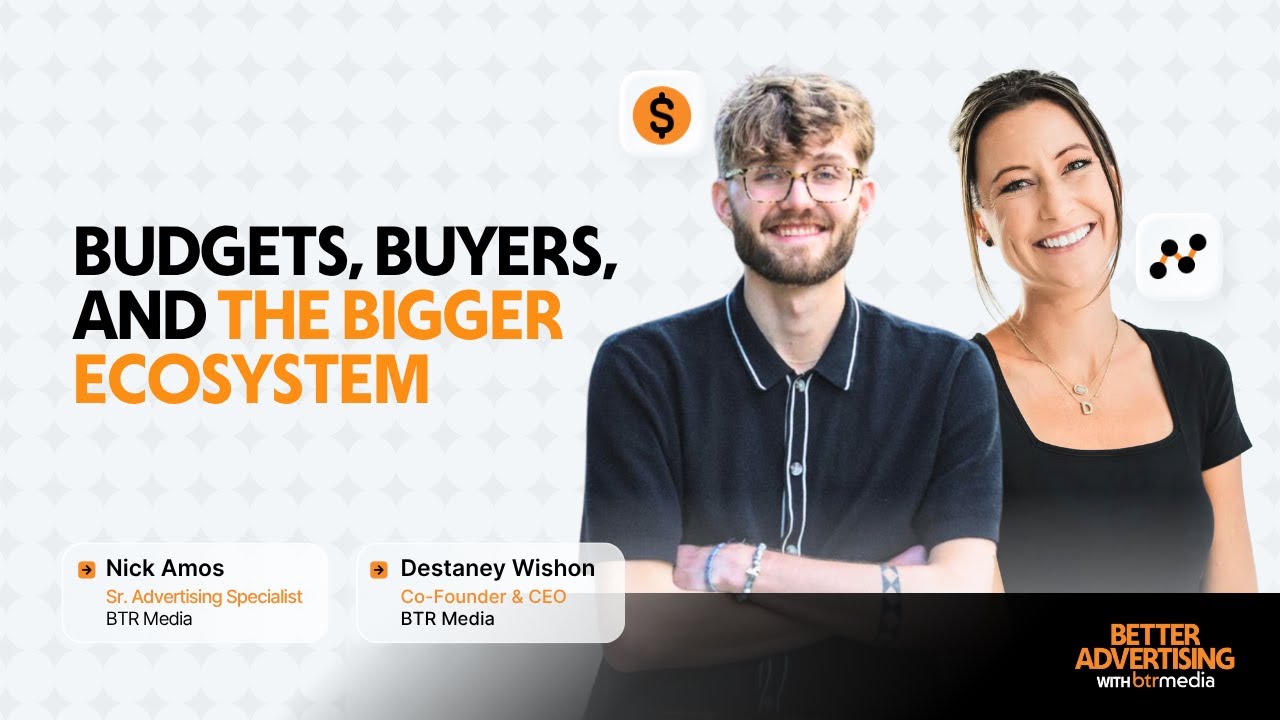
Budgets, Buyers, and the Bigger Ecosystem
Summary
"Expanding beyond Amazon, mastering retail media networks like Walmart and Target involves adapting to different UIs and less data, but utilizing available one-pagers and tutorials can ease the transition and enhance your advertising strategy."
Full Content
Budgets, Buyers, and the Bigger Ecosystem
Speaker 2:
Hello everyone and welcome back to the Better Advertising with BTR Media podcast. Today I'm incredibly excited to have Nick Amos on the podcast. Nick, have we actually done an interview on the podcast recently? No?
Speaker 1:
Not you and I ever.
Speaker 2:
I wasn't sure because we've done a lot of content outside of this, including an incredible interview and or acting debut in Amazon headquarters, which was a lot of fun. And I was like,
we need to do more of these because you are exceptional at telling a story and talking about what you do.
Speaker 1:
Love it.
Speaker 2:
So I think the topic I really wanted to dive in today is we put out a lot of content on Amazon Advertising. And Amazon Advertising is, in my opinion, the bread and butter on where we've had the opportunity to really showcase our expertise.
That being said, we manage a lot outside of Amazon advertising that we haven't really highlighted. And it's not just us. I don't think the industry has highlighted the other retail media networks well enough.
So I thought it was a good opportunity to have you on. You manage a lot of Amazon business, but you also manage Walmart, Target, Best Buy, Nordstrom, Chewy, probably a few more that we may be forgetting as well.
The first thing I wanted to ask Nick is when you were basically poised with this challenge to expand your knowledge from Amazon advertising to everything else, what were your initial thoughts?
Speaker 1:
I was definitely excited. You know, um, Amazon itself is a beast and there's a lot of insights and of course, different things you can look at when you start branching out into these other retailers.
And just as I noticed, it's not as in depth and that can be scary. It can be an opportunity, um, et cetera, et cetera, but. You start getting into these other retailers and their ad platforms and the UIs are different.
The campaign setup's a little bit different. You don't have as much data in certain areas that you might have on Amazon that you're used to and comfortable with. So you have to get a little bit uncomfortable.
You're forced to try new things and just adapt. And keep things moving along. But it's also been an awesome opportunity to start seeing the full picture, more so, versus just looking at Amazon as its own thing.
Now we're looking at all these other individual platforms and buckets, if you want to call them.
Speaker 2:
I have about 700 things I want to talk about after that intro. But I want to start with, how did you start learning the platforms, honestly?
Speaker 1:
Yeah, sure. Fortunately, too, like you go to Walmart or if you go to Target, say like through Criteo or Roundel, there's a lot of, you know, one-on-ones out there. There's one-pagers, which is great and helpful for getting started.
You know, we already have a great understanding of advertising, what we need to do. We understand what a campaign is. We understand keyword targeting, things like that. But there are specific nuances within each of these.
You know, pretty much exactly what you'd expect doing a deep dive on any sort of content that's already out there, whether it's on LinkedIn, YouTube, on these specific channels, just on their sites individually,
they generally speaking have good Um, tutorials slash one pagers and things like that to get you started from there. I mean, again, like you just, you dive in, say it's the first day of the month and you're,
you're kicking off some campaigns. You just start, you start getting that data pretty immediately, which is great. And then, you know, test and learn as you would across Amazon as well.
Speaker 2:
Test and learn is absolutely I think the biggest recommendation we have across all platforms and always working in the e-commerce space.
One of the things I think you called out head on is the nuances and that's something that we've tried to assist with.
I would say we created the retail media playbooks earlier this year and something we'll definitely link in this episode where we dive into. Here's the basics of each platform. Here are the ad types available. Here's the nuances.
Where can you conquest competitors versus not? How does bid optimization work on each platform? We have a playbook put together for that. And like you said, Amazon's the beast, in my opinion.
If you learn Amazon, the other versions right now are just a little bit watered down. So I don't think the advertising side's the biggest issue. In my opinion, what I see and thankful,
we are thankful to be in a position where we're managing hundreds of thousands of dollars of spend across those platforms at this point. So we have an opportunity to really see the nuances versus if you're a brand and you're only spending,
you know, a couple thousand, sometimes you don't have enough spend to truly garner what's going on or how the audiences differentiate or how the reach differentiates.
We're at a spin level that I think has opened up a lot of opportunity for us to really see the differences.
I think one of the biggest keys that you mentioned in your first answer was when you start looking at the ecosystem outside of Amazon, I think you have a better view of how customers actually shop. And that's been really important.
A lot of the narratives we've been telling even with Amazon advertising spin is the customer journey is not linear.
In past case studies, we've actually seen with one of our specific brands that when they did like a general incremental lift test, they realized that if they increase their spend on Amazon, they saw an increase in in-store sales.
It was around a 20% lift at in-store sales that was correlated with their investment in Amazon search, not even display. And we hear that a lot with brands that are going viral on TikTok or with brands who have an in-store presence.
You really need to think a little bit broader about how that customer is shopping.
And I would say that's one of the most important nuances with considering the retail media networks is they each have a different audience or identity and you need to figure out what most aligns with your brand.
And I think better allocate budgets in regards to that identity rather than necessarily the retail media network in itself.
Speaker 1:
100%. I mean, that's been something that's been so fun to think about as well. And of course, there's like norms or maybe things you would think about as a Walmart shopper versus a Target shopper. I'm a Walmart shopper.
What does that say about me? I don't know.
Speaker 2:
People of Walmart.
Speaker 1:
Right, exactly. So I mean, these people that are going to Walmart versus Target on a weekly basis and doing their normal shopping slash when it's gifting season, where are they going? Are they going to Walmart? Are they going to Target?
And for what? But that's been the most interesting thing for sure is being able to see the differences. And sure, some of like your basic core KPIs like conversion rate and return on ad spend.
That'll be different across these platforms for maybe the same product that you're advertising on there. And that can be a few different things. The intent to buy on these specific retailers,
maybe special promos or things that are happening within those retailers, but the amount of competition that is on each retailer as well. Some retailers say like Target might be harder to get into as a brand.
They might just have more Steps to getting into there and getting activated and things like that versus Amazon. So a lot of different things like that,
but recognizing and monitoring those trends across each on a month weekly basis has been super helpful for us. When you start to think about you're going into Q4s on the horizon, where do we want to allocate budget and things like that.
Speaker 2:
That's a really important distinction that how you allocate budget I think matters a lot. And I think we're just now getting to a point where we're seeing a lot more flexibility on Amazon in terms of budget distribution.
We're finally starting to see brands shift a little bit quicker between things like search and display and sponsored brand ads and retargeting ads. I think the next step Is seeing that across retail media platforms as well.
I think that the average consumer moves quicker than ever before. And we're going to see that with AI as well. Very frequently, I will compare Walmart and Amazon side by side on my phone.
What's available in-store at Walmart versus what's available online and who can get it to me quicker? If Walmart could in-store deliver to my house in an hour, probably not going to order on Amazon.
So that can kind of go to show that my Amazon ads can directly affect my Walmart presence and vice versa. But at the end of the day, I think it also points to the need to be much more reactive Everyone wants to be proactive in our space,
but I don't know if it's possible. Much more reactive to how we're distributing budget. Target gets boycotted for a few months or a year, whatever it is. Okay, let's shift budget to another platform.
Hey, this is going viral and has sold out in stores. Maybe we need to shift more budget to Amazon because we know our customers aren't seeing our products in stores. Like that's the ecosystem I think that we're seeing develop.
And I think the younger generations are going to push that needle even more.
Speaker 1:
100%. And something you said in there kind of made me think about, yes, there needs to be some level of fluidity between being reactive and proactive to being willing to shifting budget between your RMS, but Also,
looking within each of those and what is your desired tactic or outcome over this specific month or quarter or year for that channel? Are you trying to be there and capture the demand on Amazon and push heavy on the sponsor product,
sponsor brand side? Maybe on Target, you are more focused on inciting that demand and trying to be more of that storytelling, brand building type of advertiser or brand for that channel and for that customer.
So there's more to be said about that too. And I think now that we're obviously continuing to expand and work with more brands that are selling on all these different retailers,
you need to cater to the audience and the ideal customer per retailer. But with that too, I mean, customers bounce around like you were just saying, like you go side by side on Walmart and Amazon all the time.
So, you know, you have to think about the whole picture too. And if you're going to hit someone with a really beautiful video or offsite ad on Target, you know, like maybe they see it and maybe they go to Target,
but then maybe they go to Amazon and then Walmart. So, I mean, these customers are ultimately all over the place, especially with the whole shipping thing, like you're saying, too.
Speaker 2:
Yeah.
Speaker 1:
Maybe customers just want the fastest shipping. Maybe they want the best price. Maybe they want the best product. So.
Speaker 2:
It's an interesting dynamic because you have to walk a fine line between being where your customers are, but also not spreading yourself too thin. And I'm over here stating, you know, your customers are everywhere.
Maybe you should be everywhere. And I know that's not the right actual advice to give any one brand. And that's where I think your point to Define what you want to achieve first and then find the platform that fits those goals second.
I think a lot of brands that are in that high growth phase, that kind of mid-market phase, but maybe they don't have the funding or financing, they get caught up in a little shiny object syndrome.
They want to be the big brand and they're like, how do I get into every single retailer? What retail media networks do I expand to? How do I get on TikTok shop and XYZ? Because they think it's going to make or break their brands.
But in reality, you shouldn't start there first. You should define your brand goal. Like Nick said, what are you trying to accomplish and achieve in the next year?
And then figure out what retailer helps align with those objectives and what retailers may be attracting the best audience for those objectives as well.
Speaker 1:
100%. And I mean, you're going to have key tent poles across, you know, each of these retailers as well. Some retailers might have their own specific, you know, promo periods and that's going to, you know, you have to take that into effect.
And of course these brands do. When it comes around to Black Friday, Sever Monday, when it's a free-for-all on e-commerce, that's where it gets interesting. You just have to use what you have over the trailing couple of months,
whatever it might be, and really decide what you want to hit hard on, and again, at the tactic level too. What are we pushing on what platform?
Speaker 2:
What do you feel like for you personally has been the biggest pain point in starting to manage more retailers or starting to have these conversations with your brands?
Speaker 1:
I'd say that the data, the amount of data that you get within each from even just a search perspective and like a search term at the search term level and things like that. That's where, and you know, we hit on this hard,
what is fluid or What stays the same across all of these and what stays important is your campaign nomenclature and just your overall structure. That can stay the same across these retailers, which is great.
And that's what's going to give you kind of the biggest lever in terms of pushing and pulling at the product level, at the brand level. And, you know,
starting to scale things up because you don't have as much data at the search term level and things like that. So there's differences in what you can do in terms of, you know, going after keywords on Target or say,
you know, through Criteo, maybe you don't want to bid on branded terms because people can't conquest your branded terms. That's just like not allowed on Target and things like that.
Unknown Speaker:
So nuances, nuances.
Speaker 2:
I think something that I've seen that seems to be really difficult for brands, not as difficult for us, but the operational side of managing multiple retailers and as it relates to data.
I think we have a lot of brands that reach out to us and they're paying for really expensive software that's pulling data across all the platforms and trying to piece together a full story.
And that's been a really big struggle for brands because it's funny, they may have the data to justify a decision they're making, but then we look at their accounts and it's like, oh, you have the data to tell the story,
but you're not actually doing what's in the best interest of your business. When I look at your accounts or your campaign setup, like you mentioned, and it's kind of difficult because A lot of the platforms when you get outside of Amazon,
the Walmart, Target, Best Buys are driven by in-store. So their sales teams are used to getting a certain level of information and insight and they're trying to connect the dots with the advertising side.
So it's almost like they're as a brand, they're investing in the data first. But not following up with actionability elsewhere. And that's been interesting because we've done a lot with a little.
We have a few brands that we manage all of the key retail media networks for and we do it blind in terms of what they're giving us from an information standpoint. And we've been able to drive so much value.
On the flip side, I've audited a few billion dollar corporations that tell me they have Uh, $400,000 sass that they're using to show them sheriff shelf. And I hop in and look at their campaigns and I'm like, Wow,
you have access to all of the data and yet you're running your campaign so poorly.
So I think that's something that's been kind of fun for us as we're starting from like Amazon first is we're incredibly deep in how we structure our campaigns into the level of insights we provide and insights we have,
but we're also used to like being really, really scrappy. And I think brands that are used to retail first maybe haven't adopted that mindset for e-commerce just yet.
Speaker 1:
Yeah, yeah, totally a disconnect there. 100% agreed.
Speaker 2:
But it's been fun to overcome and I can actually only imagine what the future is going to be as we're seeing, you know, more incrementality software that's, you know, doing multimedia mix models, things like that.
It's been a chaotic last year. I think AI is only going to disrupt that anymore.
Like that's been a fun conversation we've had as an agency is you know things like AMC and Performance Plus and Brand Plus plus on Amazon's in are only gonna drive the same actions on the other networks So there may be a future where all we do is create a campaign We upload here's our website and please go run and target everyone for us and we don't have to do any of that work anymore Right.
Speaker 1:
Yeah, it's it's it's it's crazy to think what it'll be like in a year from now and I Five years from now, I can't even imagine.
Speaker 2:
There's no way to play it.
Speaker 1:
It's wild, but it's so fun.
Speaker 2:
It is fun. And I think the one thing that does stay the same is at the end of the day, you need to connect with your audience. And I think creative is going to start to play a much bigger role.
We're already seeing it If Amazon's able to connect the analytics and the audience insights with the right demographic, it's our job to put the right creative in front of the customer or to tell the story appropriately,
whether it's starting with the TV ad or focusing more on brand marketing. I think the brands who can drive discoverability And a little bit of shock factor, it's the attention economy are the brands that are going to win in the future.
Speaker 1:
100% agree. That's what it is. Incite demand and capture it where you can, but tailor your creative to your respective audience on these retailers. That's huge.
Speaker 2:
Amazing. Well, I don't think we have too much else to add here. I will say thank you so much for listening to this episode. Nick, thank you for joining. Thank you for having me.
Yeah, if you are listening in, a few things that I wanted to shout out. One, if you could like, share and subscribe to this podcast, that would be incredible. This is what really gives us the momentum to keep producing content in this space.
We'll also be attaching the Retail Media Snapshot Series in the comments. If there's anything else you want to see from the BTR team or you want expert advice on,
Feel free to let us know whether it's on LinkedIn or a Facebook DM or just send us an email and we'll try to produce content that is curated specifically for your needs. So thank you again for joining Nick.
Speaker 1:
Thank you.
This transcript page is part of the Billion Dollar Sellers Content Hub. Explore more content →