Podcast
AI is Taking Over Video Marketing (Are You Ready?)
Summary
"Generative AI is now crafting synthetic b-roll for national commercials, slashing production costs and time. Post-pandemic, raw, iPhone-style content reigns, while AI tools allow directors to create dynamic shots from a single camera angle. Plus, actors are licensing digital avatars to work for them, redefining on-set dynamics."
Transcript
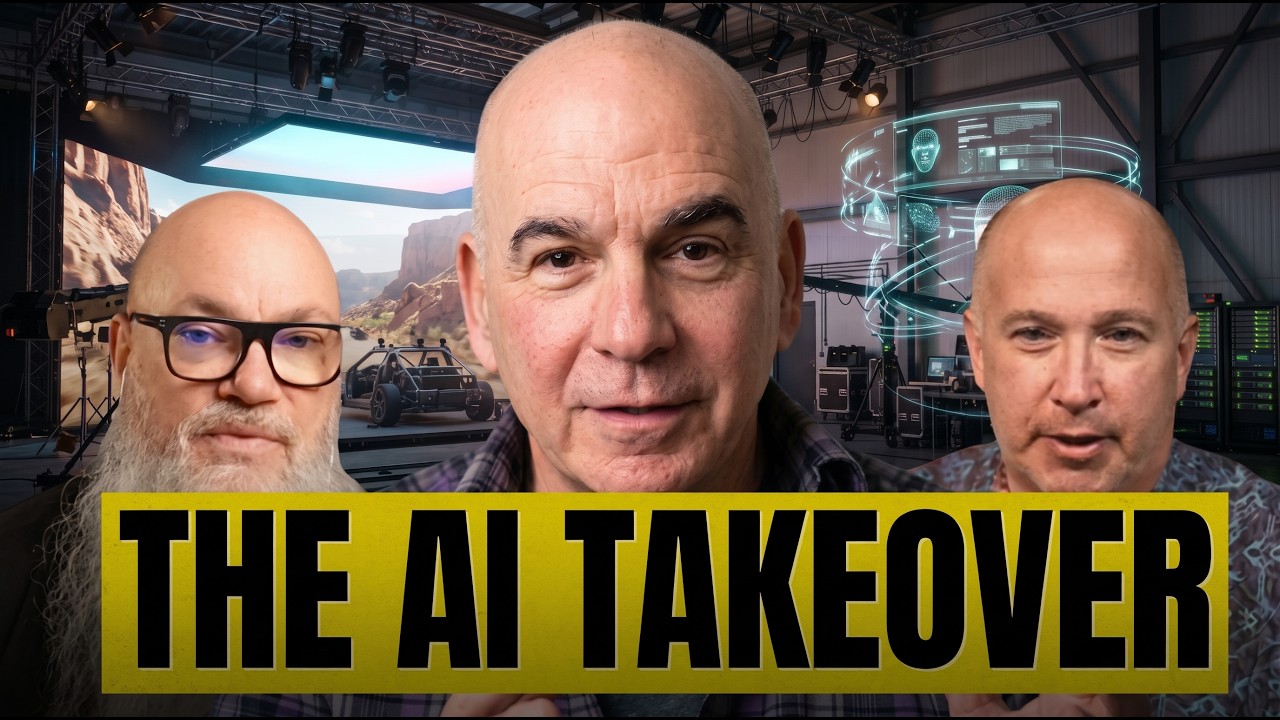
If I had you two guys walking down a street talking and I just cover it with one camera, that's it. And then with their AI, you could do like a profile shot. You could do a drone shot and it just generates it from what you've captured on your master. You know, one of the commercials I absolutely love. There's this Asian lady. She's going through the hotel. They lip-synced her. Like something was off and I I was looking at it going, "That's why it's grabbed my attention." Like most car ads these days, you see these cars driving over the bumps in Colorado. I mean, it's all done in a studio on a in a virtual wall, but yet the background's moving and it the reflections are real. It's changing film making. I just can't believe the volume of content that is consumed on YouTube versus even traditional TV. Yeah. >> You're watching Marketing Misfits with Norm Ferrar and Kevin K. >> What's up my buddy Norm? How you doing, man? >> Oh, it's getting close to cigar time. >> Close to I thought it's always cigar time somewhere. >> Well, it is. It's always Yeah. Yep. Yep. Very good line. >> Always cigar time somewhere. >> Oh, you can't see. But uh yeah, all the cases are over here just waiting to be smoothed. >> Just waiting. Uh you have your fingers like Too bad you don't have nails like a woman because you can go do a little finger piano on top of it. >> But you you didn't you go to if I recall, didn't you go to school for film? >> Yep. Film and cinematography. >> That's what I thought. Um I thought you did. You ran like a production company or something for a while, right? Yeah, I got into uh I was doing films, training films for General Motors and a bunch of different things, but uh yeah, I got >> So, what was the one with that was in a ring? >> Oh, Foxy boxing. >> Foxy boxing. That's right. The one you did the Foxy boxing stuff. >> Yeah, that was my big production. >> That was your big Yeah. I mean, I've I used to have three full-time video editors working for me. Uh you know, I didn't know you then. I don't think um but we had a whole production studio and this is back in the day before everything now we had a whole server room like racks and racks of like uh hard drives and stuff to to do everything. This is back when you have to if you had a 20 a 10-minute video you had to let it encode overnight. You know it's not like now when you upload it to YouTube and it's like okay give us uh 3 minutes and it's ready to go in HD. It was like it was it was crazy times. But what do you think it is that makes video and why is the video so important when it comes to marketing? It's everything. We talk about perceived value all the time. You can either make it or break it. But uh I got to tell you something. This is how much of a fossil I am. when I was doing those GM um videos and I was working for a country a company called Petrol Films >> and uh we were working with laser discs. >> It looked like a record. It was about 12 in and it was silver >> and uh yeah, you you'd send it out like a record. >> Yeah, it's like a big CD. I I remember that. I used I had a laser disc player when I was like um I don't know 16 or something 15. But yeah, so it but the power now with and it's evolved. I mean, it used to be you had to see everything on television or in in the movies and now with the internets and the the power of what you can do. Sometimes AI is a tool that can be used good. Sometimes AI is a tool that can pollute it. But the power of video now, I mean, just look at Tik Tok. It's basically video. I mean, all these things. And if you're not doing that right or don't know how to produce properly, I'm not saying that means spend money, but how to produce properly and tell stories, it's it's a problem. Our guest today, that's what he's been doing for uh quite some time. I mean, I think he's worked for like big companies like Honda and American Airlines and you name it. A lot of Fortune 500 companies are actually producing video and stuff for him. So, I think it's going to be an interesting take. I think he's just now coming around a little bit to some of the AI stuff uh and and figuring that out. So, I think that this is going to be an interesting one for everybody. >> Yeah, let's bring him on. >> Mr. Stewart Cohen. >> There he is. >> Hey, Steuart. >> How are you doing? >> Good, good, good. >> I I just want to start up something here. So, you are a Texas fan and Kevin is an Aggie fan. So, who's better? >> I know. Of course, >> if we're gonna have a good conversation, we got we got >> one question you got. One question you got to ask is what what do you call an Aggie, which is my school, Texas&M, when they graduate? >> Okay. What do they call >> unemployed? >> Boss. >> Oh, boss. Okay. Not >> long. But he said the answer for what do you call a Longhorn, which is University of Texas, when they graduate unemployed. So, see, he got it right. He He knew he knew it. >> Well, who knew we'd have a rivalry right here on this call today. >> Absolutely. That's right. >> But, you know, I I'm over with uh Steuart. He's from Montreal. I'm from Montreal. We got this bond going. >> There you go. >> Yeah. >> And I'm in Austin now, so I I'm behind living behind the orange curtain over here. >> Yes, you are. Yes, you are. Well, Steuarts, what's uh So, you've been doing what? Film for quite some time, right? >> I I have. I hate to admit it, but it's, you know, creeping into the uh Well, it's definitely double digits. So, I mean, I I went to film school in 94. >> Not that old then. You're you're young whippers snapper. >> That's nothing. So, but yeah, we were still yay. We were still editing on flatbeds and you know, we still needed to keep all your pieces of film. >> So, definitely I I I'm happy to say and I I I think >> granted if you never had to deal with film, maybe those are the guys that like it now, but I think if you ever dealt with film growing up, you're like, "Yeah, you guys could have it now." what you can do now compared to back then splicing film together and >> and you can do it on your phone now. >> Yeah. >> But then you look at the Odyssey and that was film IMAX film. And if you look at some of the >> behind the scenes stuff, they were showing like huge freaking reels of film and they they actually cut it like to make the master like the old way, the old school way, cut it and putting it together. I was like why? Well, I I will say I think and that just goes to prove I mean a good story it doesn't matter how you shoot it. >> Hey Norm, I'm sitting here inside seller central on Amazon and I'm trying to figure out if I'm making any money. I know you go to business reports and then campaign manager and then but there's a ton of options here. There's like a payment report, there's a cost spreadsheet and a whole bunch of others. Is there an easier way to do this? >> Yeah, it could be really confusing, Kev. So, never fear. Data do is here and all you have to do is go to claude or chatgpt and just ask it for example which skew lost money after ads last month and guess what you'll get a list how do I do this all you have to do is go to datad.com that's d o e and you'll get a free course showing you exactly how to do this and a 14-day free trial and use code norm 50 and you'll get half off your first paid month. >> Sweet. Dado.com, here I come. >> One one of the things that I really I like looking at different films from around the world, even different commercials, uh they they always have the top commercials from around the world, they're so different. And what I like about a lot of the um European films or just different films is they don't always leave you with a happy ending, you know, and you sit there and you go, "Wow, that that just took a huge twist." And I just find with a lot of uh the films that happen in North America, it is a formula and you just you know what's going to happen before it happens. >> Yeah. No, we are we are the happy ending people. I mean I mean you know like here there's a commercial for insurance you have a car wreck and someone comes and rescues you in Europe you have a car wreck and you fall off a cliff and it's over >> and how does so when when you're setting up and you're doing commercials you've got a much shorter time span that you have to get that message across. So how do you set that up? What is that story what does that storyboard look like? Well, it's shorter obviously. I mean, it's it's funny because >> this past weekend I was in Tellide Telide Film Festival and there are a lot of filmmakers, long form and stuff like that and having the conversation there with some friends. It's kind of like being a commercial filmmaker, you need to get to the point fast, obviously. And even if you get to the point fast, a lot of times it's not fast enough because now the 60-cond spot is the 30-cond spot is the 15 or even a six. And you need to get to that story. So, you learn to somehow combine nuances or combine story arcs into one because you have to get to the end quicker. um to the extent that sometimes you know now I watch episodic TV or movies and you know somebody's getting out of the car and they close the door and they walk to the front door and I'm like come on already get there you know because we're so used to like having to make that story happen. So I think I think the art of commercial making is that ability to tell a story in a short period of time. And I think I bet there are a lot there are a lot of directors that had been commercial filmmakers that went on to features that have done well but yet they understand the the benefit of being able to get to a point quickly and you know you guys I don't know about you but if I go to a movie that's really dragging I mean especially today I think everybody's attention spans are getting shorter and shorter and shorter and that's you know because of Tik Tok and Instagram and stuff like that and you so I think that bodess well for the commercial filmmaker that could get to the point quickly. Hey Kev, >> I don't know about you, but have you seen and there's more and more and more and and just it's a pet peeve of mine watching these stupid things, but these bigger companies that are trying to look like they have influencers on and you know that it's completely polished, horrible influencer. Like, it's just a terrible commercial trying to leverage uh influencers. I don't know about you, but they're driving me crazy. >> Yeah. No, it's not authentic. You can you can tell. I mean, when someone uses the product and you know they're a fan of it, it matches, it's good. But a lot of times it's it's it's not it's not. But one that sticks out is Chick-fil-A. I mean, they they do these little things during football season here in the States where you sit on people sitting on a couch and supposed to be a customer. And I think there's a disclaimer there down at the bottom that says uh actors portraying customers or something like that. Or maybe in some cases it's a real customer and they're interacting with a a person uh that's the drive-thru person or something, but they're sitting on the couch uh and talking about how this person was so friendly to them. It's it's part of their brand and part of their all all shucks wholesome uh branding, but it just comes across to me as inauthentic. Uh what so what what is it Stuart that actually can make because all these big like Norm says all these big brands now are are trying to dumb down instead of these slick produced commercials and like Hollywood style commercials a lot of them are like trying to make it look like it was shot on an iPhone or make it look like it was influencer type of uh just captured stuff. Is that actually working or is that are we losing some authenticity and losing some of the people when we do that? >> Well, I mean you you touched on a couple things there Kevin. So like one the authentic the authentic the authenticity the realness. I think that really started during COVID when all of a sudden people were not doing big productions, you know, and somebody did a commercial on their iPhone and it felt real and, you know, it's it just the authenticity really drove viewership and people believed it. And then you have the whole Tik Tok, you know, um, and you have the Instagram and and people love the authenticity of being there and it's not forced. It's not faked. It's not scripted. All this stuff, which everything we do, you know, is, you know, scripted and and and produced and styled. And they're like, "No, no, no. I want it real. I want it real." So that has affected, you know, the commercial film making world. And there have been some spots that we've shot on phones and because the client maybe they're a phone company um or they just say they want that authenticity. Now will it and I I don't know if it's ever going back. I think there's like a informality about the approach today compared to say 101 15 years ago even that is really nice when you look if you look at a commercial from 2010 it looks very dated 2015 looks very dated it's because the approach has been different think about the handheld cameras I mean not like to a fault shaky but just you know the handheld cameras moving around and and it just less staged feeling And I, you know, and I don't know if that'll ever go back unless it's something super super stylistic. Um, the other thing you talked about, the influencer deal, I can't get my head around that honestly cuz especially there are influencers like, yeah, you have a Kardashian or something like that, but when you get to people that are maybe they're called micro influencers, people that I know even that have this affiliate program and then that may be some of the affiliate programs, Norm, that you guys work with as well. Um, and I, you know, so like if you gave, you know, say I had a phone and I do a a little Tik Tok with my phone, but if you go to my store and buy my phone, I'm going to get a piece of it. So it's like everybody's trying to sell everybody something. And it's an interesting an interesting turn that our societyy's taking. You know, like if I need a shirt, I'm going to go into the store and buy a shirt. I'm not going to say, "Oh, look, Kevin's wearing that shirt." I'm going to buy that shirt in his store cuz he's wearing that shirt. So, I don't know. It's an interesting interesting times for sure. >> Yeah. Kev, when I was I was just at your place couple weeks ago and you do this all the time, you were influenced by Tik Tok and you gave me that cigar mister, right? But you would never have known it, but it it just goes back. There's an influencer. They're getting their piece of the buck representing possibly that brand. and you buy like I I've never bought anything on Tik Tok. I don't do Tik Tok too much, but yeah, you're uh you're you >> I bought I bought something last night at 2:00 in the morning on Tik Tok. Yeah. Scrolling through my going through my feed and here comes a You know, I love popcorn. It's one of my favorite snacks. >> Oh, yeah. >> Here comes a popcorn. One of these air popping machines, but the way they had it is like big and round. It had the butter melting on the top and you flipped it over and the butter I was just like, "Okay, I want that." I didn't even look at the price. I think it was 60 60 bucks. I didn't even pay. I just hit buy now and it's all integrated. So, I don't have to enter a credit card says hit buy now. Are you sure? You know, show your face on your camera and it's done. Um, but to go back to your point, I think Stuart on on that, these are sales forces. So, sometimes the influencers there is a following. I I back I had a makeup brand at one point uh like nine years ago and there was a guy he was a a gay makeup artist that had a huge following among women for his style and stuff and he promoted I had a brush set and he promoted that brush set and it just went crazy on Amazon because it was him endorsing the brush set and the people the women that followed him men and women whatever followed him um trusted his authority and so that's part of it that's more of an influenc influencer than a than a creator. Affiliate the creators or the slash affiliates are the people who are basically your sales force. So the game there is if I'm selling a popcorn machine uh is to get as many people as possible to actually promote my popcorn machine. So I'm going to send them a free popcorn machine, maybe a few bullet points or a few outlines of it and say create a video. And then they will go out. There's no such thing as followers really anymore. People have followers, but that doesn't matter. It's it's it's traction. And so if there's enough people like me that will buy a stupid popcorn machine off of a Tik Tok thing, then that algorithm is so good it can find the people. It knew that I love popcorn somehow. Probably listen, my phone's listening to me or something. I haven't looked at pictures of popcorn on Tik Tok, but it knew somehow that hey, this is someone interested in it. And the more of those they can find and the more different salespeople that can approach it from different styles or different way. Someone else might have done it the same video in a whole different way. And then those guys they get into it and then they get paid b. So people put money that the the popcorn machine company whoever owns that that guy proves that it's he's his angle or his approach is working. They will then come put money behind it and then blow him up even more. So he makes even more money, they make more money. So that's the game there is it's creating a sales force. >> I think it's great. I think it's brilliant. I mean it's truly brilliant. In fact, I got to tell you my story in the first like social media buy like and this is cuz it's pertinent to this conversation. So, there was something, I don't know, Canada Day was coming up and I saw a pair of like Converse, you know, high top Converse with the Canadian flag on it. And I'm laying in bed and I'm like, I can't believe I'm going to do this, but I'm going to do I'm going to buy them. And sure enough, I still have them. They're great. You know, I wear them once a year on Canada Day. >> But it works. Look, you're absolutely right. If somebody hits you at the right time >> Yep. And as long as we're glued to our phones like we are or any kind of media um and it hits you and there's always somebody that's looking for shoes with a canadian flag on them, you know, or a popcorn machine. >> The algorithm knew that you're a candidate for that somehow. It knew that, you know, from some other actions you've done, it knew to zero in on you and show you that. It never showed me that ad. Um, I've never seen shoes with a So that's the power now versus commercial TV >> and the the stuff you're doing for American Airlines and all these guys is like it's mass audience and you're hoping that a fraction of these 2 million people that are watching the football game or whatever, there's 10,000 of them over here that that applies to and versus now just the 10,000 that it applies to are going to see it on social media or 15,000 are going to see it and 5,000 they figure out real quick this is not the right people and they they narrow it down, >> right? That's that's the power there. But also on commercial television, you talked about it a minute ago that the 30 the 60 seconds become the 30 seconds become the 15 become the six. I've noticed that a lot of stuff when it's shot and this is from a maybe it's something brands need to be thinking about. I don't know if you noticed this too, Norm, that the 30 second commercial I've seen the same commercial they edit they they film it in such a way that it can easily be cut to a 15 and a six. >> Oh yeah. they lift out the certain sections that it flows naturally. It's 30, but if you just take this six section 6 seconds from the middle or the beginning or whatever, that can be a little bumper on the Hulu or or somewhere like that. >> Yeah. So, so sometimes what we'll do, Kevin, is we have, you know, it might be an extra scene or two that like, okay, on the 15 we're going to, you know, replace the ending or on the six we're going to do this. But yeah, it's all done, you know, it's it's all preconceived. It's all, you know, concepted and laid out and storyboarded and stuff like that. But to your point, and it's funny and I thought about this seeing that we're just coming off a holiday weekend and and knowing that I was going to be on your show and looking forward to it, but I'm thinking about even my career in my film making and how there have been some very thoughtful steps that I've had to make in my career just because I've had it I've been doing it a while now. um to stay relevant and competitive for the next chapter. And and some of those periods have been like just say for instance, you know, when still photography went digital, which is like 2005ish, like when it really really switched and film, everyone's, you know, we're still using film. We're still using film. Film will never go digital. And I'm like, guys, trust me, it's going to go digital, you know? And they're like, "Never film has, you know, it's so great. It's got the depth. It's got this. It's got that." I'm like, "Trust me, it's going to change." And so we were early adopters to say using Reds and and you know, the early digital uh video cameras. And um and sure enough, you know, everything changed and it allowed us to stay competitive to be quote unquote on the edge of what was going on and and and to partake in the next chapter of commercial film making. whereas as film for a long time was out of favor you know I know now there's a lot of nostalgia coming back with it um then another period you know after um the financial crisis say when budgets in in my world at least in advertising really got condensed they got shrunken down and I had to make this this decision it's like okay I've had a really great run of really big beefy juicy big budget commercials. If I want to play in this next chapter, I need to figure out how to do stuff more efficiently and faster to stay competitive. And again, that became a better chunk of my career. And just this weekend, and this is why it's pertinent to this conversation and what we're talking about, I'm thinking about what resonates with people and how these short form videos, these social videos, the vertical videos, how you need to tell the story even just differently. You know, it it it's not only shorter, but it's more, you know, some of the edits, if you look at the edits on spots now, you know, everyone's using like really whisbangy edits. Um, but you're still telling a story. the good stuff is still telling a story. You're just going to do it a little differently. And so I made a conscious decision this weekend and I didn't mean to bring it up on this show, but it's like, okay, how is my editing style? Like the editors I work with, how does that need to evolve like today to stay relevant tomorrow? You know, >> is that more of a fast-paced editing or more of a or more of a the graphical on the swipes? I think for more of a hook. >> I think we Yeah, I mean I think we've come we went you know there's been periods of fast and slow then longer than single take. Um but I think I think the fast is really with some crazy camera moves is really becoming very popular. It is popular. It's not becoming. And I've seen a lot of commercials that guys have gotten that we bid on that we didn't get that and it's all >> um really a lot in the camera the way the camera moves now and the way it's edited still telling the same story but you know maybe the camera's doing a 360 on the way into the person's face or maybe it's flipping upside down. There's just a lot of different things and so I think it's what's right for the spot and and everyone's going to be trying everyone is trying a lot of different things today. Um but I still believe back to what our first thing we talked about is if you could wrap a story around it, you're going to be successful because if not it's just going to be fluff like in 6 months it's just going to be some technical, you know, somebody just messing around. >> Yeah. One of the commercials I absolutely love or companies, I don't even know who the production company is, but it's crazy is Travel Velocity commercials. So, I watch those commercials and they've lured me in. So, the first one where the two guys are sitting down and the other guy just doesn't buy travel velocity pays more. the two guys they've throughout the the two years that it's been running the one guy changes once in a while then the other guy changes then the pricing that they're talking about oh we you could get it for 150 on another commercial it's oh you can get it for 250 on another one it's oh this is 355 so you're watching and what they did just recently is the second guy they did a voice over with a different guy's voice. So, it's always changing up. And then >> this the newer one, this came out a few months ago, where is there's this Asian lady, she's just in the she's uh going through the the hotel and you're looking in the background to see if the other people from the other commercials that they have, they always change them and, you know, just get your your your curiosity up. But they lip-s synced her. They made her voice just that much like something was off and I I was looking at it going that's why it's grabbed my attention like she's just off by a little bit. But it's great and I I >> I'm going to go watch it right after this. I'll go watch it. >> Watch all of the like all the Travel Velocity commercials are done. They're brilliant. They're subtle. Uh you just don't know what's happening. And every one of the actors go into the next commercial at some point and they'll run it. That's right. >> Yeah. It'll look like, you know, it's the same commercial 20 times and then all of a sudden, >> what's this guy doing in it? >> It's so cool. >> I thought he was going to say it's cuz the travel lost gnome is in there. In there. >> You know what? There was one here. Killer gnome. I thought they >> He looks like the gnome, you know. >> Yeah. Um, >> I'm I'm the norm. >> I'm the gnome. Well, you know, one of those things, Norm, is like, you know, what you're saying is it's had legs. The campaign's had legs. And one of the things I I I see a lot and I talk to sometimes is the fact that these brands that stick to their whatever their their their brand ethos is over the longer term seem to be the ones that become more memorable. Think of the insurance the flow or the you know that kind of stuff. >> Yep. >> State Farm. >> State Farm. All the insurance has done good. The emuyu emu Budweiser and Jaguar you know they stayed to their I'm just kidding. They're the ones that messed it all up. That's that's actually how branding can go totally wrong too. >> It's cra crazy >> slightly. >> So what what are you seeing? Is there a difference in creating um video for te television and I mean now even YouTube they say something like 60% of all YouTube is watched on a television 75 in or bigger. So I mean it but is there a difference when you're creating for the big screen or the television screen versus the the phone or is it has it all kind of blended together now? I mean they've always said you know the phones the wide shots don't work as well on phones you know so you're be a little tighter and a lot of times what we do is you know we'll shoot in 16 by9 and then you'll protect for the vertical so in essence it becomes bigger and if you're still shooting on real cameras now like you know so you're shooting a 6K or an 8K file so you could zoom in a lot for the for the mobile versions Um, but you know, when you think about it, if you're going to be playing on a 75 in TV, I mean, you could go pretty cinematic. I just can't believe the volume of content that is consumed on YouTube versus even traditional TV now. You know, it's amazing. >> Absolutely. >> It's really amazing. Kevin, we went to uh Vegas and when we we've been to the sphere a few times and it was amazing to hear I I think it was you that told me that they shoot it at 16K. >> Yeah, it was I think it was Yeah, it's something like it it's shot at 16 or 30. It's way up there. I I forget. >> It's not the typical 8K that like a Is the Red camera still even around? >> Yeah. Oh, yeah. Yeah. >> Okay. I I have been out. I know when it first came out cuz we almost bought one, but it was >> Oh, no. They've all they've all changed. But yeah, 8K is today, you know, but yet if you think about that the sphere, I mean, I guess you got to shoot in 270 degrees, right? So, it's a got to be a huge file. >> Yeah. >> Yeah. Just processing that file has got to be like crazy. Um, >> okay. So, what was your what was your favorite show there that you guys saw >> movie? Like I like the dead. So, when we went to see the dead eagles were good, but um that original movie, >> Wizard of Oz, >> the Wizard of Oz was fant like everything's been fantastic, but that original one we went to, >> oh, it's just the house movie, like the standard when there's no events going on. >> That was fantastic. >> That was probably the, you know, the best use of the technology because it's >> it's like a fly around the world or something, right, Nor? It's like showing on you go around the world from African safari to Indian celebration throwing paint on each other. >> There's mist the barometric uh uh the barometric pressure changes. It's it's >> Oh, that's cool. That's cool. Yeah. >> Yeah. You know there's a mini spear here in Austin. >> I did not know that. >> Actually, it's out by the airport. There's a It's a mini It's not big like that. It's It's miniature and it's made for like It's like one 12th the size or something, but they just just opened recently. >> Yeah, that's really cool. >> For like concerts and stuff like that. I have not been to it, so I haven't checked it out, but yeah. >> Yeah. >> And they're opening one They're supposed to open one in London, but they got cancelled. And they're they're the next one's in uh the UAE, I think, in Abu Dhabi. >> Yeah. >> Where they're they're putting one up. Well, I only saw I went to the original I saw the YouTube show there and >> Oh, yeah. >> And it was cool, but yet I knew right then, back to the whole conversation we've had about technology is that yeah, this is cool, but once people really figure out how to exploit this technology, they're going to be able to do some truly amazing things with it. >> Hey, Norm, I've got a quick question for you. I'm trying to manage all my affiliate and creator programs from Amazon, from Shopify, from Walmart, but it's just a freaking mess. I mean, I've got reporting coming from here and there. There's all these different Slack messages. Do you know if there's like a unified dashboard where I can do this all in one place? >> Yeah, absolutely. And you're right, it is a mess. A lot of brands are complaining about that. But there is a place that has a solution. It's called Lavanta. And they let brands recruit partners, track performance, manage payouts, send product samples, and even run creator programs across every major marketplace all in one place. And guess what? Brands can spend less time on tools and more time making profit. >> Is that the one that you sent me a link for like a 10% off coupon their gold or enterprise plan a few few days ago? >> You got it. Oh, cool, man. And I think I've got that link here. Was it lavanta.io/misfits? >> Yep, you got it. >> l e v a n t a.iomisfits. >> Awesome. I'm going to go uh go hit them up right now and get that 10% off. >> Perfect. Me too. So, what are you using any kind of AI in anything that you do? Are you still >> We are. >> Okay. >> Listen, I'm I'm willing to go with whatever tools are best. So, we just finished a commercial that is for Christmas. It's going to come out this Christmas. And the last scene in it was um you know the h like a drone shot pulling out of a neighborhood and you see a house you know it's dusk and the lights are on in the house and it's snowing and yada yada yada you know neighborhood and Christmas time and you know we looked for stock footage of it and we couldn't find anything we really liked and we created it and I got to tell you I mean I'm a believer like it it works and and it works. If you use it in the right place, it really works. I mean, it's great. It's it's it's where things are going. Um, and you know, I still feel like it's tough with people into nuance and emotion and stuff like that, but there's certain things that you're just going to be able to do in AI and it's just going to reduce the production costs and it may be even better, you know. But here, check this out. So, I was at a conference in Spain a couple of months ago and there was this um software company that are making AI tools for the movie industry and they're French and they have a place in LA. But what they were showing is what they want is people to build it into your story boards. So, say, you know, if I had you two guys walking down a street talking and I just cover it with one camera, that's it. And then with their AI, you could do like a profile shot, you could do a drone shot, and it just generates it from what you've captured on your master. So what they're saying is, we're not trying to replace film making, we're trying to make it more efficient. So think about that scene of you guys walking down the street. Instead of having to cover it three or four different ways, we're covering it once. and and it'll just it'll hopefully in time be more efficient, more cost-effective. Um, it's not good for crews for sure, but it's really good for content creators, movie, you know, because you could tell the story quicker and with more coverage. And again, going back to the quick cuts, you could then decide even after the fact, it's like, no, no, no, give me another cut. Give me the other person's POV, give me this, give me that. So you'll be able to create more shots out of one master. So I think that's going to revolutionary things. >> It could be me and Norm walking just in a studio, not on a street and it can combine that in with a whole AI generated street scene because like you said that that's easier to do without the people in it and more realistic and then you put the model of the real people in and that's modeled on those real people not just AI generated. >> Oh yeah. It it could be super powerful. >> Even if you think about if you think about these virtual walls now. >> Yeah. Well, the virtual walls are similar and they're everywhere now. And there are back plates and you create in the studio like your midground and your talent, but like most car ads these days, you see these cars driving over the bumps in Colorado. I mean, it's all done in a studio on a in a virtual wall. you know, they have these rigs for the cars and you have your camera, but yet the background's moving and it the reflections are real. Everything's real and um it's it's changing film making. And the first time I saw it, this friend showed me this video they had done. It was a music video and they were saying how cool it was, you know, and I'm looking at it and it's so this music video, this person's playing whatever. They're in they're on the Brooklyn Bridge. They're by the Eiffel Tower. They're, you know, they're here. They're there. And they said, "Yeah, we shot it all in one day." And and I couldn't tell the difference. I could not tell the difference. It wasn't shot on location. So that's amazing. So, when you're doing stuff for like American Airlines, what are what what kind of stuff is that? Is that is that advertising for American Airlines or is that their inc cabin uh safety stuff? >> Yeah. No, it's it's advertising. >> Okay. >> Yeah. And it's usually like they do a lot of um a lot of different verticals like for different types of flyers um you know, which might show on their website, it might show in their it might have links in their emails, it might just you know, who who knows? There's so many different verticals that these Fortune 500 companies have these days that there's a lot of times we never even see what we shoot. >> I want to go back to the editing for for the to the AI for a second and a film really comes together in the editing. Have you seen it's got to exist probably, but the editing used to be just methodical. It was arduous. It was just, you know, took up a ton of time. Is there a AI out there that you could just talk and have it edit the scenes? Oh, just just trim this by X. Oh, have it where they're fading out for whatever and just talk to it rather than having to create something by hand. >> Norm, I hope that's coming because I really do hope that's coming and I'm sure it's coming. >> Wouldn't that be something? It will be something and it will happen. And look, if you think about these, just think about these apps they have, you know, like Cap Cut or something like that, which it's throwing edits together for you already. I don't know how it's created. It's just algorithmically building these edits. All it needs is to be able to take instruction from a person, you know, extend this scene, do this, do that. So, I think it's going to come. I mean, again, will it ever be on the high-end stuff? Maybe, maybe not. Um, but the one thing I always say about all these tools is it's put the professional level tools in the hands of everybody, you know, and >> it's the tools though are one thing and great tools, but in the hands of the wrong person. It's the person directing it. the person that has the creative that actually can >> you can give the same tools to all three of us, you're going to get different results. >> It's >> absolutely. >> So, it's it's the creator. It's it's the same and we talk about this in email marketing and other things that it it's the creator that actually knows how to use the tools or the AI that makes the difference. And just like you just you guys just said, the the editor, I I'm a big fan of like the editor is a deal breaker for me. Oh, I I I have a guy that shoots my events. I do events like we just did one in Austin >> and I a guy came and covered it for four days shooting all the B-roll and testimonials and everything and his price was like four grand to do that for four days. It's cheap price, you know. Um my to edit a 7 minute u video of that cost me 2,200 bucks. Not from him. He I take his footage. He's not a bad editor. He's okay. But I have a guy in Colia that can just crush it on editing. and he's like a h 100red bucks an hour and he >> Yeah, but $2,200 is still cheap. >> Still cheap. And but the quality that I get back is and I've been doing this for 20 something years with editors and stuff. I know when it's good editing and good storytelling and the way he pieces it together and with all the little effects like you were talking about earlier, it's a damn good it's a damn good video that that my other guy could not have done no matter what tools he has because it doesn't know how to direct it. Right. >> Sure. >> I think that's where the >> the power of the tools is. I don't know if you agree nor or not, but where it's in the director, it's not in the tools. >> 100%. >> 100%. There's no question. But even if you think about that, 10 years ago, you would have had to spend a minimum of $10,000 to get that edit. So, you have a guy now, so the cost of entry has dropped so low for everything. So, somebody with a desire and and and a gift can really excel without what we came up with needing in terms of, you know, you look at photography and it's like this little thing is better than our cameras were 20 years ago, you know, and everyone's got it. Who is it? Was it uh um Copala said everyone's got a movie in them, you know, uh you know, and all it takes is a vision. And the thing is the tools are at our disposal. And and that's what I'm saying is like it it's >> not everybody can tell a story. >> You're absolutely right. But at the same time, it's exciting because you could tap different resources for different things. And like what you're saying is you found this guy and for $2,200 you knocked out a great video. I mean, that's a win. I would consider, you know, >> a lot of people would say like you spent 2,200. I I told that to my my trainer. He just he hired the same guy to do a video for him for his his his uh training studio and you know and he edit the guy edited and I think he spent a total like 400 bucks total and I so I spent $2,200 just for the editing and he's like I can't afford that. That's too that's crazy. Um >> the Tik Tok world in Cap Cut and everything is like why the would I spend 22? You're crazy to spend $2,200. I could do this for 50 bucks or for free. Um but yeah, you can but you see what you get. So, but on that note, yes, you are absolutely correct and I agree 100%. But if you're coming from say a world, say where I came from, where a uh a light shoot day would cost $50,000. >> Yeah. >> You know, and all of a sudden you're saying you're getting something for $2,200. So, you think about the the the jobs and the gear and and you know, it's it's just a different world. It's a condensed world. And I think the media landscape has really condensed like that. And again, I'm not saying it's good or bad. I think I think it's great because it's accessible to everybody. I think it's bad for people that had made a lot of money in that world because definitely the margins are way skinnier than they used to be. Um, but then does the cream still rise to the top? If you're a good storyteller, I don't care what tools you're using, you're still going to have a good career. you know. >> So, where is it going with the social? What What are you seeing with everybody's, like you said, everybody's a star now? Every 13-year-old wants to be a a Tik Tok star and every 15year-old thinks they can be the next Mr. Beast and and edit these cool videos and stuff. Where where are we going? We going to a land of uh a million directors and and >> Well, Kevin, I you know, I don't know. I don't >> cuz I read these articles, you know, and it's like, you know, some 17year-old with 10 million people following him on YouTube and and I look at the videos and to see who it is and I'm like, are you kidding me? You know, but it's a planet with 8 billion people and you just need to find your audience, right? >> That's right. >> You know, I'm I'm wondering and I I always had a bit of push and pull depending on the brand. So, we worked with, and I won't say the name of the company, but this car company drove me absolutely nuts. It wasn't General Motors, but it was a finer car company that between shooting, so you'd have the lighting, everything set up, ready for the shot, somebody's directing it, and then you'd have either the brand manager or a marketer or somebody from the sales team come down, and everybody had, you know, their voice. How does that affect you when you're on a set? >> Oh man, you too many chiefs. >> Too many chiefs. >> Yeah. >> Yep. That's all I'll say. Okay. >> So, we've done commercials. >> We've done commercials that uh we've hired crews that work on film, you know, on on on um cinematic films to work on my on my sets. And uh we've had an experience like that where you know you're getting talked to by their producer, the brand manager, that whole store. And this this gaffer comes up to me, he's like, "Why are they telling you what to do? You know, isn't it the director? I mean, it's your your thing." I'm like, "Yeah, but not in commercial film making. I mean, you need to be a you need to be a team player." And and it and that's the art honestly of commercial film making is having the vision, knowing what the story you're trying to tell is and then on set being very inclusive of everybody and trying to at least attempt to to fulfill everybody's vision. And then a lot of times it comes down to the editor that says, you know what, yeah, that does work best or this one works best. you know, to show them options. And everyone in the commercial world wants to have a say. And I think it's it's that's okay. That's our world. And if you you got to play the game if you want to succeed. And and I've I've become pretty adept at doing it. And I got to tell you, sometimes the ideas that come from, you know, video village are amazing. So you, you know, you got to go with it, you know. Well, what do you do to get the best out of out of your talent? I mean, you're working with with talent or sometimes maybe animals or whatever, but what do you do to actually how how does a director actually get the best from the talent? >> Well, that to me is really the differentiator and um >> relationships, >> not animals. It's more about the the human thing. And one thing about, you know, people ask what I do and it's like I I shoot anything with people in it. And I love people. I love people's stories. I love all walks of life. You could be man on the street, bluecollar, talent, celebrity, I don't care. And and I think that is my gift that I bring to it because there are a lot of people that could flip on a camera. Um, and I think ha, you know, learning to work with talent of all with with people is really the thing that you need to learn how to do. And I went to um in film school, there was a class called acting for directors. And looking back, whatever it is 25 years ago now, I mean, it might have been the thing that a light bulb went off in my head cuz, you know, when you're on the other side of the camera and no one's giving you direction or it's really quiet, it's it's a weird lonely place, you know? So, it's really up to that director to engage you in the story and engage you in the process. And and sometimes, you know, I mean, if somebody comes up with a great idea, let's try it. Let's go. You know, again, you never know where those ideas are coming from. But I think interacting with people to me is my gift. That's what I love to do. And I think that's why I've had a good long run in this industry. >> So, a good director is not like a a good surgeon. A good surgeon just shows up to do the operation and leaves and hardly ever talks to the person. But a good director actually a good director actually >> has a relationship is going into the green room is is establishing something to have some sort trying to have some sort of connection or bond so he can get the trust and the comfort and the get them to emote and get that emotion that that you want. That's correct. And even comparing it to the surgeon say you're doing you know a food filmmaker who does pores you know that's a very technical thing. So that's a very this is their deal. They they really love the technical aspect of it where I really love the human aspect of it. >> I want to go back to the uh humans and animals. Kevin, you relate more to goats, don't you? >> I relate to tigers. I mean, the la last time I filmed anything in Dallas where >> Oh, that's true. >> From is we had a tiger model a model on set. So, I'm >> This is true. >> It's a true story. >> I believe it. I believe it. That's a whole other game, too. >> That's when you hire a really good trainer. >> We did have a good trainer and drug him across the floor um with her in its mouth. Um is Yeah, that's a that's a story for another time. But um >> Exactly. Yeah, that sounds good though. >> But still my favorite, you know what I really miss? You're talking about the old days of uh before digital, before the Red cameras and stuff, is we used to have to get our our beta tapes and we we we did HD. I did HD for Mark Cuban right when HDNet first started. >> Yeah. >> 20 2003 2004 somewhere around there. We were doing >> we were doing some content for him. >> Um cuz he needed just filler time. We had pretty girls in bikinis on a beach. So we were shooting HD and trying to figure out this whole process to bring in a crew and like 30 grand to bring in this freaking HD crew to extra to shoot. But anyway, we would order our tapes and from this place in Pennsylvania, have them shipped down to Austin. And I always remember every time it, you know, it's $2,000 worth of empty cassettes to film on, but there's always two packs of M&M's in there. >> Two packs of like these little like uh um M&M's like you get at at Halloween, you little small packs. >> Yeah. >> And I didn't care about the tapes. I just cared about the M&M. So when they came in, I'll be like, "Hey, who got the M&M's? Give me the M&M's." But that's my that's funny vivid memory of the old days of before digital of getting those tapes is I tie that to M&M's for some reason. >> Yeah. >> That's why I always M&M's under my pillow. >> They make friends. M&M's make friends. >> They do. They do. >> Casting is another thing I really love because that's what's going to make or break it. And I think um there are a lot of great tips I've gotten from actors during casting sessions for a commercial. Like let them do do their own read. How would you do it? Well, this is how I would do it, you know? So, a lot of people, a lot of directors don't go to castings and they might just, you know, they'll be present at callbacks or and I would love to sit in a casting because, you know, you see a hundred people do the same thing, you start to take notice. And I think that's actually probably helped me become a better director as well because, you know, you see how people are are are playing out the script. So, do you think do you think this is going to stay stay around where people are spending $50,000 a day for shoots and all this or is it going to more of a direction of let's do this on the cheap and AI can fill in the gaps and if we got to do it okay we'll do one day instead of seven days or whatever and fill in the rest. Where's where's this all going? >> You want to hear my wish or the reality? >> Both. Both. Well, we're not going backwards. We know that. And to my point of what I said earlier about learning how to do things more efficiently and cost-effectively and so on so forth, I think that'll continue. Um, I think AI is going to be a big thing. I think and and and you can't be afraid of it. I think it's a great tool and I think we use it if we use it as such, it will be a great tool. Um, I think the storytelling, what we're going to be able to do, you know, it's wheels off if you think about it. I mean, you could tell any story you want now. And it doesn't matter where it is, you know, used to be, oh, this would look great, you know, on the Charles Bridge in Prague. Well, now you could do it, you know, and it's not even a big lift. So, I think we're going to see some really interesting things. I think people are going to take some of this new technology and do they're going to wow us. I mean, there might be a 17-year-old or kids coming out of film school that just approach things totally differently than we do. Um, I do hope I think I think the experience hopefully will help propel me for the rest of my career because I'm a very big um proponent of using new technology. So, there's something about if you have the old and the new, hopefully that makes you more valuable and more of a weapon. Um, but I think yeah, I think it's wheels off. I think I think we're going to see a bunch of great stuff. Hey, Kevin King and Norm Ferrar here. If you've been enjoying this episode of Marketing Misfits, thanks for listening this far. Continue listening. We got some more valuable stuff coming up. Be sure to hit that subscribe button if you're listening to this on your favorite podcast player or if you're watching this on YouTube or Spotify. Make sure you subscribe to our channel because you don't want to miss a single episode of The Marketing Misfits. Have you subscribed yet, Norm? >> Well, this is an old guy alert. Should I subscribe to my own podcast? >> Yeah, but what if you forget to show up one time? It's just me on here. You're not going to know what I say. >> I'll I'll buy you a beard and you can sit in my chair, too. We'll just You can go back and forth with one another. Yikes. But that being said, don't forget to subscribe, share it. Oh, and if you really like this content, somewhere up there, there's a banner. Click on it, and you'll go to another episode of The Marketing Misfits. >> Make sure you don't miss a single episode because you don't want to be like Norm. >> Yeah. I'm wondering and I've seen this u over the last few months but actresses actors u being digitally enhanced or just being digital and I wonder where that's going to lead. So like I I saw this one person and I just saw a glimpse of it but this lady who's going to be in a film like does she have an agent? Where where is this all going to go? >> That one's crazy, right? But I watched Hey, I watched your your podcast with the woman from was it savannah.ai? >> Yes. Yeah. >> And I'm like, I know a lot of people that are not going to be working anymore. And um and and again, hats off to them. You know, they created a technology. It's good. It works. I mean, you know, and back to what you were just saying, Norm, about the AI, like people, you know, that whole actor strike a couple years ago was about not using AI and then we were doing a commercial with a pro athlete like right after the strike and the agency said, "No, now we need to get him just moving his mouth for the AI version." And I'm like, "Whoa." And he is a SAG member. And I said to him, "Um, weren't you guys just on strike for this? Like, is this is this legit?" And he's like, "Dude, if they could do it, if they could hire me again and just pay me and I don't have to be here, why wouldn't I do it?" And I'm like, "Got a point." >> So, I don't know where it's all going. I mean, all I know is every little bit of technology, any new invention, anything someone comes up with will be used. And some will stick and some will not. Yeah, I I did that back at the spring. I flew up to Maryland to a studio where and shot for a full day just me uh creating an AI version of myself like 17 different outfit changes, standing, walking, sitting, bunch of different way. And yet, so now I have that and there's software tools where I can script it. So I it has all my mannerisms and all my H's and ums and twitches and whatever. >> Oh, you got to send me You got to send me a link to where you went. And so they charge like 15 grand to do that. >> And I I did that. And so now I can pump out content if I want to of me talking, you know, I can just write it perfectly or have AI or whatever help me write it and then it puts in my my voice with 11 Labs and just it it looks pretty good. Um it doesn't look >> So Norm Norm, is this Kevin? Is this the real Kevin here? >> I don't think so. Kevin usually has hair. All right, guys. We are at the top of the hour. This has been great. >> This has been fun. Uh, this has been great. Uh, Stuart, if people want to learn more about you or follow you or anything, what's the best way for them to do that? >> A lot of different ways. Uh, one, LinkedIn, you can just go on there at Stuart Cohen. Pretty easy. Website, company website is scicturcoen.com. So, I'm I'm I'm pretty easy to find. >> All right. Okay. You're almost off the hook, Stuart. We have one question we always ask our misfits. Do they know a misfit? >> I actually do. I've been thinking about it. I do. Do you want the name here on >> Absolutely. >> There is a guy in Dallas, Texas. His name is Brian Linder who is an worked for years and years and years at the Richards Group or TRG now and then went to LMA which is another agency that was a spin-off of TRG and now started his own deal and is doing it remotely from Taos New Mexico. Brilliant thinker and I think he'd be a great addition. >> Fantastic. >> Awesome. Well, looking forward to that. All right, sir. Well, thank you so much for being on the podcast today. You were awesome. >> Yeah, I appreciate it. >> Well, thank you guys. It was really fun. >> Cool. >> All right. Now, unfortunately, >> I got one more to listen to, Stuart. >> And now I've got to remove you. >> Okay. All right. See you, Stuart. See you. >> See you. >> There you go. >> Always like memories of the past. Like I don't know how many lives each of me and you have lived, but quite a few. We got to somehow we've got to fit in that tiger story somewhere because that is crazy. >> I told that in another podcast though, didn't I? Didn't I think it's in one of the other episodes do LLM search go uh >> you can go to billiondollarcellers media cuz all the Misfits podcast are indexed there. billiondollar sellers. Media and type in the keyword tiger attack or tiger um in Dallas or something along those words or or go to beat my oracle u is another place you could do that on the beat uh the ecomorracle.ai and type that in. It'll probably pull up the episode of marketing misfits where we we talked about that. Um, I think we did. Or maybe I'm I'm, you know, maybe I'm hallucin hall hallucinating. Uh, because I'm a I a a ai. Um, so I'm um, but yeah, that if not, we can always tell it again uh on another episode. >> All right. Very good. >> You got story. Speaking of stories, you've got tons of stories, too. And you've told some good stories in some of the past episodes. If someone want to go and find Norm stories or Kevin Tiger stories, how would they do that? Uh, >> well, you know, if if they wanted to have the long version, they go to YouTube and it's Marketing Misfits podcasts. If you don't have time for that, you can always go to YouTube and go marketing misfits clips. And these are the clips that are under three minutes and there's just a ton of them. Uh we can also or not now we can we also have a channel on Tik Tok and it's marketing misfits. >> That's the talk tickers, right? >> That's the talk tickers. Yeah, we were talking about that today. >> The talk tickers. We also have a newsletter. So if you if you actually don't have time to listen to the whole podcast, you can go to misfits.news and every Wednesday the podcast comes out every Tuesday and and we've been doing this every single Tuesday for I think it's like 150 Tuesdays in a row almost now. Something like that. >> Something like that. And then every Wednesday starting back in March, we have a a newsletter, written newsletter that comes out. So you can get that. It's totally free. Misfit.news. Great to skim and look at reminder of some of the good tips and strategies that our guests have mentioned. So check that out as well. You know what? We haven't today. We haven't we've recorded a few podcasts today, but we never mentioned this. And this is exciting. Now, we've got this digital game that we're doing live and it's called uh Misfits Ma Marketing Mayhem, and it is a Rumba in an octagon with cigars spinning around. Anybody who's joining live has a chance to win all sorts of prizes. Last time there was a $4,000 prize at the end of it, which was pretty damn good. >> But we will be posting it live. Well, you you'll get uh emails from us, but if you want to join us, it is a blast and you get a chance to win some money. >> Yep. Check that out uh as well. You can find more information on that on our socials or uh if you're on our email list, you'll get notified of that as well. >> All right. >> I guess Norm, I guess I'll see you again next week, huh? >> You definitely will. All right, sir. >> Peace out. >> See you later.
This transcript page is part of the Billion Dollar Sellers Content Hub. Explore more content →