Podcast
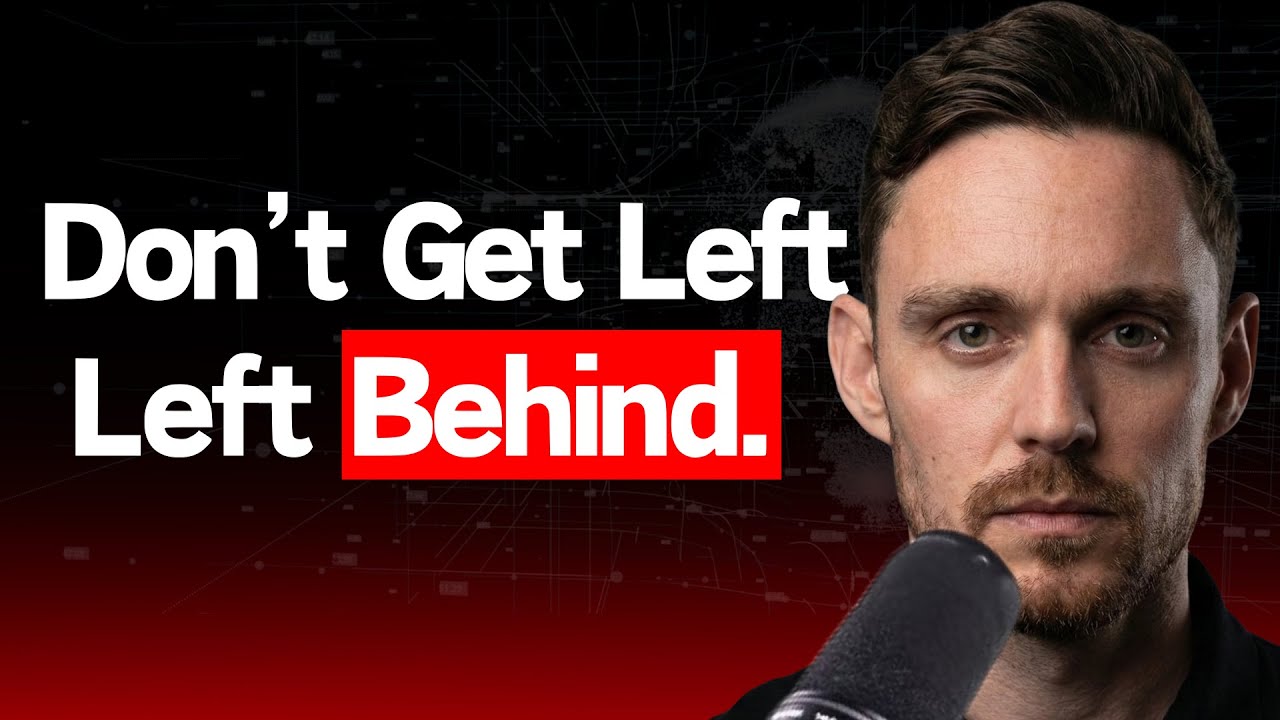
Agentic AI Will 10x Your Business in 2025...
Summary
"AI Engine Optimization (AEO) is now driving an impressive 10–15% conversion rate, vastly outperforming Google's 1-3% by harnessing trust in AI-driven answers. As AI collapses weeks of work into hours, integrating real-time learning with execution becomes vital, transforming coaching and e-commerce sectors or risking obsolescence like Blockbuster. Authentic personal branding and community engagement are crucial as AI reshapes the non-personal world, demanding businesses to adapt swiftly or fall behind."
Transcript
I fundamentally believe anyone who's in the business of information education coaching if they don't adopt AI to deliver that information the same time as the end user client customer completing the action. So they're learning while implementing through AI. They're going to become Blockbuster versus Netflix. >> Community is one of the things that a lot of people are saying is what's going to be super important in this new AI agentic non-personal world. What would you recommend to people to build a community >> right now? I mean, we're doing a lot with AEO and and driving traffic from generative search through Chachapati, Gemini, Pex, etc. The conversion rates out of these platforms defaulting are 10 to 15%. Now, for context, Google's 1 to 3%. What that tells you is humans inherently trust AI in the answer. You're watching Marketing Misfits with Norm Ferrar and Kevin K. Mr. Ferrar, how are you, man? >> Good. How's it going, sir? >> Sounds like you got a little bit of a cold there. A little bit of that. That's That's That's great white north. You know that that's what happens when you live up in the in the snow. >> Yep. Yeah. When I go to Texas and I come back, uh this always happens. Yep. >> I remember I was watching back in early September when the NFL season started uh this year. I I was watching uh watched that Buffalo Bills game uh that first first Sunday night game and they they were like it was early September and outside in Austin I think it was 105 and on that game they said the temperature is 57 this is Fahrenheit for those listening 57°. Uh I was like 57° in early September and and Norm lives further north of that. I'm like that he he wasn't kidding when it's about to get too cold to smoke a cigar. >> Well not too cold. Nothing's too cold, but uh it's layers. >> Oh, you did. Did you tell me one time you had a tent? Like you had a you you put up a tent in your back little cabin so you with a little heater you go in there all bundled up. >> Yeah. Those were the days >> until a spider came, right? And then you you quit doing that. >> Don't even say it. >> Oh man. And I mean speak speaking of tents, you know, our our guest today is coming to us from a a place that used to be all tents. Uh you know, it was like 30 years ago was Bedawin uh Desert Tents over in Dubai. And you haven't been to Dubai, have you? >> No, I haven't. >> Well, Dubai. I went there for the first time in 2007. So, we did uh me and Mark, you know, Mark and uh his ex-wife and Maddie and uh my mom and a few and a couple other people. We went on safari. On the way back, we stopped in Dubai. It's my first time there and I thought it was pretty cool place, but it was hot as you think Texas is hot. It was blood. It's like 116° in the shade. Um, but then I went back uh right after the World Cup in 2022. So, it' been what 15 years or so. And that place has changed. I mean, that place is so it's so evolving and so crazy. It's like Las Vegas without the gambling, but they're about to have the gambling soon uh as well. But it's it's a it's a really cool place. But it's a become a digital hub. So, you know, this is the Marketing Misfits podcast and the it's become a major place because there's no taxes and it's a big expat community there for digital marketing. Our guest today is actually originally from the UK, but is is back for I think the second time in Dubai. Uh, and he's heavily involved in the digital marketing world. It's going to be, I think, an awesome show. >> Yeah. Well, uh, let's bring him on. I was wondering how the hell you were going to segue from tense to I got it though. I got it. >> I just come up with it. I didn't even plan that out. I just come up with that top of my head. >> All right, let's bring what we gonna do. >> Hey you guys. I love that reference Kevin from Kent Tents to Dubai. >> Like I got to segue this somehow. >> How you doing Dan? Dan Ash with us everybody. Uh >> yeah, good. Thank you. So, we we go back a ways. When did we when did all three of us first did you meet Norm first or did you meet me first? >> My memory is awful for this stuff, but I think Kevin, you and I was maybe China 200 maybe. >> I bet that was it. Yeah. 20 Probably 2018. Probably >> 2018. >> Yeah. Uh did I have a little Colombian with me? >> Yeah. >> Yeah. Okay. Yeah. 20 2018 >> and then Norm I think we were we were an event early days of kind of the industry maybe 2016 2017 >> something like that. Yeah. Yeah. >> So >> so we go way back. >> We go way back. But you go way back uh Dan on on this marketing stuff. You're you're pretty heavily involved in the Amazon and Shopify and e-commerce world right now. But you you've been doing this since you were like kneeh high to a grasshopper, right? >> Yeah. I I got my start kind of semi-professionally kind of back in 2008 2007. I'd been messing around in the early days of affiliate marketing and the kind of early breakout days of SEO in my kind of early teens. And then by the time I was turning kind of 15, 16, um a lot of the Google updates were coming out back then if you remember Penguin and Panda and and all that stuff during that period. Um, and I was known as the kind of the local kid that could recover those penguin penalties. Um, so I ended up falling in with like local loads of local businesses and doing all the recoveries and getting their rankings back and building out early websites for anyone that remembers using it was Dreamweaver and before that it was Geio Cities. Do you remember that? >> Yeah, I remember Geio Cities. >> Yeah. So back then I was spinning articles and just dominating just this teenage kid in a bedroom just dominating Google and it kind of built from there. Now is that from that you were in the uh the Azors or something right or at one point or or or where were you weren't just always in the UK didn't you go to one >> I so I moved out my my mom took me out to uh Spain or actually Tenneref which is the >> Canary Island. Yeah. >> Yeah. The Canary Islands which is owned by Spain. um when I was about 12 years old. So, I spent my teens kind of on in this weird split between kind of growing up on an island where lots of people come on holiday and want to come to the sun and and party. Uh but then I'd be sat in my bedroom kind of I I built a hosting company and was reselling hosting. I had this SEO thing going. I was doing design. I was doing affiliate marketing and really just was fascinated with the internet marketing and monetization and kind of bringing those three things together. Uh my big success as a as a late team was I used to build these affiliate sites out and I'd drive traffic to them with Twitter bot traffic and then I'd flip them on flipper.com and each time I flip these sites I was going like a couple grand, five grand, 10 grand and I I did like hundreds of these things because I just sit there kind of spinning them all out and then for any of the SEO kind of geeks in the on the podcast was using SEO and Nuke back then and kind Yeah. Do you remember that? Using the link wheels >> and doing all the spin tacks and Yeah, man. I was just jamming and that's kind of where I kind of got my feet with this whole thing. >> Sounds like you were coming in and I was going out. I started like way back way before Panda and we were just building and renting out web pages for SEO. >> Yeah. >> And uh we got out because of all these updates that kept coming up. We could handle panda uh pigeon I think is when we got out but uh then yeah the young guys took over. >> Yeah the 12 year olds took over didn't they? >> Yeah exactly. Yeah >> it was great. It was great because that period of time is is really where I got the reps in. And it's like anything right? You get enough reps in you build experience. Experience turns into wisdom. And it's that it's those reps that really have served me for the last 15 years of of being in very high level performance marketing across almost every vertical there is in the space. So yeah, I look back at those days and look at them quite fondly. >> So th those what got you into the were you just did your mom just give you a computer and you just started playing with it and it just led from there? what got you into or was there some idol or someone in the neighborhood you knew that that was into it or how did you actually fall into it initially? >> Yeah, so my mom was uh she was a company secretary for for my dad's business. So her whole thing was typing, right? So she she kind of gave me the start and like this is a keyboard. This is how you type. Uh and I remember we had a Windows 95 computer, AOL dialup internet. Um, and in the early days, my my dad would would pay me, I think back then it was like 20 p a page or something to type up his ISO documentation. And looking back at it, I mean, there was thousands of these pages that you had to sit and type. Um, and I think that kind of got me hooked on on kind of the whole computer world. And from there, it was like, well, what can I do with this? How do they work? Uh, and my brain just I see ones and zeros and I'm very logic driven. I'm I'm kind of more IQ than I am maybe EQ. And it was just an it was like a passion that turned into an obsession u that then turned into a professionalism. And I just when I when I get on something I see the strategic objective my head sees 10 steps ahead and I just have to solve that thing. Like I get really obsessive about solving that thing. U and I think that's partially maybe where some of my success comes from. But yeah it all just started with a Windows 95 computer and dialup internet. >> How did you get into Amazon? So, you've got a typewriter and then you move into the Amazon space. >> Well, in between there was a few years, right? So, um I was I was doing all this stuff online. I got known as the local guy that could do websites and SEO and early Google ads. Um so, I was doing all of that. Um but then I was also on this kind of bad path growing up. Um I was I was out partying younger than I should have been. I got in with the wrong crowd. Um so, my mom sent me back from from Tenneref. I think I was about 16. My dad didn't really want me around in the house or anything. So, I was 16 in a in a one-bedroom flat. I was working the local bar. Um, kind of let them believe I was 18. So, I was working the bar. Uh, and I I doing all these kind of side jobs for people. Some of it kind of like more ethical than others. And I was I mean, one guy once asked me to set up a pirate radio station and he used to give me like 50 power cases and stuff like real crazy stuff, right? Uh, I started I started a delivery company um, a fast food delivery company before Just Eat and all those guys and delivery when that existed and was kind of going around getting all the local restaurants on this platform. And then one day I woke up and I was like, I need you to do something. So I heard an advert for the military. Uh, two weeks later I was in basic training. Six six months later I was in the Middle East. Um, so I did just over four years service there and that really sorted me out. It focused me. I was in in I was in communication and in intelligence and technology. So they put me through Cisco and Microsoft and all the kind of formal qualifications which really then taught me more like enterprise scale. >> And then I was actually out in the Middle East. I was in I was in Qatar. I was in Aluded which is a name that's come up a lot recently this year in the news and stuff, but I was out there at an American base. Um and I thought, you know what, I'm just going to get serious about this thing. I wrote a book on SEO and the press release was it was something along the lines of Afghan to businessman or something like that. So I phoned my best friend John >> to business. >> Yeah. I phon my best friend John and I said, "Look, get down the accountants. We're registering a business. Trust me, this is going to work." Six months later, we're in my back bedroom, one-bedroom apartment. Uh 6 months after that, we're in my mother-in-law's garage. Six months after that, we've got offices in the city. Uh and we did four or five years of just hard cold like grafting at digital marketing. We had four or 500 clients. Uh we were cold calling every day. Deployed 600 websites, over a thousand SEO campaigns. And in that I had a lot of successes. I took a local jewelers from being a local jewelers to 100 million sterling British pounds online per year through SEO and Google. I helped deploy the UK's largest Invisalign provider, 20 20,000 cases a year, 200 locations. And we had to figure out local lead generation. So central budget local lead generation on a three mile radius on a $5,000 ticket. So we had to figure all that out with early days of Google and Meta. And then I got an email 2013 2014 dropped in me inbox about selling on Amazon and this novel concept of own the brand, own the listing. And I thought I want to get off this kind of hamster wheel of kind of agency that I've been in for a few years uh at the local level. And I want to get out into the big wide world. So, bought the course, jumped on a plane to Vegas, bush eared and kind of wideeyed and turned up at I think I was 22 maybe at the time. Uh, and that was I mean, yeah, that was 11 12 years ago to this year. >> Hey, Norm, you'll love this, man. I talked to a seller the other day doing 50k a month, but when I asked them what their actual profit was, they just kind of stared at me. >> Are you serious? That's kind of like driving blindfolded. Exactly, man. I told them, "You got to check out Sellerboard, this cool profit tool that's built just for Amazon sellers. It tracks everything like fees, PPC, refunds, promos, even changing cogs during using FIFO." >> Aha. But does it do FBM shipping costs, too? >> Sure does. That way you can keep your quarter 4 chaos totally under control and know your numbers because not only does it do that, but it automates your PPC bids. It forecasts inventory. It sends review requests and even helps you get reimbursements from Amazon. >> Now that's like having a CFO in your back pocket. >> You know what? It's just $15 a month, but you got to go to sellerboard.com/misfits. sellerboard.com/misfits. And if you do that, they'll even throw in a free two-month trial. So, you want me to say go to sellerboard.com misfits and get your number straight before your accountant loses it? >> Exactly. >> All right. >> So, that was amazing.com. >> Yes. Yeah. So, amazing.com jumped over to Amazing Selling Machine and then, as you know, Kevin kind of I think I was kind of an enthusiastic kid who knew a thing or two about online and marketing and stuff and quickly found myself at the center of that community. And then you ended up uh going to China. You you heard about this trip or something, China magic, and you ended up going as a paying person or as a speaker or something like that. >> So I I'd actually linked up with a guy in the industry called Scott Deetsz who was doing a lot of the early kind of how to build enterprise value in your business and sell the business and stuff. Um and we he'd asked me to help with some stuff on on the marketing side. So we approached Athena who runs that trip and kind of was pitching her on the idea of hey would you help us spread the word about this and then Athena being Athena reversed the pitch and had me join China as a mentor. Um so all of a sudden I'm on a plane to China and it's her second trip. Uh and I just loved it. I love the immersive 12-day mastermind format where you're actually getting out to factories and to the fair in real time and then coming back on the evenings and sharing what you learned and getting advice on how to negotiate and all the stuff to do with Amazon and ecom and then going back and implementing it the next day. Uh so we did that and by China Magic 3 I was a partner in the trip. Uh we did that for a number of years and then we realized very quickly that we were doubling businesses in like 10 12 days for either conversion rate or better terms or whatever the lever we're pulling in the business and we figured we could do that year all year round and that's kind of where Titan was born in 2019. We sat there wrote a big list of everything that an ecom owner needs. Uh we sat there till 2 in the morning writing this this note. We put it under the hotel room doors of everyone in the in the trip and the next morning we had our first 50 members. Wow. Wow. That's great. Now, you just mentioned Titan. >> Yeah. >> For those of the people that don't know Titan. Can you tell us a little bit about that? >> Sure. So, think mastermind, think events, think coaching program, think consulting, and think proprietary software and put it all together in a membership. So, that's what Titan Network is. It's a network of e-commerce founders coming together to share knowledge. And in Titan, we know that together we're stronger. And effectively, we're professionally structuring and capturing collective intelligence and putting it into step-by-step frameworks and then empowering that through consulting and coaching and technology. So, we we have a technology platform and software that now we're getting super exciting with AI and all that sort of stuff. Um, so it's a it's a like-minded network of entrepreneurs coming together around a central playbook and everyone contributes to that playbook and that playbook is constantly improved and refined. So it's it really is the concept of 1 plus 1 equals 3 when you put entrepreneurs together in a room. >> You know, I always wonder between you and Kevin and your groups and your events and you take a look at the price point. So both of you have very expensive masterminds. Kevin's trying something uh new this year. Um but just trying to get people to understand it's worth paying for and that's a that's marketing in itself. But a lot of people getting out there, they're starting new in Amazon. They really don't have a lot of money, but that's probably the best money they'll ever spend is to go to like a BDSS event or to join a mastermind like Titan because it's it just accelerates everything. And even though you might have to part with X number of dollars, you just get catapulted into well, you know, jumping into two feet into Amazon or whatever the event's going to be. So, you know, tell us a little bit about that. Uh the marketing that has to go into it's got to be tricky. So, what type of marketing how can you persuade people that don't have a lot of money maybe to join a group? So I mean our core ICP for network is typically a six-f figureure kind of established ecom founder. We do have a program called Genesis which is kind of like the the zero to one end the launch end but in terms of the broader positioning um it really comes down to proof right and this has become more and more important as we go on. I fundamentally believe that we are in the chapter of authenticity and credibility. You used to be able to market programs, consulting, software, etc. purely based on benefit claims and and and certain psychological direct response structures. But nowadays, what really matters is authenticity, authentic, vulnerable, real life operating uh and then backing it with undeniable proof. So we're fortunate now enough six years in we own and operate we're going to tip up over $50 million this year in owned and operated revenue in ecom. Um so the actual coaching business and mastermind business is only about 10% of our business. It's about 15% of our business. Uh the remaining of it is real life brands that we operate. We've got teams in China. We're 150 people as an organization. I don't think many people realize that. So the one we we do what we teach I think is a is a really key point. I think there's loads of people out there um who kind of have these courses on YouTube and Instagram and I see these kind of the next generation coming through maybe on Tik Tok who are kind of teaching this stuff but don't actually do what they teach. So one we do what we teach and we walk the talk and then two within the platform um we're able to track down to profitability of a member's business because our tools have full P&L and cash flow reconciliation and everything built in. So all we do is then take that visibility and emerge it to to the marketing end um to one create the structure two the benefit but then three back it with proof and credibility and I think in whether it's ecom or any other market uh we are 100% in the season of authenticity and credibility. Yeah, when you have about 700 members or so, right, uh, in there, and that's a lot to manage, but you guys are very hands-on. A lot of people might have 700 members and they meet once a month or or they have a Zoom call or something like that, but you guys have a very active like weekly huddles, I think you call it. I've been to a couple of your events in Cancun. Norm and I were at one at uh in San Diego, one of the smaller ones, and they're very well organized and very well structured where you got people at different levels together and different stuff. It's very well done. It's probably one of the better educational I I've seen a lot, you know, on the inside and outside. Know a lot of people and it's one of the better ones out there. How do you actually And I think part of that's because you guys, like you said, you're actually selling, but there's a lot of people that are really smart at selling, that are really good at selling, but they can't speak, they can't educate, they can't explain. Um, how do you how do you find that uh balance and how do you because you guys do a good job at both. So, what do you think is the trick or the magic to being able to do that? >> There's a few layers to it and Thea and I have often joked that we could write a book on this. Um but effectively it's about systemizing activation and systemizing the different levels of maturity in the business. The first thing to understand is one size does not fit all. You can take a a broad framework or strategy but the application of that framework or strategy to a business differs depending on the maturity of the business and the size of the business. So, a brand new seller launching is not going to apply a strategy or framework the same way a multiple seven figure seller is going to apply it. And the needs of a sub $500,000 ecom brand owner are different to the needs of a $2 million brand owner trying to get to $5 million. The prioritization of their actions within the business are different. So, it's about truly understanding the business that you're growing. You have to have actually grown through each one of those stages to properly understand the milestones of growth and what changes between each milestone and then design the delivery to be evergreen around that structure. So in Titan we have Titan launch, Titan 6 stage phase one, Titan 6 phase 2, so up to 500K, over 500K, Titan 7, and now Titan 8, we're just tipping up over nearly 100 figure sellers in my Titan 8 group. And at each stage it's the same underlying business frameworks that are being um being applied but the implementation of them changes depending on the scale, size, resources uh and experience of the operator implementing them. So that's the first thing to understand is one size does not fit all. Um then in the implementation of that you need to address what are the needs. So on the base layer they need a common framework where everyone's talking the same language. So we call that the Titan operating system. That's our kind of knowledge that we we professionally structure into into playbooks and frameworks. You need a platform that measures success. So we have the Titan tools software that measures the success. You then need individuals that are one step ahead of the people that you're helping. So we brought in a leadership team, a mentorship team, and a success coaching team that are all actual operators, one step ahead of the people they're talking to. Then you need to understand how adults consume information and how to hold them accountable to their own progression. So you layer in certain ways of delivering information. You layer in accountability programs. And then there needs to be a sense of community and designing and being intentional about the design of community and interactions to create real authentic relationships. So you kind of layer all this stuff up and then you just put the right management team over the top of it with the right reporting and cadence and infrastructure and out comes a Titan network. Um, so it's really just taking it's kind of like structural design uh, but it's bottom up based on the needs of the entrepreneur and what actually makes the business tick. And you mentioned something there, community, and you mentioned earlier about authenticity and you just tied it in there. Community is one of the things that a lot of people are saying is what's going to be super important in this new AI agentic uh, non-personal uh, world. What is it? What would you recommend to people to build a community? What would you say is key people listening to this that like Yeah, I I I need to build a community, but I'm I'm selling I'm selling hammers. Uh uh, you know, or I'm I've got a course. It's easier maybe if you got a course cuz you got a group of people that are paying you some money to to learn and to to network. But but how do you do it if if you're selling something that's not this way or how what's the importance of community and what are some tips to establish that and foster cuz people a lot of times people will start a circle group or they'll start a school group or they'll start something and then just dies off uh and it's not active. So what are some strategies and tips around that to to building strong communities? >> So the first step is understanding it's who not what. So it's not what you're selling it's who you're selling to. So really truly understanding your avatar or your ideal client profile ICP and truly understanding what it is they are trying to achieve by buying the thing that you're selling to them. But then deeper than that, what do they believe? What are their thought tracks? Who do they vote for? Really understanding what's what gets your audience passionate and then creating a community with a common belief around that objective. So for us it was very simple. Number one, we believe we are stronger together. One plus one equals three. Two brains are better than one. Shared experience and testing and data is going to accelerate the whole faster than individually because an individual operator simply doesn't have enough breadth of understanding, depth of understanding or volume of operating to validate any kind of major breakthroughs. So that's the one thing is is a belief system. So together we're stronger is the mantra that really pulls together people that believe that into the Titan ecosystem. The next is is the inner goal and the voice or the objective that that person is trying to achieve. Uh for our guys and this changes over time. Originally it was just you kind of see it cliche freedom that that kind of life freedom and we have two numbers for that. We we have a lifestyle number and then we have a a dream number. So, a lifestyle number is what allows you to service your family, your day-to-day expenses, quit your 9 to5, etc., etc. A dream number is what allows you to kind of deliver on all of the goals, the house, the family, the retiring, the parents, the exit number. Um, and understanding that in what we do with e-commerce and Amazon, that the vehicle that we're we're delivering is the fastest way for them to achieve that goal based on all of the variables in the market and accessibility to that market. Now, that's changed over time, right? because when it started it was very much a lifestyle business. Then all the private equity money came in and all the aggregators and all of a sudden it was all the exits. Now we're back to kind of this like cash objective which is affected by the macro economy. Um but there's an understanding that if we can get multi- channelannel and omni channel these things are still have value and I can sell it for a few million dollars. So there has to be a shared goal and a common goal that they're working towards. If there's not something like that that's entrepreneurial and you're selling just hammers, what what do you stand for? Standing for nothing is standing for no one. So what is what is it that you stand for? And you'll find that certain guys and girls who buy certain types of hammer believe certain things and you can create entire belief systems around those things and attract more people and then take your brand of physical products or whatever it is you do really deep into that audience and be that brand and like really embody that message and that feeling. and how your brand makes them feel ultimately makes them feel like they're with their people, they're with their tribe, they're surrounded by like-minded people. So, it really comes down to who, not what. >> That's like what Rise Coffee did uh with Mushroom Coffee um and some of the other big brands. Exactly. The strategy that that that they took. Um how do you keep it though? Sometimes that can become a little some some of these communities can become a little cultish or or something or from the outside or does that not even matter or how do you >> again I think polarization polarization is important right like how do how do you cut through the noise of social media that is only becoming more or of just media that is becoming more and more crowded and is being accelerated by AI the the amount of noise that's being created by AI is only accelerating to cut through that you have to polarization is one thing. Standing for something is standing for someone. Standing for nothing is standing for no one is another. Um and the it makes me smile when I hear this about cult. A negative connotation towards being a cult is typically some sort of malicious background or some sort of ideal kind of extremist thought towards something. If you think about cult and culture, what you're creating is a culture within your community, which is a loyal belief in something that you commonly believe in. And then you found your people and your tribe. So cult and culture are very close together. One is around a common belief that you feel passionate about. Another has a darker meaning, but there's a very fine line between the two and it's really about centering around that belief and what it is you're working towards. Like another thing we have in Titan is many other communities, not just in the ecom world. I'm a part of some big masterminds. You and me, Kevin, are a part of uh Driven is a lot of people come in holding their their cards to their chest, right? They don't want to actually share anything and it's all very surface level conversation. We attract people that fundamentally believe in abundance. I will show you all of my products because I'm not there's enough to go around and by I'm going to give I'm going to get 10 times more than I um the more I give. So, it's kind of like we have an abundance mindset in Titan as well, which is another belief system of the people we attract. >> What do you see as some of the biggest things that have changed in performance marketing and because y'all use performance marketing to promote Titan and you you have a background in that. What do you see from like in the last 5 years? what what are some of the biggest shifts you've seen and then where do you see it going? >> I'm really excited about where it's heading and I'm I'm and and I'm also for the first time in 15 years of doing this. Um feeling the acceleration. I've never seen anything accelerate like it is right now in any market, any sector, any business model, any type of marketing, any type of sales, any any anything. And there's been a number of shifts that have kind of led up to where we are today. And it's been it's kind of like a pressure cooker. And I feel like we're at the point where the the pressure cooker is about to pop. The volcano is about to take about to explode. So the the first big shift early on maybe 3, four, 5 years ago um that kind of kicked all this off was moving from more demographic targeting to contentled targeting. So in meta for example interest targeting different campaigns by stage of funnel um this was all super lookalike audiences and in B2B lead genen this is still fairly true but in in broader consumer it's not that was the primary and you could throw up crappy creatives you'd only drop a couple of creatives a week or a month in that campaign and it would perform. there was this significant shift to contentled engagementbased targeting where the interests and all that stuff still kind of indicate but really it's to do with who's engaging with the content and Tik Tok was a big disruptor to that in in their algorithm. So that's again comes back to who um from a from a creative and that kind of authentic resonation. So that's one. Um the next thing is this shift from highly curated, highly published content to more organic, authentic, raw, vulnerable approaches. Again, cutting through the overwhelm of um kind of more institutional marketing and what I believe is kind of a trust crisis online right now. like consumers are done with the kind of highly curated publish kind of direct response type approach and they want authenticity to back it to believe to believe and to see themselves and you as the individual or the brand which comes back to that community. Um data has become far more important. So with iOS blocking cookies, you used to be able to drop a drop a cookie side, sorry, a browser side cookie or pixel onto a site and get great match rates and all of that. Now the data layer and the the first party data versus third party data, passing that back into the algorithms, filtering out bad leads from good. So you're only giving the algorithms the good leads so it goes finds more good leads. Like it's that that technical game. And then the biggest shift I'm seeing now with all of that and obviously you lost targeting with meta with all the Cambridge Analytica stuff and all the privacy stuff that's going on in the EU and I know it's kind of seeping into the US a little bit. Um but the biggest now is the acceleration of AI. It's effectively consolidating time. So whereas a webinar campaign or a direct to cart campaign or a product marketing or a service-based lead genen campaign would take a couple of weeks to deploy, you got to get all the assets together, figure out the targeting, do the creative, do the copy, build the pages, get all the tracking links. With AI tactically, we can now accelerate and compress that production into a matter of hours. So anyone who understands how to direct AI at the strategic level because it's not going to do the thinking for you. You need to direct the thinking can now move so much faster. And I believe what's going to happen is you you're going to effectively get the top performers pulling away from the rest of the market, the early adopters pulling away from the rest of the market and just dominating platforms because they've they've used AI to effectively crack every single one of those layers. Are you looking to quickly boost new Amazon product launches or scale up existing listings to reach first page positioning? The influencer platform Stack Influence can help. That's right. Stack Influence pushes high volume external traffic sales straight to Amazon listings using micro influencers that you only have to pay with your products. They've helped upand cominging brands like Magic Spoon compete with Cheerios for top category positioning while also helping Fortune 500 brands like Unilver launch their new products. Right now is one of the best times to get started with Stack Influence. You can sign up at stackinfluence.com or click the link in this video down in the description notes below and mention Misfits. That's m i sf ts to get 10% off your first campaign. stackinfluence.com. Yeah, you know, uh it's interesting you put those four um components together, but I like to go back to the uh the content the content side and how you're effectively using it right now because this has gone full circle and I we'll get into AI as well, but how are you using content right now? Content creation. >> So, Norm, you know as well as I do, there are seasons in marketing, right? And whether it's Amazon or Google or any of the Walmart or any of these other these platforms, Meta, whether you're in media buying, organic, the underlying strategy of the psychological approach to marketing doesn't really change. What does change is the tactical execution and the order in which you put it together. Even like the Alexosi launch recently, none of that was truly unique or novel in terms of the underlying strategic approach, but the way in which he was able to execute and implement it was very unique and very very novel in that approach. So when it comes to content, it's taking what we know works, the production of all the different content archetypes. Um, in in ecom it's us versus them, founders story, and I got this from a guy called Joe Hyde. Um, in terms of breaking down the different types, comparison charts, um, lifestyle, picking out a specific painoint from the five stages of awareness and going deep into stories around that. But now with with AI and content, what we're able to do is whereas that stuff cost thousands of dollars and weeks to produce and you needed all these graphic designers and video editors using solutions like Google's new nano banana which we've already got into production that's able to maintain the state of iteration on graphic design or V3 or there's one called A2E which is a bit more unrestricted outside. It's coming out of China. We're using that API quite a lot right now. Um we're effectively able to produce or hen with 11 Labs for avatars. We're now able to produce the volume of content at consistent quality and remove that human barrier of having to get in front of a camera or having to get a camera out and get a product box and take a photo of a a product or get them. I mean, I used to run an a I used to run a studio until recently. We had a we had a full physical studio and we'd we'd pay models $300 a day to come in and take shots with with kids. And removing that entire layer, we're now just able to accelerate the volume. And then you couple that with the way that the targeting algorithms gone in meta like I think it's called a drama, isn't it? The the latest update. These platforms have become so content hungry that it takes volume to compete. So the two things are coming together at such a time that's just making it a complete breakthrough moment for marketing. Um, and the way in which we're using it for content is exactly that, a bottom-up approach of hook, body, offer, testing different ones, really understand the ICP, their pain points, where they are in the five stages of awareness in the funnel, and then using the AI to produce and test that content. >> I ju I just saw something, speaking of that, just uh recently, this is back in early September, I saw something where there's a company doing podcast. They're doing 10,000 episodes a day. >> Wow. >> 10 10,000 podcast episodes a day, all with AI. Um, and they cost about a dollar per episode. And they're like, "We don't care." They're going niche, niche, niche. So they they're like, "We don't care if we have 20 listeners. 20 listeners at a dollar an episode. If we convert one of them into whatever they're selling them or or doing it, it pays off." And they're just blasting these things out. And then I saw Gary Vee, speaking of content, say that on another thing. He he believes that every human needs to be in the IP business now. and that that every human needs to start taking control of of their knowledge and of their intellectual property. And he said that he believes that podcast in the future is not going to be me and Norm sitting here doing this. It's going to be Norm and and some sort of a AI avatar, basically his own Mickey Mouse that he creates as his partner in the podcast. And the same thing for me or whatever. And then that that partner that AI generated partner that's interacting with the human. So you have the human element and you have the AI element combined. And then if you do that right, you have a new Mickey Mouse. That's your new IP that becomes this whole big thing. And he's like, that's that's where he believes the future's going. It's crazy. >> Yeah, I couldn't agree with it more. The the the two things are two things I believe anyone serious about owning the next 10 years, next 15 years, next 20 years are critical. One is personal brand. I think with the acceleration of content production, the one thing that you can own in that is your personal brand and voice. And some of us have kind of got ahead of that early than others. It's not something I ever really took seriously until until recently. And now I'm kind of considering that. And those that have and it's kind of become a precedent on things like YouTube and these big creators that really own personal brand are now able to kind of monetize and really own that part of their ecosystem because of that because it's their own IP. And then if you look at what like an Singal is doing with his YouTube video where he had a personal brand, he's been a marketer in this in the in globally for for many years, but he's at half a million subscribers on this YouTube video and it's not him. It's all hen generated type stuff. It's all avatar, but because he has the trust in him and his personal brand, his audience don't mind the fact that it's AI generated because they still trust what he says. So it's it's personal brand plus IP. And one thing we've done in Titan, we've got seven years of recordings and 15 hours a week of video like replays and all the community comments. We've built out what's known as a rag system without getting too geeky, but like a like a depository that every 24 hours all of that knowledge is sucked into a database and then it's vectorized and put into an AI form. And now we've got an agentic system producing daily content using our IP and our knowledge, not open AI or not just going to chatbt and getting some generic answer cuz most the time those answers are like an overenthusiastic college graduate full of facts but never actually done it. Um so yeah so we can you combine personal brand with IP and then you look at where the technology the video generation and stuff's going and the lip syncing and the calling technology and I believe that's where the future of content sits. I think personal brand is the new brand. >> So, how do you switch that? How do you switch that uh from you're Titan and most people know Titan, they might know you, they might know Athena, they might know some of the other people, but how do you switch that to be not Titan first, but Dan or Athena or somebody first? >> Or do you or do you make Titan its own little individual? >> I think there's there's both, right? And it depends at what stage of the funnel. Typically, personal brand is going to perform better top of funnel. So if we talk about the five stages of awareness, unaware, problem aware, solution aware, product aware, most aware, um where personal brand's really going to shine through is at that kind of like problem aware, solution aware stage where people are in the early phases of discovery and looking for something, looking for a solution to something, whether it's a product, a service, a coaching, a course, whatever vertical you're in. And in most cases, that's where personal brand really, really resonates. And then that personal brand if you don't want to become a key man where it's just trading time for money or maybe you do just want to build a cash flow business where it's your personal brand delivering AI delivered information and we can talk about how AI is changing the delivery of information. Um then at some point the more the company brand is entwined into that relationship and the personal brand hands off to the company brand. Uh and you'll often see that I mean look at Alex Becker and Hyros. Alex Becker's brand is massive personally, but everyone respects the Hyros platform, but most the discovery of Hyros is done through Alex's personal brand, whether it's his YouTube or and it's the same for most. I look at Russell Brunson and Clickfunnels, Ryan Dyson, digital marketer. Um, go High Level really is the only one to my knowledge that was kind of just pure brand and that was m basically more on utility from a software perspective. Um, but if you look at kind of most the big names, they lead the top of the funnel with personal brand and at some point it hands off into various portfolio businesses and often you have two or three portfolio businesses like I'm involved in a few different things from the AEO to the ecom etc. that then that dissipates down into. Right. >> Yeah. I think that you need to build that personal profile. So you've built your personal brand, your brand, and then your company. Kevin and I have talked about this a lot, but you really have to lead. Once people know your personal profile, they have the trust. You build the trust and the authority, which Google is saying is the most important thing. All of a sudden, you know, wherever you go, like for me, I love cigars. I can take my personal brand and insert it into a cigar community and people are going to follow it. You start to build your community right from the get- go. Now, brand, I mean, that's a whole different story. If you can combine the two, great. Um, but if you're associate like you were talking about Russell Brunson and all these people, they have their brand that they their profile that they insert into a brand and it accelerates. So, yeah, I I can't agree more. And, uh, one of the other things I'm kind of curious about what's going to happen because it's happening right now and it's driving me crazy and that's information overload. So now you've got AI that's coming out with content that already exists. All it is is spinning it and you know you part of it is you don't know if you're getting truth or if it's false information. There's no factchecking and then it's information overload. All of a sudden I see, you know, 20 articles coming through about X and they're all the sim they're all very similar. How do you first I guess how do you stop the information overload or where do you see that going because I think that's going to be a huge problem in the future and then secondly how do you know what to trust? >> Just to add to that too it's not just the content that Norm's talking about but it's also like in our space I just wanted you to add this to your reply. It's also like all these webinars and all this content everybody and their brother has got a freaking webinar got this. How do you know to piggybacking on what Norm said, how do you know who who to trust and who to follow? >> Yeah, sure. So, if we break this down, what's fundamentally what AI is doing to the consumption of information is condensing time. And it's also changing our expectations as humans of how we like to engage and take action. I fundamentally believe anyone who's in the business of information education coaching if they don't adopt AI to deliver that information at the same time as the end user client customer completing the action. So they're learning they're learn they're learning while implementing through AI. They're going to become Blockbuster versus Netflix. The days of the the human sitting through 4 hours of pre-recorded content to get a 10-minute answer or one thing they need for their business. Those days are dying fast because the expectation that Chachbt has created is I can type in a question and get an immediate answer. And right now I mean we're doing a lot with AEO and and driving traffic from from generative search through Chachapati Gemini Pexi etc. The conversion rates out of these platforms defaulting are 10 to 15%. Now for context Google's 1 to 3%. And what that tells you is humans inherently trust AI in the answer. Now I think there is more awareness coming through on kind of what's true, what's not and and there's models like perplexity that are kind of using that as their value proposition. But I think where this goes is into niche trained models. So what we're doing in Titan is we're taking our frameworks, our IP, those playbooks I've I've talked about, and we've created an enterprisegrade um closed system that's gone from generative answers to knowledge plus data specific recommendations on top of the software capability. And we're a month away from fully agentic execution. Can I do that for you? Type capability and um and our users will trust the AI because they know the knowledge source behind it. So one, I think in in the in application and specialist usage, whether it's in plumbing or uh in local business, whatever it is, I think we'll end up really niching down into kind of trained models. And if you kind of look back at the crypto space and you had like the tier one, tier two, tier three, I think we're going to see kind of like this tier 2 specialism evolve that are rappers of open AI and anthropic and all these and Gemini, but they're they have a fine-tuning layer that's controlling their knowledge source to a bespoke knowledge source and then controlling the output. And I think that's where kind of like as business owners and marketers, we're going to we're going to move to in terms of knowing what's true. that comes down um to knowing how to direct AI and howing to how to fact check. Um I believe that a lot of these platforms and Perplexity is quite ahead of this um are really going to have to stand on a stand on a hill about that stuff and and kind of create more visibility around the citations and give it more credibility score. And I think if you look at the citation sources right now, the last thing I saw is CHBT 40% of its results are influenced by Reddit. Now, why do you think they do that? Because Reddit is such a tightly controlled human generated community that is very difficult to infiltrate with any type of AI content or anything. So, they're almost kind of like relying on existing integrity to kind of get ahead of that truth issue before they figure it out themselves. >> So, what are you you mentioned agentic that's that was a hot term at the first of 2025. A lot of people are coming out say this is the year of agents >> and there's a lot of people that just tack AI onto anything or they say it's agentic and all it is is if then else statements. Um and there's nothing agentic about it. What and now the micros Microsoft CEO just came out this summer and said you know what it actually 2026 is the year of agents now uh not 2025. So what what do you see on the agenda? Number one, for the audience listening, can you explain what your version of an agent actually is? And then where do you see agents going and how and affecting uh e-commerce uh sellers? Well, >> it's ecom I mean it's e-commerce, it's business, it's lead generation. I'll talk about some different sectors, but first off, um here's my kind of definition and and kind of where I've settled on this. You have generative AI, which is chatbt, grock, claude. You ask it a question and it's going to generate you a response from a predefined data source. Whether it's a data source you've connected, your Google Drive, your calendar, your email, or whether it's a public data source that they've effectively scraped and pulled together, uh, like chatbt and and perplexity. Um, and within that generation, there is an AI reasoning that's thinking about what you've asked it and the best way to serve that answer. So that's generative AI. AI agents are more task orientated. So an AI agent, you can give it a task and it will go and complete that task for you. So Manis CL I mean AI um CHBT and Claude are both agents at this point. Uh where it will go complete research, it'll validate research, it will trigger an action and it will produce that response. And we are in 2025 is the AI agent era. Most the platforms are now agents. I define a gentic differently. A gentic is an organization of multiple agents that have hierarchy just like an org chart in an organization does. There's a there's a there's a team leader, there's specialists, there's coordinators, project managers. Think visualize an org chart and that organization has been trained to deliver a specific outcome or series of outcomes. And I'll give some live examples in a minute. And what they will do is without any human interaction, although you can program what's known as human in the loop where the human has to approve stuff, they will continuously and autonomously work as a team to deliver the outcome. It's like hiring a 100 human beings in a business, giving them a task of producing revenue and profit, them never sleeping, never taking sick days, never going on vacation, and they are PhD level smart in every single one of the roles and they just work autonomously. So you could go away on vacation for two months and come back and they are still producing that result. So the difference between an agent and a gentic is the autonomous nature of the work and the outcome. An agent is task orientated where you will tell it to achieve a task and it's like a dog. You throw a bow and it comes back and it's delivered the task. Agentic is fully autonomous thinking for itself and continually improving its own results not individually but as a team of like an organizational chart. So if you think about real life application for this um so an agent for example could receive a lead from meta a Facebook just for instance a a lead form it can automatically determine the marketing qualified status the MQL qualification of that lead and take an action upon that. It can start a WhatsApp conversation or a messenger conversation or a text message conversation with that lead and ask it questions to achieve a certain goal of a sales qualification. And once it's achieved that qualification, it can offer up a a call booking and offer auler into a call calendar. So humans are only receiving qualified leads. And we're doing this already in all of our businesses. So that's kind of like an AI agent that could could effectively work. Now, Aentic, if you take that a step further, if you think recruitment or if you think real estate and their whole objective is to sell a property to an inquiry that comes through, they're working as a team to match properties, qualify the lead, convert them to to to viewings. When they get a conversion, they've learned why it converted and they've improved their own playbook. So you can create these like really dedicated autonomous workers that are producing a predefined result. And that that's kind of where we're heading is into autonomous thinking. Now the the caveat to that is bringing human in the loop thinking through where the human has to approve certain steps to kind of maintain, but that's kind of where we're heading in terms of the definition between the three. >> Well, we've probably got a ton of entrepreneurs sitting out there just going, how do I even get started? So, >> is it expensive? How realistic is it? You just, you know, you're from the industry, you've been able to build, you've been able to explain the the workflow to everybody, but and I'm talking about within your company, but for somebody who's just sitting there uh who might have, I don't know, been a real estate agent, now they want to get into Amazon or start selling online. How do they even get started with this? I mean, is it something that first of all, I don't know if I would ever take this on myself if I didn't know how like uh more about uh AI and Agentic systems and workflow, but where do you start? Like I I >> So, yeah, it's a great question and just I really want to create clarity between agent and agentics. I think I could do a quick better job than that. So if you said with an agent, go and complete this research task and come back to me with this specific report, an agent's going to go off and do that. Whereas an agentic system has a continual objective, convert that lead to a sale and it thinks about its own tasks. So one, you're giving it the task. A gentic is thinking about its own tasks. That's kind of delineation. In terms of where to think about it, it really starts kind of top down in terms of what you start back from the objective. What are things that I'm rout routinely doing in my business um that I currently have a human currently executing? And this all goes into marketing as well. like you're going to have a a human that is every other day maybe or once a week logging into your Meta account, looking at your click-through rates, determining which ones meet a certain threshold, determining what the content in that creative was, the hook, the body, the offer, then thinking of new ideas to go deeper into that hook because it's obviously resonating with the ICP. giving that off to the graphic design team or the video team or the generative team as a brief u bringing it back to the media buyer. So these are tasks that everyone does routinely. So you go what area of the business done more consistently with more scale more volume or is a big cost center can I think about bringing a automation into so first off is identifying the the objective then it's well to what level of sophistication does it need to be achieved. So, if you're a $50 million business generating 10,000 leads a week and you're trying to stay compliant with WhatsApp Messenger compliance of the 24-hour window, you're trying to you're in a you're in an industry like credit cards where you've got all these kind of compliance issues with Meta. That's a much more sophisticated enterprisegrade conversation than being a local hairdresser who just wants to stop having to respond to Instagram DMs at 11:00 p.m. at night. So depending on this the kind of grade and and and the the compliance and everything around it differs to the answer. Now today it's still fairly geeky. So you've got solutions like nat which has a hosted and a self-hosted solution. You've got make.com which is kind of in between aentic and the old rulebased systems but very easy to use. You've got more advanced stuff like lang chain which is more developer enterprisegrade stuff. So it's really identifying what solution then can then deliver the outcome. But I think the good news for everyone listening norm is Zapia make.com all of these very easy self-s served platforms. They're getting to a point where you literally tell it the objective and it builds the agents for you. My team has spent the last 18 months having to learn how to code all this stuff in Python and and all this advanced stuff. >> But we are getting to a point where AI is creating AI. So if you fast forward a couple years from now, 18 months from now, you're literally going to be able to give these platform objectives and they're going to design aic architecture that just runs it for you in most cases. the more advanced enterprise stuff and the more advanced sophisticated stuff, there's always going to be a level of engineering and expertise. But even that, you can go to upwork.com. There are Facebook groups like N8N like Philippines is a massive Facebook group. You have to be careful in those because there's a bit of scamming that goes on at the moment in those. Um, but yeah, there are for very cheaply, a couple hundred bucks, you can get someone to program this stuff. And I' I'd advise business owners, understand the strategic concept, understand the strategic execution and how it materially commercially impacts the business, but don't become the technician. You can hire the technician out at a few hundred. You need to stay elevated at that few thousand an hour type level. Hey, Kevin King and Norm Ferrar here. If you've been enjoying this episode of Marketing Misfits, thanks for listening this far. Continue listening. We got some more valuable stuff coming up. Be sure to hit that subscribe button if you're listening to this on your favorite podcast player or if you're watching this on YouTube or Spotify, make sure you subscribe to our channel because you don't want to miss a single episode of The Marketing Misfits. Have you subscribed yet, Norm? >> Well, this is an old guy alert. Should I subscribe to my own podcast? >> Yeah, but what if you forget to show up one time? It's just me on here. You're not going to know what I say. >> I'll I'll buy you a beard and you can sit in my chair, too. We'll just you can go back and forth with one another. Yikes. But that being said, don't forget to subscribe, share it. Oh, and if you really like this content, somewhere up there there's a banner. Click on it and you'll go to another episode of the Marketing Misfits. >> Make sure you don't miss a single episode because you don't want to be like Norm. I was talking to somebody about ADA and compliance, not having it on your website and how important it is to have an ADA app on your website now more than ever. And then I was talking to somebody in the industry, a marketing person, probably we all know her. And um she was telling me that she was just in a lawsuit, class action lawsuit. And because this shocked me because she did not say in her chat that this was an AI bot responding and I forget what the actual compliance was. She got sued for $125,000 and she had to pay it. >> Wow. >> Yeah. >> Was that was that state was that where was that state specific or country specific? >> It it was in the US and uh there was three things they went after. one was ADA uh which she already had. I forget what the other one was. >> I it might have been uh because who she was selling on the site a refund uh compliance statement. Uh but she had two out of the three. The one she failed to have was uh that uh you're communicating with an AI bot rather than a real human. >> That might have been a That's Lauren probably, right? That that might have been a to keep her name out of here. Kev, >> no, she's talked about it. >> Okay. >> Yeah, she No, she's talked about it on the BDSC. Um >> Okay. >> So, yeah. Yeah, it's out there. Um but >> yeah, that that's that might have been a state specific because you know like California has certain rules and if you don't do and like Texas just back in September passed a law that says if you send a text into someone in Texas and you haven't registered and put up a bond, you it's a $15,000 penalty per text. And so if someone wants to enforce that and there's lawyers that will go and enforce that. Um it's a there's gonna be people it's a big deal. Um and so that that's probably something like that. They have that in Germany if you don't send the receipt you know uh the proper invoice. There's people that go after you and get you for that. That was probably one of those things. But so I guess your question >> my question is just un you have to understand compliance. So how do you do you ask AI? Do you go into chat GPT and say, you know, what's compliance? >> Yeah. So, this this area is such a it's like the wild west. It's like the early days of of messer ads and all the stuff you used to be able to do with Google ads. And like back in the day, you could do kind of like comparisons of body types in dental or teeth in dental or and now you can't you can't even go near that stuff on on meta. So, this is going to evolve over time. Um, you will find that platforms are being very proactive towards this. So for example, I'm doing quite a bit with AI on WhatsApp right now um and auto using fully agentic WhatsApp handling for leads not just in the ecom but in broader sectors and one of WhatsApp business's terms of service is you are not allowed to mimic a human. If you mimic a human as AI you will get disabled. Um I mean they have to be able to detect you're doing that. Um but you must state that this is artificial or this is not human interaction. So, you are going to see this come through. In terms of how to keep up to date with this, my go-to is Perplexity. Um, because Perplexity is really built around factf finding. Um, so I use I use Perplexity to stay up to date with it. And then it really with the website stuff, I mean it's very unfortunate what's happened to to the lady you're talking about and maybe it was a targeting thing, but it's kind of like GDPR in the UK and Europe. And it's it's like I mean if we were if any market any honest marketer sat here who's been in market for for more than five, seven years and has done more than a few million dollars. If the is it the FTC in in America, the or the advertising people, if they were to go through your stuff with a fine tooth comb, trust me, the entire marketing industry would would collapse. Um because because of the ways that these regulations are written, right? Like, can you prove that that person made that money just because they did this one thing that you told them two years ago? And that's the type of stuff that goes on, right? So, I think it's I think for me, and this is personal opinion, not advice. Let me let me just caveat that. Um it's about understanding the compliance, implementing the compliance, and then applying a realistic layer of common sense to the compliance um to be able to innovate. Because what's the fastest killer of innovation and capitalism and growth and entrepreneurship, it's regulation and compliance, right? Like if you look at the AI leaders of the world today, the US, the UAE where I am, it's just been named the second AI leader of the world. Um there's lots of conversations ethically around this, but China, uh and then you look at the ones that are dragging behind the UK, Europe, these places that are regulation first, they did the same with crypto, the crypto leads of the world, less regulation. So as a business owner, I think you have to really determine your risk tolerance, also your size as well. Well, if you're a $50 million business pumping out 200 grand a month for Facebook ads, you're on the radar. If you're a local business spending $1,000 a month in a three mile radius of your of your practice as a hairdresser or dentist, whatever that might be, then that tolerance is going to be different. Now, you should always understand the toler the compliance and always implement compliance. Um, but I think it's such a gray area right now that some of it there is an answer and you won't get an answer for and you've just got to make a judgment call on is this ethical. And for me to my team internally, I mean I have a whole management team and like a lot of decisions aren't made by me anymore. They're made below me. Um there's just a policy of is is this an is it ethical? Are we making an ethical decision in how we're executing this? And if the answer is yes to that and there's no precedent for compliance, then then you made the right decision. >> It's called business insurance. >> Yeah. And business insurance. Yeah. That's I think I could have shortcut that whole three minute spiel said get business insurance. >> Just call Saul. Just call soul. >> Just call soul. >> So, uh, Dan, we're at the top of the hour and this hour just flew by. >> Um, at the end of every podcast, we like to ask our misfit if they know a misfit. >> Yeah. So, I would recommend Joe Hyde. I met this dude about two years ago and the way he views the modernday marketing engine of understanding who at an emotional level that you're communicating to and then systemizing the content production into different frameworks or different archetypes of content. Completely shifted my belief in how to produce content about 18 months ago. that we're rolling across at a brand level now, not so much at the the the coaching level. Uh but yeah, if there was someone to to talk to, it's Joe. He's his mind just thinks differently. >> Perfect. >> Awesome. Um Dan, really appreciate you coming on and sharing. If people want to reach out, learn more about Titan or any of the other stuff that you're doing in the AI world or anything, what's the best way for them to do that? >> So, Instagram, Danashburn UK. Uh you can hit me up at dantitanetwork.com. Uh or if you are in ecom just check out titan network. >> Awesome. And those of you that don't know um make sure you check out collectivemindsocciety.com too if you want to learn more about uh what Norm and I are doing in Tampa around uh entrepreneurs and cigars. >> Good plug. Selfish plug. >> All right, Dan. We will see you later. >> Thanks guys. appreciate everything you do. >> Appreciate it, Dan. Thanks, man. >> Thanks for coming on. >> Yeah. Cheers, guys. >> Cheers. >> Great way to squeeze it. >> Another really good thing uh is is checking out Dragonfish. Uh dragonfish.co. If you're looking to do some a AI um and get into AEO and uh get your business set up uh even uh perhaps down the road, some of this agentic stuff you want to get set up so that this agentic stuff can start working really well and get some of the basics and fundamentals in place. dragonfish.co is where you want to go. And if you need help in email marketing, uh you're looking to uh expand either grow an email list or or start one and and have that supplement your business, be sure to check out dragonfish.co. And we got a couple other things they should check out, too. Right, Norm? >> Oh, well, I think they should probably check out our YouTube channel. That's uh MarketingMisfits uh podcast. That's on YouTube. That's for the long form. But if you're interested in just the nuggets, the 3minut and under little tips that you hear uh like from this uh from this uh podcast today, we'll probably have four or five uh tips that are 3 minutes and under. You go to marketing misfits clips and also Yeah, I know you're going to say it. Uh we have a talk tick or something like we have launched a Tik Tok account and uh yeah, it's doing pretty good. >> Awesome. Uh, and you can always go to marketingmisfits.co if you want to uh catch the latest episodes. If you like this episode, another one that you might like to to take a look at um is Rachel Woods. Rachel Woods episode, we talked about Agent Gentic and her her company does a lot of Agentic stuff and she talked about how you create SEOs to train Agentic uh systems and how to get these operators in place. And uh so there's some more if you want to dive deep on that. That would be a great episode here in the market marketing misfits family of episodes to check out. But you know what? We're back every single Tuesday with a brand new episode. So, if you liked it, be sure to like uh subscribe to the channel. That helps us out. And make sure you share this or or forward this episode to a friend if if you thought it was good. And that means all of you in the Titan network, you need to forward this to everybody in the Titan network cuz it's it's your leader Dan that just us uh gave you a lot of really good golden nuggets. So, uh, >> we're we're counting on you, Titans. >> We're counting on you, Titans. We're counting on that community. We're counting on it. So, do it. All right. Uh, Normous. Uh, I guess we'll see everybody again next week, right? >> We will. Every Tuesday. Check it out. We publish every Tuesday. All right, everybody. Thanks for hanging out with us today. >> Ciao. >> Ciao.
This transcript page is part of the Billion Dollar Sellers Content Hub. Explore more content →