Ecom Podcast
A Masterclass in Reinventing the Wheel
Summary
Chew on This shares actionable Amazon selling tactics and market insights.
Full Content
A Masterclass in Reinventing the Wheel
Speaker 1:
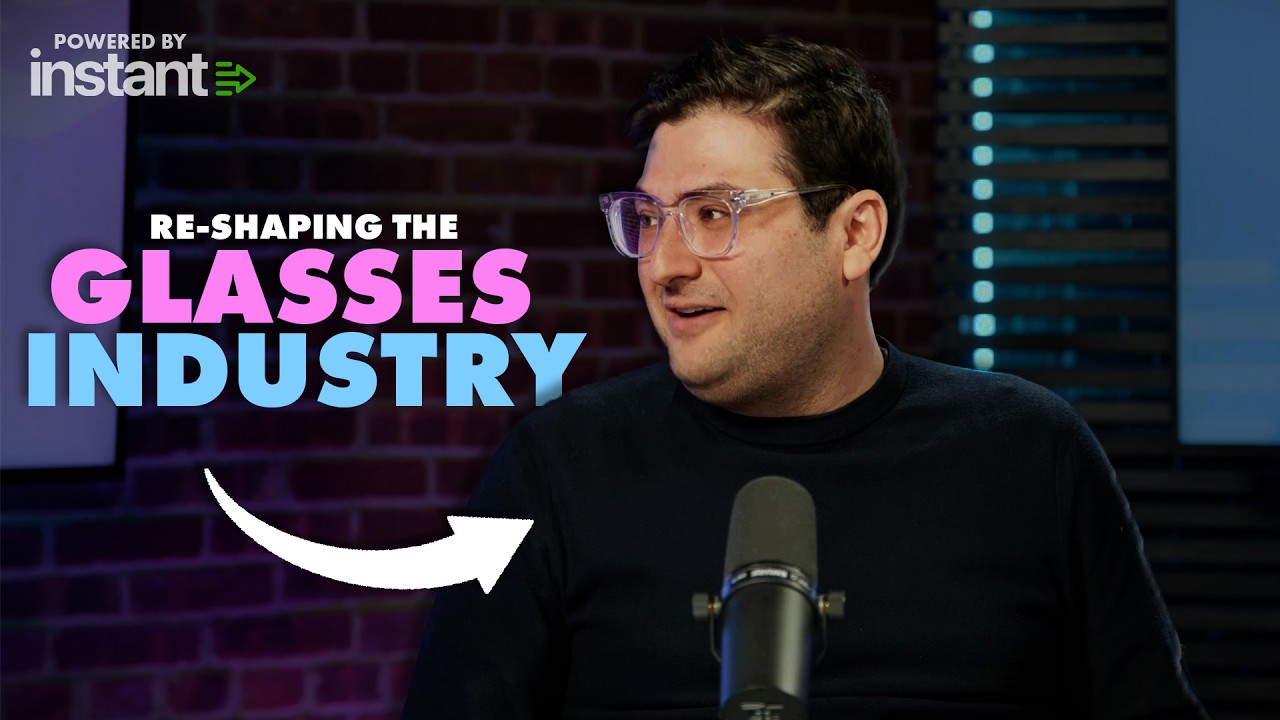
What is up, guys? Welcome to another episode of Chew on This. I'm your host, Ankit Patel, and today we are joined by Grant Goldman, VP of Marketing at Pear Eyewear.
He's been with the brand since its early days and now oversees acquisition, lifecycle marketing, and creative as the business scales. Thanks for joining us, Grant.
Speaker 2:
Thanks for having me.
Speaker 1:
I know we talked about it earlier. You're from New York.
Speaker 2:
Yes.
Speaker 1:
Your team is all in New York.
Speaker 2:
Yes.
Speaker 1:
And the weather is awful right now.
Speaker 2:
It's been rough.
Speaker 1:
I apologize for your commute to the Jersey side, which is probably even more disgusting than the New York side.
Speaker 2:
You know, look, I love a nice drive. It was a good, entertaining way to get here.
Speaker 1:
Good, good. No, this is really cool. So I was on your website earlier, Pear Eyewear. And I was just thinking to myself, where was all this stuff when I was a kid? My parents used to take me to, you know, go get glasses, do the eye exam.
It was the worst, the worst experience at the time. You had a choice of like 10 different frames, and you knew you were stuck with these frames for the next three to four years of your life, or however long they lasted, right?
Now, you've got such a cool product. I'd love for you to explain to the audience a little bit about yourself, a little about your background, how you got to pair eyewear, and then a little bit about the product.
Speaker 2:
Yeah, for sure. So I'm Grant, VP of Marketing at Pair. Pair is continually customizable glasses. We wanted to make glasses fun and interesting. You know, people view them as a medical necessity, and they are.
But, you know, we wanted to make sure that people enjoyed what they were wearing and had some fun with it. It was originally actually a kid's brand, and it was born out of Nathan,
one of our co-founders, you know, experiences with him getting glasses as a kid, and I can relate to this as well. I've worn glasses since I was five years old.
Speaker 1:
Yeah.
Speaker 2:
And like you said, you'd go to the eye doctor, You'd see 10 different frames you're like okay I guess I'm wearing these little copper frames I mean that's that's what I had you know I have all of them in a little box at my parents place.
Speaker 1:
That's insane.
Speaker 2:
But like you know you have you have the same thing for a year or two if you're lucky a year and You know, then you get to change your glasses, but now you can change whenever you want. You can just snap on a top frame, change up your look.
These are my favorites, the sun tops.
Speaker 1:
Show us.
Speaker 2:
I got it. So snap on a top frame, change up your look.
Speaker 1:
That is so cool. For the people listening, he pretty much just snapped on, what is that? Is that magnetic?
Speaker 2:
Yeah, it's magnetic. So we've got a couple of magnets in the back.
Speaker 1:
That is so cool.
Speaker 2:
Yeah, proprietary technology.
Speaker 1:
You can change the whole look.
Speaker 2:
Yeah.
Speaker 1:
That's insane.
Speaker 2:
Just like that. And we have new tops dropping pretty much every single week. Limited edition, licensed partnerships, really collectible. That's very fun and interesting stuff.
Speaker 1:
Is anybody else doing that? Like why is nobody else doing that? What do you think of that?
Speaker 2:
Yeah, we built a really tough thing to duplicate.
Speaker 1:
Yeah.
Speaker 2:
You know, I think we're doing it really, really well and we've built a great process. So, you know, plus, you know, patents and whatnot, make it hard for someone to replicate that.
Speaker 1:
Now I can see why it's a huge hit with kids as well.
Speaker 3:
Before we get started, a quick word about today's sponsor, Instant. As a brand, you know you're spending real money to drive traffic to your site. Problem is, 90% of the traffic is anonymous.
You don't know who they are, and once they leave, it's pretty much impossible to get them back. That's where Instant comes in. It identifies up to 10 times more of those lost shoppers, so you can send more abandonment emails,
build stronger retargeting audiences, and actually win back that lost revenue. Liquid IV, 3rd Love, Truly Beauty, these massive brands use Instant to get an average ROI of 21.7X and Instant guarantees you a 4X ROI or your money back.
That's right, 4X ROI. With the start of Q4, there's no time to waste. Triple your email sales and lock in smarter retention today. Just go to instant.one slash chew to claim 50% off your first 60 days before this offer expires.
That's instant.one slash chew. Now, let's get back to the episode.
Speaker 1:
So, you've been a pair through a lot of the growth phases. What's one early growth decision that still pays dividends today?
Speaker 2:
I think it's early investment in our content engine. That's one big thing. You know, TikTok's been giant for us, and we have gone really hard on working with partnerships.
And this is since, say, 2020. It's been five years since we've really worked on this content engine. So we have partners working with us, a few hundred partners every month that allow us to scale creatives across different niches.
But that's been a big thing that's helped us for the last few years. The second thing is a really great data infrastructure. Managing a business of our size is complex and with glasses it's even harder. The time to purchase is really long.
Convincing someone to get a pair of glasses isn't like a one-day thing. So having a robust way to measure what we're doing has been a giant, giant help.
Speaker 1:
I can only imagine the logistics that goes around this because you guys probably have so many SKUs.
Speaker 2:
Oh my goodness. Yeah, the SKU count can get a little out of control. I mean, we have, I think it's 22 shapes and it's growing every year. I mean, we're really investing in diversifying our frame portfolio for materials.
Shapes, of course, but then when you have 22 different frames, plus you have, you're dropping, let's say, 18 different designs almost every week across 22 different across, you know, what, 52 weeks a year? It's scaled.
Speaker 1:
That's a lot of operations.
Speaker 2:
The operations team is, yeah, they've got their work cut out for them.
Speaker 1:
Yeah, I bet. So when you look back, what do you think Pear got right that most DTC brands miss early on?
Speaker 2:
We invest in our content. I think we worked with partners, we've developed things internally, we've built out that content team internally, and we're bringing in diverse perspectives to try to help us reach new audiences,
but also reinforce relationships we have with our current audiences, the customers that come back time and time again, every single week. You know, we have to keep them entertained, right?
It's not just, you know, here's the product, go buy it. We have some customers who will just buy anything, right? I love them. They're the best. But you know, there's competition, right?
And we have to keep them entertained and keep them loyal to pair. And when we provide entertaining content and stuff that they'll actually enjoy watching, it just makes things easier.
Speaker 1:
No, that's great. So you guys said you were really big on TikTok Shop. Where were you before TikTok Shop kind of blew up? It's not been that long. What were you guys kind of investing most of your dollars in before that? Was it meta?
Was it YouTube?
Speaker 2:
So we're not on TikTok shop yet. That's something we're trying to get towards. I mean, one of the challenging pieces with Optical is that every single product is custom for that end user.
Speaker 1:
Oh my god, I can only imagine, yeah.
Speaker 2:
Right? So not only are we talking about thousands and thousands of SKUs, but now we're talking about A single SKU for a single customer every single time, right? Yeah.
So each of these, you know, our lenses are made here in the U.S., out in California.
Speaker 3:
Yeah.
Speaker 2:
You know, every single product is unique. So TikTok shop is something we're looking at. I'm really excited about it. It'll probably be with, you know, a set product. That is not custom. But think sunglasses or, you know, blue light, whatever.
So that's something we're really excited about. But even beyond that, TikTok is still a core part of what we do. And, you know, it's kind of like three different verticals. Within TikTok itself. So one is the partnerships.
Like I talked about, we have, you know, call it 250, 300 partners we work with every single month. And that's rotating. So we have our stars. We come back to time and time again that we work with that continue to produce real results for us.
Then we have the ad side and a lot of those partners power the ads. And then we also have the organic side, right? It's still really important for us to make that entertaining content that comes from the brand and has the brand voice,
but it's still fun and playful and really for like that TikTok audience. But those three kind of work in harmony to create one TikTok universe. And then TikTok Shop is like a whole other part of it that we're excited to explore.
Speaker 1:
You guys are gonna crush that.
Speaker 2:
I'm excited.
Speaker 1:
All right, let's shift gears a little bit. Turning product drops into a growth engine. So Pear Eyewear runs frequent collection drops and licensed collaborations, turning launches into repeat moments instead of one-off events.
What makes a product drop actually work as a growth lever instead of just a marketing spike?
Speaker 2:
With our content, with our top frame drops, because they're coming out every week, it allows us to have a lot of fun. So we like to have a consistent theme throughout a quarter or a month. We try to have some design through line.
Oh my god, the design team is out of their mind so talented. What they do, I have so much respect for them. It's incredible to have that many ideas consistently. It's just, it's insane. So we try to have that through line.
But it also allows us to have a little bit of fun, right? So we can do a St. Patrick's Day collection. We can do our, you know, Valentine's Day collection. Those do really well.
But then we could also do kind of like a one-off thing if we wanted to celebrate, you know, the Olympics are happening, if we wanted to have something that celebrates the U.S. or whatever country, right?
That's an exciting thing that we can do and we can loop it in because we have that flexibility and we're releasing that often.
And then what's really exciting is that we work on this flexible business model that allows us to flex up production or flex down production. We own a lot of that in-house. It becomes a growth lever if it's driving sales.
So we can scale up and we can spend more into product that's truly providing impact for payer. And if something is not working all that well, we scale it back.
But because we have that flexible production, it's been a real growth lever and allowed us to scale into it and even beyond that. It allows us to scale into unique niches. One of the great things has been working with our partners.
Disney has been an incredible one for us. We get to work with them across Marvel, Star Wars, Princesses, Mickey and France, all this stuff. It's incredible IP.
It allows us to speak to not only our customers who love Disney, we have a lot of Disney fans, but it also allows us to go out and provide a unique experience to someone who loves Disney who has maybe never heard of Pear before.
It allows us to speak to that unique audience. Same thing goes for, say, our MLB fans or NHL or NBA. We get to speak to a sports audience that may not have heard of PAIR before,
but that IP gives us a little bit of legitimacy with them and allows us to reach new folks that may not have heard of us.
Speaker 1:
That's so cool. I just want to backtrack a little bit. So you guys are, I mean, the reason you can kind of do all of this logistically is because you are so vertically integrated. I don't see somebody who's using, you know,
a Copacker or something like that being able to have this much flexibility, right?
Speaker 2:
I mean, it's tough. I think it would be really challenging. You know, we've invested really heavily and smartly in our infrastructure that's allowed us to do this. You know,
I think back to the early days of Pear and we were trying to figure out how do we set this up, right? And there was a moment in time where we were like, are we just going to do this in our office?
And you know, I think that was a quick moment in time and we ended up not going that way. But you know, we've got a really talented operations team,
really talented manufacturing and development team out in California that's just really nails this stuff and has a deep expertise in the optical world as well. Just, you know, dozens and dozens of years of experience.
That allows us to scale up and scale down like that, you know, into new collections and, you know, we've turned around collections in as fast as two weeks. I prefer not to work that quick.
Speaker 1:
That's insane.
Speaker 2:
But, you know, it's a really cool and unique business model.
Speaker 1:
Very, very cool. So how do you decide when a drop is worth pushing hard versus letting demand build organically?
Speaker 2:
Yeah, I mean, sometimes we see the results really quick, right? You know, there are collections where it's like, holy cow, automatic spike right away. We are going to lean in hard and sales kind of dictate that.
You know, we come into each collection with projections, obviously, and sometimes we exceed them and sometimes we're like, okay, there's something here. You know, maybe two of these SKUs are really, really hitting hard,
but the rest of the collection is kind of falling back behind where we were expecting. Because of that production, we can see in real time how things are working and how they're producing, then we scale up and scale down based on that.
Because of that, we've changed collection calendars around. We try not to do that too frequently, but because we have that data infrastructure that we've built and we're able to see,
again, In a week, is this selling much further beyond what we're doing than we expect it to do?
Then we scale into that and we design more products just like it or products that are inspired by it and try to reach more folks with that product. Part of the challenge though is we want to keep things limited edition, right?
So there's a balance to it because we don't want to just produce stuff, produce stuff, produce stuff and then all of a sudden like the customers who thought it was limited edition are coming back and saying,
Hey, you know what's going on here?
Speaker 1:
There's a little bit of integrity there, yeah.
Speaker 2:
Yeah, so we, you know, we have to find that balance, strike that balance, and sometimes it is a matter of producing something that's similar or inspired by or bringing it back later on, you know, but it's, there's a balance.
Speaker 1:
It's very cool.
Speaker 2:
Yeah, I was really inspired, original, I'll talk about this a little bit, because we were inspired by, or at least I was inspired by, when we first did our collections that we were bringing stuff back,
like Jordan Retros, I grew up, I loved Sneakers. I still do. And I was like, okay, what if we did a retro? Like, what would we do? What would a retro be for us? And we call it our Bring Back Collection.
So we started with one Bring Back Collection. It's for all customers who, you know, we have this giant community on Facebook. It's like 80,000 of our customers who are there, and they're posting this stuff that's no longer on the site.
You know, there's very little about it online. It's kind of like mythical, right?
Speaker 1:
So it's like StockX.
Speaker 2:
Yeah, you see people like, you know, how do I get this, right? So we were inspired by that, like, okay, you know, a few years ago, we thought what would happen if we brought back some of our best SKUs, right?
Or we even remixed them to, you know, change the background color or change, you know, some of the design cues in the top frame. And it was a hit. So we brought it back once and I think now we do, you know, two or three per year.
We still try to keep it limited because we want, you know, that initial product to feel really special to the people who had it. We also want to give access to the folks who never had the opportunity to get it as well.
Speaker 1:
I think that's a great way to just go about it. You change a little bit of it, you're still giving them that nostalgia.
Speaker 2:
Yeah.
Speaker 1:
And the, you know, the original customer doesn't feel like they were just, you know, screwed over. All right, so let's move to a TikTok as a revenue channel.
So Pear has leaned into TikTok as a real driver of sales, not just impressions or brand buzz. What did Pear figure out about TikTok that helped it move from nice engagement to real revenue?
Speaker 2:
Yeah, I mean, so I'll talk a little bit about our first foray on TikTok. This is October 2020. And this is COVID. Yeah, exactly. Peak COVID. I was in Central Park, actually, it was a Saturday. And I was on Shopify, as one does.
And I saw just like a giant spike. I'm like, what the heck is going on right now? We didn't do anything special that day. And I looked at our post-purchase survey, it was like all TikTok. I was like, what the heck just happened?
We don't really have a TikTok presence at this point. We're going back to October 2020. And I found one of our customers, Melissa, posted a video and it got like a million views overnight.
Speaker 1:
This is when TikTok just came out.
Speaker 2:
Yeah, exactly. And I was like, holy cow, this is a giant opportunity. We're seeing sales in real time from a user who posted a video organically, a customer who loves the product, and it generated real revenue for us, for the business.
And so, okay, we came back to the table and we said, okay, what can we do to build upon this? So we worked with a bunch of creators. We started small, we started with 10. What percent of 10 hit? How do we build on that?
What do we learn from that? Okay, then we scale from 10 to 20, 20 to 40, 40 to 60. And we just keep going on and on and on.
And what we found time and time again is that people who have a real organic connection to glasses have worn them their entire life like I have or Nate has back at the office. They really have, they understand the product.
And they're able to sell it and pitch it in a way that Non-organic glasses wearers.
Speaker 1:
Right, they can just talk about it.
Speaker 2:
They can just talk about it, exactly. It feels organic like a customer because they genuinely love the product.
So the key for us has been working with organic glasses wearers and scaling up our partnerships there and building an organic army of ambassadors who just love Pear. And that's been the way we've scaled over time.
And then of course, it's, you know, part of this three tiered ecosystem where we have the paid ad side, a lot of those partners funnel into paid ads. We also have our organic presence there as well, right?
You know, we want to produce entertaining content. And that's been kind of the biggest success story on TikTok for us.
Speaker 1:
100%. I always hear about, you know, brands that do a lot of organic, there's this halo effect. All ships rise, whether it's your meta ads, whether it's your TikTok ads, whether it's your retail presence, everything kind of just rises.
And it is tough to pinpoint where these things are coming from. But when you stop doing all that organic, you kind of realize that everything kind of dips again. And it's just, it's the coolest thing.
And you said, you know, you were in Central Park, and this video kind of went viral. And it just brings me back to a time where very, very similar in 2020, we had just started our brand Avi.
And, you know, sales were pretty much shit for months. And I remember I was driving home, we were all about to quarantine. I was my parents live upstate. And I stopped at a rest area and I looked at my phone. We had like 20 X that day.
And, and I didn't know why. And it was this very similar story. This one creator, Who she bought the product organically, posted a video about it. And she had such a just a just a loyal following. Yeah, because she actually loved the product.
And she's talking about it like in her daily life. That went off. Yeah, that's when we saw the power of creators. We just kept very similar to what you did. We just kept building upon it.
Speaker 2:
Yeah. I mean, again, the organic love of the product, I think will sell the product better than anything, right? You have someone who genuinely loves and uses your brand. It's the best salesperson you can have.
Speaker 1:
110%.
Speaker 3:
Quick break to talk more about today's sponsor, Instant. Are your abandonment flows making at least 20% of your site's revenue? If not, you're in trouble. Most retention tools have bad short-term memory and even worse opt-in rates.
If you don't catch an email opt-in within hours, that data's gone forever. So why pay for someone to be on your list if your abandoned emails never fire when they come back? Instant fixes that.
It captures those emails, remembers them forever, and then sends shoppers the exact messages they need to come back and buy. It takes minutes to go live, there are no contracts, and they even have a 4X ROI guaranteed.
Or simply your money back. Try it now at instant.one slash Chew and receive 50% off your first 60 days for a limited time only. That's instant.one slash Chew. Now, let's get back to the episode.
Speaker 1:
So what do most brands misunderstand about scaling TikTok profitably?
Speaker 2:
Yeah, I mean, I think part of it is they don't work with organic people who love their brand, you know, they don't work with people who they try to force a partnership, let's say, right, they try to fit a square peg into a round hole.
Ultimately, when you find a real partnership that works both ways, you know, a customer or an influencer or a creator who just genuinely has a love for your product,
I think that will work 10 times better than, you know, just something that's been forced. Beyond that, I think testing is just so, so important.
TikTok, things can go viral for something you have no idea or something you don't expect, right?
It can be high engagement in the comments for something that just feels like slightly off in the content or something that feels controversial that totally isn't.
So going wide really helps, but keeping a narrow focus on who is the audience you're trying to target, but going wide within that audience. You take a diversified approach.
So we try to look at it really broadly and help us understand do we work with 100 creators and if 10 of those really work, that kind of pays for the rest of it.
Speaker 1:
You hear all these horror stories of people dishing out millions of dollars to some of these celebrities or creators and they get like two sales and it just completely destroys their business and people are still doing that.
I don't know why. But yeah, I think, you know, finding people who actually have some sort of connection to your product, actually use your product, it's just easier.
Speaker 2:
Yeah, I mean, that can work, right? Like, we've dipped our toes into really large endorsements. I wouldn't say like gigantic, you know, hundreds of thousands of dollar endorsements. We haven't gone there. They have their place.
Speaker 1:
Yeah, they do.
Speaker 2:
They do. But like, You know, ultimately for us, we try to take a bit of a more diversified approach than that, and it's really worked quite well for us. And it doesn't just feed the TikTok engine, right? It also feeds meta. Everything.
It really just goes across the board.
Speaker 1:
100%. All right, this is cool. Let's talk about licensing, collabs, and demand creation. I love this part. So Pear has partnered with major franchises like Marvel, Harry Potter, and the NHL to create licensed collections.
What makes a licensing partnership actually worth the effort from a growth perspective?
Speaker 2:
There's two sides to it. One is does it meet the needs of our existing customers? We have a lot of people who love Disney. We have a lot of people who love Marvel, Star Wars.
There's a giant collectibles market and Pear is a natural extension for that. So one, does it meet the demands of those audiences? And we, you know, like I mentioned earlier,
we have a Facebook group with tons of customers and we get daily requests like, hey, when are you working with this? When are you working with that? When are you working with, you know, it's just on and on and on.
So we have a kind of an early feedback loop and understanding, okay, what customers really want to see from us. That's the first part. The second part is, Who are we not serving today? I think the sports side was kind of born out of that.
We were trying to target an audience that maybe never heard a pair and the partnerships with all the sports leagues has really helped us kind of tap into that a little bit more. So there's two sides. They both serve revenue.
One is more on the retention side. How do we get our customers we've already required to come back time and time again? So, you know, we work with Disney.
We've launched, I think last year we launched three or four different collections just with Disney alone. But then when we launch, you know, we can also launch new stuff that helps bring in a new customer that's just never heard of Pear.
And the partners have been incredible to work with. They're so supportive and they also genuinely love the product, which is fine. A lot of people wear glasses there and they're like freaking out about it.
Speaker 1:
So it's great.
Speaker 2:
It's fun.
Speaker 1:
That's awesome. So how do you avoid collabs becoming a distraction instead of a core revenue driver?
Speaker 2:
It's a tough one, right? So like with anything, things can do really well or really poorly. Very thankfully for us, licensing has gone more often better than not.
But we have a pretty robust product development process, gating process, and a tight-knit team that, you know, we talk to each other and we try to understand, you know,
merchandising really loves this idea, but marketing has like some concerns about it, right? So we really just need frank conversations ultimately to help understand Or help set the table for, you know, this is something we all believe in,
or this is something half the team believes in, and, you know, is there middle ground between those two thoughts, or is it something that we have to, you know, have more of a debate around? But ultimately, like, gate the product.
You know, it starts here. You know, who's responsible for bringing in new ideas, right? And ideas can come from any great place. We've gotten great ideas on licensing from all over the organization.
But then beyond that, okay, Great, like this is something we want to explore. Now merchandising, you know, how do we see this coming to life in the frame of pair, right? Because we want to put some of our DNA into it.
We just don't want to like slap.
Speaker 1:
It's a co-collab.
Speaker 2:
It's got to be a collaboration, right? So we work really closely with our partners over at our different licenses that we work with. And they have perspectives and ideas, and we have ideas,
and we want to make it something that's uniquely pair, but also really, really drives home, like, we're working with Disney. This is something that someone who loves Mickey Mouse or Minnie Mouse will wear every single day. Yeah.
Speaker 1:
No, that's so cool. I just love the licensing world. We've done a couple licenses ourselves. Now you guys are a big brand, right? Talk to me about a brand that's just starting out, wanting to go and explore a licensing deal.
It's probably going to be through a broker, right? Could be. You're not going to be going direct to Disney and knocking on their door. How did you guys go about that in your early years?
Speaker 2:
We worked with some really great consultants. That's what helped us get in the door. One thing that honestly was really helpful, a few years ago I went to Licensing Expo in Vegas.
Speaker 1:
That's right.
Speaker 2:
All of them are there. They're all there. Every single licensor under the sun is there. Can you get a meeting with them? That's the harder part. But if your product is unique enough and you have real conviction,
just go up to the booth and try to talk to them. They're friendly. They want to talk to new brands. They're there for the same reason we go. So, yeah, like just try to put your foot in the door.
I mean, it's harder than it sounds, but that's a really good first step.
Speaker 1:
And once you get one, it kind of compounds.
Speaker 2:
Yeah, for sure.
Speaker 1:
You've worked with this brand before, now you seem a little bit more trustable, you know.
Speaker 2:
Absolutely.
Speaker 1:
It all compounds.
Speaker 2:
Yes.
Speaker 1:
Cool. All right, let's do growth past the first purchase. Pairs business model creates natural opportunities for repeat purchases, but retention still needs to be earned. What actually brings customers back after their first frame purchase?
Speaker 2:
Yeah, I mean for us it's top frames. So like I said, we're dropping new product pretty much every week. One of the unique things about glasses is there's like a little bit of a planned obsolescence.
The replacement cycle is about once every two and a half, two, two and a half years.
Speaker 1:
Okay.
Speaker 2:
So, you know, typically, you know, you should go see an eye doctor once a year.
Speaker 1:
Yeah.
Speaker 2:
I highly recommend doing that.
Speaker 1:
Is anybody doing that?
Speaker 2:
Right here. Yeah, yeah, for sure. No, you gotta see the eye doctor. But you know, your prescription changes on average like once every two, two and a half years. So there's a little bit of an obsolescence with that.
But we don't want to rely on a customer coming back once every two and a half years, right?
Speaker 1:
That's not predictable.
Speaker 2:
So we want to, you know, TopFrames have allowed us to continue the conversation over the course of that two, two and a half years, whereas another brand is, you know, competing with us over email.
They're, you know, blasting their customers every single week like, hey, buy another frame, buy another frame, buy another frame. But that's a hard sell when you're like, well, I don't need to.
Speaker 1:
Expensive.
Speaker 2:
Really expensive. So Top Frames allow our customers or allow us to talk to our customers and provide them real value every week,
every month and continue that conversation in a more natural way where it's something that they can really enjoy wearing and not us just like, you know, not a brand just saying like, Buy this, because we want you to buy it.
Speaker 1:
No, it's great, because let's say you get an event coming up and you know you're going to wear a red dress. Red top frame. You don't got to go and buy an all new frame, just buy this top frame.
It's such a, it's like, why didn't somebody think of that?
Speaker 2:
It's one of those ideas, you're like, why didn't I think of that? We get that a lot, you know, on our social ads and whatnot. People are kind of like, why didn't I think of that? And that's my favorite comment. It's like, yeah, I know.
Speaker 1:
Alright, so how do you think about lifecycle marketing without over relying on discounts?
Speaker 2:
Yeah, it's a fine line, right? Because, I mean, people want to save money. Price is a natural thing for someone to care about. I get it. I care about price, right? So, you know, we try to strike a balance.
We don't always want to discount and just offer off price because ultimately like that will create a bit of a habit, right? Customers will just think like, oh, I should just wait until you know, they're on sale.
And I think we've seen that with some of like the giant major retail brands and they just get into this like vicious death spiral of Discounting, discounting, discounting.
Speaker 1:
It's a race to the bottom.
Speaker 2:
Exactly. So we want to avoid that, right? So how do we provide our customers real value and non-monetary offers? You know, it's things like exclusive product.
We just launched our subscription program earlier this year, or that's 2026, in 2025. And it was a real hit. And, you know, we offer those customers exclusive product.
You know, people who are part of our subscription program and our, you know,
our elite tier of buyers have Product that the rest of our customers can't get and it provides a little bit of incentive for people who aren't there yet to get there.
But it's also a way for us to like reward them and say thank you so much for being a valuable customer. Here are some things that only you can have. Our loyalty program has been a really key part of that and while it is,
it can be discounting here and there, but we also offer different programs through the loyalty program that have allowed us to scale and improve retention without just saying like here's $5 off or $10 off.
Speaker 1:
110%. I think those kind of rewards and loyalty programs, they go a long way.
Speaker 2:
They do.
Speaker 1:
Let's get into creative data and fast feedback loops. Growth at pair sits at the intersection of creative intuition and performance data. How do you decide when to trust the data versus trusting a creative hunch?
Speaker 2:
Oh man, it's so hard.
Speaker 1:
It's the worst.
Speaker 2:
There's been a bunch of times where I'll produce something like this is so going to be a hit and then we put it out. A total flop, right? That happens to all of us.
But I think it's important to take those risks because ultimately if you're just producing stuff that's data-backed and data-backed, you might just produce the same thing over and over and over again.
And there's validity to having a robust bench of creative that is hitting your core value props and speaks to the audience that really is driving sales. But there's also something to say like, hey,
I want to take a little bit of a risk here and try something different. At the same time, I think data without common sense can be really flawed. You know, you can spin data to tell different stories.
You know, you gotta have kind of a little bit of both, and I think it's important to take those risks, but also at the same time, have that robust bench of creative that is data-backed and you know, you feel really confident in.
Speaker 1:
Yeah, I think there's always a little bit of art that goes into it, you know? Like you said, you can kind of spin the data to say whatever you want. You can raise a lot of money doing that.
So what signals tell you a creative concept is worth scaling fast?
Speaker 2:
Yeah, so with Pair we built a longer conversion cycle and we built some really Strong proprietary signals that allow us to say like, hey,
this is a really good early indicator that are slightly further up funnel but have strong indication of down funnel success a day, two days, a week, months, a year. And it's really about finding those early signals.
For us, it's a little bit different than many other brands, but there's some upper funnel stuff that we really try to follow.
Speaker 1:
I'm sure you have your own indicators throughout all these years. Let's go to speed as a growth advantage. Indirect to consumer, speed matters.
From reacting to performance to capitalizing on customer intent, instant helps brands reconnect with shoppers automatically before they drop off. Where does speed matter most in your growth funnel today?
Speaker 2:
I think for us, it's twofold. One is on the creative side. You know, we see, like you said, those early indicators, and we try to replicate or differentiate based on those early indicators and really double down quickly.
Our internal creative team will work on it that day or that week, right? We're trying to double down there. But then also, I think it's responding to your customers. I think You know, with Pear, we get a lot of social commentary.
The faster you respond to your customers, the faster that becomes like a snowball of commentary, right? And then it's a viral growth engine powered by your own customers. You create conversations in real time.
You know, they're commenting on Facebook. They're commenting on Instagram and TikTok. Talk to them right there.
Speaker 1:
Talk to them.
Speaker 2:
You know, they're going to continue the conversation if you provide them really entertaining content. And that can be a real growth driver.
Speaker 1:
That's really interesting and you talked about your Facebook community and we also have a pretty big we have 150,000 women in our Facebook community and it's just so valuable.
Speaker 2:
Yeah.
Speaker 1:
Because they're talking to they're just talking to each other all day.
Speaker 2:
Yeah.
Speaker 1:
About their life. It doesn't even have to do anything with the product sometimes. They're just talking about their life. But I love going in there as a founder of the brand and just commenting and talking to them directly.
They find that so cool. They feel like they're being heard. They feel like they're being listened to. Whether they're complaining about something, praising something, you know, you go in there,
you just have an honest conversation and that becomes content itself.
Speaker 2:
Oh, yeah, exactly. I mean, we have some people on the team who've become like real faces of the brand in those groups and They love talking to them. Our customers love talking to the folks in the group and it's a real face to the brand.
It's a really fun thing for both the brand and the customers.
Speaker 1:
Heck yeah. So what one place you think brands move way too slowly without realizing it? Is it the content?
Speaker 2:
It's the content. It's the content and responding to customers.
Speaker 1:
That's true.
Speaker 2:
Quick response.
Speaker 1:
Let's start with rapid fire question one. If Pear Eyewear had to collab with a fast food chain, who are you picking?
Speaker 2:
McDonald's. I think their brand history is so deep.
Speaker 1:
I can see it.
Speaker 2:
I mean like the red and yellow, the arches and the glasses, figuring out how we do that, like whether it's little temple hits or like you have the arch.
Speaker 1:
You've been thinking about this. Glasses on top of your head, acceptable or should be a fireable offense?
Speaker 2:
Acceptable.
Speaker 1:
Yeah?
Speaker 2:
Yeah. I mean, are they reading glasses? Are they prescription glasses?
Speaker 1:
I don't know.
Speaker 2:
I think it's okay. You can put them up here, right? You don't want to lose them.
Speaker 1:
It does look cool.
Speaker 2:
Yeah. I'll take it. I'll take it.
Speaker 1:
If you had to sell glasses to someone with perfect vision, what's your pitch?
Speaker 2:
I mean.
Speaker 1:
That's it. That's all.
Speaker 2:
That's that cool.
Speaker 1:
Yeah.
Speaker 2:
We have we have a lot of customers who buy just like frames.
Speaker 1:
Just frames.
Speaker 2:
Just to wear them.
Speaker 1:
Yeah. I mean they are cool nowadays. Like they're not. Glasses are much better looking than they was 30 years ago. Do you prefer transition lenses or separate eyeglasses and sunglasses?
Because to me they give off this witness protection energy.
Speaker 2:
Look, I love our transitions. My father-in-law wears transition lenses and he pulls them off really well. Personally, I go with the sun.
Speaker 1:
Got it. It's a preference thing. Alright, last question. I think people want to know this. The blue light glasses really work.
Speaker 2:
They do.
Speaker 1:
Yeah, they do.
Speaker 2:
You know, blue light.
Speaker 1:
Why do people keep saying they don't?
Speaker 2:
I mean, look, there's there's science that backs it up.
Speaker 1:
Yeah.
Speaker 2:
You can Interrupt your sleep cycles if you have too much exposure to blue light and you know real blue light protection will work. There's a lot of like shady brands out there that don't produce real blue light protecting glasses.
It's good to know. And you can read up on the science on it. Like there's certain wavelengths that actually get blocked by real professionally made lenses. And that can help you know with I think melatonin production.
Speaker 1:
You heard it here first.
Speaker 3:
Before we wrap up, just a quick reminder about Instant. A good abandonment email can make all the difference, but 88% of shoppers never get one.
With Instant, you can send up to 10 times more retention emails and use AI to personalize every single message.
Fast-growing brands like Higher Dose, Garrett Popcorn and Karen Kane have tripled their abandonment flow revenue since going live. You could be next. Don't miss out.
Book a demo today at instant.one slash Chew and receive 50% off your first 60 days. That's instant.one slash Chew. Now, let's get back to the episode.
Speaker 2:
I think just keep an open mindset, like try things, don't be afraid to fail within your reasonable bounds, right? Like don't do anything and spend a bunch of money on something that you can't afford,
but you know, don't be afraid to fail, right? Take some risk and try things because ultimately we're living in a world where, you know... There isn't a monolith of a customer block anymore.
Now we're talking to customers who love this one little tiny specific niche or that little tiny specific niche and sometimes one little thing is all it takes to get the ball rolling and yeah,
don't be afraid to take that first step in that risk.
Speaker 1:
Love that. Chew on that. If you want more from us, follow us on Twitter, follow us on Instagram, follow us on TikTok and check out the website ChewOnThis.io.
This transcript page is part of the Billion Dollar Sellers Content Hub. Explore more content →