Ecom Podcast
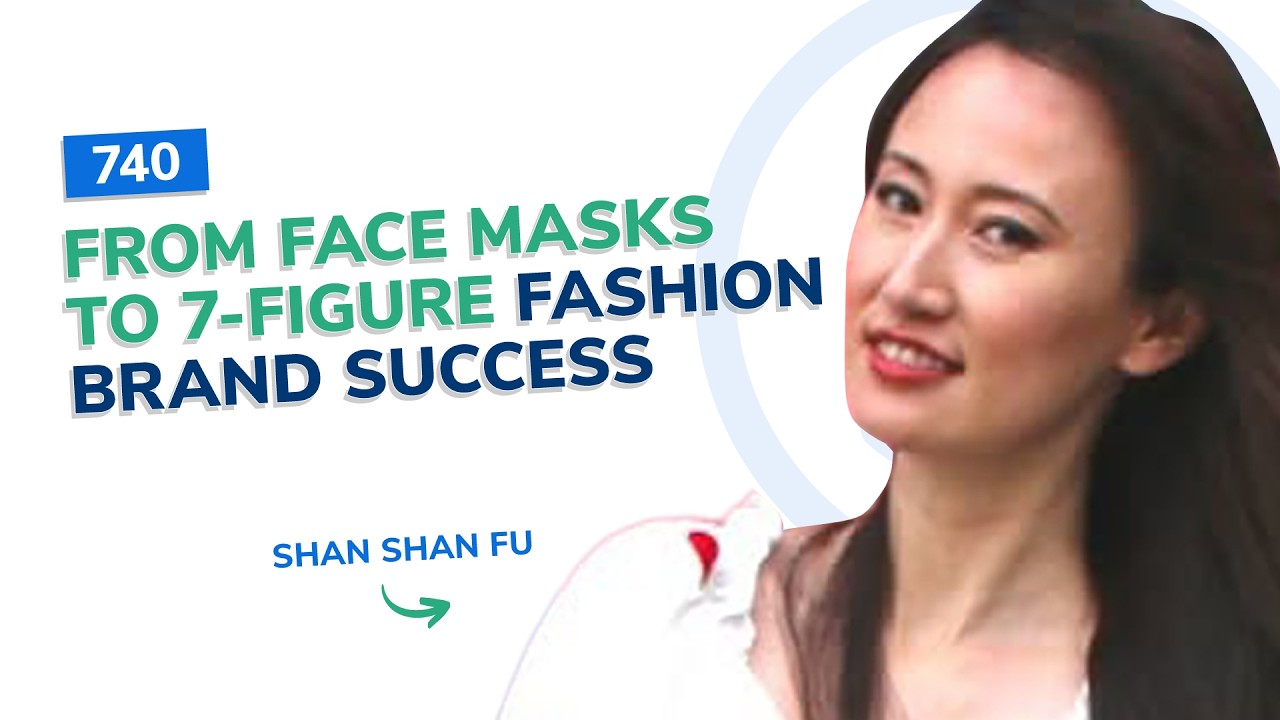
#740 - From Face Masks To 7-Figure Fashion Brand Success
Summary
Serious Sellers shares actionable Amazon selling tactics and market insights.
Full Content
#740 - From Face Masks To 7-Figure Fashion Brand Success
Speaker 1:
Today, we talked to a seller who was crushing it during the pandemic selling face masks. But then when that market disappeared, she had to completely switch into women's stockings and now has built a million dollar brand. How cool is that?
Pretty cool, I think. Hello, everybody, and welcome to another episode of the Serious Sellers Podcast by Helium 10. I'm your host, Bradley Suh, and this is the show that has a completely BS-free,
organic conversation about serious strategies for serious sellers of any level in the e-commerce world. I have flown today here to New York. This is Manhattan, right? And right here where Shan Shan lives.
For those of you who have been listening to the podcast for a while, You have maybe seen me on the podcast before, but as you guys know, this year we have a kind of like a refreshed Serious Sellers Podcast.
We're treating everybody as if it was their first time and trying to like go back because we know we have a lot of new listeners here.
So, Shan Shan, thank you for inviting me to your home here and it's great to be here where I used to live. I don't know if you knew I used to live in Brooklyn across the way many years ago.
Speaker 2:
Oh, cool. Welcome to the Upper West Side.
Speaker 1:
There we go. Um, where were you born and raised originally?
Speaker 2:
China. I was born in China. And I'm Jane.
Speaker 1:
Okay. There's some there's some there's some there's some factories. I forgot what what's the specialty over there. I know. I remember a factory doing something over there.
Speaker 2:
Yeah.
Speaker 1:
Okay.
Speaker 2:
I think I'm bigger than New York.
Speaker 1:
Oh, did you? What age did you come here to States?
Speaker 2:
I moved when I was six to Albuquerque. And then I moved to Queens. So I am actually a New Yorker.
Speaker 1:
Albuquerque to Queens. I love Albuquerque, the Mexican food there. How long do you live in Albuquerque?
Speaker 2:
About a year or two, not very long, then I lived in Queens for a year or two, and then I became Canadian.
Speaker 1:
Then you became Canadian, what?
Speaker 2:
Yeah.
Speaker 1:
Wait, California to New York to Canada. And where did you go to university?
Speaker 2:
Simon Fraser University in Vancouver.
Speaker 1:
In Vancouver. Okay, so what was your what was your major there?
Speaker 2:
It was business.
Speaker 1:
Business?
Speaker 2:
Yeah.
Speaker 1:
Okay.
Speaker 2:
Business.
Speaker 1:
And I remember from before, you had gotten kind of like into the corporate world, right? You had like a pretty good job from what I remember.
Speaker 2:
I had a great job in tech and I learned a lot, but I always had a feeling that I should be one, an entrepreneur and two, in e-commerce.
Speaker 1:
Okay. What year were you like? Did the itch become so bad you had to scratch it to get into e-commerce?
Speaker 2:
It was 2020 during the pandemic. I feel like I had a lot of friends that started side hustles during that time. And everybody was stuck at home.
And I was just watching YouTube videos on passive income and just getting obsessed with passive income. And I knew that starting an e-commerce business would be the fastest way to get there.
Speaker 1:
Okay. All right. And what was your very first product you launched?
Speaker 2:
The very first product I launched was face masks. And I started on Etsy. They were not blocking face masks. But on Amazon, they were, so I had to call it like face covers,
bandanas, but they were so in demand that Amazon pushed me to the first page right away. And then I just got addicted to the dopamine of seeing your sales every day and launching new products and seeing if they would succeed.
So then from there, I started launching clothing accessories. And so now I have about 100 different clothing accessory products.
Speaker 1:
Now or then?
Speaker 2:
Now.
Speaker 1:
Okay.
Speaker 2:
Now. Yeah.
Speaker 1:
But when you first started the face mask, what was it like? What was it, like K2, K9, N9, something like that, or was it more like stylish face mask or what kind?
Speaker 2:
Stylish, yeah, because if you had, you know, medical masks, you would have to get them certified compliance lines, but I didn't have to because I just said that they were fashion masks.
Speaker 1:
Okay, and at your peak during the pandemic, how many masks were you moving like a day?
Speaker 2:
On my peak, I was probably doing, well, I just started, so I didn't have any history, so it was about $20,000 a month.
Speaker 1:
$20,000? Yeah. And these were cheaper ones, like $10 things or $20 or something like that?
Speaker 2:
Exactly.
Speaker 1:
So that's still a number of, we're talking thousands or More than a thousand units a month. Yeah. Okay. All right. That's pretty good. Describe the feeling.
You know, I think this is what I like to talk to entrepreneurs who start their own brand. When you've moved a few thousand units over a few months, and then you just did you have a moment where you're sitting there and you're like,
There's like 5,000 people or more walking around with something I created or like, you know, having something like, like, did you ever have that kind of moment?
Speaker 2:
You know, it doesn't hit you very quickly because I just thought I was just kind of playing a video game at home. But then every once in a while, a friend of mine will send me pics and be like, oh my god, check it out.
This influencer is wearing Millennials in Motion products and they tagged you. And it'd be someone I had no idea who they were and I was like, oh my gosh, this is actually a real brand. I'm building something real and not just a video game.
Speaker 1:
I love it. I remember my first moment of that was when I was doing phone cases way back when and I was standing in line at the post office. And somebody, you know, everybody who stands in line is on their phone.
I'm like, my God, that's one of our phone cases right there. Like, this is crazy. But we're in thousands of those phone cases a month. But it's a it's a cool feeling for those of you who haven't started the brand.
That's that's one of the perks of as opposed to like, you know, either You are probably happy with your salary that you're getting when you're working in the corporate world,
but you don't have that kind of feeling like of ownership of, you know, like, I accomplished something. So that's really cool. Was it still during the pandemic that you started doing clothing as well?
Or was it just masks during the pandemic?
Speaker 2:
Right near the end of 2020, I knew that face masks weren't going to last forever. So I had to figure out something that was sustainable. And I decided to do women's clothing because that's what I knew.
I'm the subject matter expert on women's clothing. Now, in hindsight, clothing is one of the toughest categories. It might be different now that I know more, but you always start with what you knew.
And luckily for me, I kind of did the volume game. So I launched Like 30 products at one time. And the 80-20 rule, 20% of them succeeded. So I had success right away.
And I feel like a lot of new sellers get discouraged because they launch like four products and none of them succeed. And then they don't keep doing it because they didn't see success.
Speaker 1:
Now in those days, were you, I remember the last time we talked, or the first time we talked actually, you were talking about dually listing like on Etsy and then Amazon.
Did you start that with the clothing or were you still at this when you were new with the clothing, were you strictly Amazon?
Speaker 2:
I was doing that both Amazon and Etsy and they really helped each other because I got data from both Etsy and Amazon and they would actually cooperate each other. But now I just sell on Amazon and Walmart.
At what point did you discover Helium 10? Helium 10 was just kind of the industry known top tool. It was everywhere. And so I just thought, okay, well, I need more data about Amazon. So let's just check it out.
It was also reasonably priced, because, you know, these tools, they add up. And then I just got hooked. It was just really easy. And, you know, the gateway drug was Keyword Tracker and Cerebro.
Because once I saw those, I just couldn't un-use them. Like once you start using it, you can't un-use it.
Speaker 1:
I still remember how we discovered you was you were on this CNBC or MSNBC TV show called Make It and it was on YouTube. And then my boss, Zoe,
she likes that show and they did a special on you and you were talking about your Millennials in Motion brand. And then you were breaking down your cost of business. Oh, I spend this much on shipping and I have this subscription.
And you're like, oh, and then I spend this much on Helium 10 a month. And she was like, oh my God, there's a Helium 10 user on this TV show. And then I forgot, I don't know how I found you. I slid into one of your DMs or something somehow.
And I was like, hey, this is Bradley from Helium 10. I'd love to connect. And we've been friends for now like four or five years since then. So that's pretty cool.
Now, At what point, when you got into the e-commerce, did you, I don't remember, did you in full stop with your day job and just go all in or were you kind of like moonlighting in the beginning?
Speaker 2:
Moonlighting and I think that everybody should try to do that because it's going to be slow in the first year, right? You're waiting for inventory. You're waiting for shipping. You're making mistakes. So it won't take eight hours of your day.
But then eventually, if you really, really are serious, you do kind of have to go full time.
Speaker 1:
Yeah.
Speaker 2:
If you want to grow it into, you know, seven digits or more business.
Speaker 1:
Okay. At what point did you make that leap?
Speaker 2:
About six months in, I was doing at least 20k or more per month and it kept going up. So then I just felt confident. I felt like, okay, this could be a real career.
Speaker 1:
What was your profit at that? I assume by 20k, you mean the gross sales?
Speaker 2:
Yeah.
Speaker 1:
What were you being able to take away from that?
Speaker 2:
This will never happen again, maybe in the history of time. But what I was right now, everyone, if you get 20% on Amazon, you're like ecstatic. I think I had probably 50 to 60% profit because of the face mask and how much demand there was.
Yeah.
Speaker 1:
Were you even like air shipping in those days because you had so much profit and you couldn't keep in stock or were you still just sea shipping everything?
Speaker 2:
Oh, yeah, I have half. But yeah, I could airship and still get that profit.
Speaker 1:
Wow. I think that yeah, everybody's like batting you right now. We don't know about those days. Okay. Now, When you were transitioning from face masks to clothing, what were some obstacles? Because face masks, it's just one use.
It's like you don't wear it and they're like, oh, I don't like the way this fits or I changed my mind. So I'm assuming returns was a big difference. What were some of the other differences making that transition?
Speaker 2:
Yeah, exactly. You nailed it. There was no returns with face masks. So that was tight. I think the biggest is just that there wasn't as much demand. With face masks, everybody in the world needed one. But not everyone needs cool tights.
So I was playing with a smaller market. I also bootstrapped everything. So I funded my own PPC, which means that I would only spend maybe $50 per launch to try to figure out if this was a winner or loser. So I was using tiny,
tiny budgets to get the same amount of data that my colleagues and my peers were using thousands and tens of thousands of dollars to do.
Speaker 1:
Yeah. What, over time, is your number one seller? What product?
Speaker 2:
Probably one of the tights. So just one of the patterned tights. You know, I have some cool ones that look like thigh high socks, for example. That one did really well consistently. And just a few of the patterned tights.
Speaker 1:
Which year was your top in sales? Was it last year, 2025? Or was it during the pandemic? Was it 2024?
Speaker 2:
Last year and then this year will be this year. So every year it grows up 50%.
Speaker 1:
Wow.
Speaker 2:
Yeah.
Speaker 1:
So what did you get in gross sales across all your platforms last year?
Speaker 2:
Last year, it was around five, six hundred K.
Speaker 1:
OK. And about what's the breakdown between like Amazon USA versus your other marketplaces percentage wise roughly?
Speaker 2:
It's about 90% Amazon USA and then 10% Amazon Canada.
Speaker 1:
Do you store inventory there or are you like doing that North American thing where you just ship from America to Canada?
Speaker 2:
Mostly or both fulfillment but a little bit of inventory stored in Canada. I also do Amazon UK where that's dying and I also do Walmart and I used to do Etsy as well.
Speaker 1:
No TikTok shop yet?
Speaker 2:
I think I have about 10 sales from TikTok Shop as we speak.
Speaker 1:
We'll have to get you wrapped up on there, get some samples. I think the Millennials in Motion brand is kind of a TikTok-able brand. The price point is a little bit low for TikTok Shop,
but some of those stuff could go viral at the very least. Maybe there's not much profit on TikTok, but I think it could potentially drive even more sales to your Amazon listings.
Going back to Helium 10, I assume the moment you started on Amazon, you weren't using Helium 10 right off the bat, so when you started using it, what were some of the differences?
You mentioned using Cerebro and Keyword Tracker, but for somebody who doesn't, they're right, Cerebro, is that an X-Man or what even is that? How did it change your business when you started using Helium 10?
Speaker 2:
Well, the biggest change in the business is that it allowed me to launch new products.
It allowed me to find another category besides face masks because It's scary to launch a product not knowing if it'll succeed and the only way to get the data that you need was on Helium 10.
So I would spend hours and hours on Helium 10 looking at the keyword demand, the supply, the magnet IQ. I looked at that too. To find the next products and that determined, you know, what types patterns I got, for example.
And what is the number one biggest factor of my growth every year? It is launching new products. Which means that the number one tool that helped me launch more products was Helium 10. Interesting.
Speaker 1:
Interesting. Now, do your products have like a long life cycle or, you know, like the number one types you have now, like, I think the heart types are one of your top ones, right? Like, is that going to die?
Or is that like, has that been your main product for years? Or is this very cyclical? Or how does your business work?
Speaker 2:
The challenge of my business is it's super seasonal. The hard tights really do well on Valentine's Day and then it tags. And when it tanks, you know, it loses ranking. You don't know where it loses ranking.
The other big month I have is October for Halloween because a lot of the tights are Halloween tights. And then November it tanks. So it's always like going up, tanking, and that creates a lot of challenges with my brand.
And then there are tights that just kind of fade out a little bit, like the one I was telling you about, the one that look like thigh high socks. They've kind of been fading over the years and I just can't quite figure out why.
I'm trying to diagnose it.
Speaker 1:
Okay, so when you look in Helium 10 for product opportunity, you mentioned the IQ score, which is just this number where it shows, hey,
is there a high relative number of searches versus the number of products that show up in the search results? What are some other things that you look for in Helium 10 that means, hey, this could be a potential product for me?
Speaker 2:
So I like to look at what the competitors So for example, if there is a certain product that I want to launch, I cerebral the competitors. And I look at, first of all, how many keywords there are.
If they have like 20 keywords that are all number one, you know, and then a hundred that are in the top 10, that's good. That means there's a lot of different ways to search and find that product.
But then there's some products that are eye-catching, but then you look at the Cerebro and there's just like a small handful of top 10 keywords that direct traffic. And those are the ones that worry me.
I also like to look at, I have the Chrome extension that I can check x-ray and I find out the child ASIN. So very specifically, which child is the winner and the parent ASIN.
And that has helped a lot because then I don't buy the wrong, then I see like, what's the best color? What's the best size? I don't buy the wrong design. Yeah, no, I see exactly which ones sell it.
Speaker 1:
Yeah, that's a that's a good one. Because what when you Our selling clothing are things with a lot of variations, be it design or color or size. You're like, if you don't have this data, you don't know which one sells the most.
From your first order from the factory, you got to order 100, 100, 100, 100, 100 or something like that, but really the sales is going to be 300, 100, 20, 30 and then now you're just stuck.
You either run out because you don't have enough or you're stuck with all this extra inventory, but looking at the sales is, is, is good. I remember as a newer seller, you were, you were, you for years were like on the platinum plan.
You were okay with that. Now, when you upgraded to the diamond plan, I remember the first time you saw it, you were kind of blown away by some of those, some of those features.
What were your favorite features once you upgraded to the diamond that you didn't have when you're a platinum?
Speaker 2:
I think the AI was very interesting. And it was right when AI was getting really hot. I also really liked the search query analyzer,
just because one of the things that determines whether a product is a winner or loser is how it converts compared to the competitor. And yeah, there's data if you really dig into it,
but I would avoid doing it on Amazon because it was just so tedious.
Speaker 1:
To download all those Excel files.
Speaker 2:
Yeah. So I just, I just, you know, I just guessed. I was like, okay, well, if this is their ranking, then maybe they are better than me or not better than me.
I wanted everything nicely recapped for me, and so Search Query Analyzer was really helpful with that because it just told me exactly how I stamped.
Speaker 1:
I think we were all shocked that Amazon a few years ago provided that data for Amazon sellers, like exactly what sales are driving your keywords and what do you have a better click-through rate than competitors and stuff.
But that just by itself is just data.
Speaker 2:
Yeah.
Speaker 1:
So what are you actually doing with this data that you're pulling from sort of query analyzer?
Speaker 2:
So for example, if a competitor product is really doing well conversion wise, but mine isn't, then I look at their pictures. And now thanks to AI and now Banana, which I love, you can pretty much beat anyone's listing with images.
You can just, you know, if they have a cool infographic, you can you can try to get a better one. You know, you can create photo shoots just using nano banana.
So it's just a really fun time right now because now there's really no limits and all you need to know. It's what you need to do. Once you know what you need to do, you can get it done.
Speaker 1:
You were managing before your advertising just for like spreadsheets or on Seller Central. What were some of the differences when you started using Helium 10 ads? What was the main advantage? Just the visibility of data?
Was it the time savings? The rules? What did you like most about Helium 10 ads?
Speaker 2:
The problem I have is I have over 100 products, and it's just me. So managing PPC on a daily basis for 100 products is near impossible to be on top of everything.
So I really like the rules, just being able to do things like negate if you get more than seven clicks and no sales. Things like that, which I know I will 100% engage if I saw it,
but I may not see it because I don't check every campaign and every product has dozens of campaigns. So it's really a great way to just kind of have another employee.
Speaker 1:
Yeah. Now, some Helium 10 tools maybe you only use when you're looking for a new product, like maybe the black box or something like that. You're like, hey, I'm looking for a new product and maybe you do that once a month or something.
What are some of the Helium 10 tools that are kind of like your daily or every other day, like this is part of your cadence. You have to be in it. Which ones would you say?
Speaker 2:
It's gonna be Cerebro.
Speaker 1:
Okay.
Speaker 2:
Keyword Tracker. And that was actually a big, big requirement that I had that made me move to Diamond because I have over 100 products. So I need to track a lot of keywords. And it actually profits too.
Because that's, that's the only only visible I have to whether or not the product's actually profitable. I like how it profits. You can check the return rate. And then I can just quickly see, okay, these products have insane return rate.
I need to kill it or I need to fix it.
Speaker 1:
Now, you're not selling on Etsy anymore. I remember when you were, that played a role in your launch, being able to get data even before you were on Amazon. So now that you don't have that, what is your launch strategy?
How many products are you launching a month? And you mentioned, hey, some are going to work and some are not.
Obviously, you're not investing a thousand units for everything because if 80% fail, you're stuck with thousands and thousands of units.
So talk to me about what your process is for launching new products as far as how many it is and what's the steps that you're taking and what's the data that you're looking at to decide if you want to keep going.
Speaker 2:
I look at, so this month I launched 33 products.
Speaker 1:
In one month?
Speaker 2:
In one month.
Speaker 1:
Oh my goodness.
Speaker 2:
Thanks to AI. Normally you wouldn't be able to do that in one month. But I would look at how quickly it crawls up the keyword ranking. Then I would look at how high it crawls up. Does it get to the top 10? That's usually a really good sign.
I would look at how the PPC is doing, the average ROAS. That is very helpful.
Speaker 1:
Do you have a target for that?
Speaker 2:
If it's 2.0, that's great. That's probably a winner. If it's 1.0, that might be okay because if all the other stats are still healthy, then ROAS goes down over time. So that's still good. If it's less than one,
then I get a little bit hesitant to launch more unless it crawled up the rankings in Keyword Tracker so quickly that It would be silly not to buy some more.
But yeah, so I would look at how many keywords it started ranking for, how quickly it crawled up. Does it keep its position? So one thing I've noticed is that sometimes I'll blast PPC ads and it will shoot up the ranking.
And then the moment I turn off PPC ads, it loses the ranking. I don't like that. Some people can make that work. I prefer if it kind of just was sticky and it stuck there. So that's the other thing.
Speaker 1:
Managing so many SKUs, a lot of inventory, I imagine sometimes cash flow might be an issue. How do you keep control of your cash flow? Do you have good terms with your suppliers, like 100 SKUs and each of these have who knows how many units?
How are you managing that?
Speaker 2:
So cash flow, I do have about 90 days, 60 to 90 days. So that's helpful. But it's really just I just I did not pay myself. I just put everything that I earned back in the business into buying inventory.
The benefit I have is that I'm seasonal product. That's one of the only benefits of the seasonal product is that you really just buy once a year and then you get a big chunk of change in November.
So then when you borrow money, because it's seasonal, you only have to borrow money for like three months. So that's kind of nice. But yeah, cash flow, I use profits. So profits tell me that, you know, if I can expect 18%.
Then I know going forward, that's how much will ultimately land in my bank after Amazon takes its fees after I pay advertising after storage costs everything.
Speaker 1:
Now to be able to have the kind of success you do, you know, which is not Typical, right? It takes hard work. It definitely can be done. What are some of the unique strategies that you do?
I mean, a lot of the stuff you said is important, like, hey, keep your eyes down. I think that everybody should, I hope, understand things like that. Hey, keep your cash flow steady. These are things you understand.
What are some of the under the radar stuff, whether it's on Amazon, whether it's the way you present your brand off of Amazon, whether it's an advertising thing, whether it's a Helium 10 thing or not?
What do you think that you're doing that maybe Not everybody is out there.
Speaker 2:
I think two things. One is I use PickFu. It is a platform where you can pull Amazon subscribers, private subscribers.
Speaker 1:
It's called Helium 10 Audience and Helium 10. I've used PickFu since before we had Helium 10. Yeah, I love it too.
Speaker 2:
And yeah, I just use it to, I ask questions like, if there were these two main images, which one would you more likely click on? I also will upload a whole set like six pictures versus another six pictures and say,
which set of pictures would you more likely buy from? I also use it for product discovery. So I would ask of these 10 products, which one would you buy?
Speaker 1:
Are you choosing it like a certain demographic to when you pull them like say, hey, I need females from this age to this age or something.
Speaker 2:
Yeah, I always pick females and I always pick Amazon subscribers, but that's it. I don't try to limit it too much, but it's pretty accurate.
And then the second thing is really just adopting AI quickly has been very helpful, specifically Nano Banana. It has been a game changer.
There are some products that were going to die and I saved it by changing the main image on Nano Banana.
Speaker 1:
How did that increase your click-through rate or conversion rate? What was the biggest factors that that changed?
Speaker 2:
I think when you change the main image, mostly the biggest thing is the click-through rate. But then you get a better click-through rate, you move up the rankings, right?
Conversion rate might be more just your holistic six set of features, but For some weird reason, there were just some images that were not beating competitors. So I couldn't get the rankings.
And then when I switched to a different picture, suddenly got way more rankings, and it was just black and white. And it used to take forever because I would set up a photo shoot in order to get another picture.
But now with Nano Banana, I can get another picture in a minute.
Speaker 1:
It's like what? Walk through that process. I think you were just showing me a picture that you did, I think with AI and that you just took from your home. Are you taking pictures of real models or yourself and then editing it in NanoBanana?
Walk through your process a little bit there.
Speaker 2:
So I thought the best process was do a photo shoot yourself with the product. Then upload the images on NanoBanana and then ask them to change something. So I would say change the leg pose, improve the lighting, improve the tolerance.
You could even improve the size of the woman. Things like that made it really easy to adjust images quickly, but I would start with the first photo shoot just so you have a good input so that the input creates a good output.
Speaker 1:
I like it. Anything else unique that you've done either now or in the past that you'd like to share with the audience?
Speaker 2:
I do use ChatGPT a lot. What I do is Instead of writing out the listings and bullet descriptions and titles myself, what I do is I just give them a list. I go on Cerebros or Search Query Analyzer and I pull out the best keywords target.
Then I would say, hey, ChatGPT, create a listing with five bullet points that integrates all 20 of these keywords. And then they will actually write something quite decent. Now you won't have to tweak it.
And I've noticed the more keywords you force them to add, the worse the copy gets. It's not bad. And that has also helped me with 33 launches because with that many launches,
you just don't have time to write out every single description and bullet yourself.
Speaker 1:
Yep. And as of you didn't know this because this just got updated. Last week, or this week actually, while we're recording this, but now we have actually integrated ChatGPT 5.1 into our LLM 10 listing builder.
So exactly what you just said where, hey, you've got all your keywords in. Cerebro and Insert Career Performance, et cetera,
you actually put it into Listing Builder and then our ChatGPT AI will create that listing right there and even optimize it for Rufus. So she was ahead of the curve. She was doing basically now what everybody could do in Helium 10.
So that's definitely something that can save you time in the future. What's your goals for the brand? Do you have a certain number you're trying to get to? Do you want to exit this brand eventually and retire and live in beaches of Maldives?
What are you trying to do with Millennials in Motion?
Speaker 2:
I want to double every year, at least 50% every year, which I've been on track of. And so this year, I'm hopefully going to hit a million, and then next year, 2 million, and then 4 million and just keep going.
And then eventually, I would probably exit if the right opportunity came up. And then who knows what I'll do. Maybe I'll start a podcast, but it'll be a different category.
It'll be something maybe like human psychology or something like that.
Speaker 1:
Okay. Well, I hope that you consider me for a guest on there. I've had you online for a little bit. I've done that before where people have come on my podcast and they start their own and it goes full circle. I like it.
There might be other brands out there in your boat who are successful. You know, like, hey, you're doing high six figures. It's your main income.
And maybe they haven't used Helium 10. And so they might wonder, well, I'm obviously successful already. Like, what can Helium 10 do for me? Like, what would you tell them? How would you describe Helium 10 to them?
And why, even though they've achieved a measure of success without it, like why they would need it?
Speaker 2:
Yeah, I would describe it like this. The Amazon is the game and Helium 10 is the guide. And you can play the video game without a guide, but you might make a lot of mistakes. You might die.
Speaker 1:
It's called dramatic there, but I get that. That's very true. Good analogy, good analogy.
Speaker 2:
I get three lines in a game. But with a guide, it's just so much easier. You know what to do, what not to do, when to start spending more money, when to stop spending money.
Speaker 1:
The cheats, you know, like the little moves that you do in a video game to like Do you ever play Super Mario Brothers?
Speaker 2:
Yeah, exactly, where you get incident money or something.
Speaker 1:
Yeah, yeah, yeah. Those hidden doors and stuff like that. I like this analogy. Let's use this in the future for a new intent. I love it. All right. Well, Shan Shan, it's great to see all the success.
I remember when you were just getting into stockings and stuff like that and you were mainly doing masks and now it's going way down. I was a little bit worried. I was like, oh man, what's going to happen with our business now?
To see you reinvented yourself. I see some of your SKUs are selling even more than a thousand units a month. I remember I saw, I think on LinkedIn, didn't you even have your very first six-figure a month recently?
Yeah, so it's really great to see all the success and a lot of people, they have products that I like to try and say, oh yeah, I was in Dubai and I had some Dubai chocolate and somebody had a water bottle,
but unfortunately, Shan Shan, your products, I am not going to model or try on, but how about this? How about making some product for Ben in the future?
Speaker 2:
Yeah, I've actually started.
Speaker 1:
Oh, you have? What do you have?
Speaker 2:
I have some belts, some men's belts. So we'll see how it does.
Speaker 1:
Okay.
Speaker 2:
It's brand new.
Speaker 1:
All right. I will I will be The nano banana model for your belts is to send them over. I actually need belts. I've been losing some weight lately and so like before I never needed belts, so now I actually do.
So I'm going to hit you up and I'll leave a review. Everybody check her product out, Millennials In Motion. Support it. She grew it from zero and it's a great example of what you can do with the right tools,
like Helium 10, the right drive, the smarts and the ability to start your own business. And I hope Shan Shan's story will inspire you. Thanks a lot, Shan Shan.
Speaker 2:
Thanks, Bradley.
This transcript page is part of the Billion Dollar Sellers Content Hub. Explore more content →