Ecom Podcast
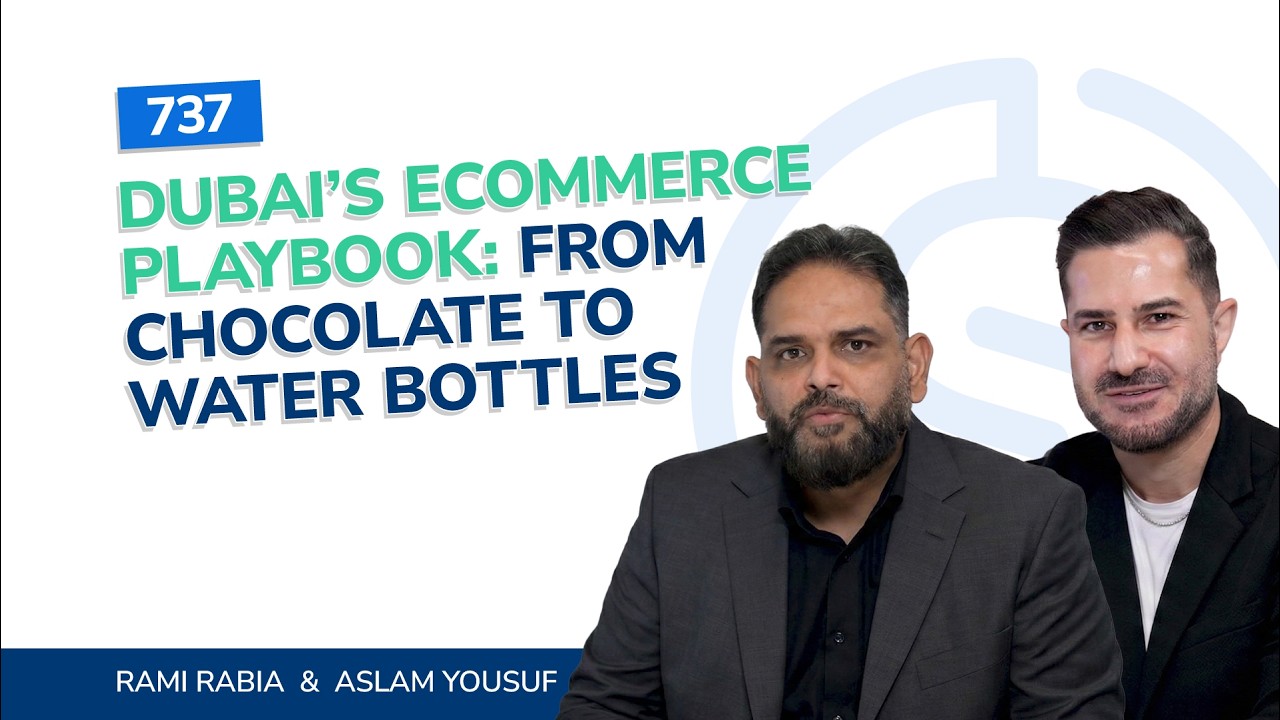
#737 - Dubai’s Ecommerce Playbook: From Chocolate To Water Bottles
Summary
Serious Sellers shares actionable Amazon selling tactics and market insights.
Full Content
#737 - Dubai’s Ecommerce Playbook: From Chocolate To Water Bottles
Unknown Speaker:
Today we talked to a seven-figure brand who sells in Amazon USA, no, Amazon UAE, as well as the number one Dubai chocolate brand in the whole world. How cool is that?
Speaker 3:
Pretty cool, I think. Hello everybody and welcome to another episode of the Serious Sellers Podcast by Helium 10. I am your host, Bradley Sutton, and this is the show that's a completely BS-free,
organic conversation about serious strategies for serious sellers of any level in the ecommerce world. Did you know that in seconds you can find all the keywords any product on Amazon was ranking for in the last couple of years?
Or find out where any product got sales from, from brand analytics data from the last five years. Or get exclusive private trainings that used to cost $400 a month. All of these plus more is available now on the Helium 10 Diamond Plus.
Upgrade with this special 20% off coupon code SSP20. No contract. You can cancel at any time. Once again, use code SSP20 to get the Helium 10 diamond plan that helps brand so much it practically pays for itself.
I'm on the other side of the physical world today. I'm in Dubai for my second time at this conference. We're at the World F conference. We have a nice podcast room here and I'm interviewing local companies and sellers from around the world.
Could you introduce yourself to our audience, first time on the show?
Speaker 1:
Absolutely. First, welcome to Dubai. I hope the jet lag wasn't too bad. Not bad. Welcome back. My name is Rami Rabia. I'm the marketplace manager for a chocolate brand here called Al Nassma Chocolates.
Speaker 3:
I see some here. I got some samples. Guys, my carnivore diet is going away as soon as I get home because I can't resist it. This is very interesting. Camel milk chocolate. What's the origin of this company? When did it start?
Speaker 1:
Yeah, so you hit it. We make chocolate out of beautiful camel milk from one of two EU certified farms here in Dubai. We take the chocolate, we make it into a powder and we use that in our products.
The company is about 18 years old now, so we've been around for a while. We've got two brands actually, so Al Nassma, which is the brand that you see here with the camel, and the one beside it called Samha.
So Al Nassma are more kind of bar form and some gifting items like pralines, and the Samha are chocolate-covered dates with different nuts in them,
and we also do these bonbons, and we have our own version of the Kunafa pistachio Dubai bar.
Speaker 3:
You guys were Dubai chocolate before Dubai chocolate was a thing, I guess.
Speaker 1:
Yeah, yeah, for sure. And we manufacture right here in the UAE.
Speaker 3:
What is the breakdown of sales as far as on versus offline?
Speaker 1:
Yeah, I mean, in general, this part of the region, online sales aren't at the same levels that we see in the US and Europe. I think the highest market is around the UK which is like 25% of sales are online.
Here, we're still around that kind of 10% range. For us, even more because we're huge in the duty-free and if you know anything about Dubai duty-free, it's one of the biggest duty-frees as well in the world.
So we're massive there and we beat some of the big multinationals in terms of sales there. So definitely, we do the lion's share of our sales there and different duty-free.
Yeah, yeah, as well as different duty-frees around the region, but we also export to some 22 countries, so it's a full kind of omni-channel brand.
Speaker 3:
So then you guys definitely were established off of, you know, online, you know, first, and then at what point did you say, hey, we need to start selling on channels such as Amazon?
Speaker 1:
Yeah. Yeah, you know, a lot of people are, you know, they want to be in our position and that we're doing so well in duty-free and we're selling the duty-free and it's kind of difficult to get into duty-free.
Which is great until COVID happens and then nobody's flying anymore. And so that was when we kind of thought, okay, we definitely need to diversify our channels. So we started with the as well the offline world.
So we're now available in a lot of the offline shops here where there's Candylicious, which is a big kind of sweet store here in Dubai. We also have our own chocolate boutique. And we started selling online.
So it started, you know, just after COVID that we started to get online and experience, experiment with some of these platforms.
Speaker 3:
Now, I imagine you being in the chocolate business, there's some obstacles for selling online, you know, like I know with FBA. Certain times a year, you can't even send it to FBA because it's a meltable inventory.
Well, how do you overcome some of those things?
Speaker 1:
Well, I can even take that whole thing a step back because we did try our own DTC website at one point. But yeah, it was just really difficult. You know, it's a sensitive product.
It's chocolate and chocolate made out of cocoa butter and cocoa butter melts even faster than some of the other chocolates. So it's very delicate, very sensitive. Obviously, Dubai is hot.
You're here in the best time of the year, by the way, but come try us in July, August.
Speaker 3:
I've been there, done that, and had to wear no t-shirt. It's so hot here.
Speaker 1:
I don't blame you. So that was a big struggle for us. Thank goodness, Amazon here obviously knows its market very well so they have a proper warehouse for stuff that needs to be kept at room temperature or cold whether it's makeup,
medicine and chocolates and some of the grocery items. So we use that and it's full cold store,
cold supply chain all the way to the last mile and to the customer so we're able to deliver the products in amazing condition and so that's a huge plus for us selling online.
Speaker 3:
Which Amazon marketplaces are you in? Which countries?
Speaker 1:
So, the UAE, which is the biggest in the region. In Saudi, we'd need to establish our own entity. So, there's a large cost there. So, we haven't done that yet. We do sell in Saudi, but we sell right to the duty-free's there. So,
we don't actually have somebody in mainland Saudi to kind of distribute the brand that we can actually get on there. Otherwise, in the U.S., the Somehow brand is available as well online.
And I believe in a few other markets in Europe as well, we're getting online there.
Speaker 3:
So being newer to Amazon, what have you used, if anything, Helium 10 in the past?
Speaker 1:
Yeah, I mean, our product and chocolates in general are a very giftable item. People like to gift it. And here being in Dubai and being a cosmopolitan city, we celebrate everything.
So we've got Valentine's Day, as we're recording this, coming up tomorrow.
Then there's like Chinese New Year's and then there's a Hindu celebration called Holi and then Ramadan is around the corner after Ramadan is Eid and then after that is another Eid and there's always these celebrations so I'm always interested in what are people searching for at this time so that I can kind of start to kind of focus on the keywords that I need to look at for every period of the year.
So that's kind of the biggest advantage that I get from Healing10. Awesome, awesome.
Speaker 3:
What's your goals for this brand? Obviously you're well-established offline. Some people start online first and then they can try and go offline. You guys actually have arguably the harder part already done. But what's your goal for online?
Are you going to try to expand to other marketplaces? Are you happy where you're at now or are you just trying to maybe have distributors handle your stuff online? What are you guys going to do?
Speaker 1:
Yeah, so I think once we get a more elaborate distribution network in the world,
we'll be looking at should we kind of centralize all the Amazon sales in one country and we just kind of control everything or do we let it happen in the individual countries? Or not. So that's kind of our next thing.
Obviously we're still establishing our network worldwide and what I mean by that is not just in duty-free but in mainlands of all the countries that we're in.
So that's our next goal and yeah just open up more markets for us offline and then they'll lead to online sales.
Speaker 3:
Okay. What's your top seller? So if somebody actually does see you in the duty, I already got a goody bag here so I'm set. I'll see you guys in the airport there. If somebody sees you in the airport, somebody sees you in one of your retailers,
which one should they go for?
Speaker 1:
Yeah. So the best one to try would be the whole milk, whole milk flavor because you can taste a little bit more of the difference with the camel milk and the whole milk.
Speaker 3:
Tell me, what is that difference? Explain. I didn't even know that you can use camel milk for chocolate.
Speaker 1:
We have it here at the shop, so maybe if you have the opportunity to actually drink camel milk. So the camel milk is a little bit saltier than cow's milk just because of the environment of the camel.
But to me, it's a superior milk because it has more vitamin A, more vitamin C than cow's milk, more calcium. It's naturally lower in fat. And if you have like a lactose intolerance, you won't get one or we haven't seen any reactions.
Speaker 3:
My son is lactose intolerant. I always have to get him almond milk and stuff like that but I bet this tastes better than almond milk.
Speaker 1:
Yeah, there you go. Now in the chocolates because you know we add flavors and such. By the way, all the flavors that we add come from the actual thing like this. We have one called the Arabia flavor.
The Arabia flavor has cardamom and that comes from real cardamom. We have another one with dates. It comes from real date bits and stuff like that. So that's what we have in our chocolate.
But definitely try the whole milk on your way out in the duty-free. It's our best seller. It's probably the one that people like the most and it's kind of your introduction to the brand, let's say.
Speaker 3:
Now that you saw what happened with the virality of Dubai chocolate on TikTok, are there any plans to enter TikTok shop in different marketplaces?
Speaker 1:
Yeah, I mean, I think we would start here as soon as it opens up. Unfortunately, we don't have access to all the things you guys have in the U.S., like Vine we don't have and Rufus.
We learn a lot, I would say, from Amazon sellers of the U.S. because it's We trail, so we kind of look to the future when we look at Amazon in the U.S., but we definitely will take advantage of all those things.
So one of them being TikTok shop, once it becomes live here, we'll definitely be taking advantage of that.
Speaker 3:
Awesome. All right, guys. Well, if you see me a few pounds heavier next time you see me, it's him to blame because I have a whole bag of goodies here that I'm going to be eating when I get home.
Thank you very much for telling us your story and all the success for you and your chocolate company here.
Speaker 1:
Thanks for having us.
Speaker 3:
Today, we are going to meet somebody for the first time who has never been on the podcast. We're going to learn about his brand. Can you go ahead and introduce yourself to the audience?
Speaker 2:
Hi, I'm Aslam Yousuf, founder of S2C. We are a lifestyle product brand primarily dealing with drinkwares. And some home essentials as well. So I acquired this brand from a friend of mine two years ago when I decided to move back from the U.S.
So since then I've been able to scale it. So when I acquired the brand it was only on Amazon.AE. Since then I've been able to scale it across different marketplaces and different geos.
During my scaling process, one of the growing pains that I actually had was PPC. To scale to different markets and different geos, you need to have a strong PPC presence. That's my journey.
I'm coming from an analytics and data science background, which helped me with the PPC tool as well. That's awesome.
Speaker 3:
Where were you born and raised originally?
Speaker 2:
I was born and raised from Chennai, India.
Speaker 3:
When did you move there?
Speaker 2:
I moved there around 2008. I was there until 2024. I spent all my time in Boston, Mass. Patriots fan?
Speaker 1:
Yes.
Speaker 3:
Sorry about the Super Bowl, I guess.
Speaker 2:
I know. This time didn't work out, but I saw most of all of Tom Brady's cups. In terms of where I've been, pretty much I was in Boston the entire 15 years or so. I went to school at Bentley University, did my master's in marketing analytics.
Speaker 3:
What was it called?
Speaker 2:
I'm from Bentley University.
Speaker 3:
I've never heard of that.
Speaker 2:
It's a business school. It's a private school.
Speaker 3:
No sports teams?
Speaker 2:
Not a big sports team. It's primarily business studies there. So I did my master's there and then from there I joined an ad firm called Media Hub. I've been with them for about 10 years. Then I moved to LiveRamp.
That's another ad tech platform. During my journey, a lot of it was analytics, attribution, building systems for Fortune 500 companies to help them better do their marketing and analytics. That's my background.
Speaker 3:
What made you say, hey, I want to purchase an Amazon brand as opposed to let me start my own Amazon brand or let me find a Shopify brand? How did that come about?
Speaker 2:
It's a mix of a couple of decisions. In my journey working in ad tech and ad services, something that I was really gravitated to was ecommerce because just given my background, there's so much data there.
I'm a data geek and it was so much of a natural fit, so I wanted to do something in the ecommerce space for a very long time. I was looking to start my own brand but then when I decided to move back for various reasons,
family and personal reasons, I didn't want to start from scratch. I wanted to ensure my family was in a good state. I wanted to take over something that had cash flow so that I don't have to worry about where my next dollar is coming from.
That was primarily the decision, but I was always thinking about Amazon as my next destination.
Speaker 3:
What year did this brand start? You said it was started in Amazon A?
Speaker 2:
Yes, this is a homebred brand.
Speaker 3:
When did this start?
Speaker 2:
This brand was started in 2021. I took over it. It was about two and a half years old. I've been running it for about two years now.
Speaker 3:
At the time you bought it on Amazon UAE, what was its sales if you were to transfer it to dollars approximately yearly?
Speaker 2:
It was actually a pretty sizable brand. It was close to about 800K, I want to say, or 750K when I started. From the time I took over, because I've been able to scale into multiple marketplaces,
we reached a little over a million, especially with quick commerce. In the UAE, there's a platform called Noon, similar to Amazon, and they have a quick commerce platform called Noon Minutes that helped me propel the growth much faster.
Quick commerce is nothing but fast commerce like the word in the name goes. It's a part of one of the marketplaces here called Noon and there are multiple services similar to this back in India as well.
The thing about it is you can order anything and it gets delivered to you in 15 minutes and that's a guarantee. These are fast moving products, consumer goods, mostly food related, CPG type of products.
They reached out to me because I was a pretty prominent seller within the noon space. They found my niche to be very fast moving as well. From then, I got about 10-20 SKUs at this point with them so it's doing well.
Speaker 3:
Now, did you expand to other marketplaces as well outside of this region?
Speaker 2:
Yes, so once I started, because I'm originally from India, I went into the Indian Amazon market as well and there's another marketplace there called Flipkart. So I started with India.
India, I want to say the results were mixed because there are a lot of compliance issues. So getting the products in, especially from China, was a bit of a challenge. But we overcame that, but we are still not where we want to be in India.
But since then, we've also gone into KSA, which is another big market in the Middle East region. So that has been doing well. And because of the synergies that exist between here and KSA, that has grown much faster than I expected.
Speaker 3:
Have you or do you have plans to expand to Europe, United States, etc.?
Speaker 2:
The plan, you know, eventually before, I mean, in the start, before I thought about India and KSA, US was the market I wanted to be. It's just the logistics issues.
I just, I'm not really comfortable, even within this region, I'm having, chasing, I mean, facing a lot of logistics issues sometimes. So I wanted to make sure I find the right partner to work with in the US before I jump all in.
And I know it's very competitive there. So it's always going to be a challenge that way. When did you discover Helium 10? Helium 10, I discovered way back when I started this Amazon journey.
I wanted to sell on Amazon, so that's when I discovered. Back then, I was a big fan of the black box tool, so identify what kind of niche I want to be in, which is competitive, which is not.
Speaker 3:
Also, this was even before you bought the brand.
Speaker 2:
You were already using Helium 10. Like I said, once I decided to move Amazon or once I I wanted to do something on my own. I was considering Amazon at least as a side hustle because my job was taking up most of my time.
So I didn't want to quit all of that and then do it all full time. At that point, I started my research phase with Amazon. So using a lot of black box at that point, trying to figure out what might be the niche, where I want to get into.
But since I acquired this brand, I inherited this niche.
Speaker 3:
It's hard to put a monetary value on what Helium 10 does for you. Thinking about the keywords or other competitor tracking and things, if there was no Helium 10, how much less sales do you think you would have gotten?
Because you might not have found some of those keywords or you might not have known about this competitor. Can you put a rough number around how much it means to your business?
Speaker 2:
It's tough. Honestly, there's no way to measure it.
Speaker 1:
Of course.
Speaker 2:
10 to 15% incremental is not a bad estimate. Especially when it comes to SEO or identifying keywords where you have to rank organically as well. When you're introducing new products, when you're creating the listing,
your listing optimizer obviously or listing optimizer tool obviously helps us create those images also now as a part of the feature, so AI generated images, so that's good as well. In that sense, it has been really a game changer,
especially the way we do it is we try to identify competitor ASINs, look at keywords that they pop for and then try to weave it into our bullets and titles and descriptions and stuff.
So we make sure we are using those more from a decision framework perspective rather than just doing actions just for the sake of doing actions.
Speaker 3:
Okay, excellent. Now, let's talk a little bit of strategy because like me, I sell some pretty unique stuff like coffin shelves and things where there's not much competition. Water bottles, party supplies, very competitive niches.
How have you been able to scale to be one of the top sellers of those categories in this region? It'd be good if you could be a seven-figure seller in America.
A seven-figure seller of this here is like being an eight-figure seller almost in USA. Do you think you're doing differently or that's unique that has allowed you to be ahead of the competition despite how much it is?
Speaker 2:
I must owe credit to the founder of this brand originally. He did a great job in building it up. I must say that he got into the market at the right time when there was no competition.
One thing that I realized, because it was an emerging market at that point, I'd say 2020, COVID time, Amazon was just getting into this area. Since then, there are a lot of sellers.
If I want to put a number to it, I think the number of sellers have doubled. Competition has increased, definitely hurting our margins. But I think just given my background coming from advertising,
I did a lot of work on branding and product packaging and positioning. We switched up the logos. We put a little bit more premium feel to what it was originally. It was more of a run-of-the-shelf product.
We were doing quantity, but we wanted to take it a little step further.
Speaker 3:
How did you tackle that project? What was your thought process, the conversations you were having?
Speaker 2:
It started very simply. When I saw it, I was like, okay, is this a brand or a product that I want to be selling and I want to be proud of? When I thought about it, there were a lot of gaps there.
So I wanted to start with identifying what those gaps are and addressing them. So one of the things was, obviously, there was no packaging or nothing branded packaging related to it. So I wanted to create a packaging that could stand out.
And have a different logo that is a little bit more catchy. I like the minimalistic look as you can see from the product as well. So that's one thing that we did. We didn't have a brand store. So then we created a brand store.
We had specific product shoots. So we did not use AI generated images. We actually hired an agency who could actually do product shoots for us. We put it together on our brand store and then created a more branded feel.
In this market, there were not a lot of people who were doing that. The only brands that you would see, at least in this category, would be the Stanleys, the Ovalas of the world who had a proper brand presence.
of that sort within this region, and that's one thing that led me to package it differently and position it differently.
Speaker 3:
Okay, so branding, you think you're going the extra mile as opposed to these people who are just slapping a label or a logo on something. What else?
Speaker 2:
And then obviously on the supply side of things, you know, negotiating the deals, so obviously margins also come into play here. So identifying the right, you know, vendors for that.
I had to make a trip to China, visited a few factories, identified. The one thing here is that when you go there, you realize that there are 100 different manufacturers doing the same thing.
I had to identify manufacturers who actually had unique designs or patented designs. So that's going to be our vision for the future, right? So apart from what we have already,
we've kind of trying to sign up a deal with some of the manufacturers who would give us rights for the region so nobody else can carry the design that we have.
So those are the kind of things that we are thinking about as well in the future.
Speaker 3:
Anything about your advertising, about your listings that you think you're doing different than others?
Speaker 2:
I think like I said, we went through a complete revamp of all our listings. We have about 120 SKUs but if you categorize them without the variations, probably about 50 at least or 35 to 50.
We had to do a complete revamp of our listing from images to the content of the listing. We leveraged the listing optimizer heavily trying to understand what are the keywords that popped. Weaving it into the narration as well.
That's something that we did.
Speaker 3:
Awesome. Awesome. What's the future hold for this? Are you building this to potentially have your own exit of it? Is this going to be like, hey, no, this is now your baby and you're going to have it for pass it on to your kids later?
Do you want to put it offline? What's the future hold?
Speaker 2:
So I haven't really put a lot of thought into it because it's been just two years. I want to see if I can scale into the bigger markets. Here, it's finite in terms of what you can expand given the UAE and KSA market. India is a huge market.
The dynamics are different there from compliance to competition. It's a race to the bottom when it goes to the right price. So, that's also not the right place to be.
So, maybe get into the bigger markets, scale up a little bit and then frame an exit strategy.
Speaker 3:
What's been your biggest mistake that you've made or the biggest loss you've taken since you've taken over this brand, like the worst thing that happened to you or your business?
Speaker 2:
I think it's working with the right partners. In haste you make decisions, not in haste but in trying to rush things when you're trying to get into a new market, not choosing the right partner.
We bought a huge inventory from China when we wanted to launch in KSA. But we chose the wrong shipping partner, there was delays, inventory held in customs, it was a nightmare.
I had to travel there, didn't know anybody there, didn't know the marketplace, didn't know nothing but I had to figure myself out and somehow get a hold of my products. Just from time, effort and money,
that was my biggest learning and that's where I wanted to build systems that can be foolproof so that I don't have to be doing these in the long term.
Speaker 3:
What's your biggest win you've had selling on Amazon, like a surprise or something you didn't have much high hopes for but it turned out amazing or an amazing lightning deal, something like that?
Speaker 2:
I think some of the newer products that we introduced like we have, so I'm trying to build an ecosystem around drinkware. Like I said, I have other category products as well, but this is where I want to build a brand towards.
When I wanted to introduce the tumblers that are very popular now or the insulated coffee mugs, I knew I had an idea that it would do well but the response I got was much more higher.
For me, apart from Amazon, moving into different marketplaces was the biggest win. Being able to scale,
taking the same product and the same system into different marketplaces in different areas was the biggest win in terms of expansion and stuff.
Speaker 3:
Thank you so much for sharing your brand story and your journey. If there's a World Expo here next year and I come back and I interview you again for the podcast,
what would you like to be able to say about what you've accomplished in the next year?
Speaker 2:
I've gotten into one big market at least. So that would be my aim for this brand.
Speaker 3:
Awesome. Thank you so much. Congratulations on your success and wish you all the best of success in the future.
Speaker 2:
It's a great pleasure meeting and talking to you.
This transcript page is part of the Billion Dollar Sellers Content Hub. Explore more content →