Ecom Podcast
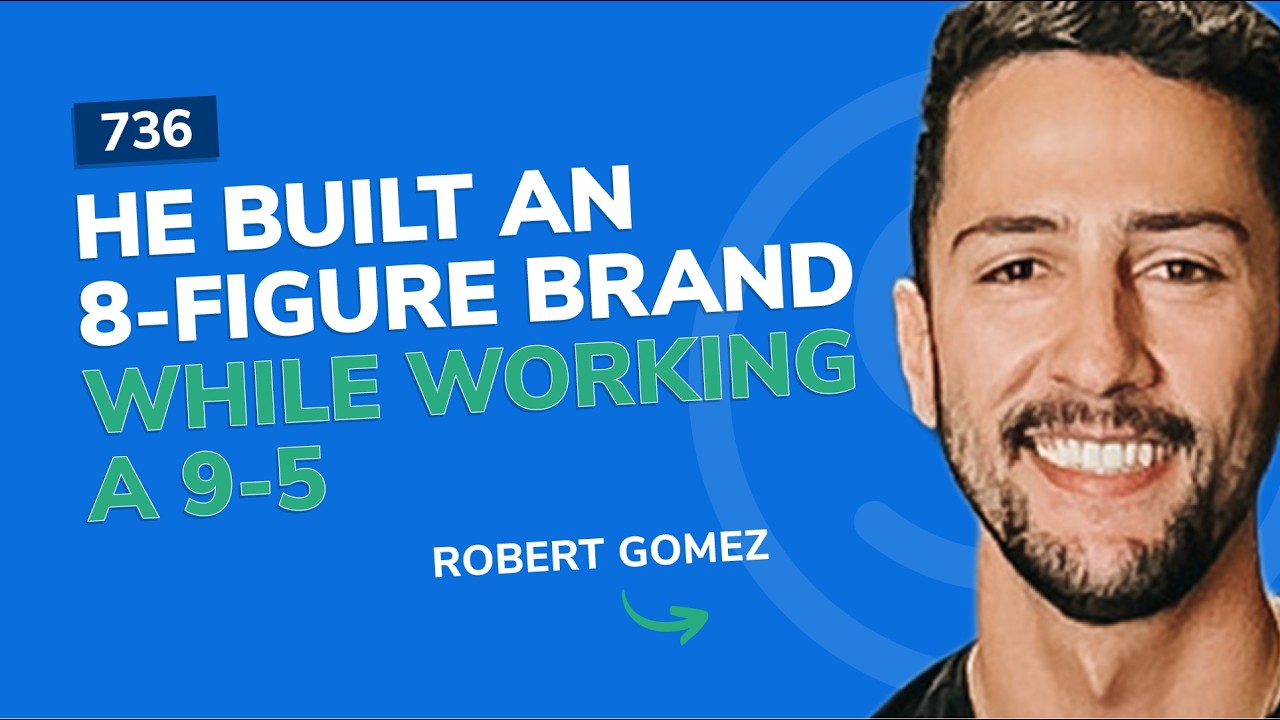
#736 - He Built An 8-Figure Brand While Working A 9-5
Summary
Serious Sellers shares actionable Amazon selling tactics and market insights.
Full Content
#736 - He Built An 8-Figure Brand While Working A 9-5
Speaker 2:
Imagine running a multi-million dollar business on Amazon for years while still working for the man at a full-time corporate job. That's what today's guest did,
but now he's finally quit his day job a few years ago and has built a highly successful brand that you can now even buy in all Walmart stores. How cool is that? Pretty cool, I think.
Hello, everybody, and welcome to another episode of the Serious Sellers Podcast by Helium 10. I am your host, Bradley Sutton, and this is a show that's a completely BS-free,
organic conversation about serious strategies for serious sellers of any level in the e-commerce world. All right, so we've got Robert from Kaffe here in Miami, Florida. We flew all this way just to meet him.
Robert, how long have you been selling online?
Speaker 1:
Well, my journey goes back all the way to actually 2012 when I started selling on Amazon and eBay. It wasn't with the current brand that I had, but sort of one thing led to another where 2019 I was able to start Kaffe Products.
Speaker 2:
So for seven years, you're just doing like kind of like random stuff?
Speaker 1:
Yeah, random stuff. You know, I don't know if we want to get fully into it, but essentially early on 2012, I started selling OtterBox cases, you know, kind of a college student sort of a dumb idea and basically got banned from Amazon.
Yeah, I'll admit it. And so it took me about another five years to get another account and finally be able to do it the right way. Okay.
Speaker 2:
What were you doing for gainful employment at this time?
Speaker 1:
So, I had a full career. I majored in finance. I started working as a financial analyst for a couple of years.
Speaker 2:
Where did you go to school?
Speaker 1:
Kennesaw State University in Georgia Tech. I got my MBA as well, but I was doing consulting for a while and then ultimately started working for Microsoft. That was my last job.
So, I was a senior finance manager at Microsoft all while already running Kaffe on the side.
Speaker 2:
Nice. So, how long did you still work full-time at Microsoft before you went full-time online?
Speaker 1:
At Microsoft, I worked there for two years. And prior to that, so I started Kaffe in mid-2019, and I kept my full-time role at Microsoft until maybe early 2023. Oh, wow.
Speaker 2:
So you stayed working full-time even while, so Kaffe was kind of like a side hustle for a while.
Speaker 1:
It was a side hustle, but at the same time, I had almost 15 employees by the time I quit. So it was really, I was the last one to kind of jump ship for different reasons,
but it's nice to get paid a ton of money and still be able to run your brand. Thankfully, I had a really flexible role, but at the end of the day, what I wanted to do was be full-time with a business.
Speaker 2:
What made you go into the coffee niche?
Speaker 1:
Basically, I had another brand. So not just in 2012, but after I got another account. This must have been 2016 or 2017. And I started a notebooks and planners brand. So think of like a paper planner, you know, like undated.
And I scaled that to six figures really the first year and it just kind of like lingered at that amount of sales. And so I kept, you know, through research and different tools and just friends in the space,
I kind of kept seeing that home and kitchen and, you know, health and wellness or whatever those categories were, you know, scaling a lot more. And so, you know, one thing led to another, a lot of Alibaba, a lot of supplier talking.
But, you know, I figured I could get behind coffee just because, you know, I drink coffee and understand it. And, you know, I thought there was an angle there.
Speaker 2:
Were you looking at it strictly from kind of like a passion viewpoint and like, hey, I'm a little bit knowledgeable or were there any indications in the market where it's like,
hey, I don't think there's that much competition or you're like, hey, there is competition, but I think I can beat them.
Speaker 1:
Yeah, so I think a combo of both. But if you think about it, most people know about coffee, right? You either drink it or you obviously know what it is. And it's obviously a category that's sort of growing.
And the way I saw it was that if I got into the coffee space, there's obviously thousands of coffee brands. But in reality, most of the coffee brands that are out there, they focus on coffee beans, right?
So if you go to a grocery store or you go wherever coffee shop they have, nicely branded coffee beans, they know all about coffee making process and everything, but there's not many actual coffee brands that are known for the accessories,
like even coffee machines, right? So it's mostly like coffee bean brands and a lot of legacy players that compete kind of like all over the home have some coffee products, but they're not necessarily known for it, right?
Like a good example, I don't know, Cuisinart or KitchenAid. Everybody knows those brands. They do make a coffee grinder, for example, but they're also known for making refrigerators or stoves or whatever it is.
So I thought with a name like Kaffe and just truly dialing in all the areas of the coffee making process, I thought there would be an angle there.
Speaker 2:
Are you still selling the first Kaffe product that you had started?
Speaker 1:
Yeah. So I'll show you here. This one right here. It's a basic coffee grinder so thousand reviews already wow yeah so you see it on walmart as well you know we're still selling the same exact product for where we're when here but.
Basically, it was the first product I launched and it was, yeah, there it is, still a bestseller within Walmart, 1,000 plus reviews. And it's at every Walmart store in the U.S.
So it just so happened the first product I ever launched some years later was actually the first product we got into a Walmart store. So it's come a long way. And yeah, it is just a simple coffee grinder, but at the same time,
I thought it looked sleek enough and we could brand it well enough that it would make an impact there.
Speaker 2:
In your first year of sales of this product, do you remember what kind of gross revenue you did?
Speaker 1:
I'm with Kaffe. So I launched mid 2019. We must have did a couple hundred thousand dollars the rest of that year. And obviously, 2020 was a big difference because that was COVID.
So I basically launched the brand six or seven months before kind of COVID hit. And that took another trajectory there. But yeah.
Speaker 2:
OK, and then how long did you run with just one product or under the Kaffe brand before you launch your second one?
Speaker 1:
It wasn't too long actually. So from the beginning, I knew I didn't want to just have a coffee grinder listing and that would be the whole brand.
So I did always try to build the catalog even before there was any demand for it or before we could even push too hard on other products because of capital resource constraints.
But I did have maybe like five other products within like six months. So at least they were there and building up the catalog.
Speaker 2:
What role in the early days did Helium 10 play in the Kaffe journey?
Speaker 1:
Yeah, I mean, a lot of research done through it, you know, like the Chrome plugin was always key. I still to this day use it basically daily. A lot of the keyword research, you know, like obviously it's a pretty self-explanatory product,
Coffee Grinder, but there is so many like Keywords that are sort of longer, longer, longer tail.
Speaker 2:
I got a question for you on that because you made me think of something. When people think of keyword research, it's not just like, oh, I'm going to find all the variations of coffee grinder.
Yeah, but you one really finds out how different people search for the same product. I know, you know, my coffin shelf that I sell, right?
Speaker 1:
Yeah.
Speaker 2:
One of the converting words is this word is a half Japanese and half English where it's called kawaii decor. Kawaii means like cute or something.
Speaker 1:
OK.
Speaker 2:
Never in a million years would I have ever thought that somebody would want a or search and buy a coffin shelf by searching cute or kawaii decor. What about you?
Did you have a kawaii decor moment where you're looking through Helium 10 and you're like, people search this keyword to find a coffee grinder?
Speaker 1:
Yeah, well, an interesting one was, I mean, there's a couple, but Basically, the Spanish version of coffee grinder, Molinillo de Café, which is like, oh, wow. Enough people search on Amazon in Spanish that it makes a difference.
And so, you know, café is how you say coffee in Spanish too, right? So, like Spanish people will say, oh, wow, that brand sounds like it, you know, in Spanish.
European people will say, wow, that's literally how you spell café, coffee shop, like in German. And so, like it's very relatable to other languages and I did not realize.
Literally on amazon.com, not amazon.mexico, that people are searching in Spanish.
Speaker 2:
I saw that in Helium 10 that it had some search volume and stuff.
Speaker 1:
Yeah, yeah, exactly.
Speaker 2:
Nice. You did a few hundred thousand dollars that first year. Which year was your best year of overall sales across the board?
Speaker 1:
Are we talking just Amazon or overall?
Speaker 2:
Overall.
Speaker 1:
Overall? Probably 2024. 2023, 2024 were pretty great.
Speaker 2:
And how much was that about?
Speaker 1:
Right around eight figures.
Speaker 2:
Eight figures? Okay. And then how about what chunk did Amazon play in that?
Speaker 1:
It played probably a little less than half. It was probably in the 35 to 40 percent.
Speaker 2:
Still multi-million dollar on Amazon.
Speaker 1:
On Amazon it was made seven figures at our peak just by Amazon.
Speaker 2:
Now thinking about what you were doing on Amazon, which is a big chunk of your pie, Like, if you weren't using Helium 10,
like you didn't see all the keywords and you're just like going off of what information you had available or whatever comes from advertising, what kind of hit would your brand take?
Like what percentage of your sales do you think comes from stuff and insights, keywords, whatever that you found from Helium 10?
Speaker 1:
Yeah, it's certainly something that the team uses every day and something that would take even more team members if we didn't have Helium 10. And not just like the amount of time it would take, but definitely like you're saying,
like some lost revenue, some market share, you know, decline there. The reason being that, you know, through Helium 10 and like alerts and all these things that we're able to set up, we find out right away, you know, when, for example,
A new competitor is coming in and they're attacking. They're going hard after reviews or going hard after our keywords. We would find out right away. Basically, the earlier you find out, the more ways of mitigating it are.
If you see a brand new player, it's not the same competing against them and taking up their ad space in their listing. When they have barely any reviews, then once they're a little more established, it's kind of like harder to do.
So yeah, it's definitely, you know, something that saves us tens of hours a week just because, you know, we used to analyze Keyword ranking, for example, right? That was something we would do by hand, you know,
like open up a browser like on incognito and see where you're at.
Speaker 2:
One, two, three, four, five.
Speaker 1:
No, that was an ad. That was an ad. OK, no, that's a real organic one and start counting from there. And that's just one keyword, you know, and there's hundreds of keywords.
So like being able to like filter by keyword, by keyword size and just like, you know, different keywords have different strategies, right? Like your main keyword.
We'll have a different strategy than like your longer tail, but you still want to have focus on those. And like without this sort of tooling, it's just not possible. I mean, it'd be there forever.
Speaker 2:
At what point did you add other channels? Like how long were you only Amazon until you're like, hey, let me start Walmart. Let me start my own website.
Speaker 1:
I think I had that vision from very early on. So essentially from from day one, I was almost trying to get new channels, you know, so Funny story is that the first order for coffee grinders that I ever placed was 3,000 grinders.
And when the grinders were on their way to the US, obviously the plan was to sell just on Amazon. That's the only place we kind of had permission to sell. But I went on LinkedIn and found a buyer for TJ Maxx home goods at the time.
We didn't have a website finished yet. We didn't have an Amazon listing because we're just now about to launch it. And the guy decided to take a flyer and buy 2,000 of them.
So before we officially launched the product, even on Amazon, it was technically sitting on a retail shelf. So that's kind of from early on. The goal was to get to retail eventually,
like the packaging and everything we did from From early on was with that mission in mind. But to speak to online channels, we started selling on Target.com as vendors very early on,
maybe 2020, early 2021. We started selling on Macy's.com, Home Depot.com, Walmart.com. I mean, just you name it and we probably tried that channel. And that was with the goal of being sort of omnichannel.
And not as reliant on just, you know, one channel.
Speaker 2:
Yeah, I see here on your website, you know, I see Macy's, Fair, you know, TikTok Shop, Amazon, Walmart, etc. And obviously this is a website in itself. Now, you know, what's your message to other brands out there?
Why is it important that they do omnichannel? I mean, you were kind of early to the game. I think not a lot of people were thinking as omnichannel as you were back in 2021, but nowadays it seems to be trending more.
Why is it so important to not just be on Amazon or not just have your own website?
Speaker 1:
You have to meet your customers where they're at. Obviously, Amazon's a huge chunk. Everybody has an Amazon account, it seems, and they would buy there, but they may not find you on there.
If they're scrolling TikTok and they find you on there, even if they don't buy in TikTok shop, they may go to Amazon or they like going on Shopify and finding off your website, but you have to meet the customer where they're at.
And nowadays, with tooling and automation and stuff, it doesn't take quite the amount of lift that it once did to sell on multiple channels, right? So if before, to sell on multiple channels, that means the orders had to come in,
you had to go print a label, and then go back to that channel and sort of like put in manually the tracking number, accept the order, cancel, whatever, where now there's all sorts of toolings for the orders to just come in,
flow in, print a label, it puts it right back to where it needs to be. Even with Walmart fulfillment services, sort of like the FBA, Amazon FBA, definitely TikTok shop has similar things.
So there's no excuse to be selling on just one channel nowadays. You can have one channel as your main channel, of course, but you need to be elsewhere to have it almost seem bigger from the beginning.
And that's your chance to go into retail and other opportunities that come up is when buyers look at your brand and, wow, you're like everywhere, right? Seemingly you're everywhere. They probably think you're a lot bigger than you even are.
And that's why they may give you a shot to be in the store.
Speaker 2:
Is Walmart in-store a big chunk also of your revenue?
Speaker 1:
Now it is, yeah. So it's at least 50%.
Speaker 2:
Would you ever have been there if you didn't have an established presence on Amazon and walmart.com first?
Speaker 1:
No, no. I mean, the buyer, you know, I've been to Walmart headquarters maybe six times, you know, including before going live just to like pitch.
And the buyer literally told us, you know, like even in the meeting, in our line review meeting, the buyer had our Amazon store sort of pulled up, you know. And so she knew exactly, you know, she was probably using the same kind of tools.
She was telling us how much we had retailed for or like why we're running a certain sale and just like our review count. So definitely they're very aware of what's going on on Amazon.
Speaker 2:
So, that's another reason of why, hey, be multi-channel and start online because you probably would not have all these millions of dollars of revenue at Walmart stores if you weren't known.
I'm sure sometimes, like maybe somebody invents something really cool, but that's another point there. TikTok shop is kind of different almost than all the other channels you mentioned here.
Fair, Amazon, Walmart, very similar vibes, even a website. How have you had to change your strategy as you expanded to TikTok shops?
Speaker 1:
Yeah, I think, and not everyone thinks this through like that, but there are certain products that work better on TikTok shop, right? Obviously, even within our catalog of products, there's certain products that work better on TikTok shop.
And what do I mean by that? Think of a product that looks nice on a video. You know, think of a product that looks very interesting when you're just watching a real type of, you know, like a quick video. I'll give you an example.
If it's just a coffee machine and you're pressing the button, the coffee's coming out, that may not be the most interesting product necessarily for a TikTok shop. But if you think of, for example, our handheld milk frothers,
where you press the button and then you mix something, the act of mixing and the milk foaming and just the coffee coming together, that is something more...
People will Be attractive to that a lot more video style than if you would like a more boring kind of product where it's not much to video.
We're a product that has more margin, obviously, so you're able to kind of spend more on the marketing side. But yeah, certainly we learned that by just trial and error. You know, not every product works as well like on TikTok Shop.
Speaker 2:
What's one of the biggest disasters or struggles you've had as a business owner? Like something unexpected and it really, you know, gave you guys a big hit and then how did you get out of that hole?
Speaker 1:
Let's see which one should I...
Speaker 2:
We're not trying to scare you. We just keep it real.
Speaker 1:
No, we keep it real.
Speaker 2:
Selling online is not all rainbows and unicorns.
Speaker 1:
Yeah. I mean, every business is this way, right? There's just a lot of trial and error and a lot of mistakes. I can name Paying an influencer $30,000 to not really move the needle.
Short shipping an order for Walmart that I then had to airship a couple pallets. It cost about $30,000 itself just to airship something. A lot on the Amazon ad side for a while,
we were kind of overspending before we really optimized our campaigns. That's very easy to do. So you just kind of leave a campaign running. And we had so many campaigns that, you know,
we were not necessarily looking into it or seeing where the waste of spend was going.
Speaker 2:
That's where Helium 10 ads could have helped you.
Speaker 1:
Yeah, for sure. Yeah. And ever since, like, we really structured more to where we're able to make decisions a lot quicker just by looking at campaign names, for example.
So, yeah, a lot of different ways to lose money or, you know, like, waste money if you're not careful. But at the same time, the way I saw it, you know, I was always willing to take a risk,
sort of like spend up front to see, like, what led to what. And that's what has led us to, for example, be at Walmart stores or have made other breakthroughs in other channels that,
you know, we may not have otherwise done if we were just penny pinching.
Speaker 2:
Scared money don't make money. Yeah.
Speaker 1:
Yeah.
Speaker 2:
So now flip side, what's some of the biggest surprises? Positive, like, oh, my God, you know, like amazing Prime Day or some crazy, you know, campaign just went off or big product launch that did better than your wallet's imagination,
something like that.
Speaker 1:
Yeah, I have a pretty unique one. So this is a couple of years back, but It's not a marketplace, but it's a gift-giving website called Snappy. I don't know if you guys have ever heard of Snappy,
but you wouldn't even hear of it because you have to go through like Miracle, which is like a platform of different marketplaces. Essentially, we onboarded on there. It's a random gift-giving.
So, a company can go on there and get their employees gifts and they use fake money to buy products. Essentially, they're giving you real money to the vendor they are.
And we onboarded there probably on October or late September, I want to say a couple of years back. And basically, within that Q4, not even Q4, like November and December,
we did almost $300,000 or $400,000 in sales at like a 50% net profit or some crazy stuff like that where we were like, whoa, what is going on? It's like a channel you would have never expected. No one even knows what that channel is.
And that thrill is like, whoa, you just found a needle in a haystack kind of moment. So that was awesome.
Speaker 2:
I just realized my coffin shelves would never do well. They're like, no company is going to buy all their employees a bunch of coffins. So they're like, what are you trying to tell us here? What's going on? But coffee like, okay, that I get.
That's a very good one. Do you keep selling on that platform?
Speaker 1:
Yeah, we've kept selling on there. Another cool story like that is FAIR. By now FAIR, you know, a wholesale platform is Very popular, but I think we were very early on to FAIR, I think 2021. And the way it came about was really interesting.
I was on a road trip down the US one, West Coast, just coming down and I stopped at a random kind of boutique store, I don't know if it was a coffee shop or something. And they had like so many different products for sale, right?
Like so many different brands and everything that I knew that the owner of that coffee shop had not just I've gone sourcing all those to the brands themselves.
So, me being curious, I see a lady in the corner taking inventory or something, writing down. I strike up a conversation, like, where do you guys source from?
It's clear that you don't make all these products and you're not in contact with that many vendors. And she said, fair.com. And I said, noted. So, as soon as I got home, we signed up for fair.com.
And we do multiple six figures there every year. The best part of that is not even the money. It's just that we're in over, I want to say three or four thousand stores in the U.S. just from fair.
And so I get random text messages from friends like, hey, I was in a coffee shop in Arizona and like, this is your product. Like, what is it doing here?
You know, it's just like that feels so, so good, you know, like seeing your product out in the wild. It's like one of the best feelings for sure.
Speaker 2:
Speaking of that, let's double down on that. I see you on Instagram before you would always post like It seems like whenever you go to a new Walmart or a different state, you're like looking for your product.
How does it feel just to know that there are tens of thousands, now maybe hundreds of thousands of people around the country that have your product and are like drinking coffee from it like every day and it's something you created?
How does that feel?
Speaker 1:
Yeah, it never gets old, okay? I've gone to an Airbnb before I stayed there and they had my coffee grinder. I went to a random friend, well, a friend of a friend's house and we went there and they had my coffee grinder.
That was just like, what? What is going on? It never gets old.
Speaker 2:
And then you tell them like, hey, that's my product.
Speaker 1:
Yeah, of course I had to. But yeah, I know it's like going into a Walmart and just seeing your product on the shelf. Before that ever happened, that was like a dream. Of course, you couldn't even fathom how does a product get into Walmart?
You would hear these stories of like, oh, this company or this guy has some product at Walmart and it's killing or whatever. You just want to be like, it's Walmart. It's everywhere.
To know that you're always Like the unreal thing for me is like I'm always within a couple of miles of a product of mine, you know, like however it got there. But it's really like I can go a couple of miles away and, you know,
that product that originated from my factory and it touched my warehouse in Georgia, like it's within there somewhere, you know,
and it never gets old seeing a Walmart truck pull up to our warehouse and just kind of load it up and go like it's it's really rewarding.
Speaker 2:
Are you only in North America right now or have you expanded to to Europe or Asia?
Speaker 1:
Strictly North America, yeah.
Speaker 2:
Any plans?
Speaker 1:
The thing with Europe is we sell electrical products and they have a different plug, you know. So that alone just causes so much kind of like, you know, logistical sort of issues within our supplier.
We've had a few orders here and there, like more like wholesale or like things like that to Europe. There's just so many retailers within the U.S. that we could go into.
That's a big strategy of ours, not just the online part but expanding our physical footprint. It's just kind of the beginning for us there.
Speaker 2:
What's your short and long-term goals for the brand? Do you want to start a new brand? Do you want to expand more? Is it just revenue-based? Do you want to get more into retail? Are you trying to sell the company later?
What are you trying to do?
Speaker 1:
Within Kaffe, we've expanded our catalog to almost 100 products or so. I spent a couple of years really developing that catalog with the goal in mind of really expanding within physical retail. I went to Target headquarters last year.
We were really close. We think we may be able to get in there. A couple of big grocery chains. And so with those, it doesn't take a big lift once we have the catalog already made. So it's just really trying to further penetrate in there.
And I won't say too much, but there may be a brand in the horizon.
Speaker 2:
Okay.
Speaker 1:
Yeah. You heard it here first.
Speaker 2:
Not phone cases.
Speaker 1:
Not phone cases. Let's just say it's something you put in your mouth.
Speaker 2:
Okay. All right. That narrows it down a little bit, but that's not too much. Okay. Interesting. Interesting. What would you tell to a brand out there who's already doing well? Like maybe they're a seven-figure seller across different channels.
They've never used Helium 10 before. And they're like, why would I use Helium 10 on a seven-figure seller? How do you think even a sophisticated seller who hasn't used Helium 10, how can they be benefited by signing up?
Speaker 1:
Yeah, first I would say like how did you get this far without But truly like you have to know your business you have to know exactly what is going on like it may not be the founder but somebody on their team has to you know,
like I'm not exactly whether they're if they are doing it They're spending a lot more time than they should and if they're not doing it They're missing out on insights truly that that will help drive further, you know,
like there may be Such low hanging fruit that they're not necessarily aware of right and just because they have blinders on so I would say. Basically, it'll help you take a look at your business from top to bottom.
Especially on the Amazon side, it's every little piece you need to run your business is within the Helium 10 tool. I don't see how somebody could run their brand nowadays without using some sort of tool.
Helium 10 has the biggest, they cover A to Z, is what I would say.
Speaker 2:
I'm not too much of a coffee guy myself, a little bit. I'm trying to get more into it, but I'm into matcha and stuff like that. Any plans for a side brand or maybe even under a cafe to get into the matcha space or anything like that?
Speaker 1:
Yeah, so I think in more recent times we've done, we're getting a little bit more into the consumable part. We have a pretty innovative product that is coffee teabags. So they're called steep coffee bags.
So think of like a teabag where all you need is hot water, but it has gourmet, like organic coffee inside, right? So like you could take it on a plane, you could take it, you know,
in your hotel room if there's not like fresh coffee or whatever. But to go necessarily like a branch off like that, we do sort of play the angle of matcha or whatever because we have our milk frothers and a lot of people,
myself included, I've used it for matcha. It's really cool. But we also have like French press, coffee and tea makers, right? Like we really kind of like angle it that way a lot because people use those a lot for tea.
But our name literally sounds like coffee, right? So it's kind of tough to just go in there. I think we're doubling down on the subcategories. And we really are about covering everything within the coffee making process, right?
So you have your beans or whatever it is, you store them in our storage containers, you take them out and you grind them with our grinder, you take it out with our scoops,
you put it on our coffee machine, you use our coffee mugs, literally everything within the coffee making process. And it's not about having 10s of products within each one of those verticals, but really having two or three key ones.
For example, coffee grinders, we have manual, blade, and burr grinders, right? So we're well covered within this coffee. But yeah, there's so many different routes to take just in coffee itself that it'll be tough to be like a matcha brand.
Speaker 2:
Or Vietnamese coffee. I'm really into Vietnamese coffee. That's like my thing.
Speaker 1:
For sure. I have talked to another founder. She owns a Vietnamese coffee beans brand. I know it's...
Speaker 2:
With the condensed milk in there? Oh, man.
Speaker 1:
All right.
Speaker 2:
All right. Well, I took a red-eye flight last night. I need some cafe-grounded or grinded coffee right about now to wake up. But your story is really inspiring, you know,
from kind of like working for the man in a nine-to-five for so many years, starting this business up on the side and now being, you know,
having nowhere in America where there's two miles where there's not one of your products is It's an amazing accomplishment.
I'm very happy that Helium 10 has been able to help you with that journey and I wish you all the success in the future.
Speaker 1:
Absolutely. Thanks for having me.
This transcript page is part of the Billion Dollar Sellers Content Hub. Explore more content →