Ecom Podcast
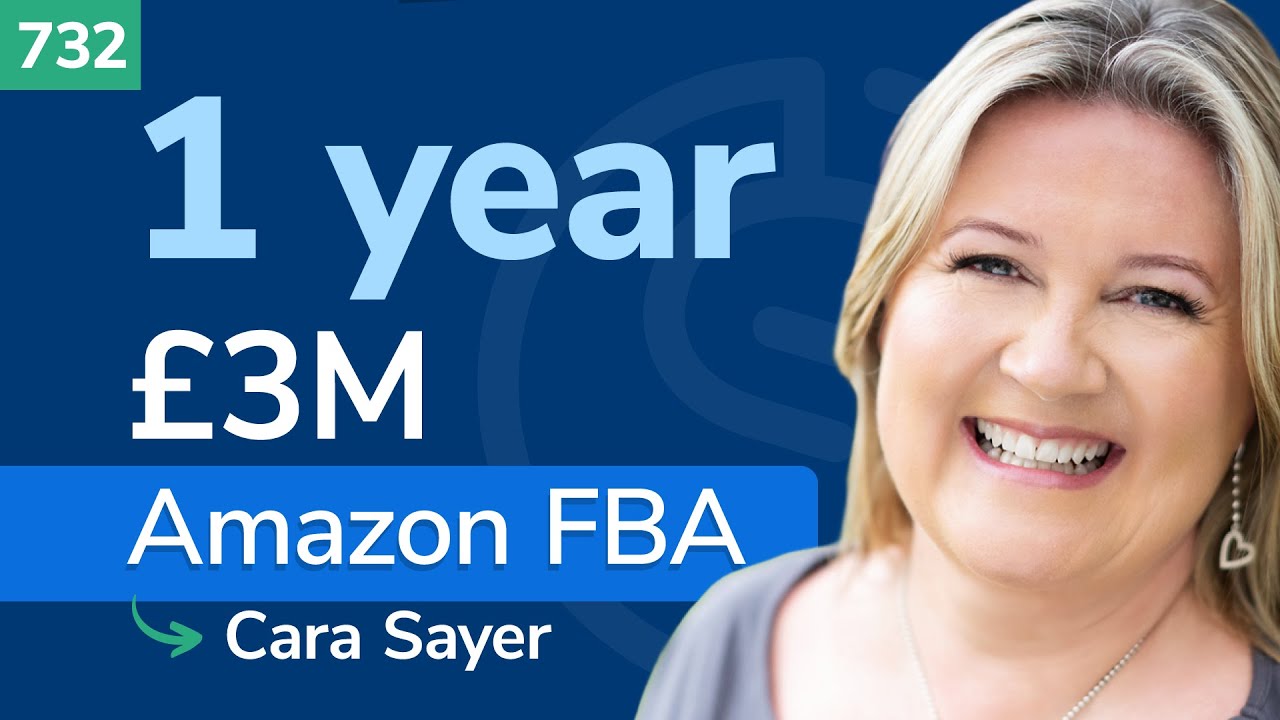
#732 - 15 Years #1 on Amazon UK
Summary
"Learn how a single mom maintained her Amazon UK niche dominance for 15 years, leveraging her PR and marketing background to build a multi-seven-figure brand, with key insights into adapting to consumer tech trends and transitioning from corporate roles to e-commerce success."
Full Content
#732 - 15 Years #1 on Amazon UK
Speaker 2:
Imagine leading your niche for over 10 years, have members of the royal family use your product, and grow your brand to multiple seven figures as a single mom. How did she do it?
Unknown Speaker:
Well, I flew to her house in London to find out. How cool is that?
Speaker 2:
Pretty cool I think. Hello, everybody, and welcome to another episode of the Serious Sellers Podcast by Helium 10. I am your host, Bradley Sutton, and this is the show that's a completely BS-free,
organic conversation about serious strategies for serious sellers of any level in the e-commerce world. All right, so here we are in the UK. I have been so kindly invited into Cara's home here, my first time. What? This is London.
Speaker 1:
No, well, it's just outside, actually. So it's called Surrey.
Speaker 2:
So we're in Surrey.
Speaker 1:
We are in Surrey.
Speaker 2:
All right, and I came here because I wanted to get a first-hand look at the operation. I see her office. She's got a backyard. Looks great. Let's just go back to the beginning.
You've been on the podcast before, but maybe this is the first time the audience has met you. Were you born and raised nearby here?
Speaker 1:
Sort of, yes. I suppose in American terms because you will travel so far like in comparison to us. So anywhere that's about half an hour away is considered a long journey in the UK. So it was sort of brought up around the area-ish.
But for those who are English listening, that was in Berkshire, which obviously is a huge distance from Surrey. Not really.
It's about forty minutes my mom still lives there and yes so yeah and then I moved here when I had my daughter so it was very very convenient for commuting so it's about half an hour into central london.
Speaker 2:
Now before you got into e-commerce what was your gainful employment like.
Speaker 1:
I've done all sorts of things. When I was backpacking, I worked in an illegal casino in Cape Town. I ran a hostel also in Cape Town. I worked on a winery in Australia. I worked for a TV company.
I worked in TV companies actually a couple of times in the UK and in Australia. But my main career, although again, I don't know if I'd call it gainful, was public relations, marketing, events, that sort of thing.
So I actually worked on the team that launched Amazon in the UK when it was a book warehouse in Slough back in the beginning of 2000, I think. Was it 1999? No, I think it was the end of 1999, beginning of 2000. We also launched eBay.
So we had a lot of consumer technology clients. So I used to run Tesco. So Tesco was a grocery store, big grocery store. Like what's a big grocery store for you? Like I was thinking of Target, but that's not really food. That's just small.
Speaker 2:
We've got Albertsons, Kroger, things like that in the U.S.
Speaker 1:
So massive, massive. And we launched online home shopping for them, which was grocery shopping. And I'll never forget, it was quite funny. I work for a company, well, I later worked for the same company actually,
which is Hearst, which has Good Housekeeping magazine. I know Good Housekeeping in the US and we have in the UK. I remember that I rang them up and they were like, Oh, no,
nobody's going to want someone else to pick their tomatoes or their vegetables, etc. and going, I think they probably will. Obviously, it's taken off very well in the UK because obviously, we're a lot smaller country than the US.
But yes, it's funny sort of seeing how people's attitudes change to technology over the years. So I've been sort of I've been involved in that world on and off weirdly like 25, 30 years.
Speaker 2:
Working for the man though, like corporations. Yes, horrible.
Speaker 1:
Hated it.
Speaker 2:
Is that what caused you to kind of think about, hey, I want to start something myself?
Speaker 1:
No, not really. My father was an entrepreneur, so he started his own business in the freight industry. So I was brought up with that as a backdrop.
But then I felt a bit of a failure because of the fact I was then working for the man as opposed to my dad who'd always worked for himself. I didn't really want to do it.
I sort of looked at service as in setting up my own events company and my own PR agency, but I just hated all of that sort of stuff.
What I didn't like about it was the unrealistic expectations people have of what's possible and also what gets promised to clients is often not what can be actually achieved and I hated all of that.
So, I actually, you know, as you probably know, we have spoken a few times before, do listen to past episodes because I give Bradley languages in the British language every time.
So, yeah, the main reason I actually started my business had nothing to do with anything. I had my daughter and she was a tiny baby and I needed a product that didn't exist. And so, I've always been quite sort of, I'm a problem solver.
In fact, actually, interestingly, I got diagnosed with ADHD a few years ago. Apparently, it's quite a big thing for people with ADHD. They like solving problems like we don't see problems as problems.
We see them as challenges and then unfortunately, you're going to hyperfocus and really probably overly solve it. So that's exactly what I did basically and I created a product that didn't exist.
Speaker 2:
What year are we talking about now?
Speaker 1:
So I had Holly October 2007 and I know that I had registered the domain for the brand name SnoozeShade by the end of 2008. I can't really remember the exact timeline as such. Then I went to see a manufacturer I think probably in 2008.
Then I really started in 2009 because That year was the year that I launched the business and went to a trade show where I showed the product prototype for the first time and that's where I've got orders and things like that.
So obviously this is back in the day pre-FBA and all of that sort of stuff, certainly in the UK. And in fact, I actually sold on Amazon in 2011 in the US and there was no kind of FBA setup or anything.
You had to do it all kind of going to the post office type thing.
Speaker 2:
Explain the product a little bit, like for the need you had and then what does your product actually do?
Speaker 1:
So the need I had was that I was out and about with the, as the Americans call it, the stroller bassinet, which is what do they call it here? Pram. We call them a pram or a carry cart, like pram carry cart.
And then I wanted to protect her from, she was born in October, but I was actually very, quite unwell when I was pregnant.
So I was in a wheelchair for the first I've been selling on Amazon for about nine months and so I had to learn how to walk again and then I got very overexcited about walking again and was walking everywhere.
So I'd like walk to the shops, go and like buy stuff for breakfast, walk to the shop to the prom, buy stuff for lunch, etc.
Doing this amount of walking with Holly, I obviously wanted to keep her protected from the elements whether that was the wind, the chill, the sun, etc.
The traditional method of doing that is to throw a blanket over the pram or something to cover her up or even using my own coat, putting it over the pram in order to make sure she was nice and protected whereas I was freezing my bits off.
Or the coat would fall off and then you run over it with the pram and then you get a nice dry cleaning bill, etc. And I just wanted something that I could use that was effectively a sort of blackout blind for the stroller.
And that was the original concept that I came up with. And then I developed it and moved on and then it's basically become like, it's been actually a bestseller on Amazon consistently since 2010. It's been number one in its category.
We've been doing some work relaunching in the US. Yeah. So anyway, it was a product I needed didn't exist. I launched it. Yeah, that was it really the beginning of the snowball.
Speaker 2:
Yeah. Now, you know, in there, since you were fortunate enough to start on Amazon in the early years, you know, when there was not much competition, first of all, obviously, by definition,
not much competition, because you kind of created this product that didn't exist. But then as the years went on, how did the competition affect you, you know,
like, and, you know, obviously, there was no Helium 10, there was no tools, you know, back in the day, you didn't need it, because you just throw something up there.
Speaker 1:
To be fair, I wasn't responsible for selling on Amazon in the early years. So in the early years, I was very much a bricks and mortar. I had like 22 distributors around the world, I had a distributor in the US,
I had distributors in the UK, wholesalers, etc.
So the product went on and was like looked after effectively by other people on Amazon and then it was 2014 was when I was getting divorced and I realized that basically there wasn't enough margin really and not enough profit for me to be selling to people who are then selling like full price,
etc. So that's when I went to my first Amazon conference in the UK and that's where I met lots of people selling garlic crushers and back support braces and things and they're all making gazillions or so they said.
By the way, that is a load of old rubbish a lot of the time. And I was like, well, if they're selling these fairly, you know, mediocre generic products and making millions, surely I've got a great product.
I know it does what it says on the tin, etc. And so I decided to start working on Amazon myself. So I had been with Vendor Central. So it was a third, so I think we were on Vendor Central, and then we had a lot of resellers.
So I had 37 resellers on my best selling product. So I had to basically sit and not sell for about six months to anybody in third party in order to get everybody off and get them to sell out.
And then I went and worked directly with Vendor Central for a while.
Speaker 2:
That means that she was selling her products to Amazon and Amazon was selling her product to the customers.
Speaker 1:
Yeah, exactly. So I wasn't doing any of the logistics, etc. But I used that opportunity to tidy up my listings. I mean, I had people putting a blue blanket picture randomly up for the main image and stuff. I work with Vendor Central.
Then I decided actually Seller Central was better for me and I preferred it with more control and I had a few issues where things have gone wrong with vendor and I was like, I think I can take it back.
I took it back and started selling myself in 2015 and then I went into the US in 2016, Australia and Canada and then Australia.
When Australia launched, I got approached by Amazon Australia to go over and launch there, so I still sell there. I basically pulled out of Amazon US a couple of years ago, so it was doing really, really well.
I had one product that was a cover for Pack and Plays, which at the time was, again, a world first, and then I just got completely and utterly slaughtered by Chinese copies, which are completely unsafe in comparison to my product.
Safety is a big thing for me and my brand. It's in the US. They try everywhere, obviously. But it was literally like a feeding frenzy. So it was like piranhas because they knew that if I had a patent,
it was going to be expiring after 10 years or whatever. So I think it's really important. It doesn't matter how long you've been selling. Actually going into the numbers is so vital, like being able to actually really,
really analyze whether or not because as I've always said, turnover is vanity and profit is sanity. And in this case, I had the turnover, yes, in the US, but the profit was absolutely tanking. So I pulled out of it completely.
And I'm only now going back in again. And I'm going in with less products, for example, because actually, you know, I have huge awareness. And actually, what the other thing I would also say that the benefit of having done this,
and Canada, I've shut down full time because Canada, again, was just like a bit of a bloodbath. And I was like, nah, I'm staying out of it. But actually then what I did, it obviously enabled me to focus on my own home territory.
And then that part of the business has grown. Every year we grow like 8-10% because you've got the time, the effort, the energy. So I would say also,
top piece of advice for people who are selling is It's very easy to get distracted by other markets and actually sometimes being focused on other markets,
especially if they're not actually profitable, not knowing whether or not you can get the turnover, whether or not you can get the profitability,
it is really useful to be able to actually focus on where your base is because you're always going to be stronger in your home country because you've got that local ability that you don't have in other countries and less costs as well because you're not shipping products and dealing with different countries,
tax systems and all the other various things.
Speaker 2:
Which year would you say was your best year across all platforms on and offline and what kind of gross numbers did you do? Not necessarily your most profitable year which is more important but just thinking about the gross for now.
Speaker 1:
I consider myself quite a small seller. I think I did like nearly 3 million pounds and now I do I think around 2. So the US marketplace kind of knocks but having said that when you look at the profitability I'm way more profitable now.
And so therefore and also that's not that that was one big year and in fact that was the year probably the last year I was in the US and then I pulled the US out and my numbers dropped like literally hugely.
But actually, the profitability of the business went up hugely as well. So I had a kind of a painful year where I was like hacking stuff out, knew I was going to be like, not profitable, as profitable as I liked.
But weirdly, I always sort of, I mean, I'm really hot on my numbers. And every now and then I sort of think, Oh my God, why am I doing this? You know, have one of those moments. And I think, all right, so I'm going to shut the brand down.
I've had enough. And then actually, when I look at the numbers, I'm like, Oh, actually, I haven't done too badly, you know, and plus also, it depends on what you get out of doing the business.
So I'm not planning on selling like anytime soon. I've probably got another at least another five years of like doing what I do at the moment. And actually, it's interesting.
I mean, I've been doing this now for 15 years, and there's still opportunities to grow and do different things.
The great thing about running the business the way I do is that my daughter is in the middle of doing her for the Americans out there, the equivalent of her SATs and for English levels and she was doing her GCSEs the year before that.
I've had the last three or four years where my daughters needed me to be around a lot more and be more focused on her and actually the business just pootled along doing very nicely. It pays me the money I need.
I get paid more than I would do for a corporate job. I don't have to work for the man. I work for me. My boss is a bit of a pain in the ass sometimes but she's okay. She lets me go off where I like and that's the thing I love about it.
I think it's really interesting. Sadly, I had a friend of mine pass away very recently. One of the things I think it really makes you do is refocus what's important in your life and it's really interesting.
So I'm on a lot of chat groups like on WhatsApp and stuff and over the Christmas break, I've seen so many people like, oh, I've just been like looking and it's freaking Christmas Day. You should be with your kids, right?
Because let me just tell you, your children will remember more the fact that you weren't around on Christmas Day, more than the money that you're going to make them. Life is really very short.
And I just think my way of running my business is not for everyone. I totally understand that. But I get what I want out of it. I do what I want. I travel where I want. I get to meet great people like Bradley and I have known each other.
It must be like the whole time you've been at Helium 10, isn't it? It's about eight years. You get to meet really great people. I pay my daughter through the business because she does work for me.
I pay my partner because he works for me through the business. I rack up my pension, which I don't think it's called a pension in the US. It's called a 401k. So I've racked that up massively.
Although again, if you actually took me out of my business, it would be a hugely profitable business. But I'm in there taking money out while I'm in it, not just focusing my attention on exiting,
which I see a lot of people running their businesses on such a tight leash and on such a tight margin that they aren't able to enjoy it. Whereas I say enjoy it, then pull yourself out of it if you want to sell and go from there.
Speaker 2:
Other than your family here, who do you employ and what do they do?
Speaker 1:
I don't actually employ anyone other than them except for I have freelancers. So I have one VA in the Philippines. So she does a lot of the day-to-day admin, does a lot of the checking in on things, etc.
I have two people who work on customer service and one of them works on customer service and social media. Then I have someone who's not full-time.
She's like sort of half-time on social media because social media and marketing is a huge part of the business. And then I have someone that I've outsourced like my Facebook to. I have someone who looks after my website, my SEO, my AO.
I have accountants. I have a logistics company. So, I've never been one of these people who wants to seem as if I'm bigger than I am to be honest. In fact,
what makes me laugh a lot of the time is that people contact us and they're quite surprised to be speaking to the owner of the business because they're like, oh, hang on a minute. I thought you were a really big business.
It's like, nope, still run out of my home.
I have a really lovely team actually and I've had lots of people work with me for quite long periods of time on and off and come back to me and then gone away and done something new and then come back or whatever.
I don't need a big warehouse to make me feel successful. I'd rather have a third party because it means I don't have to worry about wages and all of the people management stuff. I'd rather someone else handle that. My choice my lifestyle.
So yeah, maybe I pay slightly more than other people. Maybe I don't I don't know.
Speaker 2:
Yeah. Okay. Well, this is you know, your model here is I think what entrepreneurs strive to be able to do like like if you made such a big operation that now you're almost you are the man,
you know now it's the same thing of what you're trying to escape. So the fact that you were able to build this business up and still kind of like keep it in the family. Yeah is like that's that's the dream of a lot of brands out there now.
As we mentioned before, there was no tools around in 2014, 2015. As competition grew, now you have to start doing things like maybe tracking keywords and looking at where the keywords are.
Speaker 1:
I still get every day or I don't know how often it is, either once a week or once a day, I get competitor analysis of what they're doing, etc. I think what it is as well is, like I said, when I shut the US down,
there was a much bigger pile of competitors because I was just being literally attacked. Now, it seems to have calmed down because realistically, it's very hard to produce a product like mine. I mean they cannot produce a product like mine.
No product that is a copy is as good quality as mine. They can only ever attack me on price. That's it. They can't attack me on safety,
they can't attack me on quality and so now it's actually calmed down a lot and I think now I'm going back in again and it's like probably like three,
four years of like not working properly in the US and if you have a brand with values and actual proper USP, unique selling point, something that makes you different, then you can go in and start again at any given moment in time.
So my sales figures this year have been really good. I've been testing the water baby steps. This year and next year, I can go in a bit harder if I want to but it's just always useful to understand.
This is the other thing I think a lot of people do. They're like, oh, I've got to go big or go home. It's like no. I've been flying stuff in.
Even with the tariffs, I've been flying things in because I'd rather limit my exposure in case it all goes wrong. I've spent the last six to eight months testing.
It's interesting because going back in now, different products are selling better than other products. The old one used to be the market leader.
Now, another one has really come forward, which is fascinating and not something I could necessarily have predicted. It's always exciting times.
This year, I'm actually launching a couple of new products, one of which is not a SnoozeShade as such. It's an accessory, but it's an accessory I know that people who buy SnoozeShade would buy.
One of my biggest challenges and one of the reasons why I have the same issue every time, I always say to people, well, if they don't know about SnoozeShade, how do they find it?
Because my biggest keyword is my brand name and also the things that it does. So if they don't know about it, they're not looking for it. So how do I get to those people?
So my next path is, well, to give them the accessories I know the type of person who buys my product would be buying.
And then that exposes them to the brand and therefore hopefully they will then start moving over and buying the other products. So it's interesting. It's a kind of like chicken, egg, egg and chicken a lot of the time.
And then I'm also doing a product for special needs market which is really exciting. I'm very, very excited about that because I've been asked to do it for quite a long time and I've just not had the focus.
And because I'm not allowed to travel because of Holly's exams, I will be at home a bit more so I can get my cutting scissors out and start doing some prototypes which will be cool.
Speaker 2:
So, you know, I know you've dominated like your brand term and you're, um, you're definitely, you know, very well known here in the UK. I'm going to ask you in a little bit.
Uh, I heard even members of the Royal family have used your product, but quite a few of them actually.
Speaker 1:
And some ex girlfriends of Royal family have as well.
Speaker 2:
Oh my goodness. People use actually the secret service or what do you call it? The M I six or something.
Speaker 1:
They just buy on the website and then I'm nosy because I see an unusual looking name and then I Google them and I'm like, Oh wow.
Speaker 2:
But anyways, Like you said, people will find your brand because they heard about it somewhere, they saw it on social media or something, but then you can't just live off of branded search. You're trying to get new customers.
How does Helium 10 come in when you're talking about launching new products, when you're talking about expanding your existing products, how does that help?
Speaker 1:
Obviously, I know the numbers of my own brand, as you say, and some of the key words that I know I hit for. As in finding other products, it's a lot of the time it's like looking at what else people buy.
I've got an understanding and also just sometimes it's like just knowing the volume of a keyword means I can go, that would be quite a good one. If I went in and got 10% of that, I've never been a big percentage person.
When I very first started, there were like 750,000 babies born in the UK and I was like, well, if I hit 1%, Let me know if you have any questions.
It's one of those things where you have to really understand and I really like to be able to nose around and see what other people are doing, what other products are doing well and also the keywords often, it's difficult.
If you look at it just like on Amazon, it can just be a bit of a mishmash whereas with Helium, you can organize it better and you can put it into like groups and track what things are doing and where they're going,
where they've been, that sort of thing. And as I said, it's also interesting because then I can actually go into what are the other keywords people are buying my products looking at because that can be completely unrelated.
And so therefore, you'll be like, oh, hang on a minute. They're like been searching for that. So if they've been searching for that, then maybe I should be doing something that appeals to that word,
which has got nothing to do with, you know. For me, Helium 10 has always been a big time saver because I can pull things together and actually now with AI as well, that's what really helps as well because before,
I used to have pages and pages and pages of spreadsheets and I'd be sitting there and my brain would be sorting and all the rest of it. Now, you just go, sort this out for me and find this and find that.
So I think that really helps and then actually on the other side of it, I think we were talking about earlier on like the whole TikTok side of things as well. So for me, marketing, social media, etc.
has always been a very huge part of my business. In fact, to be fair, as I always said, I don't really consider myself to be an Amazon seller. I'm just a brand and Amazon happens to be my largest sales channel.
Tiktok is really interesting and not necessarily just purely for sales but for awareness again. Going back to the principles of old-fashioned marketing,
this is what's really interesting generally with the whole AI scenario that we're all dealing with. One of the reasons people are freaking out It's because it's taken away all the hacks.
It's taken away all the, well, if I go for this keyword, then I'm going to always get here, whereas AI does what kind of old-fashioned marketing does,
which is it looks at relevance and whether or not you're actually relevant for that word and whether or not you're being picked up naturally for that. So that's why things like I've had a blog since I started my website in 2010.
I have got literally huge amounts of material but then it's now also taking that material, tweaking it and making sure it's relevant to the keywords.
We're kind of coming back to the fact that as an Amazon seller, you shouldn't just be thinking about Amazon. You should be thinking outside the box.
You should be thinking about how are people going to find you and you want them to be looking for you actively so start doing things and TikTok is quite a good opportunity to do that.
Start doing things that are just not Amazon focused all the time and that's why I think we talked about TikTok last year in Prague didn't we and like what Helium 10 was going to do and it all sounds like really exciting.
Speaker 2:
So, I think being an international seller is another way you use Helium 10 because like, for example, let's say I had what we would call a diaper company in the U.S. and I went to the U.K. or Australia.
Speaker 1:
We want some nappies.
Speaker 2:
Yes, I'd be like, okay, let me just copy my listing.
Speaker 1:
Or a travel cot, a port-a-cot, or a pack-and-play. What's a pack-and-play? Right, pack-and-play. Well, that's American. You should know that. Pack-and-play is a baby, like a play-ard.
Speaker 2:
I haven't had babies for 25 years.
Speaker 1:
Exactly. So, play-ard is another word. So, play-ard, pack-and-play. So, in Australia, they're called port-a-cots. In America, they're called pack-and-play and play-ards. And in the UK, we call them travel-cots.
And so, you do have to actually change your – because that's the point. If you're going to sit there and look for the wrong keyword on Helium 10 in the wrong market, then you're going to make misinformed decisions.
So it is really interesting. I do see that and I see that a lot if I'm honest from the U.S. and well I see it both ways actually. I see U.K. and U.S. companies.
We speak English but we do speak a different language and they don't think about it. So they're like, I'm going to launch this product. It's so successful in like either the U.K. or the U.S. It's like yeah but I helped a friend a while ago.
She had a baby food preparation device. The first thing I do is go and look on Amazon where you want to sell and find the competitors and start understanding what words they're using.
Then go and look that up on Helium 10 and see what the traction is, etc. Rather than looking at your own keywords in the UK, because they won't necessarily apply.
Speaker 2:
And we're talking English here, but imagine if she was going to launch Snushade in Japan or something, a completely different language.
Obviously, you're not going to have an English listening, so you need to be able to look up the keywords. You say you get daily emails from Helium 10. What are you looking at there?
Speaker 1:
Well, that's the competitor, which has actually been really interesting. It's just seeing the number drop like since there was the, as I said, it was like shark infested waters.
And like, I would literally out there be like, you know, 40, 50 competitors and now it's gone down. It's like maybe 12 or 13 or something like that, which is very manageable.
I'm always looking at how many reviews they've got versus how many I've got and all that sort of thing. Reviews definitely have plummeted off the surface of the earth.
When I think about the good old days of how many reviews you could get because actually also customers wrote them. I never write reviews on Amazon. I just think it doesn't matter how much I love a product.
Is it you know it's like i'm just really lazy and i don't write reviews and i think everyone else is like that too so that is it's really fascinating because i was having been around quite a long time like having seen all the fads and the changes in the you know all this this the review thing and then there's yeah.
There's a hack for this and a hack for that. The biggest piece of advice I always give everyone who ever asks me about, I'm thinking of starting a business or whatever.
I'm always like, you've got to have a decent product and it's got to have something that is not just exactly the same. It's got to be your product. It can't just be someone else's.
For example, I'm doing a product launching this year and I've already had a mold made to make it look slightly different. I'm packaging it differently. I'm making it harder to copy. But also, it has a unique look to it.
Customers aren't stupid. They know that if you bought a generic whatever it is, Um, that is the same generic product. And just because one's got a hundred reviews and one's got three reviews,
because they're usually using the same pictures from the factory, you can tell, you know, and I think that's the thing. I think customers, there are obviously a lot of stupid customers out there as well who don't realize we're not stupid,
but uninformed and, and, but who obviously don't make the connection to the fact that it's like 30 photos are all exactly the same and then go for the one with the best reviews that's got the more expensive product.
I'm like, it's exactly the same product as the cheapest one. Um, And I explain that to people sometimes now because they're like, Oh, I didn't realize.
I'm like, well, yeah, like, seriously, people, you know, but it is, you know, when you know, you know. But I think it's so important to ensure that you have something that makes your products different in some way.
And that can also be the behind the scenes service, which we're absolutely like we rock on customer service, like I'm obsessed with delivering amazing customer service, so that's a good obsession to have, I find.
Speaker 2:
Absolutely. How has social media played a role? Influencers, we talked about royal family. Did you see a bump now when a member of the royal family was using your product or people just organically post or do you pay people to post?
How do you leverage social media to help you?
Speaker 1:
The royal family only found out about it because I'd run out worldwide of a particular product and so they got in touch.
Then the other one I found out about because they ordered the product and I've seen a few of them order them off the website. I mean I found out also because this is the other thing, if you ever buy from me and you've got an unusual name,
I will stalk you because I remember there was one lady and she had an unusual name and it was actually a famous name, an artistic famous name and I was like, oh, that's interesting and she bought from my US website.
This is many, many, many years ago, probably like 2013 and it turned out after I stalked her and you couldn't find anything on her,
I had to go to like some Argentinian Like newspapers and it turned out she was the partner of Matt Groening who invented the Simpsons. They just had a baby, so she obviously bought it for their baby.
We also get a lot of influencers who approach us.
Speaker 2:
It's interesting because sometimes- Famous people, when you buy from her website, use a fake name. Otherwise, she will find you.
Speaker 1:
I will hunt you down. It's just I'm so nosy, I think, and I love names. If they've got an unusual name, I'm like, oh, that's an unusual name. I wonder where that's from. I don't do it all the time.
I haven't got time but just occasionally and I've hit gold a couple of times. We mainly get approached.
We get a lot of approaches but then also we have an active influencer program where we go out and we find people but we're not like everybody else who's like, �Hi there.
Your feed is really great and I'd really like to send you some product.� tend to actually engage with them, we actually get to know them. The people that we work the best with are the people who we build a relationship with.
So, for example, they might come to us and they've got a toddler, and then they'll have a stroller product for their toddler.
Then they'll want the pack-and-play, travel cot, port-a-cot product because they're going on holiday and they want to take that. Then they might have another baby, then they want the twin product because they've got a double stroller.
And then they might have another baby and they want the one for the stroller, bassinet or the carry cot. I prefer to work with people like that who spontaneously and genuinely promote and use the products.
They promote them not because we're asking them to but because they love it and it's genuinely making their life easier, which is my slogan.
The other thing is we don't pay either so we only ever do gifted because however anyone ever tries to say otherwise, an ad is an ad and it's never going to be as genuine as when someone genuinely loves the product.
Now, they don't necessarily have to have bought the product. I mean I particularly like it. I've had people influence in the past who haven't really understood the product,
think it's dangerous because it's a dark color and it's sun and all the rest of it and I've had people who've literally started off slating the products and then I said, why don't you try one?
And then they become the biggest converts and then they're the ones who are going around like telling other people off. And that's what you want really.
I think the great thing is that we generally tend to create like emotional relationships with people. I've been working with some people on and off for 8-9 years, maybe 10 and we kind of consider them friends.
They're great and other people pop in and out very short term and that's fine as well. We're not interested in just throwing product and seeing where it sticks.
That's not the thing and I do think that's where sometimes a lot of particularly Amazon sellers who maybe are not quite as sort of brand marketing aware. Get unstuck and they just think that throwing as much product out there as you can,
they're going to get great results. And actually, if I'm honest, that's why I have the people on board that I have because of the fact that they are very good at managing and looking after in a caring way all the people that we work with.
Speaker 2:
Now, you know, you didn't know I was going to ask you this specifically. So I know you don't have a necessarily computer like mind.
Speaker 1:
Excuse me.
Speaker 2:
But over the years, you've had Helium 10 for a long number of years. And it's not like, oh, here, this exact thing brought me this exact sale. But you can estimate, hey, I found a couple of keywords that gets this sale.
So if you were to estimate how in seven years, six years you've been using Helium 10,
how much money you have made from things that you would not have had if you didn't have Helium 10 or the labor hours your own your family's or your VA's of things like tracking keywords and that you know would take hours and hours.
If you just put a random number to it, how much do you think Helium 10 has either saved or made you over the years?
Speaker 1:
Well, I think I can't do how much it's made because that's almost impossible. What I would say is I've definitely like, you know, it's interesting because I mean, I've done my own listings for a very long time.
I've now got somebody else doing it for me and helping. But, you know, I have spent numerous hours researching like the keywords. And I think that's an element where you can get given the keywords,
but you need to know how to use them and I've never been a keyword stuffer. So whilst I like to ensure I have all the relevant keywords in there, at the same time,
I wouldn't go mad and like put every single keyword that I think like I want it to read like English, you know, if you know what I mean. But certainly in terms of time, it has saved me huge amounts of time because,
you know, trying to actually understand which keywords are probably worth and it's allowed me to test as well, which is good. Because, you know,
you need to know what the keywords could be and which ones you're kind of going after and which ones you're not.
Speaker 2:
Awesome. All right. Well, it's been great catching up with you and learning more about your business and SnoozeShade, guys. Look them up. Website, whether you're US, UK, other countries, look them up and if you have a baby on the way.
Speaker 1:
Get in touch if you're an influencer even more. Get in touch.
Speaker 2:
There you go.
Speaker 1:
There we are. We keep going.
Speaker 2:
But if you're famous, just use a different name.
Speaker 1:
If you're famous, then use a different name because otherwise I will stalk around you.
Speaker 2:
And if you're going to burn her and not promote the product after getting it.
Speaker 1:
Yeah, exactly. Then consider yourself dead to me.
Speaker 2:
She'll blow you up on a podcast as well. But anyways, Cara, thank you so much for inviting me to your home. I had some nice croissants here even.
Speaker 1:
Oh, pain au chocolat. Only the best.
Speaker 2:
Thank you very much and wish you all the best.
Speaker 1:
As always a pleasure. Thank you.
This transcript page is part of the Billion Dollar Sellers Content Hub. Explore more content →