Ecom Podcast
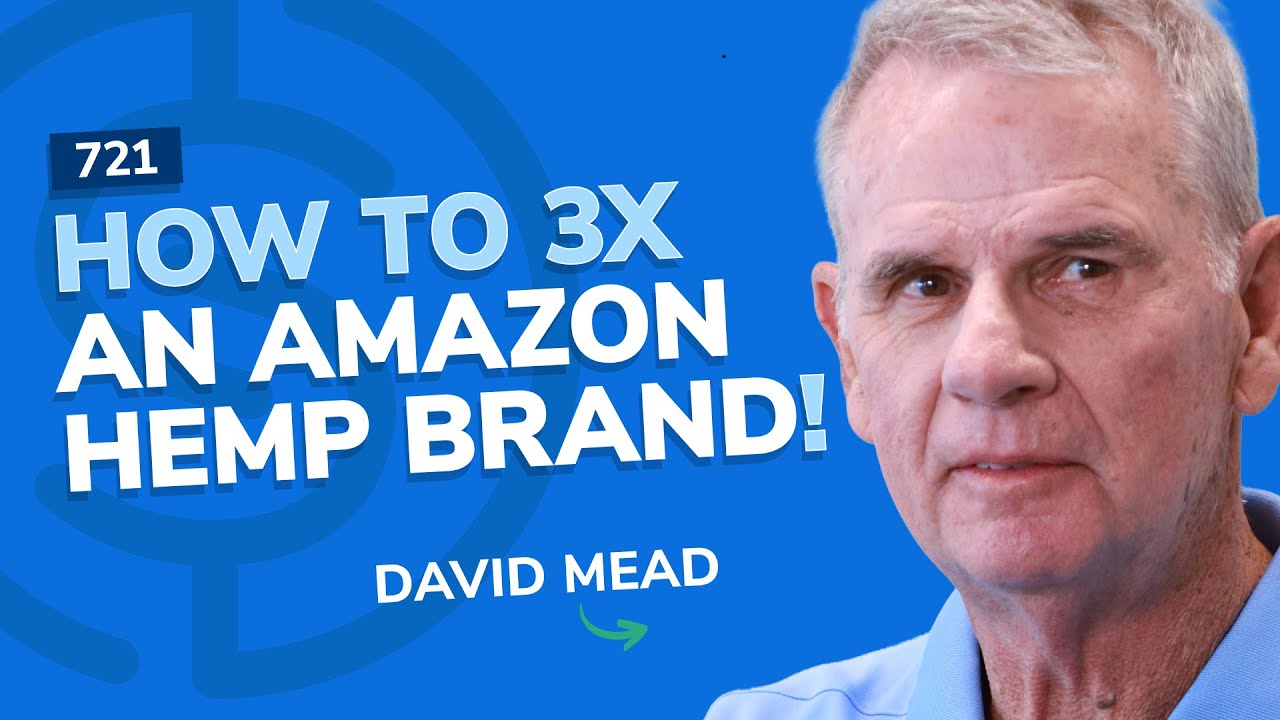
#721 - How to 3X an Amazon Hemp Brand!
Summary
An Amazon hemp brand owner shares how leveraging Helium 10's advanced tools and a team of experts has positioned him to potentially triple his sales, highlighting a 35% off Black Friday deal for upgrading to Helium 10's diamond plan, which includes access to tools that can significantly boost e-c...
Full Content
#721 - How to 3X an Amazon Hemp Brand!
Speaker 2:
Today, we talked to a brand owner that got into e-commerce almost 50 years after he entered the workforce. He's had steady sales as a six-figure seller, but with the help of a team of experts,
we're going to show you how he's now on the way to 2x or even 3x his annual sales. How cool is that? Pretty cool, I think. You ever had FOMO when we talk about all these money-making features and tools that Helium 10 has?
Or maybe you're a platinum subscriber. You want to level up to get the advanced historical Cerebro feature or the advertising things that we have on the diamond plan. Well, this is a deal you've been waiting for.
For Black Friday all the way through Cyber Monday this whole week, you can save 35% off up to 12 months of platinum. You don't have to pay for the full year in advance.
You can just do it month to month or 12 months, 35% off upgrading from platinum to diamond. Biggest deal of the year. Now, the extra money you guys are going to make by using the tools that Helium 10 has,
more than what's going to make up for what you pay on the subscription. So if you don't have an account yet, you want to sign up to Platinum, make sure to go to h10.me forward slash Black Friday. Same link.
If you already have a platinum account, you want to sign up for the diamond account, h10.me forward slash Black Friday to save 35% off up to one year. And you know what?
As an added bonus, anybody who signs up for the diamond plan on this deal, and then you mentioned to customer service this podcast or that you heard about this from Bradley,
I'm going to hook you up with my personal sourcing agent that I use to get all of my Amazon and TikTok shop products in China. So what are you waiting for? H10.me forward slash Black Friday.
Hello everybody and welcome to another episode of the Serious Sellers Podcast by Helium 10. I'm your host Bradley Sutton and this is the show that's a completely BS-free,
unscripted and unrehearsed organic conversation about serious strategies for serious sellers of any level in the e-commerce world. And we've got a serious seller here, first time on the show,
And he is another one in our series of contestants, I guess you could say, on our scale stories where they have graciously come and opened up their business and information and opened themselves up for help from our mentors.
And we're going to be following his journey along the way as he's trying to 2X, 3X or even more his sales. So David, welcome to the show today.
Speaker 1:
Good to be here, Bradley. Nice to see you.
Speaker 2:
Now, you are currently down here near me in San Diego, right, or Orange County?
Speaker 1:
Yeah, South Orange County, yep.
Speaker 2:
Okay. Where were you born and raised?
Speaker 1:
I was born in Battle Creek, Michigan.
Speaker 2:
Michigan. So, a Wolverine fan?
Speaker 1:
Yes.
Unknown Speaker:
You said that hesitantly.
Speaker 1:
What goes along with that is an anti-Ohio State fan that just comes in just like Ohio State hates Michigan.
Speaker 2:
You can't be a Padre fan and a Dodger fan. It definitely comes from an Auburn or an Alabama. I get it. Where did you go to college?
Speaker 1:
I did get my MBA at USC. That's my.
Speaker 2:
Oh, well, that's interesting. Where'd you go for your first four years?
Speaker 1:
I went to Cal State Long Beach.
Speaker 2:
Ah, so you went from a, oh shoot, hold on, hold on, Cal State Long Beach. I like do sumo events there at the pyramid all the time. It's like something like the beach or something like that is the logo or the mascot. The beach, there we go.
And then you became a Trojan after that. Okay. Excellent. Excellent. And what did you, what did you major in over there?
Speaker 1:
My undergrad was business and then I got an MBA from USC.
Speaker 2:
Alright, so right after that, did you get into the business world or what was your gainful employment when you were a young college student?
Speaker 1:
Back then, I worked in the electric utility business. I worked for a company.
I had just come back actually from an assignment overseas working in Brazil building a power plant down there and then got assigned to Southern California Edison plant around Long Beach in Turtle Island.
And then went and finished my undergraduate studies at Long Beach and went to work for Southern California Edison actually.
Speaker 2:
Whereabouts in Brazil were you?
Speaker 1:
A place called São Louise do Maranhão, which was right up by the border, right up by the equator actually, pretty far north. Pretty primitive area.
Speaker 2:
Did you pick up Portuguese along there? Oh, very impressive. All right. Excellent. Excellent. And then you went and worked at the San Onofre power plant or something?
Speaker 1:
No, I didn't work at San Onofre. I was in the generation business, the part of the business where you generate power. And then halfway through my career, I went into the distribution business.
Which means all the towers, poles, everything about distributing the electricity to your house. When I retired, well actually several times along the way I had people that worked at San Anon.
When I retired, all of the distribution and transmission business was under me.
Speaker 2:
So how long did you work before retiring?
Speaker 1:
I was in that business for probably 43, 44 years.
Speaker 2:
My goodness, you must have started when you were five years old.
Speaker 1:
I was young when I went to Brazil, yes.
Unknown Speaker:
All right.
Speaker 2:
So then you retired and I think this is one of the keys of why you're Story really resonates with a lot of the viewers of scale stories is, you know, people think about e-commerce like only if you're in the era,
like when you were just a recent graduate or, hey, you're into tech or something, you know, back then and, hey, you know, that's who should be getting into e-commerce. But here you had a full, you know, career that spanned decades.
And what did motivate you to get into e-commerce?
Speaker 1:
You know, it is interesting because when you, when you retire, you start thinking about what, you know, of course I play a lot of golf and I do like to do that. Can't golf all the time.
I was working on my house up in Washington with my brother and, um, We were doing a remodel of the bathroom, pretty extensive work, and my shoulder was sore.
My brother said, ìHey, I've got some stuff that I think works pretty good.î I tried it and I said, ìMan, first thing I said,î and this is what a lot of people say when I give them my product,
ìIs it supposed to work that fast?î because it seemed to relieve the pain pretty quickly. He said, ìI've got a friend. He just started this company. It's a hemp-based pain relief formula, something I haven't really heard much about.
I've heard about hemp and its values, but I haven't thought about it. So he said I think they're looking for investors. Now being recently retired, you're kind of in the investment world.
You have money that's set aside to invest, to provide you income. So it wasn't something I really thought too much about, but I said I can do a little bit. Maybe I'll get involved. As I did, The fellow that created the company was a doctor.
He really knew a lot about the product, but I started getting more involved with the business. A career of managing projects and people and financials And in my degrees and the things I knew, I saw that there were things I could add.
So that just got me more involved. I didn't know a lot about Amazon. I knew we were starting to sell on Amazon. I didn't know how you did it. I didn't know much about even producing the product.
Speaker 2:
What year are we talking about?
Speaker 1:
We're talking about 2016. 2016 is when I first got going with it. So I've been nine years with this company now.
Over some time I took over more and more of the management of it Invested more money saw where there was opportunities and eventually got to a point where I felt like if I wanted to continue to do this I would Offer to buy out some people and kind of take over the company.
So that's what I did. I saw that it had a lot of potential and Through some financial dealings, offering to buy out some people, I felt like if I could get the whole company, it would be worthwhile for me to put more effort into it.
That's what I did.
Speaker 2:
This is an interesting path. Oh my goodness has never happened in the history of e-commerce but this is one path where hey, you know, yeah, sure you can go and start from scratch an Amazon or online business, you know,
finding some new product maybe you've never had before or You could actually go and potentially looking to invest or purchase an existing brand. There's not just one way to success and you picked the way that worked for you.
The part of it I like is that it was a product that you yourself had experience with. I've always said it's great. When you're trying to start a new product, sure, it'd be great if you could be passionate about a product,
but the odds that where the opportunity is something you're passionate about or know about is very low.
But with existing businesses, you can literally pick something that already is successful or has some kind of established sales and who knows, maybe it is something that you happen to be passionate about.
Now, this product line comes with I don't want to say stigma,
but there are issues with it that has given you or given the brand some troubles over the years and the fact that it's a hemp-based product but doesn't have CBD in it because that's not allowed.
Talk about the product a little bit and the product line.
Speaker 1:
The base product is hemp seed oil, which is made from the seeds. And you're correct, no THC. There's like three steps in that particular type of product. One's a hemp, one's a CBD.
Now CBD is also, is low, so low in THC it's actually legal in all states. It's not a THC product. It's not marijuana. But it does have traces of THC so that's a little harder. Amazon doesn't allow CBD to be sold on its site.
I sell it off my website everywhere because it's legal. Amazon is a little more conservative around that. But hemp seeds is fine. If you get into the THC then you've got to be licensed.
It's illegal in some states but a lot of states have already legalized that. That also makes it harder for you to advertise in some cases. Facebook, Google are careful about that. Banking has been careful.
It was a chore to do that for a while and now I have a bank that's a normal bank that does that. I pay a little extra. I pay a little extra for them to monitor my website, make sure I'm not selling something I'm not supposed to.
It's been a great relationship. I was able to work that out. We've had some things with Amazon, not so much about the hemp like everybody else who sells on Amazon. You have to make sure that your wording is right.
I can't say it does things it's not supposed to do. It's been a give and take with Amazon, but we've been pretty smooth for the last three or four years, so it's really good.
Speaker 2:
When you bought the brand originally, what was the sales breakdown? Was it 100% Amazon? Did a certain percentage come from the website? Were you on any other platforms at the time?
Speaker 1:
Yeah, let's just say that it's greater than 95% been Amazon since it began. We do our website. Like I said, it's sometimes hard to advertise for a website. The thing about Amazon is Everything is taken care of, right?
I mean fulfillment, advertising, returns, everything. A lot of this, you guys, people watching this, you know this for a fact, but as I started to get into it, it was pretty amazing.
Then all the data they give you and how you can manage your stuff. Mostly, we did retail for a little bit. I think we were a little early with the retail.
There wasn't much going on in stores and that didn't really work out as well as it could. I do a little bit on eBay, not much, but just like the product to be out there if anybody's interested and then my website does get some action.
Speaker 2:
Now, I'm just wondering, what was the structure? I don't need details or anything. For people who aren't familiar with buying a brand and things like that, how did the structure work?
Was it just like a one-time payout and you just get everything? Or was it kind of like a joint venture where the old owner still had a little stake?
There's no one way to do this, but just out of curiosity, which path do you take in this endeavor?
Speaker 1:
Well, it kind of starts with the fellow that started the company. He's a podiatrist, Dr. Randy Nordyke. He had friends that were interested, so he ended up with about 20 investors.
There was a whole bunch of people that I had to communicate with and deal with. Small investors. It's an LLC, so they're all silent investors. Randy, of course, and his son were the majority owners.
And so I started buying it until I got up to where I was like number three on the list. Right. But eventually I was managing. Now we also were one of the one of the partners was the person who owned the store on Amazon. And.
After a while, I said, you know, there's just and we had borrowed money from our investors and at some point I said, you know, there's enough debt here and enough people that I'm not sure we can make this work.
Looking at it as a business, I said, I've got to do something. If I'm going to stay involved, I've got to do something. So I made an offer to buy out people at reduced amounts, certain cents on the dollar.
Which was a good deal for them because the company had some issues around whether it was going to be viable going forward. I said, if I can do that, then I think I can make this thing work. The debt will be gone. There'll be less investors.
I'll have a bigger share and more responsibility, of course, more interest in going forward. And ended up buying out all but a few. One of the people that stayed involved was Randy.
Randy's the guy that knows the products, knows how to, I mean, as we've been going through this, we're talking about doing new products. That's his passion. That's what he loves. That's what got him started.
It wasn't to run a business as much as it was to build these products. So that's a good place for him and he's still a very important partner for me.
Speaker 2:
Okay, interesting interesting now the your top seller is this roll-on product was that product one that it was already selling when you took it over or that was like a new product you had added after you bought the yeah,
we sold a cream and a tube squeeze to Cream that was the normal one and looking to add some some other products and.
Speaker 1:
we came out with a roll-on. The roll-on very quickly started passing the cream and now represents 90% of our sales.
Speaker 2:
One of the reasons why you put yourself out there to be a candidate on this series was your sales for a couple years had been kind of stagnant. I've got some rough numbers here from Helium 10.
Let me go ahead and And see if I can pull some of it up here. Our last year looks like was hundred about 140,000 might have been something you know similar like 2023 and and you know this is not you know any numbers to be.
To be embarrassed of that with only one major skew and one product that does 5-10% of the main one, that's actually pretty good. But I think you understood that you were just maybe scratching the surface,
especially the fact that you were only on Amazon and weren't even using a lot of the advertising at Amazon's disposal. And so you're like, hey, is there a way that I can increase the sales?
And so just a little bit of a long story short, when we look at this year's sales, We've already, you know, since your first episode and since we first started doing things right here,
you know, a couple of months before we filmed that first episode, a couple of things that we did this summer in upgrading your pictures. And we are already at looks like a hundred and year to date hundred and fifty five thousand.
We haven't even hit the main part of Q4. So we have already surpassed. You know, by like 10% or so your sales. But the thing I think that's interesting about this is for a decent part of the second half of this year,
some of the things that we did to improve your account. It made your sales go up so much that you have been out of stock. I know you're out of stock right now of your main role but how long earlier this year were you out of stock?
Like was it 30 days? Was it 60 days?
Speaker 1:
More like 60 days, yeah.
Speaker 2:
So total between that first out of stock and the out of stock in the last few weeks Are we talking 60 days or even more than that?
Speaker 1:
Yeah, more than 60 days, 75 days probably now. Well, I've been out about a week now, so almost two months before and that's the key. I mean, you just talked about trending, right?
I was probably in the 130 one year and then 140, so I had really good trending around what was happening, right? Then you got started and messed it all up.
Speaker 2:
In a good way but it's not that i mean like that i mean. It's it's hard to project but if you had enough stock you and the reason.
This is not great to run a stock but it's a great problem to have as in the reason is because your sales are just flying through the roof. I mean for like three, four years, you had such a predictable business.
It was like clockwork for your orders and then all of a sudden, we tweak a few things and sales are booming. But I would say it's probably reasonable to say that this could have been around 200,000 by now,
which has already been a 40-50% increase without the year even being finished. And so who knows? We only had half a year to do some of these edits and you could have potentially hit 225,000, even 250,000. This is the heavy time of the year.
So this just shows What a few little tweaks can do and we have just scratched the surface on our kind of like refresh of your brand. Now, on the show, you came in and were very open and if people watch the episode,
by the way, guys, if you want to watch this episode more, just go to YouTube, type in Helium 10 scale stories, and you'll be able to see the episode and learn a little bit more about David. But talk about your experience on the show.
You were very vulnerable and saying stuff, you know, like when they would say, hey, why Haven't you done a brand story on your page? You're like, what's a brand story? I don't even know what that is.
But talk about your experience a little bit. What were your thoughts on going through that process?
Speaker 1:
Like I say, I didn't come into this knowing a lot about e-commerce or this type of sales or Amazon at all. So I was learning a little bit as I went along which means you learn certain things and I didn't know enough even to dig in.
Very impressed with the detail and how quickly When you guys were speaking languages, I didn't understand. I mean these concepts were good, a lot of acronyms that I didn't get but it certainly made a lot of sense.
I mean talk about the brand story. I knew that I had trademarked the company and I knew that I got in the brand registry and I saw a little blip because of that but I didn't know What was behind the curtain? What did that mean?
How can it grow? I've talked several times about the name of the company. My company is InMotion Products and so I think about products. What more can I do? We got into some detail about what's the best way to figure out.
I want this company to sell products that provide some type of relief for people. I like the fact that I'm doing that. I think I told you in the original story that the business I was in was a utility business.
I felt like that provided a very essential thing for homes for people. I like the fact that I wanted to build this company's story around that. How can we make products?
With that in mind, the mentors start looking to see in that realm, what might you do? We've come across a couple that I'm sure we're going to be able to bring to fruition and they should be pretty successful.
That overall experience, I was sort of wowed. I think one of the things I said as we got finished was, I bought a bunch of people out, which left me kind of alone. I'm running the company.
There's investors, but they sit back and hope I'm good. Once we got out of that room, I felt like I had four or five other people helping me. That's the way I look at it.
Speaker 2:
Some people might be like, well, why is this even noteworthy?
But there are so many brand owners out there who get so haughty about their own brand or I know what's best or why would I invite somebody else to look under the hood of my car here.
But the humility to be able to say, hey, I don't know everything. There might be some people out there who know a little bit more about something even though that's not their brand.
So important because For a few years, your sales were pretty steady, not completely stagnant, but it wasn't like whopping growth where you ran out of stock like it is now. But you're like, hey,
I can see that there's probably some people out there who might know a little bit more about Amazon advertising or what's good for my listings and stuff, so I'm open to it.
So my advice to anybody listening out there is, hey, be in that same boat. Be open for having people help you. Don't just trust anybody off the street or say, oh yeah,
somebody Slid into my DMs on LinkedIn and offering me optimization services. Let me go ahead and trust him and give him the keys to the kingdom. But no, like if an opportunity for somebody who's, you know,
trust in the industry comes around and makes sense for your business, by all means, you should be open to that, like David here.
Speaker 1:
Let me give a little preaching, yeah. It's a lesson in leadership, right? I mean,
just because you're the one that owns the company and you're on the top of the chart doesn't mean that there aren't a lot of other people that see things from a different perspective and can help, and you need to accept that help.
When I left there, that's what I felt like. Boy, I'm lucky to get this help.
Speaker 2:
Yeah, yeah, very good. Very good point. Now, the goal, you know, the mentors were like, hey, let's see what we can do to 2x or even more your sales. And so the first path, which we have done some of it, not even all,
is like, let's optimize your existing listings. I mean, you've got products that are working, but have you completely tapped it out and your potential? And the answer was overwhelmingly from the mentors, no.
There's still a ceiling here that we can go. And so the very first thing we did even before we filmed that was like, hey,
let's do a new photo shoot on your main products and see if we can improve the click-through rate and conversion rate just by changing the main images and updating the A-plus content. And so that first one, that right there,
just that was the reason for the big increase, you know, 20% or even more some days, 50% in your daily sales. And it's just the numbers, you know, like I believe, you know, we go through it in the episode,
but I believe like your Your click through rate meaning that the number of people who saw your product in search results and then clicked it was 12% which is which was not bad but then it went up to like 16 17%.
And that one move that by itself. Represented about a potential $20,000 increase, you know, looking over for a year on sale. And so guys, I hope that, you know, kind of like shocks your system there that when we talk about improving a brand,
it doesn't have to be. Oh my goodness. We have to completely give a complete revamp to see any kind of traction. Small things like that can have big impact, but on the flip side, you hadn't launched any new products.
Talk about the process that we went through trying to actually find a couple. I think we did more than one new product that you are going to hopefully get out there and launch.
Speaker 1:
Me and Randy had talked about different things and I think we gave the mentors a couple of ideas and then they went out and started looking at Given the guidelines of what are we looking for,
what can my manufacturer produce and what would make sense, I came across the amount of research you guys were able to do very quickly to say that this looks like this is a product that's out there. People want it.
There's a way to get into that market. Even some ideas around how we would get in being a little bit different, you know, differentiating the product a little bit.
One in particular, the cream versus there's not very many that are doing a roll-on type. So that's probably the way to look at it, which means that we had to make some changes to the product itself because we knew it would work,
but we had planned on it one way. So I Yeah, I just think there was a lot of quick data available. And then it was pretty easy for the three mentors and me to agree that yeah, that's these are the ones we're going to go after.
And that's what we're working on to do.
Speaker 2:
And so that's, again, that's another path. So this applies to a lot of brands out there. Like, hey, what do I do if I'm stagnant? Number one, what are you currently doing? Can you make tweaks on images?
We didn't even talk about that in this episode, but making big changes to your advertising. We've been working with Vincenzo from Ecompsy on that, I believe.
We're launching first-ever sponsored display campaigns and some other things that we're doing. And then the next thing is, all right, what about product line extensions? You've got an established brand.
And so we came across like a couple of different product extensions and one was in the InMotion hemp brand, I believe. Is that the one where like the menstrual cream that we were looking into, right?
Speaker 1:
One is to kind of modify and upgrade that formula for menstrual cream.
Speaker 2:
Yep. All right. So completely different path. Now this is not. You were using the other product because if you're golfing now, now you're going in like a new direction and that's very valid like guys don't just oh,
I can only sell products that I would use for myself. I don't think you have much use for menstrual pain cream, but you understand that it's a problem for half the population out there. So nothing wrong with doing a product for that.
And then there are some going back still to your original products. There are some things that we worked on like we put a coupon, you know, that was from Jason from Prime Team was like, hey,
you need a A kind of incentive for people to get on your subscribe and save because you can get people in continuity and it's going to help your long term LTV. So we worked on that.
And then one of the other problems you have, like you said, being a hemp based product and actually very interesting,
we were supposed to have somebody from Amazon I'm on your episode as one of the mentors but last second we had to switch them to another episode because they could even be on your episode due to the country that they were in.
Can I have anything to do with these products and so we had to switch mentors around last second because they could even be it. There's a lot of problems with your products 100% legal in the United States, 100% legal on Amazon USA.
But there are other things that have to do with advertising and other marketplaces. We've tried to get you on Walmart for a while, but Walmart just wasn't having it.
So we're like, hey, maybe we can launch another brand that's nothing to do with hemp. But, but potentially, you know, so, you know, but, but potentially, you know, you could start getting some traction on.
And so, so we chose another product that you were looking into that we're going to launch on another brand. And then the last thing that we're like, all right, this is what the path,
the roadmap is for, for you was, hey, you're 95% Amazon business. What are some other marketplaces? You remember the first marketplace that we're looking into getting you on? Yep, TikTok shop.
So let's see if they allow it and what's going to happen there. But this is the same thing for a lot of people out there. If you are not on TikTok shop, And you have like a demonstrable product,
you know, something that really kind of would come across in video for creators to make something unique about it, like pain cream and stuff is definitely a topical, you know, product would definitely account for that.
It's definitely worth a try to try to get on TikTok shop as well. What is your hopes? You know, you're not Nostradamus. I'm not, but When we have you back on the podcast, maybe in a year, looking back at your 2026 sales,
do you have a fingers crossed number in mind for what you'd like to be able to say that you hit across all platforms at the end of next year?
Speaker 1:
I like running the business and these are all chances you take. I took a chance to get going and I took a chance when we added a product. I'd love to get back on Walmart.com. I think we did that for a month and there's no reason why we can't.
There are some issues but I think we can get through them. I'm very excited about TikTok Shop. We got approved to get going. Like you said, we have to get the product up on there.
My issue of inventory right now is an issue, which I'm sure I'll be able to work through that. I can say just for theatrics, I can say I want to double, I want to triple, but it's more about growing.
One of the fundamentals of business I learned at Cal State Long Beach was grow or die. You can't just sit. I'd like to be competitive in this business, be in the group of people that are selling all the different types of products,
in the top of that group, being successful in each of the products that we do. I sell the company possibly. A lot of the guys that build are entrepreneurial and buy these things, but you have to build a company that's worthwhile.
People look at it and they think it's worth something. I'm not saying I wouldn't do that. I'm not saying my daughter might inherit it. I don't know. Right now, it's enjoyable. It gives me satisfaction. I retired.
I was very lucky in the utility business. I'm okay. This is something that I would like it to be a real business that runs and makes some money and people that are involved with it are getting something out of it.
Speaker 2:
Sure, sure, yeah. And the process is fun too. I know you're one of those guys who's checking your daily sales as much as you can. I know you're on vacation last week. I'm not sure if you were doing it then, but hey, all right, wow.
I've seen you text me like, oh man, I hit $1,000 today in sales. That never would happen before.
Speaker 1:
We hit a day since it started that was three times my average last year. It's kind of crazy. Like you said, I don't know what it would have been if I hadn't have stocked out, but you can search or calculate it and we reached...
Speaker 2:
But it's fun, right? Yeah, it is. To have days like that, to be looking at the numbers and excited like it's the middle of the day. Whoa, look what I'm at at the middle of the day. The whole process is fun.
I'm not trying to knock on anybody's careers, though. These are the kind of feelings you might not get if you're working as an accountant or mortician or you're just crunching numbers or something.
You're just going there, punching a time clock, being a brand owner.
Speaker 1:
Even no matter where you are in a really large company, you have some effect and some influence, but it takes a lot. It's a network. You feel like it's yours, right? I mean, that's, I enjoy it. I make the decisions.
I live and die with whatever I decide.
Speaker 2:
All right. Well, you're out of stock on your main product right now, but everybody else out there listening, like you got one of the other products, you want to try out his stuff,
just look up InMotion Hemp on Amazon and, you know, I'm sure he'd appreciate a purchase, especially if you're a golfer out there. Like David or have any other chronic pains, after I hit 40,
I definitely know all about that when I'm playing basketball and stuff. So give the products a try and watch his progress. You guys can use Helium 10 to see the estimated sales of what he's doing out there.
So we are definitely hoping to double the sales. We'll go ahead and do some theatrics here. Maybe even 3x the sales across all platforms. We'll definitely have you back on the podcast, maybe multiple times, chronicling this journey.
And again, guys, go to YouTube, look up Helium 10 scale stories and find his episode. And learn a little bit more about the process because this isn't just theatrics. This is real life, guys.
These tactics and strategies we're using on the InMotion brand, most of you guys out there are going to be able to use. It doesn't matter that if you're in the topical business or you're selling coffin shelves like me or something else.
These are the steps you guys need to do if your sales start getting stagnant and you want to improve your bottom line. So David, thanks again for being open to sharing your story and your brand with the world out there.
And we look forward to helping you more on this journey.
Speaker 1:
Thank you, Bradley. I really appreciate it.
This transcript page is part of the Billion Dollar Sellers Content Hub. Explore more content →