Ecom Podcast
60% of Amazon Shoppers Use Rufus, and Those Who Do Purchase 2.74x More: Ian Simpson of Sensor Tower on Tracking 60,000 Shoppers
Summary
New Frontier shares actionable Amazon selling tactics and market insights.
Full Content
60% of Amazon Shoppers Use Rufus, and Those Who Do Purchase 2.74x More: Ian Simpson of Sensor Tower on Tracking 60,000 Shoppers
Speaker 1:
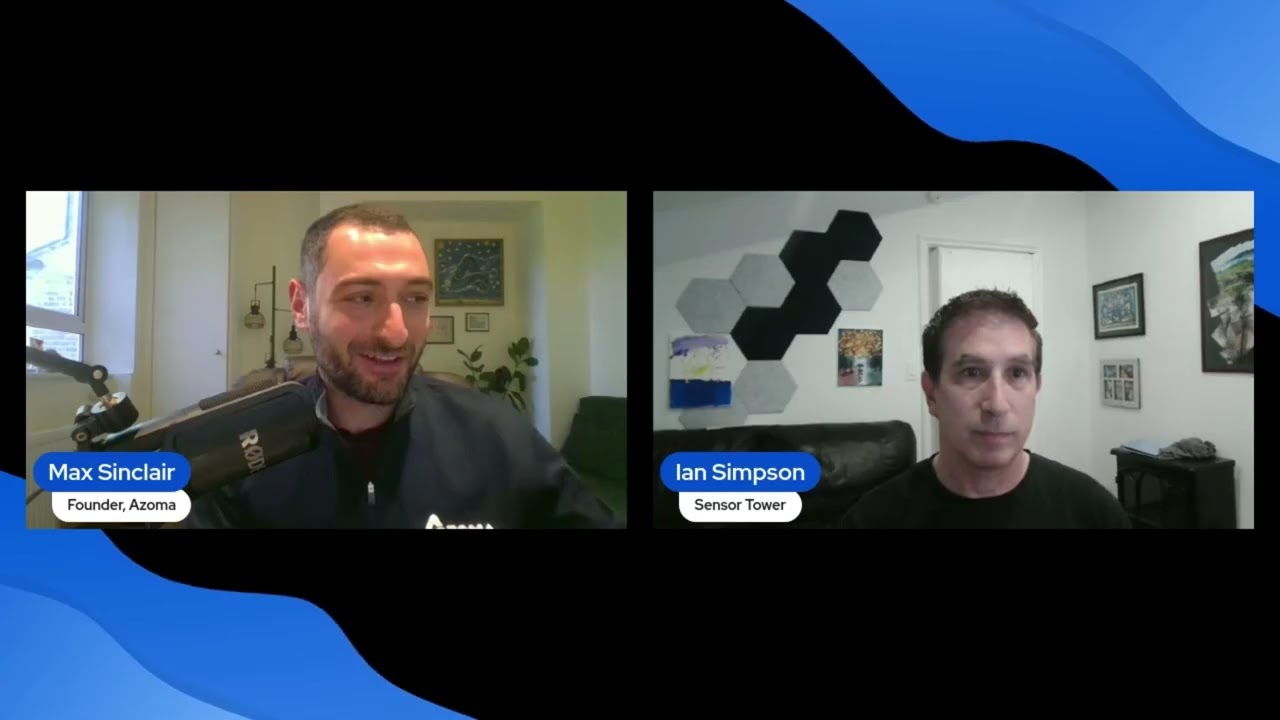
Hello and welcome to The New Frontier. It's been a while since we recorded these, but we are back with an absolute banger of an episode because we have my friend Ian Simpson here from Sensor Tower,
who is going to share some of the most earth-shattering new statistics about how Amazon shoppers are using Rufus in the US. So, Ian, how are you?
Speaker 2:
Good. Thanks for having me.
Speaker 1:
I'm really delighted that you could join us and that you could use this as a platform to announce, I think, what is going to cause ripples through our industry.
So to just dive straight into it, you guys followed 60,000 real US shoppers to collect data.
And I want to get into the methodology because I think lots of people are going to have questions about exactly how you track this and what it means. But let's just start with the headlines. And there's two headlines.
The caught my eye when reading your report. Number one, shoppers who use Rufus 2.74X more likely to buy than those who don't. And then secondly, 60% of heavy users, and I don't know, I'd like to understand what a heavy user is,
but 60% of heavy users of Amazon include Rufus in a shopping session. So over to you. Let's take the first one first and let's dive into what it means.
Speaker 2:
Yeah. So just to, let me flip it around. It's of the heavy users. They use Rufus 60% of the time. That's what that is. So they're like. What we're what we are what we have discovered is that it is 2026.
It's people have been using ChatGPT or probably now Claude or Gemini on their phones all over for the last year and a half. It has become standard, at least for a certain subgroup of people.
The consumer is trained on how to use AI at this point. And so when they go to a place like Amazon that they've been going to for the last 15 years,
and they see an opportunity to We're here to help you get a new experience and possibly a better experience with an AI chatbot that has all the promise of really enhancing that Amazon experience that has not changed dramatically in that 15 years.
They're going to start using it. They're going to figure out if it's valuable. And if it is, if it surfaces the products that they want, then they're going to keep coming back to it.
What we are learning is, and this is not news to the folks like you who've been in this industry for a long time, but what the data is clearly showing is that people who shop a lot,
heavy users of Amazon, I'm talking about people that like once or twice a week, Or maybe even four or five times a week are going to Amazon to just get something, which we all have had weeks like that.
Some people have that week every week. Those guys are looking for a specific product when they come to Amazon. Amazon sells everything. They know they can get everything. And so they're looking for a very specific thing.
And Rufus now we can see is really streamlining how people do that discovery. And so they're taking full advantage.
Speaker 1:
That's crazy. So a heavy user of Amazon, 60% of those are now using Rufus. That's what your study found.
Speaker 2:
That's right.
Speaker 1:
And do you have a definition of what a heavy user is?
Speaker 2:
Yeah, so a heavy user is someone who is using Rufus, who's on Amazon. I'm going to do the reverse math on this, but basically like once every three days or more. And there are a lot of those people.
Speaker 1:
Wow. Okay. So the top adopters of Amazon use Rufus. That, to be honest, actually makes sense to me. When you explain what that means, it makes sense to me that those, I imagine they're buying the largest percentage of,
there probably is probably some kind of 80-20 rule in some degree split. So the biggest users probably drive a lot more of the revenue for Amazon than those who kind of visit infrequently.
Speaker 2:
Here's what I would say about that. I have one of those power users in my family. She's my wife. We have Amazon sitting outside our doorstep probably five times a week out of seven and days, multiple packages.
And there's always something that, that people need and Amazon just enables it. And we have four kids. So every day there's something that we need and Amazon enables it. And whenever we talk to our friends.
They all have the same problem that we have, which is how do you break down all the Amazon boxes? There's just so many Amazon packages.
So I really do think that this consistent everyday user is an archetype in our society at this point and not just an anomaly in the data. And our data shows that. We have a lot of people in that category.
Speaker 1:
So we'll get on to how you collect this data in a second. Yeah, but firstly that that kind of explains the second stat, which is mind-blowing and huge adoption that I think many people would not expect.
Yeah, we've been banging this drum for years, like I think it's gonna shock many people. But then the first stat is even more mind-blowing that shoppers who use Rufus are 2.74x more likely to buy it than those who don't.
So do you want to just put some color there?
Speaker 2:
Yeah, so I'm gonna throw out a bunch of averages. On average, right now, the average shoppers, so I mean like anyone, any frequency, if they use Rufus, they're gonna convert about 40% of the time.
And if they don't use Rufus, they're gonna convert about 20% of the time. Those power users can convert up to 50% of the time. So that's where you get that 2.5, 2.7 over, over the 20% of the time.
So you get, you get this like massive bump in conversion. And we've been talking about this now for almost six months. And the big question that people have is, are we talking about causation or correlation?
Is Rufus actually causing higher conversion rates? It certainly looks that way. But is it also that People are just more likely to use it if they're more likely to buy. And what we've been looking into is that specific question.
We're really trying to dig in on that. And what actually, I worked with Christian on your team and we actually collaborated a little bit and discovered that based on our data,
it looks like it's the dedicated buyers that are using Rufus because they want to buy. So of course, there's going to be a higher conversion rate baked in. But the headline is not that Rufus is supercharging purchase.
It's that purchasers are supercharging Rufus. Like they're jumping in. They want something. And Rufus is right there to help them get it. And so they're more than happy to enable it and use it.
Speaker 1:
Yeah. So you're, I love the way you frame that. So almost as you're saying the causation versus correlation is the wrong way to think about it because those who want to buy are using Rufus.
So if you're a brand that wants to sell for Amazon and you want to sell to sellers who are most likely to buy, you need to be thinking about your Rufus strategy.
Speaker 2:
No doubt. There's just no doubt. Like your products, like you're the people who are most dedicated to finding your product. We are using Rufus to find it.
Speaker 1:
Yeah. I think that may be the most explosive introduction we've ever done to a podcast ever. I mean, that's probably people's minds are whirling.
So let's take a step back from those extraordinary stats and maybe just ask what is Sensor Tower? How'd you collect this data? And yeah.
Speaker 2:
Yeah. The short answer is Sensor Tower is a data intelligence company. We track the digital economy. We're about 15 years old and every year we expand the pie of what we are able to see.
We do that through a gigantic panel of people worldwide who've given us permission to, as they're using their device, whether it's a mobile phone or their computer or a smart TV,
connected TV, to pick up on the signals that they're getting and share those signals with us. We track all digital advertising basically everywhere in the world across Facebook, all social, connected television, display, retail media.
We track search in retailer establishments like Walmart and Target and Instacart. We track a huge amount of our data comes from the mobile world, so not Totally tied to this,
but because our panel is using their device every day, our core product, which is called Sensor Tower,
is our mobile intelligence platform where we are essentially reporting on what's happening in the world of apps to a huge customer base. In fact, our biggest competitor was Data.ai. We acquired them. A year and a half ago,
we have this incredible team of people that are really dedicated to getting this data out there and to expanding it. And we have this incredible set of customers that come from the customers that we've acquired over the years,
plus that we've acquired through acquisition. And, and so we have a tremendous customer base that's using it. My role is the SVP of innovation. It is my job to. Work with clients,
identify data that we pick up from that panel that may not yet be productized in our platform and bring it to light. Amazon, Rufus, and frankly, like a ton of the activity that's happening in the world of AI,
we are able to pick up those signals, but we have not yet productized them. We have a team that's working to productize them in the product. And my team is working to bring them to light with clients and partners.
Speaker 1:
Yeah, I think you guys are doing an amazing job, and I'm really excited for everyone listening to get their hands on the full presentation you've made. But on these 60,000 shoppers that you've tracked,
how are you sure that they represent the full basis of the millions of Amazon shoppers that are in the U.S.?
Speaker 2:
So the reason we chose these people in particular from our panel is because they've been in our panel for almost 18 months at least. As a panel operator, I won't go into the nitty gritty details, but as a panel operator,
people that use our apps, they opt in, sometimes they opt out. They can choose whether they want to share data or not. And so people do come in and out of our panel over time.
These people were chosen because they have not left the panel at any point. So we have this dedicated group of people that we could actually track their activity over the period of 18 months.
I want to say everything's very privacy compliant. We don't know anything about them. We're just picking up these shopping signals and these ad signals.
And we're able to get a fair view of what these people are doing when they're coming into Amazon and doing their shopping. And so we've been able to map out when they use Rufus, when they chat with Rufus, when they We make a purchase.
We're not looking at the actual purchases. We just know that they've made one. And then we piece it back together to understand what's happening. 60,000 people is a lot of people.
We've cut the data 10 different ways to make sure that we're being consistent. And these trends are holding across a ton of different cohorts.
But we chose this cohort as the one to go to market with because it's such a robust story about who they are and what they represent.
Speaker 1:
100% and I think as our good friend Jeff Bezos says, if your anecdotes and your data disagree, check your data. And anecdotally, it fits with my own usage and the conversations that I'm having.
You mentioned there's something very interesting, kind of you're monitoring people both on web and app.
So do you want to talk about actually the similarities you saw on Rufus Adoption based on those different methods of searching for products?
Speaker 2:
Yeah, so there are different platforms and they actually have different adoption mechanisms. And we also have different tracking mechanisms. So again, I don't want to dig in on the details. I'm happy. We're very transparent about how we do it.
But what we pick up on the desktop is a little different from what we pick up on the mobile app. And there's basically two distinctions that I have when I think about this.
I have the first is, are they interacting with Rufus in any way, shape or form? Are they tapping on their mobile? Are they tapping on the Rufus icon? Amazon is serving up preloaded questions.
People use it from the product page when they are investigating a product. There's an opportunity to use Rufus to read all of the comments and reviews. There's an opportunity to use Rufus. There's lots of opportunities to use Rufus.
A big portion of our data comes from the question of, did they have an interaction with Rufus at all? And another part of our data is, did they actually have a conversation with Rufus? Did they type in something and hit enter?
And so we have these two different subsets of the data. And what is miraculous, I don't know if miraculous is the right word, but what is just awesome to see because we're at so much scale is just how similar those results are,
whether we're talking about web or Android. And with phones, we see so many of the exact same patterns holding across both device sets because we're able to pick up on so many different people, they balance out, if that makes sense.
Speaker 1:
Yeah, incredible. And it is amazing to see that in your report, we have basically the same adoption of Rufus, whether a customer is on the web or the app. And as you say, it makes sense, right? It's very hard to avoid Rufus these days.
I think the biggest The challenge is that shoppers probably don't even know it's called Rufus. They're probably just searching the way that they have always searched on Amazon,
and they're probably not even realizing themselves that they're now using like an AI shopping assistant, because as you say, it's so integrated into our lives now. We're just used to it.
So I would imagine if you surveyed these 60,000 people and said, do you use Rufus? You probably get a very low percentage saying yes, because they probably have no idea what it's called.
Speaker 2:
I think that's probably true.
Speaker 1:
But actually, when you look at the data, absolutely, they are using this kind of AI shopping agent in multiple different ways. Yeah, I know. Is there any other insights that you wanted to share?
Speaker 2:
I will say a few things about the methodology and then I'll be done with this. We worked really hard to isolate for those people those shopping sessions where they're actually shopping.
There are tons of other times that people go to Amazon, they process returns. They check their account, they see if something is shipping. So we worked pretty hard to isolate all those out and just define not just this cohort of people,
but only proper shopping sessions to keep the, to keep the sample set really tight. So that was, we, this, we came up with an earlier report in December and January that focused exclusively on what was happening with Black Friday.
That was like our. That was like our aha moment was in 2025 over Black Friday is probably the first true agentic shopping period, even though people are not using agents to shop,
but using agents to even support your shopping is not something that was really happening a year earlier. As we looked across all the data for Black Friday, we had this challenge of not knowing When people did not use Rufus,
well, what were they doing? But we've solved that problem now. And so now the data is really tight on just shopping session.
Speaker 1:
Yeah. This gets into a whole nother debate, but people often argue what like agentic commerce means. And to me, it's like saying, what does social media mean? What does the internet mean?
The reality is it's going to mean different things at different times. And what we mean by agentic commerce is going to evolve. But today we have 60% of Amazon shoppers using this shopping AI assistant, that is, of course, agentic commerce.
And then tomorrow, maybe they have their own AI agent that interacts with Rufus. We all have our own open claw or whatever. And then the definition will shift, I think, through time.
But yeah, the adoption of agentic commerce today for brands, it's It's staggeringly important and obviously this is not just your data, right?
This is Andy Jassy coming out and saying that customers who use it are 60% more likely to purchase. He said that in Q4. He said in Q4 that it drove 12 billion in incremental sales.
Speaker 2:
Do we believe that? And I think that the narrative is it sparked $12 million in incremental sales. I think what we're saying is it had a very strong role to play in $12 billion in sales.
I think that people are self-selecting to use it because they want to buy something. And so that's the causation versus correlation. I'm sure Amazon is happy to use causation.
Speaker 1:
Well, I'm sure they're trying to push that they built the best AI agent, which I think they have. But equally, it is a felony to lie on an earnings call. So I don't think they're going to be pushing the vote too far on this, right?
Speaker 2:
No, I don't think that they are. I'm not even accusing them of that. I just wanted to understand what they were talking about. Critically, in that interview or in that earnings call, he said they used a seven-day attribution window.
We use a single one day attribution window. So it's actually even tighter than their own, their own methodology, right? If someone touches Rufus at all in seven days and they buy something, Amazon is giving them credit.
We're saying only if it happened in the same day, do we give them credit. And so we actually, our data is tighter, I think, than theirs, but obviously they have a sample size of 100%.
Our 60,000 people versus their 600 million worldwide is a difference.
Speaker 1:
But I think it's really interesting to independently validate this because, of course, there's all sorts of reasons and motivations why Andy Jassy will be shouting from the hill that they've got the best AI shopping agent.
But it's good to see that in your independent data, it pulls through. Yeah.
Speaker 2:
So I do have the report here. I want to caveat with it is actually we, you and I set this meeting up. It is not released yet by our company. It's in draft. Mode. I don't mind sharing screen. I've got permission to do that,
but you will see a little draft on the deck because we reserve the right to make some changes here before it finally gets released.
Speaker 1:
And so it's just me and you and all the folks watching on LinkedIn.
Speaker 2:
So yeah, this is our sneak peek at the data.
Speaker 1:
Yeah.
Speaker 2:
Okay. So the first few slides of the report are what I just talked about. This is a methodology slide where we started tracking these people and, and where they, what, and the period that we're actually reporting on.
And the key insight came from Black Friday. This is actually, we reuse this slide from our Black Friday report showing that on Black Friday, Rufus just spiked tremendously while non-Rufus activity stayed flat.
And so we really wanted to understand why that is. And so we looked now, not just over this Black Friday period, but over the full six months since the beginning of Q4. And so we have this kind of It's not a paradox,
but it's a question that needs to be explained, which is, of course, shopping is going to reduce after Black Friday. We expect that to happen. And we see this pattern at Walmart, at Target, at Amazon. But conversions are going up.
This green line here is conversion rates. And so we've got this story where shopping is coming down, but conversion rates are going up. And it really begged the question of why would that be the case?
And the spoiler is because when people go to Amazon on Black Friday, they're doing a lot of searching because they're trying to buy 20 different gifts. And so they may not convert on all of them.
But when they go to Amazon in Q1, They're going because they have a specific thing they want to buy. And so it created this sort of dichotomy between heavy browsing over here and deliberate shopping over here.
And that's like the natural laboratory that we were playing in, which also created a really nice opportunity to do some comparisons. And then it basically says that, right? Like the holiday shopper is coming in, talking to Rufus and saying,
am I getting the right gift for my dad? Whereas the Q1 shopper is coming in and saying, I need to replace my air filter. Right. So there's just two different use cases for something like Amazon.
Speaker 1:
So that graph above was on Rufus specifically converted.
Speaker 2:
No, this is all shopping.
Speaker 1:
All shopping. Got it.
Speaker 2:
Okay. Yeah. So these are what I told you, we define these shopping days, right? So these are actual shopping sessions amongst. Now we're looking at a subset in this particular graph, we're looking at a subset of 10,000 of the 60,000.
And the activity that they did during that period. Got it. And then to your original jaw-dropping point is 2.74x. But remember, as I said, no Rufus, 21%. Some Rufus, 30% to 40%. A lot of Rufus. 58%. And this is across the whole six month period.
But then in Q1, we get the same kind of view. It seems like almost like too perfect that the more they use Rufus, the more they buy. But it also does make sense that the more they use Rufus, the more dedicated they are to buying.
Speaker 1:
Yeah, it makes total sense, right? Because you are searching across Amazon's billions and billions Q catalog to find a specific thing and you keep on searching and then you find it. It makes total sense.
Speaker 2:
Yeah, exactly.
Speaker 1:
And one would imagine as they improve Rufus, conversion will go up. They'll be able to find the right product in the first few asks, rather than taking people. 11 asks is a lot.
That's a real dedication of, I don't think I have the energy for 11 asks of a Rufus. I'd probably be stopping at the, either buying or leaving at the four or five, I'd say.
Speaker 2:
I don't know. It depends on what you're looking for, right? If you're buying a camera that has all these little details, you might go back and forth 25 times.
Speaker 1:
Yeah, fair.
Speaker 2:
If you're really digging in.
Speaker 1:
Don't want to offend these people, this mystery subset.
Speaker 2:
I'm just going to move a little quickly. I don't want to run out of time with you. So this is the aha moment for us because we had this period of time where We didn't know if there's causation or correlation.
At the end of March, Amazon posted another sale, this big spring sale, March 25th to 30th. And I want to give credit to Christian on your team. He was really helpful in surfacing this insight.
When we look at that, we look at the data during this time, this orange bar is Rufus sessions. This green bar is non-Rufus sessions.
And for A while I was looking at the data trying to figure out like why all of a sudden in March do we see Rufus usage dropping and non-Rufus usage going up and then we had this realization there was this massive sale at that time.
And so we dug in on what happened during that period and the reality is even the most dedicated shoppers, even the guys who come in five times a week, They dropped their Rufus usage during this period of time,
and the only plausible explanation is they found out that there was a sale. It was advertised all over the place. They came in to just browse and see if there was anything interesting, and so they're not using Rufus.
They come in, they click on a deal page, they go to a product page, they think if the deal is worthwhile, and then they bail.
Speaker 1:
I mean, this definitely makes absolute sense to me because Amazon really does change the landing page and the whole app feeling and the web feeling during deal periods.
So they can push people, it flashes up, it's hard to ignore, you click on it, you start. It doesn't surprise me at all that during these kind of sale events that.
Speaker 2:
What it does, Max, is it lets us really understand why people are using Rufus. It solves the causation versus correlation question. People do not use Rufus because they want to browse. They use Rufus because they want to buy.
And that's why the headline here is shoppers are supercharging Rufus versus Rufus is supercharging shoppers. I guess you could say it both ways, but we found when we looked at the web data, same exact story.
On websites, on desktop, on mobile, Rufus usage completely dipped during this period and then went right back up. We extended, this is just last week, right? So this is as fresh as we could make it.
It went right back up into back to like normal territory once the sale was over. The irony is conversions went down. So you have this major sale.
You're bringing in more people to shop, but Shopping actually reduces from a conversion perspective. And so again, this could not have been served up to us better on a platter than to say,
what was going on in the market during this period and why did it have such an impact globally or nationally on how people are using Amazon? But there it is. Conversion drops 10%, 10 points during the sale.
And it's because people are coming in. They're not using Rufus. They're not really that interested. These ads are not for the most important things in people's lives. These are just things that you might want to save a little bit of money on.
And if you are in there to do a discovery for a specific product, you don't care if that is on sale or not. And if there is a sale, you're coming in to see if there's anything interesting, but it doesn't mean you're going to buy.
Speaker 1:
I'm going to throw in Ginger here, live from LinkedIn. Ian, do you want to take this question? Do you think that the additional shoppers during the sale reduce the percentages?
Speaker 2:
Yes, but Sessions overall got just a tiny little bump. This is not a major sale. That's the other thing. This did not drive a major anomaly in the market. In fact, if I come back to this, this This is what Black Friday looks like.
That's a major sale. This is a little bit of an increase in shopping sessions, right? Now, again, I am looking at just this dedicated group of shoppers.
There are maybe people who are brought in, who came in fresh, who started really digging in. But they probably would have dropped the conversion rate down even more. This is a group of people that we've been tracking for 18 months.
And so we're able to compare this group against periods when they are not in a sale period.
And so that's the magic of having this dedicated cohort is that it's the same people with shopping habits from before that we can track and see if those shopping habits changed during this period.
Speaker 1:
Great.
Speaker 2:
Like I said, this is our top finding and we really wanted to bring it to light. We really want to emphasize that this story was true on Android and on web and very robust set of findings that we were really excited about.
We end this with a little bit of a Are you doing it right? Kind of a moment, right? Are your people,
are you working with Amazon to surface the products that really matter to the people that We are in the market looking for those products at that exact time. And so that's the final, that's the ultimate question here.
And I know, Max, that's your job. I don't know the answer.
Speaker 1:
That's our job, exactly. And we have some more questions. I'm going to throw them in. So here's a good one. Which demographics use Rufus more?
Speaker 2:
So we didn't actually look at demographics in this. We looked across these people without looking at them from a demographic perspective. The only cohort cut that we did was, are they heavy shoppers? Are they moderate shoppers?
Are they light shoppers? Or are they really random shoppers? That's the only view I had.
Speaker 1:
OK, here's another one. And I've got an answer to this, which is you should use a Zoma. But the LinkedIn user asks, have you looked at what people are prompting about?
Speaker 2:
No, that's critical. When I say that our privacy is really important at Sensor Tower, I mean it. We're very dedicated to privacy. We do not look at the things people are writing. They're very personal.
We have not found yet a way to pull that data in a privacy compliant way. And so we're just avoiding it completely.
Speaker 1:
Yeah. And I would add to that that as Zoma, we're not using panel data, but we absolutely can show customers how through different methodologies on how people are searching for Rufus. And that's part of our core product.
And we can go into that at a separate time, but I don't want to take away from this kind of bombshell report, Ian, that you're talking about. Any final thoughts or closing ideas or reflections on this?
Speaker 2:
Yeah, look, so number one, I really appreciate the time. It's been really nice to present this data to you and to your viewers. I've really been jazzed over the last 18 months because the world is changing so fast. There's so much to follow.
You have your opinions about whether you like it or you don't like it, but it is interesting. And as someone in my generation who came of age during the dot-com bubble, reliving that again,
but now I have the perspective of hindsight experience to know that this is a really important period just for society. No matter your perspective on it, society is changing.
A year ago, Amazon cut ChatGPT out of its wall and Walmart let ChatGPT in. There was all this debate about whether that was a good decision from Amazon's point of view.
A year ago, people were saying that Google was on its way out and that ChatGPT was replacing search. Everything is changing so fast. way that Rufus has taken a center stage in this discussion, I think is really interesting.
I think the end of the day today, agentic shopping and using, using the chat GBT to do your shopping or Claude to do your shopping is still a very tiny percentage of actual shopping. We still have a. Adoption curve in front of us.
So I don't want the message to be. You've already missed it. That's what I think you're saying to your clients is we're here to help you so that you don't miss it.
But I don't think that I don't think that you've missed it just because we're using these numbers of 60% are using Rufus. I think everything's changing so quickly.
You want to build your, you want to build that muscle so that you're able to catch that wave. As it continues to go and morph and change, it's just going to change.
Whatever we're talking about today, it's going to change again in three months. But you guys are on the cusp of keeping tabs on it and that's what we're trying to do too.
And so it puts us in this really unique position of seeing it and then helping other people through it. And it's just, it's pretty gratifying. Yeah.
Speaker 1:
And I think I'd add to that, this is moving so fast and Rufus is evolving into this action-based agent where it can, you can trigger actions and set up things you want to do and it will take actions on your behalf. So I think it's.
I wouldn't say to brands it's too late, but I would say this is a train which has left the station and is gathering speed and it's time to get with the... understand where we're going.
It's definitely not too late, but this is not where we're ending up with Rufus.
Speaker 2:
I see it like a relay race more than a train, right? If you're running a relay race and you're passing the baton to your person, You don't start from zero.
The person is running with you and then picks up the relay, picks up the baton and goes. You want to be running with the market as it's moving so that if it changes, you're already at the same speed.
The train leaving the station implies that you're sedentary and the train is moving.
Speaker 1:
I think that's a beautiful analogy because if you haven't optimized for Rufus today, which is basically an LLM, You are going to miss the next round of Baton when it is someone's agent talking to Rufus and we will get there.
So it's not too late, as you say, with the train, but now it's like into this weird analogy.
Speaker 2:
I just hang out at a cafe.
Speaker 1:
It's a building blocks, right? Where, you know, you need to be like, This is where we are today and it's going to move fast and it's going to evolve. But Ian, I appreciate you coming on here and sharing this first with us. I, I hope you,
I think last time this was in Forbes and I imagine you're going to be back in all the major newspapers, breaking news because this is really exciting stuff, at least in our industry.
Speaker 2:
I hope so. We're going to be, I'll do one quick plug. We're going to be at Possible next week. And, and one of the things I was really trying to do is get this out before Possible so that there's a lot of opportunity to talk about this in,
in, in Much more depth next week in Miami.
Speaker 1:
Go find Ian at Possible.
Speaker 2:
The whole Sensor Tower team is going to be there.
Speaker 1:
And maybe you guys will hopefully be in our event in New York. I really hope we can. Maybe we can make that happen as well.
Speaker 2:
Yeah, for sure.
Speaker 1:
For folks in New York to see and hear from this firsthand. But yeah, thank you for your time and enjoy Miami.
Speaker 2:
Thank you. Thanks a lot. Nice to see you, Max. Bye, Christian, in the background.
This transcript page is part of the Billion Dollar Sellers Content Hub. Explore more content →