Podcast
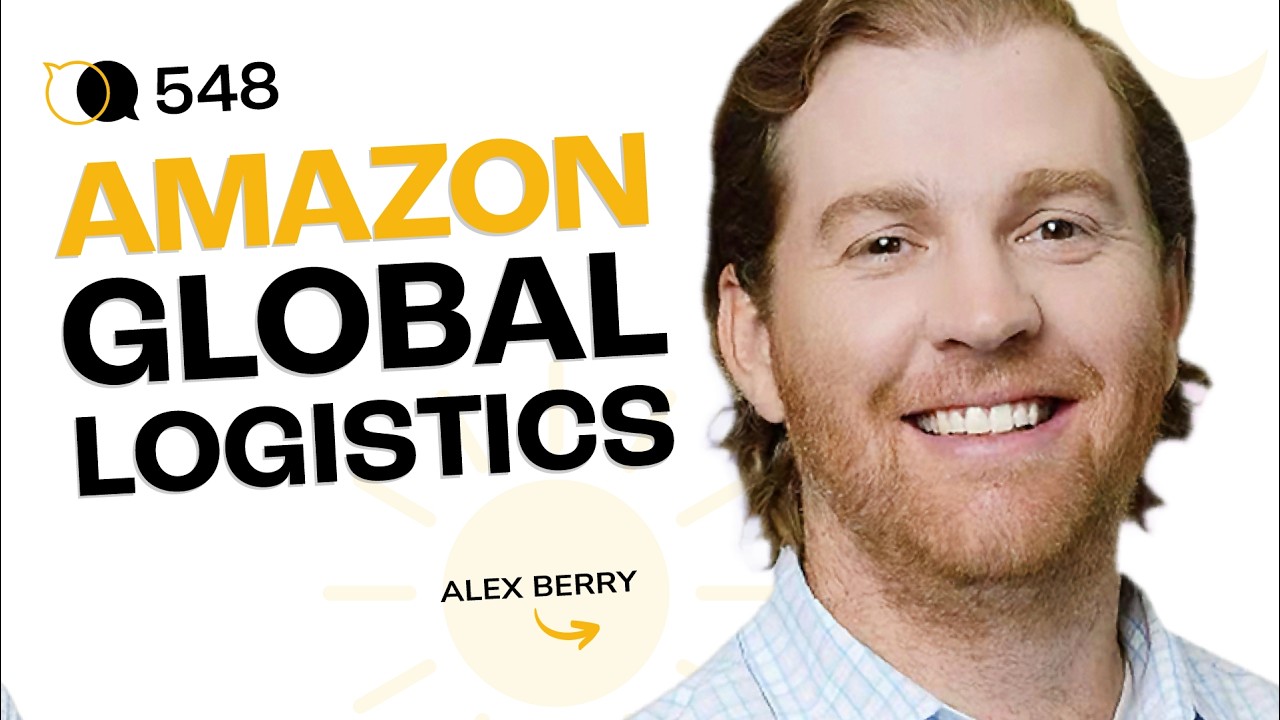
#548 - All About AGL: Amazon Global Logistics
Summary
"Amazon Global Logistics offers upfront pricing to eliminate unexpected fees, unlike traditional freight forwarders. With options like Amazon Managed and Seller Managed Placement, AGL simplifies shipping with air, standard ocean, and fast ocean options. By mid-2027, expect support for over 99% of ASINs, including those with lithium-ion batteries, plus expanded shipping lanes and direct-to-3PL capabilities. Understand your true landed costs and shipping strategy to optimize your supply chain and protect margins."
Transcript
You interested in getting more options for transferring your products from your factories to your Amazon FBA business? Today we invite a key member of the Amazon Global Logistics organization who's [music] going to tell us all we want to know about the AGL program. Hello everybody and welcome to the AM podcast. My name is Bradley Sutton [music] and I'll be your host. And this is the show where we discuss all things Amazon, Tik Tok Shop, and Walmart private label and how to generate recurring revenue streams 24 hours a day during the AM and the PM. Hence the name of the show. Get it? AM PM [music] podcast. And as a matter of fact, I love trying new cuisines. And so I went [music] to my first Kazak restaurant the day before I recorded this and I had horse meat for the first time. And let me tell you, it was delicious. [music] While I was chowing down, I was still making money online. How cool is that? Pretty cool, I think. All right, everybody. We've got a special episode here. We We said we'd do this, you know, before, but we haven't done it under our new podcast formats where we actually have people from Amazon here talking about different departments that many, uh, Amazon brands are currently using or maybe you've considered using but don't know enough about it. And so uh we wanted to make sure to bring key people from these different departments to talk about and answer a lot of the questions. And today our topic is AGL. That's something that we get a lot of questions uh about. You know, some people have trepidation. Some people think it's the greatest thing in the world. And for those who haven't used it, they're like, "Wait a minute. Which one should I believe? How do I know if this is uh something that's going to work for my brand or not?" Well, we've compiled all the most common questions that the Helium 10 community has been asking and we're going to, you know, uh, start from scratch, like if you've never even heard about AL or if you've know a lot about it or maybe you used it before, but maybe not in a couple years and you're wondering, you know, is it worth revisiting? We're going to go uh through all of that and everything in between. So, we uh very honored to have here um Alex. We have a lot of new listeners, so they might not have heard you uh on on our shows in the past. Can you go ahead and uh introduce yourself to the audience? Yeah, thanks so much for having me, Bradley. I appreciate it. Uh, my name is Alex Barry. Uh, I lead the Amazon global logistics team, uh, within Amazon. >> Awesome. Awesome. You just told me, I think you're Are you in New York right now? >> I'm based out of Nashville, so I'm in our office in Nashville. >> Yeah. No, no, you're good. One of these days I'll get some decorations up behind me. >> I was just there for the >> It was funny. I spent 46 years of my life never having been there. And I went there twice in the last uh in the last four weeks. Great uh chicken places. Uh, for sure. I'm sure you can show me some better uh even better places. Great history. Uh people so hospitable. Uh loved loved it there. Is that where you're you're from? Where you you migrated there from somewhere else? >> Uh well, first of all, I'm jealous you've been here twice in the last four weeks. That's probably more than I've been here in the last four weeks. Um but uh and you're absolutely right about uh there being some great food here. Uh but to answer your question, uh I'm not from here. Uh I actually grew up in Dallas uh in Texas and then uh my wife, my three kids, and I have been in Nashville for five to six years now. So, we're big fans. >> Awesome. Awesome. Uh, let's talk about your career at Amazon. What What's your position called and and what do you do? >> Yeah. Uh, so I'm technically a director of product management. Um, and like I mentioned, I kind of lead uh the Amazon global logistics team. So, my team's responsible for is uh all of our product development, our strategy, um, and our go to market exercises in terms of interacting with sellers. Um, and the ultimate goal that that we're really trying to work backwards from is, you know, how do we make AGL the fastest, easiest, and most economical way for sellers to get goods into Amazon. We're here to try to make things easier for sellers. Uh, I actually consider, you know, internally my main customer uh actually is, you know, the FBA team and sellers themselves. Our goal is to build and kind of scale AGL to be as large as it can be. Uh, because that indicates to us that we're doing something right for sellers. We're making things easier for them. and we're making it faster to get things inbounded. We're making it economical for them to get things inbounded. At the end of the day, I want to help spin the FBA flywheel. And that's why Al exists. >> I'm just curious, how long has Al been about? Cuz I remember when I was first getting into Amazon 10 years ago, if it was there, I'm not I didn't know it was there, so maybe it wasn't there. Um, and then like fast forward to today, like how many um Amazon uh sellers, brands are currently using AL? Yeah. So, AGL started it was super nent uh technically in 2016. So, it's been around for for about 10 years now. Um and it started out slowly, right? Primarily going, you know, kind of China out. So, China into the US, eventually China into the EU as well as UK. Um and you know, moderate kind of volume growth over time. Um I would say things have, you know, really accelerated and picked up here the last couple years. Uh you know, probably the last three to four years. Um, and you know, like I mentioned, uh, our primary customers, the FBA business is sellers. Really trying to make things easier for them. Um, and as we've seen the FBA business continue to grow, the need for, you know, simplification and simplicity in the supply chain has only become more important to sellers and, and so therefore, you know, this business has become more important to helping, you know, spin that FBA flywheel. Um, and so now the business has grown, you know, not only uh having more volume on those kind of China outlanes, but we've done some expansion. Uh we launched uh Vietnam to US lanes last year. Uh we operate on the China to uh Japan lane as well. And then we got a couple launches coming up this year that we're excited about as well. Uh going from China to Canada as well as China to Australia. Um in terms of you know the brands um using AGL uh it's in the thousands or tens of thousands of sellers who are using AL. Um, and the way I would look at it is, you know, we don't have a majority of sellers using AL, but that's where we would like to get. And, you know, once again, really just trying to work backwards from, uh, if we've got a good product and a good service that sellers want, uh, what that looks like for us and what, you know, what that looks like for Amazon is we're really just trying to make it easier, faster, less expensive for sellers to get goods into Amazon. Uh, because at the end of the day, that's going to benefit the seller business. And if we can be, you know, part of that process, that's what we want to be. >> Yeah. Yeah. I mean, people can have misconceptions about Amazon or motives or something, but at the end of the day, everybody realizes that if we the brands and the sellers are not making money and we don't have product on hand to sell, guess what? Amazon's not making money either. We're all we're all here to service the customer and and no customer can find get our products if if they don't have it. And so, anything that any any service that Amazon provides or or program, you know, obviously it's designed uh in parallel with what we the brands want. Now, I've got this whole list of questions I was going to ask. I'm going to skip around a little bit here because I think something that that comes up um you know, for somebody who's maybe new is, you know, any brand uh or new to AGL, but any brand who's been selling on Amazon for a while obvious or who's making product overseas obviously is importing the product. So, it's not like the product is uh be me up Scotty Star Trek magically appearing here. They're currently using some kind of freight forwarder. So, what's the difference of using maybe my freight forwarder that I've been using for years and me uh I actually haven't used uh AGL uh before and so this is kind of like a question for me for my own business. I've been using just regular freight forwarders coming from uh China. What's the difference of doing that compared to utilizing HL? Yeah, it's a really good question. Um and you know, like you mentioned there, there's a lot of freight forwarding options out there. It's a super fragmented market. Uh there's a ton of options that sellers have. Um, and when I think about AGL, I think about a couple things. One is, uh, the whole purpose of AGL existing is once again to make things, you know, easier, faster, less expensive for sellers to get into Amazon, right? Every other freight forwarder is trying to operate a business. They're trying to move goods from point A to point B. Point B just may be into Amazon's network. And so, you know, us at AGL are obsessing over how do we get goods into Amazon's network in the best way possible for sellers. And so, you know, we've tried to come up with a couple different offerings that I think help do that. Uh, we have an offering called Amazon managed placement and an offering called seller managed placement, which are obviously, you know, working backwards from the requirements for sellers to get things into the five regions within the US. So, Amazon managed placement is just as simple as a seller sending us one shipment and then letting Amazon kind of do the deconolidation and then moving those goods into the five regions it needs to get to. Basically operating a service for sellers to say, "Hey, let me handle this complexity for you." And then seller manage placement which has you know been launched in the last 12 months is uh you know working with sellers to ship directly into those five regions right so they can skip that deconolidation step. It's a little bit less expensive. It's a little bit faster. Um but we're really trying to drive placement options for sellers that work backwards from their needs uh kind of that FBA establishes in terms of you know where they need to inbound goods. And then the last way I'd think about it is you know if you're a seller and you use AL uh the whole purpose of using AL is to get goods into Amazon. And so that's what a lot of kind of our experience is sort of built towards in terms of the visibility milestones that you get as a seller. Uh you start to understand, you know, when things are going to get into sellable inventory into prime as opposed to just delivered to a warehouse. So I could go on and on for a while, but those are kind of a handful of kind of the larger things that we're working backwards from, which once again is I just want to make this the easiest, fastest, most economical way for sellers to get goods into Amazon. >> I've got some follow-up questions on that. you know, like let let's take out uh which we're not talking about today, like the whole AWD thing, you know, I might need to have a separate podcast uh about that. But if I'm not utilizing AWD and I'm using AGL to import my products from China, basically it's picked up from China or, you know, wherever and it's going directly to like the Amazon FBA, you know, warehouses. kind of like if I had product at my warehouse in the USA and I'm setting up like um you know replenishment order. It's, you know, Amazon tells me, you know, where where to ship it to and it goes there and then the next step, it's not stored in limbo like like or not limbo, but it's not stored in warehouses like for AWD and then distributed, but it just goes directly into the, you know, the DCs and and distributes. And so is is that kind of what happens when I do AGL after it leaves China, the next step, it's actually going to eventually be ready for sale in in Amazon and fully distributed across uh Amazon's warehouses. >> Yeah. Uh that's right and I'll give you a little bit more detail on it. So everything that I kind of just described previously uh assumes no AWD. So you can obviously use AWD in conjunction with AL but I'm assuming that we're not for the purpose of this conversation. Um and so let me walk through the flow for each of those two products that I mentioned. So for the Amazon managed placement product uh you know your container uh would be loaded onto a vessel in China would go across the ocean. It would come through destination and then we would move that into a building we call a national cross talk. Um and at that building, you know, most of our going to be in, you know, Southern California. Uh we would deconolidate that container, split it into, you know, the five regions in terms of where the components of that shipment needed to be delivered to and then we as Amazon would deliver them into the five regions. Uh those buildings are called regional ISDs or RISDs. Um so just to kind of simplify, the container would go on the vessel would hit destination, it would go to a national cross and then it would hit the kind of FC's in those five regions. Whereas the seller managed placement would actually skip the national cross talk alto together. It would just get loaded onto a vessel and then it would get delivered directly into those, you know, five distinct regions that FBA requires when you're kind of placing the PO and kind of going through the send to Amazon process. Does that make sense? >> Yeah. Yeah. So, so then it's like I don't have to be thinking about, you know, like when I'm setting when I have when I'm sending stuff from my warehouse in California, I I have like a million options. I got to like, hey, do I want to send to West Coast? Do I want to send to East Coast? Do I want to send to to two locations? Do I want to send to five locations? And and all this stuff and I start calculating like is it kind of just like uh AL is automatically going to those five, you know, uh optimized uh splits and I don't have to like choose from 17,000 different different different options. >> Yeah, that's absolutely the idea is you know eventually your goods will get into those you know five regions. The question is how you want them to get there. And I think if I go back to those kind of two products we were talking about, the Amazon managed placement product is a great product for a seller who is, you know, maybe smaller, you know, doesn't have as frequent of inbounds or maybe is just operating with, you know, really small products where you're not fitting them into, you know, five to 10 containers when you're doing inbound. Um, and it may be more efficient for you to manufacture that way, to package that way, to ship that way, and then to ask Amazon to say, "Hey, can you deconolidate and then move into the five regions for me?" Whereas maybe you have a larger seller uh either operating with kind of larger items um or shipping more frequently that seller managed placement product of just doing you know five distinct shipments into those five regions makes more sense for them because they have the volume to do it. >> Sure. >> One of our community was looking up on the website some of the details and stuff. Um they had a vocabulary question for you that they didn't know what it was. Let let me just check here. They were asking about uh incoterms. So what are incoterms? How does that uh work in the ecosystem of of AL context here? >> Yeah. So, ecoterms are kind of just like a freight industry standard, right? And you can think about them as the terms uh that effectively determine, you know, who's liable, who has to pay, who has possession uh of goods at certain points throughout the journey of uh a shipment, you know, from China into the US. Um you can go into chat GPT or you can go on the internet and you can find, you know, 15 to 20 different incot terms. There's lots of them. Um, but really to help simplify, I mean, there's there there's there's effectively two that sellers use most frequently. Uh, there's FOB, which is free on board. Um, and then there's DDP, which is delivery duties paid. Um, so FOB or free on board. Effectively, what that would mean from a seller's perspective is a manufacturer would be responsible for producing goods and then getting those goods to port um at origin. So in China, once those goods are loaded onto a boat, it becomes the seller's responsibility to basically select a freight forwarder, pay for freight, handle customs and duties at destination and kind of getting those items into the US. Uh it's a very common inco term that sellers use because it gives you control, it gives you visibility. It's very common from an industry perspective. Um, delivery duty paid is a little bit different where manufacturer would, you know, produce the goods, get them to port, but also be responsible for selecting a freight forwarder, handling kind of customs and duties information. Um, there's some puts and takes to this one. Um, you know, some of the benefits are super simple, right? Manufacturer or somebody else is handling all of this on your behalf. You can focus on your product on your customers, which sounds good. Um the downside is you're probably going to get a little bit more opaqueness as it relates to what you're being charged for exactly. Uh right. What you're going to see is you're going to see manufacturers or suppliers or third parties maybe charge kind of an all-in rate and it's going to be hard for you to decompose, hey, what exactly am I paying for and how do I compare what I'm paying for to what a market rate may be. Um so it's a little bit harder to assess, you know, financially what makes sense. >> So then how does it work with AGL? is is is it kind of it's not necessarily DDP like am I am I paying am I paying Amazon for for every step or am I still having to clear customs myself like do I have those options of of different ways of paying AL or there's only like one payment method and it's X or Y. >> Yeah. So I'll split your questions into like you know how do we handle customs and duties with AL and then we can get into kind of what the payment schedule looks like. Um, so with AGL, you know, you can do FOB, uh, and we can also do kind of customs and duties for you if you want to use, uh, our custom service, uh, called ACT, which is Amazon Customs and Trade. Um, and so, you know, let's say you're shipping, uh, full container. Um, and you want to use AL. Uh, you've got the option to use your own customs broker or you can use ACT, 100% your call. Um, if you're shipping LCL with AL, you have to use ACT because we're going to have multiple seller shipments within the same container. And that's really key to us, making sure those things get through customs, get through kind of the destination port quickly on everybody's behalf. Um, so those are kind of your options if you want to use AL. Um, as it relates to payment, um, there's a couple more options, so sorry to keep kind of splitting this up on you. Um, but if you use AL, you know, you can pay one of two ways. You can pay via um your seller dispersement account or you can pay via bank wire which is effectively just a wire transfer. Um so if you're paying via your seller dispersement account, you go through the booking process um and we will deduct you know 7 days after delivery to FC uh the amount of your shipment. So there's a little bit of goodness in there from a cash flow perspective. If you're using Bankwire, uh you can either do that uh with no credit or with credit. Um, if you do it with no credit, uh, we will, you know, ask for proof of funds upfront. We will freeze those funds in your account, but then we'll actually deduct those funds about 15 days after delivery to FC. Whereas, if you operate with AL on credit, we do monthly invoices. Um, and so those come out once a month and then there's a 30-day kind of clause once those come out to get paid. So, that's kind of your best option from a cash flow perspective. There's another question I want, you know, I guess thought about I wanted to to get to is is I think in the past, you know, there's a lot of people who are just single single platform like I only sell on Amazon or I only sell on my website or whatever. But I think, you know, in 2026, so many brands have seen the need to be to be crossplatform. And so one of these u you know crossplatform questions I had was hey what if I don't just exclusively sell on Amazon? um am I able to utilize AGL? Maybe I see the benefits of of of doing it. Um or or is this exclusively for Amazon sellers? >> So the short answer is uh yes, you can use AGL if you sell off Amazon. Uh but that yes is going to become a larger yes, you know, here in the next sort of 12 months. So the yes today is if you're selling off Amazon but you're using something like Amazon's multi-channel distribution or multi-channel fulfillment products you can absolutely use AGL to you know move those goods into Amazon's network and then leverage those services to you know sell with other retailers you know sell on other e-commerce marketplaces or obviously to your point sell on your own website. So that option exists today. Um, what doesn't exist today, but what is coming pretty quickly is the opportunity to use AGL to ship to a non- Amazon address. So, for example, if you wanted to use AL to ship directly to, um, a 3PL, to your own warehouse, to another kind of retailer, e-commerce chain, those are, you know, things that we're building. Um, and, uh, we actually have kind of the first iterations of those happening this quarter, so Q3 2026. Um, but wouldn't be generally available until 2027. Another question um I have here is is just thinking about logistics in general. A lot of people sometimes get surprised with like random fees and and of course you know there's things that happen like hey your container gets a gets an x-ray hold or it's going to have start having storage fees because it's being under examination. Of course, there's many things that could pop up, but what are some of the more, you know, some of those are extreme examples, but what are some of the more common like hidden fees that that people get when dealing with, you know, crossber logistics? Um, and especially I'm curious, is is there any of these that actually going with AGL might be a benefit where I might not have to worry about some of these things? >> Yeah, I'm actually really glad uh that you brought it up. Um, and so, you know, in the industry, if if if you're booking freight, uh, you may be familiar with terms bill one and bill two. Um, so when you're out shopping for freight, you're going to see kind of different base rates from different carriers. Um, and there's typically a lot of fine print on those quotes that you get about charges that may happen after the fact. And the vast majority of freight forwarders in the industry, uh, will charge you, you know, what they showed you, uh, which is kind of bill one. And then after your goods are delivered, uh, you'll get a second bill, uh, which is bill two, and it'll be a bunch of these kind of add-on fees. And the challenge is when you're booking freight, it's really hard to understand, you know, hey, what's my all-in fee going to be? Um, and the reason the freight forwarders do this is, you know, there's variables down the line that may happen in terms of cost that they may incur that they'd like to charge back to you, but they don't know for sure if those things are going to happen or not, which is why they don't include them um when you're out shopping around looking at quotes. but they do charge them to you after the fact. Um, and it's kind of a nasty surprise lots of times. And to to answer your question, um, you know, I I would say the ones that, you know, get charged the most, you're going to see things like detention, you're going to see things like demurrage, right, which were, you know, which effectively happen if you're holding a container for longer than you expect and it takes longer to return the container uh, you know, back to the supplier. Or even things like driver weight times. um you know when that container gets put on a chassis um and a driver goes to a warehouse uh but they can't actually get it unloaded within a reasonable amount of time for a driver or within the contracted amount of time for the driver. Um and then that trucking company is going to charge the freight forwarder back who in turn is going to charge you back as a seller. Um so there's a lot of those types of things that happen. Um the benefit to AGL is we don't have a bill too. Uh we just do bill one. Um so the price you see with us is the price that you're going to get inclusive of all those things. So, it is a way that we currently operate differently from the rest of the industry. And you know, once again, it's one of those things where we're really trying to work backwards from what's the best seller experience, what would I want as a seller, which is seeing all these things up front. Okay. Now, this next question is not for me. I sell like wooden products, coffin shelves, nothing hazardous, but um there are some in our community who who import um you know, like hazmat, some hazardous, you know, potentially products. Am I still able to use AGL? >> Yeah. Uh short answer yes and it's actually something we put a lot of investment into in 2026. Um and to your point right like not every as or even like not a high percentage of asens you know qualify as kind of hazmat or you know kind of UN codes or kind of you know needing special treatment but what we see a lot from sellers is they have a portfolio of asens you know some of those asens uh may require kind of hazmat or kind of DG handling and uh these sellers don't want to split up their shipments into the components that are DG into the components that are not which makes total sense like I'd want to handle all of my stuff the same way too which is I want as few shipments as possible possible. Um, I want them all together. I want to leverage my scale to get the best rates that I can to operate my supply chain as efficiently as I can. Um, and so we've done a bunch of investment in 2026 to continue to turn on, you know, more and more of these categories for sellers to be able to use AGL. And so the big focus this year um is kind of class 9 goods. Um, happy to share kind of the specific UN codes, but effectively what that is, you know, earlier this year in Q2, um, you know, we unlocked, you know, sellers being able to ship electronics with batteries included, which was kind of a big step forward for us. Um, in Q3, we're going to unlock, uh, you know, lithium ion batteries as kind of a major use case. So, those are two really big components of class 9. And the road map that we're working towards is you know by middle of 2027 uh we'll be able to unlock you know more than 99% of asents coming in uh to Amazon's network. To give you perspective it's 94 95% today. So we continue to try to claw back at that. as far as as shipping uh goes when I'm using AGL, you know, like right now, if I'm using freight forwarders, I have different options as far as, oh, I can do fast boat, I can do the slow regular boat, I can do air shipping if I wanted to. Um, what is the standard, you know, default uh for AGL? And are there other like different speeds available at this time? >> Yeah. Um, so yes, we have a variety of speeds, especially if we're talking China to US lane. So we have an air option available. Um, you know, ocean vessels are, you know, usually split into what we call standard ocean and fast ocean. Um, we've got both of those options available, right, with the fast ocean, you know, usually being a little bit of a smaller vessel, moves a little bit quicker through the water, um, and just operates on a more consolidated timeline. Um, and you know, we see lots of sellers using uh, you know, both fast and standard ocean. So we do have you know that portfolio of speeds available. >> All right. Another question from uh the audience is the difference between base rate and landed cost. >> Yeah. So we touched on it you know a little bit briefly a couple of questions ago kind of about bill one bill two. Um so I would think about base rate as you know the base freight rate right from moving something from point A to point B. uh usually kind of an origin port to uh an ultimate kind of fulfillment center or warehouse in the United States. Um and so there's going to be a base rate, you know, they're going to charge you. Um and then total landed cost is, you know, hey, once you include all of the other fees that are being charged, what in total or aggregate is your cost? Up to you. If you want to include customs and duties, you could have that in, you could have that out. But to me, the real difference between base rate and total landed cost is kind of what we talked about earlier in terms of those extra charges kind of from bill two that sellers may see as incremental to the initial fee that they were shown when they were quote shopping. >> Cool. Um all right. You know, maybe some some are interested already and they're like, "Hey, sign me up or I want to get more information." But before we get to that, um you know, I I know always sometimes Amazon is tight lipped about what they're working on, but I figured I'd give it a try. Can you give us any insights into uh what the AGL chefs are cooking in the kitchen for maybe what hasn't been released yet? What's coming up uh in the pipeline? >> Yeah, I'd be happy to I'd be happy to share a little bit. Um I there's kind of a few things that that are worth touching on. I think um you know, one is uh we just launched what we call a premium ocean service into the EU. So we've been talking a lot about China to US lane. Um but for sellers who are you know also you know trying to sell in the EU and move goods from China to the EU been a challenging time in the last year or two if not longer of you know trying to move things you know via ocean freight uh from Asia into Europe. We've got a lot of conflicts going on in the Middle East. You got a lot of kind of closures of you know seas and canals and you know sort of different things like that. Um and so we've been working hard on uh launching an ocean service uh that you know end to end transit time is in the you know 50 to 55 day window from China to Europe which is you know 15 20 days faster than AGL goes today. Uh we launched that in June. So we're we're we're super excited about that. Uh that's out there for sellers now who are trying to move things into Europe ahead of peak. So we're really excited about that. Um, if I switch back now to the China to US lane, um, I mentioned, you know, seller managed placement or SMP is kind of one of our larger products that we've launched in the last 12 months. We've seen really strong adoption with this. It's already become, you know, upwards of kind of 35% of all the goods that AL moves is kind of through SMP these days. Um, but we do have some opportunities to get faster into the east coast of the United States. Um, and to get into the weeds a little bit, historically AGL had used vessels through the Panama Canal into the east coast of the US and then kind of used dreage services from those east coast ports into East Coast FC's. Um, which makes some logical sense when you think about it. What we've started seeing is, you know, sellers really putting a premium on speed and getting things into those East Coast regions faster. Um, and so in the last few weeks, we've started unlocking a different route, which is a vessel into Southern California and then using a combination of rail and trucking to get things to the east coast faster. And we're seeing, you know, kind of timelines depending on region, uh, from 10 to 15 days faster into the northeast and into the southeast. So, we're super excited about this for our SMP product offering to be able to get things into inventory into sellable position faster on behalf of sellers, which I think is going to be a a big help for them. looking at SMP when they compare to their other options. You get all the other option, sorry, you get all the other benefits that you get with AGL, but now you're getting as fast, if not faster transit times into those regions. And then um you know, finally, the other thing I'd touch on for you is uh a lot of freight forwarders in the market, especially for larger sellers, will offer some form of contract pricing. you know, kind of set rates for a 12-month period of time, uh, where they're working a little bit more closely with sellers, but sellers are getting more certainty of what rate they're getting. They're often getting some degree of discount to the market, um, in terms of what they're negotiating because they're putting all of their volume behind it. Um, historically, AL had only operated on the spot market, which was we didn't do any contract. We didn't do any long-term agreements. If you wanted to ship something via AL, you just log in, look at the spot rate, and decide whether you want to do it or not. Um, we started piloting contract pricing, you know, this year. Uh, we've got over 50 sellers doing it. Um, and that was in the March, April time frame. That's worked super super well. Um, and so it's something we're excited to continue. Um, it's something that we're going to continue to roll out throughout the year to more and more sellers. But I think if you know, you're a seller of a certain size looking for something like uh, you know, that construct of contract pricing, I think, you know, AL is going to be one of the places you're able to get that from. Uh because obviously if you're trying to go direct to kind of a you know uh sorry if you're trying to go direct to one of the major ocean liners you've got to be really really large to get contract pricing from them. We're trying to offer that construct to sellers who might not be able to get it from ocean liners again to give them that certainty that predictability. Um so those are three things we're super excited about. >> Okay. Um, we're going to have a link for how people can can, you know, sign up. But for the people who who do start signing up, what's the onboarding process like? Uh, is this something that takes uh months to get approved and and set up or or uh what what can sellers expect? >> Uh hopefully it's less than that. Uh I think on average what we see today is, you know, roughly about 5 days in terms of the onboarding process. Um it's usually split into kind of, you know, two workflows. uh we've got kind of business on boarding uh which is effectively just sharing kind of key business information EIN numbers you know other things to really understand the relationship kind of between the parties and then the second is what we call compliance on boarding uh which requires a little bit of verification with the government in terms of you know importer of record status you know those different pieces um if a seller was really motivated they could do it in two to three days but on average we're seeing it take about five >> and what should I um get ready like what what am I going to be asked for how can I get my ducks in a row before you know so so make the process a a little smoother. >> Yeah, I think you want to have two things. I think you want to kind of uh you know, first you want to have uh your sort of uh your specific business information as it relates to kind of, you know, your company, your registration. That's kind of the first step. And then the second is, you know, any sort of status you have uh with Customs and Border Patrol, uh in terms of, you know, your status as an importer of record. If you're not an importer of record or you don't know, that's okay. We can help you work through the process. There's usually a little bit of back and forth there which may add a couple of days. Um, but that's really kind of, you know, the most important things to getting onboarded. And then, you know, as you start to think about shipments and sort of inbounding, that's when we'd need to get more specific about, you know, the exact makeup of goods, the valuation. You know, this is, you know, those things would be required if you're going to use ACT as a customs broker. Um, but those are the things I'd have handy. >> Okay. And then, all right. You know, somebody said you had me at hello out there. Uh hopefully they're not in their car right now, but if they're at their home and they have a laptop in front of them, where where can they go like right now to be able to to get more information and sign up? >> Yeah. Uh we've got uh a program portal page that uh we're super happy with. We've done a bunch of work on this year. I think we're actually going to drop the link into the description of this video. >> I'll just verbally say it for those not watching on YouTube, but it's going to be uh h10. H10.mel h10.me/l. If you're an elite member, we we actually have a a special a special one that we'll email out to you guys, but this will also be in the description below. And so if somebody goes to that link, um what um what can they expect on there? Is it just the you know, they can just go right to sign up or is there any kind of a special that they have if they hit that link? >> Yeah, so if you go to that link, uh so there's going to be a discount if you're a first-time AGL user. I think it's about 8% is you know, um what the first-time shipper discount is. So you'll be able to see that, but then yeah, you'll be able to uh uh there is a link on that page that you can start the onboarding process. Um and ideally you can get through that in a couple of days. Um and then you'd be ready to make a shipment. >> Okay. All right. I think you know you and I had first met at an Amazon Accelerate last year or the year before. Uh I'm assuming I might see you there this year again. And uh anything any announcements coming may maybe you can't talk about it here but like will people uh be able to see something announced about u alerate? >> Yeah. Um I think you're right. I think we met last year in Seattle at Accelerate. It's you know sort of crazy that we're almost at that time already again this year. Time flies. Um but yeah uh so yes absolutely on AL. I think, you know, you'll hear, you know, more announcements from us about, you know, how we're continuing to launch more use cases, launch more features that, you know, just better serve the majority of the seller population. Um, to once again, you know, uh, make AGL easy, fast, reliable, economical, you know, all those different pieces. Um and then in terms of just you know general themes I think you know without giving too much away I think there'll be a you know big theme on the supply chain part related to kind of going global and you know how we help sellers sell in more stores across more countries and obviously AL is a big part of that in terms of you know helping transport goods and get them located you know where they need to be located in order for sellers to be able to do that. So um that's what I'd be thinking about heading into uh you know that discussion at least from the supply chain side. >> Awesome. Awesome. All right. Well, thank you for coming on here. Um, you know, for those you No, nobody knows this, but it was it was kind of a lightning strikes almost kept me from this episode. I I'm here in the airport. For those who are like, "Hey, why why am I not in my regular podcast background? I'm on the way back from Europe." I'm like, "No, I'm going to make sure that this podcast happens." Regardless of these lightning strikes that are keeping me from getting uh here, but this was great info. appreciate um what your department is doing and appreciate you taking the time out to to answer all these all the community's uh questions and look forward to seeing these new things coming uh at Accelerate. >> Cool. Thank you, Bradley. I appreciate it.
This transcript page is part of the Billion Dollar Sellers Content Hub. Explore more content →