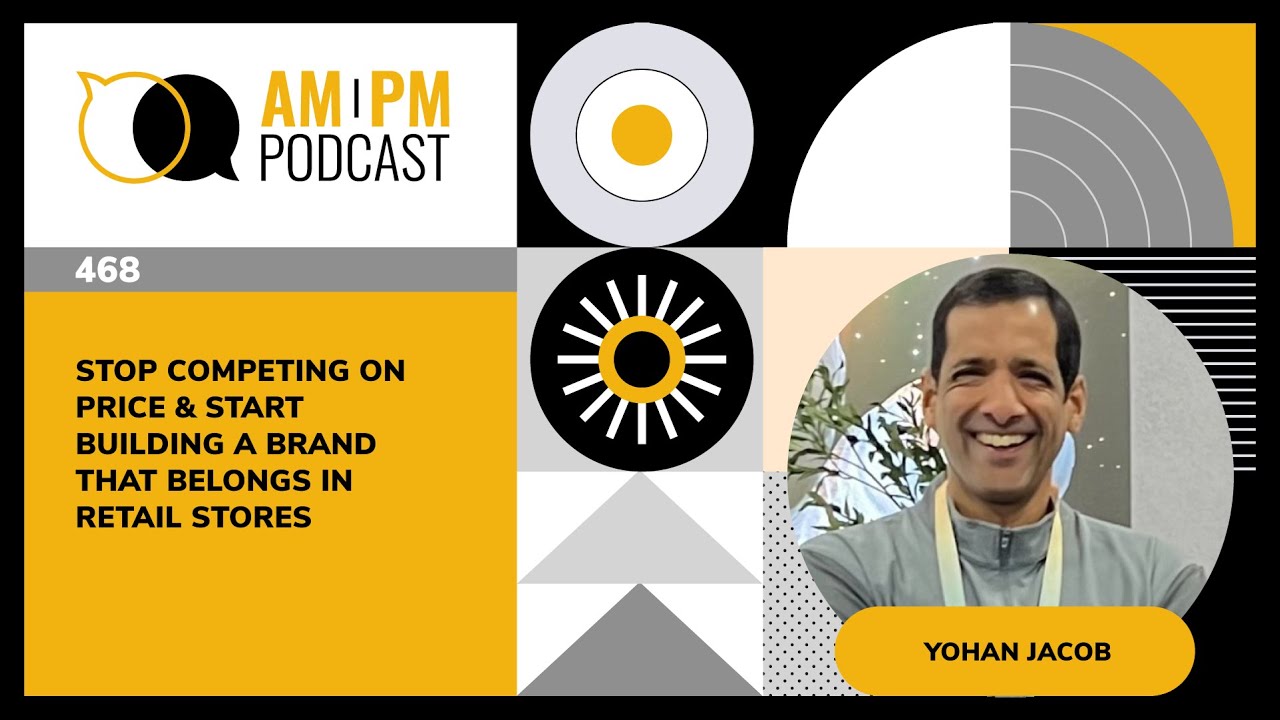
Podcast
#468 - Stop Competing on Price & Start Building a Brand That Belongs in Retail Stores
Summary
"Transition from Amazon to physical retail by following insider steps to become retail-ready. Real brands establish themselves in stores, not just online. Diversify your business and build a lasting brand presence beyond competing solely on price."
Transcript
This is episode 468 of the AMM podcast. This week we're talking to Johan Jacob from Retailbound. That's right, more about getting into retail. I think this is a major thing that a lot of e-commerce sellers need to be paying attention to to diversify and to put up a little bit more of a moat and to become a real brand. As as Johan says, real brands get into retail. Anybody can go to Alibaba and get into Amazon, but online, but real brands get into retail. We're gonna be talking about that with a lot of different stuff that you might have heard in some of the other podcasts I've covered. So, enjoy this podcast about getting into retail with Johan Jacob. Welcome to the AM podcast. Welcome to the AM podcast where we explore opportunities in e-commerce. We dream big and we discover what's working right now. Plus, plus this is the podcast for Money Never Sleeps. Working around the clock in the A.M. and the PM. Are you ready for today's episode? I said, are you you ready? Ready. Let's do this. Let's do this. Here's your host. Here's your host, Kevin King. Kevin King. [Music] Welcome to the AMP podcast. Johan Jacup. How are you doing, man? I'm doing great, Kev. How about yourself? Uh, good. I'm I'm really good. Now, you're you're just up the road from me, uh, in Chicago. Straight ahead. I mean, I'm in Austin, so I think it's just a straight line almost up to Chicago, right? Just about. Yep. Just about. We're actually getting your weather today. It's going to be in the in the 90s today here in Chicago. Oh, that's that's that's our uh that that's our spring weather. Uh, summer summer weather uh and fall weather. I mean, into September, it's in the here in Austin. Yeah. It's it's a it's crazy. I got a buddy that's actually trying to move here or thinking about moving here right now from Seattle and he he's uh like I I came this summer just to see if I could stand the heat of August and September. Um and and uh I don't know. We'll see. The judgment I think is still out if he can stand this Texas heat. Um but hey uh it's it's good to meet you. Um, so one of the big pushes uh I've been making here on the MPM podcast is for Amazon sellers to start thinking about retail uh a lot more than they have. You know, some of them have dabbled in it u but I think a lot of them are scared of it and they're they're afraid of the unknown and that's what uh I want to bring you on to help clarify uh some of that. I've had a few other guests on this on the show that have talked we've talked about retail, but I one of the things that really struck home to me as a recent guest I had uh she's a Chinese-based seller. Yeah. And she's like, "Look, us Chinese uh you know, we can compete when it comes to online on Amazon because we got price compat uh advantages in a lot of cases. We're willing to dig deep into the numbers and play the game, but we don't understand American uh culture. And the biggest thing is we don't understand American retail. And so that's a that's a huge moat when a lot of sellers on e-commer are just struggling. It's a race to the bottom. Uh especially on things that are just commoditized. And one of the ways to to uh establish a little bit of a moat against a lot of these the advantage a lot of these Chinese sellers have is to actually get into retail. So how how have you seen retail? It's not dead. A lot of people think it's dead. It's still like 80% of uh all sales, but how have you seen it evolve and change over the last uh uh 10 years or so? Uh I would say that a couple things here Kevin. So Rita has definitely evolved especially during uh co uh maybe probably uh exact probably accelerated um some of these retailers and how they work with consumers like you and I, right? So from uh better online experiences from enhanced brand content, better reviews, videos, things like that to be able to buy online and pick up in store. Um a lot of retail really improved their both their their web technology as well as their mobile technologies, right? But nevertheless, you know, retailers rely on the web for for people for more um more information, right? Right. So especially if it's if it's a product that takes a little more a little more time to understand the web is great today's social associate is very very busy but knowledgeable right a lot of times consumer check online do the research read the reviews before they actually go in store to pick it up by the way but retailers definitely have evolved over the last few especially since co by the way yeah it used to be that if you were online retailer didn't want to touch you um because they uh I remember best buy at one point uh years ago was complaining like all we are is a showroom for people to go buy it on Amazon. Uh and I remember going to a a pet expo and trying to get more some of my products in some distributors, some pet distributors. I had a line of dog bowls and some other stuff and they're like, "Are you on?" The first question out of their mouth is, "Is this sold on Amazon?" And when I said yes, they said, "Uh, not interested in talking to you." Uh, and but that's that's changed. It has changed. you honestly if you're a onep um I would say many retailers like a Home Depot or Best Buy now probably interest if you're a 3P and you can control both inventory and the promotional price uh there's interest we've had discussions with with our uh retailers and and how we how we our clients approach Amazon and their philosophies right as long as retailers and Amazon are on the same level playing field we're all good Right? If Amazon uh is lower than a Best Buy.com or Best Buy in store, best we're going to say to the brand, well, why you on my platform? You're basically could pink yourself, right? On a different platform, right? So, as long as it was on the same level playing field, you know, as a 3P vendor, Best Buy, Home Depot, Walmart are fine, you know, today on you being Amazon. So, a lot of retailers then what you're saying is they're using ecom almost as a benchmark as a a testing ground where they're like pro prove yourself with your reviews and some sales volume uh and ability to stay in stock and that kind of thing and and they're using that now more as like a testing ground to see if they want to bring this into store. Is that is that correct? So, there's many paths into retail, right? uh I would say about uh a small bunch of our clients come from crowdfunding kickstart go raise capital then they go on to maybe DC like Shopify Amazon and then retail that's the typical path for many our brands crowdfunding DC Amazon and then retail but we've seen brands skip you know maybe Amazon temporarily right and go right to retail and then go back to Amazon later on use as a as a bargaining chip hey best you know, get a few more opportunities where in store online will delay going on Amazon for three months, four months and we've seen that that type of work once in a while. Um, but for most product brands, we say go on Amazon because Amazon, you know, is a giant search engine, right? Uh, I use and you'll use Amazon probably on a daily basis. Um, a lot of retailers don't want to be an un don't want to be a guinea pig for unknown or unproven brands. So, you go on Amazon, right? They can see your sales, they can see your reviews, I can see your A+ content, things like that, right? And then, okay, you're a 3.9 or a 4.3 brand. Um, I see your content. I can check your pricing, right? Yeah, that's you. You have a better opportunity to get into retail based on your success on Amazon. Many of our clients who've done well on Amazon have seen somewhere better success in the retail space. By the way, now you said a lot of your clients at Retailbound come in from Kickstarter. Um, and there's Kickstarter and Indiegogo are the two big crowdsourcing platforms that a lot of people use. And those platforms, what I found in my experience is there's a there are some professional people on there, but the vast majority of those people have no clue what the heck they're doing. Correct. And and they they they have a good idea and they create a a prototype and and they go through that, but they have no idea about the manufacturing side or logistical side of things. And I had a product that I waited seven years for off of Kickstarter. Literally seven years. Really? Wow. Very long. Seven years. And I think my I've probably ordered four or five off of there and typically I don't think any of them have ever met their dates. Um usually it's 6 months to a year delay um because they just don't understand. And then I'm in the business. This one that was a seven-year, they were sending updates um over over the course of I mean it's an interesting story. I could tell some time, but I don't want to take up all the time here. But it it they would send updates periodically every every year almost and like show me pictures of here it is on the manufacturing line and oh CO's causing a delay and all these excuses. I'm I'm from that world. I know they're just BSing. Um, but they ended up changing their entire business model and the a product that I paid for about 500 bucks for in total on Kickstarter uh became a $10,000 product. Wow. So, I I ended up getting it uh you know at the 500 bucks, but I had to fight. But, uh yeah. So, what do you find when someone's coming from that world the challenges are and helping them actually get into retail? What do you have to educate them on typically? So, a couple things. So, so we're you know retail is a totally different beast different from Amazon, different from Shopify, different from crowdfunding. I tell I tell brands that come from crowdfunding uh where they sold, you know, you know, 200 units or 20,000 unit, it's just a number, right? Uh it's like my daughter who's who's 17, she applying for colleges in the fall. Um the ACT, SAT, just a number, right? There's many many things collect students or not, right? Same for large retails like a Best Buy, Target, Walmart that if you're on crowdfunding or or Amazon or Shopify, the sales number KPIs like returns and reviews are are are just things they consider is probably overall decision making process where you you get into retail or not, right? But I tell young brands on crowdfunding that um that that get in retail, it's a it's a marathon, not a sprint, right? And there's certain things you need to have in place uh before talking like pricing unlike Amazon or or Kickstart where you're paying a a commission, right? Uh for success in retail, you know, you know, Kevin, it's a buy sell relationship. Best Buy or Pets Smart or Walmart, Target, buy for a cost of X, sell it for Y. And the difference is what they take to the bank. Right? That's one of the biggest things I think I I we had to console or console sellers is, hey, it's margin. They take the bank. They don't take commissions to bank, right? Uh packaging very important, right? You can have a white box on Kickstarter or even Amazon. But on retail, your box has to tell a story, right? uh poor color. It can't be just a hero shot. You got to tell the story, right? That's another thing that a lot of sellers whe it's crowdfunding or Amazon are unaware of, right? Uh and the last thing that that biggest thing a lot of young brands on Amazon or crowdfunding tend to kind of forget is well getting a retail like like a Best Buy, it's great, but getting your in the door is just half the battle. The other half is actually driving traffic and billing, you know, to a retailer, right? Um, you got a product listed on bestbite.com. Great. But what do you do as a as a as a vendor to build awareness best buy? So, in turn, you get those repeat PO. Those are the three things we have to talk to brands about. Hey, it's your it's your, you know, product packaging, it's your pricing, and it's your marketing strategy. is going to help you be successful long term in the retail space. So in retail space typically it's keystones like it's double. I mean it varies from retailer to retailer. Uh it also varies from category right. So for example in in headphones right um margins are typically keystone right that's a category but in TVs right uh margins are usually single digits right in the category dep in the retail so example we have a client they make a really cool um let's say smart ring right smart rings are very very popular right one retailer is a Kell logger the margin is is in in that you believe is in that 50 to 60 point range right where at a big box uh uh club retailer like Costco Sam's Club that same ring is around that 15 point margin so same product category right but different margin on the retail based on the size uh and the category and and it's in store online in print or on air so it varies but keystone I use as is a is a good first step, but margin range from as low as you know single digit up to you know 80 90 100% by the way. Yeah, it's interesting you say that because Costco advertise or their one of their things is like we only we mark everything up I forget it's very small like 3% or 5% or whatever the small number is that they they claim. Um, but I think that's total BS because a lot of times, uh, Costco's prices are really not that much more competitive than what you find online. Depends on the category. I see. Yeah, it depends on the category. It does. It dep and there's bulk and and stuff. Um, but like I'm I'm taking like a hard drive example or a television. Um, and but part of that's probably because like you said, the margins aren't that high in or it's a it's a derivative, right? Sometimes when it comes to mattresses and TVs, uh, they're on the brand like a Simmons or Sony, they have a lot of derivatives, right? So, the product you may see at a Sams Club, you're probably not going to see at a Best Buy, uh, versus a independent consumer retailer because they are depend on the retailer, the the brand like a Sony or a Samsung may have a derivative for the club channel versus the independent channel versus the specialty channel like like a Best Buy, right? When you say derivative, that means like a a a different brand name. Uh but it's made by Sony, but it's a different brand brand brand name or a different model number basically, right? Uh they may change in features. For example, I have in my house I bought um maybe 10 years ago. It was a recumbent bike, right? Uh company called Life Fitness. That same bike was like $2,000. I went directfitness.com, right? um off the same bike, different color, you know, uh and instead of having 10 um programs, they had five, right? I paid maybe 1,200 bucks. Like all I really need is manual. I don't care about, you know, uh hills and random, right? And yeah, I saved 800 bucks by going to Costco uh on the literally the same bike, just, you know, few less features, right? uh that I didn't really need, right? And it was happy. But typically for Costco and Sam Club, they want the manufacturer to provide a a discount to members through paying membership to around 20% off the MSRP. And then uh and Martin usually in that 15 18 point range. Many many brands we work we have a map program. So to go around that map program with with a Costco or Sam's Club, we'll do a a bundle, right? So maybe it's that smart watch with an extra band. So it's the same price that you see at Best Buy, but there's an extra two or three watch bands to offset that additional that same price you buy at Best Buy, I guess. So that's an important thing that a lot of people probably don't realize is that if you're selling something, let's say on Amazon, it's I don't know, it's six units in I don't know, say it's glassware and they come as a set of six. sometimes because people don't uh these brand these retailers don't necessarily want people using scan uh their phones scanning and doing price comparisons. So you do a derivative like you said where it might be only five glasses in there instead of six or it might be the glasses are an inch taller sorry an 2 o more or something. Uh and so that's something you got to take into consideration where you may have to adjust your your molding or your product uh specs uh for some of these retailers if you can afford it. Some are some brands are too small to offer a derivative have multiple skews and match and inventory, right? But we tell brands that especially ones we come from more DTOC. You know, majority of the business is is is on their website. They do a lot of Facebook and Google ads, right? They're always doing promotions, right? You know, in retail, right? You know, they can't even promote every single day, right? It doesn't make sense financially, right? So, what a key time, right? So, for some of our clients to avoid competing themselves with their retail partners is offer at D. So this this these three SKs are for retail only and Amazon and these five SKs are for our website where we can promote and drive traffic and there's no conflict of interest between our partners and our website by the way. Yeah. Amazon actually punishes you for actually selling the same product cheaper somewhere else. So they take the buy box away. So that helps avoid some of those issues as well. So what does it mean to be retail ready? So retail right is a couple different things we talked about earlier that a you need you need product packaging right that's really important because your packaging is your best sell you said earlier in the in the podcast Kevin 80% in the US around it's in the 70s uh in can a little higher like an 80s um that people buy in store I going to Costco to go buy those pair of headphones saw a great deal on a hard drive I bought them right I wasn't expecting to buy a hard drive but in the store and saw this great display from Seagate wasn't digital and I bought it right uh so powder packing is probably one of the first things uh in getting ready for retail second thing is pricing right uh again unlike Amazon or other marketplaces retailer is a buy sell relationship where it's you know 50% margin or 80% margin having the pricing ready to go um having logistics figured out you can't ship we said some brands well can we ship our products uh from Amazon to Best Buy. Can't do that, right? So, you need a 3PL, right, to ship, you know, to a Best Buy, a Target or a Walmart or using strip in between, but you can't ship stuff from FBA, right, to a Best Buy or a Target totally confuse them. And then finally the other thing again right for retail is having a marketing plan to build awareness and drive traffic to that retail partner words Home Depot or those are the things that we ask our clients to look at we help them with before they start knock on door with a best buy a target or home depot as example. So when you say that the the the man the seller the brand has to has to drive traffic what does that really mean? Does that mean if you're in a test uh uh of test stores in say I don't know the Carolina, South and North Carolina and you're in a 100 different stores as a test that you should be buying uh social media ads in that area and and then targeting and say, "Hey, now available available at Target or running little TV ads that you can run on like Roku and stuff like that or or going out to your list." What what does that mean to help support that? It could be a bunch of different things. So some of those are pretty expensive for a store test, right? So let's say you in a 200 store test with with CVS on the east coast, right? So honestly, if you're on the NCA uh as a test, maybe you're doing a promotion at key times, right? Uh to so it's only in the store. Oh, it's 19.99 on sale for 999. Save half off. Okay, so do run promotions at key time by the most basic that we tell brands to to do. Uh second, that promotion though, just to clarify, that promotion that you running, that's you doing co-op advertising with them and giving them uh credits or paying advert. Yeah. So they're at 1999 uh and you put on sale for 99 for that that particular week, right? You you give a a a credit on the back end, hold their margin at that whatever percentage you negotiate. So they're at 40 points of margin at $8.99. They can be at 40% of margin at $9.99 and you give them a credit. So at $10, maybe you get them like a a a $4 credit or a $6 credit to hold their margin, but it's only on a net sales, right? Not returns, right? Net sales. So if you only sold, you know, 10 pieces, right? And you said, I'm gonna give you $4 each, right? You give them 40 bucks, right? So pretty pretty simple math, right? So that's the basic. Second is add a deal locator on your website. Hey, we're we're at CVS, right? A lot of people driving traffic to their website. Hey, where to buy page? That's another I call lowing and fruit, right? Those probably the two basic things. Uh third thing could be training, right? Train a sales associate. If if your product's a little more complex than a iPhone case or a water bottle, right? Uh see if you can participate in some training uh with a sales associate, right? um where it's online or in person online. Uh and then some kind of spiff or sales contest to motivate the sales to push your product that that time frame. Other things social media that helps uh we're doing post and then if you have a peer agency try and get involved any any like where CNET tech crunch you know ABC news right those are the things that are client buying TV spots uh um it's very expensive I would say definitely uh social you know promotions training are probably the three things our our clients do to try doing that that that 10 week or 12-week test. By the way, what percentage of the product would you recommend people set aside as a budget for that? 10% 20% of uh your or is it does it just depend? Great question. So, when we do what our clients before we even start talking to retail, we do a do we call price modeling to make sure hey that there's enough money in the till both retailers, distributors and and of course the manufacturer, right? So when it comes to marketing simply for for on the on the category and the retailer we start around 20% that's the number we use right for year one right and includes you know promotions um um uh marketing leverage that retail might include like like paid ads email blasts paid reviews things like that um sales training right around 20% uh in year one in year two% of my my wholesale price, right? Yes. Yes. Okay. Right. You kind of budget that in there, right? Uh and then as your product more familiar, that 20% becomes less, right? Because now you're more well known with both the customer. They know they expect to buy your product at this retailer. Sales are are have sold your product have a lot of advocy that percentage growth. the number of it can be may be bigger at your grow your business but the percentage of sales cost is much less so for example Samsung they were a vendor of mine back in the late 90s Samsung back then was a I call a red subchout to LG right it wasn't the first brand you would choose when buying a electronic product be like your third or fourth product after a Sony or a Panasonic Samsung spent a lot of money in marketing in the late n early 2000 in and build their building their quad their product right today um Samsung while a large number the percentage of sales they contribute to retail is in in the low single digits were where 30 almost 30 years ago is probably 25 to 30% of their cost by the was towards marketing h so let's talk a little bit more about how to price the product so I think that may you know and in online we say you need a 5 to 7x X your landed cost uh basically. So if if you land something for two bucks, you need to be selling it for 10 to 14 at a minimum. Uh when it comes to retail, what let's back that up in some numbers. If I got a a product that's on the retail shelves for $29.95, how do I back that down? What am I probably Let's just say it's a a pair of uh let's just use headphones. Let's go $49.95. Pair of $49.95 headphones. What what am I probably what is the store probably buying that from? What are they buying it from the distributor from? What do I need to factor in for for logistics and advertising like a 20% advertising? And so where do I need to be on my landing cost to actually make a say a 20% uh contribution margin at the end of the day? So you're at $49.99 typically in headphones let's say using Best Buy as an example they want at least 50 they want 50 points so keystone right give or take depend on the brand right and the price point though so let's say they want so their cost be around 25 bucks right um is say on average given that's that would be the the raw cost that's negotiable but let's say using your example keystone so 25 bucks uh that including backend rebates. So there's two ways that retailers buy either net net or cost plus. So Walmart is a net net house. It's $25, nothing more, nothing less. Great. Right? Where Best Buy their cost maybe $27, $28, right? They ask for some rebates on the back end. They maybe you mentioned co-op heard earlier, right? Uh or we call MDF, marketing development funds. It could be a defective allowance. There could be a a freight allowance, right? So, you're on the retailer, there's different ways where it's net net or cost plus. Let's say at the end of the day, it's $25 net net, right, for Best Buy, right? But all the programs on the back end kind of taken out there. If you if if most likely if you're a small brand um Best Buy use a distributor uh to to to use because again to set up a one skew sushue brand online right takes a lot of time then some better today has 200 SK 300 SK right so at $25 is the cost that best would buy from a distributor you're looking at probably around $21 give or take for a distributor to get hold of so you would sell to the distributor 21 bucks. They would sell it to best for $25 give or take, right? Obviously makes less margin. They're usually between a eight to 15 inronics. Uh 12 being the average. Um obviously you got to sell a lot of units to make some money, right? Because $4 gross profit gross, not net. You got to sell a lot of units to make. So then you got to look at then you got to look at uh other costs. So, you got to look at, you know, maybe you had a rep, maybe you need to go directly at a rep. Reps charge around 5% commission uh uh typically for this category, electronics, right? So, so and let's say it's Best Buy, right? So, they bought for $25, right? So, you're looking at a cost of of about a buck and a quarter, right? Uh commission every year that's sold at Best Buy. You're paying about a buck and a quarter for that round. You pay that on the the the Best Buy price. on the distributor price. Yeah. Yes. Unless you use unless you use a rep uh by a distributor, but typically, you know, you're using a rep to hopefully hunt for a a retailer, right? They have a relationship. So, around 5%, so about a buck and a quarter. Talk about the marketing fees, right? You know, 15 20%, right? Uh and that's really acred, right? Uh another fee got look at as well, Kevin, is returns, right? Uh typically, you know, we see our clients have higher return on Amazon than just a retail for really, you know, with Amazon, they have a very liberal return policy similar to a Costco or a Nerta, but typically retailers have a have a have a 30 30 policy or less on the category. Um so we've seen our clients return returns less on re because they have more educated staff you know walking people through they can testing they can just product headphones typically we see returns you know we ideally be that one or two% in the category but we see returns in the low double digits from Amazon right so you got to factor that in as well and then you look at fixed costs uh such as logistics as well as product liability insurance that's a requirement any retailer large or small product insurance typically the minimum is usually $1 million coverage. Uh max is usually around 10 million average being around $300 to five million. That cost you probably a couple hundred dollars a month in in insurance. Right? So after you had all that in there, your your land cost, you're probably looking in that in that, you know, five to six buck range, right? To kind of affect all other other fees, right, to get you that that 30% 25% um gross prof. So an example, I have a client that makes a a very thin wallet you might see on Amazon, right? Uh they have a wallet that sells for like $69.99, right? Right. And all the fees I just talked about, uh, their their land cost in the US is around seven bucks, by the way. 7,8 bucks. Yeah. So, you need for retail, you need an 8 to 10x pretty much to cover to cover your to make sure you have enough margin left over at the end of the day after you cover all of your expenses. Basically, on the lower end, some and some of our clients, maybe not for a big TV. Yeah. Yeah. And some of our clients uh uh are okay with single digit margins versus because maybe it's a they have a call the razor maybe they sell a product the hardware there's a back end like like like a like a Arlo camera right and need a subscription to keep it going right so depend on the category right um they may they may accept lower margin but they offer a backend you know they sell a subscription or you buy accessories like a razor blade to use the razor itself. Yeah. So, they'll take a slower a lower margin on that and then make the money up on the uh the consumable part of it. Um just like laser printers do the ink. Yeah, you got ink and toner. That's correct. Yes. So, um so what is it that retailers are looking for? Are are they looking for something that's got a proven record? Are they are they looking for unique that's like unique to them or unique to something that's really not in retail or are they looking for stuff that has a proven track record when I'm approaching them? All the above on the buyer and the category, right? I think a lot of times if you're another another headphone that's selling for $49.99, well, best a headphones, why would they pick you up when they have already literally 16 feet of headphones and then online probably 3,000, right? So if you're if you're in a commoditized care like headphones, is there a feature that you can different that wow that's kind of cool? So I'll give you an example using headphone. We actually had a client in 2018 that wasn't headphones. It was in that when we first start 199 which is kind of tough because now you would it's a Sony and a Bose and an Apple at 199, right? But they had a feature was kind of cool in their first gen and beyond that basically did a hearing test of your left ear and your right ear. Their personalized technology I thought was kind of cool. Honestly, eventually by the time we get the second gen was like 149, right? It was close to I loved it. They actually put it in about about 320 stores as a test and did very well. Um because again while it's a headphone very saturated, it was something different, something unique, right? So a lot of our clients are retail bound Kevin are are your first to market or or they taking a a category like a wallet been around for a long time at a feature that no else has right and again retail looking for something that's different unique and try out their stores really if you're if you're the lowest price headphone it's a you know it's a you need to make a an appointment but retail bar looking for products that have has some sales, good reviews, has some cool unique features that a retailer can can boast and brag about and find that there's a campaign to build awareness to drive traffic to that retailer like a Best Buy or Home Depot. So, walk me through the process of actually talking to one of these buyers with your company or if I'm doing it directly. So, I'm knocking on the door or you guys on behalf of uh your clients are knocking on the door and what is what is that door knock? Is that a phone call? Is that a here's a one sheet? Here's a one sheet and a sample. Here's a little gift package. And then once the buyer says, "Okay, I'm interested. Uh, tell me more." What happens next? Uh, is it a phone call? Is it go to like and go to Bentonville with Walmart and sit down and make a presentation? And what do I need to have prepared uh for this whole process? So, for us, uh, typically it's a phone call or an email to the buyer or using our rep to open a door, right? to be a phone call or an email maybe with a with a with a what with a what with a cell sheet and some information like like hey they were on Kickstarter they're on Amazon the review know something that they're they're featured on Good Morning America today right they kind of kind of wet the buyer's appetite okay kind of cool right uh once there's interest we get a we have that we do the demo where you know maybe it's a first date via a zoom call uh co's definitely changed nowadays you would go in person we would Walmart bend a Maybe the first date maybe it's a a zoom call uh and then maybe the second date maybe you're in person in Benville or you're shipping a a physical sample to pass minimal Walmart's office to review and test right u but yeah I think he's changed since co but yeah a phone call email with a sell sheet and some other stuff they kind of wet the buyer appetite uh then you get the goal is to get a a a phone a do do a demo of your product The second goal of that is to actually get a sim out the buyer to play and test with and hopefully between the buyer and how and his her decision making process hopefully get an opportunity to get a a an online or instore test before things roll out down the road. But typically it's a a phone call or email with a sell sheet and some and some some tidbits. Next thing is they get a product in front of the buyer to play and test and hopefully there's interest and you do the the the the negotiation the the song and dance. So if this means if I'm a Kickstarter or I'm a new product, if I don't have the product yet, um I'm either using prototypes to actually try to get in the door or I wouldn't do that. I wouldn't pay. I've already done my first production run of stuff and I'm taking it from there. And that's why many brands you know do I mentioned earlier crowdfunding first DC Amazon second then because again you know Walmart wouldn't want to touch this crowdfunding brand till a you've already shipped the backers you got some feedback right uh and you've made some adjustments right and then we talked about earlier you have some pricing you have packaging you have logistics you have marketing figured out so typically when come to crowdfunding it's a little longer of a time frame before they start talking to to retailers. Now, that only that's for newer people, but if you're an established brand, they may take your next product or something without you having to have to go through this whole process, right? I mean, Nintendo is not sending samples on Amazon for 10 years, right? Dog bowls you mentioned, right? Or dog product, right? You try to Petco and Pet Smart, right? Um then you have a sales history, right? Uh and you want to launch some products, right? You get I mean with with Walmart or or Sands Club with the pet the pet team and kind of show them your products, show them your track record, show them reviews, right? Show them your community, right? With the hope for the goal of of getting into online in store in the near future, by the way. And in each retailer, by the way, each buying category has different buying cycles. So in categories like dog bowls, we're not allowed new tech every year. uh it might be every few years when when a buyer wants to switch out new product or new vendors whereronics where the tech team on a weekly or daily basis you'll see a lot more transitions depend on the category and the retailer you might see one or many transitions that make sense David yes that's that's interesting so depending on your product you may be waiting a while um before they do a line a line review or what do they call that? Uh it's a line review category review. Yeah. Um for that and so then basically u usually for you to get in someone else has got to go. Um well it depends on what's in the C again there's a lot of what ifs. So let's say it's a category that's growing, right? They want to add suppliers, right? So Okay. So if it's category that's that's that's declining or flat, you know, you have to you have to do a really good job of convincing the buyer. Why do they need to replace uh brand A with your brand? It takes a lot of work to online is one thing, but in store it's a lot of work to replace a vendor, right? Unless the vendor is doing a bad job, right? So you got to tell the story why. So maybe you're probably has better margin. Maybe you can replace two or three vendors with your assortment. Maybe maybe a better uh better marketing program, better social following, right? If you're going to try to replace an incumbent that's already there on the floor by the way. Now, you said earlier to leave a a like a two to 3% allowance. Uh it depends on the category, but a two to 3% allowance for returns when you're running your numbers. independent category too and independent carry Kevin some products you want back right so maybe say I because you when you negotiate with a retailer if they're return always returns you want it sent back to you where you're paying the return freight or do you want to offer a defective allowance or destroyed in field right so again there's a lot of whatifs when developing your pricing model for like a Walmart or Target by the way yeah that's what I was going to say is a lot of times I think a lot of people don't realize that returns s actually aren't sent back to you. um that that a lot of times it's like in and uh I I sell calendars at retail uh wall calendars and stuff and and it's just uh used to be in the old days it's like they tear off the cover and just send you the covers back instead the whole thing just to reduce the weight and and but now it's just trust u it's like yep we didn't sell this many we're like uh you sure about that but uh that's a it's a trust thing or I just recently had a I bought a a humidor cigar our humidor is like 700 bucks and they they don't want to mess with getting that thing back. So, they just said take a picture of the serial number, peel off the sticker and uh cut the cut the cord is what they told me to do. Cut the power cord in half and send them a picture of that and that that's considered the return. It's up to me to dispose it. But the the manufacturer, they're they're just eating whatever their their cost is and it's just not worth getting it back. Um, so but once what if I get into stores and I just I tank so they they end up pulling me. What's the best way to do liquidation uh when it comes to uh to to retail? So if by chance you get into retail for say let's do the store test. It's easier. Say stores didn't really hit the the KPIs that you and the buyer kind of mutually agreed upon, right? What do you do? Yeah, you can send it back, but problem with that is that the only get is the truck drivers, right? Uh the product you get product you do get back may not be sellable, right? May not be your product might be, you know, a competitor's product or something a totally different category. Typically, we tell our clients if you're if you're in a situation where you did a store test or referral and it didn't hit the going either, you know, need to get rid of it, typically give we call markdown money or do a promotion to try to sell through or they have in versus trying to take it back. You know, you you want once you try to send it back, you won't get all back and it be not sellable. So typically you have a budget set aside to either mark down the product, right? Or to sell help them sell through and that way it's a clean transition between you and the retailer. What about seasonal products? A lot of times seasonal products hash um you know after the season the retailer ends up uh discounting them and just get rid of them whether that be Christmas products or Easter products or or whatever. And a lot of people don't realize that often times depends on your contract but often times you have shared markdowns. So, if the original price was 20 bucks and they lower it to $10 just to get it out the door, they're not paying you the original uh wholesale agreement price. They're paying you now half of what they were paying before. Yeah. So, when you're when you're working with a retailer, you know, a lot of retire clients before you present a cost to a Walmart or or Target, we also got to plan what the exit strategy may be where it's a seasonal product or probably going to be there in store for two, three years, right? What is your exit strategy? Right. Uh but yeah, in some situations it's a it's a tier or a volume like gate. So, you know, $10 off, $20 off and and so forth. So, that's negotiable. Um but it's also budgeted before we actually present to the retailer our first cost into store by the way. Yeah. And then there's a lot of other fees. If you put a label in the wrong place, there's a $100 fee. If you put a if you do this, they they can nickel and dime you. some of these uh these places. It's very important if you get a retail especially the larger retailer that you or someone who's who's in charge of logistics reads the the vendor manual we call the routing guide. know how you process orders, you know, how do you how do you prepare orders, how do you invoice and things like so it's very important when you get a that venue routing guide or venue manual that you in charge of logistics from from cover to cover by the way not to like you're right because you make a few issu mistakes those telling charges each into your product margin typically if you're a brand new vendor at a retailer um like a Walmart or Target they'll give you a a a a first pass fine first mistake Kevin, don't do it again. Do it again. I will I will definitely because remember those penny charges, you know, um the buyer doesn't get get it. It goes and it goes into the vendor compliance department. If you're going to give away money, I the buyer want that money for marketing, they give it to a different department at my company for vendor compliance. So, obviously, the buyer will try to help you and work with you. But, it's really important you read the the vendor manual, make sure you know how processes uh and prepare orders are shipped to a retailer. Do you got now you're we're talk we've been talking about retail, Target, Best Buy, Walmart, and so on. What about uh well, it used to be QVC and HSN, now they're one. Uh but uh what about QVC? Are someone Do you help people get into uh platforms like QVC? Yep. We have uh ASN's actually starting to die off as you remember you said. Um uh the the parent company of QVC called create. They actually bought ASN a couple years ago. It was shared a shared you know you know QVC and ASN uh over the last few months uh as teams being slowly phased out um I don't know they still run as is but QVC is definitely the big brother but QC is a little different um their metrics are more of how how many how many dollars per minute on air you produce where in retail it's it's dollars per square foot right so you know on on air and and in store different KPIs, right? Um, which with QVC and and guess and typically it's a it's a uh it's not a guaranteed sale. So, we'll say, "Okay, we think we're going to sell based on the the goal that five minute airing on QVC on air. Uh, we our goal is to sell $25,000. Based on your cost and sell, we need 2,000 product, 2,000 units, right? So, you have 2,000 units in in in your in QVC's warehouse or or a distributor that can drop ship on behalf of QVC. Let's say they only sell 500 units. Okay, it was a success, right? Uh you have to you buy back the inventory from QVC warehouse or or or if you're a distributor, you just, you know, sell the remaining 200 units to other retailers like a Target, Best Buy. Um the only cost we like QVC because it it for for products that need to be demonstrated like a headphone, right, that is more complex versus an iPhone case. Um we like that we have a a a video a commercial that we can show other retailers, right? Um uh and the costs while the margin a little high really only cost upfront including the inventory is is paying for the on air talent right the the the TV host and typically the cost for a TV host t between you know 500 to $800 for someone to be a professional spokesperson for five or eight minute airing on QVC and they get a commission too off of that too right or is it just a No, just flat fee. They get they're your TV host. They're out there. They're out there. They're professional. They've been trained, right? They're out there. Uh but they don't get a commission. The only the the margin would go to QVC. And they do have a small very small back-end rebate, but typically the upfront cost uh other than inventory you got set aside uh is the the on air host uh to you know you know publicize your product on air. Let's talk about let's talk about money. Um talk about getting paid first and then how to actually finance uh some PO. So a lot of a lot of these retailers pay on a a net 60 or net 90 term sometimes in some seasonal products. I mean like calendar club for example is someone I sell to. I just literally in June of this year got paid my final payment for a shipment I made in uh August of last year. Um, so it's almost a fullear cycle uh before I I'm completely whole on a on on a purchase order. And now they make a initial payment in December based on a certain percentage of sell through. Sure. Uh and and then then your cleanup, I call it the cleanup payment, uh comes in uh it's supposed to come in end of April, April 30th per their contract, but they never pay on April 30th. They they drag their feet and pay whenever they feel like it. Um and that's typical for a lot of retailers. I mean, some are very very good and very very on time, but you got to be prepared to like be uh be waiting for your money for a while. And it depends. The retail we work with like the Best Buys, the Apples, the Costos, the QVC's, we really have to chase chase them down for payment. Obviously, probably not selling well. Yeah, maybe a little slower, but typically pay range from from net 30 to net 90 being the average. Some retail offer payment discounts like 1% 10 net30 means they pay your invoice in 10 days or less. They just 1% off or 2% 10 net 60 uh or 2% 30 net 60 I apologize. Um the only retail we work with that have net 90 terms is QVC. They just recently changed but majority of the ret the bigger retailer usually 60 days and the regional retailer or small retail usually 30-day terms. By the way, what about with distributors? If you're selling to a distri or you or is the distributor are you if you if I sell to a distributor I'm selling to them they're paying me or they're paying or the up the chain is paying me where they sell uh they're paying you but they obviously so typically the deserve turn usually 60 to 75 days because obviously they're they're waiting to get payment from their retail but again you know they're pretty good at at managing their money right so you know typically your terms by distributor is usually around it would be upside that would be hey it's 30 terms of the distributor and 65 for the retailer, right? That's upside down, right? Uh but typically distri distributors are usually 60 days, give or take. Some distributors um and retailers, by the way, um we use consignment as a term. Consignment, uh for people don't know what it is, you basically get you get paid what's get sold through, right? Uh payment a little less. So let's say uh Staples, they're they're known for for in storere for smaller brands to do consignment. If you're a stock vendor, typical consumers at St is 60 days. You're a consigned vendor, it's usually 30 days. So that means let's say they bought $10,000 of inventory at stables and you're a consigned vendor. Uh you only sold like $100 the month of of June, you'll get paid $100 in 30 days from now versus if you were a stock vendor, you paid the that $10,000 in 60 days from now, whether whether they sold it all or not. Um yeah, correct. So, what about I mean there's there's what about how how am I funding my POS? Um, do I need to have a rich uncle uh or a good bank? You do. Let me know. Um, because if if it's a if it's a two month, say manufacturing process, a one month on the water process, some other logistics, and then I'm getting I'm not getting paid for 60 to 90 days in most cases, I'm floating a bunch of money. Yeah, I mean it comes in tranches, but I'm floating a bunch of money for potentially nine months to a year. Could be. Yeah. Depending on the category and the volume. So many of our clients, you know, uh we always we we start small, right? We treat our clients like our money. So typically it'd be more smaller regional retailers, online, in print, even on air and make sure let's make sure things are happening before you scale up bigger opportunities. So one, your sales are consistent, not up and down. your supply chain is bulletproof and you get paid on time and once those trades are happening Kevin then makes sense to to scale up for many for many brands we work with you know uh it's all domestic and we don't do any we don't we don't import so at ret like Home Depot Lowe's they're buying you know from the client's warehouse here in the US right maybe it's a case pack maybe it's a pallet right not buying a 20 foot or 4 foot container so these are small manageable but you need that inventory, right, that s your warehouse, right? If you got a large PO that you could that that hey, I'm be in store in fall 2025 or winter 2026 and it's, you know, a quart million dollars, more money you might have in our piggy bank, there are ways you can uh get finance. Many large banks will help finance if it's a well-known read like a Walmart or Target. Uh there are companies that can factor your purse order for a a a percentage, right? But there's or if you have a rich uncle or rich grandma and they can also but there's ways you can you can factor you can get financing for that PO if it's a well-known re if it's a small retailer it's it's like $2,000 you on your own. But if it's a one on retail, a target and it's a 100,000 RPO or it's a mill RPO, there are ways to to get financing uh uh for that per you holding a bill for 69 months by the way. So besides besides the big uh distributors and going direct to these big boys, what about all the mom and pop stores, all the little gift shops and the tourist areas and stuff and websites like fair uh and other things like that? What are what are some other options to get in to those type of things? Do or do you need a a sales force and a sales team to go out there? Yeah, I mean it's a lot of work. I mean, you're not going to get a rep interested in selling to a small M pop, you know, on commission. Uh, typically, you know, your best bet on those smaller retailers is you mentioned fair uh is is is one site. Uh maybe it's a trade show uh that you you exhibit at uh that you find some more small mop paws. Um uh or is a distributor. Typically it's the A20 rule, right? So a lot of our clients are the bigger retailers, they're working direct with our help, right? U those larger retailers provide 80% 80% of the volume, right? those small amount of pop shops isn't worth the the time to offer kind of service uh credit terms and and something like that. Uh as well as set up and managing a small amount high value may buy couple of dog bowls per year, right? So those smaller accounts should be handled through a distributor, right? Those bare accounts you hopefully you're handling direct like a Petco, PetSmart or Target as an example. What about exhibiting at trade shows to actually find uh to find uh potential uh buyers? I mean, is that a good method? I mean, where you just find your industry trade show where the buyers go for your type of product and and are those good ways to actually build relationships and to get out there versus if you have a retalator corner, uh treasures are a great way. It's expensive, but it's a great way uh to find uh potential partners to work with, right? retailers work with. Um, obviously Best Buy may not stop by a booth, but you might find a regional retailer that maybe stop by a booth, right, to say, "Hey, let me see what you got." And to see if we can work together, right? And again, the trade show, right? Uh, good way of just networking and build relationships, right? But trade shows are a nice way and since 2020, they're slowly coming back. They're not fully back before COVID, right? But trade shows are slowly coming back since since the COVID days. Uh we see our clients who use trade show not just to find new partners but also help uh launch new products get me attention right um find new partner in PR product sourcing things like that as well as uh build relationship with existing retailers who are happen to be the shell right uh but you know traations are a good way of try to find new retailers to work with dep on the category so what are some of the biggest dos and don'ts that you see that you can uh leave us with here if you want to get into uh into retail. So, don't send don't send un samples. Uh I can't tell that as a buyer how many samples I got I didn't ask for, right? Um if you do meet with a buyer, uh don't don't uh overpromise, underdel, right? Uh, I I always tell our our our our clients the the the secret in selling the secret of of success in retail is making the buyer's job easier, right? The buyer calls your email. It's not because he's bored because he needs something to get his job done, right? Um, I would say we talked about earlier about uh another big mistake a lot of Amazon brands do when trying to get into retail is is is be lower on almost on a daily basis than retail. It's kind of stupid. You're telling it yourself. So make sure that your pricing strategy, your marketing strategy is similar between Amazon and and and retail. Uh and then finally the last thing I think the biggest mistake a lot of brands do is they once they get into read like a Best Buy or Home Depot they go my job is done it's not done Kevin it's just begun how what do you do work you need to you need to work with relationship you know it's not just 100 product and said hey I'm done off the next retailer it's like a marriage right it's about building relationship with that retail partner and say what can you do together as partners to be successful uh in your stores do you find that often times maybe that first retailer is the hardest one to crack and to get in. And once you've got into one, then the other buyers start paying attention like, "Oh, he's in uh he's in Walmart, so uh maybe we should get them in Target, too." Is the I say it's funny. So, a lot of buyers, they don't want be some want to be the first retailer say yes, but they don't want to be the last, right? And know the fear of missing out, right? But once you get the first name retailer on your resume, it does help open doors. So, for example, we had a client that did very well on QVC on air back in late 2023. We use that to open doors and today they're in over 4,000 stores in less in about a year and a half in, you know, where it's where it's the military, the specialty, mass, right? Um, but yeah, QVC got it on air. Uh, did very well. use used the the the KPIs and and of course the video it showcase other bars like a Best Buy, a Verizon, a Walmart, a Dick Sporting Good and and every Okay, and it start to to to snowball. But yeah, once you get your first retailer, it does help discussion with other retailers down the road. What do you have any examples of just someone listening that maybe they're sitting here, they've been selling Amazon for the last 5 years, they're doing all right, they're doing a couple million, let's say a year, uh, on Amazon. If they go into retail and they have success, what do you think they could do to the numbers? Can is it fair for them to say, I might be able to double my sales to 4 million a year because I'm in retail to to 6 million to just add a little bit. What what's And I know it varies by category. A lot. It's hard to say because it depends on, you know, do you have a team like Redbound that's managing uh the relationship with the retailer? Are you are you are you doing promotion to keep time? Are you building awareness? What's your competition doing? So, it's hard to say if you get in retail, they'd be two times, 10 times. You know, I would say a third of clients who are in retail and Amazon, but they're going the wrong direction, right? because no one's really managing the ship. They hire us to kind of get them back on the track, right? Um, other clients uh have done well on Amazon and looking to not rely on Amazon only. Maybe they're a source of income, right? They want to, you know, put their eggs in other baskets and be in brick and mortar, be in Kellogg, be on air, and be more, you know, as a brand because again, you know, Gon's great, that's awesome, right? When you get into a retail like a Best Buy or Target, it does two things. one it it exposes your company to mill customers no one finds you look at Amazon the category be 100 pages got to find that that iPhone case or that headphone or in Best Buy in store was still a large number it's not thousands and thousands of listings right it's a it's a more creative assortment right but two get in store at or Best Buy or Walmart gives you street cred or that seems like you're a brand right and you and I can go to China get a product going on Amazon. Are we a brand? You know, that's going to be debatable. But when we get it in store at a Walmart or a Best Buy, you know, you can probably say the latter that we are a brand because Best Buy or Walmart, they want to buy brands for their customer shop. So, if I do want some help and I want some guidance and this is something I want to explore, how do I reach out and uh to you guys and uh and uh work with you? Sure. So, our website is retabound.com. uh we run for about 17 18 years and we are a fullervice retail solutions agency that helps brands like yours scale really they have the they don't have the time they have the experience they're not local to the US or they don't have the connections in place and our job is being an interim uh solution so our job is to work with a client for x number of time get them launched get them growing and then basically turn the keys over to them to take over someday in the future Awesome. Well, this has been great. I really appreciate you coming on and uh sharing, uh, Johan. This has been awesome. Sure. I appreciate your time here, Kevin. So, if you want to get into retail and you want to do this yourself, you can do that. But I recommend actually going with with someone that does this day in day out, has all the relationships. But if you do decide to do it yourself, one of the best ways is probably to start small. Don't try to go after Target or Home Depot or Best Buy and Initial because from the buyer side, they've seen it all. And you want to kind of hone your skills. So maybe go to a fair, go to the smaller retails, kind of perfect your pitch and perfect everything. Uh get a few little numbers coming in even though they might be small and then from there go into the bigger guys. That could be a strategy. Another strategy is to actually subscribe to my newsletter, billiondollarellers. billiondollscellers.com is the address to get on the list. It's every Monday and Thursday. Actionable tactical stuff for ecom and Amazon sellers. You're going to love it. It's totally free every Monday and Thursday, like I said. And speaking of Thursdays, every single Thursday, we're back here with another episode of the AM PM podcast. So, I hope to see you again next week. In the meantime, have a great rest of your day and rest of your week. Take care. Heat. Heat. N. [Applause] [Music] [Applause] [Music] [Applause]
This transcript page is part of the Billion Dollar Sellers Content Hub. Explore more content →