Ecom Podcast
4 dumb ideas that made people rich
Summary
"Creating team-specific novelty merchandise, like the Bears' cheese grater hats, can lead to explosive sales; Foampartyhats.com capitalized on this by selling 10,000 units in a week, generating $500,000 after a viral moment."
Full Content
4 dumb ideas that made people rich
Speaker 1:
Sam, I have a list of what I'm calling dumb ideas that made a million dollars. These are obscure lists that really only people like you and me would ever even keep, but I have a list of dumb ideas that actually worked.
I say dumb not because I think they're dumb. I actually think they're genius because I think being clever and doing simple things is actually a form of genius. But I think other people would call these dumb ideas.
So I want to run through them with you and I want you to give me your reaction to each one. All right.
Speaker 2:
Let's hear it.
Speaker 1:
All right. First one came up. I was watching the NFL playoffs, which were on this weekend. I don't know if you've paid any attention, but like the Chicago Bears, who have sucked for a long time, are in the playoffs.
And Chicago has this rival, the Green Bay Packers. And the Packers have been great for a long time and the Bears have sucked for a very long time. And so it's like kind of a rivalry just by like location, but they're not really,
they're not really like close rivals. And so I'm watching the game and I look and in the crowd, I just see a ton of people wearing like, I don't know how much you know about football,
but do you know what the Packers fans wear on their head?
Speaker 2:
Yeah, cheese heads.
Speaker 1:
Cheese heads. So what are the Bears fans wear?
Speaker 2:
I don't know. Helmets?
Speaker 1:
Cheese graters. And so I see all these fans wearing this like silver cheese grater hat. I'm like, oh, that's clever. Like we're about to shred the Green Book package. We're going to shred the cheese heads. And I'm like, this is really smart.
So I started looking. What's the story behind this? And the story behind this is kind of crazy. So if you go to Foampartyhats.com, this business started in 2017. So Grace Rojas and her son, Manuel Rojas, they create this thing.
And they had actually for like, you know, 15 years, they had just for fun been making like fun party hats. Like I think for their own daughter's like party, they made fun party hats for all the guests. People loved it.
And they kind of gave it up and then they moved and then they like started again. And they're like, we're going to make these foam hats for special events, parties, occasions. And sports. And so they've been kind of like trucking along.
They got on Shark Tank and they gave up 25% of their company for $100,000, right? So like, you know, did this deal with Mark Cuban. And you know, birthdays, wedding, corporate events, they had all these novelty hats. And then came the boom.
So this greater head thing has just taken off and become this viral frenzy. Basically, the Bears, they have this coach. I don't know if you've seen this guy, Ben Johnson.
He's kind of got like if Sam Parr was into football energy a little bit. He's basically this young coach who's supposed to be really, really smart. He's super like ripped.
So every time in the postgame, he'll like in the locker room, he just like rips off his shirt, which like most of the old like 70-year-old coaches would never do. And he gets his team like really fired up.
But he gives the game ball to this guy who comes out. And I don't know if you can see this, but he's this wide receiver, DJ Moore. He's wearing the hat. And so he's wearing this, this guy DJ Moore, and the whole team starts chanting,
go DJ, go DJ, the Lil Wayne song. He starts dancing. This clip goes viral, right? This has 2.2 million views. And suddenly, these hats are flying off the shelves.
And they do like 10,000 orders in a week, which is like half a million dollars in a week. They have this huge wait list now, this huge backlog, because they make these by hand, apparently.
And this idea of, Like team specific novelty merch, because like sports fans, like when I went to that Warriors game, I walked out, I bought my son a jersey, a little ball, but it's like also like vanilla.
It's all cookie cutters, like the same things over and over again. With social media, teams now have little like trends, little meme moments.
And if you can fast follow those meme moments and create stuff that's going to like kind of make somebody laugh or be worth sharing on social media, you can actually get a lot of spread.
And so that's what this company has been doing with these hats and going viral. So they've built basically a million dollar plus business now off of these like novelty foam hats. Isn't that wild?
Speaker 2:
They do a really good job of making me into the story. It looks like it's a Hispanic family and looks like the son is kind of the CEO and the mom is one who is the brains and kind of came up with the idea and originally made it.
It looks pretty awesome.
Speaker 1:
Yeah, but I think if somebody takes this idea, there was another company, like a t-shirt company, I can't remember the name,
but they were doing this for sports teams where they realized the dropshipping infrastructure has become so good that If anything happens in the game like last night,
within an hour after the game, they can have the store up for that product, for that slogan, for that thing. Linsanity happens in New York and then they go, they have like the Linsanity line ready to go.
And so I forgot what the name of this company is, but they're basically like rapidly, like much faster, like orders of magnitude faster than the typical like merch industry. Creating team-specific, moment-specific, um, merch.
And I just think that's like a, it's not the, it's not the best business. It's not a business I would want to be in, but it is like a simple man's business.
Like anybody can understand what they're doing and be able to like try to replicate that. And if you niche down even all the way, forget t-shirts, like to giant oversized foam hats.
It's like, there's a million dollar business sitting in oversized foam hats, which is pretty wild. All right. Ready for the next one?
Speaker 2:
Yeah, that, that was a quotable last line. There's a million dollar business sitting in an oversized foam hat. All right.
So a lot of people watch and listen to the show because they want to hear us just tell them exactly what to do when it comes to starting or growing a business. And really, a lot of people who are listening,
they have a full time job and they want to start something on the side, a side hustle. Now, a lot of people message Shaan and I and they say, all right, I want to start something on the side. Is this a good idea? Is that a good idea?
And again, what they're really just saying is just give me the ideas. Well, my friends, You're in luck. So my old company, The Hustle, they put together a hundred different side hustle ideas,
and they have appropriately called it the Side Hustle Idea Database. It's a list of a hundred pretty good ideas, frankly. I went through them. They're awesome. And it gives you how to start them, how to grow them, things like that.
It gives you a little bit of inspiration. So check it out. It's called the Side Hustle Idea Database. It's in the description below. You'll see the link. Click it. Check it out. Let me know in the comments what you think.
Speaker 1:
All right, here's the next one. So as you know, a long time ago, I was running a business called BirthdayAlarm.com. This was a business started by Michael and Xochitl Birch.
It had been going for 20 plus years, printing millions of dollars a year. It was one of the earliest viral businesses ever.
So I think Birthday Alarm has had like 50 million plus members with zero marketing spend because Michael was one of the pioneers of viral marketing. And so he understood how to get this business to grow virally.
Speaker 2:
How much revenue has this done over the course, it's 20 years old?
Speaker 1:
Yeah, I think it's more than that. It's probably 25 years old now.
Speaker 2:
And so has this done like 100 million over 25 years?
Speaker 1:
Probably not 100. Over 50, so maybe 75 million is my guess.
Speaker 2:
Wow.
Speaker 1:
And hyper profitably, by the way. Revenue is profit for a business like this.
Speaker 2:
So 3 million every year for 25 years-ish.
Speaker 1:
Not exactly, but yeah, average. Let's say average two to three.
Speaker 2:
Okay, wow, amazing.
Speaker 1:
Because the business model is very simple. So it's reminders for your friends and family's birthdays. Fantastic. And then I was like, but the reminders are free. So you make the money when people pay to send a card.
And I remember when we were trying to like grow the business or revitalize the business, I was brainstorming ideas with him. And I was like, you know, I try not to be too smart.
So I always just like what's already working or has worked in the past or is working for other people. And so that was my first question. Before I tell you any of my bad ideas, tell me about some things that are already proven to work.
And he goes, you know, at the beginning, these guys approached us with this goofy idea that I thought was a total scam. He's like, but I think they've actually made even more money than we did without the 50 million members.
I go, what is it? He goes, it's this thing called the International Star Registry.
Speaker 2:
Oh my gosh. I have heard of this.
Speaker 1:
And so he goes, they let you for like a special occasion for your friend, you know, friend's birthday or whatever. You can gift them their name on a star. You can name a star in the universe after your friend.
It'll tell, it'll show you the star. It'll tell you the location of it. And for the low price of $25, that star is yours. Technically, not technically yours at all, not even officially named,
just named in our book that we're going to keep in our office. And so these guys have been printing millions of dollars for also 20 plus years. Just naming stars after people and this got popular. It was like it's been referenced in movies.
It was like in a walk to remember they like someone is dying. They name a star after her like it's this emotional sentimental thing and I love it because the it's a pure play marketing product.
There is no product like you don't get to have the star. They don't you know, there's nothing nothing changes hands. It's literally not even officially naming the star after them. It's literally just we are going to write it down in our book.
Permanently. It's like something I would trick my kids with.
Speaker 2:
What's really funny is if you Google star registry, you could see they're buying ads against each other. There's like dozens of these companies, which begs the question, like. Who's book is the more permanent book?
Is this the one that was founded in 1979? Yeah, 1979 when space was hot and the moon and all that.
Speaker 1:
You get a certificate. You get a map of where the thing is and you get to have that forever in their book. The funny thing is the details of this, which I think are pretty funny. Think about it from a marketing point of view.
How do you legitimize this You know, frankly, illegitimate thing. And what they did was they basically like, they made their book so official, they're like, it's placed in the Library of Congress.
And we store the official book in a Swiss vault, in a Swiss bank in a vault. And you're right, like just leveraging like prestige and...
Speaker 2:
Are any of those things impressive? Like, how do you get a book into the library?
Speaker 1:
Like, you probably donate a copy.
Speaker 2:
Like, one of my favorite copywriters, Joe Sugarman, wrote this famous ad for Casio watches. He asked the guys who made the watch, he was like, explain to me how this watch is made.
And they say, well, we use a quartz movement and then we use this type of aluminum. And he goes, hold on, did you say quartz movement? And they go, yeah, it's like a movement that every $10 watch uses.
He's like, But tell me more about quartz and if he finds out what quartz means. And then he's like, tell me about the steel. He's like, yeah, or this metal. He's like, oh, it's just aluminum. It's just like, you know, we use it.
This pen company uses it. Hell, even like NASA uses it. Did you just say space grade aluminum? If you read this old ad for the Casio watch, he was like, made with the same aluminum that's space grade, or it's like it's space grade aluminum.
It is called that because NASA uses it on their rocket ships to make it so strong with the quartz movement, which is the most precise movement. It's the same thing that Rolex uses or like something like that.
And so he like took like a truth and made it sound a lot cooler than it is, sort of in a Swiss bank account.
Speaker 1:
He took a fact and he made it value.
Speaker 2:
Yeah.
Speaker 1:
By the way, I think this is the, what's that thing called a Rorschach test or whatever, the inkblot. And you're like, is this a buddy rabbit or a serial killer? Right? Like to me, that's what you just described is the thing for this podcast.
It's like if there was like a speakeasy and you had to come in and like we had to decide who gets in and who gets out. I'd tell this Joseph Sugarman story and I'd be like, do you find that amazing or repulsive?
They're like, well, that's bullshit. And you're like, cool, you should you should just head to the next bar. And if they're like, that's amazing. How do I do that? Like, come on in. Welcome to MFM.
Speaker 2:
That's pretty good. How long did you ever look up who owned this company? Do they have like some crazy story like Michael Birch?
Speaker 1:
Yeah, so it was owned by this Canadian advertising executive, but only for like a year. I think he like passed away two years later. And then this mom of 12 who gifted a star to her husband loved it,
finds out that like the business is like, you know, For sale, she buys it and then they've grown it as a family business. Now her son is the operator of it or something like that.
So this mom of 12 did it, which by the way, if you're a mom of 12, you're hired. You're capable of doing anything if you can be a mother of 12. I don't know what Navy SEAL training is like, but it does not compare to being a mother of 12.
Speaker 2:
It's called StarRegistry.com on their About Us page. They explain how they're democratizing the cosmos and all this stuff, and then they have a line that says, Do not be fooled by the impostors.
And they go on to say why they're the more official one. Right. It's pretty funny.
Speaker 1:
Make oil salesman says other guys oil is terrible for you.
Speaker 2:
Yeah.
Speaker 1:
Did I tell you how he came up with this idea?
Speaker 2:
No.
Speaker 1:
Michael had a they were they're both I think working at an insurance company. And he's like, we were making really good money because he's like, computers were new. And like, not many people knew how to do programming for computers.
The internet was new. Insurance companies needed somebody who could do like database programming or whatever. So he's doing that. I think he told me they were making like, a really good salary, like maybe like 200 grand a year,
maybe combined, maybe the two of them, I don't know, they're doing well. So the internet boom starts kind of like 1998, 1999. And he's like, what am I doing sitting here at an insurance company? I got to be a part of this,
which I'm sure today many people feel that way about AI and the way the robotics and the way the world is going. So his friend sends him a site, a link to some Friendster or something like that. He's like, wow, this is incredible.
I got to get in there. I got to start doing things. And so he decides, I'm going to create a self-updating address book. So like, you know, today, this is still an unsolved problem, by the way. Sam, you move. I don't have your new address.
I have to keep asking you for your address. I don't know when you move. So he had this idea. Well, the way it should work is when Sam moves,
he changes his address once and it changes automatically and anybody who he's already accepted Like to have his address, like it changes for everybody. A great idea. Still a great idea.
This is the idea that he had many, like Sean Parker, you know, who's famous from the social network and Facebook. He tried to start a company doing this too. Like a bunch of smart people have been like, we're going to solve this problem.
It just turns out people don't really care enough to do it. But he's building this thing. It's called Lemon Link. He's like, you know, the best thing that ever happened was he's like, we had no money. So he's like, I'm the programmer.
I'm the designer. I'm the product manager. I'm customer service. I'm the janitor. I'm everything, right? Because there's nobody else. And he told his wife when he quit his job, he's like,
give me three months to try this computer thing and like this internet thing. And like, if it doesn't work in three months, I promise, like,
We'll go back to having a job because I think they were like pregnant with their second or third kid. And so it was like, you know, not not super like stable time to just quit your job. Well, two years goes by and he's like, I'm so close.
I just just keep I did another three months. I just let me keep going. So he's still trying. He's doing customer service and Lemon Link is not growing.
And he's like, the only thing I'm getting in customer service is basically like, shut down my account. I don't need this. Or, hey, thanks for that birthday reminder. You saved my butt, you know, because he's like,
I added this one feature in addition to the address thing, like, oh, by the way, like save their birthday, too. And I'll tell you when it's their birthday. That's a good feature. And he's like, I kept seeing that. And this was pre-Facebook.
So people didn't have an easy online way to know when their friend's birthday was. And so he realized, oh, this is a thing. And because he was doing customer service, and because he finally faced reality, which is like,
nobody wants my idea, but they do seem to want this. Then overnight, he creates birthdayalarm.com. And within a couple of weeks, he gets like 10,000 members. And he's like, oh, my God. He's like, this was...
Because he figured out a viral loop. And he's like, there's he's like, to this day, you know, that was still the best feeling that even before we made any money, getting to 10,000 members like that was that was crazy.
Speaker 2:
It's pretty crazy. He had the audacity to stop working on that and work on Bebo. Like most everyone else would say, all right, birthday alarm. How do we Make anniversary alarm. How do we do this? How do we do that?
Speaker 1:
It's working and it starts making a little bit of money, not much, but a little bit of money. And his friend Morgan sends him a link to Friendster at the time.
And he's like, oh, of course, people are going to want to like this Internet thing. It's not just looking up information. They're going to want to like talk to their friends and post photos about each other,
you know, like stuff like that, like that makes total sense. So he created a before Bebo, he created a Friendster like product. It goes viral again, because he really understands virality.
But he's losing money because the more members that sign up, the more his bandwidth costs. And at the time, social networks didn't have any way of making money. Today, Facebook is known for Facebook ads. There was no ads at the time.
And so there was no ad network. Nobody had ever done that before. Nobody knew how to make money off of those things. So he went to a meetup and he sold the business to James Currier for like $2M.
And he was like, and he went and worked for them for a year. And then kind of like as social networking was maturing, he's seeing what MySpace is doing. He's like, oh, okay, I think I know what I should be doing.
I learned even more about virality here. Now I'm gonna go start Bebo. Then he started Bebo. That was the one that took off.
Speaker 2:
And that was like in two or three years, he grew it from nothing to like a $800 million exit, right?
Speaker 1:
I'm not sure how many years. Yeah, three, four years probably.
Speaker 2:
Like very short.
Speaker 1:
Yeah.
Speaker 2:
What a baller. Damn. And now he's just the sole proprietor of littlebirthdayalarm.com.
Speaker 1:
Just a mom and pop shop.
Speaker 2:
Yeah, just trying to make ends meet.
Speaker 1:
Today's episode is brought to you by Hubspot. Did you know that most businesses only use 20% of their data? That's like reading a book but then tearing out four-fifths of the pages. Point is, you miss a lot.
And unless you're using Hubspot, the customer platform that gives you access to the data you need to grow your business, the insights that are trapped in emails, call logs, transcripts,
all that unstructured data makes all the difference because when you know more, you grow more. And so if you want to read the whole book instead of just reading part of it, visit Hubspot.com.
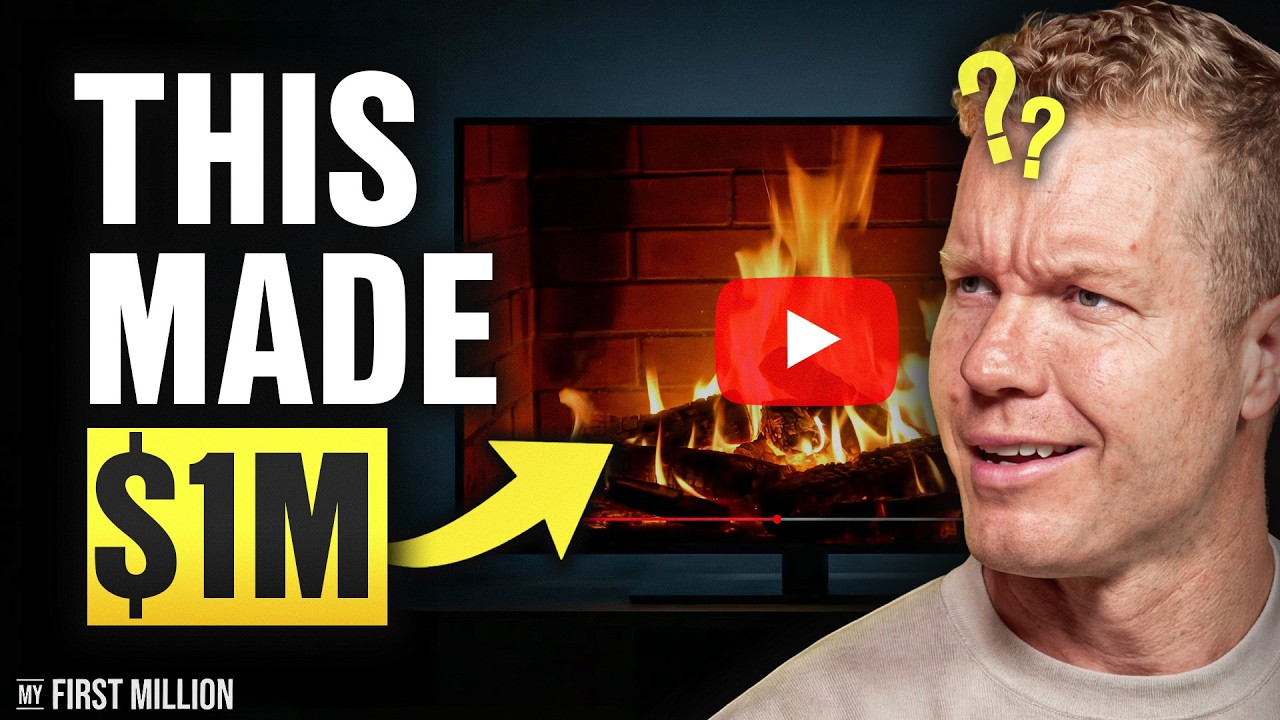
I have one more very dumb idea that I admire for its simplicity. So you probably are a subscriber to this YouTube channel. Can you just type in 10-hour fireplace?
Speaker 2:
Of course. I mean, everyone is, aren't they?
Speaker 1:
So there, what you will see, describe what you see when you type in 10 hour fireplace and then click the YouTube channel.
Speaker 2:
They have done a very good job of naming it. So I see, oh my God, I didn't realize it was that big. Okay. Holy moly. Okay. So obviously it's what you guys expect. It's a 10 hour video of a fireplace. With 157 million views.
Unknown Speaker:
Exactly.
Speaker 1:
How many videos on this channel, Sam?
Speaker 2:
So they posted this 10 years ago and shockingly they have 120,000 subscribers and there is one video and it's so funny. There's like points in the video that you know how when you scroll over YouTube there's points where it spikes?
Like where the viewers are just loving it? Yeah, like why is it?
Speaker 1:
Let's look at the most replayed section.
Speaker 2:
Oh, they don't even add logs. They don't even add logs to the fire, so it must be like a 30-second loop just done over and over and over again. There's parts where it spikes. You see the part at five hours and 55 minutes?
Speaker 1:
Thrilling. Everybody knows about that part.
Speaker 2:
Oh, the top comment, bro's a millionaire.
Speaker 1:
Bro's a millionaire because this channel was started by one person in Romania. It's a channel with one video. So this guy just hit it and quit it. This is the one hit wonder of the business world.
He posted one video of a 30-second loop of a fireplace, or I don't know if it's a 30-second loop, but a 10-hour video of a fireplace crackling, and this guy made a million dollars in Romania.
And did he try to follow it up with another video and then turn it into an empire and then create it? No. He just put the video up and let it run, baby. I admire this. I admire the restraint maybe more than I admire the ingenuity.
Speaker 2:
Have you noticed on YouTube what's been going on with these types of things? I don't know. I guess we can call it an ambient channel. Let's categorize them as ambient channels. I love ambient channels. I love Brain.fm.
But then I started going down the rat hole of like other music. So there's like, they call it like, like, is it like lo-fi Mac Miller? It's basically just Mac Miller. For some reason, I don't know how I got, I like Mac Miller,
but not enough that I would think you'd start popping up on my channel. So, it's tons of like lo-fi Mac Miller, which I love. But what I've noticed is that there's basically like a quadrant or like a huge graph where it's like,
let's do old money. Let's do 1980s. Let's do this. And then it's like, now select country. So, for example, I keep getting targeted with old money Brazil or 1980s finance. And they create the best AI thumbnail.
So, type in old money Brazil music.
Speaker 1:
Hold money Brazil.
Speaker 2:
Trust me. It's so strange.
Unknown Speaker:
All right.
Speaker 1:
I see this gentleman in this nice suit with a cigar. And Old Money Brazil, Elegant, Bossa Nova, Timeless, Luxury, Instrumental Playlist, 74,000 views.
Speaker 2:
I get targeted with so many of these. There was another one where it was like...
Speaker 1:
You get targeted or you select? You beg for them?
Speaker 2:
You make the algorithm. So yeah, like if I see that image, it might get a click.
Speaker 1:
First we shape our algorithm, then our algorithm shapes us, like old Winston Churchill.
Speaker 2:
But then there's even crazier ones where it's like, greedy American Revolution, like I don't like, like locked in American Revolution or something like that.
Like, it's like, it's crazy how like specific they get, but they basically just take like, like, you're joking.
Speaker 1:
90 Minutes of American War Revolutionary Music, Liberty Song playlist.
Speaker 2:
Do you see a good one?
Speaker 1:
Define good, bro. I'm never going to click any of these.
Speaker 2:
The thumbnails are so funny. I'll have to find a different one. I tweeted out the other day. I was like, the thumbnail gods have been smiling on me. It's like an American Revolution Like music, but the best thumbnail ever.
And I keep getting targeted over and over and over again. These guys must be doing well. You've never seen these?
Speaker 1:
Well, I've seen just a normal Lo-Fi, so like Lo-Fi Girl, for example. Lo-Fi Girl, I think, is probably the biggest channel in this category. 15 million subscribers, two and a half billion views on the channel.
We're making about $100,000 a month on this channel right now. Right now, she's live. There's 30,000 people just listening to this right now while we're recording this.
Speaker 2:
It's the best.
Speaker 1:
Why don't we just do this?
Speaker 2:
Why are we talking? Look at the thumbnail that I sent you.
Speaker 1:
Oh, this is incredible.
Unknown Speaker:
What is this?
Speaker 2:
Explain what you see.
Speaker 1:
I mean, I don't even have a word for this. It looks like, you know, like what's the painting at the top of the Sistine Chapel where like the naked man's reaching out to like God and their fingers are about to touch? It looks like that guy,
but he's got his dukes up like he's about to fight and he's like a hairless naked man with like half a mullet. And it just has classical music that goes hard.
Speaker 2:
Yeah. Or I'll see them where it looks like paintings like that and they're giving you like the shocker sign. I just get so many of these. There's this weird underground world.
There's that underground world and there's the underground world of the comments. If you look at MFM's comments, people can't see this, but on the back end, we've tried to ban them where it's like, I can't believe no one has been blessed.
Why hasn't anyone blessed me before? They've just blessed me after I read this book called You know, millionaires are us. Or it'll be like, I totally agree with this video.
And it's so funny that this video that you guys are making these points because I read about this exact thing in the millionaires are us book by this person who's a total saint.
Speaker 1:
Dude, those guys are like the bane of my existence, by the way.
Speaker 2:
It's the worst.
Speaker 1:
I just sit there and manually try to get rid of them. Have you seen this guy, Yang Mun on Instagram? It's like an AI monk. And he's got this like healing guide.
Speaker 2:
He's got so into it.
Speaker 1:
He's got like one to two million followers. And it's a monk who's just doing like talking head advice videos. And then he sells a healing guide. And again, it's like, you know, it's a guy who's like, you know,
it's a kid who's 17 with like the broccoli haircut who had just moved to Miami and he's in a house with seven other guys and they're all creating these accounts that are like, there's one of just elderly...
Speaker 2:
It's sold on WOP. You know, what's that thing called? WOP or whoop, where you buy like financial newsletters. If you go to his, if you go to Yang Mun's link tree, you click on...
Speaker 1:
Because that's what a monk would do, right?
Speaker 2:
He would be on WOP.
Speaker 1:
The ebook, Time to Heal, young man.
Speaker 2:
Things you might love that it's like newsletters that it's like. 10X your wealth with this stock tip.
I fall victim to this worse than like a grandparent falls victim to like buying the top listing on an Amazon like like every birthday for every like for every gift giving experience at my house right now from grandparents.
It's like you guys all just typed in kids bike and bought the exact same thing.
Speaker 1:
All right. I got to show you one more. This is the best one. All right. So I I'm on YouTube the other day. And you know when the algorithm just like has a commission on five star, you know, experience for you. So this is one.
The most intense shoe salesman you'll ever meet. It's a CBS News archive from 1983. There's shoe store here in Sharon, Pennsylvania is just, you know, a shoe store.
Unknown Speaker:
Oh, no. That's the playing field of a champion. Here he comes now, out of the bullpen, the hottest pitcher of a retail shoe game today. Big number one, Larry Jolton. 11C, come on up.
Speaker 1:
Alright, so this video is of this guy, Larry Jolton, who is the number one shoe salesman in America. This is back in 1983. He sold $400,000 worth of shoes at this physical shoe store himself by hand. It's in Pennsylvania.
It's Rayers or something like that. It's a famous shoe store. He was the number one hustler. This video is amazing because they just show him.
Speaker 2:
Play a clip on him. I want to see. What's that? The hook is great. I'm in. I'm bought in.
Speaker 1:
Here you go.
Unknown Speaker:
I wouldn't go any bigger than that. That's a nice dress. You're 20% off. I like it better. I do too.
Speaker 1:
Especially in the summertime. Listen to me.
Unknown Speaker:
You order the two shoes, whatever color you want. If it comes in, it don't fit. If you don't like it, you're not obligated to take it.
Speaker 1:
Big day. Clean it up.
Unknown Speaker:
Larry Chilton is the Cy Young of his time. The best of the big league shoe pitchers. There are only 38,000 feet in Sharon, Pennsylvania. Last year, Larry Joseph sold $423,000 worth of shoes. We're busy today, fellas.
Speaker 1:
I can feel it.
Unknown Speaker:
I can feel it. It's going to be busy. His stats make him the MVP, the officially recognized champion shoe salesman. It's not bad at one time.
Speaker 1:
All right, so watch this. So they show him doing his thing, and there's a couple of amazing parts. All right, so one is he's like, the worst thing in the world is someone leaves without a shoe.
He's like, that's not going to happen on my watch. So he's serving like four or five customers at once, and he's like, He's basically like selling them on like it's about not about the size. It's about the fit.
He's got all these like go to slogans. And he's like, that's a good looking shoe right there on you. And then he'll he'll like deliver them to their house. He's like, I'll deliver to your house. I'll deliver to your office.
I'll find you on the street. I'll give you the shoes. Don't worry. And he's like, if you ever have a problem, you just give right back to me. I'm Larry. And then he they show like he never takes a lunch break. They show he's eating a burger.
Unknown Speaker:
You have to keep up your strength because sometimes the game goes into extra innings.
Speaker 1:
He's just eating a burger in the back like he just has a burger in the shoe rack where he finds the sizes. He just takes bites as he's running back and forth to get customers the shoe size.
Speaker 2:
This guy's awesome.
Speaker 1:
He's like, and then he's like, you know, he's like his sales philosophy. So he's like, you don't want to be the nice guy. He's like, you know, you got to, some people just want to be told they want to be told what they need.
And he's like, you know, they come in, they think their shoes are size eight and a half. They walk around with cramped feet all the time. He's like, you got to give them a size 10. He's like, he tells a story about this guy,
like didn't know what he wanted. He's like, the customer doesn't always know what they want. You got to help them. And he's like, yes, that's the art of shoe sales. But just his overall energy.
And when he's walking around the bullpen, he's like, got a big day today, boys. Got a lot of shoes we got to move today. And all the other shoe salesmen clearly don't care. And this is a very inspiring video about just being the best.
Just championship mentality in anything you do.
Speaker 2:
Dude, so he died this year, which is, he died this year in his obituary. It goes in depth about how he was on that show and a bunch of other shows.
He said he was, the National Shoe Retailers Association named him Salesman of the Year in 1983, 84, 85. They say he was a larger than life figure. This guy's awesome.
Speaker 1:
He's incredible, right? I love this guy. I love this man.
Speaker 2:
Larry's a salt of the earth type of guy.
Speaker 1:
If you're going to do anything today, you bring that Larry Jolton energy, that championship mindset to whatever you do. You'd sell whatever you sell the way Larry sold shoes today, all right? That's the final word here.
Speaker 2:
Have you ever studied sales? I imagine, if I had to guess, you did something, you and I have behaved similarly, which is like, we're pretty charismatic, so we think that's all it takes.
But then I've hired salesmen before and saleswomen before, and I've seen the difference between a winning one and a pretty good one. The greats have both the talent and this thing that I'm going to describe,
but the second thing that they all have to have is process, where they know that saying this gets that.
Speaker 1:
Charm, charisma, talent, whatever. The best people use process. The reason we actually suck isn't even because we can't adapt that, because over time we're like a problem solver, like it's a puzzle.
Oh, I gotta do this, and then that gets me the solution I want. We would get bored doing that. The most impressive thing of this guy isn't that he sold $400,000 shoes, it's that he just kept doing it year after year after year.
He never got bored of it. I have this phrase I say now, because every day when I do my workout, We start with this 10-minute routine where I basically like loosen up my IT band.
It's like do like a fascia release on my IT band, which is painful. It's boring. It doesn't look cool. You don't feel like you're getting any stronger or more athletic.
It's like the opposite of what you want when you go into a workout, but I need it. I need it because like I've had the injuries and I got to keep doing this. And you can't do it once, twice, you can't do it for two weeks.
You basically have to just constantly do this if you want to stay healthy, if you're like, if you're got sort of my leg condition. And now every day when I go in, I say, all right, boys, we're not getting bored of greatness today.
Let's not get bored of greatness today, right? The Larry mentality of like, you can't get bored with doing the thing that leads to great results, even if it's the same thing you've done. You can't get bored.
You can't become sort of nonchalant about it. You can't become autopilot with it. You can't like cut the corner or cut it short because you already have done it before. Like, you have to do this. And that's when I'm coaching my team.
It's the same thing. We played a game the other day and in the warmups, I knew we're going to kick this team's butt because their warmup was so sloppy. I was like, if they warm up like this,
they're not going to be able to play at some high level because this tells me everything I need to know. I don't need to do a scouting report. It's over. And sure enough, we beat them by almost like 50 points.
And yeah, they didn't have a lot of talent, but they were shortcutting the process. And so I just feel like getting bored of what gets great results It's been a real problem for me in my life and I know that for other people,
if you're smart and talented and you get off on solving new problems and new puzzles, it could become an Achilles heel.
Speaker 2:
I'm the biggest victim of these stories where a company does the small things right and it levels up to the big things. For example, have you heard of Rakuten?
Speaker 1:
Yeah, I know them well.
Speaker 2:
So Rakuten is a Japanese company. I think they're like the Amazon of Japan, right? Ish?
Speaker 1:
Yeah, it's retail, but then there's also like a big like discounting kind of component to it that I think like deals component to it that I think that Amazon doesn't really have.
Speaker 2:
Yes, but it's just like a multi-billion dollar huge massive thing, whatever.
Speaker 1:
Yeah.
Speaker 2:
And for some reason, I came along the founder and I started reading about him. And they have a book because they're famous for having a culty culture. So the culture is like super into it.
And he released a handbook on what their culture and what their values is. It's one of these things that were supposed to be internal and it was a hit. So now everyone reads it or a lot of people read it.
And like he has like 30 rules or something of Rakuten. And like rule number one is every Tuesday from 3 to 4, everyone, every office throughout the world, you stop what you're doing and we clean.
And we refuse to have cleaners, hired cleaners. And his reasoning was that if we keep our desk clean, it's the same thing. You already know what I'm going to say.
You keep your desk clean and you have a clean desk, you're going to have a clean mind. It's going to keep you disciplined. Same thing like, you know, General, I forget what the general is who had the famous speech. Make your bed.
Speaker 1:
Yeah.
Speaker 2:
Yeah. It was make your bed. And then there's all these other famous stories of like a coach of Indiana basketball or something like that who turns around the team and he's like, I started by teaching the front desk how to answer the phone.
Speaker 1:
How to shoelaces. Yeah.
Speaker 2:
Yeah, it's like these stories over and over and over again. I love all of them. I'm always into these. I don't know how often they are true, but I buy into it. Have you ever tried one of these things?
I mean, it sounds like you're doing it with your basketball team, warming up, right?
Speaker 1:
Yeah, we try. I mean, the hard part is to have the courage to actually live by it, right? You can read the story back. Ah, that's great. And that makes total sense.
Then you get into an environment where you got all these people who they're not as bought into it. They don't, you know, they don't really care. And are you going to really force it? Are you really going to enforce it?
How much of a standard really is it? And how many exceptions are you going to create? And are you going to let your best player not do it? Or are you going to let a meeting get in the way of it? Right?
Like, it's all the compromises is where things get interesting. And I have never gone to the extent where I'm like,
truly hardcore about it because I think it takes like just a different level of leadership and courage that I personally don't possess.
Speaker 2:
Let me reframe it for you. So in high school, I tweeted something today, but in high school, my freshman year of high school, first practice, I went to an all boys school, first practice for cross country.
The coach gets up and he goes, I remember the Titans moment. He was like, I'm going to teach you guys something. I'm not here to teach you how to be the best runner.
What I'm here to do this year is I'm going to teach all of you boys how to become men. We're going to do it by learning how to run better. He goes on to say, we're going to show up earlier than we anticipate.
We're going to run when we don't feel like it. We're going to go through the pain no matter what. We're going to stick around until the last person's finished because that's what we do with our teammates, that whole thing.
At the time, I kind of like laughed a little bit about it, but then I started buying into it and it brought us all together. Our team did.
And the cross-country team, my high school slew, you know, it's a nerdy sport, but we won all the time. We always won. And he used to have this idea of like being great and how you're going to be a great man just via running.
And we're going to teach you how to do all these little small things. And it totally worked on our team. And it was awesome. And because of that, this coach has a very cult personality. We used to have this phrase.
It was tradition doesn't graduate. That was like, I still remember like tradition never doesn't graduate, you know, like, like that. He was like, he's like, I've been doing this since the 80s. Tradition doesn't graduate.
You guys are going to graduate, but we've been doing this the same way and it works. And I just remember all of these like culty lines and we're talking high school cross country,
nothing like significant, but it like meaningfully impacted me and it was awesome. And so this type of like inspire you to be a better human being by teaching you how to work better or clean your desk better. I love that story.
Speaker 1:
My buddy Jason told me an amazing story like this. So Jason Hitchcock, I think you know Jason. He used to work at Bevo and I was pretty hard on Jason. Like I would give him feedback all the time. Like, hey, you got to do this.
You got to do this. You got to do this. And like maybe it's because he was one of the non-engineers. So I felt like, you know, there's only a few non-engineers. I'm going to tell you what I think.
The engineers, I don't really have as much to say because that's not my domain. And I noticed he took it really well, always, like incredible attitude. So I was doing a one on one with him. I give him credit for that.
I was like, man, I think that you have just like a 10 out of 10 attitude at life and at work. And I just really respect that. And I know that, like, I give you a bunch of feedback, but you take it so incredibly well,
like, you know, whatever. And he was like, I receive it. I go, what? And he goes, I don't take it, I receive it. And he goes, can I tell you a story where that comes from? I said, yeah, sure. He goes, my freshman year, I go to high school.
I'm a high schooler and I wanted to play water polo. My brother was the captain of the water polo team, my older brother. And I thought I was as good as him or going to be better than him. So I'm feeling myself a little bit.
I'm like a hot shot. And he's like, we get in the pool and I guess like for water polo, like you're basically treading water while you're playing the sport, right? So it's kind of a hard sport.
So during the warm up, you're probably not going as hard. So he's being a little sloppy in the warm up where he's treading, but he's like when he's throwing the ball, his arm is like skimming. It's like in the water still.
It's not out of the water like you would want it to be if you were really playing a game. And so the coach, the varsity coach walks by and he goes, Jason, get your arm out of the water. Keep your arm out of the water.
And Jason's like, yeah, yeah, thanks, Coach. Keeps going. Couple minutes later, he's like, you know, being a little lazy again, does it again. Jason, keep your arm out of the water. And he's like, yeah, Coach, sorry, I will.
I'm just getting warmed up. He has something to say back to the coach. Coach blows the whistle. Everybody comes over. He goes, hey, everybody, I'm Coach. I just want to introduce you to Jason. Jason is a freshman. Jason is too good for feedback.
Jason takes the gift of feedback And he does not care. He doesn't want your feedback, all right? And he basically pulled him aside. He embarrassed him in front of everybody. Like, Jason is too good for feedback.
And he's like, look, Jason, feedback is a gift. If I'm going to give you that gift, you got to receive the gift, right? Don't just throw the gift away when I give you that gift. Think about what it takes to give somebody feedback.
You have to be kind of vulnerable. You're risking conflict. You have to care about making that person better. These are what it takes to give that gift. And so he was like, feedback is a gift.
And so like at the whole company that became like, you know, a mantra for us, which is like feedback is a gift, which is really important because Otherwise,
you can create a kind of defensive mentality or people shy away from saying something to somebody else. They'll only do it as a last resort. And that's not good. And so the feedback is a gift thing like changed us.
And it was a lesson from his high school water polo coach. But the story with the lesson is what we needed for like people to get it.
Speaker 2:
I love stories like this. They always like get me going. You know, I distinctly remember we did a podcast a year ago where we were talking about I think I was actually like motivating you.
I think like you had said something like I haven't done anything like world-changing, but I've been doing this thing and I was like, whoa, whoa, whoa, why are you saying that? Who cares if it's world-changing?
Just creating a small game that makes someone just a little bit happier is worth it. It's not necessarily less meaningful than anything else. I sort of have grown to believe that to work, where high school sports are very insignificant,
and yet it's such a world-changing experience for many kids. I think that we need to take that same energy to work, which is like We're making a podcast. That's fine. But let's even go something way less glamorous. We're making B2B software.
It's not that special. But you can learn how to be excellent here. You can learn how to follow through here. You can learn how to say you're going to do what you say and whatever.
You can learn how to have this unearned pride where you make these tough decisions when no one is looking. And so I think that has carried over to employees and how I've been working with my team.
Speaker 1:
That's cool. I like it. Sam's in his leadership arc. That's definitely the season you're in. You gotta start going by Samuel or something. I feel like we need to upgrade the name. I think you need to reinvent yourself here, actually.
Speaker 2:
Father, just father. Just the same way the stargazing thing exists, there's this thing called UniversalMinistries.com where you can sign up and get ordained as a minister and I've had to do that.
I've had to do that because I've officiated a couple weddings before and it's all obviously a crock of bullshit, but I am a minister, so if we could go by I am a legal witness, so.
Speaker 1:
All right, let's take a quick break because I got to tell you a story. Let me tell you about the first time I tried to run payroll for my team. I was using a traditional bank and you know the type. It's got a janky interface.
It's built like a 2002 tax form and it was open only during business hours and I hit send and it froze. They flagged the transaction. They locked my account.
They put me on hold for 45 minutes and then they told me I got to visit my local branch. And that was the day I started looking for a new banking solution. After asking a few founders what they were using, I found out about Mercury.
And so now my payroll is two clicks. I can wire money, I can pay invoices, I can reimburse the team, all from one clean dashboard. That's why I use it for all of my companies. And so do 200,000 other startup founders.
And so if you're looking to level up your banking, head to mercury.com and apply in minutes. Mercury is a financial technology company, not a bank.
Banking services are provided through Choice Financial Group, Column NA, and Evolve Bank & Trust members, FDIC.
Speaker 2:
Alright, Shaan, I want to show you someone who's in the aviation business, in the grocery store business, and actually had a pretty important character in a movie, Marty Supreme, which recently just came out.
Speaker 1:
Okay, I haven't seen the movie yet.
Speaker 2:
Okay. Well, you know what it is, right? It's like the biggest movie going on right now.
Speaker 1:
Timothée Chalamet and ping pong? I don't know. That's literally the only two words I know.
Speaker 2:
That's it. Or as Adam Sandler says, Timothée Chalamet. Have you seen that? Everybody does that so good. Okay, so Google John Catmiadidis.
Speaker 1:
All right, John the big cat. Here we go. Who am I looking at? Okay, here's just a quick description. American billionaire, businessman, and radio talk show host. He's the owner, president, chairman, and CEO of Grocery Chain's Gristeeds.
I've never heard of that. D'Agostino Supermarkets in Manhattan. Okay, go ahead. $5 billion net worth.
Speaker 2:
Yeah. You've never heard of this guy, have you?
Speaker 1:
Is this guy the famous actor? Why does he look so familiar?
Speaker 2:
He's a familiar face. He's one of these guys. He's sort of like the character in The Dark Knight who plays the police chief where you're like, I've seen this actor everywhere. What's his name? He sort of has that type of energy.
So here's his story. I think he's 80 now. So he was born, I guess that would mean sometime in the 40s, and he immigrated as a baby from Greece. He came to New York. I believe he moved to Harlem.
And then he was an okay student, went to Brooklyn Tech, which in I think New York is a pretty good school, but eventually actually got into West Point. So he's clearly smart, but didn't go, decided not to go to school.
And instead, he bought a small grocery store. So at the age of like 20, he convinced a failing grocery store to sell it to him at like an owner financing type of setup where he didn't have to come up with a lot of money.
But do you know anything about grocery stores? They're like the hardest business to run.
Speaker 1:
It's like no margin business, right?
Speaker 2:
Yeah, it's a commodity. There are no margins. So if you look at the biggest grocery stores or at least some of the mid-sized grocery stores, like the regional giants, they do 3% margins. It's incredibly challenging.
You have food that's going to spoil. And particularly back in the 70s when he was doing it, you don't have the best systems to make sure your food's not going to spoil very hard. But he's a dog.
He's got that immigrant hustle and he's able to grow this business. I think it's something like seven years. So by the time he's only 32.
He has this cool quote that I found in newspapers.com and this old article where he grew the business to the point where he was making something like $40 million a year in revenue, had like 12 or 15 locations.
And he goes, I'm now paying myself at the age of... And this actually, he said this at the age of like 28. He was like, I'm paying myself $1 million a year. So through just hustle and grind, he makes it work.
And he does a lot of stuff that we take for granted now. His grocery stores, they were called Red Apple. They did free cash checking. They did free delivery. It was a discount store. A lot of stuff that isn't particularly groundbreaking now,
but he just provided a pretty simple service, but he did it really well. Now, Red Apple, which is, I think they have like 100 locations in the city. They own Gristidis. Have you heard of Gristidis?
Speaker 1:
No. Is that like a New York thing?
Speaker 2:
Yeah. These are all local things, but here's where it gets weird. So he does two interesting moves. So at the age of 32, I think it is, he was like, well, I was going to get into West Point. My dream was to be a pilot.
I've never been able to do that. Gets his pilot license as an activity just for being for fun. And he does this move that I've actually heard Richard Branson do as well. He buys a jet and it's like kind of interesting and kind of fun.
But then he's like, I got to turn this into a business. I got to do something. And so he buys one plane, a relatively small plane. He has a biography and it was just a Cessna, nothing fancy.
And he starts allowing customers to charter his plane from New York City to Atlantic City. And this is in the 70s and the 80s. So the airlines are still a little bit nascent, but it's still pretty complicated. But he pulls it off.
And he's able to, so now officially he's in the aviation business and like one thing leads to another and it grows for like eight years and eventually becomes like a fleet of like 40 planes and jets,
which eventually he sells to Warren Buffett or, yeah, Warren Buffett. And that is like one of the beginnings of NetJets, which is one of Berkshire Hathaway's like crown jewels, I believe.
Speaker 1:
And so he was doing it as private charters, not like an airline like Branson.
Speaker 2:
No private charters, but he tried to get into the actual airline business, and I don't think it worked out. Now, while all of this is going on, he's still only like 33, 34, 35 years old. He does another crazy thing.
He hears about an oil refinery going out of business in Pennsylvania and the grocery store business, it's a commodity, lots of unions, very low margins, 24-hour, like you have to be working 24 hours to make it work.
And somehow, which I never would have thought this would have been a thing, he made the leap that they are comparable and he gets into the oil business and he finds an oil refining company, which do you know what that means?
Speaker 1:
Not really. They are a middleman in the oil process between drilling for the oil and selling it to the end customers, my guess.
Speaker 2:
Not exactly. These are all very vague terms, so I had to figure out what exactly is oil refining. Basically, if I had to dumb it down, they do two things.
One, they have a massive pool or tank in the ground that can store tons and tons and tons of oil. So you drill the oil, it goes to this thing and it's not particularly useful. You can't use it.
And so there's this process where you have to refine it and you could take parts of that crude oil and turn it into oil that you could use in cars, oil that you can burn as kerosene.
You know, oil can turn into multiple products along the way. And that's what he did was he bought a business that did that, which is actually Kind of ridiculous,
like you never would have thought that that would have been a thing, but it works.
Speaker 1:
And by the way, when you're reading about this or watching whatever you watched for this, is it is he just like a gunslinger? Like, why is he going into all these different spaces? He can't help himself. Does he have some aspiration?
Is he just, you know, he's just wired that way? Like, what did you get? There's a sense of like, why is this guy doing all? Why is he bouncing from from? Totally different hard thing to totally different hard thing.
Speaker 2:
This is why I wanted to bring him up. And so I think you and I will get a kick out of like people like him. But let me just add that the last thing he does two things now in his six,
I think he's close to 80. Now, in his 60s, he does two other wild things. One, He starts an AM radio station political weekly radio show, which he still is the host of. You can't find it on YouTube, and you can't find it on Spotify.
You literally only get this on AM radio, and he records every single Sunday. I've listened to it, and his co-host is this Long Island guy who's like, hey, John, what do you think about this Mondani guy? It's hilarious.
I'm an unrefined billionaire, I would say, and I mean that in a cool way. And the second thing that he did was he ran for mayor in 2012, I think, and he almost won.
And he was like, I'm going to be a mayor for the people in Harlem and the people in Wall Street. So he's this very sort of salt of the earth, immigrant energy type of billionaire guy.
But the reason why he's interesting is, A, what's that word that you have been obsessed with? Generative. Yeah, he's very generative, but he does this in a way, you know, like the charm that when Donald Trump is being like a nice guy,
you know, like the charm that he has where he's like, screw it. Let's just do it. You know, what's money amongst friends? Just like old timey, like, right, like what's a little like, you know,
I'll take a little you take a little we all win like this type of energy.
Speaker 1:
My word is my bond. My word is my word is stronger than oak.
Speaker 2:
This guy is actually that. He has that energy with him, but he's not hateful at all. He's a Republican, but he talks very fondly of Obama and Hillary. He's not a hater at all. He's got this very folksy type of vibe.
When you hear him talk, he's got this thick New York accent, but it's very much a spit on my hand, shake your hand type of energy. I have found him very fascinating because of that and also Now, his company,
it's called Red Apple Holding Company, I think. They have 8,000 or 9,000 employees. His family runs it. I believe him and his kids, they own a building in New York City. They all live in the same building. They run this company together.
He's still incredibly active, even at the age of 80. He's just constantly doing stuff. He's very interesting to me. Also, he looks very funny.
Speaker 1:
He was just an actor? He just had a cameo? Was he playing himself?
Speaker 2:
Listen to this. Marty Supreme, which is the hottest thing going. I went and saw it the other day.
Speaker 1:
How is it? Like must watch? Okay. Where were we at?
Speaker 2:
Did you see Uncut Gems?
Speaker 1:
Loved Uncut Gems.
Speaker 2:
Loved. Then you'll like this. So if Uncut Gems is a 9 out of 10 on the stress scale, Marty Supreme is an 8 out of 10. And for people like me, if you're in my boat, you'll hate it. I hated Uncut Gems and I hate Marty Supreme. Too much stress.
Yeah, all the characters are pretty evil and there's no like redeeming qualities of any of them. But this guy, John, has a pretty interesting, not minor character in Marty Supreme. And so I was like, this guy is everywhere.
He's a man about town. He's just always doing stuff. And he just seems like sort of in that Jesse Itzler category of people who have fun while winning and doing well. And he's just a really fascinating guy to me.
Speaker 1:
Dude, I'm reading this guy's Wikipedia and I'm like, wow, that's really amazing. Oh, that's really amazing. And then it's like he gave a speech at the Stern School of Business expressing his unease about his daughter's graduating class.
He said, 480 of the 580 kids are Asian, including Indian. And that's scary when you think about it. We're going to deport most of these kids. So then I was like, oh, well, that may not be so amazing from,
you know, kicking me right off this podcast.
Speaker 2:
Did he really say that?
Speaker 1:
I don't know. It's on the Wikipedia page.
Speaker 2:
I didn't see that one, but I did see other things where I'm like, I couldn't tell if you were trying to be funny and it reads stupid or what. But yeah, he does seem like he's an 80-year-old New Yorker who has a little bit of a big mouth.
But my vibe, my read on him was that he was an alright guy. But maybe I could be wrong.
Speaker 1:
We're slowly assembling this list of what you call capital men. And I feel like he would be one of the capital men where he's just It takes money, goes into these sort of mavericks into new spaces, creates new investments,
new entities and whole new industries and wins more often than not. It doesn't win every time. You actually can't be a capital man if you have a perfect record.
It kind of means you weren't playing as rough as you should have, but wins more often than not. I feel like this guy's in that bucket.
Speaker 2:
Yeah, I was reading his book and there seems like a common theme. A lot of these guys, there's one point in their life where they're just, what was the phrase we used? They're leveraged up to the tits.
They're just like a crazy amount of debt.
Unknown Speaker:
What's the scientific term for that?
Speaker 2:
Derek from More Plates, More Gates, More Plates, More Dates, he always says, this guy's juiced to the gills. And when I was reading about old Johnny Cats, I was like, this guy's This guy's leveraged to the tits. He's leveraged to the gills.
And so, yeah, you have to pay the price to do a lot of this stuff. But I love these young guys who have this gunslinging energy.
Speaker 1:
So he is your Billy of the Week?
Speaker 2:
Yeah. So the whole anti-Indian thing, I didn't know about that when I got into this. So this is a little...
Speaker 1:
It's hard to throw you.
Speaker 2:
So I should have done a little capital J journalism. Otherwise, I was going to say we should have invited him onto the pod, but I think that probably won't be happening.
Speaker 1:
Hey, we can still invite him.
Speaker 2:
Let's see.
Speaker 1:
Let's see what happens.
Speaker 2:
You should ask him about that quote.
Speaker 1:
We'll just make sure we do it remote. I don't disclose my location.
Speaker 2:
I didn't realize he said that. So did he say what other dumb stuff did he say? He said he said something about like.
Speaker 1:
There's something about Hitler. I don't know.
Speaker 2:
Classic blunder.
Speaker 1:
He compared raising taxes on the wealthy to how Hitler punished the Jews.
Speaker 2:
Yeah, that's probably not the best place to go to.
Speaker 1:
A trap we've all fallen into.
Speaker 2:
I did read that line and I was like, dude, we have seen time and time again that type of comparison. People have tried to make it. Literally not once has it ever worked.
Speaker 1:
Dude, I might end up being the richest man in California. Have you heard about this billionaire tax?
Speaker 2:
Yeah, so is the gist of it that net worths will be taxed at 5%?
Speaker 1:
Yes. One-time tax of 5% for billionaires. So all the billionaires are leaving, which will mean they'll just be like, okay, we'll move to the next class of people. Soon enough, I'll be the last man standing in California.
Speaker 2:
Yeah, I think that's a pretty stupid law but at the same time I'm like, isn't it crazy how little power a billionaire has if they have to leave their home?
Speaker 1:
Yeah, like do you really have that much power?
Speaker 2:
It's like another Dark Knight reference Have you seen when Bane is talking to the guy doing construction and the little guy's like I'm in control and Bane puts his hand on his shoulder he goes Do you feel in control?
Because like Bane is about to like snap his neck. That's sort of like...
Speaker 1:
That's the 850,000 votes it takes to put this on the bill.
Speaker 2:
That's sort of the energy that I'm feeling right now, which is like these billionaires being like, you know, we're the big shots. It's like, you don't look like the big shots. If you have to flee your home. That said,
it is kind of a stupid rule because so like the analogy that I always use is let's say that you buy a Picasso painting for $5 at a garage sale. And it turns out, you didn't realize it, but you bought a one-of-one rare piece of art.
Now your net worth is hundreds of millions of dollars or whatever the painting is worth. How are you supposed to pay taxes on that assessed value?
Speaker 1:
Yeah, it's complicated. I mean, you don't even have to go as far as finding a Picasso at a garage sale example, which is more of an edge case. But you're a founder of a startup in San Francisco.
On paper, net worth is $200 million, but that's just because you have an AI company that was hot and you raised a round. That doesn't mean you have that money. That doesn't mean that that money is anywhere close to guaranteed for you,
but you would be on the hook for the taxes the following year, which is pretty wild. All it'll do is just obviously gonna drive the wealthiest people out, obviously drive the startup founders who want to get wealthy out,
because why would you start here? Literally like, you know, strangle the golden goose of California. It's like, oh yeah, what did you achieve? What did you accomplish with that?
Speaker 2:
I read that like it said like 20 or 30 families have left, like prominent families. You should make a like a Public announcement, the 31st.
Unknown Speaker:
Oh, what a great idea.
Speaker 1:
That's hilarious. That's like that one time that I tweeted that I was buying Bitcoin and then it somehow got picked up by all the Bitcoin magazines and newspapers and they were like,
Executive Shaan Puri says he's moving 20% of his net worth into Bitcoin. And I'm like, I don't think y'all know how small that net worth is. You know, like that's not magazine worthy. This has escalated far too quickly for me.
Speaker 2:
I saw some guy on the line announced that he was leaving and everyone was making fun of him. And they're like, You're not important enough for us to care.
Speaker 1:
You own two duplexes. You didn't qualify for the bill.
Speaker 2:
Is that what it is, by the way, a billion?
Speaker 1:
Well, there was a proposal for $50 million. That didn't make it. Then they went to the billionaire tax because it's like, who's going to not vote for that? And so that's the one that's currently proposed.
But people have done the math, like even if you tax the billionaires, even if you took all the billionaires' money, it doesn't like plug the hole of the California spending.
Basically, it's setting precedent for, it's kind of like income tax, right? Income tax, I think, was supposed to be this one-time, what was the first one, like 3%? It's like, there's a one-time only 3% tax on income.
Like, don't worry, guys, it's okay. And now, like, everybody pays income tax, you know, 20, 30, 40%, 50% of your income every year now. And so, the idea would be,
once they set the precedent that they could just tax you on your property that you have not realized any gains on, Then that's a problem. And if they could set the bar at a billion, then they could easily change it to change it or add.
Well, also, if you're over 100 million, then you pay this. And also, if you're over 40 million, you're going to pay this. And, you know, they could sort of just continue on from there.
Speaker 2:
I've always found it interesting how people come up with round numbers to make as the threshold. If I remember correctly, in the 1910s or 1920s, this idea of a millionaire came to be,
where people were using the phrase millionaire, like, you're a millionaire, you've made it. And it's kind of funny that 100 years later, we still use that as a threshold,
because a millionaire in 1920 would be something like 20 million today. I think it was 18 or 20x or something like that. And then people are like, billionaires shouldn't exist. And I'm like, okay, but why one billion? $800M.
I've always found that to be interesting how we have settled on this perfectly round number.
Speaker 1:
Yesterday, I took my whole basketball team, the team I'm coaching, to the Warriors game. I wanted to make a special thing. After they won their last game in the locker room, normally we're just saying, you did this well, you did this poorly.
And then I was like, I want to do something for you guys. It's your birthday coming up. You guys want to go to a Warriors game? And then we went as a group and they got to go courtside and see Steph Curry. Like it was cool.
Speaker 2:
And you just ruined all of their eligibility for going to NCAA.
Speaker 1:
I accidentally violated like HIPAA.
Speaker 2:
How did you get courtside? You just knew a guy, knew a guy?
Speaker 1:
I don't know if he wants me to say, so I won't say his name. But yeah, I know a guy who's with the team X Player. And so he was like, He just literally like waved his hand.
He's like, I'll let them come down and the security guard's like, I guess he's waving his hand. You can go. And I was like, yeah, me and these other 18 guys. And so we all went. But anyways, it's part of a story. I had one extra ticket.
So I took my son, who's four and a half years old. And, you know, taking a kid to a game like this, his first basketball game, you know, we have to leave after the, you know,
second quarter because it's like bedtime and I got to drive him back home. But on the drive back, so I'm hoping I'm going to have this amazing father son time bonding and like, I'm like wanting him to love it.
I'm like, watch, that's the greatest shooter ever. Steph Curry, like that's the closest we've ever been to God right here, this five feet away. And he's like trying to care, but he doesn't really care. He's like, can we get his candy now?
And I'm like, OK, I got him some M&Ms. And I'm like, every time the Warriors make a shot, you get an M&M. Now he's like locked into the game. And so then finally we leave. And of course, the drive home was this like amazing moment.
Basically, I put Tesla like self-driving. I just talked to my son for like an hour. And it's like a one on one because I have three kids. So normally it's not one on one, but I get to talk to him.
So he told me, he goes, you know what I want to be when I grow up? I want to be a builder. And I was like, amazing. Builder of like what? And he's like, do I have to pick? And I was like, no, I guess not. And so I'm telling him about builders.
Somebody built this bridge. Somebody built this building. Somebody built this car. And somehow I start explaining to him who Elon Musk is. And I'm basically doing a podcast episode for him. And I'm like, you know rockets?
This guy builds rockets that land themselves. And he's like, what did they do before they landed themselves? And I was like, honestly, I don't know. Maybe that's actually hype, because people went to the moon and came back. So I don't know.
They come back. They do come back. Anyways, don't ask too many questions. So I'm telling him about Tesla, and he's like, did he start it? And I'm like, no, not technically, but let's not get into those details.
So I'm telling him about Elon Musk, and I tell him he's the richest man in the world. He's got money. He's got the most money in the whole world. And he's like, how much money does he have?
And I was like, he's got like $300 billion, $400 billion, something like that. He goes, He's quiet for like 30 seconds. And then I'm like, did you hear how much money he had? Are you still there? Did you fall asleep?
Speaker 2:
What happened?
Speaker 1:
He goes, can it even fit in his wallet? And I was like, no. He goes, so we used to use a grocery cart?
Speaker 2:
I was like, no.
Speaker 1:
Explaining the concept of banks. I had this long conversation with him about money and about the builders and the prolific people that make all this happen. It just reminded me...
Speaker 2:
By the way, did your son have a take on the simulation?
Unknown Speaker:
We didn't get there.
Speaker 1:
That'll be the next time. He does have a lot of questions similar to that, like, you know, like, where did the earth come from? And then I'm like, yo, honestly, like, we're very much past the edge of my understanding of like,
I don't know, to be honest. And like, who's older, the earth, the sun? There's a lot of questions that are pretty tough. But the good thing is in the car, they have like AI built in.
So you just like, if I don't know, we just turn on AI and ask AI and AI tells us. Anyways, so That's that.
Speaker 2:
All right, that's the part.
Unknown Speaker:
I feel like I can rule the world. I know I could be what I want to. I put my all in it like no day.
Speaker 2:
All right, my friends, I have a new podcast for you guys to check out. It's called Content is Profit, and it's hosted by Luis and Fonzie Cameo.
After years of building content teams and frameworks for companies like Red Bull and Orange Theory Fitness, Luis and Fonzie are on a mission to bridge the gap between content and revenue.
In each episode, you're going to hear from top entrepreneurs and creators, and you're going to hear them share their secrets and strategies to turn their content into profit.
So you can check out content is profit wherever you get your podcasts.
This transcript page is part of the Billion Dollar Sellers Content Hub. Explore more content →