Ecom Podcast
3 businesses we think are about to blow up
Summary
Explore the potential of unregulated markets, like oxytocin for marriage counseling, to create innovative products and services—taking inspiration from successful ventures in biohacking and IVF—could position your business ahead of emerging health trends.
Full Content
3 businesses we think are about to blow up
Speaker 1:
We're going back to the roots a little bit with MFM. Everyone says they want more ideas. I've got two of them. Okay, so everyone's lonely. We know this. I want to talk to you about two different radical ideas.
Speaker 2:
If you're listening to this podcast, we know. You know, we know.
Speaker 1:
Well, these two ideas I've already been interested in, and I was just trying to find an excuse to tie them together. I'm trying to make this cohesive, but they're two great ideas,
and we have a precedent of getting this first one somewhat-ish right. We have predicted a couple biohacking things. Not predicted, that takes too much credit, but we talked about it fairly early in the adoption cycle. Would you agree?
Speaker 2:
We're basically Big Pharma. We have predicted and developed several For several pharmaceutical drugs on this podcast, would you like to go down memory lane of a couple of them?
Speaker 1:
I don't actually know all the ones that we did. Obviously, GLP-1s, testosterone. What else were we talking about for a long time?
Speaker 2:
You've brought up GLP-1s kind of before they even got to market, before Ozempic ever got to market. We talked about TRT businesses, and you were toying around with the idea of like,
hey, I really believe there's a big business to be built here. We didn't end up building one, but we both invested in one. Well, we invested in one. That worked.
You also talked about sperm freezing, not just egg freezing, and I think that's also become quite a big deal. We've talked about IVF fairly early on and the different business opportunities that exist in IVF.
I don't think anyone's actually done those yet. A trusted brand in the IVF world, a chain. The Chick-fil-A of IVF, as I like to say. A place you trust. Okay, go on. What do you got now?
Speaker 1:
So, I was scrolling on Instagram the other day and I saw two things. One, a new version or rather another health trend that I think is going to be popular. And two, probably the best way to position this new trend I've ever seen.
So get palmer lucky CEO founder of and role also started oculus he was at this conference. And someone said something to him, a question that I tend to hate,
and he's one of the few people I've ever seen to answer this question in a great way. The question was basically, Palmer, if you were starting from zero and you had nothing, no connections, what would you do? What would you work on?
And he had the best answer.
Unknown Speaker:
If you were starting with zero today, some bet you made wiped you out, you gotta start again, you didn't have your network, you didn't have your wealth, What would you do today?
Speaker 2:
Palmer? I would try to end the tragedy of divorce with oxytocin doping for marriage counseling. We understand mammal pair bonding pretty well. There's a lot of people who want to stay together.
Speaker 1:
Most of the people who don't want to stay together should stay together, especially for their kids. Look, if people think SSRIs are fine, which they're not, but if they were, then oxytocin doping to stay together is definitely fine.
Speaker 2:
So, I've heard about this.
Unknown Speaker:
It's really critical, right? So, you know, people sort of drift apart over time. Oxytocin is safe, but if it's understood, we use it on mothers and infants. It's the bonding hormone.
Speaker 1:
That's right. It's the mammal pair bonding chemical. There's things you can do to increase the uptake and it's very well understood. Also, totally unregulated, which is great. Unregulated spaces are a lot easier.
You can go buy a kilogram of oxytocin on Sigma Aldrich Chemical Supply right now and if you do that, maybe you won't die alone. Okay, so let's recap what we just heard here. So Palmer Luckey, tens-of-billionaire guy, very successful.
He said, if I had to work on something again, it'd be saving America from the tragedy of divorce. And that would be oxytocin doping for marriage counseling. If you do this, maybe you won't die alone. How great is that? Is that brilliant?
Speaker 2:
You're absolutely right. Most of the time when you ask somebody, what would you do if you started up again? They'll just give you the most vague, hand-wavy. He immediately had not only a great original novel, surprising idea,
but he had the pitch ready to go, locked and loaded.
Speaker 1:
The best. And I hate using the F word, first principles. I hate using that word because it's overplayed and it's just not used correctly. But this is like a kind of a textbook case of that. He starts with Divorce is a huge deal.
It impacts 50% of people. What are some potential ideas that could solve the tragedy of divorce? You could say a bunch of stuff. You could say, like, helping people find the right person, having good conversations early on in a relationship.
Okay, whatever. Like, what all could do this? And somehow, he got to this idea of oxytocin. And I think that is brilliant. In fact, I am saying I know nothing about oxytocin other than a little bit of nerdy research.
So I'm not saying that oxytocin is necessarily great. What I'm saying is the packaging of this is beautiful. And when I heard this, I realized this is actually an interesting business idea. And I have heard about oxytocin.
The reason I've heard about it is I follow these weird subreddits with biohacking. And this is how I learned about GLP-1s. This is how I learned a little bit about testosterone. And what I've noticed Oftentimes, these people are wrong.
They'll say things that are kind of ridiculous, but occasionally, there comes conversations where you're like, okay, there's a signal here. Something is interesting. I followed along on the Oxytocin forum on Reddit, the subreddit.
There's this one called Oxytocin. It's basically mostly autistic people, so a lot of people who have Asperger's, a lot of people who suffer from PTSD. And they've been taking oxytocin for a few years now because it's fairly unregulated,
and I'll explain what it is in a minute. And they are writing a daily journal about how it makes them feel, and it's kind of amazing. So, what is oxytocin? Oxytocin is a hormone that naturally occurs in your body.
The most common way that people get oxytocin is when women have babies. It creates a bonding between the mother and the The infant, and so right when they have the kid,
oxytocin, I believe, when it gets released, the mother starts creating milk and they bond. Men get it after they have sex, you know, when you're cuddling, you know, that nice feeling. That's because of oxytocin.
A lot of mammals, a lot of animals, there's a strong correlation between when mammals have a lot of oxytocin, they do bonding better with their partner.
So they'll be like, they study these I think it was called Prairie Dog, something like that. And they have huge amounts of oxytocin and they are lifelong partners with their spouse forever. Right.
Speaker 2:
Yeah, like if I have a really solid dap up with somebody, perfect hand clap, I feel a small surge of this male partner, this pair bonding chemical released in my body. I can almost hear it when it happens.
Speaker 1:
Or when you look your dog in the eye. So there are studies that show when you look at your dog and make eye contact with your dog, you release a little bit of oxytocin.
Speaker 2:
Have you recently just had like silent eye contact? Like you're four inches away from your wife and you just hold eye contact for like 30 seconds to a minute. Have you done this?
Speaker 1:
No, but your friend Chris Williamson put out this thing where it was like questions to ask spouses to like make you bond and like part of it was looking at eye contact together. And I told my wife, I was like, hey, I want to try this.
And it's like, so we have like, we have like a scheduled time to do this.
Speaker 2:
I mean, it's a little bit weird, but if you want to be adventurous tonight, the eye contact thing is, is it awesome? Do you do it? Hey, I want to tell you about something pretty cool.
We have a database of all of the business ideas that have been discussed on this podcast. So hundreds of episodes, the team at Hubspot went through, they pulled out all the simple,
relatable, interesting, profitable ideas that we have brainstormed, and they're all available for download for free. Just click the link in the description below.
Thank you to our friends at Hubspot for sponsoring this podcast and putting together this free resource for you guys. Back to the show. Yeah, I've done this before and my wife literally starts crying.
Speaker 1:
It would make me cry.
Speaker 2:
Within 30 seconds, she starts crying. It's like the most bizarre thing to me because I don't feel the urge to cry.
There's definitely an intensity to it when you're just quiet and you're looking straight into the eyes of somebody who you know really well. I'm going to do it today. I'm going to do it tonight. In fact, that's everybody's homework.
30 seconds, maybe a minute, if you're feeling freaky, of straight-up eye contact.
Speaker 1:
Yeah, it doesn't matter if it's your spouse or a roommate, just the stare.
Speaker 2:
Or the mirror if you're really, you know, if you're really in one of the Spotify-wrapped top 1% listeners.
Speaker 1:
Well, one of the reasons why you feel that way is because of the chemical or the hormone oxytocin.
Speaker 2:
Isn't this also why skin-to-skin contact with a baby, you hold the baby on your chest, they make you take your shirt off in the hospital.
Speaker 1:
Yeah, amongst other things. Yeah, I do that with my kids. I'll be holding them and I'll take my, I pop the top, I take the shirt off and I want to hold them because it feels special. You bond more.
And what I didn't realize is that if you Google buy oxytocin, you'll get like a bunch of interesting websites. They're usually called like something sciences or something pharmaceuticals where you can buy it and like a pure,
I don't know if it's pure, I'm not using these words correctly, but from an idiot's point of view, like a pure block of it. It's a powder.
Speaker 2:
Like a stick of butter?
Speaker 1:
What do you mean? I thought it was a nasal spray. Okay, so here's what I'm getting at. It's like a powder, but now...
Speaker 2:
Oh, the wholesale.
Speaker 1:
Yes, you can buy a ton of it. And what a lot of companies, I'm noticing, they're slowly getting into, if you go to Blue Chew, which sells erectile dysfunction medicine, if you go to HIMSS, I imagine they might start selling this,
but you're noticing is that this fringe thing is being turned into a nasal spray, because that's the only way that you could take it. You could either take it through that, or I think like a gas mask.
You can't inject it, and it's not a pill. But they're starting to sell this.
Speaker 2:
And my prediction- You do need a prescription for it, it looks like.
Speaker 1:
Not to buy on some of these websites like you can just you can click and order it right now. Yes.
Speaker 2:
So you sent this over and this immediately. I feel like my brain overheated for a minute because when you hear a genuinely interesting, great idea, you don't understand fully. You haven't researched it. You don't know the efficacy of it.
You don't know the safety of it. Those are all the caveats.
Speaker 1:
Yeah, by the way, it could still be bullshit. This is totally understudied. So let's preface everything by saying that.
Speaker 2:
Well, we should explain the prairie vole thing, the study that they did. So most animals are not monogamous, right? But there are a few that have an intense bond, a monogamy.
And so they've studied these prairie voles where once the male and female mate And they bond and they spend enough of this like brief time together. They will be monogamous for life and they will not only not go with other partners,
they'll even attack if another, like if a male's there and a female comes, he will like kind of push her away. And then they did studies on this in a very small sample size, so not like a robust study,
like a maybe bullshit study, where they did this with humans. And they had a placebo and they had humans that would take oxytocin and they would see what would happen.
And, you know, for example, in one of them, they would have an attractive female come in. And if the person had had the oxytocin bonding with their partner, they would sit like an extra 15 centimeters apart from the attractive people.
They would create distance between them and the attractive female, or they would spend less time looking at them, things like that. Now, again, small studies, but it's very interesting that most people,
we like to think We're in control of our mind. We're in control of how we're gonna feel and how we're gonna act. And so I'd say there's one group of people that think they can think their way to a behavior.
There's another group of people that would be feelings-based. And they say, well, it's not about logic and thinking your way there. It's a feeling thing. But feelings to them are this amorphous sort of mystical thing.
It's just something that happens in the body. It's like the idea of a soul. Whereas in truth, basically a feeling is a chemical brain state that you're in. And then you have a conscious readout of it that says, oh, I really like the way,
that means I'm in love. This brain state, this way I feel when I'm doing this or when I'm with this person, that means I love this. That means I hate this. That means I'm disgusted by this.
So we have a kind of a readout of the chemical state. And if we could find safe ways to alter or grease the wheels on certain chemical states, that's really interesting to me.
And the reason why is all these ideas sound a little far-fetched before we had the miracle weight loss drugs. There used to literally be a phrase that was like, there's no magic pill for weight loss. But now there is.
There's literally a magic pill for weight loss. Well, what if there's a magic pill for love or for being bonded with your partner? I find that really, really interesting.
And then I think further, the example you just gave of people who are autistic or have Asperger's, using this to bridge maybe a social gap that they have is really interesting. And when I was reading about this just before the podcast,
you mentioned this idea and I'd never heard of it. One of the ways that it was described was it's like a highlighter. So it's not a love potion.
It's not like you take something and you immediately fall in love with the first person you see or anything like that. What it does is it highlights or amplifies what you feel. So they did studies where if somebody was domestically abused,
This wouldn't override that and make them feel love towards the person. It would heighten their sense of distance between that person. So it was taking whatever the social feeling you have underneath and just amplifying it.
So if it was bad, it would amplify that you want to get away from that person. And if it was good, the warmth, it would amplify the warmth for that person.
So I find that angle of it to be really promising because that would be life-changing for people who have connecting socially and in relationships, right?
Speaker 1:
There's not like that much data to back this up. So it's not necessarily that it's disproven, but it's also not proven yet. But he was like, we've been doing some small stuff where we would give it to like small teams.
And he didn't explain what a team was, but it could have been like co-workers or even a sports team, whatever, people working together. And he was like, they worked together so much better when they all had small doses of oxytocin.
And I found that to be really fascinating. And I like ideas. That seemed very freakish and strange. Like imagine walking into your office or going to a team retreat, which I just had, and everyone has to do oxytocin in advance.
That's very weird, right? That's off-putting. That's strange.
Speaker 2:
Yes.
Speaker 1:
Maybe, maybe that's kind of interesting. And so I went and texted.
Speaker 2:
Adam Neumann somewhere is like, yes, not weird. We are doing that.
Speaker 1:
But I just I think it's interesting. I think this is very interesting. And I tweeted this out. I'm like, who has done this? And someone was like, don't do stuff that you read on forums.
And I'm like, Yeah, don't do it because we are talking about it or because someone else is talking about it. But there's some interesting signal there, particularly from a marketing standpoint,
but potentially for like a selfish standpoint of like maybe there is something here because I've seen this enough times that when people that we call strange, where they're doing something, there's something there.
And there's a subreddit where these guys, there's one guy who had Asperger's and he was talking about, I keep calling it Asperger's. Is it Asperger's? Am I saying it wrong? Sorry, guys.
Speaker 2:
I think there's a P in there somewhere between the ass and the burger that you're saying.
Speaker 1:
It's not ass. Ask Pergers. Sorry, guys. There's a subreddit where these guys who have this are talking about, like, they're writing daily journals, and they're like, all right, I just took the dose. Okay, I'm feeling hoardy now.
That's probably too much of a dose. Okay, 10 hours later, I took a second dose. I noticed that I struggled to make eye contact with my children most of the time.
Now it was way easier to make eye contact, and I had a significantly better conversation. Like, they're documenting this, and it's so interesting to me.
I would not be surprised if in 12 months You and me and our listener are gonna get a lot of meta ads saying this will cure divorce or something like that.
Speaker 2:
Well, I'm the type that I have an initial reaction to these things. Like, I don't do drugs. I don't even go to Burning Man because I'm scared of like, you know, just new experience. I'm very happy in my life.
I just kind of like to chill, you know, in a happy little bubble. I always have a kind of fear-based reaction to things that sound weird, unfamiliar or like You know, chemically altering.
And I think there's definitely some good in that, right? Obviously, you can protect yourself that way. But it's also over time, I've seen how things that initially sounded very fringe can become very normal. And not that long of a time.
Years ago, we're like, oh, I hurt my Achilles and so I injected BPC whatever, 157, and it's healing my Achilles. And I'm like, that's a crazy thing to do. You're like, no, it's the Wolverine stack or whatever, right?
I'm like, yeah, even more reason not to take this. It turns you into a Wolverine or whatever. I don't know, I don't want that. And now peptides are Shockingly common.
And same thing recently, a psychedelics company just got acquired for $3 billion by Eli Lilly. Did you see this?
Speaker 1:
No, what was it called?
Speaker 2:
It's probably the biggest psychedelic acquisition ever. This company called, I don't know how you say it, Atea Beckley, they just got bought for $2.8 billion. And, you know, psychedelics are the same sort of thing, right?
Like, you know, growing up, Psychedelics were seen as a certain way, right? It's like, you know, tripping balls and it's a way to have a good time. And now, psychedelics is, I would say, amongst smart friends,
considered to be one of the best interventions for people who have PTSD and other forms of deep trauma as a way to kind of do 20 years of therapy in 20 minutes type of shit. Now again, this is maybe anecdotal, there's whatever.
All I know is it went from Very fringe and labeled a certain way to way more mainstream and now seen in a very different light, but it's the same thing. The sort of social acceptance shifts over time for these things.
And I suspect that something like this is also something that where social acceptance could shift over time. The idea you said of, hey, before we go to this team retreat, you know,
quick, everyone pop, you know, let's do the flow nays in our nose here real quick. It's going to help. That sounds like laughable right now. But I don't know. I've seen this shift over time many times now. Right.
So who's to say this isn't also one where that might be true?
Speaker 1:
I have. I texted Jack Smith, our resident biohacker. And I said, have you ever taken this? And he said, no, but one time an intern at my company got effed up on it after he took some. And then once I took a taxi driver,
and I was telling the taxi driver about it, and he asked to be paid in it. So the opportunity is sniffing bloodhounds. Something's there. So that's cool. That was one of mine. But I think that's interesting.
And so this is one of those things where we're going to have to look back in 12 months and be like, were we on that or not?
Speaker 2:
10 out of 10. Great segment. Hey, let's take a quick break. You know that feeling when strategy is done, the brief is written, everyone's aligned, and you realize someone still has to sit down and actually create all the content?
That someone is usually you and it's due tomorrow. Well, the breeze assistant from Hubspot can help. It works right inside Hubspot.
You can draft a campaign copy, blog posts, emails, all in your brand voice, all using your actual customer data. So you don't create just content, you create content that converts.
Check out Hubspot.com, the agentic customer platform for growing businesses.
Speaker 1:
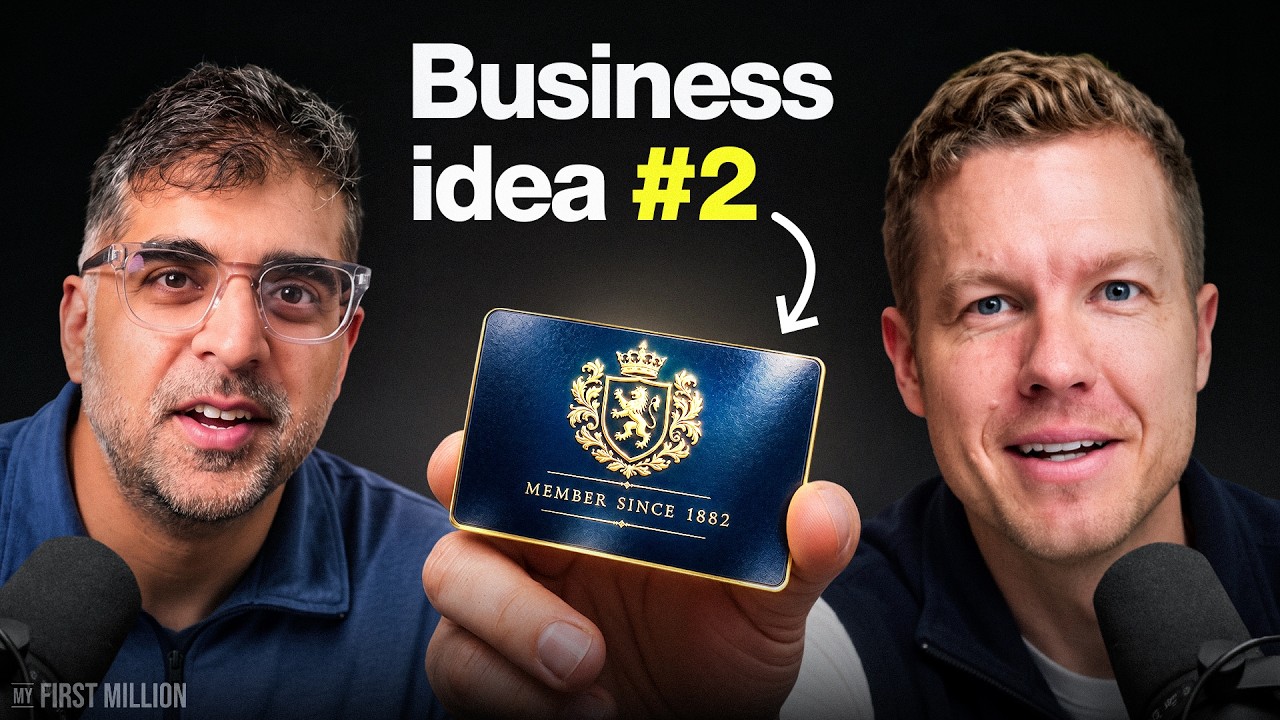
Okay, second one. Have you ever heard of the Knights of Columbus?
Speaker 2:
No. Is this that medieval play that you told me about once?
Speaker 1:
No.
Speaker 2:
Like where you go, it's like a buffet?
Speaker 1:
What is that called? No, that's a renaissance fair. I forget the name of the restaurant, but check this out. So we're talking about the loneliness epidemic a little bit. So in 1882, there was this guy.
He was a priest up in New Haven in Connecticut. What was his name? His name was McGivvy. He was a Catholic priest. Someone in his parish died, and he was like, dude, this sucks. This man had two kids and a wife, and he died.
He was the earner for his family. We have to do something about this. So he convinced something like 200 of his male people and his priests to join what he called a mutual benefit society,
where they would all chip in money and they would help pay for this guy's family for a little while. And then if any of the mother died, some of the money would go towards them. This sounds very similar to life insurance, right?
And that's sort of what it became. And so, the Knights of Columbus is now an organization. It's a fraternal organization that's been around since 1882. It has something like 2 or 3 million members. They have $30 billion in assets.
They do like $5 or $10 billion a year in revenue. And it's a fraternal organization for Catholic men. And the whole thing is that you pay dues,
something like $300 a year and you basically show up in your church after hours and you guys plan charities that you're going to do together.
So predominantly it's like pancake drives or they do a lot of like homeless stuff and they're there to help each other. And at this point, they're a huge lobby. It's quite powerful.
But the way they make money is they sell life insurance to their members. And they crush it. It's been around for over 100 years and it's a massive business. And I've always been interested in this type of business. And what this is,
is basically a shared interest group that they get together for and help other people or help themselves in a variety of ways. And it monetizes by selling financial products, insurance products.
And I think that this is a really interesting business for a couple reasons. Number one, the Knights of Columbus, they are actually growing mostly through young men. For decades, young men were not joining.
It was mostly old men, and they have local chapters. I think they have like 14,000 chapters all over the country, and it was mostly old men, and it was kind of dying.
And what they're noticing is that young men, like between 30 and 40, are joining, and it's their fastest-growing segment. So I'm interested in it for that reason.
The second reason I'm interested in it is because these exist for all types of organizations. So for example, let's use Good Sam as an example. Have you heard of Good Sam?
Speaker 2:
No. What is Good Sam?
Speaker 1:
Good Sam is an RV owner membership. So it's all based around a shared identity and community and they monetize through financial stuff. So Good Sam is if you own an RV,
you spend a couple hundred dollars a year and you get some better insurance for your RV, but you also get like, you get discounts to like campgrounds and things like that. Another one is there's this thing for, it's called the USCCA.
I was a member of it. When you get your conceal and carry license, You can pay $300 and you can get access to monthly trainings for like gun ownership, but also you get insurance if you ever get prosecuted for shooting someone.
And they do about $400 million a year in revenue. And these are huge businesses that last a very long time.
And in my opinion, there's a lot of interesting opportunities to jump on this whole loneliness thing and monetize it via financial products.
Speaker 2:
You're saying you basically take a Deep interest-based community, could be religious, could be non-religious, could be RV owners or whatever.
And then you become a member, you get to meet other members, so you kind of get community belonging. You get maybe some discounts that immediately kind of justify the value of your membership because it's marketing for them.
But the real banana is you figure out how to sell a commodity financial service, but people will have some preferential attachment to you because you are the community.
Speaker 1:
100%. And I think now is an interesting time because the loneliness thing, it's quite easy to capitalize on that. And two, these things last forever. What do you think?
Speaker 2:
Well, I mean, I've never heard of this. I have heard of healthcare shares. I mean, just in general, that's a thing, right? Like there's a whole health insurance, life insurance model. That's kind of like this.
Usually religious, I think, is the general way these go. And I never understood if this is just some tax loophole type stuff or if there's a better value prop for these things. Do you know a lot about these healthcare share programs?
Speaker 1:
It depends what your offering is. For some of them, there is tax benefits. So there's some weird rules around if you are a membership and you are considered a I think they call it a mutual benefit membership,
where everyone gets the same benefits, but you don't have to pay taxes on, I think it's the investment gains of your premium, something like that.
There is some tax advantages for sure, but that's not required in order to make this awesome.
Speaker 2:
So I'm looking at this now. So it looks like these healthcare share programs are often like, instead of paying two grand a month to Blue Cross, You pay the same two grand a month, or maybe even a little bit less,
maybe a thousand a month, into a healthcare share program. And now, if anybody in the community has that $40,000 surgical bill, the group coordinates to get the money paid out to that person who needs it.
But I think there's some weird stuff where like, Legally, they're not obligated to pay it. It's like a high trust type of situation, but like not contractual in the same way that health insurance might be.
Although people who have had trouble getting health insurance to pay for things that they think should be covered probably would disagree that that is any more likely to be paid out is probably a fair criticism.
Speaker 1:
But what's going on here, first of all, health insurance is like a whole other thing where I'm like, I don't know if I would touch that. Very messy. But the majority of these businesses, they're not insurance companies.
They are partners with someone else who does it and they get a more tailored plan.
Speaker 2:
So the Knights of Columbus, they just have all the money and the members and then they go to who?
Speaker 1:
Knights of Columbus might be one of the few that does it on their own, but like AARP, if you know AARP, so AARP does billions of dollars a year in revenue. AARP is Association of Retired People, I think.
If you're above 50 or 60, you automatically get a letter from AARP that says, hey, come join AARP. You'll get our magazine, you can come to some of our events, and you'll get a discount on your health insurance. And they partner with United.
And so they license their name. So they are the trusted brand and like the marketing channel, but they do not actually provide the health insurance, but they're a partner. And so they aren't actually running that.
Speaker 2:
Well, these faith-based businesses are very interesting. So I just did an interview with the guy behind Angel Studios. So Angel is probably the 10th biggest studio in the world.
And you've never heard of it, and it's basically all values-based content, they call it, which is like one out of every 10 of their movies or TV shows is religious, like it'll be like Game of Thrones.
But the underlying book is The New Testament and it's called The Chosen or Chosen, something like that. It's like a show about Jesus and he said 200 million people have watched that show.
Speaker 1:
What?
Speaker 2:
It's like on Amazon Prime. It's like one of the most watched shows ever in the history of television is that show. It's on the seventh season and they helped produce the first three seasons of that.
But they make all kinds of movies and shows and their community is basically 3 million members who want content that's going to have no cursing, no drinking, no drugs, stuff like that.
And also just heroes, like good people doing good things are in the movie. So like it can't be just like a dark film where like everybody's kind of bad.
Everybody's flawed and messed up and it's just a bunch of messed up people living together, right? They're trying to avoid that type of content. For example, they have one movie right now called The Runner.
If you watch the trailer for it, it's Owen Wilson and this guy Allen, whatever, Richardson, something like that. Basically, the premise of the thing is they're delivering an organ donor, their organ donor van, they're driving this liver.
And suddenly, three cars pull up in front of it, and they have guns, and they're like, how much does this liver go for on the black market? They're like, a million dollars. And they're like, oh shit, we gotta get out of here.
Speaker 1:
Dude, I saw that trailer last night in a movie, and in my head I was thinking, there's like 18 guys trying to kidnap this body part for only a million dollars? It's crazy.
Speaker 2:
Like they did so much work. What kind of margins is this operation running? That doesn't seem worth it, right?
Speaker 1:
Like in the movie, they're like blowing stuff up.
Speaker 2:
Did you see the cost of ammunition lately?
Speaker 1:
They definitely spent more than a million to get, yeah, I saw that.
Speaker 2:
To get delivered.
Speaker 1:
And so what about it?
Speaker 2:
Well, but this business is a juggernaut. They're doing 400 plus million dollars a year in ARR. 450 million in ARR. It's a public company. You can see their data. And the way they did it was they basically said they had a worldview.
In fact, the guy who started it, he's this epic marketer. did the marketing behind Poo Puri and Squatty Potty. He was one of these really viral marketers. You know like Dollar Shave Club? They would make videos like that.
Speaker 1:
Dude, there's a whole Mormon cabal of these really good marketers up there in Salt Lake. All those companies that I think you named are either Mormon-based or And they're really good at marketing.
Speaker 2:
So this guy's a Latter-day Saint. And, you know, so what he did was he was like tired of looking at like YouTube videos where, you know, your kids, you never know what you're going to get when your kids click on YouTube,
like they can get to, they're two clicks away from watching somebody like, you know, smoke meth. And so he's like, you know, that's not great. So he created this like filter and because the project didn't even start as a real business.
He literally just took a movie. I think it was like Cinderella Man. It would wipe out all of the cursing, the sex scenes, the drug scenes, but it would leave the rest of the movie. And so he's like, you know, the gluten-free movie, basically.
Yeah. He creates this filter and he publishes it. He publishes the movie and immediately gets sued. And he ends up having to pay $10 million in a lawsuit somewhere along the way.
But this tool and these movies started attracting a lot of people. So 100,000 people eventually wanted the service. They then started doing this thing where you would go rent, technically you would rent the DVD for a dollar.
And then that gave his group the permission to wipe out all the scenes and then give you the streaming version of it or something like that. Created this whole loophole to try to make this business work and finally said,
all right, I'm tired of getting sued by the movie industry because they don't like that we're doing this. Why don't we just make our own movies and our own TV shows that just out of the box are clean, better for you?
Speaker 1:
Did you raise funding?
Speaker 2:
Yeah, they raised some money, but it's amazing that they've reached this incredible scale. It's like two or three million people.
It's not like that many people, but two or three million people each who pay 13 to 20 bucks a month for this streaming service, just like you're paying for Peacock and Paramount and whatever tier two,
tier three streamer service that you subscribe to. And then the members vote on the content. So basically,
they'll take a movie that's already made And they'll show the trailer or they'll show like a snippet of the movie to the two million members and the members vote. And if 70% of less than 70% green light it, the deal's dead no matter what.
But if more than 70% say yes, then the movie like kind of gets picked up by them and it's going to go into their marketing pipeline and whatnot.
And they have like a higher average like Rotten Tomatoes and hit rate than, you know, all the popular studios.
Speaker 1:
How did you meet this guy?
Speaker 2:
Ben met him somewhere at a barbecue or something like that. Ben knows that I've been, you know, curious about the movie and TV industry and making a movie. And he said, you know, you should talk to this guy. He's done it. You know,
he went from no experience in the movie business to now doing almost half a billion dollars a year in revenue for their movie, kind of their like values-based A24, right?
Speaker 1:
Like, do you know anything? I saw a movie last night. I went and saw the Chris Hansen movie. You know what that is?
Speaker 2:
Catch a Predator?
Speaker 1:
Yeah. He's got a movie? It's about him that he doesn't like.
Speaker 2:
Wait, didn't he get canceled also or something though?
Speaker 1:
I think he was cheating on his wife. I don't think he was a predator, but I don't think he was breaking the law, but I think he was doing not good stuff. That's part of the movie is that he was, while he was doing this,
he wasn't like a good husband basically. And it's called Prime Time. It was pretty great. And it's got Robert Pattinson. It was awesome. It's an A24 movie. And every great trailer leading up to the movie was A24.
I don't really know anything about A24 other than Scott Belsky, who I have a man crush on, was a tech guy, is now working there. Do you know anything about A24? Well, what do you want to know?
Speaker 2:
I know some things about A24, but I'm not an expert.
Speaker 1:
How does someone start a studio? Because it seems like they came out of nowhere. It seemed like there was a startup at first, and if I remember correctly, the movies early on were kind of dumb or artsy.
They weren't mainstream movies, but now it seems like everything they do, I want to see it.
Speaker 2:
Well, one of my business theories is that A great way to think of a business idea is to find the reaction to the action. Like for example, when Facebook was in its absolute prime and everyone was using Facebook,
Facebook created this world where all your photos would be public and they would be permanent. You'd post them on your profile, your timeline, your history, everyone could see them.
And so that became the action and the reaction became Snapchat. Photos you could send that would self-destruct in 10 seconds. And it's actually that the popularity of one creates the need for the other. And you see this a lot of times, right?
So you, as you know, we talked about GOP ones as food calories become abundant, you know, You have DoorDash and you have fast food and you have all these, you know, the way that the food industry went.
Well, then there became a higher, a greater need for the reaction. And this happens over and over and over again. You see this right now with like screen time limiting apps and Brick and things like that,
like things that are getting quite popular that are really just like a reaction to kind of the current norm. And so A24 was also a reaction to the action in a way,
where the movie studios and the people in Hollywood really started to become extremely conservative and predictable in the movies that they would fund.
Because why would you fund an unproven screenplay by this cool hipster who's drinking matcha when you could just go to Spider-Man 7? Why not? Why not just do Spider-Man again?
And so they kept gravitating towards what they call these like four quadrant movies. I don't know if you've seen like the quadrants. Have you ever heard this before?
Speaker 1:
No, what are they?
Speaker 2:
It's like males under 30, females under 30, males over 30, females over 30, whatever, a simplified version of that. But it's basically the big short. If both of us said like, yo, Do you like the big shorts? I love the big short.
Well, we love the big short because we're in one of those quadrants and it hits for us, but guess who it doesn't hit for? It doesn't hit for like women over 40 in the same way as it does for, you know, men in their kind of 20s and 40s.
And so the highest kind of potential for a film is something that satisfies all four quadrants. You know, Harry Potter right now. It's like if you go, you know, the new HBO series for Harry Potter,
they'll put a billion dollars into this because they know that Millennials who read it growing up are now 30, 40, 50 years old. They like it, but so do kids still. And so you're gonna get this huge demographic. The TAM is really large.
And so what happened was studios became quite risk-averse and they started gravitating towards sequels, superhero films and other things.
That created an opportunity for folks like A24 who could go pick up at pretty low cost and pretty uncompetitively All the other films that were being ignored. What are the great films that are being ignored right now?
And so what they found was that these independent directors were Creating really interesting things that could be produced on a fairly low budget,
had pretty low expectations because there was not a lot of demand in Hollywood for their product. And so they started creating cool, edgy, they're making stuff nobody else was making. So they were like differentiated out of the box.
Speaker 1:
Do you remember the early movies? It looks like it was like the movie The Room, which I saw, it was pretty awesome. I don't know some of the other earlier ones though, do you?
Speaker 2:
No, and I'm sure, by the way, this is like an extreme oversimplification and somebody who lives in the movie business is probably yelling at their phone right now, being like, what? That's not the whole story. You're forgetting A, B, and C.
And I'm sure there's A, B, and C. And they did a bunch of things well. They branded their studio well. They have limited edition merch. They figured out a different form of marketing.
So like the Timothee Chalamet, where he leaked his movie trailer instead of saying, this summer, Coming to a movie theater near you, this guy, this guy in the hottest film of the year. It was like a Zoom recording,
like a meeting that got accidentally leaked that had a file name that sounded like a real thing and it was like an hour long and it was this weird thing that they were doing, you know, that sort of stuff.
For example, the guy yesterday was saying they have a movie with Kevin James, you know, like King and Queens, Kevin James. And they were like, he was like to market that movie Kevin James was like,
hey, you know, the character in this, he's like this painter, just like teacher who's like a painter. So let's just create an Instagram account where I'm a teacher and a painter. We don't even mention.
And people are gonna be like, isn't that Kevin James? But then people will be like, is that just like a Kevin James lookalike? This guy says he lives here and he's just painting every day and he doesn't, what's going on?
Let's just do weird shit like that. And then they sent him to the Super Bowl and they bought 12 seats and they left, you know, 10 of them empty. And he sat, you know, 11 of them empty. He sat in the middle.
I'm the host of the Super Bowl with empty seats on either side. He was wearing a tuxedo and he's holding flowers because that's like a famous scene from the movie. And they didn't even explain what was going on and suddenly,
but they paid for other influencers to be in the same section because they knew those influencers would be like, dude, that's Kevin James. And why are all those empty seats? Why is he wearing a tuxedo? And why is he holding flowers?
They put out their story and it created intrigue and people started wondering what the hell's going on.
And then the movie comes out and it does really well because they can like do this guerrilla marketing that the traditional studios don't really understand or don't have the like, DNA to go do.
I think A24 and some of the upstarts have figured out that because make it like when you think about the cost of making a movie, It's pretty mind-blowing. So he was talking about a movie they made.
He goes, yeah, it costs $14 million to make. Okay, how much do you spend on marketing? $40. So $14 million to make and $40 on marketing.
Speaker 1:
Whoa, so the $14 million, does that include the actor's salary?
Speaker 2:
Everything, yeah. Full production costs.
Speaker 1:
So it's $54 million all in for this.
Speaker 2:
All in. But this is very common. I was talking to a friend who made a movie and I was like, it had been three or four years since he had first told me about the idea to when it came out.
And I was like, damn, that takes forever, but I guess that's just the creative process. And he's like, do you know how long filming takes for a movie? I was like, no, he goes, 30 days, 37 days for us.
I was like, you shot the whole thing in 37 days? He goes, yep, end to end, 37 days. And that's complete, I was like, was that fast? He goes, no, that's normal, 30 days. That's how long it normally takes to shoot these things.
Now the editing takes a long time, the post-production. What's that?
Speaker 1:
A normal movie can only take 30 or 60 or 90 days.
Speaker 2:
The actual shooting of the filming of the movie.
Speaker 1:
Wow, I had no idea.
Speaker 2:
So you spend time writing, getting it funded. That could take years sometimes to get it to day one of principal production. And then afterwards you have to do all the other like mixing, mastering, color correction, like all that stuff.
That could take time. The edit can take a lot of time. And then you have the marketing and distribution. So the whole thing takes years, but the making of the movie, like the actual like,
hey, lights, camera, action, go, say your lines, that thing's like 30 days, which is insane to me. Same thing with cost. Like I think the Grand Theft Auto games, They would spend a couple hundred million making the game,
years of development and engineering time and animation and all that stuff, but then they would spend equally hundreds of millions on marketing.
Maybe not Grand Theft Auto specifically, but the video game industry is very common to do that. So for movies and video games, which are two of the biggest parts of the American economy,
they spend more money on marketing than they do on actually making the product, which some people would say is kind of sad, but it's kind of crazy. Today's podcast is brought to you by my friends at Mercury.
They make the world's best banking product. I think you know this already. I use Mercury for all of my businesses. I think I have like maybe seven or eight businesses. We use Mercury as our business banking across all of them.
And now they actually just launched a personal banking account. So I have my personal account there. I moved off of Wells Fargo and Chase. I'm just all in on Mercury.
Speaker 1:
Why?
Speaker 2:
I like products that are easy to use. I like products that get me and the problems that I have. So like, very easy to make a joint account with my wife. Very easy to spin up virtual cards. One click and I get savings yield.
It just has all the stuff that I need in one place. So, if you're looking for the best banking product on the market, it's definitely Mercury. I will fist fight anybody who disagrees with me on that.
Go to mercury.com slash personal and learn more. Mercury is a FinTech, not an FDIC insured bank. Banking services are provided through Choice Financial Group in column NA, members FDIC.
Speaker 1:
This business is foreign to me. We should do a whole episode.
Speaker 2:
Seems like a terrible business. He was telling me, he was our biggest hit. It did 250 million box office. And it only cost us 14 to make. So then I go, okay, how much was the other cost, like marketing? So that's 40. Okay, so now we're at 54.
250 million in revenue. All right, that's not bad. You got a 5X return. Oh, but wait, that's the box office. So how much do you keep out of that? Like, what does the theater get, the distributor? He's like, well, 50% because we're big.
We'd be much smaller than that if you're kind of a newcomer. So the 250 becomes 125. 125 against 54 million to create. So your biggest hit in like a hits driven business where you can have lots of flops.
Speaker 1:
Yeah, that profit needs to cover six flops.
Speaker 2:
Is like a two point something X return.
Speaker 1:
But that's the same way with all creative businesses. That's the case. So for example, Mark Manson, when he came on two or three years ago, he either said this on the podcast or when I was hanging out with him,
his book for, I think it was Penguin, sold 20 million copies. And he was telling me one time, he was like, yeah, my mom and dad,
they always kind of gave me a hard time because they thought I was just kind of playing on the computer because I was blogging and then it turned into a book deal and all this stuff.
And I was like, well, when did they start taking you seriously? He was like, well, Penguin put out their annual, I think it was Penguin, I could be getting it wrong. They put out their annual report because they're owned by News Corp.
And he was like, they said that I outsold Hillary Clinton and I helped make the whole company profitable that year. And I was like, wait, so you were the reason the company was profitable?
And basically with a lot of these publishing businesses, whether it's games or it's movies, it's like one or two things. It drives everything and the rest is like, hopefully it doesn't fail.
Speaker 2:
That's normal. What was surprising to me was that the one or two things that hit really big, your biggest hit, I would have just expected to be much more than like a two and a half X return.
I would have thought it's like in his case, like a book. Yes, you're right. Most books fail.
Speaker 1:
Sure.
Speaker 2:
But when a book hits like The Subtle Art hit and you sell 10, 20 million copies, well, that book costs almost nothing to print. And so they're printing money when it hits. And that's what I was surprised at.
You know, like in startup investing, you get a 50x, a 100x, a 200x, a 1,000x return when you hit. And I was surprised that the movie business isn't like that,
or at least my layman's understanding from a few of his examples and looking at their business.
Speaker 1:
Yeah, and it doesn't seem like it's a fun business to be in right now.
Speaker 2:
And I think he explained why, by the way. He goes, have you ever met a billionaire who doesn't want to make a movie? I haven't. And he said like there are every year, let's say a thousand films get made. Far less than that get distributed.
So most, even of the films that get made, not just the films that get pitched and written, like screenplays and stuff like that.
Speaker 1:
But I think there's some tax advantages there. I get pitched this all the time and I never, like, I get these emails and I never, like, actually seriously read them.
But isn't there something where if you fund a movie, there's some type of, like, you can depreciate something weird?
Speaker 2:
Yeah, but it's not that good. Like, you can It's a, you can write it off, but it has to be, the thing has to go into production. So it's not like you could just like say you're doing it and like get it. You have to actually spend the money.
The money has to go into the project and the project has to actually start day one of production. They changed the rules on this. And so it has to actually get made.
And if there's no return, well, yeah, you might have saved money in taxes, but you lost your entire principal. You know what I mean? Like if you have a million dollars in, maybe you get a $300K write-off,
but you might lose your million dollars. You'll probably lose your million dollars.
Speaker 1:
I didn't think it was going to take the entire episode to give a shout out to Grindr, by the way.
Speaker 2:
Are you wearing a Grindr vest?
Speaker 1:
Dude, they listened to the episode that we had with the former owners of Grindr. Great episode. Did not hit in terms of YouTube. Wonderful episode with Rick Marini when we talked about Grindr and how they turned the business around.
They decided to send me some merch and it's kind of the least gay merch ever. It's an arcteric vest. Like, I wanted something a little bit more, like, with some pizzazz.
Speaker 2:
Like a scarf?
Speaker 1:
Yeah, I don't know, like, something. Like, this is way too straight for me. I wanted something a little bit more gay. I thought it would be more enjoyable. But I appreciate the love, Grindr. I just wish that you'd lean in a little bit.
Speaker 2:
Grindr, where's my puffy vest? This is a hot collab. Grindr, MFM.
Speaker 1:
Well, that's it. That's the pod.
Speaker 2:
All right, let's take a quick break. I want to tell you about Marketing School. It is a podcast that is part of the Hubspot Podcast Network, and it is run by Neil Patel and Eric Hsu,
and these guys are both marketers who are running businesses, and so if you want real-world tactics from practitioners who are actually out there in the field doing it, this is the podcast for you.
Check it out wherever you get your podcasts.
This transcript page is part of the Billion Dollar Sellers Content Hub. Explore more content →