Ecom Podcast
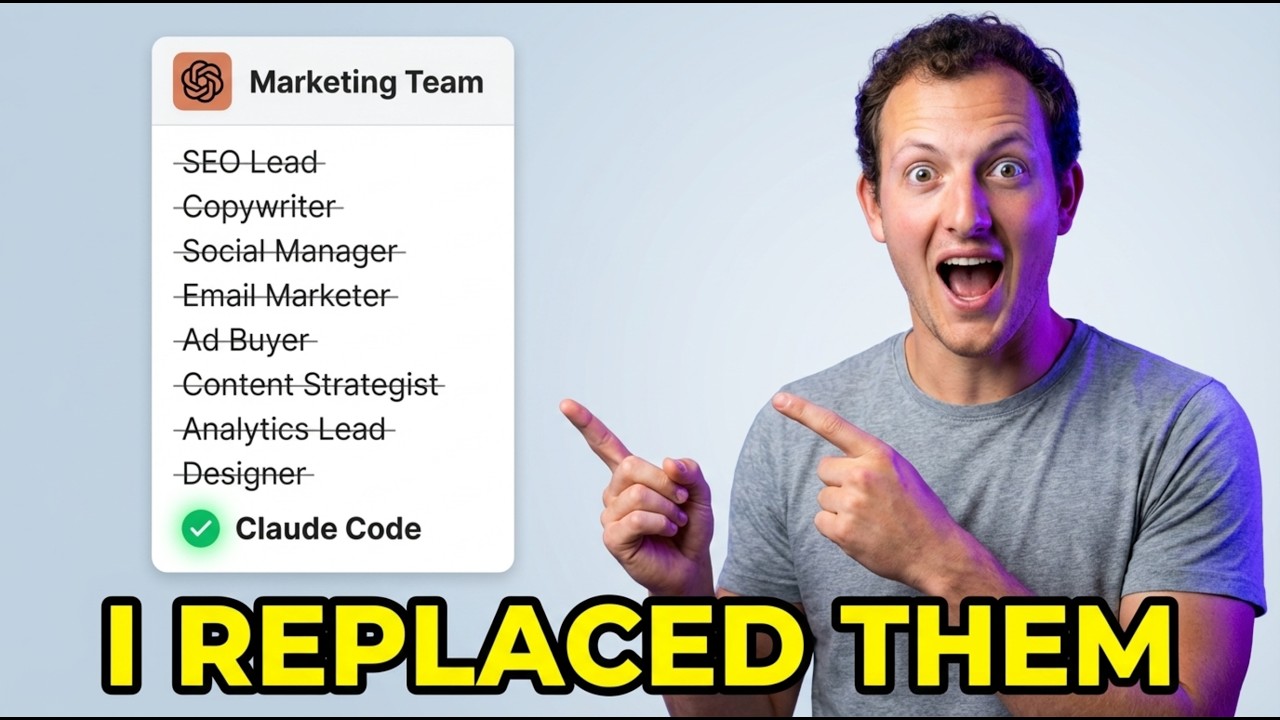
# 154 I Replaced an 8-Person Marketing Team With Claude Code (full tutorial)
Summary
The Corey Ganim Show shares actionable Amazon selling tactics and market insights.
Full Content
# 154 I Replaced an 8-Person Marketing Team With Claude Code (full tutorial)
Speaker 2:
If you're serious about marketing, you must watch this video because in this episode, I sit down with James Dickerson, aka The Boring Marketer, who's going to show you step-by-step how to use Claude Code to 100x your marketing.
Now, you don't need to know how to code. You don't need to have experience. You literally don't need anything at all because James is going to break down the entire process for you step-by-step.
This is the future of marketing with AI, so let's jump in. Alright, I'm here with James Dickerson, the boring marketer. So James, what are we going to be learning today?
Speaker 1:
Well, I want to show people that they can use just a few AI tools and something called skills to replace a $5,000 or $10,000 marketing agency in their small or local business. So, huge unlock. We're going to go through Claude Code.
If you don't know what it is, that's okay. We'll go through it, show you how to set it up, and we'll show you how to create some awesome assets that actually perform.
Speaker 2:
Perfect. Now, before we dive in, so give us kind of your background, like why is it that people should listen to you?
Speaker 1:
Yes. So, online I'm known as the boring marketer and I share a lot of like, You know, practical use cases around business growth with AI. So, I focus specifically on marketing.
I've been doing marketing in one way or another since roughly 2012, 2011, something like that. Started building my own products and my own apps and spent a little time at a venture capital firm in Chicago,
advised a bunch of portfolio companies and everything and then I've been consulting small businesses, startups, etc. for over 10 years now. When AI hit, I knew it could be done differently. It could be done a different way.
So, I started just diving in, experimenting with my own products, my own services, and I've learned a ton and I've just openly kind of shared what I've discovered online.
Speaker 2:
I feel like that's the best way to do it. And then what I love about your content and your approach is that you're speaking from experience, like everything that you Kind of put out there.
You're like, Hey, this is what I did or this is what I'm doing. It's not like, Hey, this is what you could do.
Speaker 1:
Yeah.
Speaker 2:
So I feel like that's probably why it's usually pretty well received.
Speaker 1:
There's a lot of hype out there, you know, and there's new tools every single day, every, every single week. And you know, people get the shiny object syndrome and they forget that they actually have a business to work on.
And I don't think that most people know just simple practical ways to apply this stuff. To, you know, benefit, you know, their SEO or their email marketing or their social media.
These are things that companies spend a ton of money on and what I personally found is that not only can you move a lot faster once you know how to use these tools, but you get better results and better outputs.
Speaker 2:
Right.
Speaker 1:
So, you know, you can train your team, you can use it yourself, you can, you know, kind of upgrade yourself and upgrade your AI at the same time.
Speaker 2:
For sure. And so, what we're going to do today is you're going to be giving us some marketing sauce, like screen share style. So, what are we going to be looking at?
I think we're going to be building, what, a 14-day nurture email sequence, basically for a small local service business. That's kind of the avatar that we're using to build this. Is that right?
Speaker 1:
Yeah. So, you know, I'm not an email marketing expert. I know about email marketing, but what I did was I used some AI tools and techniques to train my AI how to become an email marketing expert.
So, I have a process that I use to build what's known as skills. And skills are like deep instruction files that an AI can follow. So, it basically teaches the steps, the processes, the frameworks, the strategies, you know,
from how to sequence your emails, how to write your emails, how to have strong calls to action so people actually open and click and convert. So,
I created a skill file that I've used to build some sequences for my own business and we'll walk through how to do that. We'll look at the content and we can even talk about how to turn that email sequence into social media content,
blog posts, other things of that nature too.
Speaker 2:
And we're going to go into all that. So again, what I love about this is it's going to be screen share. It's going to be super tactical. If you're listening on a podcast platform, this is where you'd probably want to switch over to YouTube.
But if you don't have the ability to switch over to YouTube, we will just talk through it as if you're right there watching the screen. So, James, why don't you, first and foremost,
share that graphic with us that we're going to kind of be building the sequence off of. It's kind of the framework for how a really good 14-day email sequence should be structured.
And why is it that you built it that way, first and foremost?
Speaker 1:
You got it. I'm going to record my screen here so we might have to edit that little part out. Just give me a sec. All right, I'm going to browse through my tweets and find where that sequence is.
So, here it is, how to structure high converting email sequences. So, copy this or give it to AI is what it says. What we're going to do is imagine you have a small business.
Let's say you have a financial advisory service or a wealth management service, something like that. Someone finds you online, whether through Google search or some ads that you're running or maybe from social media.
And most businesses don't have a good way to take that cold traffic Warm them up, engage them, and then get them to book a call. Most people are like, book a call with us.
Speaker 2:
Right, they try to go for the kill right off the bat. It very rarely works.
Speaker 1:
Yeah, and no one knows who you are, why I should trust you, who else is getting good results, etc. So, you know, most people need some sort of mechanism like a lead magnet to get an email address so that they can,
you know, follow that process. Now a great simple lead magnet is an email sequence.
Speaker 2:
Yep.
Speaker 1:
A lot of top creators use that, a lot of successful consultants and businesses that have sort of cracked growth online create an educational email course.
Speaker 2:
Yes, I've seen so many. And as a consumer, right, I love a really good, well-crafted email course. Again, from a consumer's perspective, I feel like the ones that I've actually followed all the way through,
most of the ones I've taken myself are like five-day email courses, and the best ones are like they give you some sauce on day one, and they're like, they kind of leave a cliffhanger, and they're like, well, hey,
if you want, you know, the answer to this question or if you want the next step, you've got to tune in to day two. Waiting for day two to drop and then same type of sequence and each day,
I'm more and more confident in their service and in their ability to deliver. So, that's kind of the idea, right?
Speaker 1:
If you can solve a burning problem for, you know, the people that are visiting your website via email, You know, the likelihood that they're going to get on a call and you can take it to the next stage is way, way higher.
Speaker 2:
Right.
Speaker 1:
So, the way I've structured this one is, you know, they sign up for the email course. On day one, I'm going to give them something actionable that they can go and do. I want them to get something valuable and tactical.
I don't want to dump a bunch of information on them that they're not going to use. They're going to tune out. So, I want to keep that short. I want to say, hey, you know,
here is And we're going to be talking about how to restructure your portfolio by using AI or something like that.
Speaker 2:
Right.
Speaker 1:
You know, here's a simple prompt that you can go and take into ChatGPT and find new investment opportunities or something along those lines.
Speaker 2:
Right.
Speaker 1:
You know.
Speaker 2:
And again, we're taking the frame as you're assuming that like, hey, if I was a wealth manager, like a financial advisor, this would be my type of sequence. That's what you're saying.
Speaker 1:
Right, yeah, like how we level up portfolio management with the use of AI or something like that. Just coming up with like a mock example, but, you know, deliver that, you know, actionable two-minute sort of result that they can take.
This comes from your process or your framework, and then your job through the rest of the sequence is to show Why it worked, what's the methodology behind it, how you think, what's this total system that this kind of plays into?
How does it benefit, you know, whoever this ICP is or a real customer profile? Maybe it's retirees with a $2 million plus net worth between age, you know, 50 and 65, something like that.
What are others, you know, getting or generating from this service and this methodology? How's it different? Maybe you're faster to respond. To market, you know, movements or something like that,
maybe you're able to deliver outputs that say like a Goldman Sachs would by leveraging these tools at, you know, a fourth of the cost and half the time. You know,
this is a way for you to be able to educate your prospect on kind of like really the core angles and benefits of working with you.
Speaker 2:
For sure.
Speaker 1:
So, after that, we get into kind of like the offer. So, what is it that you do? If I were a wealth manager or a financial advisor or something like that,
my goal would be to sit down with a prospect and get a meeting going or do like a virtual meet on Zoom or something like that. So, given that this is sort of like a big decision for prospects, I still don't want to ask them like,
hey, go sign up and transfer your portfolio. We have to understand the customer journey a little bit. And there's these micro-commitments along the way. The first commitment was, hey, go and try this and see that it works.
The second commitment is, okay, now you trust me. I've told you I have a system. I've shared the social proof. I've told you how I'm different. Let's get on a call. And what's the result going to be of that call, too?
Speaker 2:
Like knowing what they're going to get out of it before they book it, because if they don't, then it's like, Why am I booking this call?
Speaker 1:
Yeah, exactly. So, you know, if I were starting a business like this, I would lean into sort of the AI angle. So, I would say, hey, I have these AI tools or agents. We're going to sit down. I'm going to interview you.
I'm going to run this information through our system and you're going to see how we can optimize your portfolio and you're going to walk away with a guide on how you could go implement something like this yourself.
Or, you know, a plan for how we could work together and you would get a better experience in whatever you're currently doing.
Speaker 2:
Yep.
Speaker 1:
So, you know, leave the optionality there. Let them like, you know, see the value, feel the value and make that decision to come and work with you.
Speaker 2:
And I feel like the beauty of a sequence like that is by the end of it, if you do it right, A good prospect is going to be like, wow, they just gave me so much value. You talk about those micro commitments.
It's almost like with each micro commitment they make, it's kind of adding to that sunk cost factor of like, well, hey, I just spent, even if it was only a couple of minutes engaging with James's content or learning how he does things.
I'm just going to be so much more likely to proceed with him than I would be to go and start that process over again. Even if the quote unquote sunk cost was only five minutes of my time or 20 minutes of my time.
And then leaving the door open to be like, well, hey, I just gave you everything you need to go do it yourself. But if you'd prefer, we can work together and I could either do it with you or I can do it for you.
And again, good prospects are going to be like, okay, James has done his job. He's earned my business. I'd rather him just do it for me because he's the expert. Right. And those are your best clients every time.
Speaker 1:
Yeah. And, you know, something that I always kind of blend into whatever marketing work I'm doing is persuasion and psychology.
Speaker 2:
Have to, that's the key.
Speaker 1:
You know, and I think that's a little bit about like what makes What I do different is I'm sharing marketing tactics and systems that leverage that.
And the way that I learned those processes is through a book called Influence by Robert Cialdini.
Speaker 2:
Great book, yep.
Speaker 1:
It's a classic, one of the best ever. So, you know, when you're adding value to your prospects and giving them these results that kind of wow them, what you're doing is you're building reciprocity.
You know, you're giving them this stuff for free and that's going to create a psychological, you know, shift in their mind so that when you do ask for their business, they're going to remember that.
Speaker 2:
Right.
Speaker 1:
And they're going to know that. And there's other tactics here that we're using from that book in the sequence too, like social proof. That's a massive one.
Authority, you know, I'm the expert in using AI to optimize, you know, retirees' portfolios or something like that. Reciprocity, like I said, so scarcity is another one.
Speaker 2:
We only take on, you know, five… Five customers a month, five clients a quarter or whatever that ends up being.
Speaker 1:
That's right. So, we're using persuasion, we're using these micro-commitments, kind of like a ladder, to get them on the call. And then after we have the call, you know, we can send them that full kind of audit or that full plan or whatever.
And then we can follow things like the math, you know, let's get into the weeds a little bit. Here's what folks are paying, like, you know, traditional financial advisors. Here's how long it takes to get a response.
They're charging 1% of your portfolio for this, you know. Here's what you're getting for 0.5% or whatever working with us. These are Goldman Sachs level outputs. Here's what they look like. Show, don't tell, right?
Like show them the report, show them how it can like fit into their issues and solve their like core pains.
Speaker 2:
Absolutely.
Speaker 1:
And then you have the objections as well. So that's another part in the sequence. Like, can't I just do this myself?
Speaker 2:
Right. Well, you can. And if that's the route you want to go, then we're probably not the best fit.
Speaker 1:
Right. And can't I just do this myself? Well, sure.
Speaker 2:
You can spend a hundred hours doing the research that we've already done. Right. You know how to do.
Speaker 1:
How do you know that your AI is giving you the right results and not just coming up with like hallucinations? Like, you know, do you have access to the tools to go and read all the,
you know, let's say like financial reports from every business in the S&P 500 or, you know, whatever that looks like. You have to kind of come up with what your special sauce is or your angle is.
But, you know, after the math, dealing with those objections is another solid tip.
Speaker 2:
And you're by addressing those because a lot of people might hear this and be like, well, if they have objections, like just let them have them. We don't necessarily want to put an objection into their head that maybe wasn't already there.
And my counter argument to that would be. I mean, it's just sales 101. There's common objections that most people are going to have and you want to get ahead of those and address them before they come up.
Because if you can proactively get out ahead of those and shoot them down and prove to them why this objection is actually not as relevant as they might've thought, then that actually, I think, positions you on an even higher plane.
It's like, hey, this is what you might be thinking, but this is the reality. And actually the reality is, It's a non-issue. They're like, oh, okay, yeah, I actually trust this guy more because he got out ahead of it, right?
Speaker 1:
And if you think that I know what you're thinking, I'm in your head, I know your problems, I know your pains.
Speaker 2:
It's like, oh, James, he can anticipate what I'm going to be hung up on. He's proactively addressing it. Again, therefore, now I trust him more to be the person to solve this problem.
Speaker 1:
Exactly. So, the next thing is kind of like the anti-vision or the transformation. So where are you going to be a year from now? You know, like show kind of the current state a year from now.
We're here to show sort of like what this transformation looks like. You know, everything is smooth. You know, you could be getting better results, something like that. You actually have transparency. You have someone you can trust.
You have someone that, you know, answers your call or your email quickly, like whatever, you know, benefits that you have.
Speaker 2:
Right.
Speaker 1:
How do those sort of transform the prospect and paint the picture of where they can be in their minds? So that's a powerful kind of psychological technique of like anchoring. Right.
You know, and your job is to be the person that can pull them toward that vision.
Speaker 2:
Yep.
Speaker 1:
You know, and then, you know, the last one is kind of like what held you back or like, why didn't you convert or, you know, give me your feedback or something.
Speaker 2:
So this one's for people that, again, so this might be sent on like day 14 of the sequence and this is saying like, hey, We just sent you basically 13 days of emails or 13 emails in a row, and you haven't yet converted. So it's like, why?
Give us feedback. What did we do wrong? What objections do you still have? And I assume that if the prospect converts before that point, that's, I guess, an automation in the email provider that's like, hey,
we actually don't send them this final email.
Speaker 1:
Right. You could do that. You could set up an automation where, okay, they move to this stage in my CRM or whatever, and they're not going to get the next email or something.
So, you could definitely like branch those out and things of that nature so that, you know, if you convert a customer, they're not getting the why didn't you email or whatever.
So, that's kind of the main sort of like overview of how I would think about this. You know, there's no hard rule, like it doesn't have to be 14 days. It could be five days.
Ultimately, something else to think about is that you have to test and see what works with your market, with your prospects, you know. There's no one size fits all anywhere. So yeah, test and see what happens.
Speaker 2:
Well, and a way to think about it too is, so again, the example that you're using is for like a wealth manager. That's a, I think what a lot of people would consider to be a very high ticket, high trust sale,
you're not going to be able to send two emails and get somebody to convert and get somebody to switch their wealth manager, most likely. But on the other hand, if you're selling a $27 e-book, for example, I know it's 2026,
that's not really a thing anymore, but let's say you were. One follow-up email might be all you need to get somebody to convert or two or three.
But again, if you're trying to get somebody to switch their wealth manager, there's a lot of education, a lot of, I guess, convincing that's going to need to happen for them to even take the first step in booking the call with you.
Speaker 1:
For sure. Yeah, and you know, like think about what your competition's doing. And this is one of like, one of the amazing things to me about like these tools and stuff like that. And we're going to get into that in just a second here,
but like 99% of the wealth managers out there or financial advisors or whatever are probably just, they probably just have like a subscribe to our newsletter on the right side.
Speaker 2:
And nobody's ever, ever subscribing to it.
Speaker 1:
Nobody's doing it. They're sending like a monthly, email blast or something like that.
Speaker 2:
Not personalized, generic.
Speaker 1:
Yeah, exactly. And there's other ways too, we can kind of talk about that, you know, we could actually research the prospects on a very deep level. Once they subscribe to the email system and they get into your CRM,
you could use tools like Exa or something along those lines to do people based research, find your LinkedIn profiles, you know, find what they're into,
get some information about them so that you could really personalize the outreach as well.
Speaker 2:
Interesting. Yeah, I've never heard of XS, so I definitely want to touch on that. But do you want to jump into Claude Code and start cooking?
Speaker 1:
Let's do it. Let's do it. All right. So, I've got an IDE open here. And this is what developers code in. We'll really just kind of explain this from like a 10,000 foot view.
So, this has a terminal which has access to the files and things that live on your computer. This has like a folder structure that has documents, code if you want to go, you know, to the advanced level, images, assets, etc.
When I'm doing marketing work, oftentimes I just have a bunch of text documents in here. I've got blog posts I created. I've got guides or email sequences or whatnot that I can, you know, if I want to, I can copy and paste them.
I can hook up to tools from here. That I use and I can have full sort of closed loop research, creation, publishing type workflows.
Speaker 2:
Right.
Speaker 1:
So everything that I do with marketing, I work from here.
Speaker 2:
And that's cursor, right?
Speaker 1:
This is cursor, but you can use VS Code, which is also a free IDE. You can use the terminal on your computer.
Speaker 2:
Right.
Speaker 1:
You can use Antigravity, which is Google's new IDE, which you can get for free as well. Basically, when you download any of these, they all look the same because they're all built from VS Code.
I recommend getting an IDE to do this work versus just using the terminal because you have a little bit more visibility in terms of what it's doing by understanding the files that are getting created.
You can open them here within this system. Imagine this as kind of the new operating system for getting things done.
Speaker 2:
That's a good way to put it, yeah, because I remember when I first downloaded Cursor and jumped in. Zero tech expertise, failed computer science one, like anti-developer, if you will. I jumped into Cursor and was totally overwhelmed.
But I think reframing it is like, well, look, this is just, think of Cursor, whatever IDE you're in, it's the operating system for where you're going to be building some of these workflows.
It just makes it a little less intimidating in my mind.
Speaker 1:
Exactly, exactly. And let me just open this up. Alright, so yeah, this is Cursor and this is the terminal here and I'm just going to show you something. You know, there's a lot of chatter about Claude Code and I think people are You know,
kind of intimidated by it, if you will. Okay. So, step one is to just get an IDE. Again, it can be free. There's a little button up here where you can open the terminal. I've got my terminal open.
It says, you know, I'm in this folder, which is called Vibe Marketer Production. So, there's an install command for Claude Code. It's one line. You can go to ChatGPT. You can go to Google. You can find it. You're going to take that.
You're going to paste it right here in this line. You're going to hit enter. It's going to install Claude Code on your machine and then you'll just, if you have a Claude account, it'll give you like an authentication link.
You click it, opens up a browser, you sign into Claude Code and then you're in. It's that simple. Like, you know, you don't have to overthink it. You don't have to set it up with all kinds of crazy tools and stuff like that at first.
So I tell people, get an IDE, install Claude Code and just start using it as your normal LLM.
Speaker 2:
Yes, that was a big unlock for me. Getting into the habit of instead of using the Claude web app, jumping into Cursor and just using it just like I'm using a regular Claude.
And again, all that did for me at least was just get me more comfortable in the terminal. And so, that's I think a big hack for getting people closer and closer to where they feel comfortable with Claude Code.
Speaker 1:
Absolutely. So, again, here we are in the IDE. Here's the terminal. And once I have Claude Code installed, I'm just going to type Claude. And this is going to get Claude Code going.
So, again, this is just like the input field where you can chat just like with any other LLM. And let's see, I created a little project earlier for us to work in. And I'm just going to tell Claude Code to go to that project.
And you don't have to know what you're doing also.
Speaker 2:
You can just tell it.
Speaker 1:
You can just tell it. It's so smart.
Speaker 2:
Right.
Speaker 1:
It's the smartest, in my opinion, it's the smartest agent on the market. It uses Opus 4.5, but it's exceptional at technical tasks like coding.
It's really, really good at using tools, recognizing what tools it has access to, how to set up other tools. We can get into some of that. You can do things like, you know, create skills, which we'll talk about as well.
And then you have access to MCPs also, which we can touch on too.
Speaker 2:
Yeah, definitely. And there's so much to dig into as far as Claude Code is concerned. What we'll probably need to do is have you back and do just like a Claude Code masterclass style episode. Yeah, there's so much to dig into. Yep.
Speaker 1:
So I'm just saying, hey, let's start a fresh project for a wealth manager. And it's asking me, hey, let's get some clarity on what you need to build. So another beautiful thing about Claude Code is that it'll kind of guide you through.
Like it can help you orchestrate how you want to get whatever it is around what you're doing. So here we have like, do you want a marketing website? Do you want a client portal? Do you want a landing page? Do you want a full application?
I think a landing page would be a good place to start.
Speaker 2:
Yeah, definitely.
Speaker 1:
So, that's a single page funnel for a specific offer or lead magnet. So, we talked about lead magnets being like an educational email course. So, I think that we'll build a little page to generate some leads from that.
Speaker 2:
Yeah, let's do it.
Speaker 1:
All right. So, I'm just going to say landing page. And what's the primary goal for this project? Do you want to generate leads? Do you want to establish credibility? Serve existing clients? All of the above. So, let's just say, All of the above.
Unknown Speaker:
Cool.
Speaker 1:
So right now it's going to start to map out what needs to be done and we're going to let it do its thing and then we're going to get in and sort of follow our process for how we want to go about this.
What's the wealth manager's specialty or niche? This is really good. High net worth individuals, business owners with exits, retirement planning or general slash broad. So let's go after high net worth individuals. Yeah.
Speaker 2:
Cause I feel like that's one of the examples that, Again, you've got to be pretty dialed in to convert those people and I think this will just be a good example.
Speaker 1:
Yep. So, we've got some context here. So, right now, it's going to build a landing page. For high net worth individuals, so what's the primary call to action for our page?
It's saying, hey, do you want to do a free consultation, a free guide or report, a financial assessment, like a quiz? That's a great one.
Speaker 2:
Yeah, quiz funnels are crushing. I would love to see some sort of quiz.
Speaker 1:
You want to do a quiz? So, let's do a quiz that leads into a educational email course. All right.
Speaker 2:
Yeah, everybody should be running a quiz funnel of some sort. We've got like a rudimentary one up on our website, but I feel like the quality of lead that's going to take the time to answer five or six quiz questions.
It's just that much more friction for the opt-in, but those people tend to be higher quality. Right.
Speaker 1:
And then you learn.
Speaker 2:
Right. It's like, oh, well, now I've got this data of 100 people that filled out this quiz, 60% are struggling with this issue. Okay, that's an offer or that's a separate lead magnet or that's a YouTube video or whatever.
So yeah, you end up learning a ton about, I guess they're not customers yet, but learning a ton about your audience or your leads.
Speaker 1:
Right. And there's a guy named Ryan Levesque who has this thing called the Ask Method. And he was really the guy that started the whole quiz funnel type of movement a few years ago. I thought it was a long time ago.
And he's kind of like an OG in the direct marketing world. And his whole thing was, you know, it really allows you to go deep and understand the pain points, the problem areas, their language, how to talk about those problems.
And the quiz funnel allows you to prescribe And we're here to talk about the right solution. It's not guessing,
it's like learning and getting real market data from the people that are entering into your funnel and then you're using that information to prescribe things that they actually want.
Speaker 2:
Exactly.
Speaker 1:
So, what design direction do you want to go down? We've got premium, sophisticated, clean and modern, warm and approachable or bold and distinctive.
Speaker 2:
Let's go bold and distinctive.
Speaker 1:
All right. I'm just going to move this up a little bit. Cool. All right. Yeah. So, that's a standout from typical finance sites. I think there's a lot of financial advisors and wealth managers,
so always good to think about standing out and having kind of a unique angle, a unique vibe in the marketplace.
Speaker 2:
Right.
Speaker 1:
All right. So, it's building a quiz funnel into an educational email course with a bold and distinctive design. And let's see. What's the firm or advisor name? We'll just let Claude Code come up with something. What should the quiz be about?
Wealth readiness score, tax efficiency audit, retirement timeline, risk tolerance, is your portfolio aligned with your goals?
Speaker 2:
So, I think an interesting quiz, like if I'm a wealth manager and I'm putting up this kind of quiz, what I'm trying to do is qualify people early. So,
I think a good quiz is going to be focused around like does this person have money to invest or do they not? Because if they're dead broke, it doesn't matter if they want to work with me, there's nothing I can do. So,
I think maybe something along the lines of like establishing their And today we're gonna talk about financial means and their goals. Like, hey, how much money do you have? How much do you have set aside? What are your goals?
Like that kind of quiz, I would think would be pretty good for that type of business.
Speaker 1:
So I've got a qualification and then maybe we do like a current portfolio analysis to identify the gaps.
Speaker 2:
Yeah, that'd be cool.
Speaker 1:
And then also the gaps in their current wealth manager's process. So like, what are they missing in this customer or client experience that they wanna close? Cool. So yeah, as you can see, like Claude Code doesn't have to be scary.
It doesn't have to be about like building a complicated app or a complicated product. You know, I use Claude Code as again, like a general LLM, just how someone would use ChatGPT.
But I find that it's just way smarter and I have a lot more optionality here to do different things or to experiment with different things.
Speaker 2:
Right.
Speaker 1:
You know, if I want to build a website, I can build a website.
Speaker 2:
And I love that we're just showing an example as simple as building a landing page because I feel like that's the gateway drug for people. They hear about Claude Code. They hear how powerful it is.
They hear about people using Claude Code to build apps and websites and portals and all these crazy things. But they're like, I just want to see what it can do. And that was kind of my gateway.
I mean, the first thing I ever built in Claude Code This was a simple landing page for my podcast. So if anybody listening to this, if you go to corey.show, you'll see it's just a simple landing page I built for my podcast,
but built it in Claude Code. And what's cool about it is that it pulls in each new episode dynamically and pulls in the title, the description.
It's got a button to subscribe on Apple, a button to subscribe on YouTube, a button to open on Spotify. And all of that was created just from iterating. Like the first version didn't have a YouTube button.
So I told Claude Code, I said, hey, add a YouTube button and it did. And it worked. And like it clicked, when you click it, it links directly to my YouTube. So again, it doesn't need to be anything crazy.
It's like just go in and build the most basic landing page. That's the use case I think that This is the lowest hanging fruit because everybody use a new landing page or at least update one they have.
Speaker 1:
And that's always the first test project that I start people with is build a landing page. Because you can build a landing page here locally on your machine. Claude Code can do it. You can open it up. You can check it out.
You can kind of get a feel of the power of it. And then the next step is kind of like, okay, like if I actually wanted to get that landing page live, what do I have to do?
Speaker 2:
Right. And that was a whole learning curve too. And all I did for there, as I asked Claude, I said, great, this is done. This is to me a finished project. Now how do I go deploy it?
How do I, like I had bought the corey.show domain, but I'm like, okay, how do I go and attach this landing page that we just built in Claude Code to that domain? And so I know you know about Vercel.
I had never heard about Vercel yet at that point. And it walked me through, okay, these are the steps, you know, go into Vercel, copy this, paste that, et cetera, et cetera. Five minutes later, it was live. And I had to specify, I said, well,
walk me through step by step as someone with no coding expertise who's non-technical. And it, I mean, it quite literally was like, Copy this, paste it here, do this.
And like, it was so, so easy for someone who, again, zero technical expertise. I just, it blew my mind. Like that was kind of the light bulb moment for me. But it's like, if somebody just gets in here and starts messing with it,
they're going to open up an entire universe of possibility.
Speaker 1:
Right, right. And you know, as a small business owner and a marketer for a long time, like I always think back to just a few years ago. When to build and deploy a simple landing page, my options were, okay,
I can go and hire a web developer and a designer and, you know, pay a couple thousand dollars or whatever that looks like. Or I can go and use like a landing page builder tool that looks so generic, just like everyone else.
And I have to figure out this interface and go in there and change the text, wire up like all this, you know, these other tools.
Speaker 2:
The DIY option was never very high quality before this.
Speaker 1:
Yeah, it was a total pain. You know, in my view, it's like once you start to get in here, you begin to see how Claude Code removes the barriers between a lot of these roles. You know, like, hey, marketers can be developers now.
Business owners can be marketers. They can be marketers and developers. You know, it turns you into like a weapon.
Speaker 2:
Right, 100%.
Speaker 1:
So, it's very powerful to just sort of start playing around with and unlock. And I think that, you know, if it's intimidating to you, just view it as kind of a hobby, like something that you can tinker around with and explore.
Like, again, you know, your first time, there's going to be some friction. It's going to feel like kind of pushing a boulder up a hill a little bit. But you reach a point where you hit that unlock and you're like, wow,
I can literally do anything in here.
Speaker 2:
Right. And something I did too, which anybody can go and do is I had Claude build me a 60-day course, step-by-step, day-by-day for mastering Claude Code. So I specified, I said, hey, I'm not technical. I have no coding expertise.
Build me a 60-day course where every day I practice using Claude Code in a different way. And I told it, I was like, make sure each day is a little bit harder than the day before. And it built me this course that, I mean,
if somebody were to go through it in 60 days, they'd be in the top 0.1% of Claude Code users.
Speaker 1:
Absolutely.
Speaker 2:
And it took, you know, five minutes and a basic prompt for Claude to go and build that.
Speaker 1:
Yep. So, we have a page.
Speaker 2:
Let's see it.
Speaker 1:
You ready to see it? All right. So, here we go.
Speaker 2:
Gap in your wealth.
Speaker 1:
What's the gap in your wealth?
Speaker 2:
And I like that at the top, for investors with a million dollars plus.
Speaker 1:
What's the gap in your wealth? Most high net worth individuals don't know what they're missing until it costs them. Take our three-minute assessment to uncover the blind spots in your portfolio and your advisor's process.
I like how it's calling out that it's just three minutes of value. Time to value is always a very important metric to be thinking about. The uncomfortable truth, this is really good, this section.
Your wealth manager might be costing you more than they're earning you and you'd never know it.
Speaker 2:
That's really good, yeah.
Speaker 1:
And this is one shot.
Speaker 2:
That's the thing. Yeah, this is no context. Does it know your brand voice? No. You didn't give it any example?
Speaker 1:
I didn't give it anything.
Speaker 2:
This was literally just like, hey, go give us a V0.01. Yeah. And this is better than your six iteration from a seasoned developer two years ago that gave all your context.
Speaker 1:
Yeah.
Speaker 2:
And you did this in two minutes.
Speaker 1:
Two minutes. And this is a better landing page than most wealth advisors in town have, period, that they probably spent $10,000, $15,000 on from a web design and development firm.
Speaker 2:
For sure.
Speaker 1:
It's insane. So, you know, here are the kind of problems that it's calling out. Hidden fee structures. The average high net worth investor pays 1.5% to 2% in total fees, often buried across multiple line items on a $3 million portfolio.
That's $45K to $60K annually. So, we're making you feel the pain.
Speaker 2:
I would probably even highlight that more, like when we go to iterate on V2, it's like, I would try to twist the knife on like if my ICP usually has more than $3 million to invest, that's a really good example.
It's like, hey, if you have $3 million invested with an advisor, it's costing you probably $60,000 a year. Aren't you at least willing to spend three minutes to take this assessment to figure out if that's you or not? Yeah.
Like to me, that's a no-brainer.
Speaker 1:
It's a no-brainer.
Speaker 2:
Absolutely.
Speaker 1:
And, you know, making your lead magnet or your initial offer feel like a no-brainer is super important. Alex Formosy talks about that with like $100 million leads and some of his models and frameworks, but make it just a total no-brainer.
Speaker 2:
Yeah.
Speaker 1:
And you'll get emails all day.
Speaker 2:
For sure.
Speaker 1:
So generic allocation models, so most are generic, not personalized, reactive, not proactive, no integration. So, it says here it's divorced from the state planning tax strategy. So, it's talking about like an integrated model.
Speaker 2:
Right. That makes sense.
Speaker 1:
So, the assessment. In three minutes, you'll discover portfolio gaps, process gaps and your score. Built For Investors Who Expect More, this is kind of the qualification piece that we talked about. So, how much do you have under management?
How many years of experience do you have? You're kind of like also building some authority. Right, there's placeholders. And then we've got placeholders for testimonials, social proof, always important on a landing page.
Got some FAQs and stuff. So, let's see what it came up with assessment-wise. So, what's the total value of your investable assets?
Speaker 2:
And just to kind of dig in on this quiz, so a couple of things that I like, it's got, so when you click start assessment, it's got the question number at the top. So it's like, hey, this is question one of seven. So you can very clearly see.
So there's the question number and a progress bar.
Speaker 1:
Yep.
Speaker 2:
So it's like I can visually see how much time this is going to take me. This first question took me five seconds to answer. So this whole thing is probably going to take me 60 seconds and I can see the value on the other end.
Speaker 1:
Yep. All right. How often do you have meaningful conversations with your current advisor? It's a good question.
Speaker 2:
That is a great question.
Speaker 1:
I'll say once a year or less. Do you know exactly how much you pay in total fees including fund expenses? That's actually a good little thing to add there.
Speaker 2:
Because most people are like, wait. What fund expenses? Am I paying fund expenses? I don't know. I should go ask my advisor.
Speaker 1:
Right. I'm paying 1% in fees to my advisor, but they've got me in all these mutual funds that also have expense fees that are much higher than say individual equities or ETFs or index funds.
Speaker 2:
Exactly.
Speaker 1:
So, that's often a hidden gap. We didn't tell it that. That's pretty cool that it brought that up, right? So, no, I've actually never calculated that. How integrated is your investment strategy with your tax planning?
Let's just say they're separate. When did your advisor last proactively reach out to you with an opportunity and concern? In the last few months.
And also these questions, they make it feel like you know the problems and you know the situation that someone's facing. And again, like you can apply this to any SMB.
You know, you could have real estate, interior design, medical aesthetics, you name it. I love high ticket SMB businesses. So, you know, there's many, many applications here.
Does your wealth management include estate planning and insurance coordination?
Speaker 2:
And again, that's a question that makes you think. It's like if the answer is no, why? Why has my advisor never come to me and had a conversation and pulled my tax person in or pulled my insurance person in?
So, it's like the farther you get down this quiz, Your doubt about your current situation goes up and your curiosity about what this company can do for you also goes up. I feel like that's the perfect combination.
Speaker 1:
100%. Okay, and this is really good. Where should we send your results? So this is where you're capturing the email and here's an interesting little psychological tactic there.
You've already spent time and effort to go through those questions.
Speaker 2:
Yes, so of course I'm going to give them my email. Of course.
Speaker 1:
I want to see what the results are. You know, we haven't wired anything up here. I'm curious if it'll show it on a web view or if it needs to email, but we can generate a preview as well.
Speaker 2:
And so it's funny that just my observation, so we on returnmytime.com, we have a quiz that's our main lead magnet on our website. Yeah. And we set it up through a tool called Interact. It's just like a quiz software.
But I'll be honest, this one shot with Claude Code looks 10 times better than the out-of-the-box Interact software. Everything from the way the questions are formatted to the final squeeze page, like, where should we send your results?
This one-shot version is, I guarantee you, would convert higher than the current tool that we're paying for. So, my action step from this conversation is we're going to go home, rip out Interact and hook up something with Claude Code.
And it gives you like a score out of 100, that's really smart.
Speaker 1:
Yeah, it gives you a score. So, gaps detected, your assessment reveals multiple areas. This is kind of like a preview here.
Check your email for the detailed report in the first lesson of our five-part WealthGap course or informational series, right? So, then you hit none, you open up your inbox, whatever.
Something that you could do here is after the assessment, after they submit their email, you could redirect them to another page. Maybe someone wants to call right away, right?
So you could have like what I would do if I were building a funnel for a wealth manager, I would then have a video intro. So, cool. I'll check my email, redirect to a video of me. Hey, thanks so much for taking the time to do the quiz.
Check your inbox. We've got a detailed assessment here. Here's a preview and what you're going to find. Here are some brief explanations of these different core components. I'd love to have a quick call with you when you're ready.
No pressure to chat through this and I'm happy to dig into your report free of charge.
Speaker 2:
Right. And of course, I'm sure like right under that video, there's going to be a book a call button because there's probably that 5% of traffic who is ready right away to book that call. So you want to give them that opportunity.
But then if they don't, then of course, as they're getting those emails over the course of, let's say five days, probably around day four, day five, one of those emails is going to be like, Hey, you ready now? Book a call now.
Speaker 1:
Right. Yep.
Speaker 2:
And so that, I mean, It's unbelievable how good that V0 was with no context. All it did was ask you like six questions. And then you just gave it like very generic answers.
And it gave you something that two years ago would have cost you $15,000 and probably two months of time.
Speaker 1:
So I'm just going through it briefly one more time. So, yeah, that's how quick it is.
Speaker 2:
And it gave you a different score.
Speaker 1:
Gave me a different score because I answered the questions differently. So, pretty cool stuff. And then, yeah, like here I would say done. I would redirect them to a page that has like a video introduction and an option to book a call.
So, the next question is probably like, all right, what's the email course look like? And then we can talk about how might you drive some traffic into this funnel.
Speaker 2:
Yeah, absolutely. And I know we've, so we're in the in-person studio right now and I think we're running up on our time. So if we could do maybe like a five to seven minute crash course on how do we structure the email course?
So like basically the next step in the funnel and then maybe a quick two or three minutes, how do we actually drive traffic to this thing in the first place?
Speaker 1:
You got it. So let's open up cursor again. I'm going to switch around my screen share. And let's just make sure that it is showing the screen. Cool. We've got Claude Code and cursor back up here. So this is a good introduction to skills.
And I'm going to show you some skills here. Just give me a second. Let's just load. Let's show how easy it is to kind of load some skills into Claude Code. So I'm just going to drop a folder if I can. We're going to dive into here.
And these are some skills that I created. I'm just showing kind of like sharing the files. These are just a bunch of documents that I created with like, you know, deep research.
And these are instructions for how to do things like write blog posts that perform and rank and drive traffic, build email sequences that convert.
And what I do is I do really deep research on On how to fill each of these gaps in the marketing stack. And I fine-tune these, I test these, I iterate on these, I give them to folks in my community,
I charge for these online now, which has turned into its own business, which is pretty cool.
Speaker 2:
Yeah. And I will say, so that skill pack, when you launch it on X, you just basically put out one tweet, like, hey, here's this skill pack if you want it. Here it is.
And I think I heard you said that you really underestimated how much that would pop off. But when you think about it, like, again, I saw that and I bought it immediately. I was like, this is such a no brainer.
And I think most other people probably saw that and thought the same thing, which is why it picked up steam so quickly.
Speaker 1:
Right.
Speaker 2:
So, that's kind of just, what, it's 10 pre-built marketing skills that you've essentially created and then offered for sale. So, just for people that are maybe listening to this, like, oh, I want to get my hands on those.
What's the URL for them to go grab that just while we're talking?
Speaker 1:
Yeah, so you can go to thevibemarketer.com, and there I've got, like, a free playbook, how to use these, the frameworks, how I think about leveraging skills, turning cloud code or your AI into a full marketing team.
You can get the playbook, you can get the skills there.
Speaker 2:
Okay, sweet. Yeah, vivemarketer.com. We'll put that in the description for sure.
Speaker 1:
So those skills, I just showed you how to install them. I just downloaded the file and then dropped it right here into my Claude Code chat. Claude knows what to do with them.
It knows how to extract these files, how to save them in my environment, and now I have these skills installed and ready. So now I've got expertise across this entire marketing stack.
How to find a positioning or angle for my business that sells. How to write killer direct response copy. I think that's probably one of the best skills in here.
Speaker 2:
For sure.
Speaker 1:
How to create lead magnet concepts, email sequences, how to extract my brand voice, how to repurpose one piece of content into 15 for different channels.
How to build an ongoing educational newsletter that I'm going to send like on a weekly basis. How to do keyword research to build an SEO strategy for your website.
How to write SEO optimized blog posts and articles based off of that information. You'll notice that I know what to ask and I know what to do. I say, hey, I need an email sequence. I need a landing page. Most people don't know that.
We often take for granted our existing skill set and expect people can just pick that up. So I built something called the orchestrator skill.
It basically asks you through whatever questions that it needs to, to identify what skill to use and when.
Speaker 2:
Okay. So it's basically, it's almost like the ask user question where it's going to interview you and basically, Hey, before we go and put all these super powerful skills to use,
let's really get clarity on what it is that we're trying to accomplish. So that's what that orchestrator skill does. And then it takes your answers and then it says, okay, well, we're going to need the landing page skill for this.
You know, the direct response marketing copy skill for this. So that way it's just making the most efficient use of its resources is kind of how to look at it.
Speaker 1:
Yeah, you can think of the orchestrator as the AI CMO or VP of marketing that knows details about each one of these skills,
can match you up with the right one when you need it and recommend which ones you should do in specific sequences as well and guide you through the whole process.
Speaker 2:
Yeah, that's really powerful.
Speaker 1:
Let's use the email sequences skill to build out the educational email course.
Speaker 2:
As you're typing that, just a question for clarity because I'm sure there's people in the audience wondering this. Your skill pack, for example,
if somebody were to buy that skill pack and literally copy and paste it into Claude Code just like you did, is that all they need to do to make immediate use of those skills?
Speaker 1:
That's it.
Speaker 2:
It's basically swipe credit card, And now I'm immediately the best email sequence writer alive. That's kind of what it is.
Speaker 1:
And the amount of research that I've done to build up these skills, I mean, you know, you can find And we're here to talk about skills out there online for free and stuff.
Speaker 2:
That are like pre-built or like people have, yeah, repositories.
Speaker 1:
But my perspective is that they're not all created equal.
Speaker 2:
No, of course.
Speaker 1:
Skills, in my view, are a way for an expert to encode their knowledge into a portable format that allows other people to access what they know.
Speaker 2:
Right. I like that.
Speaker 1:
And use AI in the way that they do to get similar results. So, it's a huge equalizer in my mind. So yeah, just drag them in. Claude knows what to do with them. It sets up the skills in my project here.
And right now we're using the email sequences skill to build a five-part educational email course for the Wealth Manager Quiz Funnel. So it says, let me create a comprehensive sequence based on the skill framework.
Speaker 2:
And so while it's cooking that, let's talk for a minute or two on traffic. So it's like, okay, great. I've used Claude Code to build my landing page. I've got a couple of lead magnets I'm putting out there.
I'm working on this nurture sequence so that when somebody does download one of my lead magnets, now I can follow up with them appropriately. But it's like,
how do I get people And we're going to talk about how to download my lead magnet in the first place. Like, how do I get them in my funnel to begin with?
Speaker 1:
Right. The way that I like to start with local or, you know, small businesses, and I did this exact same process for my own business, is I built a fully optimized SEO, you know, type campaign with Claude Code.
So, you can use the skills to do this. Where I would start. So, I would use that landing page as like my website. I would just build on that incrementally.
So the first thing that I need to consider for SEO is I need to find out what people are searching for. Then I need to figure out how to create very helpful, valuable content around what people are searching for.
So SEO is all about supply and demand. Let's go find out the demand. Let's look at how that demand's currently being fulfilled in my market, in my niche. So there's some competitive research there that you can do with Claude Code.
You can identify your competitors in your local market. It has tools like web search and it can go and find those and browse the websites and tell you what kind of those gaps look like.
And then you can do some keyword research or then you can start creating that content based on the keywords and based on the gaps in your market. And there are skills for all of that that you can do.
Speaker 2:
And so just a concrete example of that. So my cousin, he owns an insurance agency in Raleigh. And he used Lovable, which is similar to Claude Code, you know, just kind of like a vibe coding platform to build a website.
It's something like triadinsurancejournal.com or like rallyinsurancejournal.com or something like that. But his whole play with it is It's one big essentially SEO site where he's got,
you know, hundreds of different articles like travelers versus progressive or progressive versus this carrier, right?
So he's uncovered that a lot of people in the area are searching for like insurance carrier versus this other insurance carrier or like progressive pros and cons.
And so he's got just tons of articles for every, cause they're an independent brokerage. So they have like 30 different carriers. So, it's like for every one of their carrier, he's got like, you know, this one versus that one.
So, he's got like hundreds of these very niche, very specific articles that, again, people are searching for and it's driving a lot of traffic back to their main insurance agency,
which is, again, what you're saying is you don't need to make content, you don't need to be a social media influencer. You're creating websites that basically attract the leads to you. That's what SEO is really.
Speaker 1:
Yeah. So, for instance, for our wealth manager website, I would say, hey, run the keyword research skill on this. This is going to give you a good zero to one place to start.
We don't need to get into advanced like pulling real live metrics and things like that. Claude Code is smart enough to understand, okay, here's some queries that we can start thinking about optimizing for.
Get a short list of say, you know, 10, 15, 20 of those. Ask it to build out a content pipeline. Actually, the skill will do that for you.
And then you can run that SEO content skill on top of the keyword research and that pipeline to create really in-depth articles that are better than what your competitors have.
Speaker 2:
That's so smart. Yeah, that's genius.
Speaker 1:
Now what you're talking about is a programmatic SEO strategy. So to execute a programmatic SEO strategy, let's say that this wealth manager serves multiple states.
You might find that someone's searching for wealth manager in Charlotte, wealth manager in Chicago, wealth manager in Kansas City. As you get deeper into keyword research and start looking for some real metrics and things like that,
you might find patterns or bulk groups of keywords that have similar sort of aspects to them.
Then you say, hey, Claude Code, I want to build a programmatic SEO strategy around people searching for wealth managers across Tier 2 cities around the country. Go research examples on the best programmatic page structure.
And we're here to help you and build those out.
Speaker 2:
Right, and just copy best practices, basically.
Speaker 1:
Then deploy them. So now you have 10, 15 articles tied to keywords. You've got programmatic pages set up. And then what I would do is say, hey, Claude Code, you understand our keywords,
you understand our competitors, do a technical site audit on our website. And then it'll go through all the sort of nitty gritty SEO stuff.
Speaker 2:
Like the stuff, like the nerdy stuff.
Speaker 1:
Yeah, the nerdy stuff. The speed of the site and I've done things like set up free tools from Google like Google Search Console and looked at PageSpeed Insights from Google as well that identifies, hey, is this loading quickly?
Does this have all the boxes checked to optimize how this website is going to show up for these search terms? You don't need to be an expert. You don't have to know what any of it means.
Claude Code can help guide you through it and you can just feed it the information and the tools and it can update the site and do the fixes for you.
Speaker 2:
Right. That's what's crazy about it. It's like you just point it in the direction and let it go to work.
Speaker 1:
Yeah, and most companies are paying an SEO agency $5,000 a month or more to go and, you know, update meta descriptions, do this technical work, you know, load up articles and stuff.
So, I think traditional agencies that aren't embracing these tools, like they are in.
Speaker 2:
They're going to get killed.
Speaker 1:
They're going to get crushed.
Speaker 2:
Right.
Speaker 1:
They're going to get crushed. You have to be AI enabled if you're serving these types of businesses. You have to be using this type of stuff. Everyone on your team needs to be kind of cross-functional.
And if you have a business like your marketing manager or whatever should be doing this stuff.
Speaker 2:
They got to be on top of the stuff. Yeah.
Speaker 1:
So, real quick, the five-part sequence, we have it. We've got context here, you know, the target audience, the tone that it's writing in, the quiz identified gaps, one per email.
I like that it structured the email sequence based on the gaps that it identified.
Speaker 2:
So you're saying it's going to tailor the email sequence to whatever gaps were uncovered during the quiz?
Speaker 1:
Yes.
Speaker 2:
That's crazy. And think about how powerful that is too. It's like, you don't just write one generic sequence and then that's what everybody gets.
It's like, well, hey, if prospect A has a gap in the sense that they're never meeting with their current advisor, then their email campaign is going to be tailored to that pain point.
Like, well, hey, why are you not meeting with your advisor?
Speaker 1:
Right.
Speaker 2:
So that's crazy.
Speaker 1:
Yeah, so email one immediately, the results delivery, and then it talks about the fee transparency gap. Day two, the communication gap. Day four, tax integration gap. Day six, proactivity gap and holistic planning gap.
And then day eight, the solution and some soft CTAs. So that's what it came up with with the first version. You know, you can iterate on that. You could go to my X account, take that snapshot of the 14-day sequence, throw that in.
Oftentimes, I do some AI ping pong, I call it. I bounce the answers around. How can this be improved? I'll take it. I'll go throw it into ChatGPT.
Speaker 2:
And just get them to critique each other.
Speaker 1:
Yeah, critique each other. Bounce around between the models. Take the time. Don't just like, you know, go and use the first one.
Speaker 2:
Right.
Speaker 1:
You can squeeze out a lot better results by bouncing around a little bit and asking other models to give its opinion.
Speaker 2:
The funny thing about that is if Because I'm lazy, like I'm the first to admit, not that I would be with this particular process, but like in the past, I could see myself being like, oh, great, it spit me out the email sequence,
go plug that into kit and let it go to town. And like you said, smart people are gonna take that like, oh, this is V1. We're gonna further optimize it and then we're gonna still test it and see what we can do to further improve it.
But with all that said, the lazy person that just takes V1 and plugs it in, they're still gonna outperform probably 80% of marketers.
Speaker 1:
100%.
Speaker 2:
And it's the people that really, like you said, they ping pong it around, they dial it in, they split test it, they do all the things that a traditional marketer would do. They're the ones that are like the 90, 95, 99%.
Speaker 1:
Yeah, absolutely. And, you know, anyone with these tools can get to 80%.
Speaker 2:
Yep. 80% is going to become like the baseline. It's going to become like table stakes.
Speaker 1:
It's going to become the baseline. You're going to be better than, let's say, unsophisticated marketers or your typical competition. When you get into more competitive spaces like, let's say,
SaaS and AI products and tools and stuff like that, that last 20% is everything. Your expertise, your process, how you're integrating additional context, feedback and data to squeeze out that 20% and that makes a huge difference.
Speaker 2:
Absolutely, for sure.
Speaker 1:
So, we've got our emails here. Hey, first name, your wealth gap score is this. Here's what that means. Based on your answers, I've identified these gaps.
Over the next week, I'm going to break down what each one means and what it's costing you. It's got a great email sequence here that it built out for you. And again,
you're going to be better off than all of your competitors and probably what your agency is giving you today just from this first output.
You can take this, you can plug it into MailChimp or whatever it is that you use as a financial advisor. Maybe it's Kit, maybe it's Beehive, who knows, maybe it's HubSpot. And you've got your sequence there.
So what you would need to do is sort of like wire up the forms and things. It's a very easy process. This is not rocket science. This is not building an app. Claude Code can easily guide you through, hey, when people actually sign up,
how do I make sure they get added to my email platform? How can we set those emails up? Claude Code can help you do so.
Speaker 2:
Yeah. In my experience, anytime I get stuck with Not just with Claude Code, but with AI, period. If I get stuck with AI and I don't know how to proceed, I use,
because I'm on Windows, I use the snipping tool and just take a screenshot of whatever it is that I'm doing, whether it's the chat conversation or the page that I'm looking at. I literally screenshot it.
I give it to Claude and I say, hey, I'm stuck. Here's a little background. How do I move forward? And I would say like 99 times out of 100, I'm able to, it fixes it. Oh, you just do X, Y, Z. Great. Okay. On to the next.
Speaker 1:
You know, you're resourceful and you have agency. Most people out there, When they get stuck, they don't even think to go and ask AI.
Speaker 2:
Right.
Speaker 1:
Ask AI is a new, let me Google that for you.
Speaker 2:
Right.
Speaker 1:
You know?
Speaker 2:
I feel like for us too, it's like, I think it's just gotten ingrained into the way we do things. Like to me, it's just like, that's my natural, like primal instinct at this point is like, I'm stuck, I just go ask AI.
Speaker 1:
Right.
Speaker 2:
But then there's still people who, When they get stuck, they're still Googling. And then there's people who when they get stuck, they just give up. They're like, I don't even try to solve it. You can't help those people.
But for the 70, 80% that are still Googling, it's like that's the next step up is I'm stuck. I screenshot it, I send it to Claude, and then I fix it.
Speaker 1:
Right. So you mentioned WhisperFlow and, you know, talking to AI before we got started. So just a quick thing of what I do next with this email sequence. I love to repurpose content.
Speaker 2:
Yep.
Speaker 1:
So let's just ask it to do that. Okay, using the content atomizer skill and the SEO content skill, repurpose our email sequence into a bunch of assets that we can use to drive traffic into our funnel.
Speaker 2:
Yeah, I'm really curious to see where it goes with this.
Speaker 1:
So, we'll see what happens. But I'm thinking that we're going to get some LinkedIn assets. That would be a good channel. I'm thinking we'll get some like pretty solid starter blog posts.
Speaker 2:
And I even take the reverse approach. So, like with the podcast, like the one we're doing here, I like to take that transcript and feed it to Claude and be like, hey, based on this transcript, give me some content ideas.
And usually it'll be like, well, here's two or three tweets.
Speaker 1:
Yeah.
Speaker 2:
Here's four or five LinkedIn posts. Here's, you know, you guys really hit on this topic deep. So like, here's a whole newsletter article that you use to go deep.
Speaker 1:
Right.
Speaker 2:
And what I found, and I've taken a page out of your book and out of Greg's book and out of a lot of the bigger guys, But what seems to work best is like the super tactical.
I guess I ask myself, is somebody going to bookmark this or save it, I guess on LinkedIn? If the answer is no, then it's probably not worth posting unless it's just like a hot take that you're trying to get views.
But it's like, all right, if this is like a genuine piece of content where I'm trying to explain something or teach something, I'm always optimizing for a bookmark.
In my mind, a bookmark or a save is worth way more than a like or even a comment.
Speaker 1:
Yeah, for sure, for sure. I agree and here's a little hack for you for creating lead magnets and this is what I've been doing lately. So,
I will record a working session and the way I've been doing that is I'm trying to kind of kill two birds with one stone. I'll do these training sessions with my team and I'll just walk through me working in Claude Code,
producing things, doing real stuff for our own websites and our own businesses and teaching them along the way. I'll pause, I'll break down sort of the key frameworks, the mental models, what skills I'm doing, what skills are, you know,
things of that nature and then I take the transcript I load it into Claude Code and I ask it to build a comprehensive lead magnet based off of it.
Speaker 2:
That's really smart.
Speaker 1:
And, I mean, you could create a playbook, which is what I did for skills, testing that lead magnet right now. I think it's gotten around, I don't know, it's gotten thousands of… Email so far. Already.
Speaker 2:
Damn, good for you.
Speaker 1:
Or you could think further. It's like, okay, everyone does eBooks and PDFs and stuff.
Speaker 2:
That's so lame. I feel like those are so like 2020. Yeah.
Speaker 1:
They're not actionable and stuff like that. So I'm working on repurposing it right now into more of like a guided kind of learning experience, taking that same content, but making it actionable, chunking it down, giving you, let's say,
a five or a seven day challenge, which is another successful lead magnet format. But you can build those easily and quickly with Claude Code.
Speaker 2:
Or even like a custom GPT. Like that's, I think I was telling you before we started recording, that was really the first legit lead magnet that we put out as part of the Return My Time business.
And, you know, we put it out a couple of days ago and it got way more signups than expected. And I think it's because it was, the promise was very tangible. It's like, hey, take three minutes. It's going to interview you about your business.
And then at the end, you're going to have a, And today we're gonna talk about a custom blueprint tailored to your business that's gonna tell you exactly how you can build your first agent.
So it's like, hey, shoot, that's worth three minutes of my time, right? And it's tailored. So I think, and I saw somebody talking about this on LinkedIn too.
He was like, hey, the best performing lead magnets of the year have all been custom GPTs for me. And it's so easy just to spin up a custom GPT.
So yeah, I think like thinking about what's the most value you can pack into a lead magnet's important too.
Speaker 1:
So, Claude Code has been cooking on social content assets, the wealth gap course, kind of a sequence of different posts and things like that. You know, add value to your LinkedIn audience or whatever that might be.
But it's still going, creating a bunch of assets. So, yeah, the point though is you create one thing and you can easily repurpose it into multiple assets that you can use.
You can go and research like what type of assets in your niche perform on these different channels. You know, you can scrape, you can do deep research with things like perplexity. And have those set up in this environment.
So, the sky's the limit to what you can do with this kind of thing. It's just like, you know, use the right skills, how do you apply it and get started with something small and just try it.
Speaker 2:
And just get 1% more comfortable, not even better every day, but just 1% more comfortable with it every day. And I think, yes, that's what's going to lead you to be better. Yep. So, this has been fantastic.
So, one question before we wrap up and before we tell people where they can find you and follow you, and that question would be, and you kind of already answered it,
but what is the practical first step for somebody listening to this who's like, I know I need to use Claude Code. I've been procrastinating on it. It's kind of intimidating. Where do I start? Like, what is step one for a non-technical person?
Speaker 1:
Step one is go and download anti-gravity or VS Code. Open it up and you're just going to see kind of like a blank app or whatever. Don't worry about anything. Click this little like button. It's the same in all of them.
That'll open up the terminal and the terminal is where Claude Code lives for me. Go to, you know, Google or ChatGPT or whatever it is you use and say,
hey, give me a guide to install Claude Code and anti-gravity or VS Code as a first-time user.
Speaker 2:
Right.
Speaker 1:
Give me the install command and stuff like that. Then you're going to get like one little sentence. You're going to copy it. You're going to paste it into that terminal that you have open in your IDE.
It's going to install some stuff and get it ready. And then you're just going to type Claude. It's going to open up Claude Code and you just have to sign in.
Speaker 2:
That's all.
Speaker 1:
And hopefully you have a paid Anthropic or Claude account because if you don't, you're probably already behind. I use a Max account, so I pay like $200 a month. However, they have other tiers that are lower.
You don't need to pay $200 a month to get access to this stuff. I'm a power user. I spend 10-12 hours a day. In here, I've never run out of tokens with a MaxPlan.
Speaker 2:
Right, yeah. That'll be, for even the heaviest users, that should be enough to get the job done. I'm on the ProPlan, which is $100 a month. Yep. And then the cheapest paid tier is $20 a month. So, yeah, that's kind of table stakes.
So, that's really good feedback. It's like download Antigravity or VS Code or Cursor and just jump in.
Speaker 1:
Jump in, start using it as like a day-to-day LLM.
Speaker 2:
Right.
Speaker 1:
You know, and just ask it questions. Give it the URL to your business or your website. Tell it the idea that maybe you have that you haven't started building yet. And just get comfortable for how it responds, how it thinks, how it works.
And I would say that, you know, start with something simple like a landing page or even something non-technical like a blog post or an email series. And you'll really see how much different it is working with Claude Code than anything else.
So, here's what Claude Code actually came up with real quick in terms of assets. So, we've got social content. We've got two LinkedIn carousels around the five wealth gaps and the true cost of fees, four long-form LinkedIn posts.
Speaker 2:
I can see that being a great carousel, the five wealth gaps. That's a good framework to have too.
Speaker 1:
We've got two long-form threads for X, seven single tweets. We've got a short-form video, actually five short-form video scripts that you could use across TikTok,
Reels or Shorts, and then four full SEO articles ready to publish 2,800 words, 2,200 words, 2,400 and 2,000. No wonder it was taking so long to cook.
Speaker 2:
I was like, what's taking it so long?
Speaker 1:
Yeah. And it even ties into the keywords. So, the article, the first one is true cost of wealth management. The keyword that it decided to optimize for is how much should a wealth manager cost? Nine signs you need a new advisor.
What's a wealth manager do? 21 questions for your advisor. All have meta descriptions, FAQs and quiz CTAs.
Speaker 2:
Oh, so at the end of each article, it redirects them back to taking the quiz? Yeah. That's so good. Yeah. That's so good.
Speaker 1:
So, then it says complete funnel structure. So, you ask, how do you get traffic? How does this all come together? And here you go. So, you've got the SEO articles. You're going to rank on Google. That's the goal. People are going to click.
They're going to come to the landing page or they're going to read the article and click that CTA button. They're going to enter the quiz. We're going to get the email sequence. You're going to get them on a consultation.
Speaker 2:
Right.
Speaker 1:
That's it.
Speaker 2:
That's so good. That's so powerful. It makes me just want to like run home and immediately fire up the terminal and just start going to town.
Speaker 1:
I know. There's nothing like it.
Speaker 2:
I know. It's so cool. Well, dude, this has been fantastic. I think this is pretty much like it started as, hey, show us how to build a 14-day email sequence and it kind of turned into almost like a mini marketing masterclass.
I've certainly gotten a lot out of it. I think everybody who's made it this far probably has as well. So, with that said, I'm sure people are going to want to follow you or maybe buy that skills pack that you offer.
Where's the one place that you want to send people?
Speaker 1:
Yeah. So, I share stuff like this every day on X. I'm at BoringMarketer on X. So, you can find me there. You can find the different things I'm building and working on and stuff like that.
If you go to the vibemarketer.com, I've got sort of a free playbook. That walks you through how I use skills, how I use Claude Code, my mental models, my frameworks and my strategies.
If you want the skills, there's some links on the website that you can grab them. Once you buy them, they're yours.
I'm going to push some new updates with some fresh skills to people who have purchased and there's no like additional fee for that.
Speaker 2:
So nice. And I tell people, For people that are doing it at a high level like you, it's like go opt into every, just follow him on all platforms, get onto his email list,
look at the website, just like see what people at the highest level are doing and just copy that. Like that's literally what tends to work pretty well, so.
Speaker 1:
That's it.
Speaker 2:
That's awesome, man. I appreciate the time and I'm sure we'll be back soon for a part two.
Speaker 1:
All right. Thanks for having me, Corey.
This transcript page is part of the Billion Dollar Sellers Content Hub. Explore more content →